| Food | Serving | Calories | Protein | Carbs | Fat | Key Nutrient |
| Rice paper (standard) | 1 sheet (~10g) | 30-38 cal | 0.1g | 7-8g | 0g | Refined starch (gluten-free) |
| Disclaimer: This article is for informational and educational purposes only. It does not constitute medical advice. Always consult a qualified healthcare provider before starting a new exercise, nutrition, or wellness program. |
Rice paper seems harmless until you start counting calories and carbs. Have you ever wondered if those light, translucent wrappers are actually as healthy as they look?
If you’re trying to make smarter food choices, understanding rice paper nutrition can be confusing. Different brands, serving sizes, and fillings can make the numbers hard to track.
The good news is that rice paper is fairly simple once you know what to look for. By the end, you’ll know how many calories and carbs are in rice paper, how it compares to other wraps, and how to use it in a balanced meal that fits your goals.
Rice Paper Nutrition: What One Sheet Actually Contains
One standard rice paper sheet contains about 30 to 38 calories, 7 to 8 grams of carbohydrates, almost no fat, and very little protein. That makes rice paper a light wrapper, but not a nutrient-rich food by itself. It is mostly refined starch, so the real value of a rice paper meal depends on what you add inside.
Rice paper is usually made from rice flour, water, salt, and sometimes tapioca starch. Many brands include tapioca starch because it helps the sheet become soft, stretchy, and easier to roll after soaking. The trade-off is that tapioca digests quickly, which can raise the glycemic impact of the meal.
Rice paper is also naturally gluten-free, but gluten-free does not always mean low-carb. Since rice paper has almost no fiber, its net carbs are nearly the same as its total carbohydrates.
Here is the basic rice paper macros breakdown per standard 10g sheet:
| Nutrient | Amount Per 1 Sheet (~10g) | What It Means for Your Diet |
|---|---|---|
| Calories | 30-38 kcal | Low per sheet; adds up across multiple rolls |
| Carbohydrates | 7-8g | Almost entirely net carbs; no fiber to offset |
| Net carbs | 7-8g | Same as total carbs; fiber is essentially zero |
| Protein | 0.1-0.2g | Negligible; add protein-rich fillings |
| Fat | 0g | Naturally fat-free |
| Fiber | 0g | Zero; fillings must provide fiber |
| Sugar | 0g | No added sugar in plain varieties |
| Sodium | 15-125mg | Varies by brand; sauces raise sodium significantly |
The sodium range is wider than most people expect. Some brands use almost none; others add well over 100mg per sheet. If you are managing blood pressure, checking the label before buying matters more than with most foods in this category.
The number that matters most for tracking purposes is the net carb count. At 7 to 8 grams per sheet with essentially zero fiber, rice paper delivers all of its carbohydrate load as digestible starch. That is what you are counting when you track a meal built on rice paper rolls.
Rice Paper Calories: Serving Size Is Everything
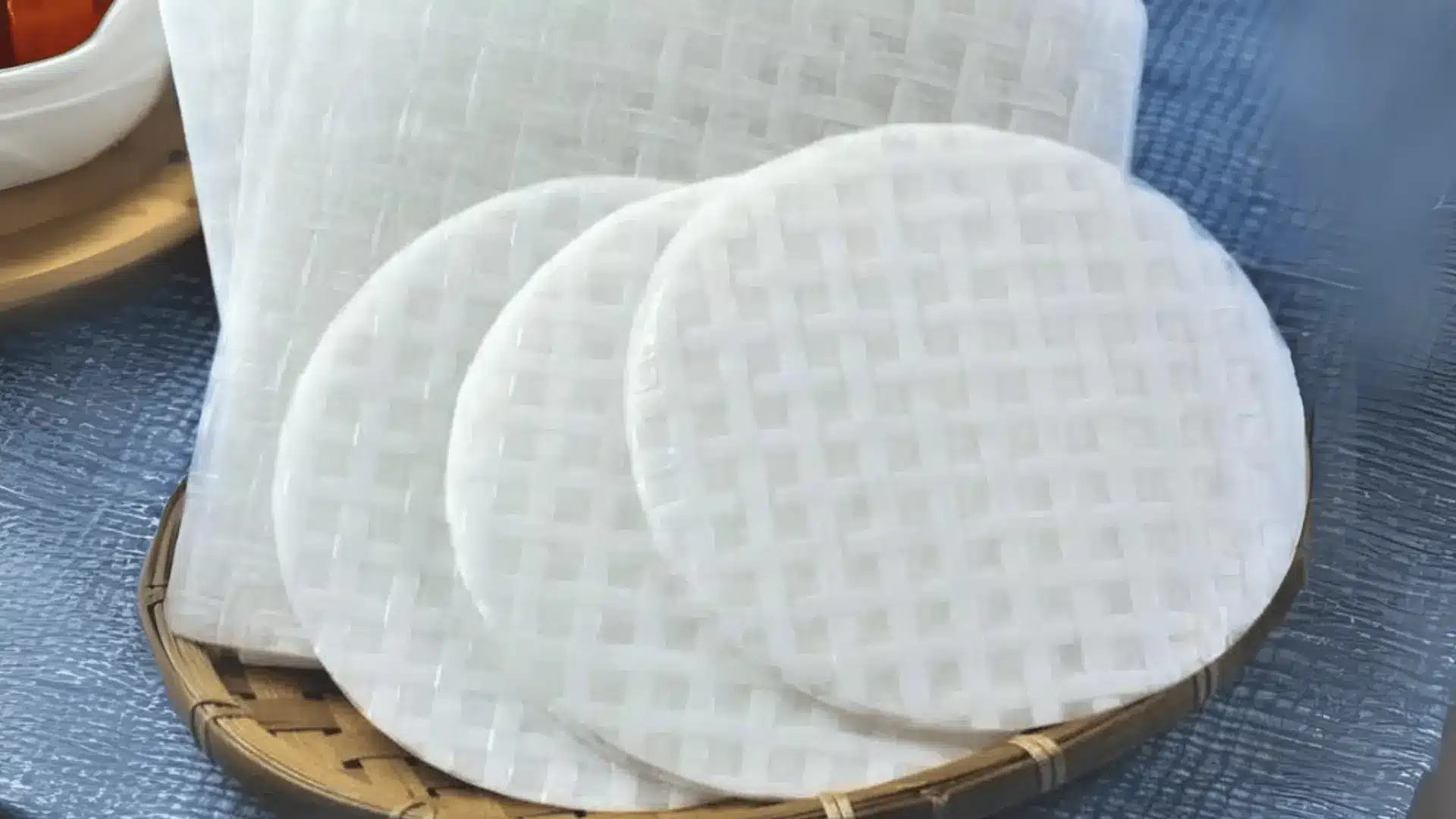
A single standard sheet runs 30 to 38 calories. Larger sheets can reach 45 to 50 calories; smaller versions drop to around 20. Here is where the tracking gets practical: most people do not eat one sheet per meal.
Three rolls at a sitting means three sheets, and the calorie count compounds with every filling choice on top of that.
| Serving Size | Estimated Calories (wrapper only) | Context |
|---|---|---|
| 1 small sheet | 20-30 kcal | Mini rolls, appetizer portions |
| 1 standard sheet | 30-38 kcal | Typical fresh spring roll |
| 2 sheets | 60-76 kcal | Light snack portion |
| 3 sheets | 90-115 kcal | Typical meal portion of fresh rolls |
| Fried rice paper roll (1) | 150-250 kcal | Oil absorbed during frying changes the profile entirely |
The fried version is worth separating out entirely. Oil absorption during frying can triple the calorie count of the wrapper alone, and the filling adds on top of that. A fresh spring roll with shrimp and vegetables can stay around 80 to 120 calories total. A fried spring roll of similar size often reaches 200 to 280 calories, sometimes more. The wrapper is the same food; cooking method is what changes the math.
The real calorie drivers in any rice paper meal are the fillings and sauces. Two tablespoons of peanut sauce can add 80 to 150 calories to a meal that otherwise looked light. Vermicelli noodles inside each roll add another 30 to 50 calories per roll. Track those separately from the wrapper count.
Rice Paper Carbs and Glycemic Index
Rice paper carbs total around 7 to 8 grams per standard sheet. Since rice paper has almost no fiber, nearly all of those carbs count as net carbs. Three sheets provide about 22 to 25 grams of carbs before fillings or sauces are added.
Rice paper has a moderate to high glycemic index, depending on the brand and tapioca content. Brands with more tapioca starch may digest faster. This means rice paper behaves more like refined starch than a high-fiber wrap.
That does not mean rice paper is off limits. A roll filled with shrimp, tofu, chicken, lettuce, cucumber, cabbage, and herbs will affect blood sugar differently than a roll filled mostly with noodles and sweet sauce.
Here is how carb count scales with the number of sheets used:
| Sheets Used | Total Carbs (wrapper only) | Net Carbs |
|---|---|---|
| 1 sheet | ~7-8g | ~7-8g |
| 2 sheets | ~15-16g | ~15-16g |
| 3 sheets | ~22-25g | ~22-25g |
| 4 sheets | ~30-33g | ~30-33g |
| 5 sheets | ~38-42g | ~38-42g |
For anyone tracking carbs for weight loss, blood sugar management, or a lower-carb eating pattern, the wrapper count is the first thing to note. Then add noodles and sauces separately. Those two additions frequently double the carb total of the wrapper alone.
Rice Paper vs. Other Wraps: A Direct Comparison
Here is what the numbers look like when you compare rice paper against the alternatives most people actually use. This is the comparison that drives most of the practical decisions around rice paper nutrition.
| Wrap Type | Calories | Carbs | Protein | Fat | Fiber |
|---|---|---|---|---|---|
| Rice paper (1 standard sheet) | 30-38 | 7-8g | 0.1g | 0g | 0g |
| Small flour tortilla (6-inch) | 90-120 | 15-20g | 2-4g | 2-4g | 0.5-1g |
| Large flour wrap (10-inch) | 180-220 | 30-35g | 5-7g | 4-6g | 1-2g |
| Spring roll wrapper (wheat-based) | 60-80 | 12-16g | 2-3g | 0.5g | 0.5g |
| Lettuce wrap (1 leaf) | 5-10 | 1-2g | 0g | 0g | 0.5g |
| Seaweed sheet (nori) | 5-10 | 1g | 1g | 0g | 0.3g |
Rice paper works well as a gluten-free wrap for fresh rolls, especially if you want something lighter than tortillas or wheat-based wrappers. It is also different from wheat-based spring roll wrappers, which often contain gluten and are usually designed for frying.
Is Rice Paper Good for Weight Loss?
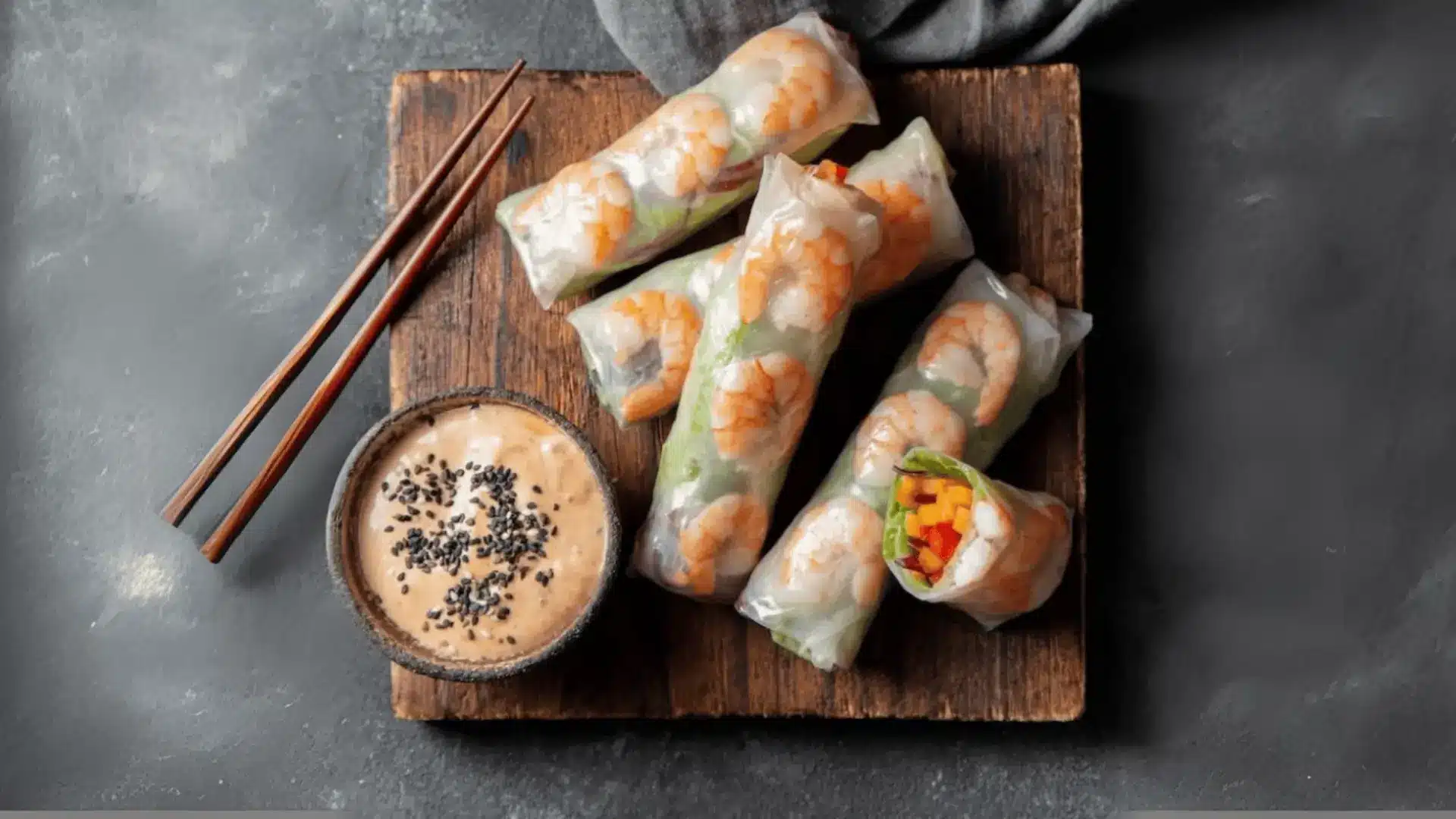
Rice paper can support weight loss goals when portion size and fillings are managed well. The wrapper itself is low enough in calories that it does not create the problem; the fillings and sauces are usually where calorie creep happens.
The real limitation for weight loss is satiety. Rice paper contains no protein and no fiber on its own, which means it does not trigger the fullness signals that make a meal stay with you. A roll filled only with noodles and vegetables will leave most people hungry within 90 minutes. The fix is straightforward: build protein into every roll.
| Note on Satiety: Here is what this actually means for your plate. Rice paper with shrimp, a lettuce leaf, cucumber, and fresh mint holds you longer than rice paper with vermicelli and sweet chili sauce, even if the calorie counts look similar on paper. Protein slows gastric emptying; refined starch alone does not. Build the protein first, then fill around it. |
For weight loss specifically, the practical approach is to limit the wrapper count to two or three sheets per meal, skip the vermicelli noodles inside the roll, and treat sauce as a measured condiment rather than a dipping bowl. Two tablespoons is a serving; an open bowl at the table is not.
Good weight-loss fillings that add satiety without excess calories:
- Shrimp or grilled chicken: Lean protein, low in calories, holds hunger effectively
- Firm tofu or tempeh: Plant-based protein that holds its shape inside rolls
- Edamame: Adds protein and a small amount of fiber in one ingredient
- Cucumber, lettuce, cabbage, and carrots: High volume, low calorie, meaningful fiber
- Fresh mint, basil, and cilantro: Add flavor complexity without calorie cost
- Measured dipping sauce: 1 to 2 tablespoons of a low-sugar sauce, not open-bowl dipping
Is Rice Paper Good for Low-Carb or Keto Diets?
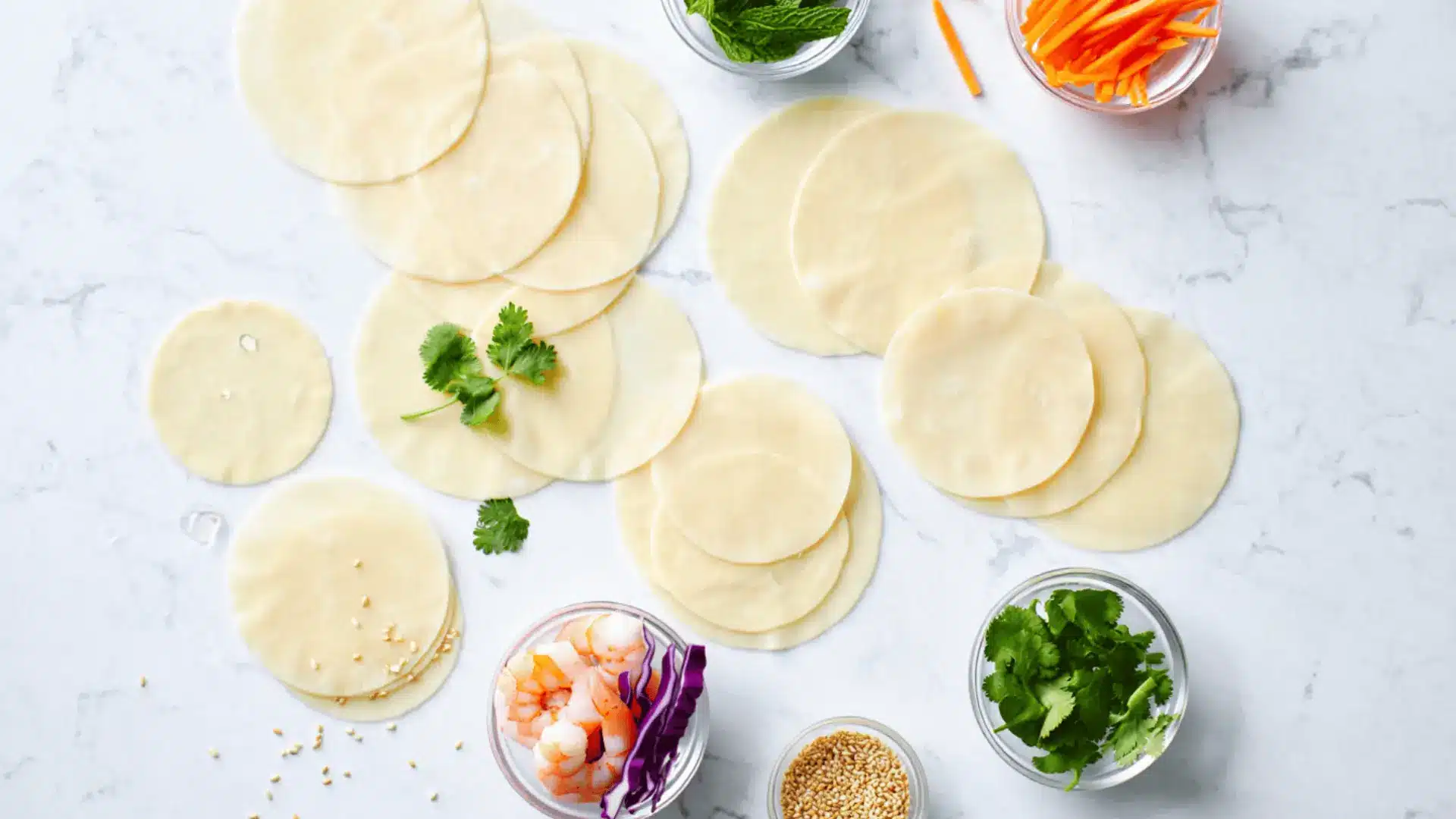
Rice paper is not suitable for strict keto. One sheet contains 7 to 8 grams of net carbs, and most meals use two or three sheets. Three sheets bring the wrapper alone to around 22 to 25 grams of carbs, which exceeds the daily net carb target for most ketogenic protocols before any filling is counted.
For a moderately low-carb approach, rice paper can still fit with discipline. The practical strategy is to use one sheet per roll instead of the usual single-wrap method, skip noodles entirely, and fill the majority of each roll with protein and non-starchy vegetables.
One roll on this plan might carry 8 to 10 grams of net carbs total, which is workable for a moderate low-carb target of 50 to 100 grams per day.
Lower-carb alternatives that still provide wrap structure:
- Lettuce wraps: 1 to 2 grams of carbs per leaf, high volume, zero structure issue with fresh fillings
- Nori sheets: About 1 gram of carbs per sheet with a small protein contribution
- Thin cucumber slices: For open-face rolls or plated presentations
If rice paper feels too carb-heavy for your goals, lettuce wraps, nori sheets, or thin cucumber slices can provide lower-carb alternatives while helping you create satisfying low-carb lunch ideas that fit your daily carb target.
Rice Paper and Blood Sugar: What to Know
Rice paper can raise blood sugar because it is mostly refined carbohydrate and contains almost no fiber. The glycemic impact depends on the brand, tapioca content, serving size, and what you eat with it.
The best way to reduce the blood sugar impact is to pair rice paper with protein, healthy fats, and high-fiber vegetables. Since rice paper has almost no fiber, filling each roll with high-fiber low-carb foods can help improve fullness and slow digestion.
For better blood sugar balance:
- Add shrimp, tofu, chicken, egg, or tempeh.
- Use vegetables like cabbage, cucumber, carrots, and lettuce.
- Limit portions to two or three rolls.
- Skip vermicelli noodles if blood sugar is a priority.
- Avoid sweet chili sauce or hoisin as the main dip.
- Choose low-sugar sauce and measure the serving.
Rice paper is not a diabetic-specific food, but it can fit into a balanced meal when carbs are counted and fillings are chosen carefully.
Building a Balanced Meal with Rice Paper
The wrapper provides structure. That is its job, and it does that job well. Everything else nutritionally has to come from what you put inside. Here is how to think about the roll as a complete meal rather than a snack.
| Goal | Filling Combination | Why It Works |
|---|---|---|
| Higher protein | Shrimp + edamame + lettuce + carrots | Two protein sources, high-volume vegetables |
| More fiber | Firm tofu + cabbage + cucumber + bell pepper | Tofu provides protein; four vegetables provide fiber |
| Lower calories | Shrimp + lettuce + cucumber + fresh herbs + light sauce | Maximum volume per calorie; sauce portioned to 1 tbsp |
| Plant-based | Tempeh + avocado + carrots + mint + basil | Tempeh provides protein and fiber; avocado adds healthy fat |
| Blood sugar management | Chicken + cucumber + cabbage + no noodles + low-sugar sauce | Protein and fiber buffer the glycemic impact of the wrapper |
Sauces deserve their own line in any meal plan. Peanut sauce made from peanut butter, lime, and a small amount of soy can add 80 to 150 calories per serving depending on how it is prepared.
Just like rice paper rolls, understanding poke bowl nutrition facts comes down to evaluating the ingredients, since the base, protein, toppings, and sauces all influence the final calorie and nutrient content
Common Mistakes That Change the Nutrition Profile
Rice paper starts with a genuinely low-calorie profile. These are the choices that undo that without people realizing it:
- Using four or five wrappers per meal: That is 120 to 190 calories and 30 to 40 grams of carbs from the wrapper alone, before fillings or sauce.
- Adding vermicelli to every roll: A small portion of rice noodles adds 30 to 50 calories and 7 to 10 grams of carbs per roll. Across four rolls, that is a significant addition.
- Open-bowl dipping: Repeated dips into a shared sauce bowl are hard to track. Portion the sauce before eating.
- Frying the rolls: Oil absorbed during deep frying can add 80 to 150 calories per roll depending on technique and oil temperature.
- Skipping protein: A roll built only on noodles and vegetables leaves out the macronutrient that produces satiety, leading to eating more rolls to feel full.
- Flavored specialty rice paper: Some flavored varieties add sugar to the wrapper itself. Check the ingredient label if the product is not a plain variety.
Frequently Asked Questions About Rice Paper Nutrition
Does rice paper contain protein?
Rice paper contains very little protein, usually less than 1 gram per sheet. It is mainly a source of carbohydrates. To make a more balanced meal, pair rice paper with protein-rich fillings such as shrimp, chicken, tofu, eggs, or edamame.
Is rice paper suitable for vegans?
Yes, most rice paper is vegan because it is typically made from rice flour, tapioca starch, water, and salt. However, it is always a good idea to check the ingredient list, as recipes and manufacturing processes can vary between brands.
Does rice paper contain fiber?
Rice paper contains little to no fiber because it is made from refined starches. If you want more fiber in your meal, add vegetables such as cabbage, carrots, lettuce, cucumber, or bell peppers inside your rice paper rolls.
Can rice paper help with portion control?
Yes, rice paper can support portion control because each sheet has a fixed calorie and carb amount. Using one or two wrappers per serving makes it easier to track intake compared with larger wraps, breads, or oversized sandwich rolls.
Is rice paper easy to digest?
Many people find rice paper easy to digest because it is low in fat and made from simple ingredients. However, digestion varies by person. Pairing it with vegetables and protein may help create a more satisfying and balanced meal.
Does soaking rice paper change nutrition?
No, soaking rice paper in water softens the texture but does not significantly change its calories, carbs, or nutrient content. The nutritional values remain nearly the same because water adds moisture without adding calories or macronutrients.
Can children eat rice paper rolls?
Yes, rice paper rolls can be a kid-friendly meal or snack. They can be filled with vegetables, lean proteins, and other nutritious ingredients. Make sure fillings are age-appropriate and cut into small pieces to reduce choking risks for young children.
Does rice paper contain added sugar?
Most plain rice paper contains little or no added sugar. The ingredient list usually includes rice flour, tapioca starch, water, and salt. However, flavored or specialty products may differ, so checking the nutrition label is always recommended.
Final Verdict
Rice paper may seem simple, but knowing what is inside each sheet helps you make smarter meal choices. When I look at rice paper nutrition, the biggest takeaway is that it is low in calories but mostly made up of carbohydrates.
You also learned that portion size matters, especially if you are tracking rice paper carbs or managing your calorie intake.
Pairing rice paper with lean protein, vegetables, and lighter sauces can create a more balanced and filling meal. This information makes it easier to enjoy fresh rolls while staying aligned with your health goals.
Give these tips a try and share your experience, or check out my related nutrition guides for more ideas.
Sources
USDA FoodData Central, “Rice paper, dry.” fdc.nal.usda.gov
SugarMDs, “Can Diabetics Safely Include Rice Paper in Diet?” 2024. sugarmds.com
MDPI Foods, “Insights into Recent Updates on Factors and Technologies That Modulate the Glycemic Index of Rice and Its Products.” 2023. mdpi.com
National Institutes of Health (PubMed Central), “Influence of resistant starch resulting from the cooling of rice on postprandial glycemia in type 1 diabetes.” 2022. ncbi.nlm.nih.gov