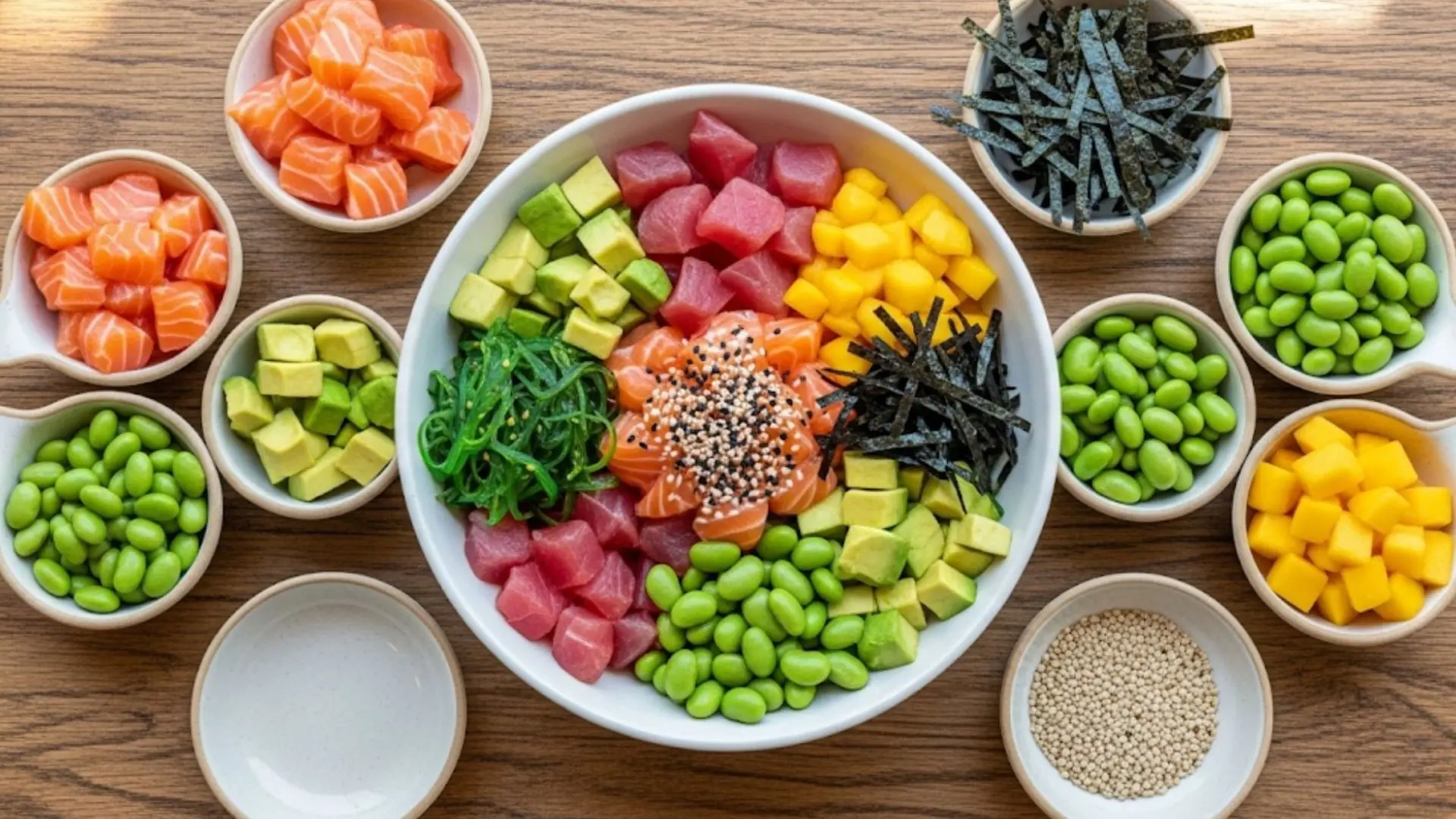
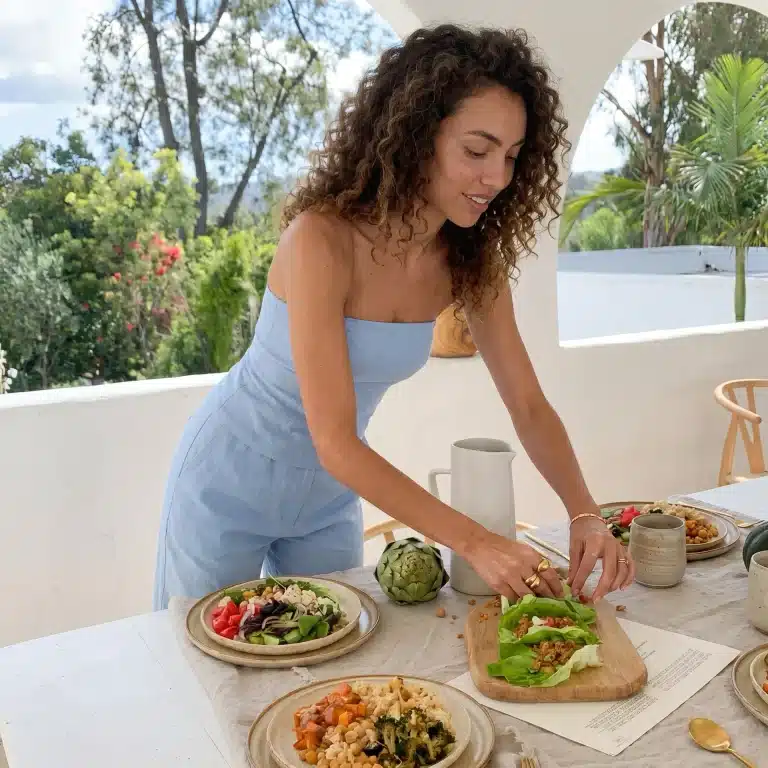
| Food | Serving | Calories | Protein | Carbs | Fat | Key Nutrient |
| Poke Bowl (standard, rice base) | 1 bowl (~400g) | 500-700 | 25-40g | 50-70g | 10-22g | Omega-3 fatty acids, Vitamin D |
| Poke Bowl (greens base) | 1 bowl (~350g) | 300-500 | 25-40g | 10-25g | 10-20g | Omega-3 fatty acids, Vitamin K |
Nutritional values based on USDA FoodData Central data. Individual values may vary by brand, preparation method, and serving size. Verify at fdc.nal.usda.gov.
| Disclaimer: This article is for informational and educational purposes only. It does not constitute medical advice. Always consult a qualified healthcare provider before starting a new exercise, nutrition, or wellness program. |
What are the Actual Poke Bowl Nutrition Facts?
If you are wondering how many calories in a poke bowl, the honest answer is that most bowls fall between 300 and 700 calories. A lighter greens-based bowl can sit on the lower end, while rice, creamy sauces, and fried toppings can push the total much higher.
A standard poke bowl built with white rice, tuna, and light toppings usually lands around 500 to 700 calories. A greens-based bowl is often closer to 300 to 500 calories. That range matters because poke bowl nutrition facts change quickly based on three choices: your base, your sauce, and your protein portion.
The biggest hidden calorie sources are usually white rice and creamy sauces. A generous scoop of rice can add more than 200 calories, while spicy mayo adds around 90 to 100 calories per tablespoon.
That is why a bowl that looks colorful and vegetable-heavy can still become a high-calorie meal if the base and sauce are not portioned carefully. To build a more balanced bowl, start with greens or a measured scoop of rice, choose a lean protein, and keep sauce on the side.
Macro Breakdown: Protein, Carbs, and Fat
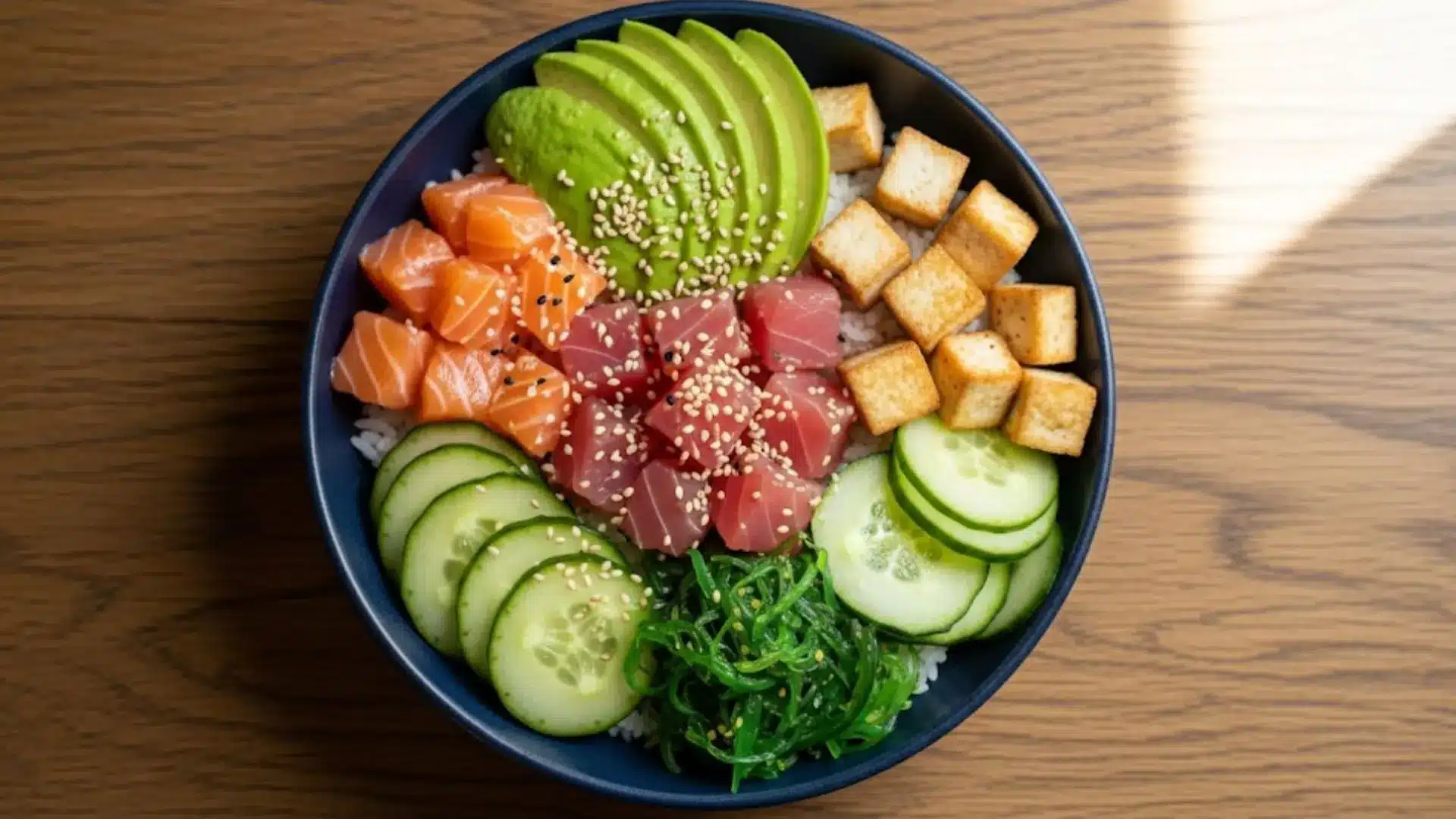
The macro profile of a poke bowl is shaped by its protein source above everything else. Here is what that looks like across the most common choices, based on full-bowl estimates:
| Protein Type | Calories | Protein (g) | Fat (g) | Carbs (g) | Sodium (mg) |
| Tuna | 475 | 36 | 16 | 47 | 278 |
| Salmon | 434 | 27 | 22 | 38 | 1492 |
| Tofu | 425 | 20 | 18 | 52 | 1106 |
| Shrimp | 559 | 18 | 47 | 18 | 834 |
| Chicken | 639 | 40 | 17 | 63 | 2311 |
Tuna is the most protein-efficient option at 36 grams for 475 calories, with the lowest sodium of any protein listed. Salmon brings in 22 grams of fat, most of it heart-healthy polyunsaturated fat including EPA and DHA omega-3s, but its sodium can climb sharply when marinated.
The shrimp bowl surprises people: 47 grams of fat is higher than most expect, largely because shrimp-based bowls at restaurants are often prepared with heavier sauces.
If you are tracking specific macros for muscle building or weight loss, tuna or chicken are the cleaner targets. The base you choose will then determine whether those macros land in a useful range or tip into excess carbohydrates.
Base Options and What They Actually Change
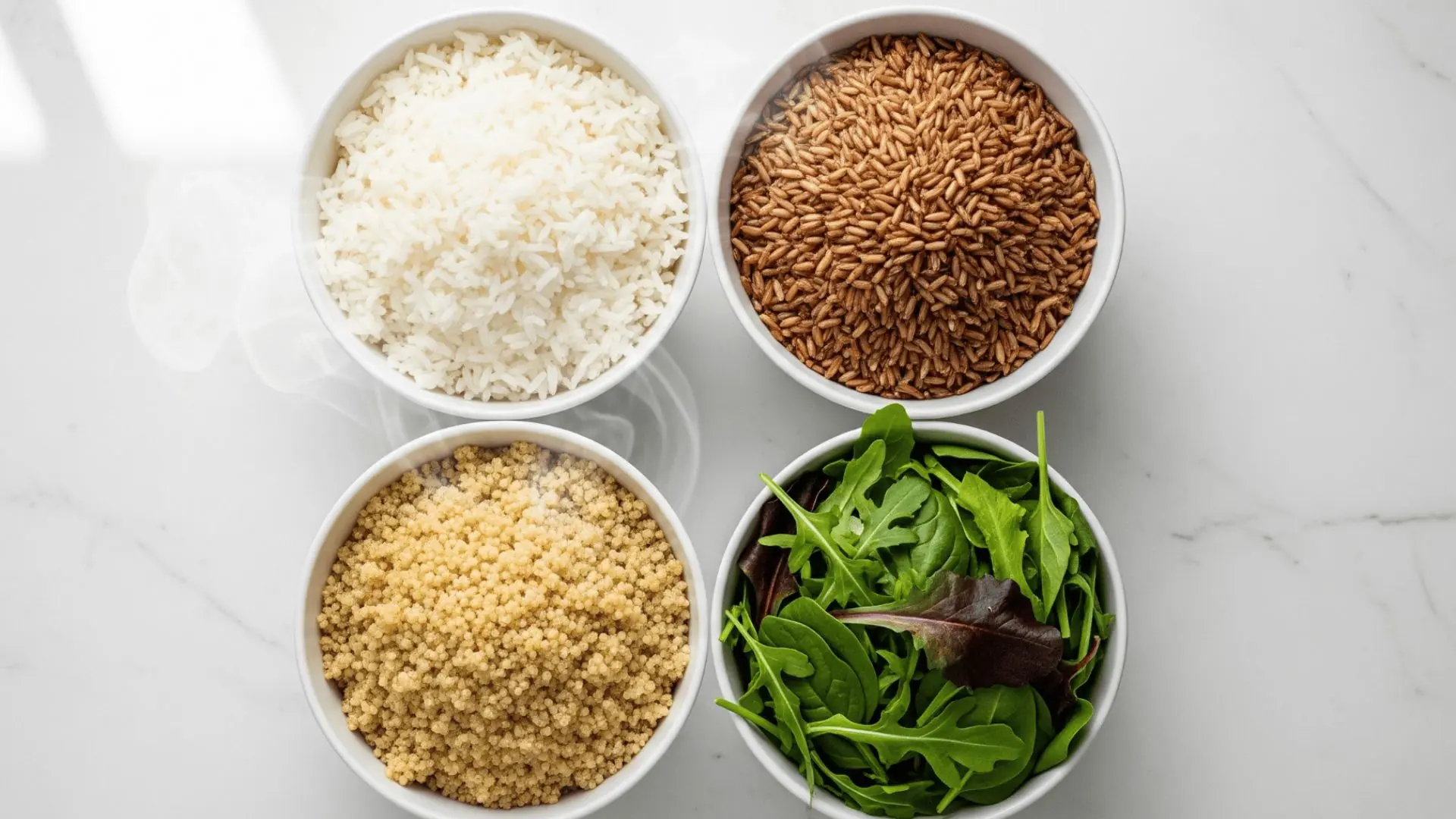
The base is the single largest calorie decision in a poke bowl, and it is the easiest one to optimize. Here is how the four main options compare per one-cup serving:
| Base | Calories (1 cup) | Protein (g) | Carbs (g) | Fiber (g) |
| White Rice | 205 | 2.7 | 28 | 0.6 |
| Brown Rice | 215 | 2.7 | 23 | 3.1 |
| Quinoa | 120 | 4.4 | 21 | 5.2 |
| Salad Greens | 10-20 | 1-2 | 2-4 | 1-3 |
Quinoa delivers more protein and nearly nine times the fiber of white rice at 85 fewer calories per cup. That gap adds up when you consider that a restaurant scoop is typically 1.5 to 2 cups, not one.
Swapping white rice for salad greens on a tuna bowl is roughly a 200-calorie reduction before you touch a single other ingredient, which is relevant context for anyone managing calorie intake day to day.
Here is what this actually means for your plate: if you want a high-protein, moderate-carb meal, go brown rice or quinoa and keep the base to one cup. If you want the lowest-calorie version that is still filling, greens plus a generous protein portion is the most effective combination.
Sauces and Toppings: Where Calories and Sodium Accumulate
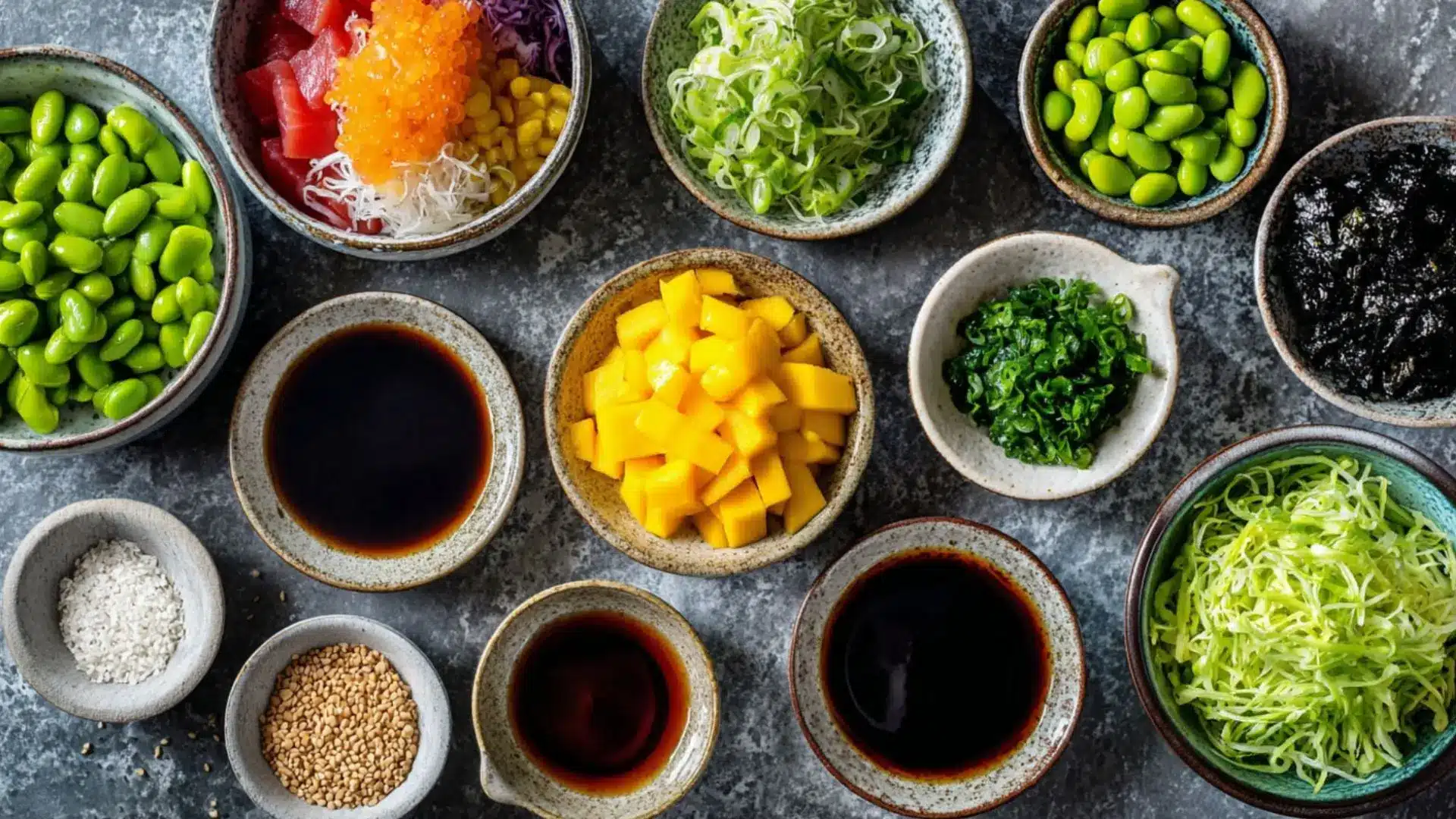
Most of the variance in poke bowl nutrition facts comes down to sauces and toppings, not the fish itself. Spicy mayo is the biggest offender at 90 to 100 calories per tablespoon, and most restaurant servings are closer to two tablespoons than one.
Soy sauce adds 900-plus milligrams of sodium per tablespoon. The 2020-2025 Dietary Guidelines for Americans recommend a daily sodium cap of 2,300 milligrams for most adults; a chicken poke bowl with standard sauces can account for close to the entire daily allowance in one sitting.
The toppings worth loading up on are avocado (45 calories per quarter, with heart-healthy monounsaturated fat), edamame (40 to 50 calories per quarter cup, with 4 grams of protein and fiber), and seaweed (5 to 10 calories per tablespoon, with iodine and antioxidants). These add nutritional value without spiking totals.
Mango adds natural sugars at 20 to 25 calories per quarter cup and is worth including for the vitamin C and variety, but it is one topping worth measuring at a build-your-own restaurant rather than taking an open scoop.
Fried toppings like tempura, crispy onions, and wonton strips add 60 to 100 calories each without any meaningful nutritional return.
| Sauce/Topping | Calories | Sodium (mg) | Notes |
| Soy Sauce (1 tbsp) | 10 | 900+ | Very high sodium; use sparingly or choose low-sodium |
| Spicy Mayo (1 tbsp) | 90-100 | 100-200 | High calorie; one of the biggest hidden calorie sources |
| Ponzu Sauce (1 tbsp) | 10-15 | 200-400 | Best low-calorie sauce option; citrus-forward flavor |
| Sesame Oil (1 tbsp) | 120 | Low | High-calorie but healthy fats; use as a finishing drizzle |
| Avocado (1/4 fruit) | 45 | Low | Monounsaturated fat, potassium; nutrient-dense choice |
| Edamame (1/4 cup) | 40-50 | Low | 4g protein, 2g fiber; one of the best toppings nutritionally |
| Seaweed (1 tbsp) | 5-10 | Low | Rich in iodine, antioxidants, and minerals |
| Mango (1/4 cup) | 20-25 | Low | Vitamin C and natural sugars; keep the portion measured |
Requesting sauces on the side is the single most effective habit to develop when ordering poke bowls at restaurants. It costs nothing and routinely saves 100 to 200 calories per meal.
Key Micronutrients in Poke Bowls
Calories and macros get most of the attention, but the micronutrient profile is part of why a well-built poke bowl stands out compared to other high-protein lunch options. The main micronutrients worth understanding:
Omega-3 fatty acids (EPA and DHA): Raw salmon provides approximately 1.5 to 2 grams of omega-3s per 3-ounce serving, which exceeds the 1.1 to 1.6 grams per day the NIH recommends for most adults. Tuna provides roughly 0.5 to 1 gram. These fatty acids are associated with reduced cardiovascular disease risk and support cognitive function, per research published in the American Journal of Clinical Nutrition.
Vitamin D: Raw salmon is one of the better dietary sources of vitamin D, providing around 440 IU per 3-ounce serving, which is close to half the daily recommended intake of 600 to 800 IU for most adults (NIH Office of Dietary Supplements). The heart-healthy fish recipes that work best for overall nutrition share this same advantage: fresh, minimally processed fish prepared without heavy coatings.
Vitamin B12: Tuna and salmon are both dense B12 sources. Three ounces of tuna delivers over 100% of the daily value. B12 is essential for red blood cell production and neurological function, and it is almost exclusively found in animal-based foods.
Potassium: A standard poke bowl provides 600 to 900 milligrams of potassium, depending on toppings, from a combination of fish, avocado, and edamame. Most US adults fall well below the 3,400 milligrams per day recommended intake.
Poke Bowl Nutrition by Style and Setting
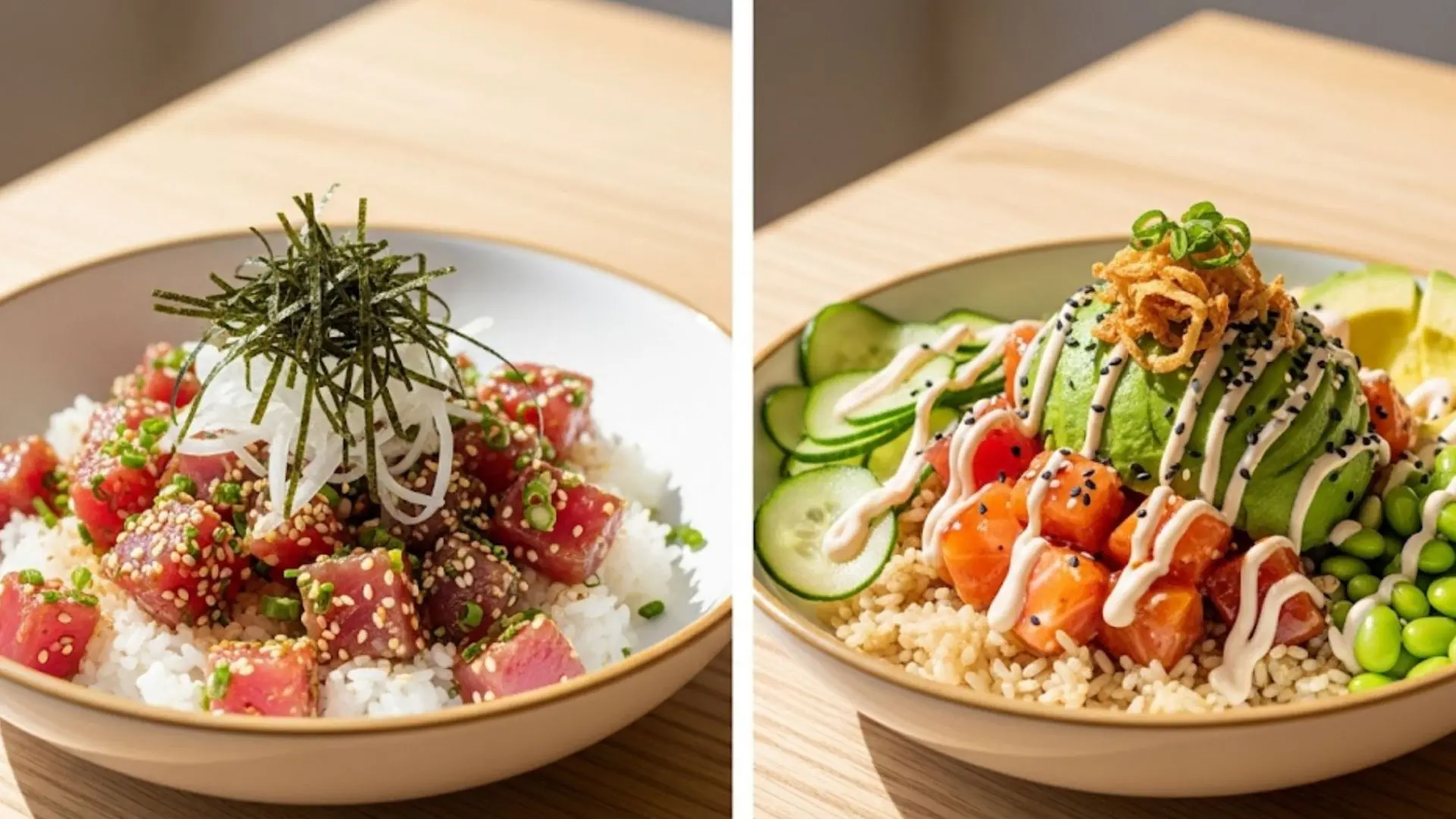
Traditional Hawaiian poke bowls typically contain 400 to 600 calories per serving. They use lightly seasoned raw fish, seaweed, a measured amount of rice, and simple condiments like soy sauce and sesame oil. That original format is lean and nutrient-dense by design.
Modern American and Japanese fusion versions, including what is served at national chains, push the calorie range to 700 to 900 because of richer sauces, larger base portions, and multiple high-fat toppings.
Homemade poke bowls are the easiest way to stay under 600 calories because you control the exact amount of rice, sauce, and fish going into the bowl. When building at home, a useful starting point is 4 to 6 ounces of fish, one cup of base, and sauces measured by the tablespoon.
How to Build a Poke Bowl for Specific Diet Goals
The number that matters shifts depending on what you are actually trying to accomplish. Here is how the same bowl format maps to three common goals:
For weight loss: Use a salad greens base, choose tuna or shrimp as your protein, and use ponzu or a small amount of low-sodium soy sauce. Skip spicy mayo and any fried toppings. This builds toward a 350 to 500-calorie bowl with 25 to 35 grams of protein, which is filling enough to carry through the afternoon without pushing daily calories too high.
A greens-based tuna bowl fits naturally into a structured low-calorie meal plan as a lunch option with room to spare.
For muscle building: Use brown rice or quinoa as your base for the complex carbohydrates and fiber. Choose salmon or chicken as your protein and add edamame for extra amino acids. Include avocado for calorie density and healthy fat.
A bowl built this way delivers 600 to 700 calories with 35 to 45 grams of protein and the carbohydrate volume needed to support training recovery. Tracking body composition changes over time is the most reliable way to know whether this approach is working, and the signs of gaining muscle are more specific than most people expect.
For low-carb or keto: Replace rice with mixed greens, zucchini noodles, or kelp noodles. Choose salmon or tuna, add avocado and macadamia nuts for fat content, and use coconut aminos or sesame oil in place of standard soy sauce. This builds toward 20 to 30 grams of net carbohydrates per bowl.
Standard white rice adds 28 grams of carbs per cup before any other ingredients, which is why base selection is the foundational decision for anyone managing carb intake. The same principle applies to other whole foods on a ketogenic diet, where low-carb vegetables like mushrooms follow a similar logic: nutrient-dense, low net carbs, and easy to portion.
Potential Downsides to Watch For
Poke bowls can be nutritious, but a few details can quickly change the meal. Sodium, portion size, fried toppings, and raw fish quality matter most when ordering.
-
High Sodium From Sauces: Soy sauce adds over 900 milligrams of sodium per tablespoon, and teriyaki marinades can add even more. A bowl with multiple sauces may reach 1,500 to 2,000 milligrams of sodium.
-
Large Restaurant Portions: A restaurant rice scoop is often 1.5 to 2 cups instead of one cup. That can add 100 to 200 extra calories before protein, sauce, or toppings are included.
-
Fried Toppings Add Empty Calories: Crispy onions, wonton strips, and tempura toppings can increase calories without adding meaningful nutrition. They make the bowl heavier while offering little protein, fiber, or micronutrient value.
-
Raw Fish Safety: Raw tuna or salmon can carry foodborne illness risk if sourced or stored poorly. Fresh fish should smell clean, feel firm, and never look mushy, dull, or discolored.
These downsides are easy to manage with smarter choices. Ask for sauce on the side, watch rice portions, skip fried toppings often, and choose restaurants with clear freshness standards.
Frequently Asked Questions
Is raw fish in poke bowls safe?
Raw fish can be safe when it is fresh, properly sourced, and stored at the right temperature. Choose reputable restaurants with high turnover, clean prep areas, and fish that smells fresh. Pregnant people, young children, and immunocompromised individuals should ask a healthcare provider first.
Is salmon or tuna better in poke?
Tuna is usually leaner and higher in protein per calorie, while salmon provides more healthy fats and omega-3s. Choose tuna if you want a lighter, protein-focused bowl. Choose salmon if you want more richness, heart-healthy fats, and vitamin D.
Are poke bowls good after workouts?
Yes. A poke bowl can work well after workouts because it combines protein for muscle repair and carbs for glycogen refill. Choose rice or quinoa, a strong protein portion, and lighter sauce. Skip heavy fried toppings if you want faster digestion.
Can I meal prep poke bowls?
Yes, but keep raw fish separate and very cold until serving. For safer meal prep, use cooked shrimp, chicken, tofu, or canned tuna. Store rice, greens, toppings, and sauce separately so the bowl stays fresh and does not become soggy.
What is the healthiest poke base?
Greens are the lowest-calorie base, while quinoa offers more fiber and protein than white rice. Brown rice is a good middle option if you want steady carbs. The healthiest base depends on your goal: calories, carbs, fullness, or workout fuel.
Are poke bowls gluten-free?
Poke bowls can be gluten-free, but not always. Soy sauce, imitation crab, marinades, and some crispy toppings often contain gluten. Choose tamari or coconut aminos, plain fish, rice or greens, and fresh toppings if you need a gluten-free bowl.
How long does poke stay fresh?
Poke is best eaten the same day, especially when made with raw fish. If refrigerated properly, it may stay safe for about 24 hours, but texture and freshness decline quickly. Cooked proteins usually hold better for meal prep.
Can poke bowls fit a heart-healthy diet?
Yes, especially when built with salmon or tuna, greens or quinoa, avocado, seaweed, and light sauce. Watch sodium from soy sauce and marinades. Choosing low-sodium sauces and skipping fried toppings makes the bowl much more heart-friendly.
Final Verdict
You now understand the key poke bowl nutrition facts that impact your health and energy levels throughout the day. Smart ingredient choices can alter your bowl from a calorie bomb into a balanced, nutritious meal.
I recommend watching out for high-sodium sauces and creamy toppings that can quickly increase calories and unhealthy fats.
Making your own poke bowl at home gives you complete control over portion sizes and ingredient quality.
Start experimenting with different combinations to find your perfect healthy bowl that satisfies your taste buds.
I believe fresh fish provides quality protein, while vegetables add essential vitamins to support your wellness goals. Drop a comment below sharing which poke bowl nutrition facts surprised you the most today!
Sources: NIH Office of Dietary Supplements, Omega-3 Fatty Acids Fact Sheet, 2022. USDA FoodData Central, fdc.nal.usda.gov. U.S. Department of Health and Human Services, Dietary Guidelines for Americans 2020-2025. American Journal of Clinical Nutrition, “Long-chain omega-3 fatty acids and cardiovascular disease,” 2018.