
Standing in front of a clothing rack, the difference is not always obvious. Yoga pants vs leggings often looks like a simple naming choice, yet the design, fabric, and purpose behind each option can be quite different. A pair that feels perfect for a casual afternoon may not offer the same comfort during stretching, workouts, or long hours of movement. Small details such as waistband construction, material blend, fit, and intended use can change the overall experience more than expected. Understanding those differences helps make shopping decisions easier and prevents buying a pair that does not match everyday needs. A closer look reveals why these two wardrobe staples are often grouped together, yet serve different purposes.
What Are Leggings?
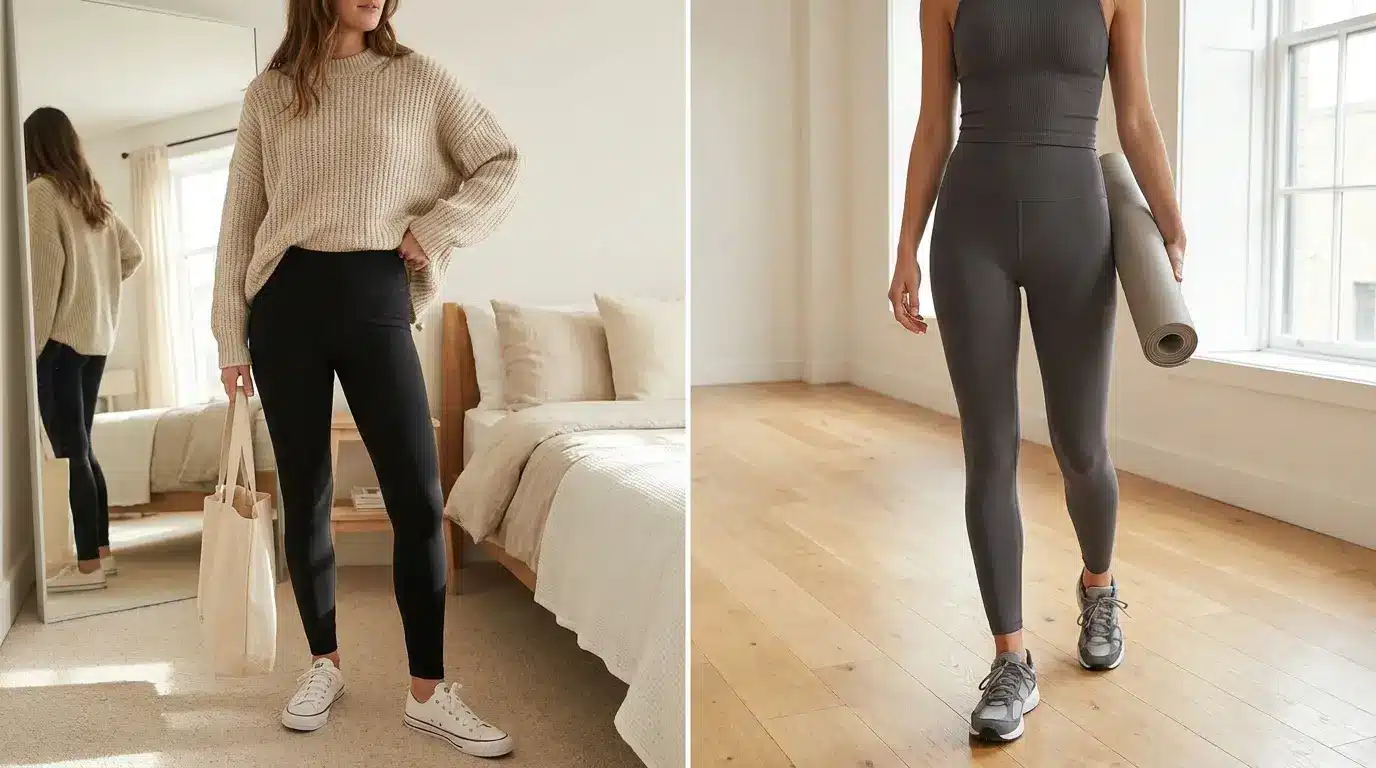
Leggings are close-fitting bottoms that usually cover the legs from the waist to the ankle, though some styles stop above the ankle. They are made with stretch fabrics such as cotton blends, polyester, nylon, spandex, or mixed materials.
Their main role is comfort and easy styling. Many people wear them with oversized shirts, hoodies, tunics, sweaters, kurtas, dresses, or casual gym tops. Some leggings feel soft and light, while others feel firm and more structured. The important thing to know is that leggings are a broad category. Some are made for lounging, some for layering, and some for training. The label alone does not tell the full story, so fabric quality and intended use matter.
What Are Yoga Pants?
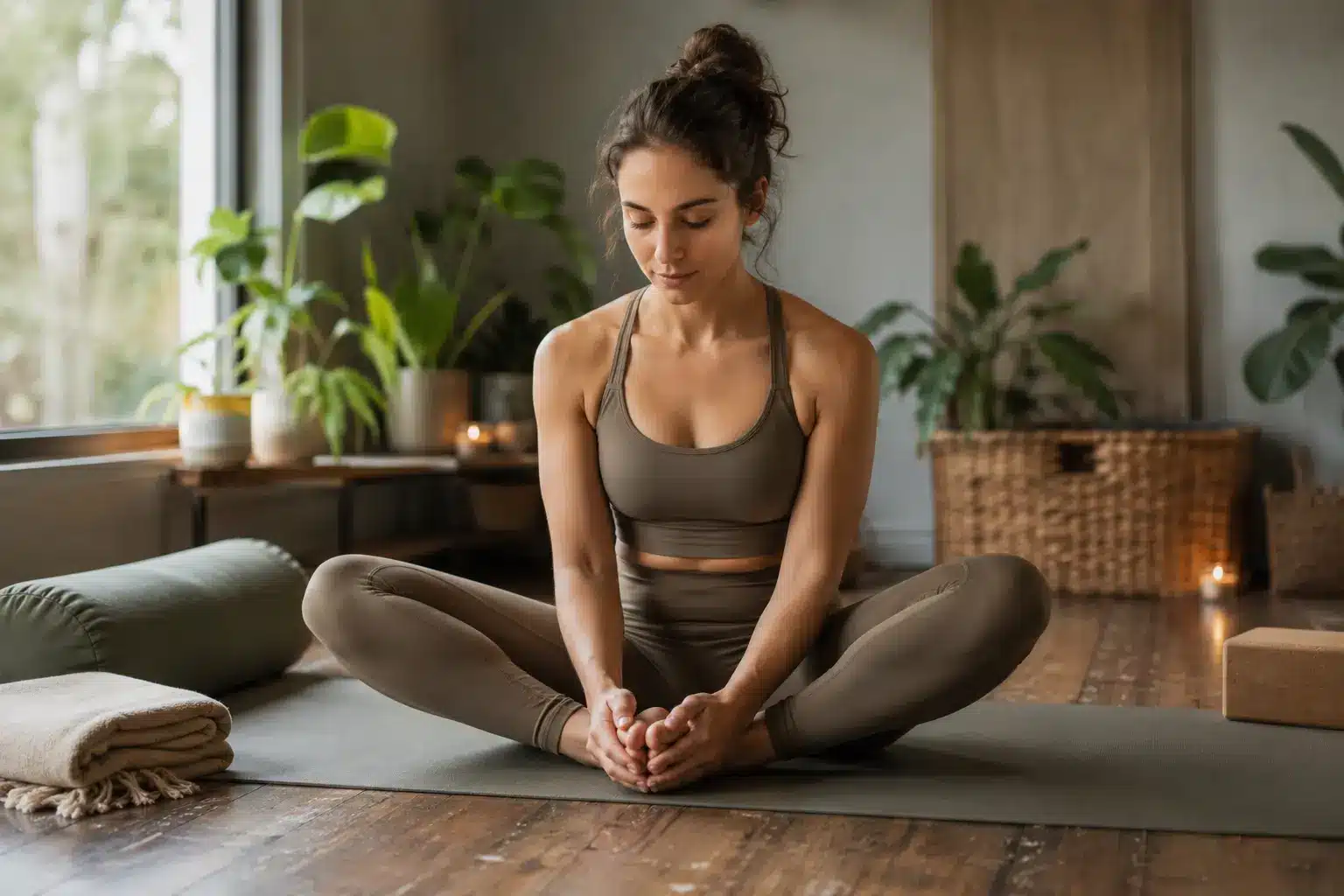
Yoga pants are bottoms made for movement-focused activities like yoga, Pilates, stretching, and light workouts. They are usually made with flexible performance fabrics that allow the body to bend, twist, and move without the pants pulling or shifting.
They also come in more shapes than basic leggings. You can find fitted, flared, bootcut, straight-leg, and wide-leg yoga pants. Many styles have a high-rise waistband and a smooth feel around the hips and waist. Yoga pants are no longer limited to yoga classes. Many people wear them for errands, travel, walks, and relaxed daily outfits because they offer comfort without feeling too loose or stiff.
Key Differences Between Yoga Pants and Leggings
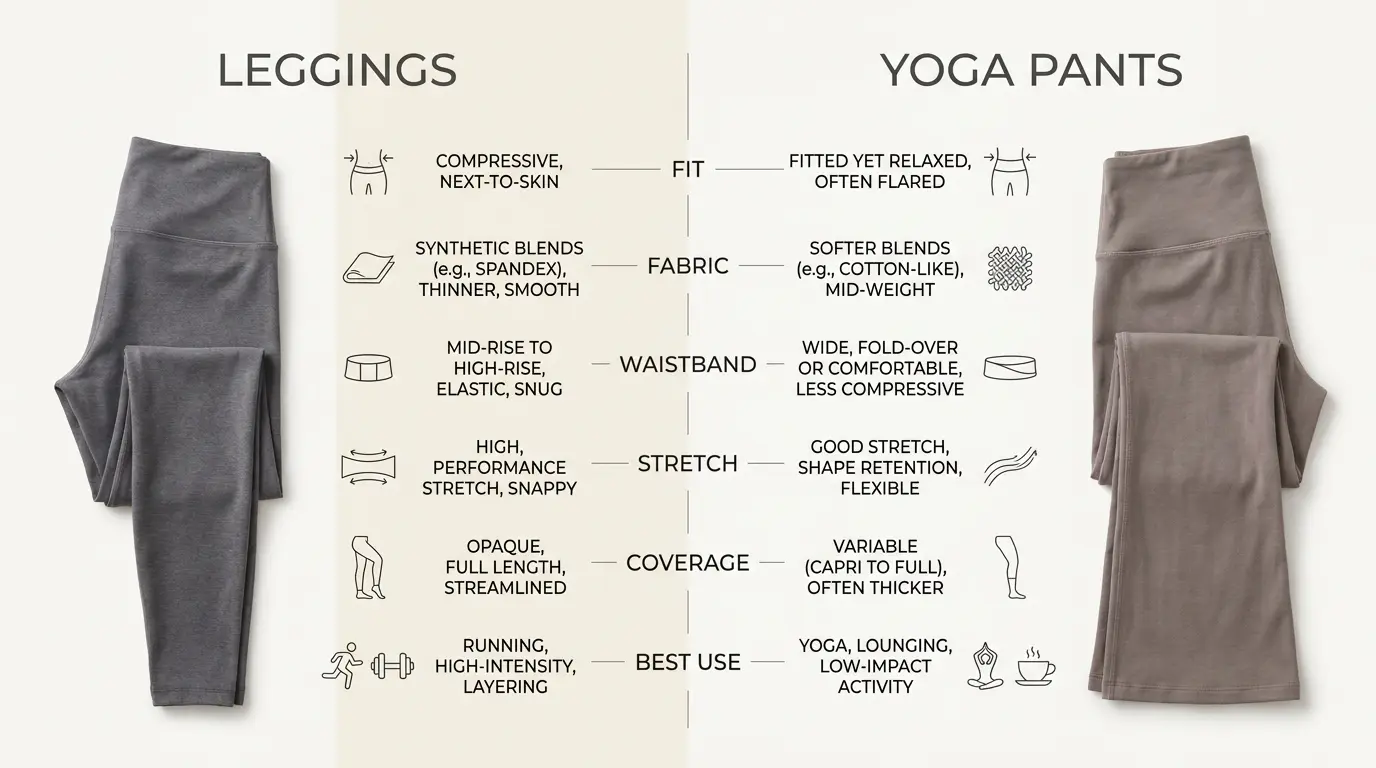 At first glance, both options can look very similar, which is why many shoppers use the terms interchangeably. Looking more closely at their construction, performance, and intended use reveals several important differences that affect comfort, support, and everyday practicality.
1. Design and Fit
Leggings typically feature a slim, body-hugging silhouette from the waist to the ankle, creating a streamlined look that works well for layering and casual outfits. Yoga pants offer more variety in shape, including flared, bootcut, straight-leg, and wide-leg styles. This wider range of designs makes them suitable for both activewear and more polished athleisure outfits.
2. Fabric and Construction
Leggings can be made from a variety of materials, including cotton blends, polyester, nylon, and spandex. Yoga pants are generally created with performance-focused fabrics that feel smoother and provide greater flexibility. These materials are chosen to support movement, maintain shape, and provide consistent comfort during activities that require frequent bending, stretching, and position changes.
3. Thickness and Coverage
The thickness of leggings can vary significantly depending on the fabric and intended purpose. Some casual styles are lightweight and better suited to everyday wear. Yoga pants often use denser fabrics that provide more structure and dependable coverage. This added thickness can help maintain confidence during movement without compromising overall comfort.
4. Waistband Design
Many standard leggings use a simple elastic waistband that prioritizes comfort and ease of wear. Yoga pants frequently feature a wider waistband that distributes pressure more evenly around the midsection. This design can create a smoother fit, improve stability, and reduce the need for adjustments during extended periods of movement.
5. Stretch and Shape Retention
Both garments contain stretch fibers, but yoga pants are often engineered for repeated movement and recovery. Their fabrics are designed to return to their original shape after bending, squatting, or stretching. This helps preserve the fit over time and prevents the material from becoming loose in frequently used areas.
6. Breathability and Moisture Management
Breathability depends largely on fabric composition. Cotton-based leggings may feel soft against the skin but can retain moisture during active use. Yoga pants often incorporate materials designed to improve airflow and manage moisture more effectively, making them a practical option for extended physical activity.
Yoga Pants vs Leggings: Quick Comparison
| Feature | Leggings | Yoga Pants |
|---|---|---|
| Main use | Casual wear, layering, light activity | Yoga, stretching, workouts, athleisure |
| Fit | Usually tight | Tight, flared, bootcut, straight, or wide-leg |
| Fabric | Cotton, polyester, nylon, and spandex blends | Performance stretch fabrics |
| Thickness | Thin, medium, or firm | Often thicker and more structured |
| Waistband | Basic elastic or high-rise | Usually wide and secure |
| Stretch | Depends on fabric | Made for deeper movement |
| Sweat control | Varies by material | Usually better for active use |
| Coverage | Can vary when stretched | Often more reliable during movement |
| Style feel | Casual and simple | Sporty, relaxed, or polished |
Are Yoga Pants Leggings?
Yes, some yoga pants are leggings, but the two are not always the same. Yoga pants can be called leggings when they have a close-fitting, ankle-length design. However, leggings are a broader clothing category that includes casual, cotton, fashion, thermal, compression, and workout styles. Yoga pants are more specific because they are usually made for movement, stretch, and support during yoga or exercise. The confusion often happens because many yoga pants look fitted, and brands may use both names on similar products. A simple way to understand it is this: all fitted yoga pants can resemble leggings, but not all leggings are yoga pants. The fabric, waistband, and intended use make the real difference.
When Should You Wear Leggings vs Yoga Pants?
Choosing between leggings and yoga pants becomes easier when the activity, setting, and comfort needs are clear. While both offer flexibility and comfort, each one tends to perform better in different situations.
| Situation | Better Choice | Reason |
|---|---|---|
| Lounging at Home | Leggings | Soft fabrics and a simple fit make them comfortable for relaxed wear. |
| Casual Errands | Leggings | Easy to style with everyday outfits and quick outings. |
| Layering with Dresses or Kurtas | Leggings | Their slim fit works well under longer clothing pieces. |
| Cold Weather | Leggings | Fleece-lined options provide additional warmth and insulation. |
| Yoga Classes | Yoga Pants | Designed to move comfortably through poses and stretches. |
| Pilates Sessions | Yoga Pants | Offer support and flexibility during controlled movements. |
| Stretching Routines | Yoga Pants | Flexible fabrics help maintain comfort through extended stretches. |
| Light Gym Workouts | Yoga Pants | Performance materials handle movement more effectively. |
| Travel Days | Yoga Pants | Comfortable for long periods of sitting and movement. |
| Long Walks | Yoga Pants | Breathable fabrics often feel better during extended activity. |
| Athleisure Outfits | Yoga Pants | Flared and bootcut styles create a more polished activewear look. |
The best choice depends on how and where the bottoms will be worn. Leggings generally suit casual daily wear, while yoga pants tend to work better when movement, support, and active comfort are priorities.
How to Choose Between Yoga Pants and Leggings
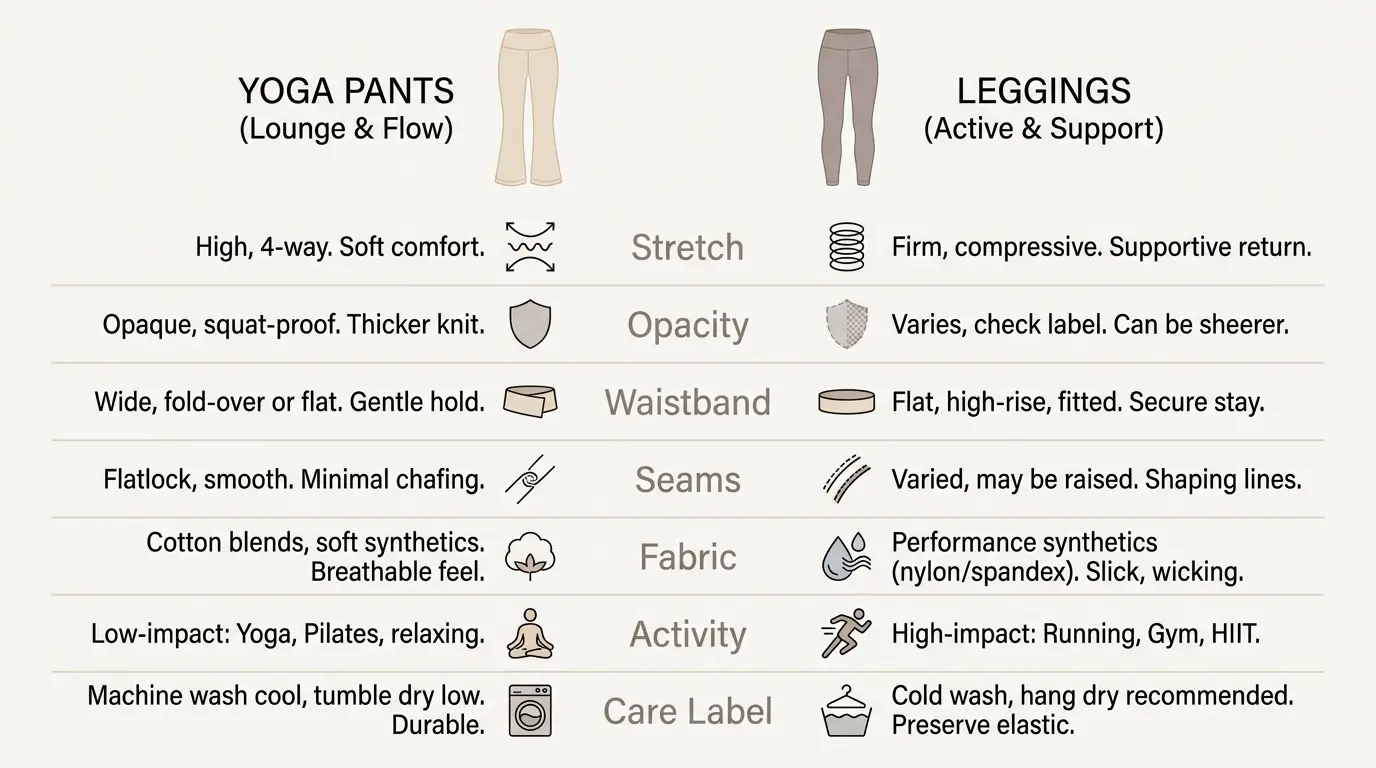 The right pair should match how it will be worn. A few quick checks can help you avoid weak fabric, poor support, and bottoms that feel uncomfortable later.
- Check stretch, opacity, and shape recovery before buying.
- Choose moisture-friendly fabric for workouts and cotton blends for casual wear.
- Look for a wide, high-waisted waistband if support and hold matter.
- Check that the seams feel smooth, strong, and comfortable against the skin.
- Pick flared yoga pants for a cleaner casual look and compression leggings for gym training.
- Avoid rough or thin fabric if you plan to wear the pair for long hours.
- Match the pair with the activity, not only the style.
- Read care labels so the fabric keeps its fit and lasts longer.
A good pair should feel comfortable while standing, sitting, walking, and bending. If it shifts, digs in, or turns sheer, it is not the right choice. Choosing well does not mean buying the most expensive pair. It means picking fabric, fit, support, and style that suit your routine and feel good in real use.
Common Mistakes to Avoid
Small buying mistakes can make leggings or yoga pants uncomfortable. Most issues happen when the pair does not match the activity or body movement.
- Wearing Thin Leggings for Workouts: Thin leggings may look fine while standing, but they can become sheer when stretched. Always test coverage before using them for gym, yoga, or Pilates.
- Choosing Cotton for Sweaty Sessions: Cotton can hold moisture and feel heavy. It works better for lounging, layering, and light daily wear than for hot yoga or intense workouts.
- Ignoring Waistband Fit: A weak waistband can roll down, shift, or dig into the skin. For movement-heavy days, choose a waistband that feels secure without feeling tight.
- Buying Only by Size: Two pairs in the same size can feel different. Fabric stretch, rise, seam placement, and waistband design all affect fit.
- Trusting the Product Name Only: A product labeled “yoga pants” may not always be ideal for yoga. A pair of leggings may still work for workouts if the fabric performs well.
- Skipping Fabric Care: Heat, harsh washing, and rough drying can damage stretch fibers. Gentle washing helps the pair keep its shape longer.
Avoiding these mistakes makes the choice easier. A good pair should stay comfortable, covered, and secure during the way you actually plan to wear it.
Fabric Guide: What Material Works Best?
Fabric affects comfort, stretch, warmth, and workout performance. Knowing how each material behaves makes it easier to choose leggings or yoga pants that suit daily wear.
| Fabric Type | How It Feels | Best For | What to Keep in Mind |
|---|---|---|---|
| Cotton Blends | Soft, breathable, and comfortable | Lounging, layering, light errands, and low-sweat days | Can hold moisture and may lose shape faster with repeated wear. |
| Nylon Spandex | Smooth, stretchy, and supportive | Yoga pants, workout leggings, long wear, and flexible movement | Usually holds shape well, but quality can vary by brand. |
| Polyester Blends | Lightweight, flexible, and quick-drying | Activewear, gym sessions, walking, and sweat-prone use | Poor-quality blends may feel rough, stiff, or less breathable. |
| Fleece-Lined Fabric | Warm, soft, and thicker | Cold weather, winter layering, and casual outdoor wear | Can feel too warm for workouts or sweaty activity. |
The best fabric depends on how the pair will be worn. Soft blends suit comfort-focused days, while performance fabrics are better for movement, sweat, and extended active use.
How to Style Leggings and Yoga Pants
Leggings and yoga pants look best when the outfit matches their shape. The trick is simple: balance fitted bottoms with the right top, layer, and shoes.
1. Casual Everyday Outfits
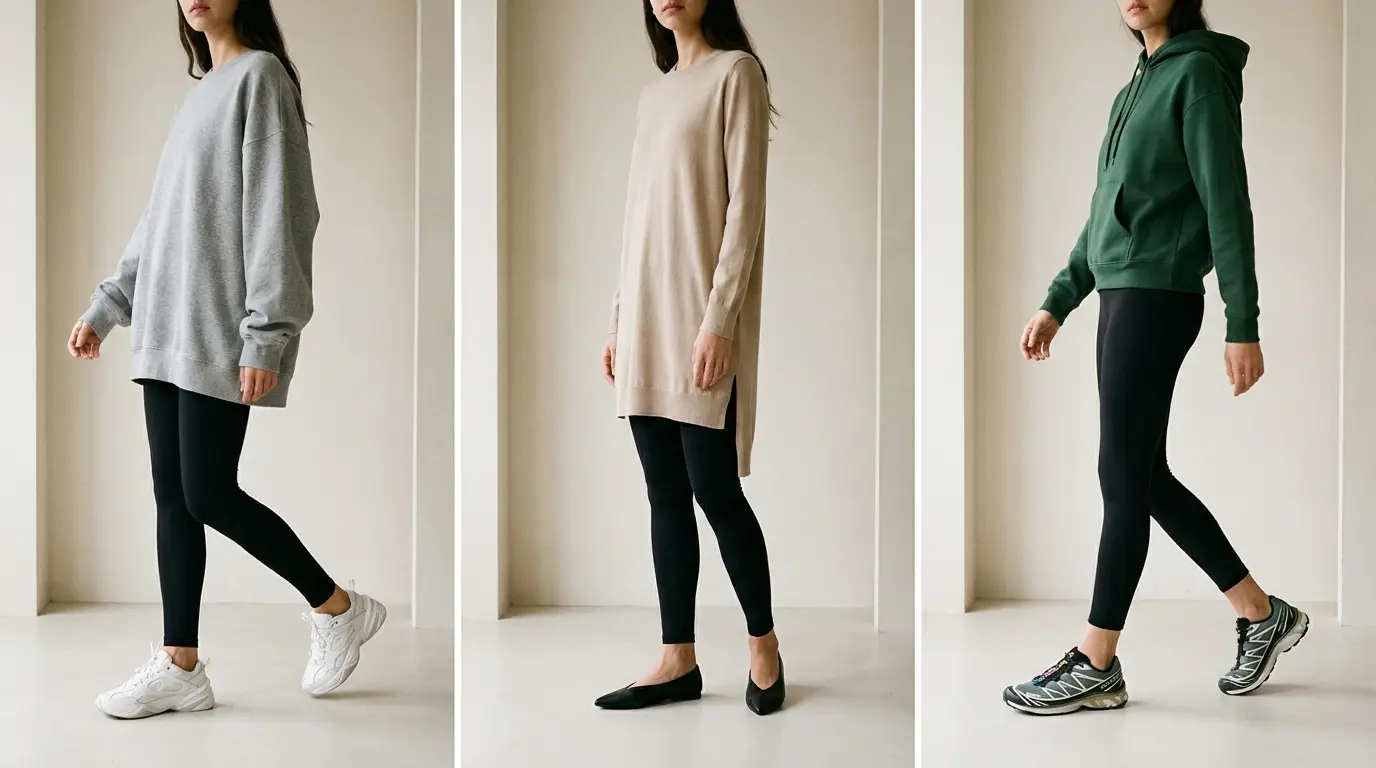 For relaxed daily wear, leggings are the easiest choice. They work well when the outfit needs to feel comfortable but still clean enough for errands or coffee runs. Outfit formulas:
- Leggings + oversized sweatshirt + sneakers
- Black leggings + long tunic + flats
- Ankle-length leggings + hoodie + running shoes
Best for: Errands, lounging, quick outings Suits: Most body types, especially when paired with longer tops Tip: If the leggings are thin, keep the top longer for better balance and coverage.
2. Clean Athleisure Looks
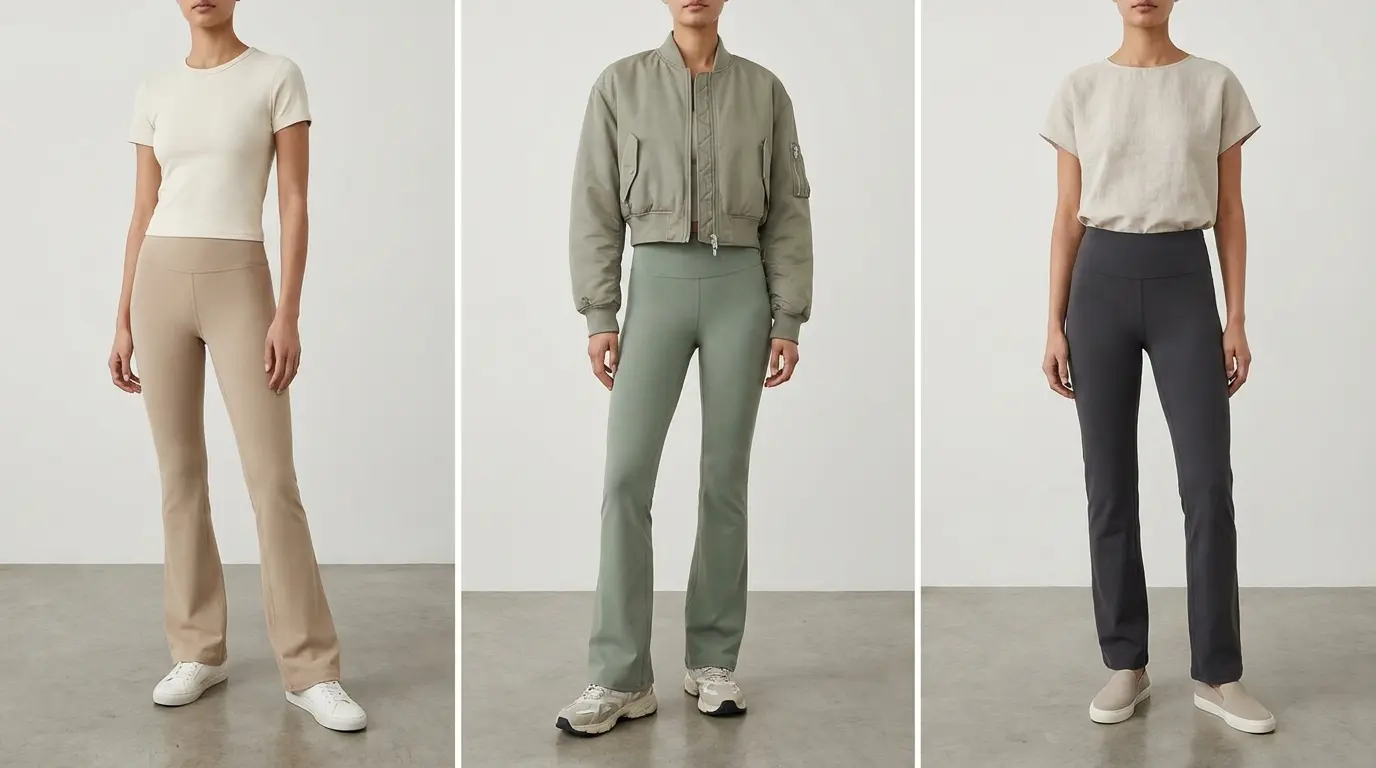 Yoga pants work well when the outfit needs a sporty but more put-together feel. Flared, bootcut, or straight-leg styles can make the look feel less casual. Outfit formulas:
- Flared yoga pants + fitted tee + sneakers
- Bootcut yoga pants + cropped jacket + trainers
- Straight-leg yoga pants + tucked top + slip-on shoes
Best for: Travel, walks, casual meetups Suits: Tall, petite, and curvy frames with the right hem length Tip: Keep the top more fitted when the bottom has flare or volume.
3. Cold Weather Layering
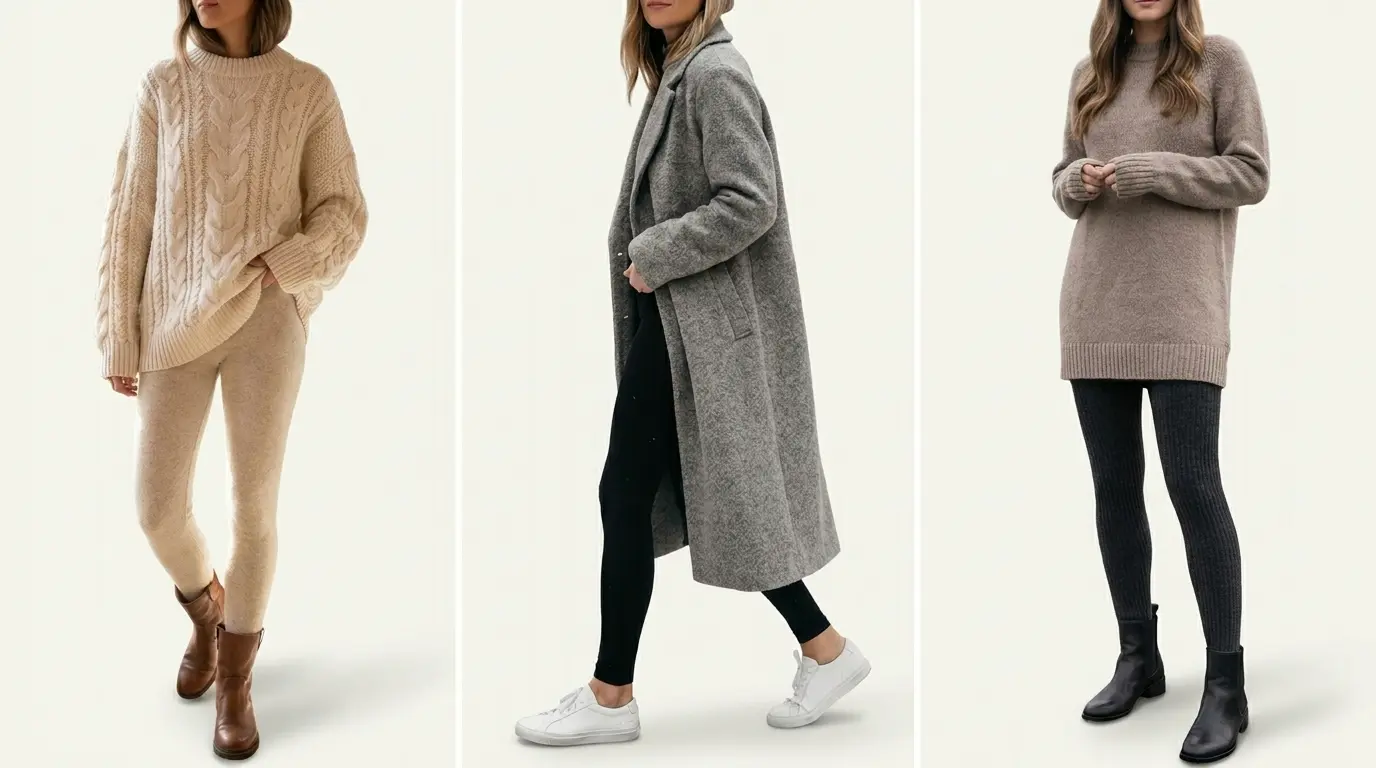 Leggings are useful in colder weather because they fit neatly under longer layers. Fleece-lined pairs add warmth without making the outfit feel bulky. Outfit formulas:
- Fleece leggings + oversized knit + boots
- Black leggings + long coat + sneakers
- Thick leggings + sweater dress + ankle boots
Best for: Winter errands, casual outings, layering days Suits: Anyone who wants warmth without heavy bottoms Tip: Choose thicker leggings in winter so the fabric looks smoother and feels warmer.
4. Active and Workout Outfits
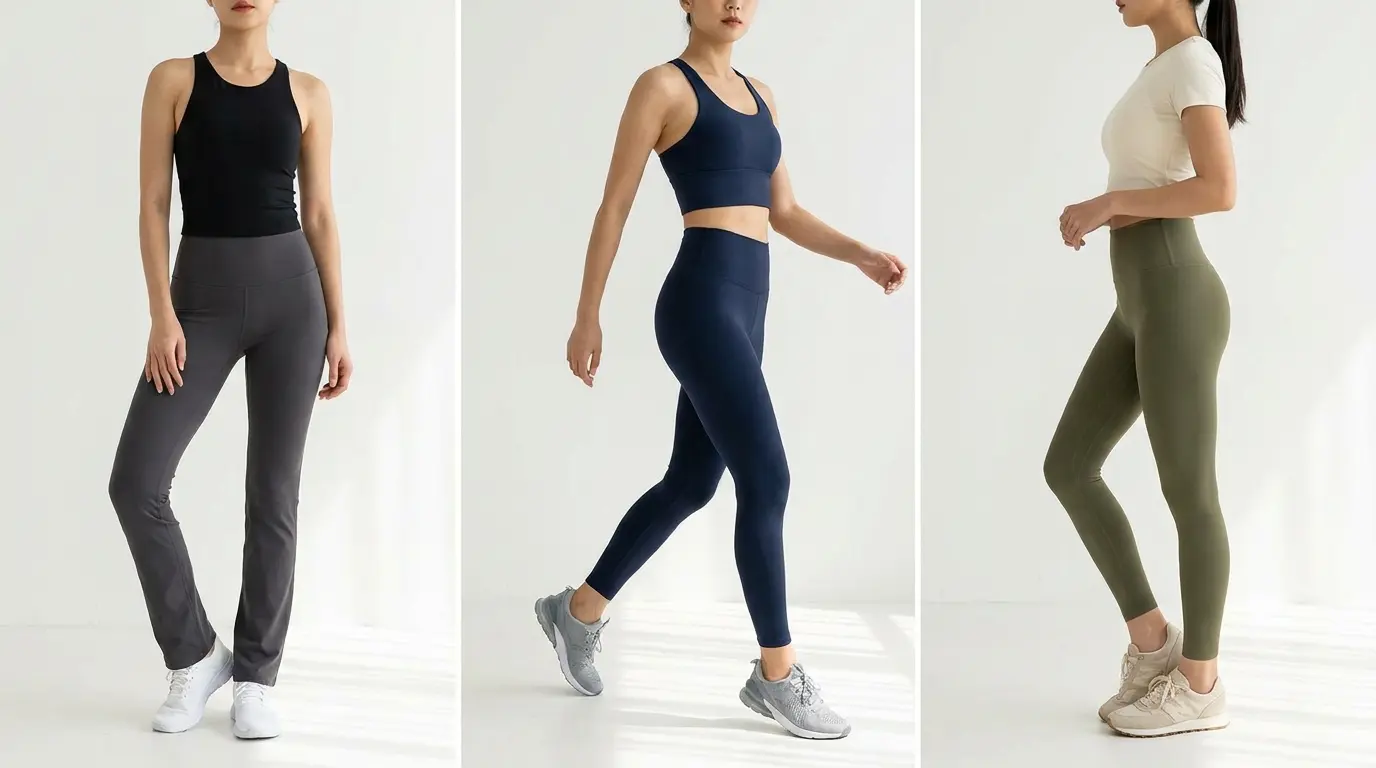 For movement, choose the pair based on activity. Yoga pants suit stretching and light workouts, while performance leggings are better for gym training. Outfit formulas:
- Yoga pants + fitted tank + training shoes
- Performance leggings + sports top + trainers
- High-waisted leggings + cropped workout tee + sneakers
Best for: Yoga, Pilates, gym sessions, stretching Suits: Anyone who needs comfort and support during movement Tip: Check opacity and waistband hold before using any pair for exercise.
Which One Should You Choose?
Choose leggings if you want simple, close-fitting bottoms for casual outfits, layering, lounging, or light activity. They are easy to style and work well when comfort is the main goal. Choose yoga pants if you need bottoms that support movement, hold better during stretching, or feel more useful for active days. They are also a good pick when you want a sporty but neat outfit. The best choice depends on how you plan to wear them. If the fabric feels comfortable, stays opaque, holds its shape, and matches your routine, that pair is worth choosing.
Frequently Asked Questions
Can yoga pants or leggings cause skin irritation?
Yes, irritation can happen if the fabric traps sweat, rubs against the skin, or contains harsh dyes. Choosing breathable materials, washing new pairs before wearing, and changing after sweating can help reduce itching, redness, and discomfort during regular use.
Should leggings or yoga pants have pockets?
Pockets are useful if you carry keys, cards, or a phone during walks, travel, or workouts. Side pockets usually feel more secure than back waistband pockets. For lounging or layering, pocket-free styles often look smoother under long tops.
Are seamless leggings better than regular leggings?
Seamless leggings can feel smoother because they reduce rubbing around the thighs, hips, and waist. They are helpful for sensitive skin or long wear. Regular leggings may offer stronger shaping, more structure, and better durability depending on stitching quality.
Can petite women wear flared yoga pants?
Yes, petite women can wear flared yoga pants when the length and flare size are balanced. A slightly high waist, fitted top, and shoes with a little lift can help the legs look longer without overwhelming the frame.
How can you tell if a pair is good quality?
Good-quality pairs feel smooth, stretch evenly, and return to shape after being pulled. The seams should lie flat, the waistband should not twist, and the fabric should stay opaque under bright light, movement, and normal daily wear.
Final Thoughts
The right pair starts with knowing how it should feel and where it will be worn. I’d choose leggings for easy outfits, layering, and relaxed daily use. You may prefer yoga pants when movement, support, and a cleaner activewear look matter more. Fabric, waistband, stretch, coverage, and shape all play a part, so the best choice is not only about the name on the tag. The topic of yoga pants vs leggings becomes much simpler once you match the pair to your routine. You get better comfort, fewer fit issues, and more use from what you buy. Try these tips next time you shop, and share your go-to choice in the comments.