Low-calorie fast food can be a smart backup when you are trying to lose weight but still need something quick, filling, and realistic.
I know the drive-thru can feel risky during a calorie deficit, especially when fries, sauces, and drinks are built into every combo.
This blog looks at fast food for weight loss through specific chain orders, calorie ranges, protein value, and easy swaps that actually matter.
My goal is to make each recommendation useful on a busy day, whether you are choosing Chipotle, Subway, Chick-fil-A, Taco Bell, Starbucks, Panera, Wendy’s, McDonald’s, or Burger King.
Can Fast Food Fit Into a Weight-Loss Diet?
Fast food can fit into a weight-loss diet when the meal helps you stay within your daily calorie target. Weight loss usually requires reducing calories from food and drinks, increasing activity, or using both approaches together.
The useful question is not whether fast food is “good” or “bad.” The better question is whether the order gives enough food value for the calories.
A 450-calorie bowl with chicken, beans, salsa, and vegetables usually works harder than a 450-calorie dessert drink.
For this blog, a strong low-calorie fast-food meal should stay near 500 calories or less. It should also offer protein, fiber, vegetables, or portion control.
Since calorie counts can vary by location and customization, readers should still check restaurant nutrition pages before ordering. Chain restaurants with 20 or more locations must list calorie information on menus and menu boards, which makes planning easier.
Best Low-Calorie Fast Food Meals Under 500 Calories by Chain
This ranking favors chains that give readers more control over protein, vegetables, portions, and add-ons. The calories below are estimates or official menu values where available, so customization still matters.
1. Chipotle
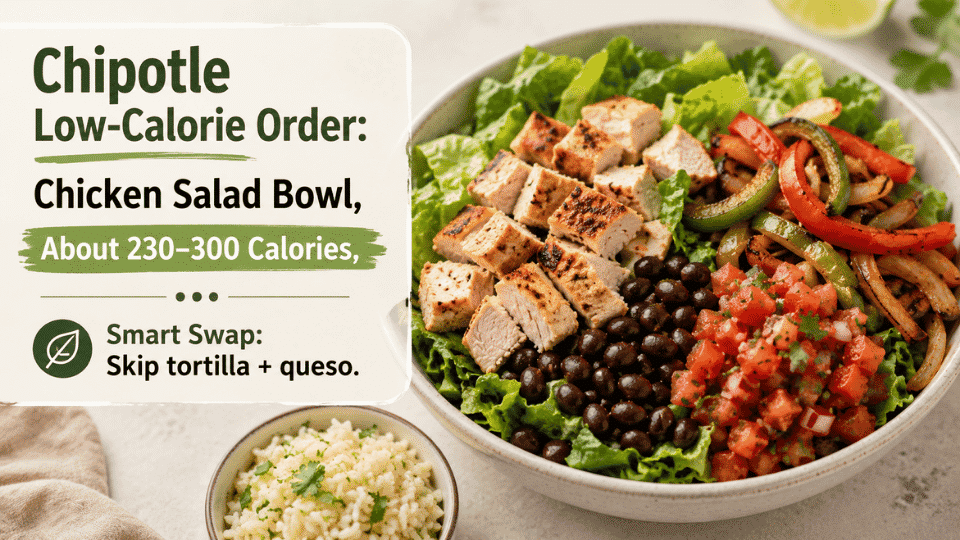
Chipotle ranks first because it gives the most control over the final meal. You can choose the base, protein, beans, vegetables, salsa, and toppings. That matters because the same restaurant can create a light bowl or a 1,000-calorie meal depending on what goes in it.
Chipotle’s official nutrition calculator lets users build meals and check calorie, carb, protein, and nutrition information based on selected ingredients. A very light chicken bowl with chicken, fajita vegetables, fresh tomato salsa, and lettuce can be around 230 calories with about 33 grams of protein, while adding rice can bring it closer to 440 calories.
| Order | Estimated calories | Helpful breakdown |
|---|---|---|
| Chicken salad bowl with fajita vegetables, salsa, and lettuce | Around 230–300 | Best for high protein with fewer carbs. |
| Chicken bowl with light rice, beans, salsa, and lettuce | Around 400–500 | Better if you want more fullness from carbs and fiber. |
| Steak salad bowl with salsa and fajita vegetables | Around 300–400 | Good protein option without needing cheese or sour cream. |
The biggest calorie jumps usually come from the tortilla, chips, queso, sour cream, cheese, guacamole, and full rice portions. Guacamole can be nutritious, but it is calorie-dense, so it works better when planned.
For weight loss, Chipotle is strongest when you build the bowl around protein first. Then add salsa, fajita vegetables, lettuce, and either beans or light rice.
2. Subway
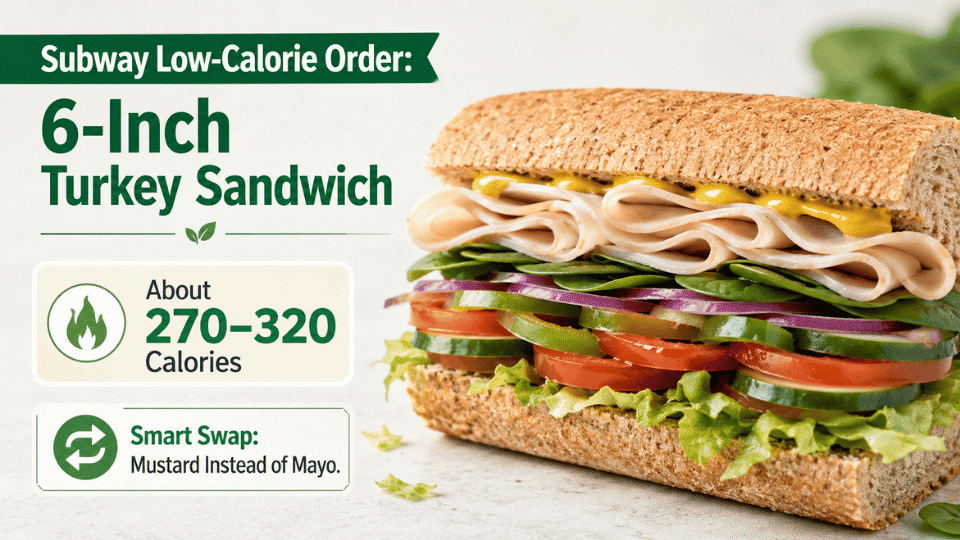
Subway ranks second because it is easy to control the meal without making it feel tiny. A 6-inch sandwich can include lean protein, vegetables, and a lighter sauce while staying under 500 calories.
Subway’s official nutrition page allows readers to check calories for sandwiches, salads, and sides. Dietitian-reviewed Subway picks often include turkey, rotisserie-style chicken, roast beef, grilled chicken, and veggie-based sandwiches because these can offer protein without heavy sauces.
| Order | Estimated calories | Helpful breakdown |
|---|---|---|
| 6-inch turkey sandwich with vegetables and mustard | Around 270–320 | Lean, simple, and easy to customize. |
| 6-inch grilled chicken sandwich with vegetables | Around 290–350 | Higher protein and more filling. |
| 6-inch Veggie Delite with added lean protein, if available | Around 300–380 | Better with protein added for fullness. |
Subway can become less diet-friendly when the order includes mayo, ranch, chipotle sauce, extra cheese, bacon, cookies, chips, or sugary drinks. The sandwich itself may be reasonable, but the meal can climb quickly.
For a better order, choose vegetables freely, keep sauces light, and treat cheese or oil as optional extras. Mustard, vinegar, pickles, onions, and peppers add flavor without doing much damage.
3. Chick-fil-A
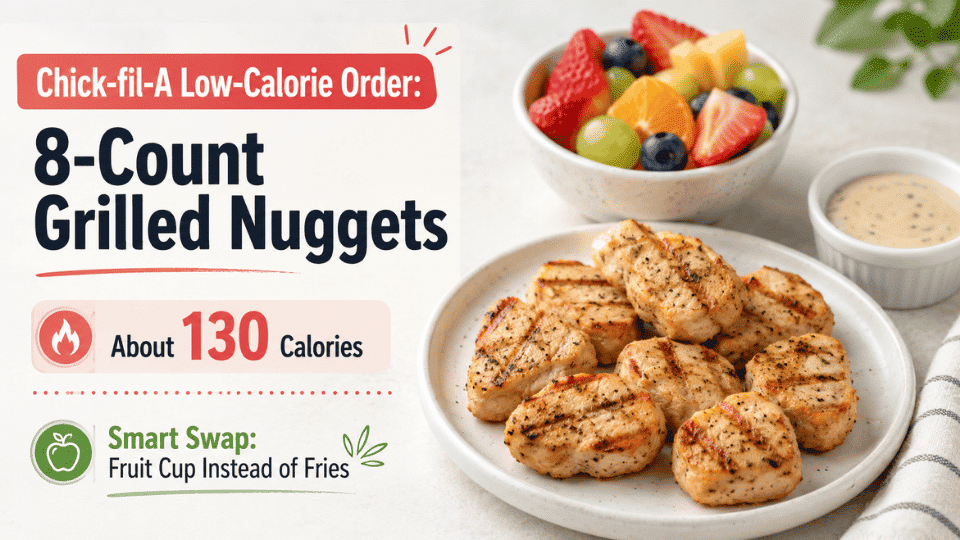
Chick-fil-A ranks highly because it offers grilled chicken options with strong protein content. The 8-count grilled nuggets are especially useful because they are much lighter than fried nuggets and still filling for the calories.
Chick-fil-A describes its 8-count grilled nuggets as grilled pieces of marinated boneless chicken breast. EatingWell reports that the 8-count grilled nuggets contain 130 calories, 25 grams of protein, 1 gram of carbs, and 440 milligrams of sodium.
| Order | Calories | Helpful breakdown |
|---|---|---|
| 8-count grilled nuggets | 130 calories | Very high protein for the calories. |
| 8-count grilled nuggets with fruit cup | Usually under 250–300 calories | Better balance with fiber and volume. |
| Grilled chicken sandwich | About 390 calories | A more complete meal with 28 grams of protein. |
Chick-fil-A’s grilled chicken sandwich is made with grilled chicken, lettuce, tomato, and a multigrain bun. A nutrition review lists it at 390 calories, 11 grams of fat, 45 grams of carbs, and 28 grams of protein.
The main thing to watch is the sauce. One or two creamy sauces can change a very lean order into a much heavier meal. Fruit, salad, or a lighter side usually fits better than fries.
4. Taco Bell
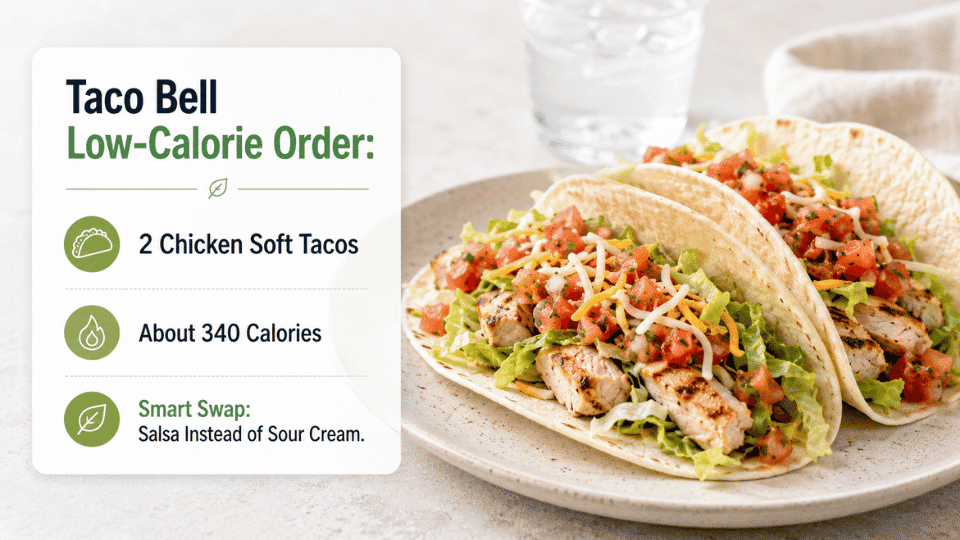
Taco Bell ranks well for portion control. It is not always the highest-protein chain, but soft tacos, crunchy tacos, and simple bean-based items can fit under 500 calories.
A Taco Bell chicken soft taco is listed at about 170 calories, with 10 grams of protein, 16 grams of carbs, and 8 grams of fat. Taco Bell also has an official nutrition calculator, which is useful because sauces, cheese, sour cream, and add-ons change the final calories.
| Order | Estimated calories | Helpful breakdown |
|---|---|---|
| Chicken soft taco | Around 170 calories | Small, protein-based, and easy to pair. |
| Two chicken soft tacos | Around 340 calories | More meal-like while staying under 500. |
| Crunchy taco | Usually under 200 calories | Portion-controlled and simple. |
| Bean burrito without extra creamy toppings | Often under 400 calories | More filling from beans, but check sodium and calories. |
Taco Bell becomes harder to fit into a weight loss plan when the order includes nacho cheese, sour cream, creamy jalapeño sauce, large burritos, quesadillas, or nachos. These items are not forbidden, but they are harder to keep under 500 calories.
The easiest order is usually two simple tacos with water or a zero-calorie drink. If you want more fullness, beans can help, but they should replace heavier toppings rather than be stacked on top of them.
5. Starbucks
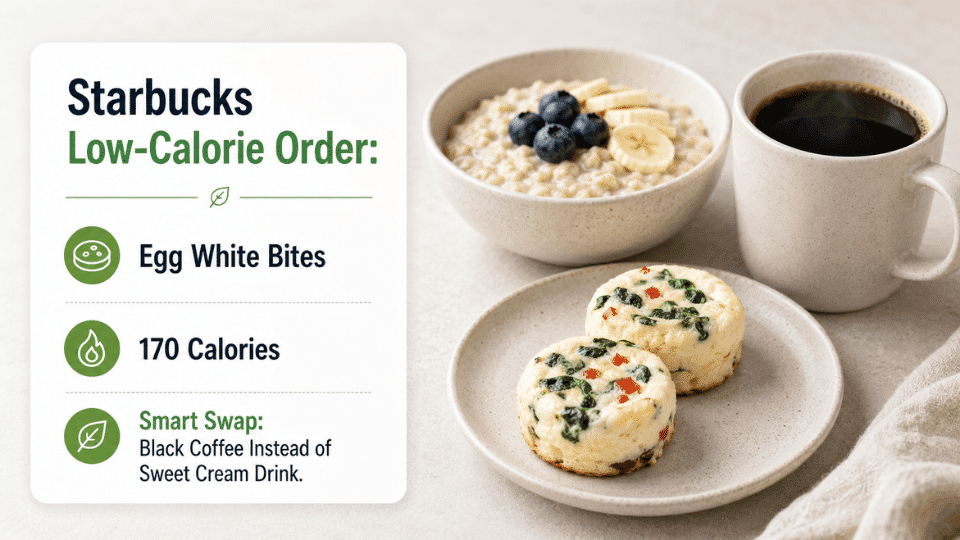
Starbucks works best for breakfast, snacks, and light meals. It is also a reminder that drinks can be the hidden calorie problem, not just the food.
Starbucks lists its Egg White & Roasted Red Pepper Egg Bites at 170 calories, 3 grams of sugar, 8 grams of fat, and 12 grams of protein. Dietitian-reviewed Starbucks breakfast picks also highlight the Spinach, Feta & Egg White Wrap at 290 calories with 20 grams of protein.
| Order | Calories | Helpful breakdown |
|---|---|---|
| Egg White & Roasted Red Pepper Egg Bites | 170 calories | Light, protein-based breakfast or snack. |
| Spinach, Feta & Egg White Wrap | About 290 calories | Better if you need a fuller breakfast. |
| Oatmeal with controlled toppings | About 250–320 calories | Good fiber option when sugar-heavy toppings are limited. |
Starbucks can look light until the drink is added. Syrups, whipped cream, sweet cream cold foam, flavored sauces, and seasonal toppings can add more calories than the food.
For weight loss, pair a protein-based food with black coffee, cold brew, unsweetened tea, or a lightly customized drink. This keeps the order useful instead of turning breakfast into dessert.
6. Panera
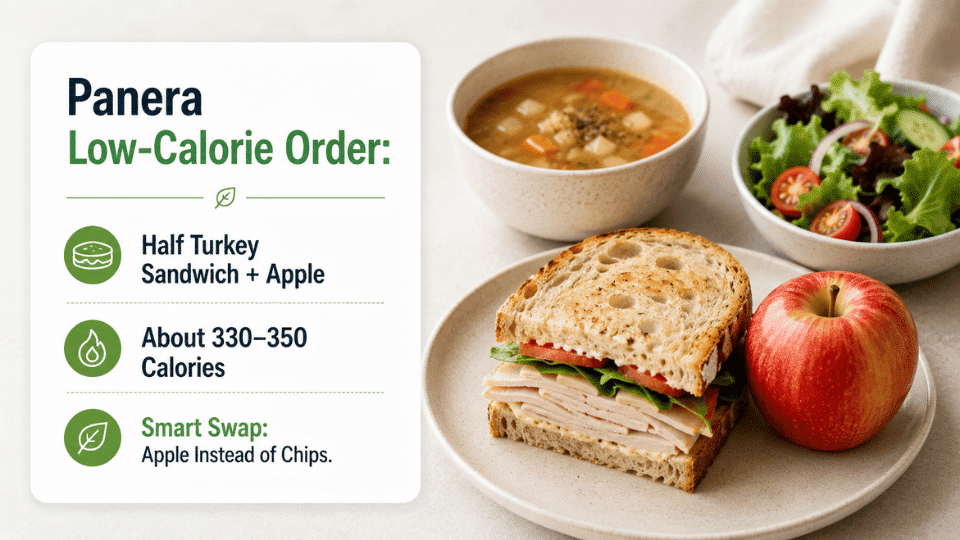
Panera can be useful for half portions, soups, salads, and lighter sandwich combinations. It ranks below Chipotle and Subway because bakery items, bread bowls, creamy soups, and dressings can quickly raise calories.
Panera provides nutrition information for menu items, including calories, fat, sodium, carbs, fiber, sugars, and protein. A half turkey and cheddar sandwich is listed by MyNetDiary at 390 calories with 20 grams of protein, though the exact number can vary by recipe and location.
| Order | Estimated calories | Helpful breakdown |
|---|---|---|
| Half turkey sandwich with a lighter side | Around 350–450 calories | Better portion control than a full sandwich. |
| Broth-based soup with salad | About 300–450 calories | Can feel full without relying on fried food. |
| Grilled chicken salad with dressing on the side | About 350–480 calories | Useful when toppings stay controlled. |
Panera is strongest when readers use half portions and check the nutrition details before ordering. Some soups and salads sound light but become calorie-heavy with cream, cheese, croutons, bacon, or dressing.
The better strategy is to choose one main calorie source. For example, choose bread with soup, but avoid adding chips, a bakery item, and a sugary drink to the same meal.
7. Wendy’s
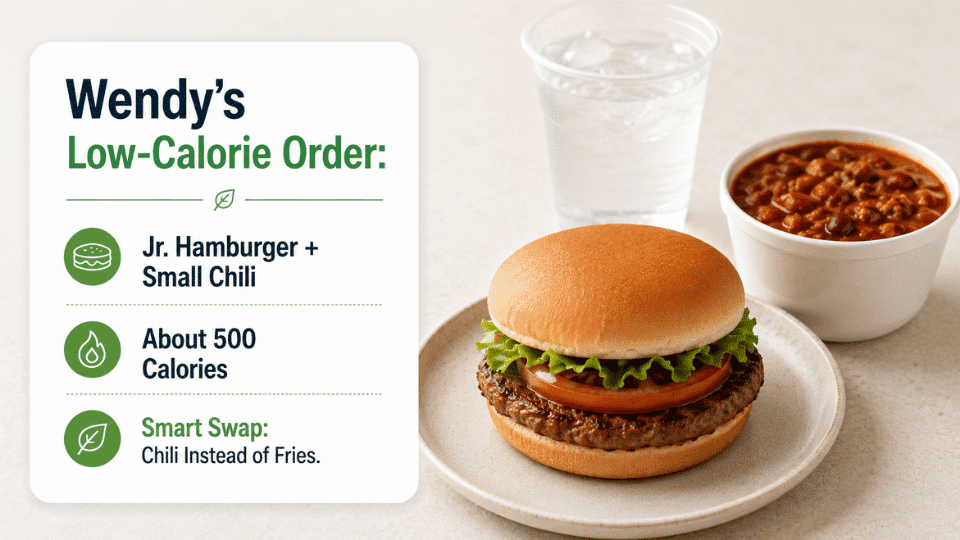
Wendy’s works best for small burgers, chili, and simple orders. It ranks lower because many popular items are fried, bacon-heavy, or built around larger burgers.
A Wendy’s Jr. Hamburger contains about 230 calories, 10 grams of fat, 24 grams of carbs, and 12 grams of protein, according to a recent nutrition review. Wendy’s also publishes nutrition information in its menu documents, which readers can check for current items.
| Order | Estimated calories | Helpful breakdown |
|---|---|---|
| Jr. Hamburger | Around 230 calories | Simple, small, and portion-controlled. |
| Jr. Cheeseburger | Usually under 350 calories | Still manageable without fries or soda. |
| Small chili | About 280 calories | Often more filling than fries because of beans and protein. |
Wendy’s is a good example of why “small” can beat “healthy-looking.” A junior burger may fit a calorie deficit more easily than a large salad with crispy chicken, cheese, bacon, and heavy dressing.
The best move is to avoid large combos. Choose one small entrée, skip fries if needed, and use water or a zero-calorie drink.
8. McDonald’s
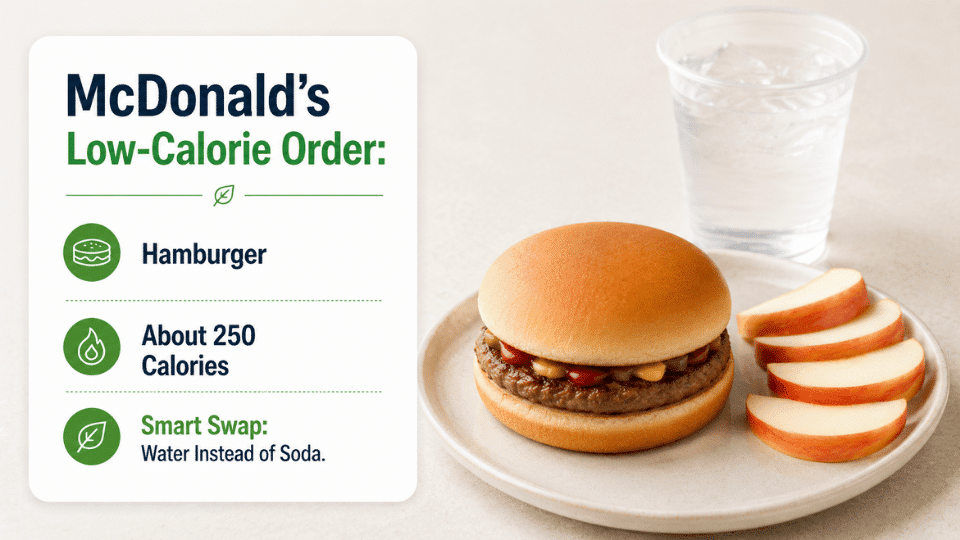
McDonald’s belongs in the blog because readers expect it, but it should not be treated as the strongest weight-loss option. It offers calorie-controlled items, yet the menu is easy to overbuild with fries, soda, sauces, and larger burgers.
McDonald’s provides an official nutrition calculator for checking calories, macros, carbs, and nutrition facts. A McDonald’s hamburger is listed at 250 calories, with 9 grams of fat, 30 grams of carbs, and 12 grams of protein.
| Order | Estimated calories | Helpful breakdown |
|---|---|---|
| Hamburger | Around 250 | Simple, small, and easy to fit into a deficit. |
| Cheeseburger | Usually around 300 | Manageable when ordered without fries or soda. |
| Egg McMuffin-style breakfast sandwich | Often under 350 | Better than biscuit-heavy breakfast meals. |
McDonald’s is best for portion control, not nutrient density. A hamburger can fit into a weight-loss plan, but it may not keep readers full for long unless paired wisely.
The main rule is to avoid turning a small entrée into a large combo. Fries, sweet drinks, McFlurry-style desserts, and double burgers change the meal quickly.
9. Burger King
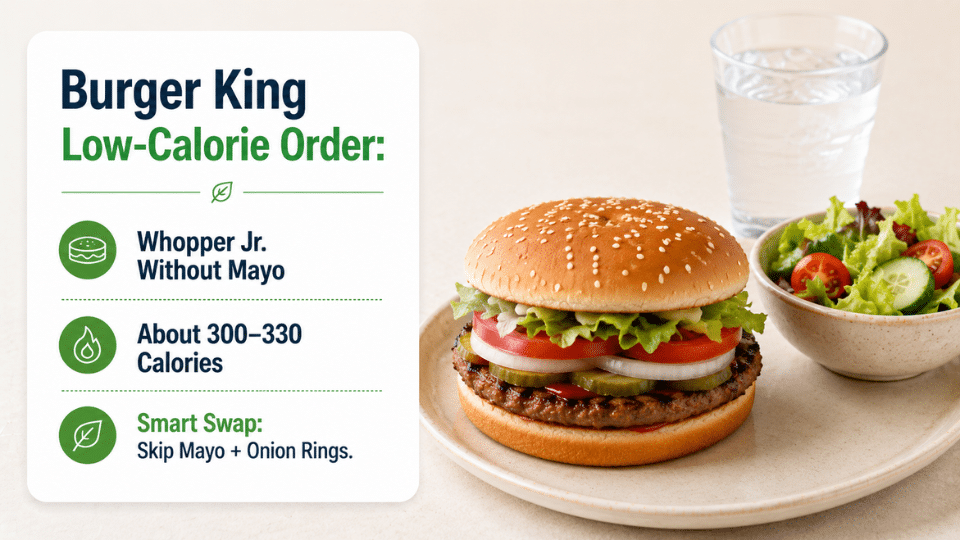
Burger King ranks last here because many popular orders are larger, fried, mayo-heavy, or harder to balance. Still, smaller burgers can fit when ordered carefully.
Burger King’s nutrition explorer lets users review nutrition facts for menu items. The Whopper Jr. without cheese is listed at about 330 calories, while versions with cheese or extras can be much higher.
| Order | Estimated calories | Helpful breakdown |
|---|---|---|
| Hamburger | About 260 calories | Basic choice when you want the smallest burger option. |
| Whopper Jr. without cheese | Around 330 calories | Smaller than a regular Whopper and still satisfying. |
| 4-piece nuggets with light sauce | About 190 calories | Works better as a snack than a full meal. |
Burger King can work when the order stays simple. The problem usually comes from mayo, cheese, bacon, onion rings, fries, double patties, and combo upgrades.
For weight loss, ask for no mayo, skip the combo, and choose a smaller sandwich. That keeps the meal closer to the under-500-calorie goal.
How to Order Fast Food for a Calorie Deficit
Use this section as a simple checklist for keeping fast food lower in calories without overthinking every order.
- Start with protein: Choose grilled chicken, turkey, eggs, beans, steak, lean beef, or grilled nuggets. These usually make meals more filling.
- Choose one carb source: Pick rice, bread, a tortilla, beans, or potatoes. Avoid stacking rice, chips, tortillas, and sugary drinks together.
- Control sauces: Use salsa, mustard, vinegar, hot sauce, or light dressing. Limit mayo, ranch, queso, sour cream, and creamy sauces.
- Watch the side item: Fruit, salad, vegetables, chili, or no side usually works better than fries, chips, cookies, onion rings, or hash browns.
- Keep drinks simple: Choose water, black coffee, unsweetened tea, sparkling water, or diet drinks instead of soda, milkshakes, sweet tea, or sweet cream drinks.
- Use smaller portions: Junior burgers, 6-inch subs, soft tacos, half sandwiches, and small bowls are easier to fit into a calorie deficit.
Small choices add up fast at fast-food chains. When the main order is simple, sauces are controlled, and sides stay lighter, the meal becomes much easier to fit into a weight-loss plan.
Sample Low-Calorie Fast Food Day
This sample shows how fast food under 500 calories can fit into a realistic day. It is not a fixed diet plan, but it helps readers picture balance.
| Meal | Example order | Why it works |
|---|---|---|
| Breakfast | Starbucks egg white egg bites with black coffee | Light, protein-based, and low in sugar. |
| Lunch | Chipotle chicken salad bowl with salsa and fajita vegetables | High-protein, high-volume without a tortilla. |
| Snack | Chick-fil-A 8-count grilled nuggets | Very high protein for the calories. |
| Dinner | Subway 6-inch turkey sandwich with vegetables and mustard | Lean, customizable, and filling enough for a quick meal. |
A day like this works because each order has a clear job. Breakfast is light, lunch adds volume, the snack adds protein, and dinner stays balanced.
Readers should still adjust portions to their appetite, schedule, and calorie needs. Someone with a higher activity level may need more food than someone with a smaller calorie target.
Frequently Asked Questions
Is fast-casual food better than traditional fast food for weight loss?
Fast-casual food can be better because chains like Chipotle, Subway, and Panera allow more customization. You can adjust protein, vegetables, sauces, and portions. Still, these meals are not automatically low-calorie. Large bowls, bread bowls, chips, queso, cheese, and creamy dressings can quickly add calories.
Should I track fast-food calories before ordering?
Tracking helps when weight loss is the goal, especially if you eat fast food often. Restaurant calculators make it easier to compare toppings, sides, and drinks before ordering. You do not need to track forever, but checking a few go-to meals can prevent accidental calorie overload.
Are low-calorie fast-food meals always healthy?
Not always. A meal can be low-calorie but still low in fiber, high in sodium, or not filling enough. Better choices usually combine calories with protein, vegetables, beans, fruit, or whole-grain options. The goal is not just to eat less, but to eat enough to stay satisfied.
What is the best fast-food option after a workout?
A good post-workout fast-food order should include protein and some carbohydrates. A chicken bowl, turkey sandwich, grilled chicken sandwich, egg wrap, or simple taco meal can work well. Avoid making the meal too heavy with fries, soda, desserts, or multiple creamy toppings.
How often can I eat fast food while losing weight?
It depends on your total calories, food quality, and how the rest of your diet looks. Fast food can fit occasionally or even regularly with planning. The challenge is managing sodium, fiber, portions, and fullness, so having a few reliable orders helps.
Conclusion
Finding low-calorie fast food becomes easier when the order is built around protein, fiber, and toppings that earn their place.
Chipotle, Subway, and Chick-fil-A give better control, while Wendy’s, McDonald’s, and Burger King work best for smaller portions.
Fast food for weight loss does not need to feel like a gamble at the counter. It should feel like choosing from a short list of meals you already trust.
My suggestion is to save two or three orders from this list before your next busy day. If this helped, comment with the chain you want me to add next.