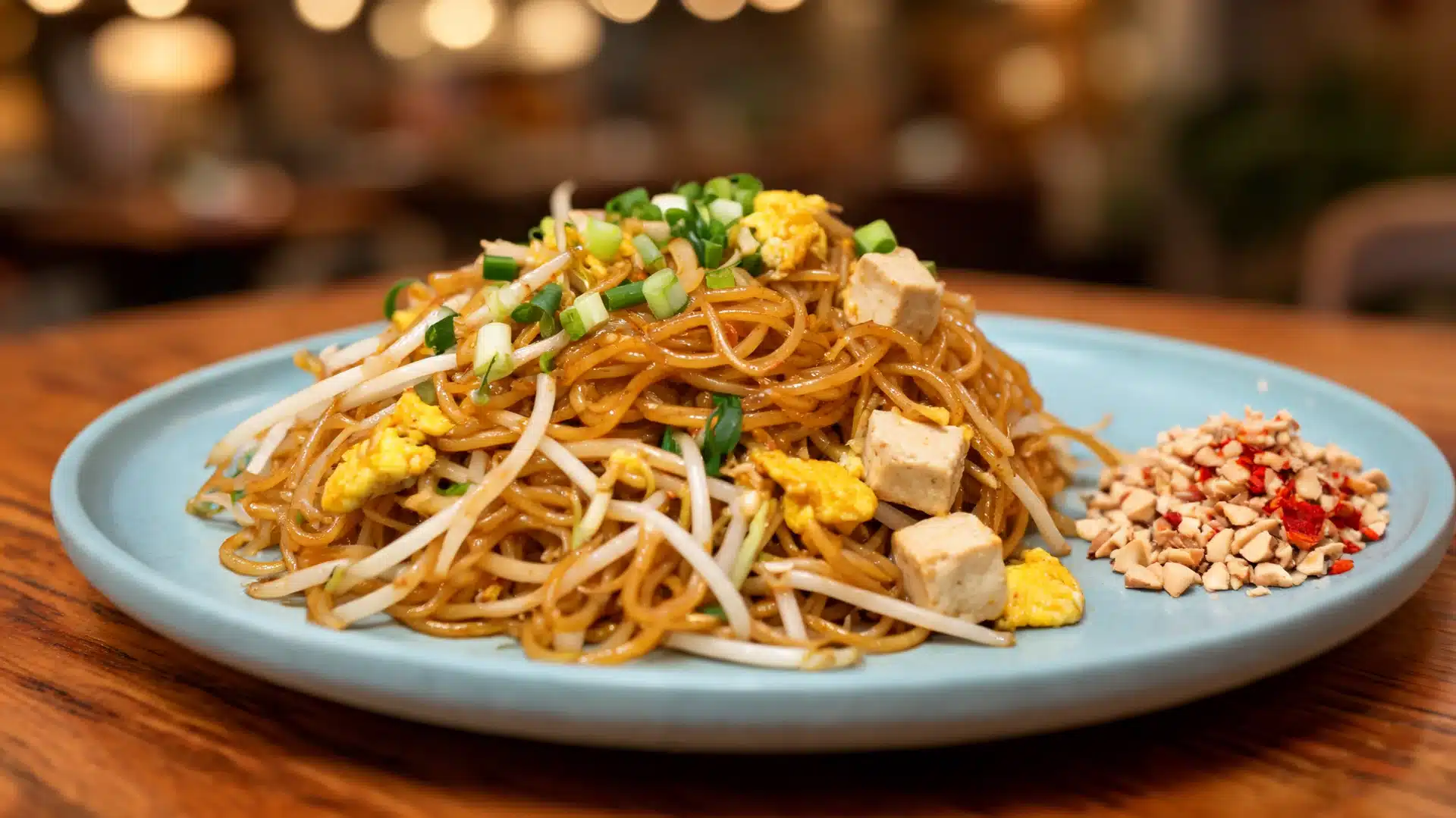

Pad Thai is tasty, filling, and easy to love, but the calorie count can change more than you might expect.
Most pad thai calories fall between 350 and 800 calories per serving, depending on the portion size and how the dish is made.
A smaller homemade serving may stay on the lighter side. A large restaurant or takeout portion can be much higher because of extra noodles, oil, sauce, sugar, and peanuts.
Your protein choice also matters, whether you choose chicken, shrimp, tofu, or egg.
I’ll help you understand the calories, macros, health benefits, downsides, and simple ways to make Pad Thai healthier.
How Many Calories Are in Pad Thai?
Pad Thai usually has 350 to 800 calories per serving, depending on the portion size, recipe, and where you buy it.
A smaller 250g serving may have around 350 calories, while a packaged chicken Pad Thai serving of about 311g may contain around 429 calories.
Restaurant Pad Thai is often much higher. A large plate can reach 600 to 800 calories because it may include more oil, noodles, sauce, sugar, and peanuts.
So, the calorie count can vary widely depending on how it is cooked and served.
Calories in Pad Thai by Type
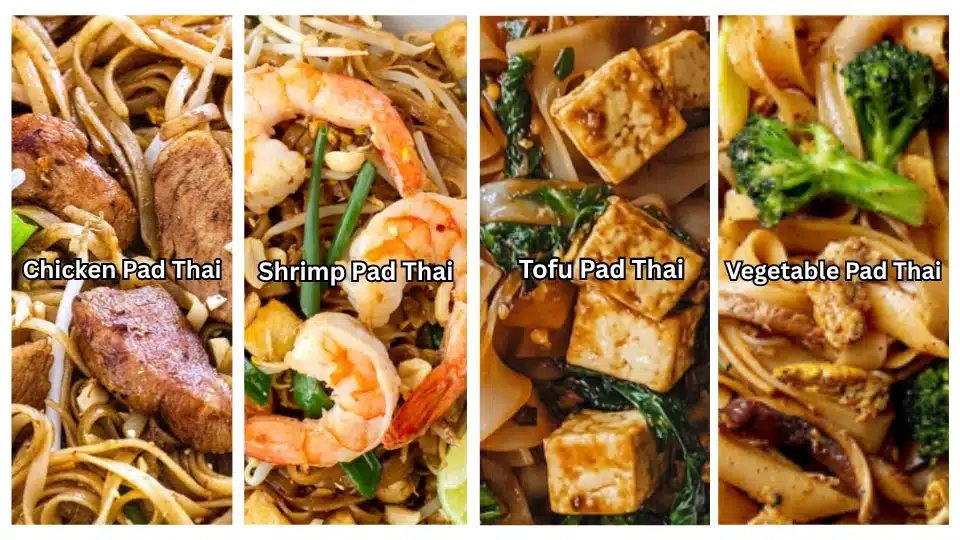
Pad Thai calories change based on the protein, portion size, and cooking method. Some versions are lighter, while others are heavier due to extra oil, sauce, or toppings.
- Chicken Pad Thai: Usually higher in protein and often has around 400 to 700 calories , depending on portion size and oil.
- Shrimp Pad Thai: Often lighter than chicken Pad Thai and usually has around 350 to 650 calories .
- Tofu Pad Thai: A good vegetarian option, but calories can rise if the tofu is fried in too much oil.
- Vegetable Pad Thai: Can be lower in calories when made with fewer noodles and less oil, but heavy sauce and peanuts can still make it calorie-dense.
The lightest choice is usually a smaller portion with lean protein, more vegetables, less oil, and a controlled amount of sauce.
Pad Thai Nutrition Facts
The exact pad thai nutrition numbers can vary widely from place to place. Restaurant portions are often larger, and extra oil, sauce, sugar, noodles, and peanuts can quickly add calories.
| Nutrient | Approx. Amount Per Serving |
| Calories | 350 to 429 |
| Carbs | 40g to 82g |
| Protein | 15g to 20g |
| Fat | 2.5g to 14g |
| Fiber | 3g to 4g |
| Sugar | 8g to 26g |
| Sodium | 659 mg to 800 mg |
| Cholesterol | 40mg to 120mg |
The protein choice also matters, since chicken, shrimp, tofu, and eggs change the protein, fat, and cholesterol levels.
| Disclaimer: Packaged Pad Thai may also have more sodium or sugar than homemade versions. So, use these numbers as a helpful estimate, not a fixed rule. |
Which Ingredients Add the Most Calories
Pad Thai can look like a simple noodle dish, but its calorie count depends on how the recipe is built. The biggest changes usually come from portion size, cooking style, and toppings.
- Rice noodles: These are the main source of calories because they are high in carbs and starch.
- Oil: Oil is a major hidden source of calories, and just 1 extra tablespoon can add about 120 calories.
- Peanuts: Peanuts add crunch, fat, and calories, so they are best used in small amounts.
- Sauce: Tamarind, sugar, fish sauce, and soy sauce add flavor, but sugar and sodium can rise quickly.
- Protein: Chicken, shrimp, tofu, and egg add protein, but fried tofu or extra egg can raise calories.
Most of the calories in Pad Thai come from noodles, oil, sauce, and toppings, so controlling these ingredients can make the meal easier to fit into your diet.
Health Benefits of Pad Thai
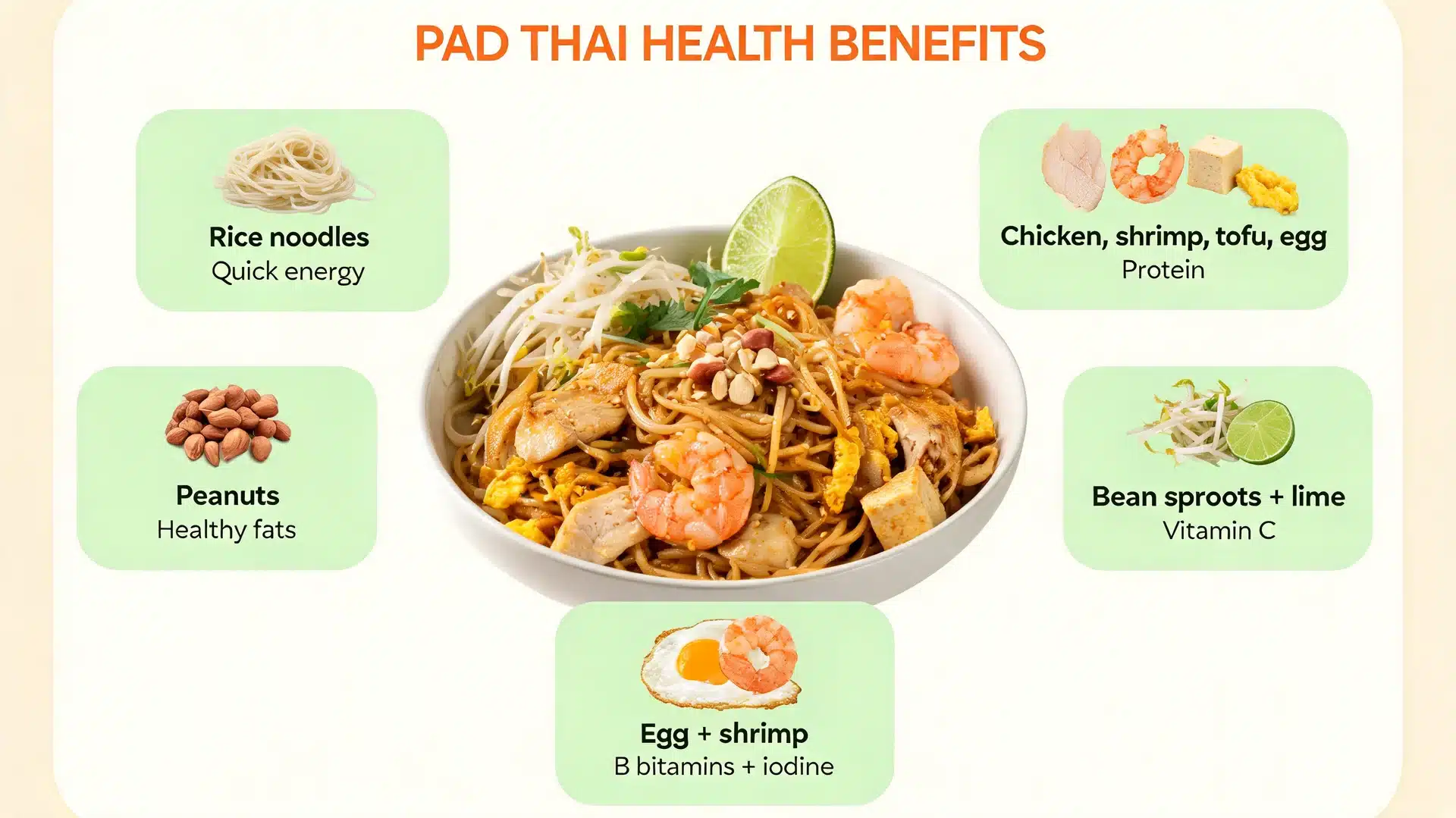
Pad Thai can be a balanced meal when the portion is controlled. Many people ask, “Is pad thai healthy?” The answer depends on how it is made and how much you eat.
The best version has more vegetables, lean protein, less oil, less sugar, and a moderate amount of noodles.
1. Quick Energy and Better Fullness
Pad Thai gives you quick energy because rice noodles are rich in carbohydrates. Carbs help fuel your body, making this dish more filling than a light snack or a plain salad.
When you add chicken, shrimp, tofu, or egg, the meal becomes more balanced. These protein sources help you stay full for longer and support muscle repair.
A smaller serving with enough protein can be a satisfying lunch or dinner without feeling too heavy.
2. Healthy Fats From Peanuts
Peanuts are a common Pad Thai topping, and they add more than crunch. They provide unsaturated fats, which are better for your heart than many fried or heavily processed fats.
These fats can also make the meal feel more satisfying. That said, peanuts are calorie-dense, so a small amount works best.
A light sprinkle can add flavor and texture without making the dish too heavy. This is why measured peanuts are better than a large handful.
3. Vitamins, Antioxidants, and Minerals
Pad Thai can also give you useful vitamins and minerals when it includes fresh toppings and good protein.
Bean sprouts and lime add vitamin C, which supports your immune system.
Eggs provide B vitamins and antioxidants that support energy use and eye health. Shrimp adds iodine, which helps support thyroid function, along with extra protein.
Tofu can also add minerals and plant-based protein. These nutrients make Pad Thai more balanced when it is not overloaded with oil, sugar, or sauce.
| Health Tip: Choose a smaller portion, add more vegetables and protein, and keep the sauce, oil, and peanuts in check. |
Is Pad Thai Good for Weight Loss or Blood Sugar?
Pad Thai can fit into a weight-loss diet when you keep the portion reasonable.
A smaller 350- to 450-calorie serving can work for many meal plans, but a large restaurant or takeout portion may be too heavy for one meal.
For a lighter choice, eat half the portion, ask for less oil and sugar, add extra vegetables, choose shrimp, chicken, or tofu, and limit extra peanuts.
Pad Thai can also raise blood sugar because rice noodles are high in carbs, and the sauce may contain sugar.
Add protein and avoid sweet drinks.
Downsides of Pad Thai
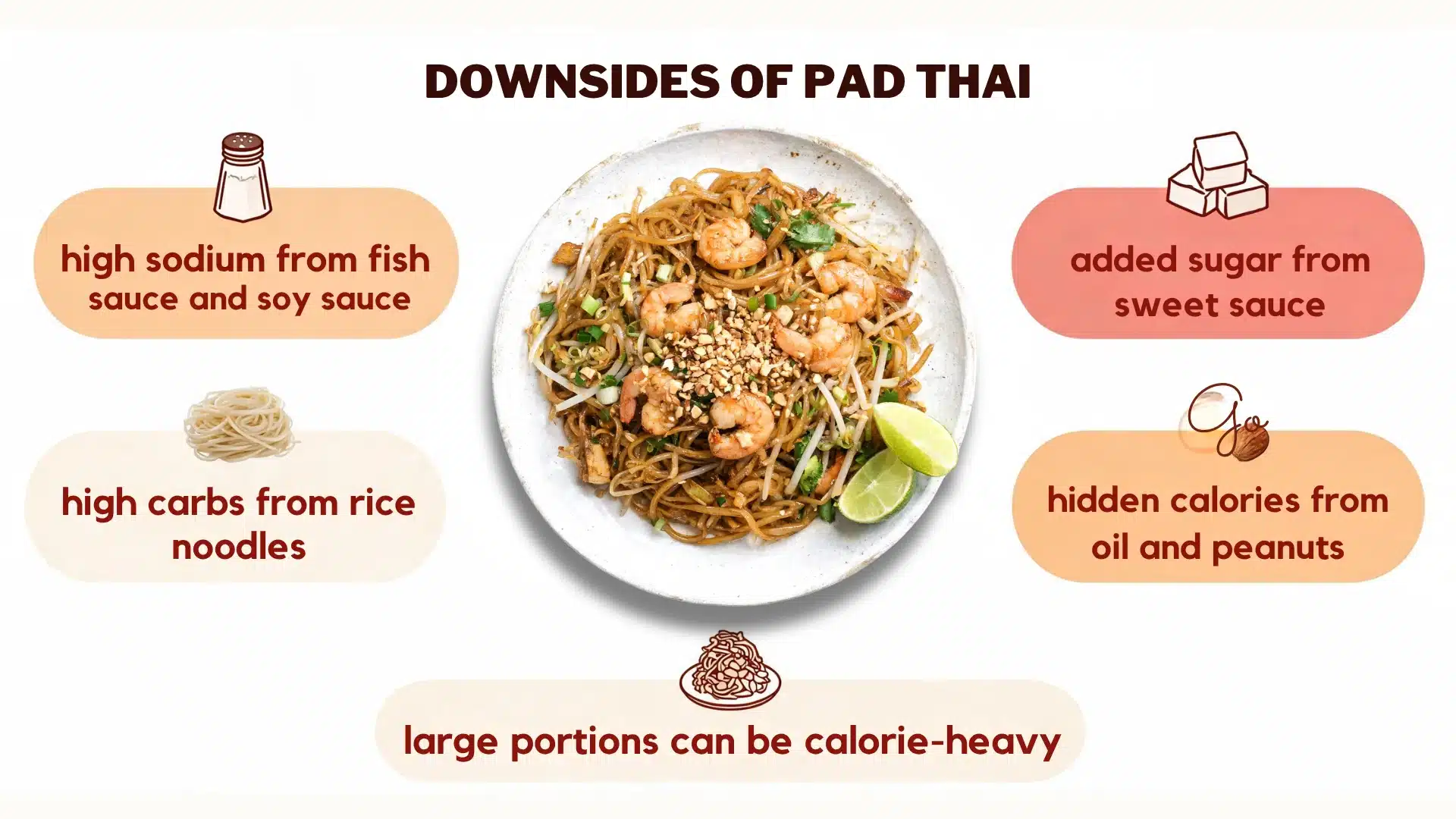
Pad Thai can be a tasty and filling meal, but it is worth checking how it is prepared before eating it often. Some versions are lighter and balanced, while others can be high in salt, sugar, carbs, and calories.
1. High Sodium and Added Sugar
Pad Thai can be high in sodium because it often uses fish sauce, soy sauce, and dried shrimp. This can make the dish higher in sugar than expected.
These ingredients add the salty, savory flavor people enjoy, but they can quickly raise the sodium level. Some restaurant versions also use sweet sauce or extra sugar to balance the sour and salty taste.
For a lighter choice, ask for less sauce, less sugar, or sauce on the side when ordering.
2. High Carbs From Rice Noodles
Rice noodles are the main component of Pad Thai and are rich in starch. This means the carb count can get high, especially when the noodle portion is large.
For some people, this may affect fullness, weight goals, or blood sugar control. The dish becomes more balanced when it includes enough protein and vegetables.
A better option is to ask for extra bean sprouts, cabbage, broccoli, chicken, shrimp, tofu, or egg, along with a smaller portion of noodles.
Pad Thai does not need to be avoided completely, but large, oily, salty, or extra-saucy versions are better eaten less often.
| Diet Tip: A smaller portion with more vegetables, lean protein, and lighter sauce can make it a better fit for a balanced diet. |
Tips to Make Pad Thai Healthier
If you want to enjoy Pad Thai without making it too heavy, I’d suggest changing how you order it or cook it at home.
These small changes can lower calories, sugar, and sodium while keeping the meal filling:
- Ask for less oil: This can reduce hidden calories in restaurant Pad Thai.
- Get sauce on the side: This helps you control sugar and sodium.
- Request less sugar: A lighter sauce can make the dish healthier.
- Add more vegetables: Bean sprouts, cabbage, carrots, or broccoli, which add fiber and volume.
- Choose lean protein: Grilled chicken, shrimp, tofu, or eggs can make it more filling.
- Split the portion: Sharing or saving half can keep calories under control.
- Use less oil at home: A smaller amount of oil keeps homemade Pad Thai lighter.
- Replace some noodles: Zucchini noodles or cabbage can lower the carb load.
- Use low-sodium soy sauce: This helps reduce the salt content.
- Choose tamarind paste: Tamarind gives flavor without relying on sweet bottled sauce.
- Measure peanuts: A small amount adds crunch without too many calories.
- Add lean protein: chicken, shrimp, tofu, or eggs can better balance the meal.
The healthiest Pad Thai is usually the one with more vegetables, enough protein, less oil, and a smaller portion of noodles.
Pad Thai vs. Other Noodle Dishes
When comparing Pad Thai with other noodle dishes, it helps to look beyond calories. Sodium, protein, fat, and how filling the meal feels can change how well it fits your diet.
| Dish | Calories | Sodium | Protein | Fat | Fullness |
|---|---|---|---|---|---|
| Pad Thai | 350 to 800 | Medium to high | Medium | Medium | Filling because of noodles, protein, and peanuts |
| Lo Mein | 400 to 800 | High | Medium | Medium to high | Filling, but often oily and salty |
| Pho | 350 to 600 | High | Medium to high | Low to medium | Light but filling because of the broth and protein |
| Drunken Noodles | 500 to 900 | High | Medium | High | Very filling, but often higher in oil |
| Vermicelli Bowl | 300 to 600 | Medium | Medium | Low to medium | Fresh and filling when it has enough protein |
| Ramen | 400 to 900 | Very high | Medium | Medium to high | Filling, but sodium can be very high |
Pad Thai sits in the middle compared with other noodle dishes. It can be balanced, but restaurant versions may be higher in oil, sugar, and sodium.
Who Should Limit Pad Thai?
Pad Thai does not need to be off-limits for everyone. Still, some people may need to be more careful with the portion size, sauce, and toppings.
- People watching sodium may want to limit Pad Thai because fish sauce, soy sauce, and dried shrimp can make it salty.
- People managing blood sugar may need a smaller portion because rice noodles are high in carbs.
- People on a low-calorie diet may want to split restaurant Pad Thai since large servings can be calorie-heavy.
- People with peanut allergies should avoid regular Pad Thai unless it is made without peanuts and cross-contact risk.
A smaller serving, lighter sauce, extra vegetables, and lean protein can make Pad Thai easier to fit into your diet.
Frequently Asked Questions
What is the healthiest Chinese food takeout?
Steamed dishes with lean protein and vegetables are usually among the healthiest options. Steamed chicken with broccoli, vegetable stir-fries, and clear soups are common choices.
Ask for sauce on the side and choose steamed rice instead of fried rice to keep calories and sodium lower.
What’s healthier, green curry or Pad Thai?
Green curry can be lower in carbs because it contains fewer noodles, but it is often higher in fat from coconut milk.
Pad Thai usually contains more carbohydrates from rice noodles. The better choice depends on your dietary goals, portion size, and the ingredients used.
How do Asians eat so much rice but stay thin?
Body weight depends on overall eating habits, activity levels, and lifestyle rather than on a single food.
Many traditional Asian meals include smaller portions, plenty of vegetables, lean protein, and regular physical activity. Rice is often eaten as part of a balanced meal rather than as the main focus.
What is the healthiest Thai dish you can order?
Tom Yum soup, papaya salad, steamed fish, and vegetable-based dishes are often considered healthier Thai menu options.
These meals are usually lower in calories than fried noodle dishes and provide vegetables, protein, and bold flavors without relying heavily on oil or added sugar.
Final Takeaway
So, how many calories in Pad Thai really depends on how it is served. Pad Thai can still fit into a balanced diet.
A typical serving contains about 350 to 800 calories, but the exact amount can vary depending on portion size, oil, sauce, sugar, noodles, peanuts, and protein.
Restaurant Pad Thai is usually higher in calories because the portions are larger, oilier, sweeter, and heavier on sauce.
Homemade Pad Thai is easier to control because you can use fewer noodles, less oil, less sugar, and lower-sodium sauce.
For the healthiest version, go for more vegetables, lean protein, less oil and sugar, and a smaller portion of noodles.
Next time you order or cook Pad Thai, use these tips to choose a portion that fits your goals while still enjoying the dish.