

Peace can feel impossible when your mind will not slow down. You lie there tired, but your body still feels tense and alert.
Shirodhara massage offers a different kind of rest through warm oil flowing gently over the forehead. I know it may sound unfamiliar, especially if you have never tried Ayurvedic therapy before.
But you may be curious about what it feels like, what happens during a session, and whether it is safe for you.
Here, you will learn the meaning of Shirodhara, the full session process, possible benefits, safety points, and how to choose the right practitioner before booking.
Disclaimer: This article is for informational and educational purposes only. It does not constitute medical advice. Always consult a qualified healthcare provider before starting a new wellness program, especially if you have an ongoing health condition.
Shirodhara Massage Mean in Ayurveda
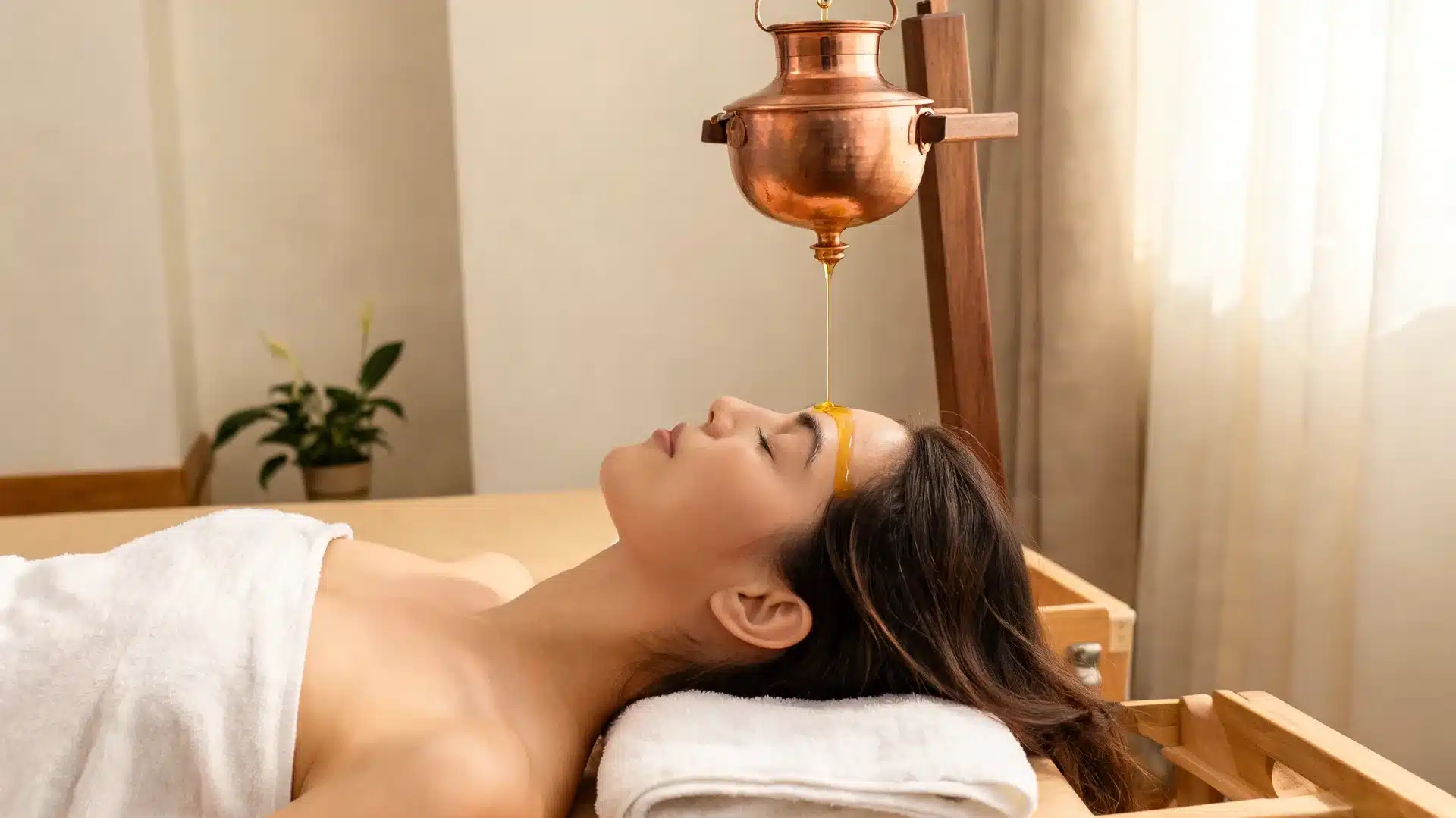
Shirodhara massage is an Ayurvedic oil-flow treatment where warm liquid is poured in a steady stream over the forehead while you rest on a treatment table.
The practice is one of the more well-known treatments in Ayurvedic bodywork, and it is easy to see why. The experience is unlike anything in a standard wellness menu.
| Detail | What To Know |
| Also called | Shirodhara therapy, Ayurvedic oil flow therapy |
| Origin | Ayurveda, India’s traditional health system |
| Sanskrit meaning | “Shiro” means head, “dhara” means flow |
| Treatment type | Ayurvedic body therapy |
| Main method | Warm oil or liquid flows steadily over the forehead |
| Focus area | Forehead, near the space between the eyebrows |
| Common session length | Around 45 to 60 minutes |
| Common purpose | Rest, calm, sleep support, and mental ease |
| Oils commonly used | Sesame oil, coconut oil, herbal oil, or medicated Ayurvedic oil |
The table gives a fast picture, but what makes shirodhara massage worth understanding goes deeper than logistics. Its meaning comes from the Ayurvedic system it belongs to.
The Ayurvedic Roots of Shirodhara Therapy

Shirodhara comes from Ayurveda, India’s traditional system of health that dates back thousands of years. In Ayurveda, the body and mind are understood through three fundamental energies called doshas: Vata, Pitta, and Kapha. Each person carries a unique combination of these three, and health is a matter of keeping them in balance.
Shirodhara is most often prescribed when Vata is disturbed. Vata governs movement, dryness, and the nervous system. When it runs out of balance, the signs are familiar to most of us: racing thoughts, difficulty sleeping, anxiety, and a restless quality that makes it hard to settle even when you are tired. The steady, warm oil flow of Shirodhara is designed to calm that restlessness at the level of the nervous system, not just the muscles.
In traditional Ayurvedic clinical practice, Shirodhara is one component of Panchakarma, a five-part detoxification and rejuvenation protocol. Outside of Panchakarma, it is also offered as a standalone treatment in Ayurvedic spas and wellness centers.
Traditionally, the type of liquid used is selected by a trained Ayurvedic practitioner based on your constitution (prakriti), the current season, and your specific wellness goals. That selection process matters more than most people realize when booking a session.
What To Expect During A Shirodhara Session
A good session should feel organized, safe, and unhurried. The practitioner should walk through the process before anything begins. Here is how a typical session tends to unfold.
Step 1: The Practitioner Prepares The Oil And Sets Up

The practitioner begins by preparing the treatment room, towels, oil bowl, and Shirodhara pot. The oil is warmed to a safe and comfortable temperature before the session starts.
Everything should be clean, organized, and placed within reach. This preparation helps the session feel smooth, calm, and safe. A trained practitioner will also check your comfort, explain the process, and make sure you are ready before treatment begins.
Step 2: Warm Oil Is Applied To The Upper Body

Before the main oil flow starts, the practitioner may gently apply warm oil to the shoulders, neck, upper chest, or forehead. This helps the body adjust to the touch, warmth, and texture of the oil.
The movements are usually slow and light, not forceful. This step prepares the muscles and nervous system for deeper relaxation and helps you feel more comfortable before lying fully under the Shirodhara pot.
Step 3: The Body Is Oiled And Relaxed

You may lie face down while warm oil is gently applied to the back, shoulders, and neck. This helps loosen surface tension and creates a relaxed state before the forehead oil flow begins.
The pressure is usually soft, steady, and calming rather than deep or intense. This step is meant to settle the body, slow the breathing, and prepare you for the main part of the Shirodhara session.
Step 4: The Client Lies Down Under The Shirodhara Pot

Next, you lie comfortably on the treatment table with your head positioned below the hanging Shirodhara pot. A towel or cloth may be placed over your eyes for comfort and protection.
The practitioner checks your head position carefully so the oil falls in the right place, usually near the center of the forehead. You should feel supported, relaxed, and able to stay still without strain.
Step 5: Warm Oil Starts Flowing Over The Forehead

The practitioner opens the pot so warm oil flows in a thin, steady stream over your forehead. The oil usually falls near the area between the eyebrows. This is the main part of the session and should feel warm, slow, and soothing.
The practitioner may adjust the pot, oil level, or direction of flow to keep the experience comfortable and consistent throughout the treatment.
Step 6: The Forehead And Face Are Gently Massaged

Near the end of the oil flow, the practitioner may gently massage the forehead, temples, and face using light finger pressure. This helps remove extra oil from the face and gives the session a calm, gradual finish.
The touch should feel soft and relaxing, never painful. This step helps the body remain settled and allows the mind to slowly transition out of the deep resting state.
Step 7: The Session Ends With Cleanup And Rest

After the oil flow and gentle massage are complete, the practitioner wipes away extra oil and may support or wrap your hair. Some oil may remain on the scalp depending on the clinic’s method.
You are usually asked to rest quietly for a few minutes before sitting up slowly. This final step helps prevent dizziness and allows the body to return gently from deep relaxation.
The session is simple to describe, but the body response tends to feel more layered and personal than most people expect.
Video: Bali International Spa Academy
Instructor Tip: Plan your day around the session. Shirodhara leaves the hair oily and the mind slow and soft. Scheduling a work meeting immediately afterward defeats the purpose. Give yourself at least an hour of quiet time post-session, and wash your hair when you are ready, not on a deadline.
Types of Shirodhara Therapy
Different types of Shirodhara therapy use different liquids based on Ayurvedic purposes, body constitution, and practitioner guidance. Each type offers a slightly different experience during treatment.
| Type of Shirodhara | Liquid Used | Common Purpose |
|---|---|---|
| Taila Dhara | Medicated or herbal oil | Commonly used for relaxation, stress relief, and calming the nervous system |
| Takra Dhara | Medicated buttermilk | Often used in specific Ayurvedic therapies, especially for cooling and soothing effects |
| Ksheera Dhara | Milk or medicated milk | Used for a gentle, nourishing, and cooling therapy experience |
| Kwatha Dhara | Herbal decoctions | Used when herbs are selected for specific Ayurvedic wellness goals |
| Jala Dhara | Water or coconut water | Used in some practices for a lighter and cooling Shirodhara experience |
The best type of Shirodhara depends on your comfort, health condition, season, and Ayurvedic assessment. A trained practitioner can help choose the right liquid safely.
Possible Benefits Of Shirodhara Massage
The benefits below reflect what Ayurveda traditionally links to Shirodhara and what early research has begun to explore. Since Ayurveda and yoga share ancient Indian roots, both view the mind, nervous system, and body as deeply connected.
Still, Shirodhara is a supportive wellness practice, not a treatment for diagnosed conditions. Speak with a healthcare provider if you have any medical concerns.
1. Stress and Nervous System Support
The most consistently reported experience in Shirodhara is a significant drop in mental tension during the session. The warm oil, the uninterrupted quiet, and the single sustained sensation on the forehead give the nervous system a rare signal to stop scanning for input.
For people whose days are dense with screens, noise, and task-switching, that signal can feel profound.
A 2013 study published in the Journal of Ayurveda and Integrative Medicine examined the psychophysiological effects of Shirodhara in healthy volunteers and found indicators of a relaxation response, though researchers noted that larger, more rigorous trials are needed before strong conclusions can be drawn.
2. Sleep Quality Support
Many people who seek Shirodhara report that their minds race at night or that they wake frequently and have difficulty returning to sleep. These are classic signs of Vata disturbance in Ayurvedic terms.
The deep rest that Shirodhara produces during a session may support an easier transition into sleep in the hours that follow, though the effect varies considerably from person to person.
I would not frame it as a cure for insomnia. But for someone whose nervous system is chronically overstimulated, a session that creates genuine stillness for 45 to 60 minutes may be part of a broader sleep hygiene approach worth exploring.
3. Mental Quiet and Reduced Mental Fatigue
The sustained, monotonous sensation of the oil flow is unusual in everyday life. Most sensory input we receive is fragmented and rapidly changing. Shirodhara does the opposite. It gives the mind one continuous thing to rest on.
Students in my classes who struggle to settle into meditation often tell me that the Shirodhara they tried before a retreat gave them the closest feeling to a meditative state they had experienced without years of practice. That is not coincidental.
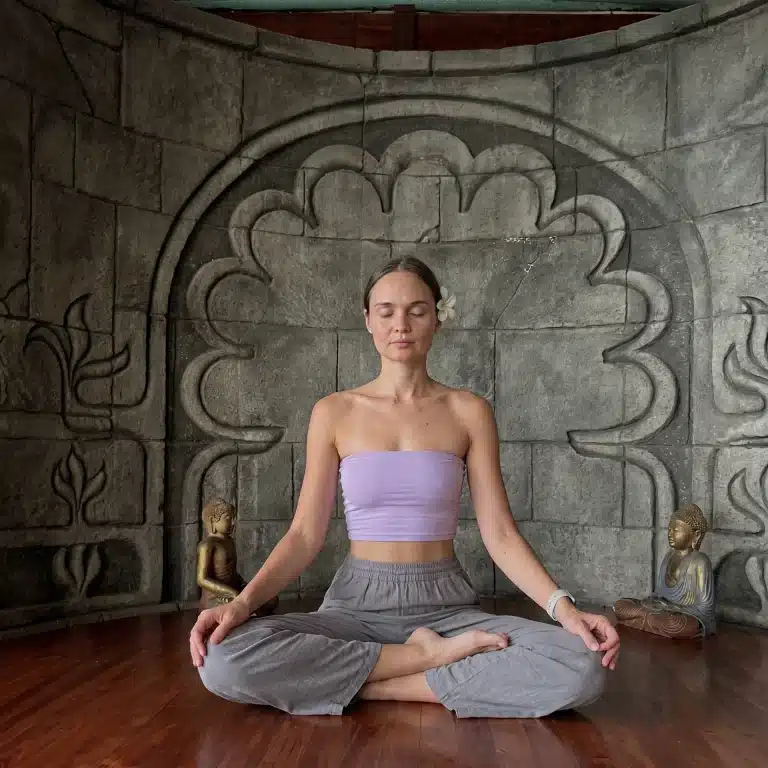
The sensory conditions created by Shirodhara closely parallel those that support a meditative state: warmth, stillness, single-point focus, and the removal of competing stimuli.
4. Head, Scalp, and Neck Comfort
fragmented and rapidly changing. Shirodhara does the opposite. It gives the mind one continuous thing to rest on. Students in my classes who struggle to settle into meditation often tell me that the Shirodhara they tried before a retreat gave them the closest feeling to a meditative state they had experienced without years of practice. That is not coincidental.
The sensory conditions created by Shirodhara closely parallel pratyahara, the withdrawal of the senses described in the eight limbs of yoga: warmth, stillness, single-point focus, and removal of competing stimuli.
What Shirodhara Actually Feels Like
Most people describe the session as warm, slow, and deeply calming. Within the first few minutes of the oil flow, the body tends to grow heavier. Breathing slows. Thoughts become quieter or more spacious. Some people fall asleep. Others remain awake but in a state that feels different from ordinary alertness, closer to the hypnagogic zone between waking and sleep.
A few honest things to know before you go. Your hair will be oily afterward. Plan to wash it within a few hours, or leave the oil on overnight if your clinic recommends it. The room will be quiet, possibly with gentle ambient sound. You will lie still for most of the session.
Some people find it helpful to arrive with a quiet focus in mind, the same way setting a yoga intention at the start of class gives the mind somewhere gentle to rest. If you tend to feel anxious when lying still for extended periods, let the practitioner know before the session starts so they can offer reassurance throughout.
The session should never feel painful or cause any stinging or burning sensation. If the oil temperature feels wrong at any point, say so immediately. A trained practitioner will adjust without hesitation.
Who Should Avoid Shirodhara Massage?

Shirodhara is gentle for most healthy adults, but it is not appropriate for everyone. Speak with a healthcare provider or qualified Ayurvedic practitioner before booking if any of the following apply to you.
Safety Note: Do not use Shirodhara to delay or replace medical care for ongoing symptoms. If anything feels uncomfortable during a session, speak up immediately. A qualified practitioner will always stop and adjust.
- Fever or active infection
- Recent head injury or concussion
- Open wounds, scalp infection, or active skin rash
- Severe oil or nut allergy (sesame is commonly used)
- Migraines triggered by heat, scent, or touch
- Pregnancy (especially the first trimester)
- Epilepsy or a history of seizures
- Very low blood pressure
- Claustrophobia or significant discomfort lying still for extended periods
- Recent surgery or a serious medical condition currently under treatment
Side Effects and What to Watch For
For most people, the only notable after-effect of Shirodhara is oily hair and a deep sense of tiredness. Both are expected and resolve within a few hours. Below are the less common concerns and how a good practitioner prevents them.
| Concern | What may happen | Simple step |
| Oil near the eyes | Oil may drip too close | Ask for a flow adjustment |
| Skin or scalp irritation | Redness, itching, or warmth | Stop and check the oil |
| Oily hair | Hair may feel greasy | Plan to wash after |
| Dizziness | Lightheaded after deep rest | Sit up slowly |
| Body discomfort | Neck, back, or shoulder strain | Ask for support cushions |
| Headache | Oil may feel too warm, or the session may last too long | Ask to adjust the heat or timing |
Any serious discomfort during a session is a signal to stop. A qualified practitioner will never pressure you to continue if something feels wrong.
What Research Says About Shirodhara Therapy
Research on shirodhara massage is growing, but it is still in its early stages. A study published in PMC by the National Institutes of Health explored the psychophysiological effects of shirodhara in healthy volunteers and found signs of a calming response, but noted that larger, more rigorous studies are needed. That is the honest state of the science right now.
- Early research has looked at relaxation response, stress markers, sleep quality, and nervous system activity
- Most studies are small, with limited sample sizes and varying methods
- The results are promising, but not yet strong enough to support medical claims
- Shirodhara therapy may support relaxation and rest for some people in some contexts
- It should not be presented, or chosen, as a proven treatment for insomnia, anxiety, depression, hypertension, migraine, or any nervous system condition
- Anyone with a diagnosed condition should speak with a healthcare provider before adding shirodhara to their care
Research gives useful early signals. But personal fit, trained care, and honest expectations still matter more than early-stage studies when deciding whether to try a session.
How to Find a Shirodhara Practitioner Worth Trusting
The quality of a Shirodhara session depends almost entirely on the practitioner’s training, hygiene standards, and how carefully they screen each client. Here is what to look for and what questions to ask before booking.
What to Look For
- Formal Ayurvedic training or certification from a recognized institution
- Clear documentation of hygiene protocols, including whether oils are freshly prepared or reused between clients
- A health intake process that screens for allergies and contraindications before the session
- Clear aftercare instructions are provided before you leave
- Honest language about what the therapy can and cannot do; avoid any clinic that promises to cure or treat diagnosed conditions
Questions to Ask When You Call
Ask directly: Is the oil used in my session freshly prepared, or is it shared between clients? What training do your practitioners have? How do you screen for oil allergies? What is your protocol if a client becomes uncomfortable during the session? A clinic that answers these questions clearly and confidently is a clinic that takes the practice seriously.
If the topic of Ayurvedic mind-body practices interests you, a structured movement practice alongside restorative therapies builds a more complete approach to physical and mental wellbeing than either practice alone.
Shirodhara Aftercare: What to Do After Your Session
Most clinics will provide specific aftercare instructions, but there are a few general principles that apply to most Shirodhara sessions.
Rest for at least an hour after the session. Avoid jumping straight into a busy schedule. Your nervous system has just spent 45 to 60 minutes in a deeply downregulated state, and it needs time to gradually return to normal activity.
Eat something light and warm if you are hungry. Your digestion may feel slow, and heavy food can feel uncomfortable. Drink warm water. Wash your hair when you are ready, not on a deadline.
If the clinic recommends leaving the oil on for several hours, follow that guidance. And give yourself some quiet time before getting back on your phone or laptop.
Frequently Asked Questions
Can Shirodhara make me emotional afterward?
Some people may feel emotional, quiet, or unusually relaxed after deep rest. This does not happen to everyone. Give yourself time after the session and avoid rushing back into stressful tasks.
Is Shirodhara suitable for sensitive skin?
It depends on your skin and the oil used. Tell the practitioner about allergies, itching, scalp sensitivity, or past reactions. A patch test or a different oil may be needed before the session.
Can I eat immediately after Shirodhara?
Yes, but choose something light and warm. Your body may feel slow or sleepy after the session, so heavy meals may feel uncomfortable. Drink warm water and eat only when you feel ready.
Wrapping Up
Shirodhara is less about doing more and more and more about allowing your body to settle.
You now know how the warm oil flow works, what each session step may look like, and why many people use it for calm, rest, and mental quiet. I also covered the different types, possible benefits, safety concerns, aftercare tips, and how to choose a trained practitioner.
That matters because you should never book a therapy session based only on curiosity or big promises. Shirodhara massage can be a supportive wellness experience when you approach it with clear expectations.
Try these tips before your first session, and share what you notice afterward.