| Style | Yoga Nidra / Yogic Philosophy / Intention-Setting |
| Level | All levels |
| Duration | 2 to 5 minutes daily |
| Props Needed | None (journal optional) |
| Best Time | Morning, before practice, before sleep |
| Avoid If | No contraindications; adjust wording if going through acute grief or trauma |
| Disclaimer: This article is for informational and educational purposes only. It does not constitute medical advice. Always consult a qualified healthcare provider before starting a new exercise, nutrition, or wellness program. |
I first came across sankalpa, meaning something more than a resolution, when I was teaching a Yoga Nidra series and a student asked why her affirmations kept feeling hollow. She had a list of them. She said them every morning. Nothing stuck.
When I explained what a sankalpa actually is and how it works differently from either a goal or an affirmation, she sat quietly for a moment and said, “That is what I have been missing.” That moment is why I keep returning to this topic in my classes.
A sankalpa is a Sanskrit term that describes a heartfelt intention or sacred resolve rooted in your deepest truth.
Unlike a goal that points to something you lack, or an affirmation you repeat to convince yourself of something, a sankalpa begins from the premise that what you are seeking already lives within you.
This guide covers what sankalpa means in yoga and Sanskrit, how to use it in Yoga Nidra, how to write your own, and examples you can adapt for peace, confidence, healing, discipline, and spiritual growth.
What Is Sankalpa? Meaning in Sanskrit and Yoga
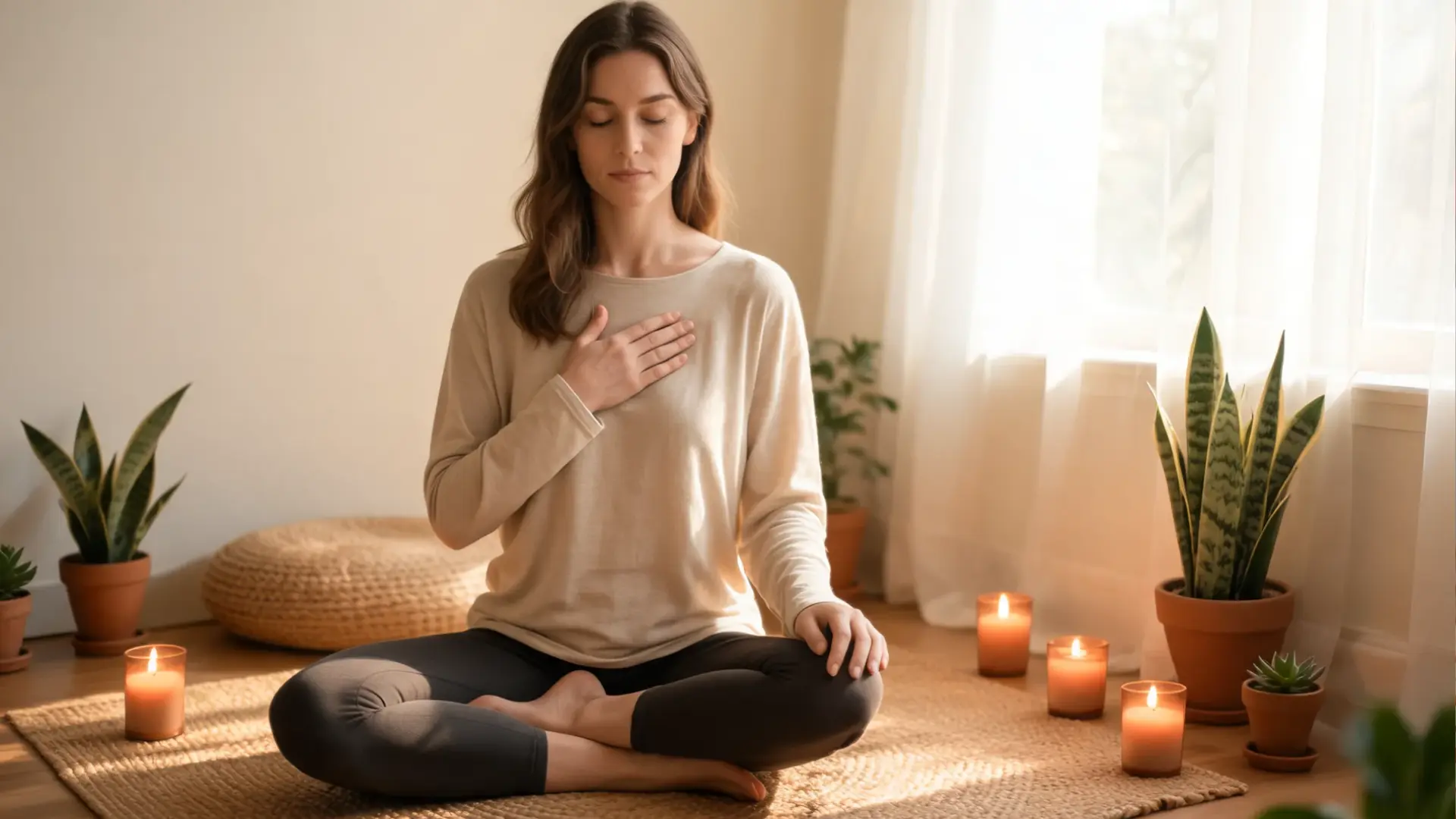
Sankalpa is a Sanskrit word most accurately understood as a heartfelt intention, vow, or conscious resolve. The word is formed from two roots: san, meaning connection with the highest truth or a deeper sense of self, and kalpa, meaning a vow or rule to be followed above all others. Together, they describe a sacred intention made in alignment with your higher self.
In yogic philosophy, sankalpa is not simply a mental exercise or a motivational phrase. It is an inner commitment that aligns thought, action, and purpose. It gives direction to meditation, pranayama, and yoga nidra practice.
It connects your daily decisions to something stable underneath them. And unlike most resolutions, it does not expire when circumstances change. A sankalpa deepens over time rather than fading once the initial energy wears off.
Richard Miller, one of the most respected Western teachers of Yoga Nidra, describes a sankalpa as a statement of who you already are at your most fundamental level, not a project to complete but a truth to remember. That framing is the key distinction between sankalpa and nearly every other intention-setting method most practitioners have encountered.
Sankalpa vs. Goal and Affirmation: What Is the Actual Difference?
Most people treat these three as interchangeable. They are not. Understanding the gap between them is what makes sankalpa practically useful rather than just philosophically interesting.
| Factors | Goal | Affirmation | Sankalpa |
| Starting point | What you lack | What you want to believe | What is already true within |
| Language | Future tense (“I want”) | Present tense (“I am”) | Present truth (“This already lives in me”) |
| Orientation | External achievement | Mental repetition | Inner recognition |
| Does it expire? | Yes, once reached or abandoned | Often fades without reinforcement | No, it deepens over time |
| Rooted in | Desire or ambition | Positive thinking | Yogic philosophy and inner truth |
| Best used for | Measurable outcomes | Shifting surface-level thinking | Sustained inner direction across all areas of life |
A sankalpa can absolutely support goals, but it operates at a deeper layer. Goals expire when you reach them or abandon them. A sankalpa does not. It stays with you across seasons of life, adjusting naturally as you grow, but always pointing back to who you already are at your core.
Two Types of Sankalpa: Core Truth and Active Purpose
Not every sankalpa serves the same function, and knowing the difference makes choosing one much easier.
- A Core Truth Sankalpa speaks to who you are at your deepest level. Not what you do, but what you are. These work best during periods of self-doubt, healing, or inner work. Examples: “I am whole.” “I am enough.” “I am steady.”
- An Active Purpose Sankalpa guides daily action and choices. It extends outward to how you show up for your body, your relationships, and your work.
Examples: “I care for my body with respect.” “I speak with patience.” “I use my energy with intention.” If you follow a purposeful yoga practice, an active purpose sankalpa gives it direction beyond the physical.
Many practitioners hold one of each: a core truth statement that grounds them and an active purpose statement that directs their days. Neither is more advanced. They simply serve different needs at different moments in practice and in life.
How Sankalpa Works in Yoga Nidra
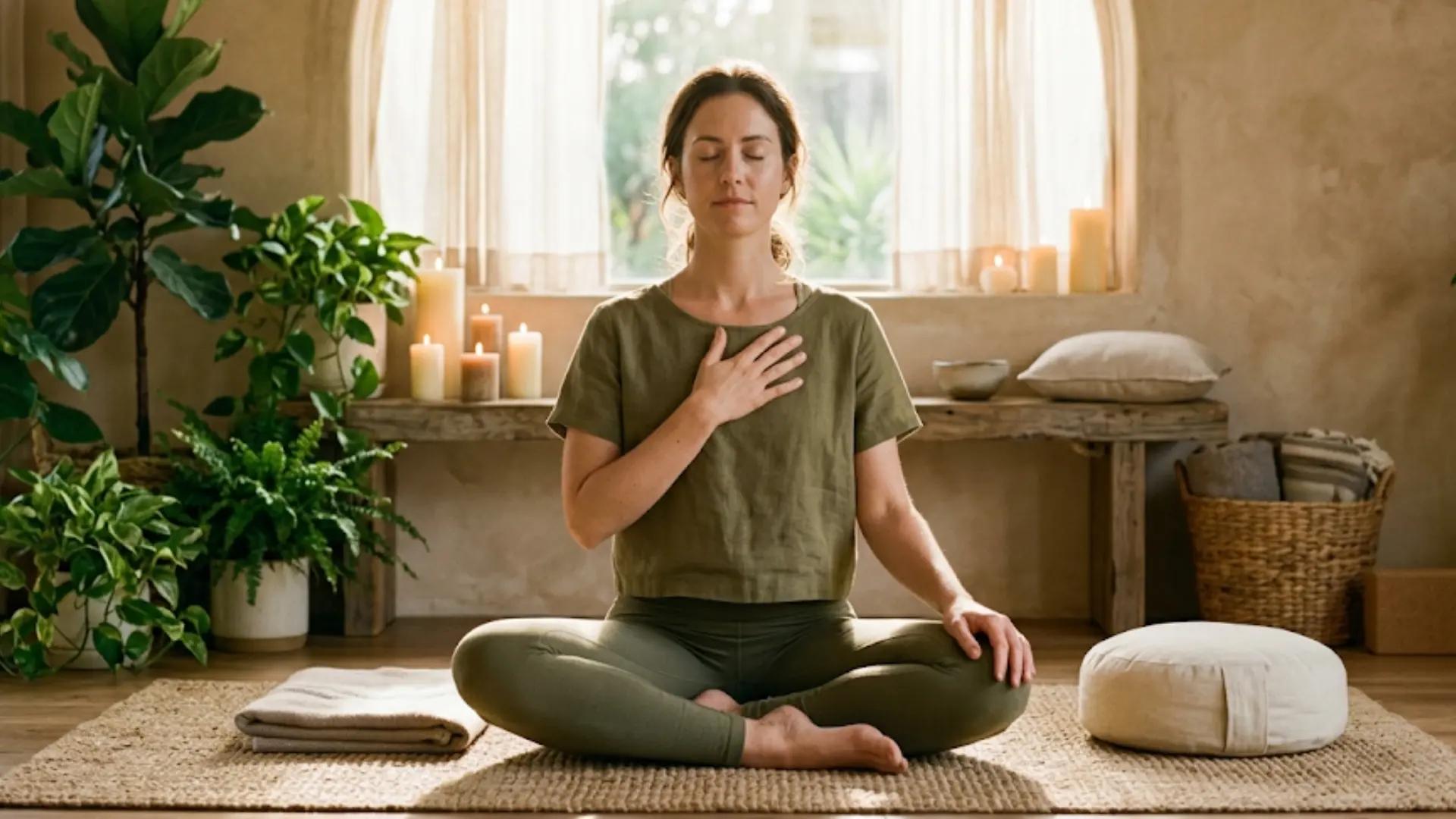
In Yoga Nidra, sankalpa is placed deliberately at two specific points in the practice, and this placement is not accidental. The first repetition comes near the beginning, once the body has relaxed, but the mind is still oriented. The second comes near the end, after the practice has moved through body scan, breath awareness, and visualization, when the mind is in its most receptive state.
This double placement follows the classical eight-stage Yoga Nidra structure developed by Swami Satyananda.
The first repetition is a conscious sankalpa, planting the intention before the deeper work begins.
The second is a subconscious sankalpa, received after the practice has loosened habitual patterns of resistance. The effect of repeating at both points is cumulative: the first sets the direction, and the second consolidates what the whole session has prepared.
What makes this particularly powerful is the brain state involved. Yoga Nidra guides the mind into a hypnagogic threshold, the space between waking and sleep, where the mind is unusually open to inner impressions.
In this state, the sankalpa can settle below the layer of analytical resistance that normally filters incoming information. This is why Yoga Nidra is one of the most respected vehicles for lasting inner change in the yogic tradition.
Practical points for using sankalpa in Yoga Nidra:
- Repeat the sankalpa mentally, not forcefully, as a feeling rather than a command
- Keep the wording identical across sessions, same phrase, same rhythm
- Use the same sankalpa for several weeks before reassessing
- Choose words that feel true in the body, not words that sound spiritually impressive
If you are building a regular Yoga Nidra habit and want support with your broader yoga intentions, choosing a clear sankalpa before your first session will anchor every practice that follows.
How to Create Your Own Sankalpa
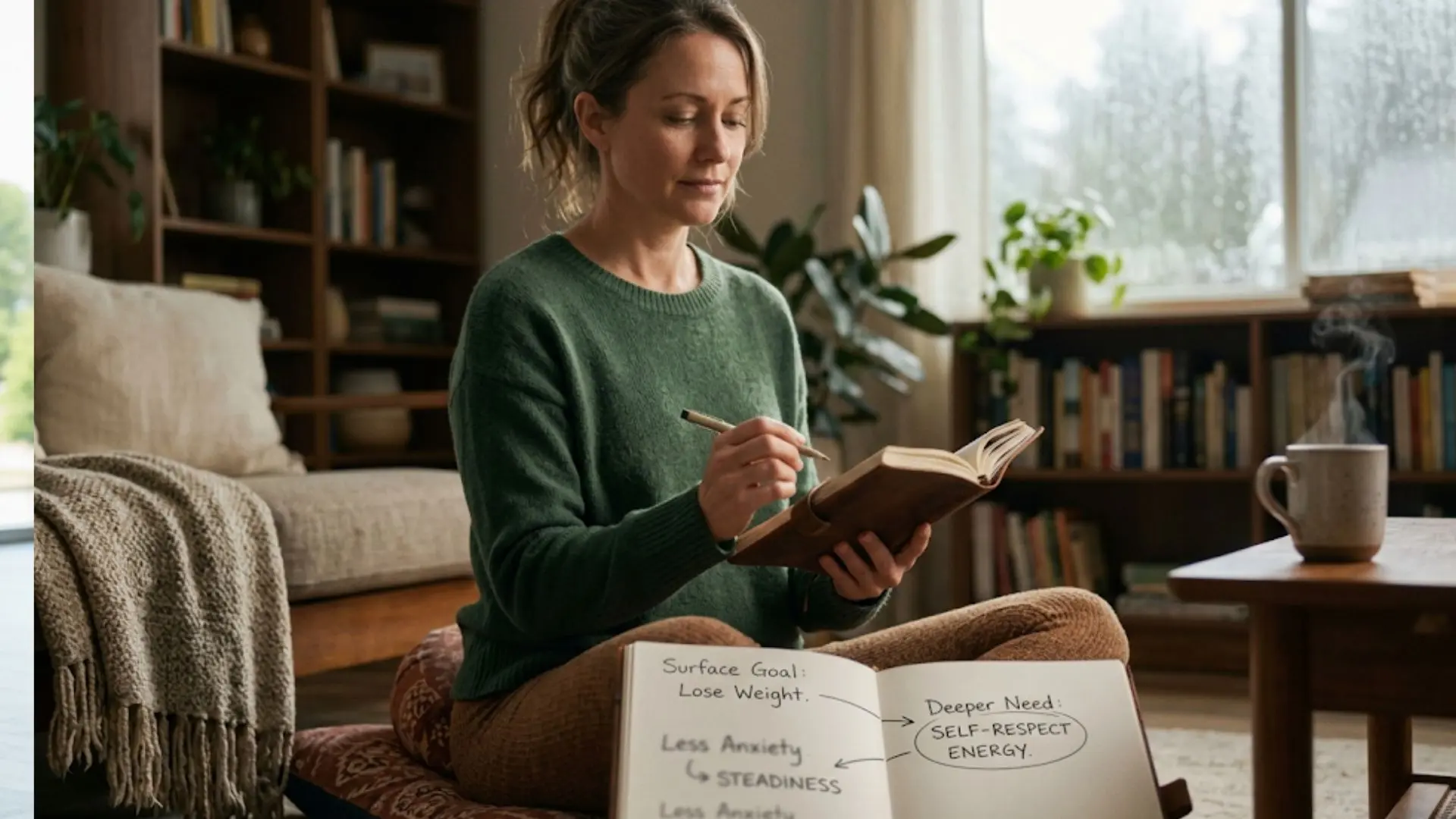
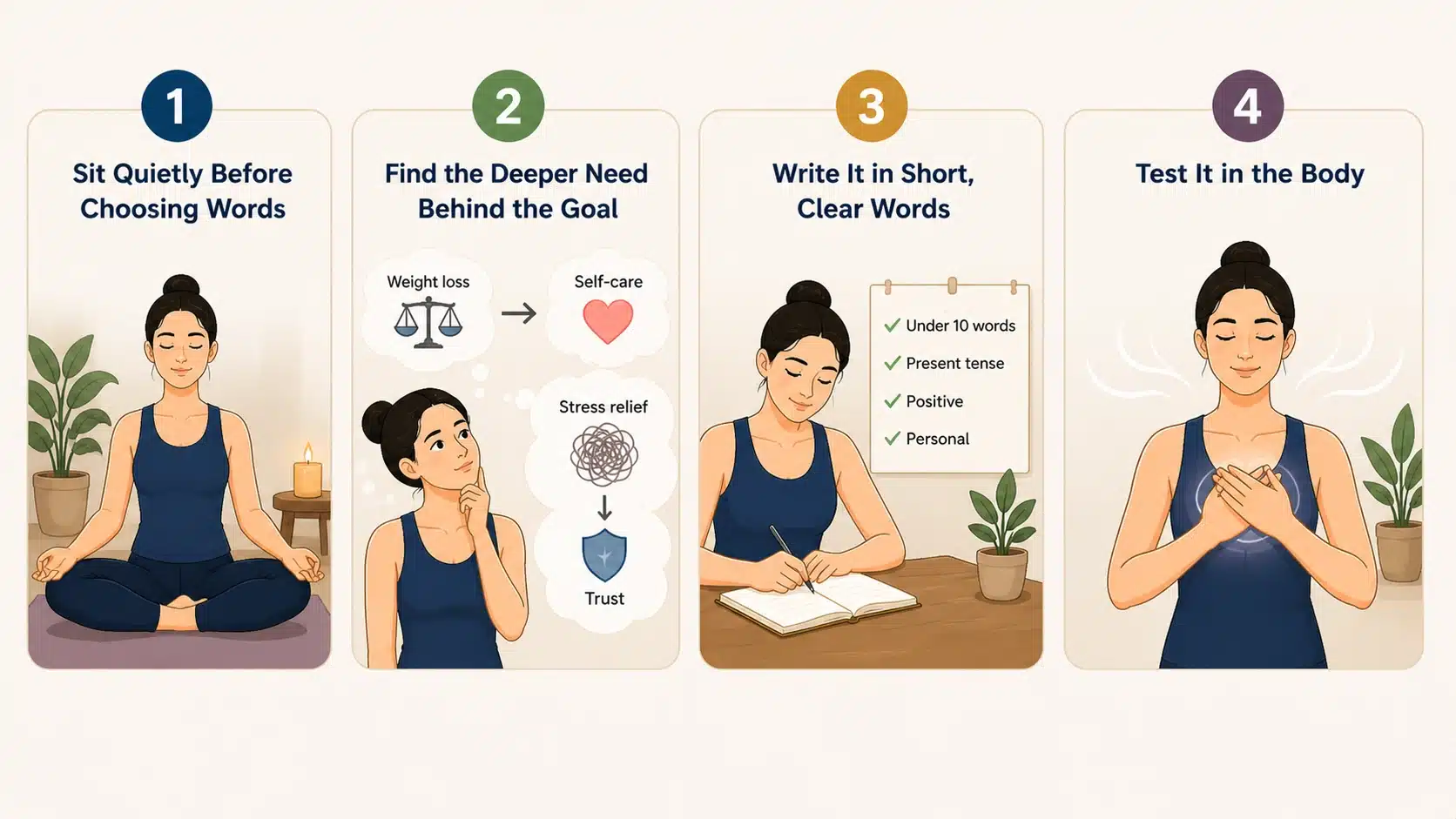
The most common mistake people make is reaching for words before they have done any listening. The four steps below slow that process down in the right way. Work through them in order before settling on a single phrase.
Step 1: Sit Quietly Before Choosing Words
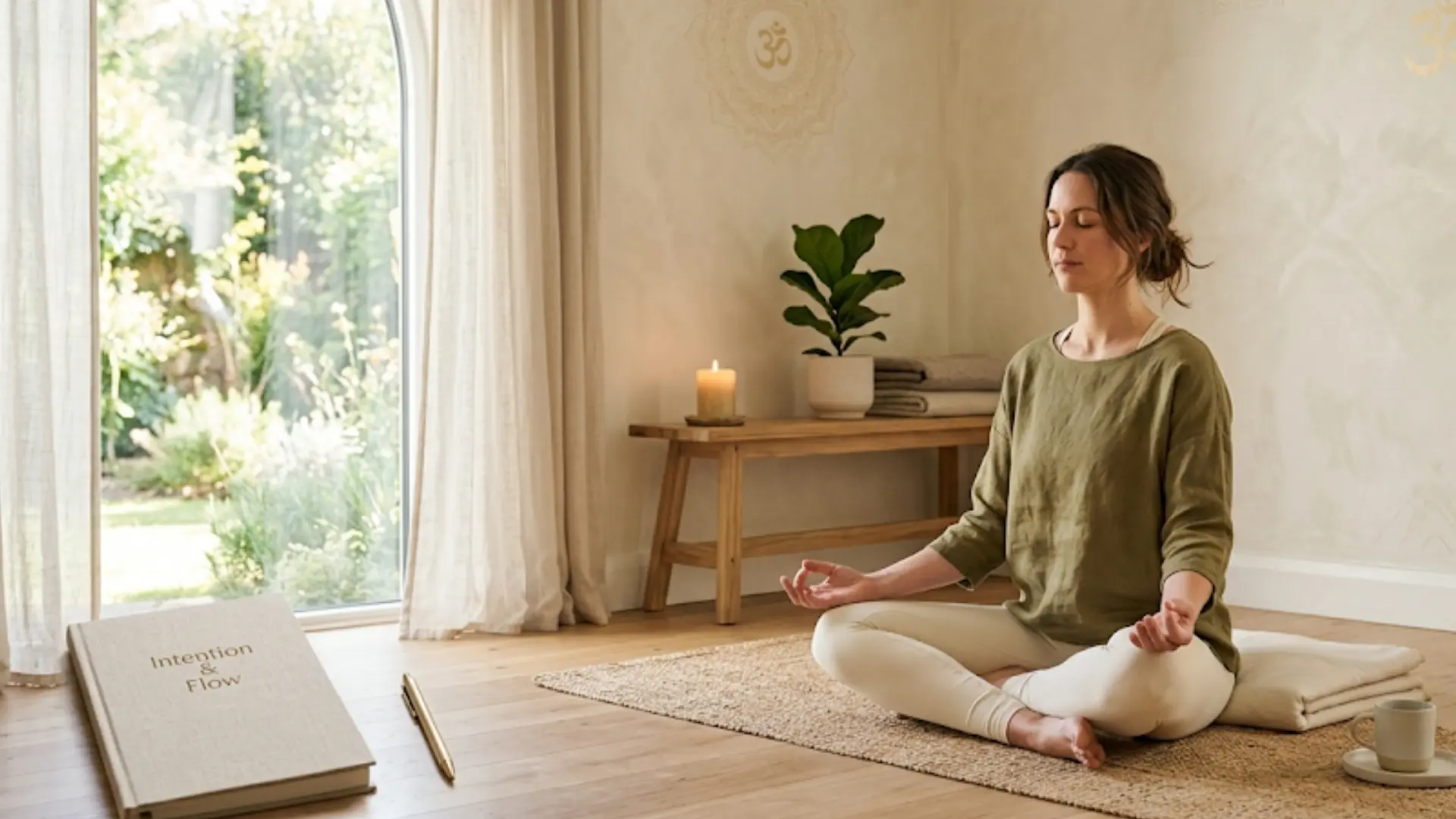
Close your eyes and breathe for two to three minutes before attempting to write anything. The mental noise that is present when you first sit down is not the layer where a genuine sankalpa lives. Let it settle before reaching for language.
Step 2: Find the Deeper Need Behind the Surface Goal
Look past the surface goal. If you want to lose weight, what is the deeper need? Self-care, self-respect, energy. If you want less anxiety, what does that point to? Trust, safety, steadiness. Your sankalpa lives at that second layer, not the first.
Step 3: Write It in Short, Clear Words
Aim for under ten words. Use the present tense. Keep it positive and framed around what you are growing, not what you are removing. Borrowed phrasing, copied from a book or a teacher, will feel hollow after a few days. The sankalpa needs to belong to you.
Step 4: Test It in the Body
Repeat your chosen phrase three times slowly, silently. Notice how it lands. A sankalpa that is right feels like a quiet exhale, a gentle settling. One that is slightly off feels like a small effort, like pushing a word that does not quite fit. Adjust the phrasing until it settles. That sensation is your feedback.
| Instructor Tip: If you struggle to find words in Steps 1 and 2, try this: ask yourself what quality, if it were fully present in your life, would make the most difference right now. Calm. Courage. Patience. Trust. That quality is usually the seed of the right sankalpa. |
Sankalpa Examples for Yoga and Meditation
The right sankalpa is not the most poetic sentence. It is the one you can believe and return to on the hard days. The examples below are starting points. Adjust the wording until something settles genuinely in the body. Here are the questions I hear most often in my classes when I introduce this practice, each with a category-specific set of examples.
1. Sankalpa for Inner Peace
A peace-focused sankalpa works well before meditation, Yoga Nidra, and bedtime. The goal is not to eliminate difficulty but to remind yourself that stillness is available underneath whatever is happening on the surface.
- “I am calm and centered.”
- “Peace flows through me.”
- “I rest in stillness.”
- “I return to quiet whenever I need to.”
2. Sankalpa for Confidence
One student I worked with carried intense stage fright before public talks. She chose “I trust what I know.” Four words that reminded her the knowledge was already there, regardless of how her nerves felt. Her sankalpa did not remove the anxiety. It gave her somewhere to return to when the fear rose. That is what this kind of intention is for.
- “I trust myself.”
- “I am confident and capable.”
- “I move through life with courage.”
- “I trust what I know.”
3. Sankalpa for Healing
A healing sankalpa should feel gentle and honest. It creates emotional space around pain, grief, or physical recovery without pressuring you to feel better immediately. The goal is to meet yourself with care, not to rush past what is real.
- “I am open to healing.”
- “I honor my body and mind.”
- “I release what no longer serves me.”
- “I am patient with my own recovery.”
4. Sankalpa for Discipline
This type of sankalpa supports consistency without turning into self-criticism. It is useful for yoga practice, meditation, study, fitness, or any habit that requires steady effort over time. The tone should feel focused and encouraging, not strict or punishing.
- “I act with focus and commitment.”
- “I choose consistency.”
- “I follow my path with dedication.”
- “I show up, even on the hard days.”
5. Sankalpa for Spiritual Growth
A spiritual growth sankalpa connects your practice to awareness, truth, and a sense of purpose beyond daily tasks. It works well for meditation, journaling, and quiet reflection. Keep the wording grounded and sincere rather than aspirational or dramatic.
- “I am connected to my higher self.”
- “I live with awareness.”
- “I walk my path with truth and compassion.”
- “I am awake to what matters.”
When to Repeat Your Sankalpa
A sankalpa builds its effect through consistency, not through perfect conditions. These moments work best, based on both yogic tradition and what I have seen hold in real practice.
| Moment | How to Use It |
| Morning | Repeat quietly before getting out of bed while the mind is still soft and receptive |
| Before meditation or yoga | State it three times as you settle in to give the session a clear center |
| Yoga Nidra | Introduce it at the opening and close when the mind is most deeply receptive |
| Journaling | Write it at the top of the page before any other thought begins |
| Before sleep | Let it be the last intentional thought held as the mind settles toward rest |
| During hard moments | Return to it silently before entering a difficult conversation or decision |
No moment is too small to return to it. A sankalpa does not ask for perfect conditions. It only asks that you come back.
How Long Should You Keep the Same Sankalpa?
This question comes up in nearly every class where I introduce the practice, and it matters more than most practitioners realise. The short answer: longer than feels comfortable, and certainly longer than a week.
A sankalpa needs repetition across many sessions before it begins to settle into the deeper layers of awareness. Swami Satyananda’s tradition recommends holding the same sankalpa until you feel it is genuinely established in your life, not just familiar in your mind. That process typically takes weeks to months, depending on how consistently you practice and how much resistance the intention meets in daily life.
Signs that a sankalpa has settled: you find yourself choosing actions that align with it without consciously thinking about it, and returning to it in difficult moments feels natural rather than effortful. At that point, you can consider whether it needs updating or whether a new one is genuinely called for. Changing it simply because it feels routine is one of the most common ways people undermine the practice.
Common Mistakes When Choosing a Sankalpa
Most people approach a sankalpa the way they approach a goal: with pressure, borrowed language, and the urge to get it right immediately. These are the patterns worth watching for.
- Making it too long: A sankalpa that runs past ten words is hard to hold in the mind. Trim it to its clearest possible form.
- Using negative wording: Phrases like “I won’t” or “I will stop” anchor attention on the problem. Focus on what is being grown, not removed.
- Copying someone else’s words: A sankalpa that does not belong to you will feel hollow after a few days. It needs to feel personally true.
- Changing it too often: Swapping the sankalpa before it has settled defeats the practice. Give it weeks before reassessing.
- Turning it into pressure: A sankalpa guides, it does not punish. If it starts to feel like a demand rather than an anchor, the wording needs adjusting.
- Making it only about outcomes: A sankalpa tied purely to results misses the point. It should point to a value, not a finish line.
The right sankalpa is not the one that sounds most polished. It is the one that still feels true on the days when nothing is going to plan.
Sankalpa in the Yogic Tradition: What the Texts Say
The concept of sankalpa appears throughout classical yogic literature, though not always by name in a single defining passage. In the Yoga Sutras of Patanjali, the principles most closely linked to sankalpa are viveka (discernment), abhyasa (steadiness of practice), and ishvara pranidhana (surrender to a larger truth).
Together, these describe a practitioner who acts from a place of clarity, sustained over time, in alignment with something beyond personal ambition.
The Bhagavad Gita describes sankalpa more directly as the mind arranging experience into a pattern through conscious volition, not forcing an outcome but orienting the whole system of thought and action in a particular direction. This is a meaningful distinction: sankalpa is not willpower applied to a task. It is the organizing principle that shapes how you meet everything.
Rod Stryker, founder of ParaYoga, explains that kalpa means vow or the rule to be followed above all other rules, while san refers to a connection with the highest truth. A sankalpa, then, is not one intention among many. It is the foundational one, the one that gives coherence to all the others.
Understanding this yogic foundation helps clarify why the practice is placed at the beginning and end of Yoga Nidra and not simply recited as a warm-up phrase. It is being embedded at the deepest available level of awareness, which is precisely where lasting change originates.
For a broader picture of where these practices come from, the history of yoga provides useful context for how intention-setting developed across different lineages.
Frequently Asked Questions
Can I change my sankalpa later?
Yes. A sankalpa can change when it no longer feels aligned with your life or practice. Avoid changing it too quickly, though. Stay with one phrase for several weeks first, so it has time to settle beyond surface-level motivation.
Should sankalpa be said in Sanskrit?
No. Your sankalpa does not need to be in Sanskrit to work. It should be in words you understand deeply and feel connected to. For most people, a simple phrase in their own language feels more honest and easier to return to.
Can sankalpa help with anxiety?
A sankalpa may support anxiety by giving the mind a steady phrase to return to during stressful moments. It is not a replacement for therapy or medical care, but it can work alongside breathwork, meditation, and grounding practices.
What time is best for sankalpa practice?
The best times are morning, before meditation, during Yoga Nidra, journaling, and before sleep. These moments are quieter and more receptive. Still, the most useful time is the one you can repeat consistently without turning it into pressure.
Can children use a sankalpa?
Yes. Children can use simple sankalpa phrases, especially when the language feels kind and clear. Short statements like “I am safe,” “I am brave,” or “I can be calm” work better than long, abstract phrases.
Should I repeat sankalpa aloud?
You can repeat it aloud, silently, or write it down. Silent repetition is often used in Yoga Nidra, while speaking it aloud can help some people feel more connected. Choose the method that feels steady rather than forced.
Can sankalpa support habit change?
Yes. A sankalpa can support habit change by connecting the habit to a deeper value. Instead of forcing behavior through pressure, it reminds you why the change matters. This makes daily choices feel more grounded and less reactive.
What if my sankalpa feels untrue?
If your sankalpa feels completely untrue, soften the wording. Instead of “I am fully at peace,” try “I return to peace.” The phrase should feel believable enough to receive, even if it still stretches you gently.
Final Verdict
Shifting from rigid goals to a soulful resolve is how you finally stop the cycle of starting and stopping. The real sankalpa meaning unfolds not on the page, but in the quiet moments when you choose, again and again, to act from your inner truth.
Keep your intention short, positive, and rooted in the present. Let it become a steady center that outlasts any single yoga session, any difficult month, any season of doubt. You are not broken, and you do not need fixing. You are simply returning to who you already are.
Give yourself permission to let this intention breathe and evolve alongside you. And when the hard days come, because they will — let your sankalpa be the one thing you come back to.
What phrase feels honest to you right now? Take a moment to sit with it before you type anything. That pause is already the beginning of the practice.