| Practice | Yoga Intention Setting (Sankalpa) |
| Level | All levels — beginner to advanced |
| Duration | 1-3 minutes at the start of any session |
| Props Needed | None |
| Best Time | Opening centering, before pranayama, or pre-savasana |
| Avoid If | No contraindications — accessible to all practitioners |
Yoga intentions are the mental anchor that separates a workout from a practice. When I first started guiding classes, I treated intention-setting as a nice opener, a brief moment before getting into the sequence. What I noticed over time, though, changed how I teach entirely.
Students who set a clear intention at the beginning of class stayed more present during challenging poses, recovered faster from distraction, and walked out visibly more settled than those who skipped it.
Setting yoga intentions before class gives both teachers and students a specific quality to return to throughout the session. It is not about achieving the perfect pose or reaching a milestone.
It is about choosing one inner quality, patience, groundedness, courage, compassion, and letting that choice shape how you breathe, move, and respond.
In this guide, you will find out what yoga intentions are, why they matter in teaching, how to set them step by step, and 70 ready-to-use examples organized by theme.
What Are Yoga Intentions?
A yoga intention, rooted in Sankalpa in Sanskrit, is the conscious choice of a quality or focus that guides your practice from the inside out. The word itself carries specific meaning: san means “to connect with the highest truth,” and kalpa means “a rule above all other rules.” Together, Sankalpa translates roughly as a heartfelt commitment, not an aspiration for what you want to become, but a recognition of what you already carry within you.
Understanding what a yoga intention is requires separating it from two things people often confuse it with. Goals are future-oriented (“I want to hold wheel pose without assistance”). Affirmations are often externally focused statements repeated to shift mood (“I am enough”).
An intention sits between both: it is present-focused, internally rooted, and tied directly to the quality of attention you bring to this practice, right now. “I invite steadiness into my breath” is an intention. “I want to be calmer” is a goal. “I am calm” is an affirmation.
The first one gives you something to do inside the practice, and knowing the distinction matters as much as knowing yoga terms like this before stepping onto the mat.
For teachers, yoga intentions also function as a structural tool. When a class carries a unifying intention, the sequence, the cueing, and even the music can align to reinforce it. A class themed around release cues differently from one themed around courage. The intention is the invisible thread that holds everything together.
Why Use Yoga Intentions in Class?
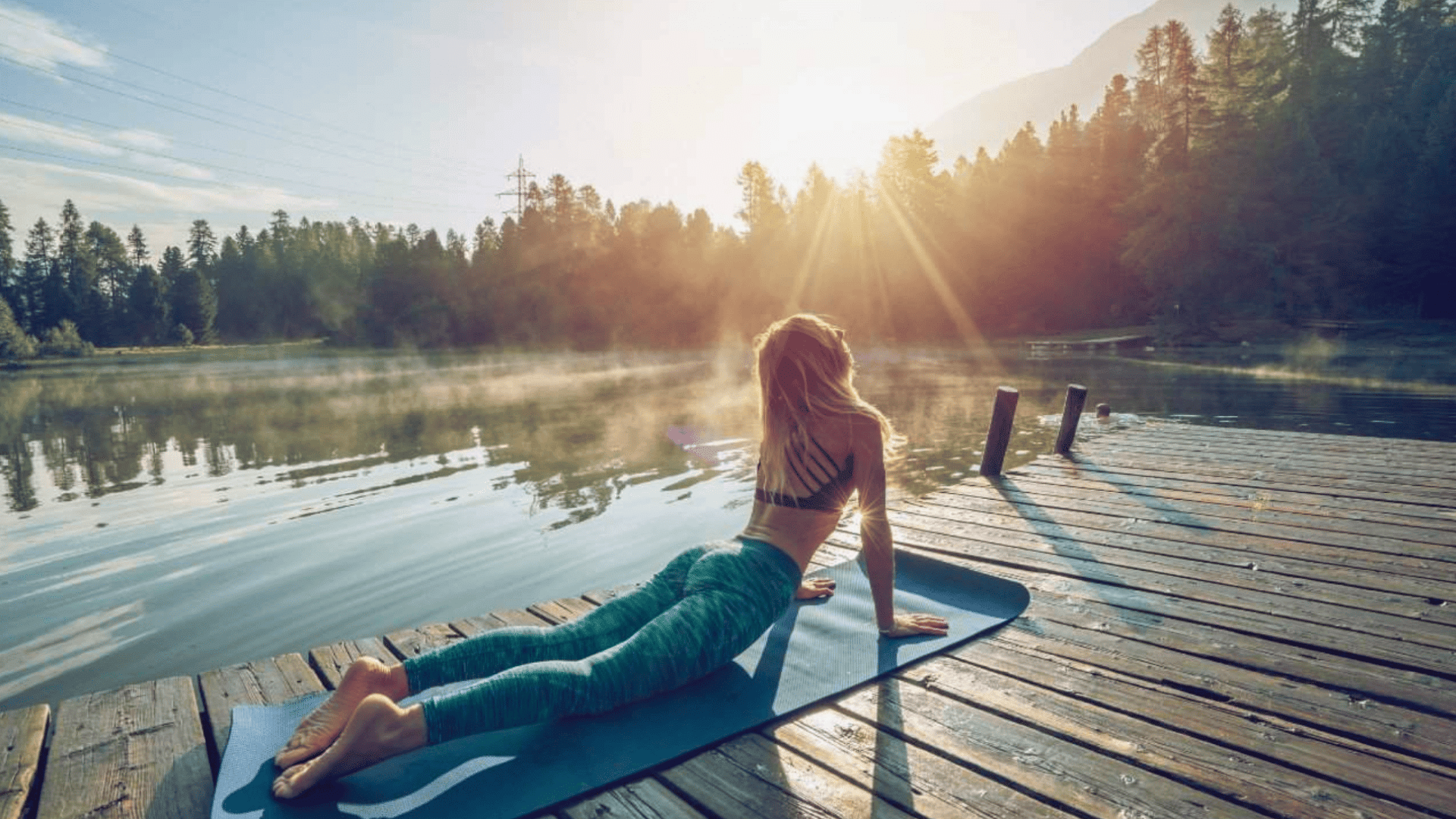
I have noticed a consistent pattern: students who set an intention at the start engage differently by the time we reach the harder work in the middle of a session. They are less likely to rush out of a challenging pose early and more likely to find something steady to return to when the breath gets short. That is not just anecdotal.
Research on mindfulness-based interventions shows that anchoring attention to a single focal point reduces mind-wandering and improves task engagement during physical activity. Setting a yoga intention at the start of class is a low-effort way to activate that anchoring effect before a single pose begins.
Here is what yoga intentions specifically bring to a class:
- Mental clarity: A named intention narrows focus from “everything in my day” to one quality. That narrowing helps students drop into presence faster.
- Emotional grounding: Intentions like “I release what I cannot control” act as a quiet container for students carrying stress into the room, reducing the cognitive load they carry onto the mat.
- Physical awareness: When the intention connects to the body — “I soften the grip in my jaw” or “I breathe into restriction” — students develop finer proprioceptive attention during poses.
- Teaching structure: Intentions give classes a theme that extends beyond sequencing. A well-chosen intention lets the teacher reinforce depth at the opening, mid-class, and in savasana without repeating themselves.
By weaving yoga intentions into your class structure, you shift from guiding physical positions to guiding the experience of being in those positions. That is the difference between a flow class and a practice.
How to Set Yoga Intentions: A Step-by-Step Guide for Teachers
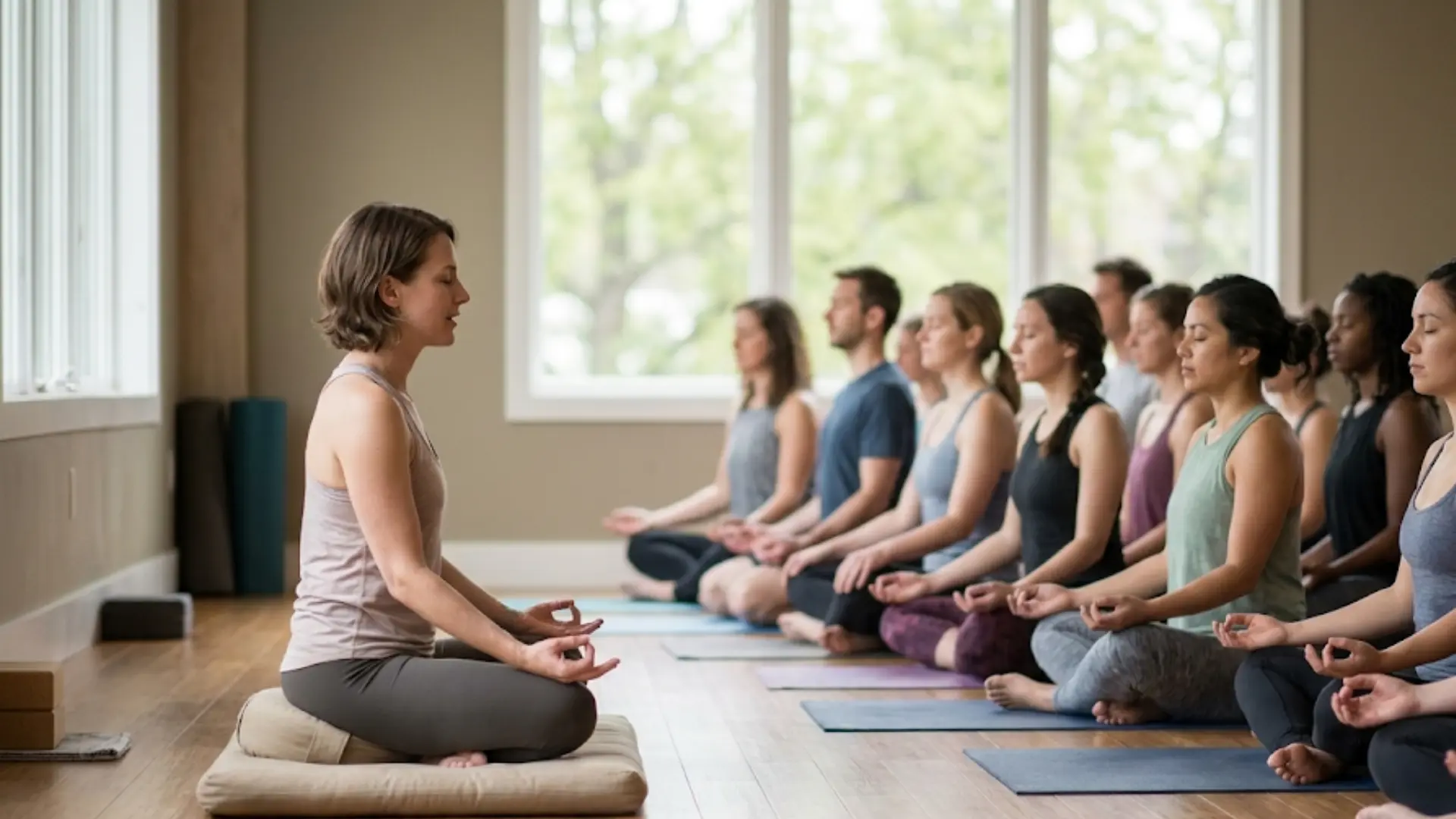
Guiding intention-setting well is a skill that takes a few iterations to land naturally. The biggest mistake I see new teachers make is over-explaining the concept at the cost of the student actually sitting with it. Here is the approach that works in my classes.
Step 1: Choose Your Timing
The most effective moment for setting a yoga intention is during the opening centering, before any movement begins. The nervous system is still transitioning from outside-world alertness to the quieter register of the mat. That transitional window is exactly when an intention can plant most deeply.
Some teachers return to the intention just before pranayama or right before savasana as a bookend. Both work. What does not work is introducing an intention mid-sequence, when the body and breath are already occupied.
Step 2: Guide the Stillness First
Before naming the intention, bring students to a settled starting point. Ask them to close their eyes, find a comfortable seat, and take two or three slow breaths.
Students who skip this arrive at the intention from a distracted mental state, and the word or phrase will not anchor. Thirty seconds of breath focus before the intention doubles its stickiness.
Step 3: Offer an Open Prompt, Not a Prescription
Students who choose their own yoga intention invest more in it than students who are told what to intend. Instead of “Today our intention is gratitude,” try: “Ask yourself what you need most right now, not what your to-do list needs, not what someone else needs from you.
What would genuinely support you in this hour? That quality is your intention.” Then pause for ten to fifteen seconds of actual silence. That silence is where the real work happens.
If students are newer to intention-setting, offering a small menu helps: “You might land on something like presence, patience, release, or compassion. You might find a word that is entirely your own. Either is right.” Students who struggle with open-ended prompts will use the menu. Students who have a strong inner pull will move past it.
Step 4: Keep the Return Cues Light
Returning to the intention during class is valuable, but over-cueing it turns it into noise. I typically bring it back once during the hardest section of the class (“If your intention was patience, this is the moment it gets to show up”) and once in savasana (“Let your intention settle into the body like the practice itself”). Two returns, well-timed, land better than five.
Step 5: Invite Integration at the Close
Before students open their eyes at the end of savasana, ask them to notice if their intention is still present and whether they want to carry it into the rest of their day.
This bridges the mat experience to daily life without being prescriptive about what that should look like. The carry-through is the whole point of yoga intentions. The pose practice is the vehicle, not the destination.
Yoga Intentions by Class Type
One thing that took me a few years to figure out is that the best yoga intention for a class depends on the style of practice, not just the theme. A Yin class calls for different inner work than a Vinyasa flow. Here is how I match intentions to class format.
| Class Style | Best Intention Themes | Why It Fits |
| Vinyasa / Flow | Presence, courage, adaptability | Movement pace creates natural moments of challenge where an active intention can be called on |
| Yin / Restorative | Release, surrender, self-compassion | Long holds create space for emotional processing; release-themed intentions support that |
| Hatha / Alignment | Patience, attention, precision | A slower pace suits intentions requiring sustained mental focus on subtle sensations |
| Power / Hot Yoga | Strength, discipline, perseverance | High-intensity format pairs with intentions that match the physical demand being asked of the body |
| Yoga Nidra | Sankalpa (a single phrase), healing, integration | The hypnagogic state during Nidra makes intention planting particularly deep — keep it short and personal |
Matching the intention to the format is not about being rigid. It is about giving students an intention that can actually do something inside the practice you are guiding. Yin sessions in particular, with their long passive holds, pair naturally with release and surrender themes, the same inner qualities that make restorative yoga poses so effective for nervous system recovery.
70 Yoga Intentions to Bring Into Class Today
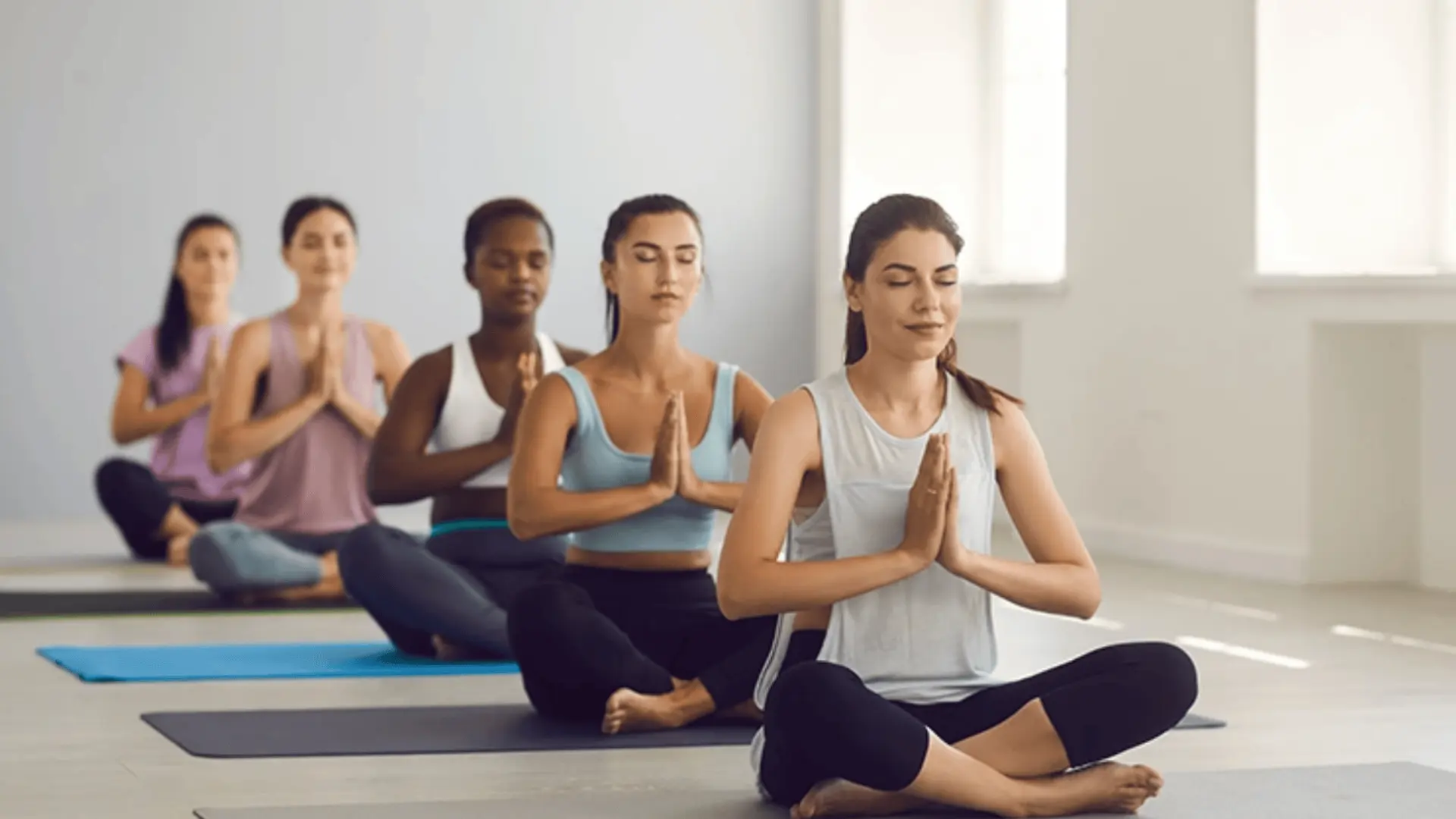
Below are 70 yoga intentions organized by theme. These are not scripts — they are starting points. Students who hear an example often find their own version of it, which is the best possible outcome. When I use these in class, I read one or two from a relevant theme and then leave space for students to land on something personal.
For Gratitude and Self-Love
- I am grateful for what my body can do today.
- I open my heart to give and receive with equal ease.
- I choose gratitude over comparison in this practice.
- I honor progress without demanding perfection.
- I treat myself with the same kindness I would offer a close friend.
- I welcome joy into the space between each breath.
- I thank my body for showing up, even on difficult days.
- I love myself as I am right now, not as I plan to be.
- I recognize my own worth without needing to earn it.
- I celebrate small wins as fully as large ones.
For Grounding and Presence
- I am here, in this moment, in this body.
- I root myself in the present breath.
- I find stillness beneath the movement.
- I feel the ground beneath me and let it hold my weight.
- I return to the center whenever I drift away from it.
- I am anchored in this breath, this pose, this room.
- I reconnect with the ground beneath me with each exhale.
- I let my breath bring me back when my mind wanders.
- I am fully present, not performing presence.
- I trust this moment exactly as it is arriving.
For Strength and Courage
- I am strong and capable of adapting to challenges.
- I choose to move toward difficulty rather than away from it.
- I welcome challenges as information about where I can grow.
- I trust the strength that lives inside me, even when I cannot feel it.
- I stay with discomfort long enough to learn from it.
- I bring discipline to this practice without harshness toward myself.
- I trust myself to return after I fall.
- I say yes to the next step, even without seeing the full path.
- I honor the power that has carried me through hard days before.
- I release the fear that keeps me at the edge of my potential.
For Healing and Release
- I release what no longer serves my growth.
- I soften into the present moment instead of bracing against it.
- I let go of judgment — of others and of myself.
- I invite healing energy into whatever part of my body needs it most.
- I forgive myself for what I could not do differently then.
- I breathe out tension with every exhale and receive ease with every inhale.
- I open space in my body and my mind for renewal.
- I allow emotions to move through me without needing to manage them.
- I surrender to the process without demanding a specific outcome.
- I trust my body’s intelligence and its capacity to heal.
For Compassion and Connection
- I treat myself and those around me with active kindness.
- I honor the light in myself and in every person I encounter today.
- I choose compassion over judgment when it is hard to do so.
- I extend love outward, beginning with how I speak to myself.
- I see myself and others with patience rather than expectation.
- I honor the energy we are creating together in this shared space.
- I practice empathy in how I think, not just in how I act.
- I welcome the feeling of practicing alongside others.
- I celebrate the humanity in everyone in this room, including mine.
- I send care to wherever it is needed most.
For Clarity and Focus
- I invite clarity into how I see my situation today.
- I quiet the noise in my mind by returning to breath.
- I focus on one breath, one movement, one moment at a time.
- I find a quiet place inside that stays still even when the body moves hard.
- I let go of the thoughts that are not about this room.
- I sharpen my awareness of what is actually happening right now.
- I see my next step clearly without needing to see the whole path.
- I honor simplicity and let it guide this practice.
- I allow breath to do the navigating when my mind wants to race ahead.
- I focus on what is genuinely within my reach today.
For Joy and Celebration
- I choose joy as a practice, not just as a feeling I am waiting for.
- I celebrate the fact that I am here, in this body, on this mat, today.
- I honor the simple pleasure of movement without an agenda.
- I allow happiness to arise without needing a reason.
- I embrace lightness even inside effort.
- I celebrate the practice I showed up for, not the one I imagined.
- I find joy in stillness and in movement equally.
- I let this practice be playful when it does not need to be serious.
- I welcome freedom in how my body and mind move right now.
- I honor the beauty of being alive and in motion.
Teaching With Yoga Intentions: Class Stage by Stage
Using intentions well in teaching is about placement and restraint. These three moments in a class are where intentions do the most work.
| Class Stage | How to Use Intentions | Purpose |
| Opening | Invite students to breathe, settle, and set or choose a personal intention. Offer 2-3 example themes, then allow 15 seconds of silence. | Creates a shared inner focus before the physical practice starts. |
| Mid-Class | Bring the intention back once during the hardest section. One sentence is enough — “If you set an intention around courage, this is the moment it matters.” | Reconnects students with their personal anchor when physical challenge peaks. |
| Closing | In savasana or final seated position, ask students to notice if their intention is still present and whether they want to carry it past the mat. | Bridges the practice to daily life and deepens the integration of what just happened. |
One thing students have told me over the years is that the closing return to the intention is the moment that actually makes it stick. The opening sets it. The mid-class reminder activates it. The closing gives them ownership of it. All three matter, and none of them should take more than ninety seconds total.
How to Bring Yoga Intentions Into Daily Life
The most meaningful shift I have seen in students comes not from what they do on the mat but from what they carry out of the room. An intention does not have to stay inside a class.
Students who work with a consistent Sankalpa across multiple sessions often report that the same qualities begin appearing in their everyday choices, their relationships, and their self-talk — not because they forced it, but because repetition makes the neural pathway familiar.
Practical ways to carry yoga intentions into daily life include writing the intention in a journal immediately after class while the body is still warm from the practice, repeating it silently before a difficult conversation or decision, and setting it as a phone reminder that appears once mid-afternoon. None of these require additional time investment. They are small contact points that keep the intention alive between practices.
If you work with the same Sankalpa across multiple sessions, the intention can evolve with you. Some students keep the same Sankalpa for a month or a full season. Others choose a new one each week. Both approaches work. The important thing is that the intention stays personally relevant rather than becoming a habit you repeat without feeling.
For students working on stress reduction, combining intention-setting with a guided meditation practice creates a reinforcing loop: the meditation deepens the intention, and the intention gives the meditation an anchor. I have seen this pairing make a noticeable difference for students who said meditation “never worked” for them before they had something specific to return to.
Frequently Asked Questions
Can yoga intentions reduce stress?
Yes. Yoga intentions can reduce stress by giving your mind one steady focus during practice. Instead of following every thought, you return to a word or quality like calm, patience, or release. This helps the body settle and makes the practice feel more grounded.
What are good intentions for morning yoga?
Good morning yoga intentions include energy, clarity, gratitude, focus, ease, and openness. Choose a word that matches how you want to enter the day. A simple intention like “I move with clarity” can help your practice feel purposeful without becoming too complicated.
Can teachers use one intention for a class?
Yes. Teachers can offer one shared intention for the class, especially when it matches the theme, sequence, or energy of the session. Still, it helps to invite students to adapt it privately so the intention feels personal rather than forced.
Do yoga intentions help with focus?
Yes. Yoga intentions help focus because they give the mind a clear place to return when attention drifts. During difficult poses or long holds, the intention becomes a mental anchor. This can make students feel more present and less distracted throughout practice.
Can I write my yoga intention down?
Yes. Writing your yoga intention before or after class can make it feel more concrete. A journal note, sticky note, or phone reminder can help you carry the intention beyond the mat and notice how it shows up during the day.
Should my intention match the yoga style?
It helps. A power class may pair well with courage or discipline, while Yin or restorative yoga may suit release, patience, or softness. Matching the intention to the class style makes it easier to return to during the actual practice.
Can yoga intentions change during practice?
Yes. Sometimes the intention you choose at the start shifts once your body begins moving. That is normal. You can soften, adjust, or replace it if something more honest appears. The point is not to be perfect but to stay connected.
Are yoga intentions only for spiritual practice?
No. Yoga intentions can be spiritual, emotional, mental, or practical. Some students use them for inner reflection, while others use them for focus, stress relief, body awareness, or patience. The intention only needs to feel useful and honest for that practice.
Final Thoughts
A yoga practice becomes more meaningful when you give your mind something steady to return to. I see yoga intentions as a simple way to bring more presence, clarity, and emotional direction into each session.
You learned what intentions are, how they differ from goals and affirmations, when to set them, and how teachers can use them without overcomplicating class.
You also have examples for gratitude, grounding, strength, healing, compassion, focus, and joy. This matters because intention-setting helps you carry the practice beyond the mat.
Try choosing one word before your next class, notice how it shapes your breath, and share what you experienced.
Sources
Swami Satyananda Saraswati, Yoga Nidra. Bihar School of Yoga, 1976. https://www.biharyoga.net
Kabat-Zinn, J., “Mindfulness-Based Interventions in Context: Past, Present, and Future.” Clinical Psychology: Science and Practice, 2003. https://doi.org/10.1093/clipsy.bpg016
OriGym, “How to Set Yoga Class Intentions (With Examples).” https://www.origym.co.uk/blog/how-to-set-yoga-intentions/