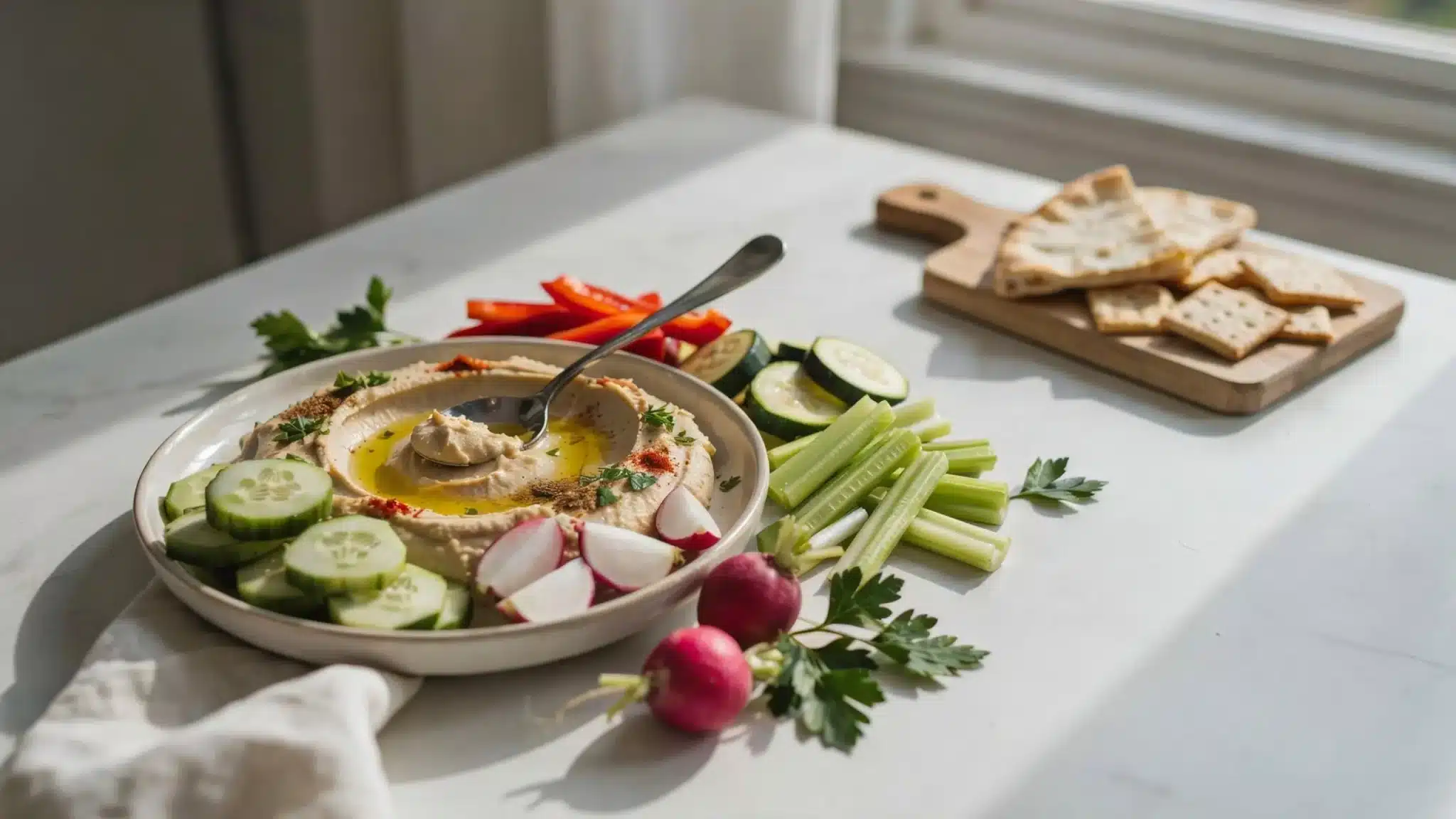

| Food | Serving | Calories | Protein | Carbs | Fat | Key Nutrient |
| Plain hummus | 2 tbsp (28g) | 70 kcal | 2g | 6g total / ~4g net | 5g | Iron, folate, manganese |
| Disclaimer: This article is for informational and educational purposes only. It does not constitute medical advice. Always consult a qualified healthcare provider before starting a new nutrition or wellness program, especially if you have a medical condition. |
Hummus contains roughly 4 grams of net carbs per 2-tablespoon serving, and that number is what determines whether it fits a keto day. The chickpea base is the issue.
Chickpeas are naturally starchy, and even a generous dip portion can eat through a meaningful share of a strict keto carb budget. That said, hummus is not a flat-out disqualifier. The real question is how much you eat and what you eat it with.
I get this question often, and my honest answer is always the same: hummus is a portion-control food on keto, not a free food. Here is what the numbers actually mean for your plate, and how to decide whether it belongs in your routine.
Is Hummus Keto-Friendly?
Standard hummus is not considered keto-friendly by most strict keto standards, primarily because chickpeas, its main ingredient, are a high-starch legume. A 100-gram serving of traditional hummus contains approximately 9 to 10 grams of net carbs according to USDA FoodData Central data, which can represent half or more of a strict keto dieter’s entire daily carb limit.
That said, hummus occupies a middle ground that most keto resources ignore. In small, measured portions, particularly 1 to 2 tablespoons, the net carb impact drops to around 2 to 4 grams.
For people following flexible or lazy keto with a 50-gram daily carb limit, that is manageable. For strict keto at 20 grams per day, it is not impossible, but it requires real discipline with the rest of the day’s meals.
The short version: strict keto generally rules hummus out. Flexible keto can accommodate it in controlled portions. Either way, you cannot eat from the tub without counting.
How Many Carbs Are in Hummus?
The carb count in hummus comes almost entirely from chickpeas. The other core ingredients, tahini, olive oil, lemon juice, and garlic, contribute negligible carbohydrates.
A standard 2-tablespoon serving of plain hummus contains approximately 6 grams of total carbohydrates, with roughly 1 to 2 grams of fiber, bringing net carbs to around 4 grams per serving according to USDA nutritional data.
The number that matters for keto tracking is net carbs, which is total carbohydrates minus fiber. Here is how different serving sizes and hummus types affect that number:
| Hummus type or amount | Approx. net carbs | Keto verdict |
|---|---|---|
| 1 tablespoon plain hummus | ~2g | Fits most keto budgets when measured |
| 2 tablespoons plain hummus | ~4g | Standard serving, count it carefully |
| 3 to 4 tablespoons plain hummus | 6 to 8g | Takes up too much of a strict keto day |
| Garlic or roasted red pepper hummus | Varies by brand | Check the label before buying |
| Dessert or sweet hummus (chocolate, vanilla) | Often 8 to 12g per serving | Poor fit for keto in almost all cases |
| Homemade hummus (controlled recipe) | Variable, typically 3 to 5g | More controllable, but still chickpea-based |
Portion creep is the real risk with hummus. A tablespoon looks small on a plate, and it is easy to double or triple that amount without noticing. Serving hummus out of the container onto a separate dish before eating makes the actual amount visible and keeps the count honest.
Hummus Macros and Micronutrients: What Else Is in There?
Beyond carbs, hummus has a reasonably good nutrient profile for what it is. A 2-tablespoon serving provides around 70 calories, 5 grams of fat (mostly from olive oil and tahini), 2 grams of protein, and 4 grams of net carbs.
The fat content is worth noting for keto, since fat is the macro the diet depends on. That said, 5 grams of fat in a 2-tablespoon serving is not enough to justify hummus as a fat source on its own. Think of it as a flavor addition that comes with a small carb cost, not a fat booster.
The micronutrient picture is where hummus earns more credit. Chickpeas are a meaningful source of folate, iron, manganese, and phosphorus. Tahini contributes calcium and additional iron. These are genuine nutritional benefits, but they do not change the carb math for keto. They are a reason hummus is a healthy food in general, not a reason to eat more of it on a low-carb day.
| Note: Nutritional values based on USDA FoodData Central data for plain hummus. Values vary by brand, recipe, and added ingredients. Always check the specific product label when tracking net carbs on keto. |
Can You Eat Hummus on Keto?
Keto eaters don’t all treat hummus the same way. Some keep it around because it makes vegetables easier to enjoy. Others don’t buy it at all because one spoon can turn into five. That honest split is why this topic gets so many mixed answers in keto groups. Here’s how the real-life advice usually breaks down:
When Hummus Usually Works
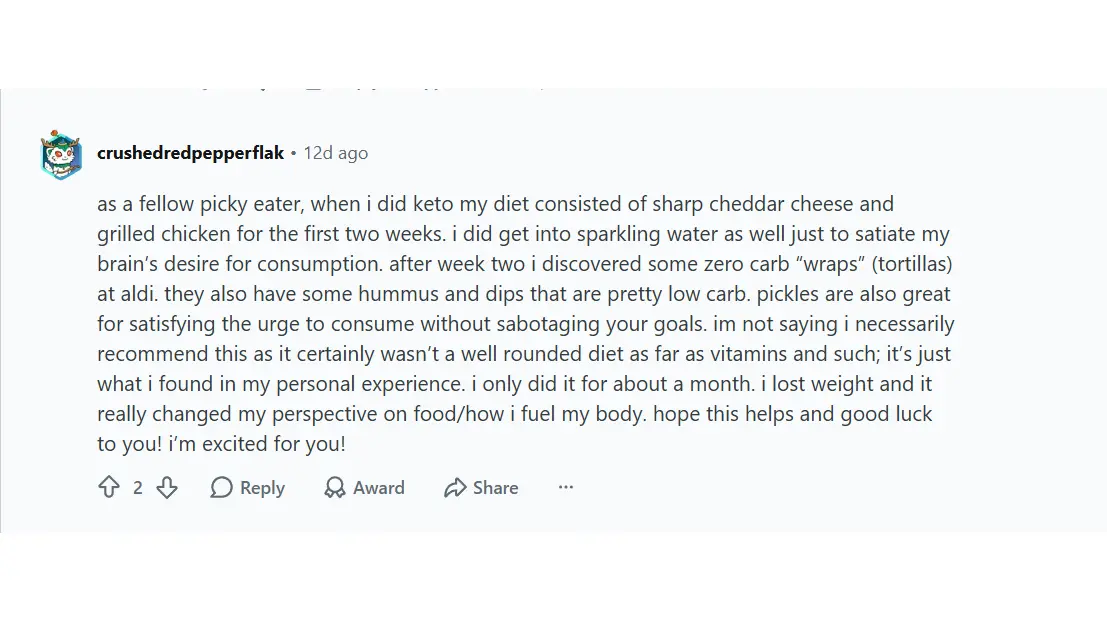
After checking Reddit, the useful pattern isn’t “eat unlimited hummus.” It’s more like using it as a small low-carb add-on. In r/ketobeginners, one user wrote, “they also have some hummus and dips that are pretty low carb.”
That supports the idea that hummus can work when you choose the right kind and keep it controlled. I’d treat it as practical keto behavior: hummus works best when it’s measured, paired with low-carb foods, and used as a side flavor.
When Hummus Usually Does Not Work
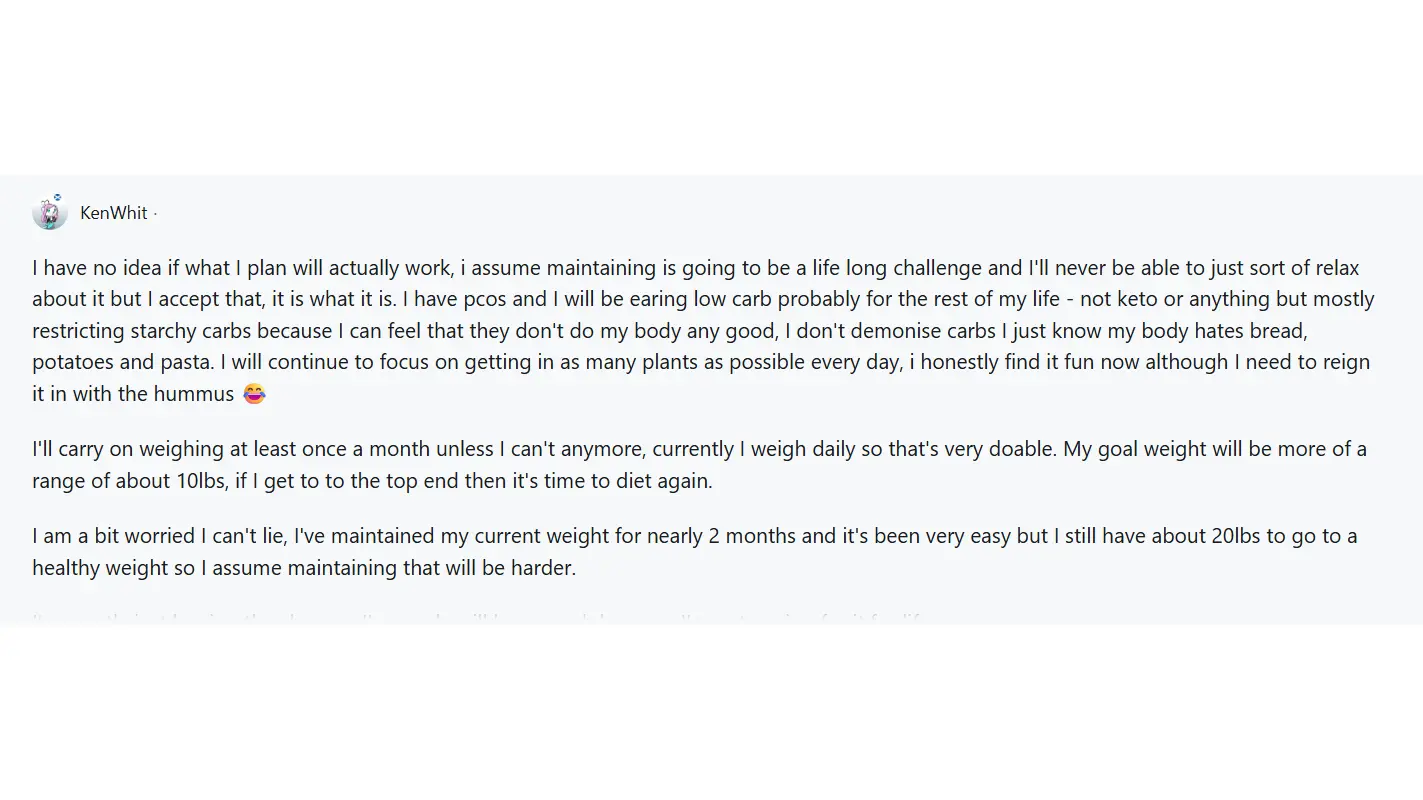
The stronger warning comes from a Reddit post in which a low-carb user talks about maintaining their eating habits and says, “I need to reign it in with the hummus.” That line fits the real issue: hummus is easy to overdo, even when someone is already carb-aware.
I’d read this as portion creep, not a reason to panic over one bite. Hummus usually stops working when the tub stays open, the serving isn’t measured, or it’s paired with bread, crackers, or chips.
How to Eat Hummus on Keto Without Letting Carbs Sneak Up
Managing hummus on keto comes down to three practical habits: measure first, choose the right dippers, and treat it as a flavor addition rather than the main event of a snack.
1. Measure Before You Eat, Not After
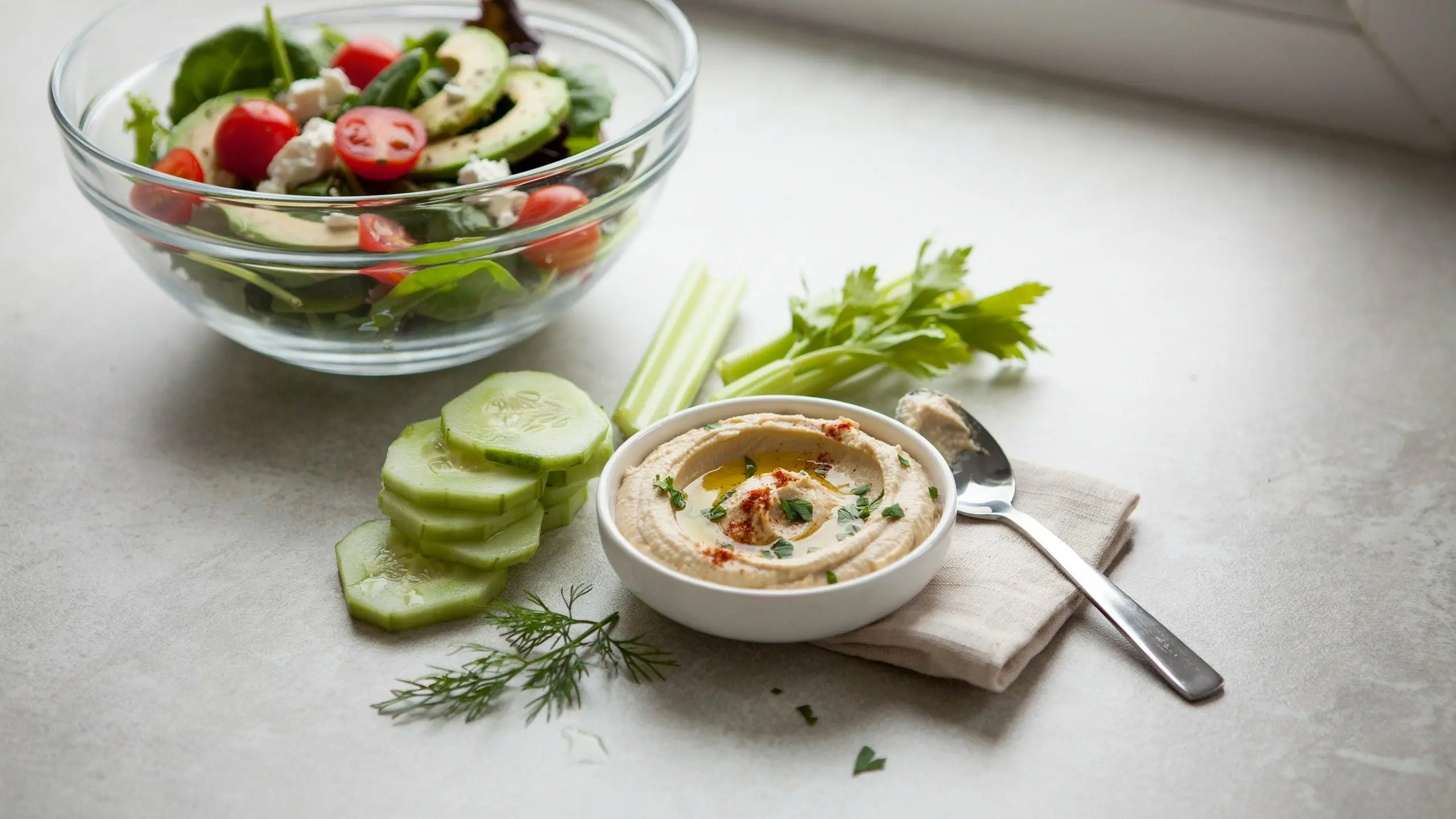
Spoon the hummus onto a small plate before you open anything else. Once it is portioned and visible, you are working with a fixed amount rather than dipping from an open container.
For most people following flexible keto, 2 tablespoons is the right starting point. For strict keto, start with 1 tablespoon and build the snack around low-carb vegetables to add volume. A useful habit: use a measuring spoon for the first few weeks until your eye is reliable for that amount.
| Tip: I always recommend spooning hummus into a ramekin before eating, not because of willpower, but because the visual makes the portion real. Most people are surprised how small 2 tablespoons actually looks. Once you see it, you plan around it better. |
2. Pair With Low-Carb Dippers Only
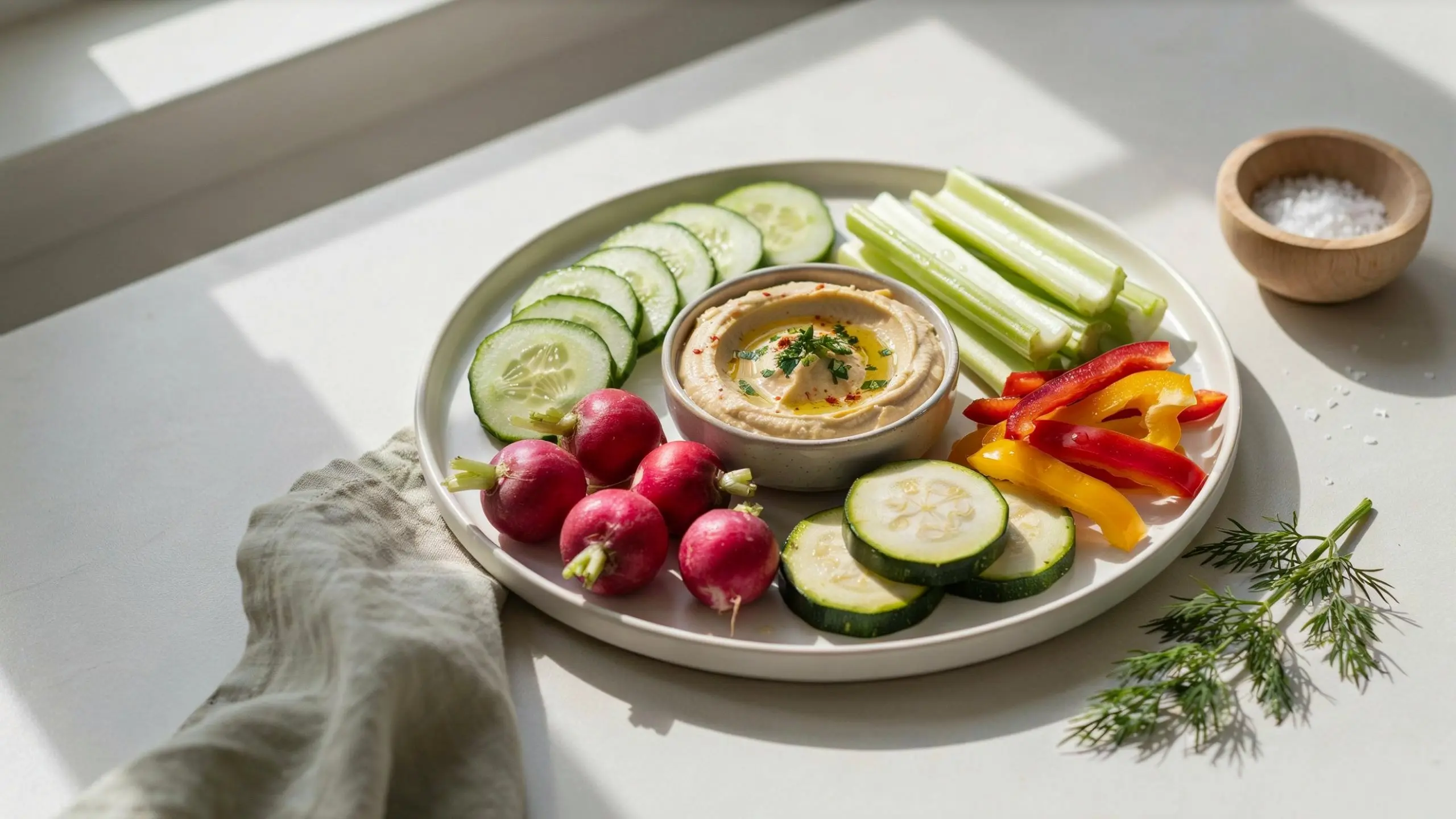
The dippers matter as much as the hummus serving size. A 2-tablespoon portion of hummus with pita bread can turn a 4-gram net carb snack into a 20-gram carb event before you finish the plate. The right dippers add crunch and volume without stacking carbs. Good options include:
- Cucumber slices (roughly 2g net carbs per cup, cut thick for better texture)
- Celery sticks (under 1g net carbs per stalk)
- Radishes (approximately 1g net carbs per half cup)
- Zucchini rounds, sliced about a quarter inch thick
- Bell pepper strips, ideally green for fewer carbs than red or yellow
Pita bread, crackers, pretzels, tortilla chips, and regular bread are all disqualifying dippers for keto. Each one multiplies the carb load of the snack several times over. If you want to build a fuller low-carb snack plate, green beans on keto are a useful side since they add volume and fiber with very little impact on net carbs.
3. Use It as a Condiment, Not a Dip
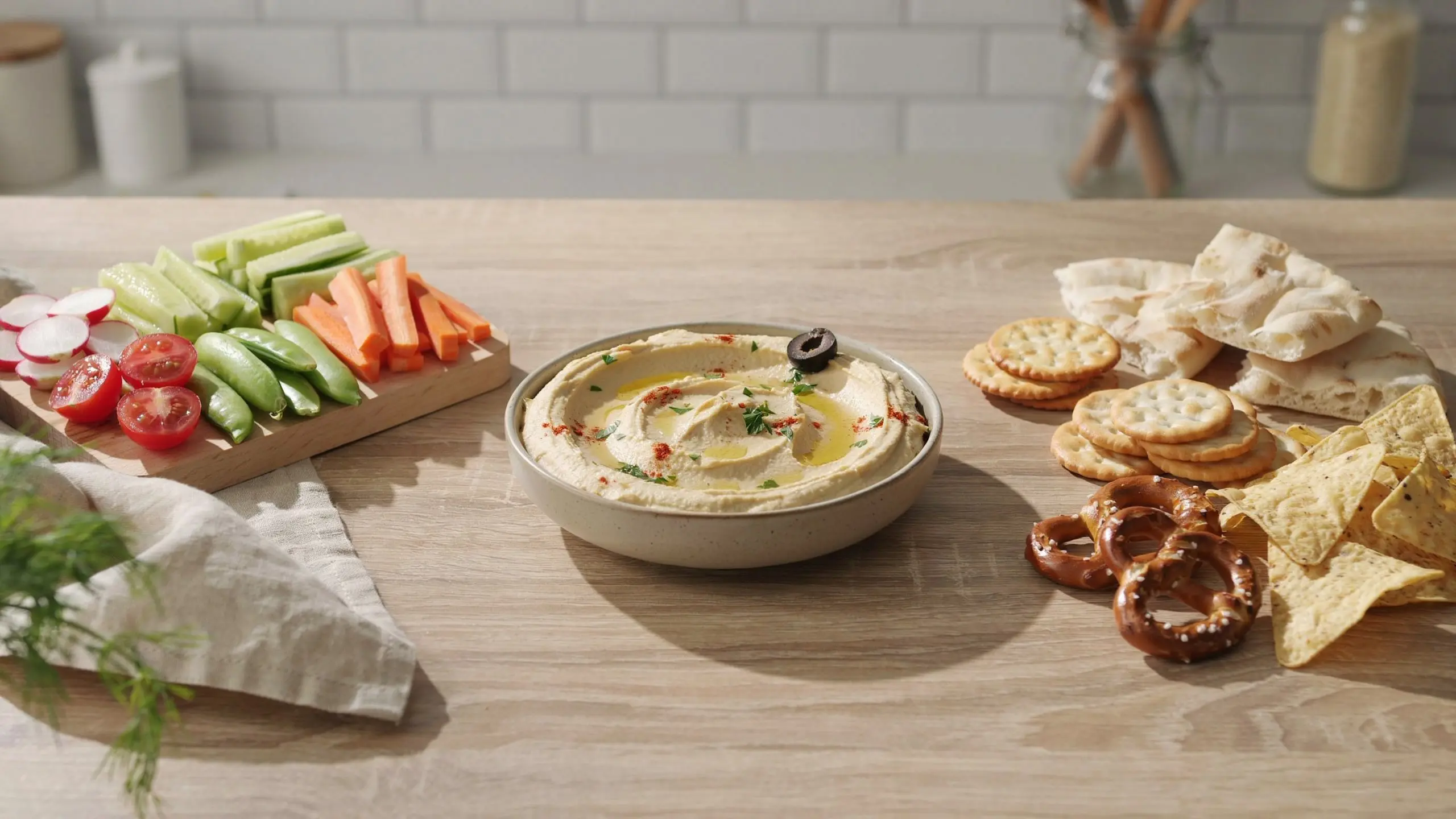
The most sustainable way to include hummus on keto is to stop treating it as the center of a snack and start using it the way you would use a sauce or spread.
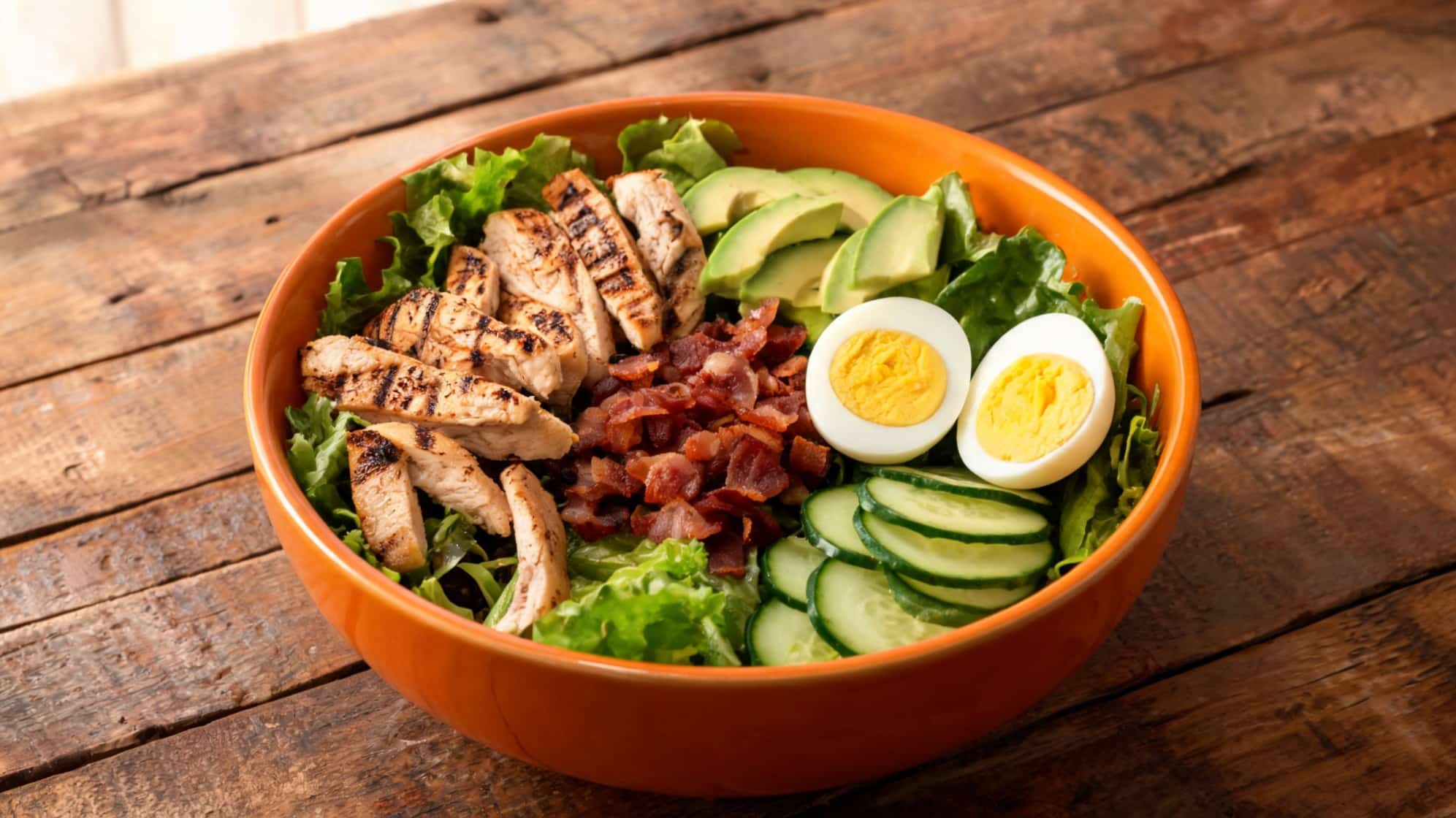
A tablespoon spread across the inside of a lettuce wrap with grilled chicken, a spoonful on a salad bowl with eggs and greens, or a small smear under roasted zucchini, these uses keep the portion naturally small because the hummus is a supporting element, not the main food.
The flavor payoff is the same. The carb cost is much easier to manage.
Best Low-Carb Hummus Alternatives
When hummus feels too risky to portion control or your carb budget is already tight, there are dips that deliver a similar creamy, savory experience with fewer carbs per serving. These are not compromises; they are genuinely good options that many people prefer once they try them.
- Cauliflower Hummus: This is the closest swap to traditional hummus. Steam or roast a head of cauliflower, then blend it with tahini, lemon juice, garlic, olive oil, and salt. The result is a creamy, pale dip with a flavor profile that reads very similarly to the original. Net carbs per 2-tablespoon serving drop to roughly 1 to 2 grams, which is a significant reduction. It also happens to be one of the easiest homemade keto dips to prepare.
- Baba Ganoush: Roasted eggplant blended with tahini, lemon, garlic, and olive oil. Baba ganoush has a smoky, slightly earthy flavor and a similar creamy texture to hummus. A 2-tablespoon serving contains approximately 2 to 3 grams of net carbs. It is a strong keto-compatible choice for anyone who wants a Middle Eastern-style dip with less carb concern than hummus.
- Tahini Garlic Dip: Pure tahini thinned with lemon juice, garlic, and a small amount of water or olive oil gives you the nutty, rich flavor that makes hummus satisfying, without the chickpea carbs at all. Net carbs per 2-tablespoon serving are under 2 grams. It pairs particularly well with cucumber slices and roasted vegetables.
- Avocado Dip: Mashed avocado with lemon, garlic, and salt functions as a creamy dip and is naturally high in fat, which fits keto macros better than hummus does. Net carbs per 2-tablespoon serving are around 1 to 2 grams. If you want a dip that pulls double duty as a fat source and a flavor addition, avocado-based dips are the most keto-aligned option on this list.
- Greek Yogurt Dip: Full-fat plain Greek yogurt seasoned with garlic, dill, cucumber, and lemon makes a thick, high-protein dip that works well with vegetables. Net carbs depend on the brand and preparation, typically 3 to 4 grams per 2-tablespoon serving. It is closer to tzatziki in flavor and is a good option if you want something cool and tangy rather than savory and rich.
Hummus vs. Other Keto Dips
Before committing to hummus as your go-to keto dip, it is worth seeing how it compares to the alternatives across the metrics that matter most for a low-carb diet: net carbs per serving, fat content, and flexibility of portion size.
| Dip | Net carbs (2 tbsp) | Keto fit | Best use on keto |
|---|---|---|---|
| Plain hummus | ~4g | Moderate, requires portion control | Condiment, spread, or small measured dip |
| Guacamole | ~1 to 2g | Strong, higher fat profile | Vegetable dip, bowl topping, lettuce wraps |
| Baba ganoush | ~2 to 3g | Strong, similar texture to hummus | Dip for cucumber, celery, or grilled meat |
| Tahini garlic dip | Under 2g | Very strong, lowest carb count | Sauce for meats, vegetables, bowls |
| Cauliflower hummus | ~1 to 2g | Very strong, best direct hummus swap | Any use where traditional hummus would go |
| Ranch dip (full-fat, low-sugar) | ~1 to 2g | Strong when made with full-fat sour cream | Raw vegetable dip |
Guacamole, baba ganoush, and cauliflower hummus are all easier to use on strict keto because the net carb count per serving is lower and the margin for error is wider.
Hummus remains a valid option, but it sits at the high end of the carb range for a dip, and that means less flexibility with the rest of your meals. If you are running close to your daily limit by mid-afternoon, one of the alternatives above will give you more room.
The same logic applies to other plant-based keto foods: mushrooms on keto are a strong complement here because they pair naturally with dips and add volume to snack plates with almost no carb cost.
Frequently Asked Questions
Is Store-Bought Hummus Keto-Friendly?
Some store-bought hummus can fit keto in small servings, but it depends entirely on the brand and flavor. Plain varieties from Sabra, Cedar’s, or store-brand labels typically contain 4 to 5 grams of net carbs per 2-tablespoon serving, which is workable on flexible keto. Sweet flavors, snack packs with crackers, and flavored versions with added sugars are generally too high in carbs to include. Always check the nutrition label for total carbs, fiber, and added sugar before buying. The serving size on the label is important too because some brands print a 2-tablespoon serving while others use 1 tablespoon, which makes the carb numbers look very different at first glance.
How Many Net Carbs Are in Hummus?
A 2-tablespoon serving of plain traditional hummus contains approximately 4 grams of net carbs, calculated by subtracting fiber from total carbohydrates. At 1 tablespoon, the net carb count drops to roughly 2 grams. At 4 tablespoons, which is a generous dip portion, you are looking at 8 grams or more of net carbs from hummus alone. The USDA FoodData Central database lists plain hummus at approximately 9 to 10 grams of net carbs per 100-gram serving, which translates to the per-tablespoon figures above. Flavored hummus, particularly sweet varieties, will be higher.
Can I Make Keto Hummus Without Chickpeas?
Yes, and cauliflower is the most reliable substitute. Steam or roast one head of cauliflower until fully tender, then blend it with half a cup of tahini, a quarter cup of olive oil, two to three tablespoons of lemon juice, two garlic cloves, and salt to taste. Add a small amount of ice water while blending to get a smooth, light texture. The net carb count per 2-tablespoon serving drops to roughly 1 to 2 grams compared to 4 grams for traditional hummus. Zucchini-based hummus is another option, though the texture is thinner. Both work well with the same low-carb dippers you would use with regular hummus.
Is Hummus Better Than Guacamole for Keto?
Guacamole is the easier choice for keto. Avocado contains roughly 1 to 2 grams of net carbs per 2-tablespoon serving compared to around 4 grams for hummus, and it is naturally higher in fat, which supports keto macros better. Hummus is not a bad food, but its chickpea base gives it a higher carb floor than avocado. If you are tracking strictly, guacamole gives you more flexibility. If you prefer the flavor of hummus, it can still fit, it just requires more attention to the rest of your day’s carb intake.
What Can I Dip in Hummus on Keto?
Cucumber slices, celery sticks, radishes, zucchini rounds, and green bell pepper strips are all solid options. They add crunch and freshness without meaningfully affecting your carb count. Avoid pita bread, crackers, pretzels, tortilla chips, and regular bread. Those dippers can add 15 to 25 grams of carbs to a snack that was otherwise manageable. One practical option is cutting vegetables into larger pieces so each dip picks up a proper amount of hummus. Small vegetable slices can lead to more dips per sitting without realizing it.
Does Hummus Kick You Out of Ketosis?
A single measured serving of 1 to 2 tablespoons is unlikely to kick you out of ketosis on its own, particularly if your other meals that day are very low in carbs. The risk is cumulative: if hummus is eaten in larger portions, or combined with other moderate-carb foods at the same meal, the combined carb load can push total net carbs above the threshold needed to maintain ketosis. For most people, strict ketosis requires keeping net carbs under 20 to 25 grams per day. Hummus at 2 tablespoons uses 4 of those grams, which is possible to fit but leaves little room for error. Understanding where each food sits in your daily carb budget is the same discipline required for popcorn on keto, another food that fits only when the portion is fixed before you start eating.
Is Hummus Okay on a Low-Carb Diet That Is Not Strict Keto?
Yes, hummus is considerably easier to include on a general low-carb diet where the daily carb limit is 50 to 100 grams rather than 20 grams. At that range, a 2 to 3 tablespoon serving with vegetables is a straightforward snack that fits without disrupting the overall approach. The same pairing rules apply: low-carb dippers, a measured serving, and no sweet or flavored varieties with added sugar. For people who are low-carb but not strictly ketogenic, hummus is a much more practical option than it is for those chasing active ketosis.
Final Thoughts
Hummus can fit into a low-carb routine when you treat it as a measured addition rather than a free-flowing dip. You’ve seen how its carbs add up quickly, why portion size matters, and how low-carb swaps can make things easier.
Understanding is hummus keto-friendly helps you decide when it belongs on your plate and when to skip it. That awareness keeps your daily carb budget steady without feeling overly restricted.
You can try smaller portions, test different dips, and see how your body responds across a normal day of eating. Share your experience or compare it with other keto-friendly dips to refine what works best for you in your routine today.