
If you follow keto, edamame can feel confusing. It looks like a smart snack, has protein and fiber, and is easy to order at a sushi restaurant. Then someone points out that it is a soybean, and soybeans are legumes. Now that little green bowl starts to feel questionable.
As a dietitian, I like this question because it is not about blindly following food rules. It is about understanding how a food fits your plate. With keto, portion size, net carbs, sauces, and the rest of the day all matter.
That is where the question is: edamame keto becomes more practical than simple. The answer depends on carb math, serving size, preparation, and how it fits into your full day of eating.
| Food | Serving | Calories | Protein | Net Carbs | Fat | Key Nutrient |
| Edamame (shelled, cooked) | 1/2 cup (75g) | ~94 kcal | ~9g | ~4–6g | ~4g | Folate, Vitamin K, Isoflavones |
Is Edamame Keto-Friendly?
Yes, edamame can be keto-friendly in moderate portions, but it is not a free food, and it is not the right fit for every keto approach. Whether it works depends on your daily carb target, how much you eat in one sitting, and how it is prepared.
Keto is a low-carbohydrate, higher-fat eating pattern designed to keep carbohydrate intake low enough to support a metabolic state called ketosis. According to NCBI StatPearls, ketogenic diets typically restrict carbohydrates significantly, though exact targets vary. Most people following a strict keto diet aim for somewhere between 20 and 50 grams of net carbs per day.
Edamame is a young soybean harvested before it hardens. It is found fresh, frozen, steamed, in-pod, or shelled, and it is a common snack and appetizer across Japanese, Chinese, and Southeast Asian cuisine. Unlike most legumes, edamame has a relatively high fiber and protein content compared with its total carbs. That fiber is what makes the keto conversation more nuanced than a flat no.
The whole soy foods, like edamame, are rich in plant protein, fiber, and essential nutrients. That nutritional profile is part of why edamame behaves differently from starchy beans in a low-carb context.
Is edamame low carb enough for keto? In a small serving, often yes. In a large bowl with sweet sauce, often no. The best way to think about it is as a controlled keto snack or protein addition, not an unlimited side dish.
How Many Net Carbs Are in Edamame?

Net carbs are what most keto eaters track, and the formula is simple: net carbs equal total carbohydrates minus dietary fiber. If you are wondering if edamame is low carb, this net carb number is the key detail to check.
Because fiber is not digested and absorbed the same way as other carbohydrates, it does not raise blood sugar or affect ketosis the way starch and sugar do.
The FDA Nutrition Facts label is the most reliable place to check total carbs, fiber, added sugars, and serving size for any packaged edamame product because brands and preparations vary significantly.
| Serving | Total Carbs | Fiber | Approx. Net Carbs | Keto Note |
| 1/2 cup shelled edamame | about 8 to 10g | about 4 to 5g | about 4 to 6g | Often fits keto |
| 1 cup shelled edamame | about 14 to 18g | about 8g | about 6 to 10g | Needs carb planning |
| Dry-roasted edamame | varies widely | varies | check label | Watch serving size |
| Sauced edamame | varies widely | varies | can rise fast | Check the sugar in sauce |
The sauce is often the biggest carb surprise. Plain steamed edamame stays manageable. A sweet chili glaze or ponzu-style dipping sauce can add as many carbs as the edamame itself.
Checking a restaurant nutrition page or product label before eating is the most accurate step, especially for packaged versions where added starches and flavorings sometimes appear in the fine print.
This is why many keto eaters also look at high-fiber low-carb foods as a reference framework for tracking edamame alongside other plant-based options.
Is Edamame Keto-Safe When Eating Out?
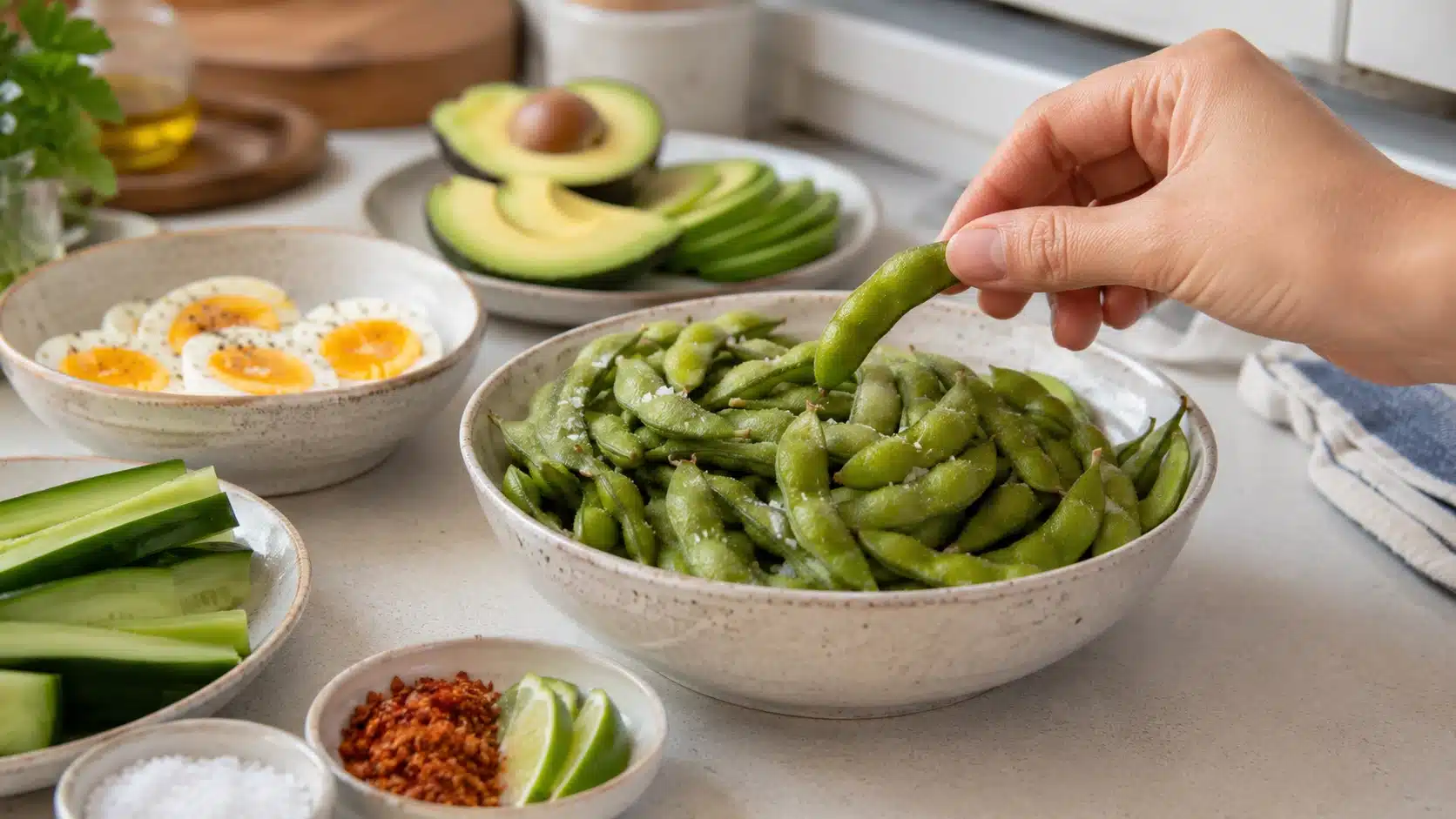
Restaurant edamame is typically served in-pod, steamed, and salted. That preparation is generally the safest keto choice because it involves no added sugar and the carb count is predictable. The issue arises with variations that arrive pre-glazed, sticky, or mixed into a sauce before it reaches the table.
At sushi restaurants, the plain salted bowl is almost always a safe order. Teriyaki-style or sweet ponzu-dressed versions are the ones to question. Asking for sauce on the side is a practical solution because it lets you control exactly how much gets used.
Glazes and sticky coatings that are premixed during cooking are harder to estimate, and without a nutrition page it is difficult to know the added sugar content.
At restaurants serving edamame in salads or grain bowls, the challenge is that the edamame may carry dressing or marinade from the kitchen. Asking how the edamame is prepared takes 10 seconds and answers the carb question far more accurately than guessing from appearance.
The same logic applies to ordering keto-smart Chinese food, where sauces are often the carb variable that matters most.
Which Edamame Preparations Are Keto-Friendly?
Plain steamed or salted edamame is usually the safest keto choice because it has no added sugar, no heavy sauce, and a straightforward nutrition label. The preparation changes the carb picture more than most people expect.
| Preparation | Keto Fit | Why |
| Steamed edamame with salt | Strong fit | Simple, no added sugar |
| Garlic butter edamame | Often fits | Watch added sauces |
| Chili-lime edamame | Often fits | Low sugar if homemade |
| Dry-roasted edamame | Depends | Serving size can be small, check the label |
| Teriyaki edamame | Often a poor fit | Sugar in sauce adds carbs |
| Sweet chili edamame | Often a poor fit | Sauce can raise carbs significantly |
| Edamame pasta | Depends | Often higher serving carbs, check label |
Dry-roasted edamame deserves a closer look before assuming it is keto-safe. Some brands have small listed serving sizes, which can make the carb count look lower than it is in practice if you eat a full handful. Some products also include added oils, flavorings, maltodextrin, or starches that change the label values.
For dry-roasted versions, is edamame low carb depends on the serving size and the product label.
Restaurant edamame is usually fine when it comes salted and plain. When it arrives glazed, sticky, or with a sweet sauce already mixed in, the carb count is harder to estimate without asking.
What Do Keto Eaters Say About Edamame?

In a Reddit discussion on the topic, the general takeaway was clear: edamame can fit keto, but only when the portion aligns with daily macro targets. The conversation stayed practical rather than becoming a debate about whether soybeans belong on keto at all.
The bigger concern raised by community members was not edamame alone but the full meal context around it. Sweet dressings, thick sauces, and rice-heavy sides were flagged as the more likely culprits pushing a keto meal over the carb limit. Edamame was not the problem. What surrounded it was.
Several responses emphasized checking the sauce label as the single most useful habit when including edamame in a keto meal. Sweet chili, hoisin, and ponzu-style sauces with added sugar were specifically mentioned as easy places to accidentally add carbs without noticing.
The thread also pointed toward a mindset that experienced keto eaters tend to share: no single ingredient makes or breaks ketosis.
What matters is the total carb count across the whole plate. Someone eating plain steamed edamame with a protein and low-carb vegetables is in a very different position from someone eating edamame tossed in teriyaki glaze alongside white rice.
This is the same practical lens worth applying to other borderline keto foods, such as mushrooms on a keto plan, where portion and preparation matter more than the food category itself.
What Edamame Recipes Work for Keto?
Edamame works best on keto when the flavor comes from fat, salt, acid, herbs, and spices rather than sugar or sweet sauces. These four recipes keep preparation simple and help each serving feel more satisfying without adding meaningful carbs.
1. Sea Salt Steamed Edamame
Ingredients: Edamame pods, sea salt, water, fresh red chilies, lemon juice, soy sauce.
Rub the edamame generously with salt and let it rest for 10 minutes. Boil in salted water for 2 to 3 minutes for frozen edamame or 5 to 6 minutes for fresh. Serve warm with a light dipping sauce made from finely chopped red chili, soy sauce, and a squeeze of lemon.
Nutritional Benefits: Low in fat, a good source of plant protein and fiber, and the simple preparation keeps carbs minimal with no added sugar in the dip.
2. Garlic Butter Edamame
Ingredients: Frozen edamame pods, butter, minced garlic, ponzu sauce or soy sauce with lemon or lime juice, a touch of sugar, flaky sea salt.
Cook edamame in salted boiling water for one to two minutes, then drain and rinse. In a pan on medium heat, melt butter and sauté minced garlic until fragrant. Add a splash of ponzu sauce and a small amount of sugar to balance the savory notes. Toss edamame in the sauce until each pod is well coated. Finish with flaky sea salt.
Nutritional Benefits: Butter adds fat to support keto macros, garlic provides flavor without carbs, and the small amount of sugar used is spread across the full batch, keeping individual carbs low.
3. Edamame Salad Bowl
Ingredients: Frozen shelled edamame, cucumber, celery, bell pepper, avocado, hemp hearts, lemon or lime juice, olive oil, sesame oil, grated ginger, salt, and black pepper.
Cook the edamame in boiling water for 3 to 4 minutes, then drain and transfer them to a large mixing bowl. Add diced cucumber, celery, bell pepper, avocado, and hemp hearts. Shake together lemon or lime juice, olive oil, sesame oil, grated ginger, salt, and black pepper, then pour it over the salad and mix well.
Nutritional Benefits: High in plant protein from edamame and hemp hearts, rich in healthy fats from avocado and olive oil, and full of crunch from low-carb vegetables.
4. Edamame and Avocado Toast
Ingredients: Frozen shelled edamame, avocado, garlic, olive oil, coconut yogurt, lime juice, salt, pepper, keto bread, fresh herbs such as dill and parsley, snow peas, sunflower shoots, and hemp seeds.
Defrost the edamame without cooking. Blend edamame with avocado, a small sliver of garlic, olive oil, coconut yogurt, salt, and pepper in a food processor until slightly chunky with some texture remaining. Spread it over toasted keto bread and finish with a squeeze of lime, fresh herbs, snow peas, sunflower shoots, and a sprinkle of hemp seeds.
Nutritional Benefits: Combines plant protein from edamame with healthy monounsaturated fats from avocado and olive oil. Using keto bread keeps the recipe lower in carbs than regular toast, while herbs, snow peas, and hemp seeds add freshness, texture, and extra nutrients.
How Much Edamame Can You Eat on Keto?
A half cup of shelled edamame is the practical starting point for most keto eaters. That portion delivers roughly 4 to 6 grams of net carbs, around 9 grams of protein, and meaningful fiber, without consuming too large a share of a typical 20 to 50 gram daily carb budget.
The number that matters most is how much carb room is left in the day before the edamame gets served.
Treat edamame the same way you would handle a handful of macadamia nuts on keto: enjoyable in a measured amount, not something eaten freely from a shared bowl without tracking. That framing makes it easier to include without accidentally going over the carb target.
- 1/4 cup shelled: Best for strict budgets of 20g net carbs per day; works as a garnish or small add-on
- 1/2 cup shelled: Practical keto snack for most people; fits most daily carb targets without disruption
- 1 cup shelled: Possible but requires planning the rest of the day’s meals around it
- More than 1 cup: Difficult to fit on strict keto without going over the carb limit, even with a low-carb eating day otherwise
The best use of edamame on keto is as a snack, a plant protein addition, or a small side rather than the main carbohydrate source for the day.
Edamame can sit alongside other smart choices on a broader low-carb lunch rotation where each component is tracked as part of the whole plate rather than evaluated in isolation.
What Should You Avoid When Eating Edamame on Keto?

The biggest keto issue with edamame is usually not the bean itself but the sauce, the serving size, and the assumptions made when buying packaged versions. Small mistakes here can push a keto-friendly snack over the carb limit without the eater realizing it.
- Sweet sauces: Teriyaki, sweet chili, and hoisin sauces can add sugar quickly. Always check the label on packaged sauces or ask for the sauce on the side when ordering at a restaurant.
- Oversized portions: A large shared bowl of edamame can easily reach one cup or more per person. If the rest of the day already has carbs from vegetables, nuts, or dairy, that portion may push the total higher than intended.
- Dry-roasted snack bags: These are easy to overeat because the listed serving size is often much smaller than a normal handful. Reading the label before opening the bag makes a significant difference.
- Restaurant sweet glazes: Salted, plain, steamed edamame is the safer restaurant order. Glazed or sticky versions at sushi restaurants often carry hidden sugar that is not listed on a standard menu. Also consider that other popular keto snacks can carry the same hidden-carb problem when flavored versions replace plain preparations.
Avoiding these small mistakes lets edamame stay useful instead of accidentally pushing the meal over the carb target.
Frequently Asked Questions
Is edamame keto-friendly for strict keto under 20g net carbs?
Yes, in small portions. A quarter cup shelled delivers around 2 to 3 grams of net carbs and fits within a 20-gram daily budget. The key is measuring the serving rather than eating from a shared bowl, and keeping preparation plain without added sauces or glazes.
Is frozen edamame okay for keto?
Frozen plain edamame is generally fine for keto because it is just young soybeans without added sugar or starch. Choose unsauced bags and check the Nutrition Facts panel before buying. Flavored frozen varieties may include starch, sugar, or sauces that significantly change the carb count per serving.
Can edamame kick you out of ketosis?
Edamame alone is unlikely to disrupt ketosis in a half-cup measured portion. What disrupts ketosis is total daily net carbs exceeding your threshold, not any single food. A full cup of edamame covered in sweet sauce alongside other carb sources in the same meal is a more realistic risk than plain edamame itself.
Is dry-roasted edamame keto?
Dry-roasted edamame can fit keto, but the label needs checking. Some brands list small serving sizes that make the carb count appear lower than it is in practice. Some products also include added starches, flavorings, or sugars. Always compare total carbs, fiber, serving size, and added sugar on the specific product before buying.
Is edamame pasta keto-friendly?
Edamame pasta is higher in protein than wheat pasta and may have a lower net carb count, but it is not automatically keto-safe. Serving size matters significantly, and some products have 15 to 20 grams of net carbs per serving. Read the label against your daily target before including it.
Can you eat edamame on keto every day?
Daily inclusion is possible at a measured half-cup portion if it fits within your total carb budget. The practical limit is that edamame is not zero-carb, so eating it every day means consistently reserving 4 to 6 grams of your daily net carb allowance for it. Most people rotate it rather than eating it daily at strict keto targets.
Does edamame cause bloating on keto?
Edamame can cause bloating for some people because it contains fiber and plant compounds that may ferment in the gut, particularly for those who are newly increasing dietary fiber. Starting with a small portion, chewing thoroughly, and staying hydrated helps. If bloating persists, reduce the serving or try a different low-carb protein source.
Final Takeaway
Edamame can fit a well-planned keto diet when the portion is measured, the preparation is simple, and the rest of the day’s carbs leave room for it.
For anyone tracking whether edamame is low-carb enough to include regularly, the answer is a practical yes in small to moderate portions, particularly for fresh steamed or lightly seasoned versions.
Edamame works best as a snack, a protein addition, or a small side in a meal built around fat, protein, and low-carb vegetables. The answer to Is edamame keto depends on portion size, net carbs, and preparation.
How do you usually eat edamame on keto? Steamed and salted, roasted from a bag, mixed into a bowl, or as pasta? Drop it in the comments, and the reply can suggest a lighter build or preparation swap worth trying.
Sources
- NIH StatPearls, “Ketogenic Diet.” National Institutes of Health. https://www.ncbi.nlm.nih.gov/books/NBK499830/
- USDA FoodData Central, “Edamame, cooked.” United States Department of Agriculture. https://fdc.nal.usda.gov/