| Food | Serving | Calories | Protein | Carbs | Fat | Key Nutrient |
| Fresh vegetable spring roll | 1 roll (~80g) | 60-100 kcal | 1-3g | 12-18g | 0-1g | Vitamins A, C, K |
| Fresh shrimp spring roll | 1 roll (~100g) | 100-180 kcal | 8-12g | 14-20g | 1-3g | Lean protein, iodine |
| Fresh tofu spring roll | 1 roll (~100g) | 110-160 kcal | 6-10g | 15-20g | 3-5g | Plant protein, calcium |
| Fresh roll with avocado | 1 roll (~110g) | 140-220 kcal | 4-8g | 16-22g | 7-12g | Monounsaturated fats |
| Fried vegetable spring roll | 1 roll (~75g) | 120-200 kcal | 2-4g | 14-20g | 6-10g | Iron (small amount) |
| Fried meat spring roll | 1 roll (~90g) | 150-250+ kcal | 5-9g | 14-20g | 8-14g | Protein, saturated fat |
Nutritional values based on USDA FoodData Central data. Individual values may vary by brand, preparation method, and serving size. Verify at fdc.nal.usda.gov.
| Disclaimer: This article is for informational and educational purposes only. It does not constitute medical advice. Always consult a qualified healthcare provider before starting a new nutrition or wellness program, especially if you have a medical condition such as diabetes or cardiovascular disease. |
Are Spring Rolls Healthy? Fresh vs. Fried Matters Most
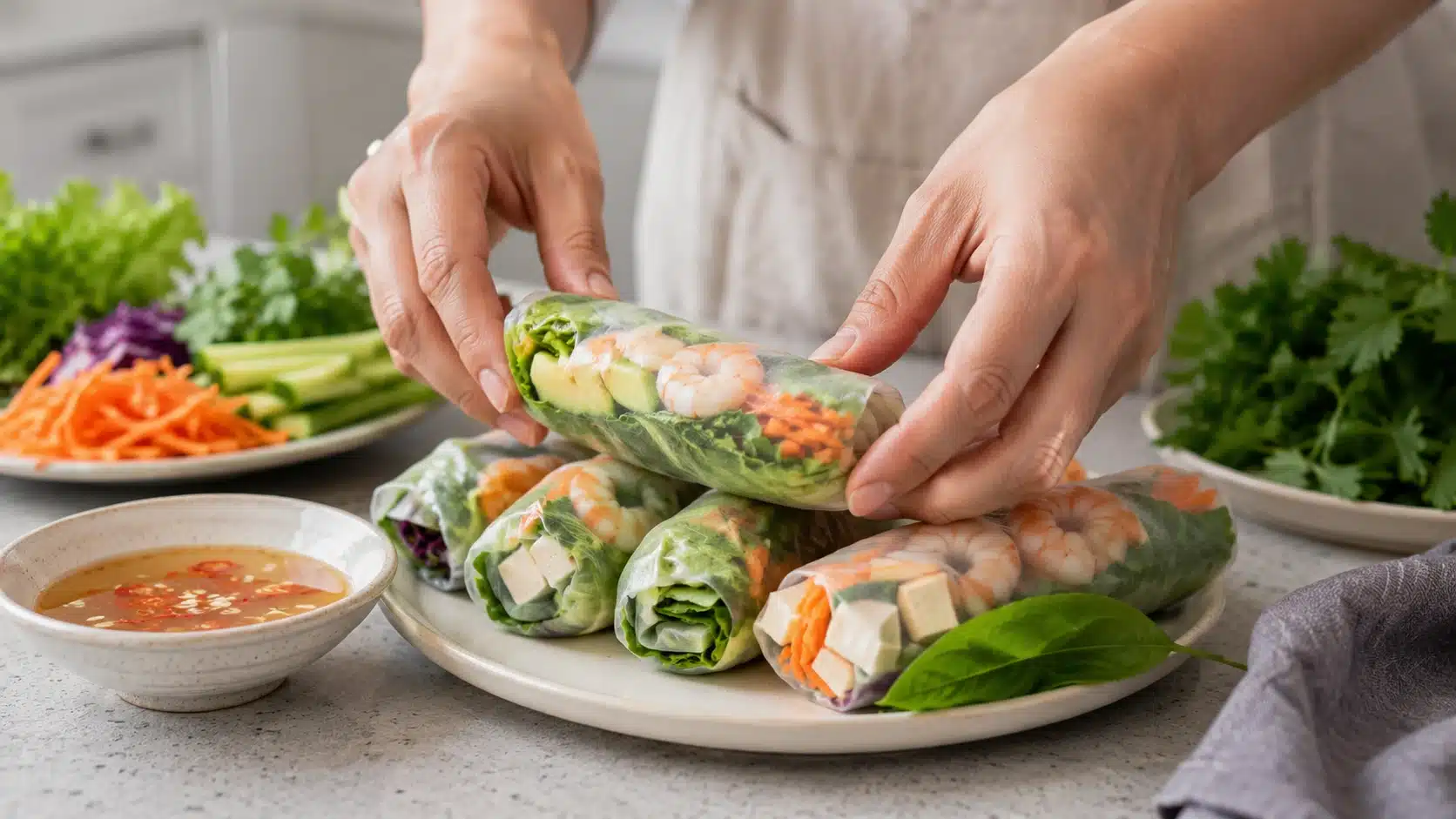
Yes, spring rolls can be healthy, but it depends on how they are made. A fresh spring roll with rice paper, raw vegetables, herbs, and lean protein can be a light, balanced meal or snack. A fried spring roll is different because the wrapper absorbs oil, which raises calories and fat even when the filling is mostly vegetables.
This is why the first question should not be “Are spring rolls healthy?” It should be “Are they fresh or fried?” Fresh rolls usually keep the nutrition lighter because they are not cooked in oil. They also hold crisp vegetables, which add fiber, water, vitamins, and volume. Fried rolls can still fit into your diet, but they work better as an occasional side than an everyday choice.
The filling matters too. Shrimp, tofu, or chicken can make spring rolls more filling by adding protein. Vegetables like cabbage, cucumber, carrots, lettuce, bell pepper, and herbs add crunch and nutrients. Sauce and portion size also matter because peanut sauce, hoisin sauce, and sweet chili sauce can add extra calories, sodium, and sugar.
The table below shows the biggest differences between fresh and fried spring rolls.
| Factor | Fresh Spring Rolls | Fried Spring Rolls |
|---|---|---|
| Wrapper | Thin rice paper | Thicker wheat-based wrapper |
| Cooking Method | Served fresh, not fried | Deep-fried or pan-fried |
| Calories | Usually lower | Usually higher |
| Fat Content | Low unless avocado or rich sauce is added | Higher because the wrapper absorbs oil |
| Texture | Soft, fresh, and crisp from vegetables | Crispy outside, heavier overall |
| Vegetable Nutrition | Raw vegetables keep more texture and nutrients | Some nutrients may be reduced during cooking |
| Best Use | Everyday snack, light lunch, or balanced meal | Occasional appetizer, side, or treat |
A fresh spring roll is usually the healthier choice, especially when it includes vegetables, enough protein, and a lighter dipping sauce. A fried vegetable spring roll is not automatically healthy just because it has vegetables inside. The wrapper and cooking oil can change the nutrition quickly, so always look at the full roll, not just the filling.
What Affects Spring Roll Calories and Nutrition?
Spring roll nutrition depends on more than the filling. The wrapper, cooking method, protein, noodles, sauce, and portion size all change the final calorie count. A fresh roll with vegetables and shrimp can be light and filling, while a fried roll with a heavy sauce can become much higher in calories, fat, sodium, and added sugar.
- Vegetables: Lettuce, cabbage, cucumber, carrots, bell pepper, and herbs add fiber, water, vitamins, and volume. Since they stay raw, they keep more of their nutrients.
- Protein: Shrimp, tofu, or chicken makes the roll more filling. Protein helps turn spring rolls from a light snack into a meal that can keep hunger down longer.
- Rice Paper: Rice paper is light, gluten-free, and usually only adds about 30–35 calories per sheet. It is not the main nutrition concern in fresh rolls.
- Noodles: A small amount of rice vermicelli adds texture, but too much can make the roll carb-heavy. Keep noodles as a small supporting ingredient.
- Sauce: Sauce can add the most hidden calories, sugar, and sodium. Peanut-based sauce, hoisin, and sweet chili sauce can quickly double the meal’s calorie load, so use smaller amounts or choose lighter dips.
- Portion Size: Two fresh rolls with shrimp and vegetables work well as a snack or light lunch. Three to four with a good protein filling can function as a complete meal. Eating six fried rolls as a starter before a main course changes the math considerably. Portion is a lever you control regardless of what kind of roll is in front of you.
The table below gives a practical calorie range for common spring roll types.
| Spring Roll Type | Approx. Calories Per Roll | Main Nutrition Driver |
|---|---|---|
| Fresh vegetable spring roll | 60–100 kcal | Rice paper and raw vegetables |
| Fresh shrimp spring roll | 100–180 kcal | Lean protein and a small noodle portion |
| Fresh tofu spring roll | 110–160 kcal | Plant protein and rice paper |
| Fresh roll with avocado | 140–220 kcal | Healthy fat from avocado |
| Fried vegetable spring roll | 120–200 kcal | Oil absorbed by the wrapper |
| Fried meat spring roll | 150–250+ kcal | Fried wrapper and denser filling |
| Sauce, 2 tablespoons | Adds 30–150 kcal | Peanut, hoisin, and sweet sauces add most |
These numbers are estimates, not fixed values. Restaurant size, sauce amount, filling ratio, and cooking method can all change the final count. For packaged rolls, check the Nutrition Facts label. For homemade rolls, add up the rice paper, protein, noodles, vegetables, and sauce separately.
Healthy Dipping Sauces for Spring Rolls

The sauce is often where a light spring roll meal gets heavier than expected. The right dipping sauce keeps flavor high and calories, sodium, and added sugar in check.
Nuoc Cham (Vietnamese dipping sauce): Made with fish sauce, lime juice, water, garlic, chili, and a small amount of sugar. It is tangy, bright, and far lower in calories than peanut or hoisin sauce. A tablespoon adds flavor without significantly changing the nutrition of the meal.
Lime and low-sodium soy sauce: A simple mix of fresh lime juice, low-sodium soy sauce, and a pinch of chili. This is one of the easiest lighter options with minimal ingredients and good sodium control compared to standard soy sauce.
Thai peanut sauce: Peanut sauce made with natural peanut butter, lime juice, a small amount of low-sodium soy sauce, water, and fresh ginger. Thinning it with water and lime reduces the calorie density while keeping the flavor. Portion size still matters because peanut butter adds up quickly.
Ginger-rice vinegar dip: Rice vinegar, fresh grated ginger, a small amount of honey, and chili flakes. Low in calories, naturally acidic, and supports digestion. This works particularly well with tofu and vegetable rolls.
Avocado-herb dip: Mashed avocado with lime juice, cilantro, and a pinch of salt. Higher in fat than the other options, but rich in healthy monounsaturated fats and satisfying in small amounts. Best with lighter protein rolls like shrimp or chicken.
The sauce does not have to be removed entirely. A smaller portion of a lighter sauce keeps the roll meal balanced without making it feel plain.
Are Spring Rolls Good for Weight Loss?
Fresh spring rolls can fit a weight-loss eating pattern when the filling is built around lean protein and vegetables rather than noodles and sauce. The key variables are calorie density and satiety.
A two-roll serving with shrimp, cucumber, cabbage, herbs, and a tablespoon of nuoc cham runs roughly 200 to 250 calories while providing 15 to 20 grams of protein and 4 to 6 grams of fiber. That combination supports fullness without a high calorie load.
Where people run into trouble on a weight loss goal is portion size and sauce volume. Eating four or five fried rolls with a full bowl of peanut sauce can easily reach 600 to 900 calories before the main course arrives, a pattern similar to what happens with other Asian wrapped foods when portion size goes unchecked.
The roll type is the first decision to make. The sauce portion is the second.
| Nutrition Tip: To maximize satiety per calorie, build your fresh roll around shrimp or chicken as the primary filling, use vegetables as the bulk, keep noodles to one small handful, and serve sauce in a one-tablespoon portion on the side. That structure consistently delivers 100 to 150 calories per roll with 8 to 12 grams of protein. |
Are Spring Rolls Safe for People with Diabetes?
Fresh spring rolls made with rice paper, lean protein, and primarily non-starchy vegetables can fit a diabetes-friendly eating plan.
Rice paper does contain carbohydrates, roughly 7 to 9 grams per sheet, so the total carbohydrate count of a two-roll serving with noodles sits at approximately 25 to 35 grams. That is a manageable amount within a balanced meal when protein and fiber are also present to slow glucose absorption.
The variables to watch for diabetes management are noodle quantity, sauce sugar content, and overall portion. Sweet chili sauce can add 6 to 10 grams of sugar per tablespoon.
Nuoc cham or a ginger-vinegar dip is a better choice for blood sugar control. For specific guidance on carbohydrate targets, work with a registered dietitian who can tailor recommendations to your situation.
The American Diabetes Association’s food and nutrition resources are a reliable starting point for understanding carbohydrate management.
Are Frozen Spring Rolls Healthy?
Frozen spring rolls are more convenient but typically higher in sodium, refined starch, and added oil than homemade versions, especially when they come pre-fried. A single frozen fried spring roll can contain 300 to 500 milligrams of sodium, and a three-roll serving can push toward 1,000 milligrams or more.
If you use frozen rolls, check the label for four numbers: calories per serving, sodium, saturated fat, and serving size. Baking or air-frying frozen rolls rather than deep-frying them again reduces added oil.
Look for frozen rolls where the ingredient list leads with vegetables and protein rather than refined flour and oil. The calorie count alone does not tell the full story. Sodium is often the more important number for people managing blood pressure or cardiovascular risk.
Summer Rolls, Egg Rolls, and Related Options
Some roll-style dishes are close to spring rolls, but the health answer still depends on the wrapper, cooking method, filling, sauce, and portion size. Instead of judging by the name, check what the roll is made with and whether it is fried.
- Summer rolls: Usually a lighter choice because they are fresh, not fried, and often filled with vegetables, herbs, shrimp, tofu, or chicken. They are closest to the healthier rice paper spring roll style.
- Egg rolls: Usually heavier because they are made with a thicker wrapper and deep-fried. They can still fit occasionally, but they are better treated as a side than a main healthy meal.
- Lettuce wraps: Often a lighter option because lettuce replaces rice paper or dough. They work well when filled with lean protein, crunchy vegetables, and a lighter sauce.
- Air-fried rolls: A middle option for people who want crunch without deep-frying. They still use a wrapper, but less oil usually means fewer added fat calories than deep-fried rolls.
- Restaurant “crispy rolls”: These are usually fried, even if the filling sounds healthy. Words like crispy, golden, crunchy, or fried are the clues to check before ordering.
The best way to judge any roll is simple: look for fresh vegetables, enough protein, a lighter wrapper, less oil, and sauce served on the side. The name helps, but the cooking method tells you more.
Five Healthy Spring Roll Recipes to Try
These recipes are built to hit the nutritional marks that make spring rolls a sound everyday choice: sufficient protein, high vegetable volume, controlled noodle quantity, and a lighter sauce on the side.
Spring rolls can be a complete, satisfying meal when the filling includes enough protein and produce. Below are the best healthy recipe options, each with ingredients, a fuller description, and nutritional benefits.
1. Vietnamese Fresh Spring Rolls

Ingredients: Rice paper, shrimp or tofu, rice vermicelli noodles, lettuce, cucumber, carrots, bean sprouts, mint, and cilantro.
A fresh Vietnamese-style roll made with rice paper, shrimp or tofu, crisp vegetables, herbs, and a small amount of rice noodles. It is light, filling, and works well as a balanced meal or snack.
How to make it:
- Soften one rice paper sheet in warm water for a few seconds.
- Place it flat on a clean plate or cutting board.
- Add lettuce first to create a base for the filling.
- Layer shrimp or tofu, cucumber, carrots, bean sprouts, mint, cilantro, and a small amount of rice noodles.
- Fold the sides inward, then roll tightly from the bottom until sealed.
Nutritional Benefits: High in lean protein, rich in fiber and vitamins from raw vegetables, and low in fat. One of the most balanced ready-to-eat spring roll options available.
2. Shrimp and Avocado Summer Rolls

Ingredients: Rice paper, cooked shrimp, avocado slices, cucumber, shredded cabbage, fresh basil, and lime-soy dipping sauce.
A light but satisfying roll with lean shrimp, creamy avocado, crunchy vegetables, and fresh basil. It gives you protein, healthy fat, and fiber without feeling heavy.
How to make it:
- Dip one rice paper sheet in warm water until soft but still easy to handle.
- Lay it flat on a clean surface.
- Add shrimp, avocado slices, cucumber, shredded cabbage, and fresh basil.
- Keep the filling centered so the roll closes neatly.
- Fold both sides inward.
- Roll from the bottom while holding the filling gently in place.
Nutritional Benefits: Lean protein from shrimp, healthy monounsaturated fats from avocado, and fiber from cabbage and cucumber. Naturally low in added sugar and sodium.
3. Tofu and Purple Cabbage Rolls

Ingredients: Rice paper, firm tofu, purple cabbage, shredded carrots, cucumber, cilantro, and a ginger-soy dipping sauce.
A colorful plant-based roll made with firm tofu, purple cabbage, carrots, cucumber, and cilantro. It has good crunch, steady protein, and works well for vegetarian or vegan meals.
How to make it:
- Press the tofu lightly to remove extra water, then slice it into thin strips.
- Soften one rice paper sheet in warm water.
- Place it on a clean plate or board.
- Add tofu, purple cabbage, shredded carrots, cucumber, and cilantro.
- Fold the sides inward to hold the filling.
- Roll it tightly from the bottom until sealed.
Nutritional note: One roll provides approximately 110 to 150 calories, 6 to 9 grams of plant protein, and is suitable for vegan and vegetarian diet patterns.
4. Chicken and Herb Fresh Rolls

Ingredients: Rice paper, shredded poached chicken breast, lettuce, cucumber, bean sprouts, mint, and a lime-chili dipping sauce.
A protein-rich fresh roll made with shredded chicken, lettuce, cucumber, bean sprouts, and mint. It is filling enough for lunch while still feeling light and fresh.
How to make it:
- Shred the poached chicken breast into thin pieces.
- Soften one rice paper sheet in warm water.
- Lay it flat on a clean surface.
- Add lettuce, chicken, cucumber, bean sprouts, and mint.
- Keep the filling even so each bite has protein and vegetables.
- Fold in the sides, then roll tightly from the bottom.
Nutritional Benefits: High protein content, low fat, and good fiber from fresh herbs and vegetables. Keeps well for a few hours, making it practical for lunch prep.
5. High-Fiber Veggie Rolls

Ingredients: Rice paper, cabbage, carrots, bell pepper, cucumber, bean sprouts, fresh herbs, and a light vinegar-chili dip.
A crisp vegetable roll made with cabbage, carrots, bell pepper, cucumber, sprouts, and herbs. It is low in calories, high in fiber, and best as a snack or light side.
How to make it:
- Slice the cabbage, carrots, bell pepper, and cucumber into thin strips.
- Soften one rice paper sheet in warm water.
- Place it flat on a clean plate or board.
- Add cabbage, carrots, bell pepper, cucumber, bean sprouts, and fresh herbs.
- Do not overfill the roll, or the rice paper may tear.
- Fold the sides inward and roll tightly from the bottom.
Nutritional Benefits: Very high in dietary fiber, rich in vitamins C and K, and extremely low in calories. Best as a snack or light side alongside a protein-based dish.
Frequently Asked Questions
How many spring rolls make a meal?
Two fresh spring rolls can work as a light snack, while three to four can make a meal if they include enough protein. Shrimp, tofu, or chicken helps make them more filling. Add a side salad, soup, or extra vegetables if the rolls feel too light.
Can I make spring rolls without noodles?
Yes, spring rolls can be made without rice noodles. Replacing noodles with extra lettuce, cabbage, cucumber, carrots, or herbs lowers the carb load and adds more crunch. This also makes the rolls feel lighter while keeping volume high, especially if you include shrimp, chicken, or tofu.
How long do fresh spring rolls last?
Fresh spring rolls taste best the same day they are made. Rice paper can dry out or become sticky in the fridge. If you need to store them, wrap each roll in damp paper towel, place them in an airtight container, and eat them within 24 hours.
What protein is best in spring rolls?
Shrimp, chicken, and tofu are the most practical protein choices for spring rolls. Shrimp is lean and light, chicken is filling and mild, and tofu works well for plant-based diets. The best option depends on your nutrition goal, taste preference, and whether you want a lighter snack or a fuller meal.
Can kids eat spring rolls?
Yes, kids can eat spring rolls if the ingredients are age-appropriate and easy to chew. Use soft vegetables, mild protein, and a simple sauce on the side. For younger children, cut rolls into smaller pieces and avoid very spicy sauces, large herbs, or tough raw vegetables.
Are spring rolls high in sodium?
Spring rolls themselves are not always high in sodium, but sauces, packaged fillings, frozen rolls, and restaurant versions can raise the total quickly. Soy sauce, hoisin sauce, and some peanut sauces are common sodium sources. Choose low-sodium dips and fresh homemade fillings when sodium control matters.
What vegetables work best in spring rolls?
Cucumber, carrots, cabbage, lettuce, bell pepper, bean sprouts, and fresh herbs work especially well in spring rolls. They add crunch, color, fiber, and freshness without making the roll too heavy. Slice vegetables thinly so the rice paper wraps tightly and the roll is easier to eat.
Final Verdict
Spring rolls can be a smart food choice when you know what is inside them and how they are made.
Fresh rolls with lean protein, raw vegetables, and a lighter dipping sauce give you fiber, vitamins, and steady fullness without too many calories. Fried rolls, heavy sauces, large portions, and frozen versions with high sodium need more care.
If you have been asking, Are spring rolls healthy, the real answer depends on the wrapper, filling, sauce, and serving size. I would start with two fresh rolls, add protein you enjoy, and keep sauce measured.
Try these tips next time and share your favorite spring roll combo.