Calories in a sushi roll are not as predictable as the menu makes them seem. A single roll can range from 200 to over 700 calories depending on what goes inside.
Sushi nutrition facts vary dramatically based on the amount of rice, protein choice, fillings, and sauces. Understanding what drives those numbers changes how you order.
This breakdown covers every core component, rolls, nigiri, sashimi, and the ingredients that push calories higher than expected.
| Disclaimer: This is for informational and educational purposes only. It does not constitute medical advice. Always consult a qualified healthcare provider before starting a new nutrition or wellness program. Nutritional values based on USDA FoodData Central data. |
How Many Calories Are in a Sushi Roll? (Quick Reference)
A standard sushi roll averages between 200 and 450 calories. That number moves based on four main variables: rice volume, protein type, fillings, and whether the roll is fried or sauced.
| Sushi Type | Calorie Range |
|---|---|
| Basic tuna roll | 200–280 kcal |
| California roll | 250–350 kcal |
| Salmon avocado roll | 280–380 kcal |
| Spicy tuna roll | 300–450 kcal |
| Philadelphia roll | 320–420 kcal |
| Dragon roll | 400–600 kcal |
| Tempura shrimp roll | 450–700+ kcal |
These figures assume a standard 6–8-piece roll. Portion size, sauce drizzle generosity, and rice packing all shift the final number, sometimes by 100 calories or more.
Why Sushi Calories Are Harder to Predict Than They Look
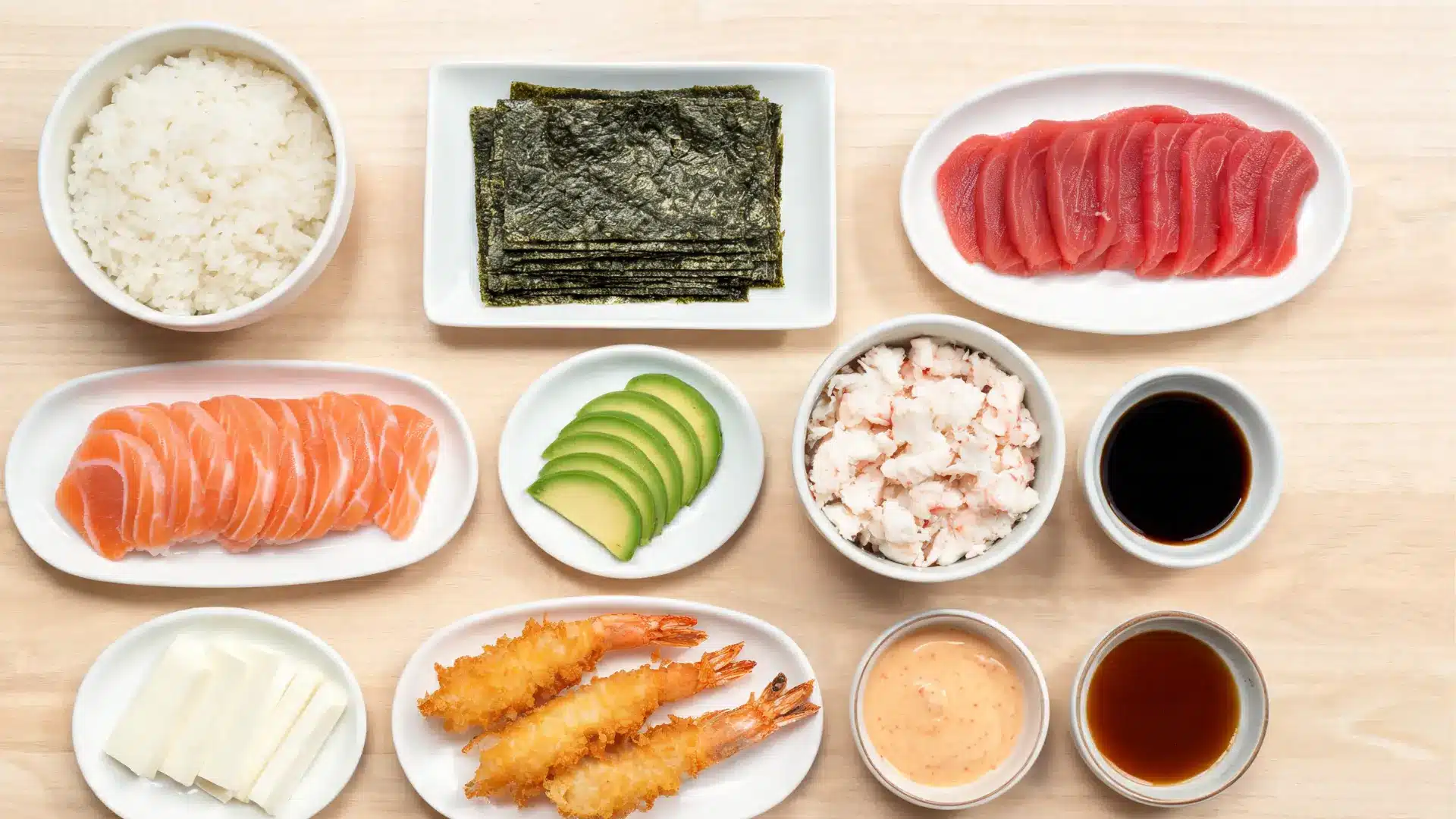
Ordering sushi feels straightforward until you realize two rolls with the same name can differ by 200 calories. The roll name is not the variable. The ingredients are.
Here is what actually determines calorie count in any sushi order.
1. Rice is the Foundation
A single roll uses 150–200g of sushi rice, which adds 200–260 kcal before any protein or filling is counted. Rice is seasoned with sugar and vinegar, which adds to the calorie load.
- 150g cooked sushi rice → ~200 kcal
- 200g cooked sushi rice → ~260 kcal
- Vinegar seasoning → +5–10 kcal
Rice alone often accounts for 50–70% of the total roll calories, making it the most important factor in calorie estimation. For comparison, the wrapper matters in other Asian dishes too; rice paper carries far fewer calories, which is why it’s often the lower-calorie alternative for people building similar meals at home.
2. Protein Type
Salmon runs 120–160 kcal per serving due to its fat content. Tuna sits at 80–130 kcal. Shrimp is the leanest option at 30–70 kcal. The difference between salmon and shrimp in a roll can be close to 100 calories.
| Protein | Calories | Notes |
|---|---|---|
| Salmon | 120–160 kcal | Higher fat, rich in omega-3s |
| Tuna | 80–130 kcal | Lean, lower-calorie protein |
| Shrimp | 30–70 kcal | Lowest calorie seafood option |
| Crab stick | 40–80 kcal | Processed, mild flavor |
3. Fillings that Add Up
Avocado adds 60–120 kcal on its own. Cream cheese contributes another 80–120 kcal. Cucumber and carrot together are negligible at 5–25 kcal. A roll with both avocado and cream cheese starts 200 calories heavier before sauces are considered.
| Filling | Calories | Notes |
|---|---|---|
| Avocado | 60–120 kcal | Dense in healthy fats |
| Cream cheese | 80–120 kcal | Significant calorie addition |
| Cucumber | 5–10 kcal | Minimal calorie impact |
| Carrot | 10–25 kcal | Light carbohydrate source |
4. Sauces and Frying
Spicy mayo adds 90–120 kcal. Eel sauce adds 30–80 kcal. Tempura frying is the largest single multiplier, adding 150–300 kcal to any roll. A tempura shrimp roll with spicy mayo can exceed 700 calories, nearly triple a basic tuna roll.
| Item | Calories | Impact |
|---|---|---|
| Spicy mayo | 90–120 kcal | High fat, high calorie |
| Eel sauce | 30–80 kcal | Sweetened, adds up fast |
| Soy sauce | 5–15 kcal | Negligible impact |
| Tempura frying | +150–300 kcal | Largest calorie multiplier |
Sushi Nutrition Facts: What You Get Beyond Calories
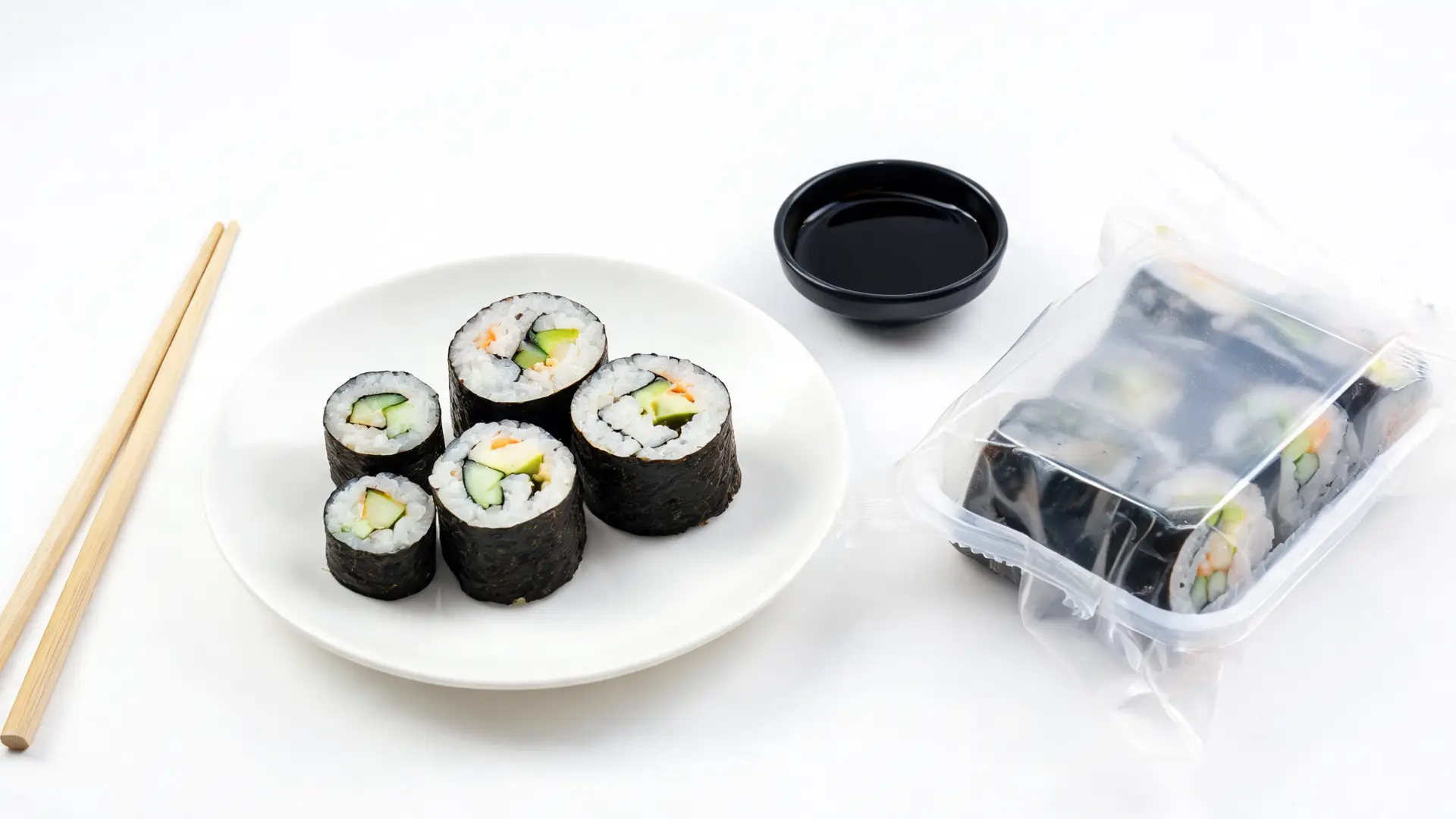
Calories in a sushi roll tell part of the story. The macronutrient and micronutrient profile completes it.
A standard sushi meal provides a balanced mix of carbohydrates, protein, and fats, the ratio depending on the roll type.
- Carbohydrates come primarily from sushi rice. At 150–200g per roll, rice contributes 40–55g of carbohydrates, making it the dominant macronutrient in most orders.
- Protein ranges from 10–25g per roll depending on fish type and portion. Lean proteins like tuna and shrimp deliver higher protein per calorie than salmon or cream cheese rolls.
- Fats vary most widely, from near zero in cucumber rolls to 20g+ in Philadelphia or dragon rolls with heavy saucing.
- Micronutrients from seafood include iodine, omega-3 fatty acids, selenium, and B12. Seaweed adds trace minerals. These contributions make sushi nutritionally dense relative to its calorie count when rolls are kept simple.
A basic sushi order built on lean fish, minimal sauce, and moderate rice delivers strong nutritional value. The same order, with fried protein and cream-based sauces, shifts the profile toward calorie-dense comfort food.
Calories in Sashimi vs. Nigiri vs. Rolls
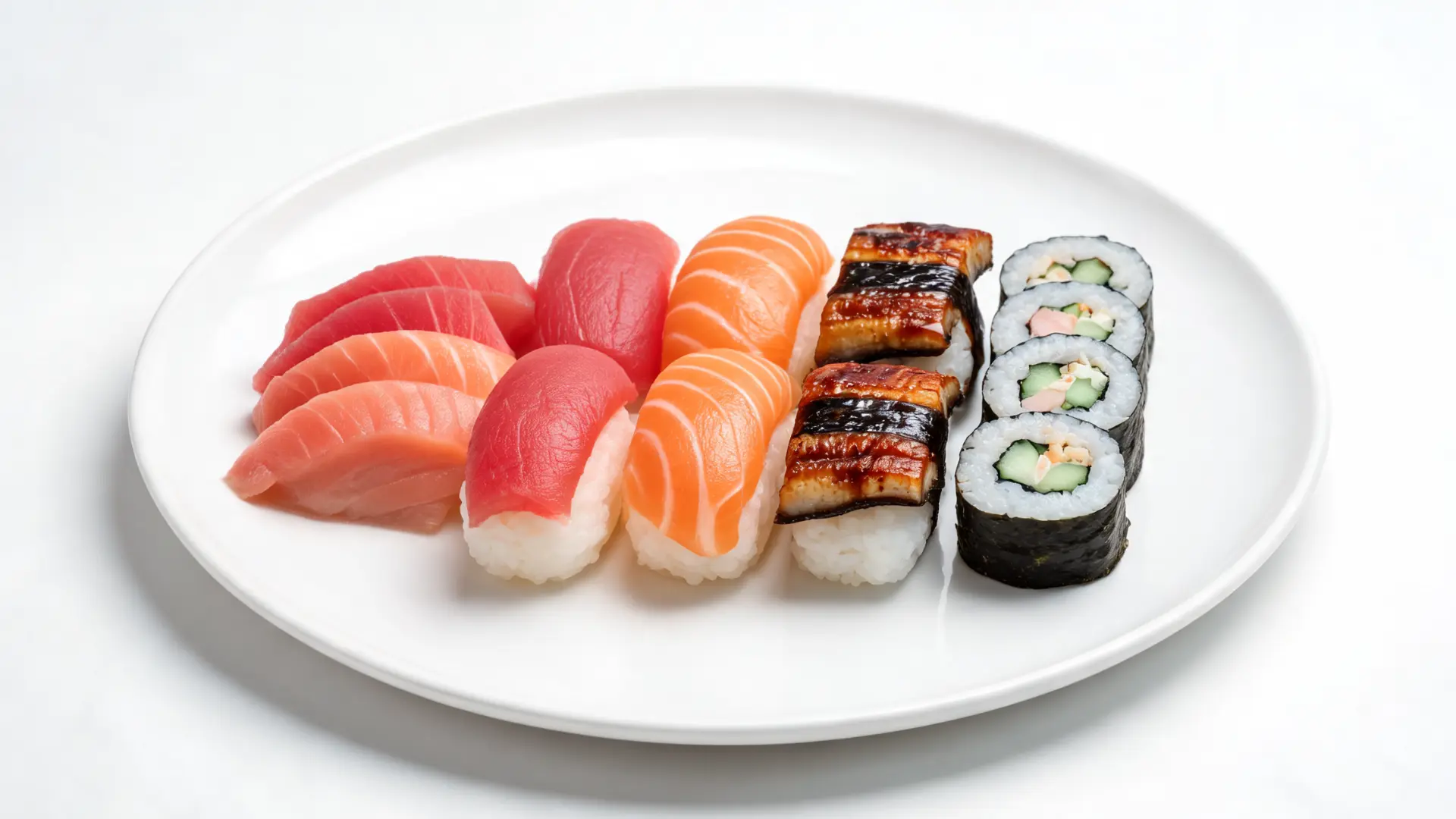
Not all sushi is built the same way. The format, roll, nigiri, or sashimi, determines the calorie range before ingredients are even considered.
| Format | Calories | What’s Inside |
|---|---|---|
| Sashimi | 20–50 kcal per piece | Pure fish, no rice or sauce |
| Nigiri | 40–70 kcal per piece | Fish + small rice base |
| Roll (6–8 pieces) | 200–700+ kcal | Rice, protein, fillings, sauces |
Calories in sashimi are the lowest among sushi formats because there is no rice and no sauce by default. Two to three pieces of salmon sashimi total around 90–150 kcal. The same amount of salmon in a roll, once rice and any sauce are added, can reach 350–450 kcal.
Nigiri sits between the two. The rice portion is smaller than a roll, roughly 20–30g per piece, but it adds 25–40 kcal per nigiri on top of the fish. Over six pieces, that rice adds up to a meaningful contribution.
Rolls carry the most variables. A plain cucumber roll stays under 150 kcal. A dragon roll with multiple sauces and toppings can pass 600 kcal. Format awareness is one of the fastest ways to manage calorie intake when ordering sushi.
Sushi Calories and Specific Diet Goals
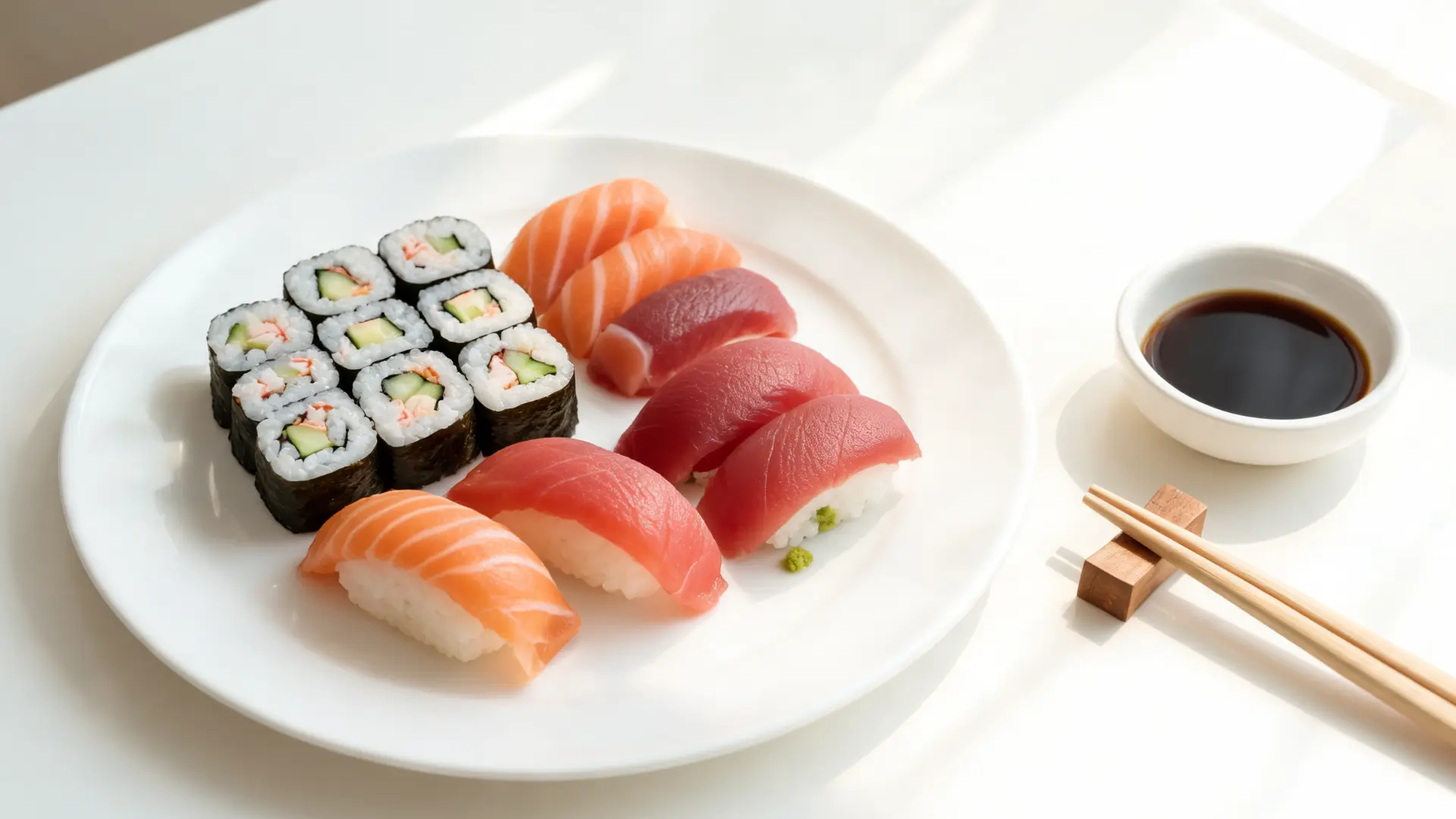
The number that matters most depends on what you’re tracking. Here’s what the sushi calorie breakdown means for the most common diet frameworks.
1. Sushi Calories for Weight Loss
For anyone in a calorie deficit, sushi is a viable restaurant choice if ordered deliberately.
A meal of 6 pieces of sashimi (3 salmon, 3 tuna) plus 2 pieces of tuna nigiri comes in under 350 calories and provides 35 to 40g of protein.
That’s an effective high-satiety, low-calorie meal. The same total calories from two sauced rolls provide less protein and leave hunger returning sooner.
The number that matters for weight loss at a sushi restaurant is protein per calorie, and sashimi wins that comparison by a significant margin.
The same thinking applies when ordering similar dishes: poke bowl nutrition follows comparable component logic, where the rice base and sauces determine the calorie total more than the protein does.
2. Sushi Calories for High-Protein Goals
The spicy tuna roll is the highest-protein standard maki roll, with 18 to 22g of protein per roll. For comparison, a California roll contains 9-12g.
If you’re hitting a protein target at a sushi restaurant, two spicy tuna rolls give you 36 to 44g of protein for 600 to 900 calories. Two salmon sashimi orders (6 pieces each) would provide approximately 48g of protein and around 300 calories. Sashimi is the more efficient protein source; rolls are the more filling, higher-carbohydrate option.
3. Sushi and Low-Carb or Keto Diets
The rice in a standard roll contains 40-55g of carbohydrates, which puts it outside keto macros for a single order.
Most sushi restaurants will accommodate a sashimi-only order or a “sashimi salad” style plate for low-carb eaters. Some will also prepare rolls wrapped in cucumber rather than rice if asked.
The fish itself is keto-compatible; the rice is not. Plan the order around sashimi and nigiri in moderation, avoid sauces that contain sugar (eel sauce in particular is heavily sweetened), and a sushi meal can fit into a lower-carb framework.
How I Calculate Sushi Calories Before I Eat
Guessing by roll name leads to consistent underestimation. A four-step breakdown gives a more accurate figure in under a minute.
Step 1: Start with rice. Assume 200–250 kcal for a standard roll. This is your baseline for almost every order.
Step 2: Add protein. Shrimp or crab sticks add 40–80 kcal. Tuna adds 80–130 kcal. Salmon adds up to 160 kcal.
Step 3: Account for fillings. Cucumber and carrot are negligible. An avocado adds up to 120 kcal. Cream cheese adds up to 120 kcal.
Step 4: Check for sauces and frying. This is the step most people skip. Spicy mayo adds up to 120 kcal. Tempura frying adds up to 300 kcal.
Example (Spicy Salmon Roll):
| Component | Calories |
|---|---|
| Sushi rice (180g) | 240 kcal |
| Salmon | 140 kcal |
| Spicy mayo | 100 kcal |
| Seaweed + extras | 10 kcal |
| Total | 490 kcal |
That totally surprises most people who assumed the roll was around 300 calories. The sauce alone accounts for 20% of the final count.
Frequently Asked Questions
Does the restaurant’s rice preparation affect calorie count?
Yes. Sushi rice is seasoned with sugar, vinegar, and sometimes mirin. The amount of sugar used varies by restaurant and chef. A heavily sweetened rice preparation can add 20–40 extra calories per roll compared to a lightly seasoned version.
Are inside-out rolls higher in calories than traditional rolls?
Generally, yes. Inside-out rolls (uramaki) place the rice on the outside, which often results in a thicker rice layer. That additional rice can add 30–60 extra calories per roll compared to a traditional nori-wrapped roll with the same fillings.
How does soy sauce affect total calorie intake across a sushi meal?
Soy sauce adds only 5–15 kcal per roll when used moderately. Its bigger nutritional concern is sodium, a single tablespoon contains roughly 900mg. For calorie tracking, soy sauce is negligible; for sodium tracking, it adds up over a full meal.
Does the quality or grade of fish affect the calorie count in sushi?
Not significantly. Sashimi-grade and standard fish of the same species have nearly identical calorie counts per gram. Fat content varies slightly by season and sourcing, but the difference is typically under 10 calories per serving.
The Final Count
Calories in a sushi roll are determined by ingredients, not assumptions. Rice sets the floor, sauces and frying set the ceiling, and everything in between is a variable worth knowing.
Sushi nutrition facts shift significantly depending on whether a roll is simple or loaded, and that gap can be 300 to 500 calories within the same menu.
Calories in sashimi remain low because nothing is added. Rolls require more attention. My approach has always been to build the number from components rather than guess.
Do that consistently, and sushi stops being a calorie mystery. If this changed how you think about your order, drop a comment below.