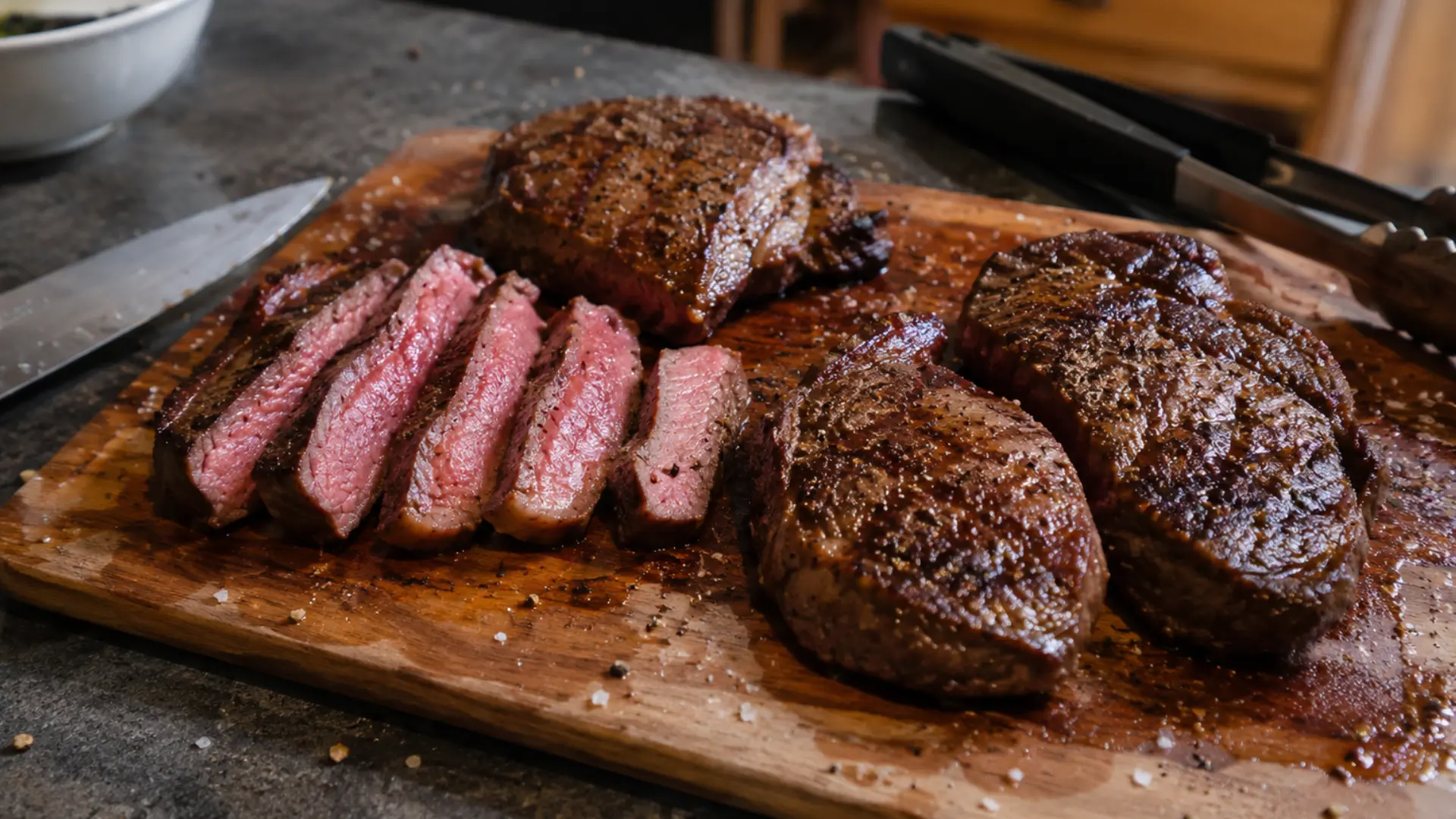

Steak looks simple until you start checking protein, calories, fat, and cooked weight. One cut can fit your goals perfectly, while another can push your meal higher in calories than expected.
If you have ever wondered how much protein in steak you are actually getting, you are not alone. I check these numbers before buying or cooking because the cut, portion size, and cooking method all matter.
This guide makes it easier for you to compare steak cuts, understand raw versus cooked weight, choose leaner options, and build meals that match your goal without guessing.
How Much Protein Does Steak Have?
A 3.5-ounce (100g) serving of cooked steak delivers roughly 26 to 29 grams of protein, depending on the cut. Lean cuts like top round and eye of round sit at the higher end.
Fattier cuts like ribeye come in lower because fat replaces lean muscle tissue by weight, pulling the protein-per-ounce figure down even as calories climb. The core numbers hold steady across cooking methods: protein in steak is largely determined by the cut you buy, not by how you cook it.
That said, there is real variation worth knowing. A 3-oz serving of sirloin steak nutrition shows about 25 grams of protein at around 207 calories. The same serving of ribeye gives you closer to 21 grams at 290 calories.
Both are complete proteins with all nine essential amino acids. The difference is the calorie cost per gram of protein, which matters if you are managing a daily calorie budget.
Use this table to estimate protein based on your cooked steak portion before adjusting for cut, fat, and cooking method.
| Serving Size | Approx. Protein |
|---|---|
| 3 oz cooked steak | 20–25 g |
| 4 oz cooked steak | 28–34 g |
| 6 oz cooked steak | 40–50 g |
| 8 oz cooked steak | 55–65 g |
Mayo Clinic notes USDA lean beef standards use fat, saturated fat, and cholesterol per 3.5 oz serving. Check these because protein alone never tells your full steak story well enough.
Is Steak a Good Source of Protein?

Yes, steak is a good source of protein because it provides all 9 essential amino acids your body needs. It also contains leucine, an amino acid that helps support muscle repair after training or harder physical work.
I like steak for meals that need staying power because it digests well and can keep you full for hours. It also brings iron for oxygen transport, zinc for immune support, and vitamin B12 for nerve and blood health.
The key is portion balance. A leaner cut can fit lighter goals, while a richer cut can work when calories are less strict, and taste matters more for your meal plan today.
Protein Content by Steak Cut
Different steak cuts can give similar protein, but calories shift with fat and marbling. The table below uses USDA FoodData Central data for cooked, trimmed servings. Use the 3-oz figures for tracking individual meals and the per-100g column when comparing cuts side by side.
| Steak Cut | Protein per 3 oz Cooked | Calories in Steak per 3 oz | Best For |
|---|---|---|---|
| Sirloin Steak | 23–26 g | 180–220 | Lean protein |
| Ribeye Steak | 20–23 g | 250–330 | Flavor and tenderness |
| Filet Mignon | 22–25 g | 200–260 | Tender texture |
| New York Strip | 23–26 g | 220–280 | Balanced flavor and protein |
| Flank Steak | 24–27 g | 180–230 | High-protein meals |
| Skirt Steak | 22–25 g | 220–300 | Fajitas and grilling |
| T-Bone Steak | 22–25 g | 230–300 | Mixed texture and flavor |
| Top Round Steak | 25–28 g | 160–210 | Leanest option |
| Eye of Round Steak | 25–28 g | 150–200 | Low-calorie protein |
| Porterhouse Steak | 22–25 g | 250–330 | Large steak serving |
If you want the leanest choice, start with eye of round, top round, or sirloin. If you want more tenderness and flavor, filet mignon, New York strip, or ribeye may be more satisfying, but they usually bring more calories.
For meal prep, flank steak is one of the easiest cuts to slice, portion, and use across bowls, tacos, salads, and wraps.
Does Cooking Method Change Protein or Calories in Steak?

Cooking does not change steak’s protein much, but added fat can quickly change its calories. I watch butter, oil, and sauces because they can raise the meal total before you notice. The best method depends on your cut, your time, and how closely you track calories.
- Grilling: Keeps flavor with little added fat, though lean cuts can dry out. Let the steak rest after cooking.
- Pan-searing: Gives a browned crust, but butter or oil can add calories fast if you do not measure.
- Broiling: Works indoors with less added fat, though thin steaks can overcook quickly under direct heat.
- Air frying: Cooks steak with minimal added oil, but timing matters because smaller cuts can dry out fast.
- Sous vide: Helps control doneness and keeps steak tender, though it usually needs a quick sear afterward.
- Cast-iron searing: Creates a deep crust and strong flavor, but adding butter or oil can increase calories.
- Slow cooking lean cuts: Makes tougher lean cuts more tender, but works best with moisture and low heat.
- Marinating: Adds flavor and can improve tenderness, but oily or sugary marinades can raise calories quickly
Nutrition Tip: If you cook in a cast-iron pan, measure your oil or butter before adding it. A pour that looks like a teaspoon is often closer to a tablespoon, which adds 40 to 120 extra calories without changing how the steak looks on the plate.
Protein in Raw vs Cooked Steak
Raw and cooked steak can confuse your tracking because the weights change after cooking. You can refer to this table when you want protein numbers that match the steak you eat better daily.
| Raw Steak | Cooked Steak |
|---|---|
| Weighs more because it still holds natural water. | Weighs less because heat removes water during cooking. |
| Protein is spread across a heavier piece of meat. | Protein becomes more concentrated per ounce after shrinkage. |
| Best for checking grocery labels before cooking. | Best for tracking what actually lands on your plate. |
| An 8 oz raw steak may cook down to about 6 oz. | The protein remains mostly the same, but the serving size gets smaller. |
The protein stays mostly steady, but the cooked weight drops as water leaves. It is advised to track steak in the same form you log, serve, and eat it for clearer meal numbers today.
Is Steak Good for Building Muscle?
Steak can support muscle-building goals because it provides complete protein, leucine, iron, zinc, and vitamin B12. These nutrients help support muscle repair, oxygen transport, and normal energy metabolism.
Research published in the Journal of Nutrition (Paddon-Jones et al.) found that spreading protein across meals rather than loading it all at dinner produced better muscle protein synthesis rates over a 24-hour period. If you are also tracking signs of gaining muscle, protein consistency across meals is one of the clearest variables to control
A 6-oz steak at dinner covers a large chunk of daily protein, but it works harder for muscle building when breakfast and lunch also carry 25 to 30 grams of protein each
Good muscle-building steak meals include:
- Sirloin with rice and vegetables
- Flank steak with potatoes and salad
- Lean steak tacos with beans and avocado
- Steak bowl with quinoa, vegetables, and yogurt sauce
Is Steak Good for Weight Loss?
Steak fits a weight-loss plan when the cut, portion, and cooking method align with your daily calorie target. The practical advantage is satiety: protein and fat together slow gastric emptying, which means a 4-oz serving of sirloin tends to keep hunger down longer than the same calorie count from a carbohydrate source. That satiety effect is real and measurable, making lean steak a useful tool for managing total daily intake
The cuts that work best for calorie-conscious meals are top round, eye of round, sirloin, and flank steak. Each provides 24 to 28 grams of protein in a 3-oz cooked portion while staying under 215 calories.
Ribeye and porterhouse can still fit, but the calorie ceiling per serving is lower, so portions need to be smaller to stay on target. For context on how body composition shifts as calories are managed over weeks, the signs of losing fat are often more reliable than scale weight alone
Best tips:
- Choose lean cuts most often.
- Keep cooked portions around 3 to 4 oz.
- Grill, broil, or air fry instead of cooking in lots of butter.
- Add vegetables for volume.
- Use sauces lightly.
- Track cooked weight if you count calories.
Steak vs. Other Protein Sources
You may compare steak with chicken, salmon, eggs, pork, and shakes when planning meals. Refer to this kind of table when you want protein, calories, and key nutrients at a glance.
| Protein Source | Protein | Calories | Best For | Watch Out For |
|---|---|---|---|---|
| Steak | 25g | 250 | Iron, fullness | Saturated fat varies by cut |
| Chicken breast | 26g | 165 | Lean protein | Can feel dry |
| Salmon | 22g | 210 | Omega-3 fats | Higher calories than white fish |
| Eggs | 12g | 140 | Breakfast, choline | Lower protein per serving |
| Greek yogurt | 20g | 120–150 | Snacks, breakfast | Check added sugar |
| Tofu | 10–20g | Varies | Plant-based meals | Protein varies by firmness |
Steak adds iron and fullness, chicken stays leaner, and salmon brings healthy fats. I’d rotate them so your meals support protein goals without feeling repetitive or hard to plan.
How to Choose the Best Steak for High Protein and Lower Calories
High-protein steak does not have to be the biggest cut. I start with cut, cooked serving size, visible fat, and cooking method because each one changes calories.
- Choose lean cuts like top round, eye of round, sirloin, or tenderloin.
- Keep cooked portions around 3 to 4 oz when calories matter.
- Check marbling because extra fat raises calories.
- Trim visible fat before or after cooking.
- Measure butter, oil, and sauces, as they add calories quickly.
- Add vegetables, beans, potatoes, or grains for a filling plate.
- Save ribeye or porterhouse for days when a richer taste fits.
Choose lean cuts, track cooked portions, and let your goal guide the plate so steak feels simple, filling, useful, and easier to plan every time you cook dinner at home.
Common Mistakes When Choosing High-Protein, Lower-Calorie Steak
Choosing steak for protein can get tricky when calories are hidden in the cut, fat, and cooking method. I’d watch these mistakes before buying.
- Choosing ribeye just because it has protein, while ignoring marbling.
- Counting raw weight when your serving is cooked.
- Skipping lean cuts like top round, sirloin, tenderloin, and eye of round.
- Forgetting butter, oil, and sauces can add calories fast.
- Eating oversized portions instead of matching the steak to your goal.
- Ignoring side dishes that make the full meal heavier.
Pick the cut, portion, and cooking fat together. That keeps your steak high in protein without making calories climb too much, while making the meal easier to plan later.
FrequentlyAsked Questions
Does grass-fed steak have more protein than grain-fed steak?
Grass-fed and grain-fed steaks usually have similar protein amounts. The bigger difference is often in fat content, flavor, price, and texture. Protein depends more on the cut and portion size than on whether the beef is grass-fed or grain-fed.
Does steak have carbs?
Plain steak has zero carbs unless you add breading, sugary marinades, barbecue sauce, or sweet glazes. Seasonings like salt, pepper, garlic powder, and herbs usually add little to no carbs.
Is steak protein easy to digest?
Steak protein is high quality, but digestion can vary by person. Leaner, smaller portions may feel easier than large fatty cuts. Chewing well, slicing steak thinly, and pairing it with vegetables or potatoes can also make the meal feel lighter.
Is steak good after a workout?
Steak can work after a workout because it provides complete protein and nutrients like iron, zinc, and vitamin B12. For better recovery, pair it with a carbohydrate source such as rice, potatoes, beans, fruit, or whole-grain bread.
Final Thoughts
Steak becomes much easier to plan when you understand the numbers behind it. You now know that protein in steak changes by cut, cooked weight matters, and fattier steaks can raise calories quickly.
I’d use lean cuts like sirloin, top round, eye of round, or flank steak when you want more protein with fewer calories. Richer cuts like ribeye can still fit when portion size and meal balance make sense.
The main goal is not perfect tracking. It is making clearer choices that match your appetite, training, and daily routine. Use this guide before your next grocery trip, and share your favorite steak cut or go-to meal idea.
.