
Camphor uses and benefits come up constantly in injury recovery and pain relief contexts, and I understand exactly why. When a client comes to me with a sore shoulder or a nagging calf after a long week of training, their first instinct is often to reach for a cooling balm. Camphor is almost always behind that familiar tingle.
After years of programming recovery for clients coming back from strains, overuse injuries, and post-surgical rehab, I’ve seen the same mistakes repeated: too much product on broken skin, heating pads layered over a freshly applied balm, or camphor used as though it were a treatment rather than the comfort aid it actually is.
I’ve also seen it genuinely help people push through tough recovery sessions when applied correctly.
This guide covers what camphor genuinely does in the body, which uses are FDA-supported, which benefits are limited to anecdote, and the safety rules that matter most. I’ll also tell you where I actually recommend it in a recovery program, and where I don’t.
| Medical Disclaimer: This article is for informational purposes only and does not replace professional medical advice, diagnosis, or treatment. If you are dealing with a persistent injury, skin condition, respiratory illness, or chronic pain, consult a licensed healthcare provider before using camphor or any topical product. Stop use immediately if symptoms worsen or any adverse reaction develops. |
What Camphor Is and Where It Comes From
Camphor is a terpene, a naturally occurring organic compound, derived from the wood of Cinnamomum camphora, a large evergreen tree native to parts of Asia, including Japan, China, and Taiwan.
Synthetic camphor, chemically identical to the natural form, is widely produced from turpentine and is the version found in most commercial OTC products today. Both forms carry the same safety profile.
You will find camphor in chest rubs, muscle balms, pain creams, ointments, patches, camphor oil, and vapor products. Each form has a different concentration and risk profile. A properly labeled OTC topical rub is not the same thing as a loose camphor block or a concentrated essential oil, and treating them interchangeably is where most misuse starts.
| Product Form | Best Suited For | Key Safety Point |
|---|---|---|
| Camphor balm or chest rub | Chest congestion, muscle aches | Do not apply near the nostrils or swallow |
| Camphor cream or lotion | Itching, irritation, mild pain | Use only on intact skin |
| Camphor patch | Targeted pain relief | Avoid heat and broken skin |
| Camphor oil (white only) | Diluted massage blends, aromatherapy | Must be diluted before any skin contact |
| Vapor liquid | Steam or diffuser use | Use only in compatible devices in a ventilated room |
The form matters as much as the ingredient. Using multiple camphor products simultaneously, or combining them with heat, significantly increases the risk of irritation and toxicity.
How Camphor Actually Works on the Body
Camphor works primarily as a counterirritant. When applied to intact skin, it activates TRP (transient receptor potential) channels, the same sensory receptors that respond to temperature and pain signals.
This creates a competing skin-level sensation, either cooling or warming depending on application pressure, that reduces the perceived intensity of underlying aches and itching.
The discomfort does not disappear. It is partially masked by a stronger surface signal. That mechanism is important to understand because it sets a realistic ceiling on what camphor can do. Topical camphor is not a clinical anti-inflammatory, and it does not repair tissue or eliminate a source of pain.
The FDA approval for camphor concentrations between 3% and 11% covers three specific uses: cough suppression, acute pain relief, and itch reduction. Everything else, including claims about hair growth, improved circulation, or antifungal activity, is either anecdotal, limited to animal studies, or based on traditional use without robust human trial data.
| Trainer Note: In my experience working with clients post-injury, counterirritants like camphor work best as part of a structured recovery plan, not as a substitute for one. If a balm provides enough relief to allow gentle movement between sessions, that is its best use. It is the movement that aids recovery, not the balm itself. |
Main Camphor Benefits and Uses

Camphor is used for short-term relief from cough, congestion, mild pain, itching, irritation, and muscle stiffness. Each benefit depends on correct external use, proper dilution, and safety precautions. Here are the six areas where camphor is most commonly applied, ranked by strength of evidence.
1. Cough and Chest Congestion Relief
This is one of camphor’s two strongest evidence categories. The FDA approves camphor at concentrations under 11% specifically for cough suppression when applied topically as a chest rub.
Products like Vicks VapoRub combine camphor with menthol and eucalyptus, and research supports their ability to reduce cough frequency and improve subjective breathing comfort, particularly at night.
The mechanism is partly sensory: camphor creates a cold sensation in the nasal passages that makes airways feel more open, even when no structural decongestion has occurred.
It does not treat the underlying infection and should not replace medical care in persistent or severe respiratory illness. Keep all chest rub products away from the nostrils, mouth, and eyes, and do not use them in children under two years old.
2. Muscle Pain, Joint Stiffness, and Post-Exercise Soreness
This is the area I see camphor used most frequently in fitness and recovery contexts. Camphor-based balms, creams, and patches are FDA-approved for acute pain relief at concentrations of 3% to 11%.
The counterirritant effect can make tight muscles feel more manageable and reduce the subjective discomfort of delayed-onset muscle soreness after training.
What camphor does not do is accelerate tissue repair, reduce actual inflammation in the tissue, or substitute for appropriate post-exercise recovery protocols like sleep, hydration, and progressive loading.
When I program recovery for clients coming back from a strain or overuse injury, I frame camphor balm as a comfort tool between sessions, nothing more. Apply to intact skin; avoid heating pads simultaneously since the combination increases absorption and irritation risk, and stop use if redness or burning develops.
3. Skin Itching and Surface Irritation
Camphor is FDA-approved for itch relief at concentrations between 3% and 11%. Its cooling counterirritant action reduces the urge to scratch, providing short-term relief from minor irritation, insect bite discomfort, and mild rashes. Some formulations combine camphor with anti-inflammatory agents for broader skin comfort.
Camphor should never be applied to broken, blistered, or actively inflamed skin. Damaged skin absorbs camphor more rapidly than intact skin, significantly increasing the risk of systemic toxicity. Patch test before wider application on sensitive areas, and discontinue immediately if irritation worsens rather than improves.
4. Toenail Fungus Support (Limited Evidence)
Some research supports the use of camphor-containing vapor rubs as an adjunct in managing mild toenail fungus. A small 2011 study published in the Journal of the American Board of Family Medicine found that 83% of participants showed partial or full resolution after daily Vicks VapoRub application, though the study was small and uncontrolled.
Camphor is not a proven antifungal treatment. Severe or spreading nail infections warrant prescription antifungals and a podiatrist visit, particularly for anyone with diabetes or circulation issues.
If you do try a camphor-containing product on mild toenail fungus, consistent daily application over several months is the realistic timeline, since nails grow slowly. Keep the area clean and dry as a parallel measure.
5. Aromatherapy and Stress Relief (Anecdotal)
Camphor’s sharp, clearing scent is used in aromatherapy to create a mentally refreshing atmosphere. Some people report reduced tension and improved sleep quality with camphor diffused in a well-ventilated room.
The evidence for camphor as a direct anxiolytic or sleep aid is anecdotal, and it should not be used to manage diagnosed anxiety, insomnia, or breathing disorders. Avoid prolonged or high-concentration inhalation, particularly in people with asthma or scent sensitivities, and keep camphor diffusers away from infants, young children, and pets.
6. Hair and Scalp Use (Traditional, Not Clinically Proven)
Diluted camphor oil is used in traditional South Asian hair care routines, typically blended with a carrier oil such as coconut or sesame for scalp massage.
The cooling sensation may make the scalp feel refreshed, and I’ve had clients from South Asian backgrounds mention it as a long-standing family practice. There is no strong peer-reviewed evidence that camphor promotes hair growth or prevents hair loss. Claims in this area are primarily anecdotal or drawn from traditional practice.
If you use camphor oil on the scalp, dilute it thoroughly in a carrier oil before application, use a small amount, and avoid irritated, flaky, or sensitive areas. Stop immediately if burning or increased dryness occurs.
Camphor Side Effects by Usage Type
Camphor side effects depend on how it is used. Skin application, inhalation, accidental swallowing, and overuse can cause different reactions. Knowing the warning signs for each usage type is more useful than a general caution.
| Usage Type | Possible Side Effects | What to Do |
|---|---|---|
| Skin application | Redness, burning, rash, itching, irritation | Stop use and wash the area with water |
| Inhalation | Coughing, wheezing, throat irritation, breathing discomfort | Stop inhaling it and move to fresh air |
| Eye or mouth contact | Burning, irritation, nausea, unpleasant taste | Rinse carefully and seek help if symptoms continue |
| Broken skin exposure | Faster absorption, stronger irritation, toxicity risk | Stop use and contact a healthcare provider |
| Accidental swallowing | Vomiting, confusion, seizures, poisoning | Seek emergency medical help immediately |
| Overuse | Skin burns, irritation, dizziness, toxic effects | Stop use and get medical advice |
Do not ignore strong reactions after using camphor. Severe burning, swelling, breathing difficulty, vomiting, confusion, seizures, or accidental swallowing all require urgent medical attention. No topical comfort product is worth pushing through those signs.
Camphor Safety: Who Should Avoid It and What to Watch For
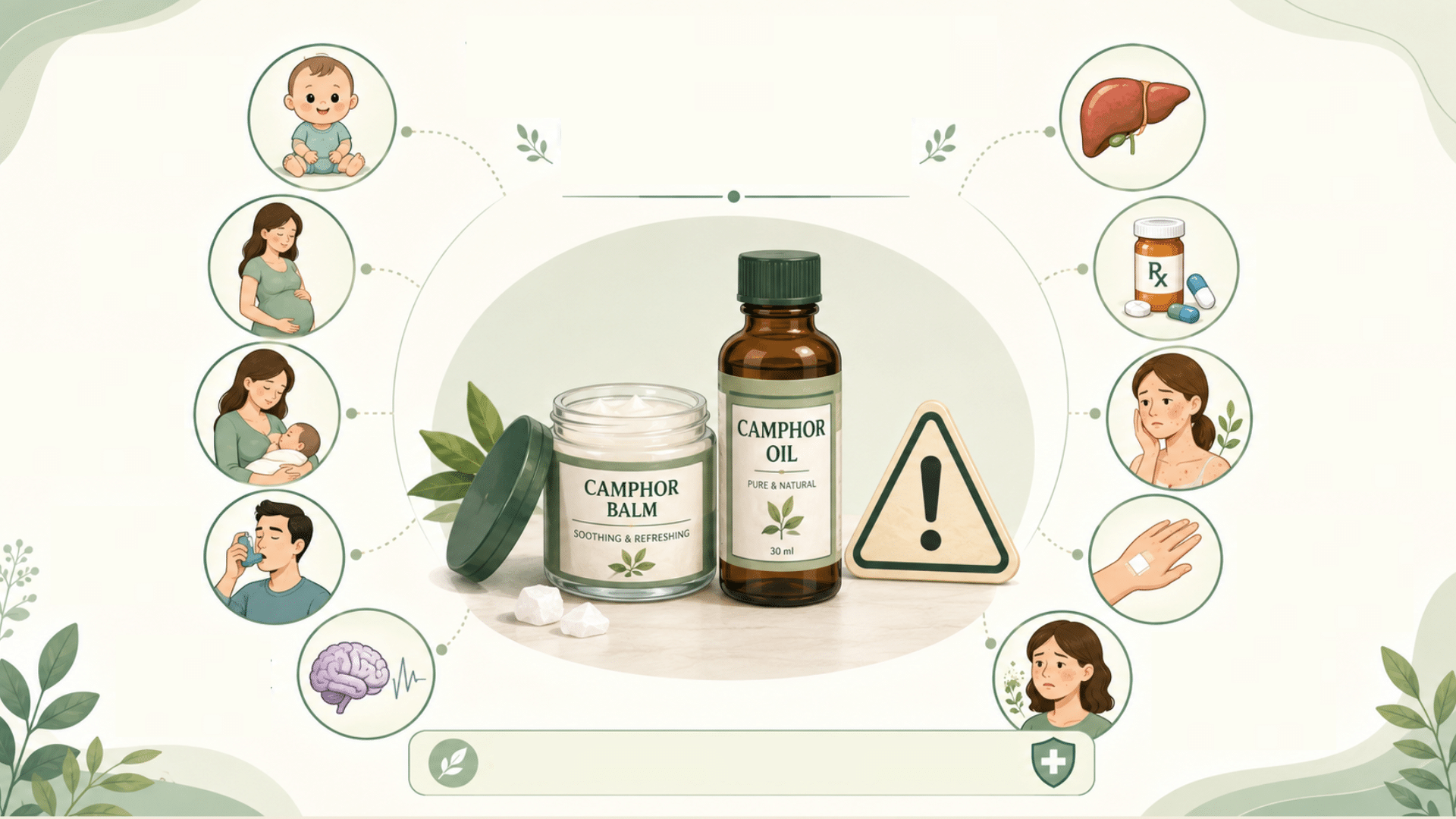
The following groups should avoid camphor or use it only after medical guidance.
Children under 2 years old should never be exposed to camphor in any form. The compound can cause serious neurological side effects in young children, and camphorated oil was removed from the US market in the 1980s following accidental poisonings.
Pregnant women should confirm safety with a healthcare provider before using any camphor product. Breastfeeding mothers should avoid products that could transfer to the baby through skin contact or inhalation.
People with asthma, epilepsy or seizure history, liver disease, or sensitive and allergy-prone skin face elevated risk and should consult a doctor before use. Anyone with cuts, wounds, or compromised skin should never apply camphor to those areas.
Do not combine camphor products with heating pads, hot showers immediately before or after application, or other strong topical essential oils on sensitive skin.
| Safety Warning: Camphor is toxic when swallowed. Even small amounts can cause vomiting, seizures, and serious harm, particularly in children. Keep all camphor products out of reach of children. If camphor is accidentally swallowed, call Poison Control immediately (US: 1-800-222-1222) or go to an emergency room. |
Camphor Product Types, Oil Varieties, and Common Ingredient Combinations
Different camphor products serve different purposes, and not every type of camphor oil is safe for wellness use. Choosing the wrong form, or combining multiple camphor-containing products, is one of the most common mistakes I see.
Camphor Product Forms and Their Uses
Camphor is available in oils, balms, creams, ointments, patches, and vapor liquids. Each form has a different use, concentration, and application method. Follow the product label, not just the ingredient name.
| Camphor Form | Best Suited For | Key Safety Point |
|---|---|---|
| Camphor oil | Aromatherapy and diluted massage blends | Must be diluted before skin use |
| Camphor balm | Chest congestion and muscle aches | Do not apply near the nostrils or swallow |
| Camphor cream | Itching, irritation, and mild pain | Use only on intact skin |
| Camphor ointment | Local pain or cough rub | Follow the recommended frequency |
| Camphor patch | Targeted pain relief | Avoid heat and broken skin |
| Camphor vapor liquid | Steam or vapor use | Use only in compatible devices |
Choosing the right camphor form reduces the risk of irritation, overuse, or accidental misuse. Avoid using multiple camphor products together unless advised by a healthcare provider.
Safe and Unsafe Camphor Oil Types
Not all camphor oils are suitable for topical or aromatherapy use. The oil is fractionated into different grades during distillation, and only white camphor oil is generally considered appropriate for home wellness use.
| Camphor Oil Type | Safety Status | Reason |
|---|---|---|
| White camphor oil | Generally used in wellness products | Preferred for aromatherapy and topical formulations |
| Brown camphor oil | Unsafe for therapeutic use | May contain high safrole levels |
| Yellow camphor oil | Unsafe for therapeutic use | May contain high safrole levels |
| Blue camphor oil | Considered unsafe by some sources | Not recommended for wellness or topical use |
Check product labels carefully before buying camphor oil. Avoid brown, yellow, or blue camphor oils for home wellness use, especially on skin.
Camphor, Menthol, and Eucalyptus in Combination Products
Many vapor rubs and pain balms combine camphor with menthol and eucalyptus. These ingredients may feel similar when applied, but they contribute different effects to the final product.
| Ingredient | Main Effect | Common Use |
|---|---|---|
| Camphor | Cooling or warming counterirritant sensation | Pain balms, vapor rubs, anti-itch creams |
| Menthol | Strong cooling feeling | Cough products, chest rubs, pain-relief balms |
| Eucalyptus oil | Aromatic respiratory comfort | Vapor products, steam blends, essential oil mixtures |
Combined formulas may feel more soothing because they offer cooling, aromatic, and counterirritant effects together. Sensitive users should patch test first, as combinations can increase irritation compared to a single-ingredient product.
What Not to Mix or Do With Camphor
Camphor can irritate the skin or become unsafe when combined with heat, strong ingredients, or incorrect application methods. In my own training practice, the most common mistakes I see are people layering camphor balms with heat therapy or applying them right before a hot shower. Both significantly increase absorption and the risk of irritation.
Avoid the following during camphor use:
- Do not mix multiple camphor products at the same time.
- Do not use camphor with heating pads.
- Do not apply camphor before or after hot showers if it irritates your skin.
- Do not microwave camphor-containing products.
- Do not add camphor products to boiling water unless the label allows it.
- Do not combine camphor with strong essential oils on sensitive skin.
- Do not apply camphor near the eyes, mouth, nostrils, genitals, or wounds.
- Do not use camphor with liver-affecting medicines without medical advice.
Using camphor safely is mostly about avoiding overuse, heat exposure, broken skin, and risky combinations. Camphor is best used for short-term symptom relief, not continuous daily use.
How to Read a Camphor Product Label Before Use

Before using camphor, take a minute to read the product label. It can tell you more than the front packaging, especially when safety depends on the product form and concentration.
Look for these details:
- Active ingredient: Check that camphor is clearly listed, along with its percentage concentration.
- Use purpose: See if it is meant for pain, itching, cough, or another specific use.
- Age directions: Make sure the product fits the intended user, especially for children.
- Application area: Check where it can and cannot be applied.
- Warning section: Read limits for skin, heat, bandages, breathing issues, and swallowing.
- Stop-use advice: Follow the label if symptoms last, worsen, or return.
- Expiration date: Skip old products, especially if the smell, color, or texture has changed.
This quick label check helps you use camphor with more confidence and keeps your focus on the actual product in your hands, not just the ingredient name.
Signs You Should Stop Using Camphor and See a Doctor
Camphor is for temporary relief. If any of the following happen after applying, inhaling, or accidentally swallowing camphor, stop use immediately and seek medical advice.
- Skin irritation gets worse after applying camphor.
- Redness, burning, rash, swelling, blisters, or hives appear.
- Coughing, wheezing, throat irritation, or breathing discomfort starts after inhaling camphor.
- Pain becomes severe, persistent, or keeps returning despite using camphor.
- Itching, irritation, or insect bite swelling spreads instead of improving.
- Toenail fungus becomes painful, spreads, or affects nearby skin.
- A cough lasts more than 7 days or keeps coming back.
- Cough comes with fever, chest pain, thick mucus, or breathing trouble.
- Camphor accidentally gets into the eyes, mouth, or nostrils and causes burning or irritation.
- You feel dizzy, nauseous, confused, weak, or unwell after using camphor.
- Vomiting, muscle twitching, confusion, or seizure-like symptoms occur.
- A child swallows camphor or a camphor-containing product.
- You accidentally swallow camphor in any form.
Do not continue using camphor to manage serious or worsening symptoms. Swallowing camphor, breathing trouble, seizures, severe swelling, or strong allergic reactions all need urgent medical attention.
Frequently Asked Questions
Can camphor be used for headaches?
Camphor is sometimes used in balms applied to the temples or neck for a cooling sensation, but it is not a proven headache treatment. Keep it away from the eyes, nostrils, and mouth. If headaches are frequent, severe, or sudden, speak with a healthcare provider.
Is camphor safe for children?
Camphor should not be used on children under 2 years old. Older children should only use age-appropriate products exactly as labeled. Never apply camphor near the nose, mouth, broken skin, or hands that may go into the mouth. Store all camphor products securely away from children.
Can camphor help with blocked nose?
Camphor may make breathing feel easier because its strong scent creates a cooling sensation. It does not actually clear nasal passages or treat the cause of congestion. Use only labeled vapor or chest rub products, and never apply camphor directly inside the nose or near the nostrils.
Can camphor be used for back pain?
Camphor creams, balms, or patches may give short-term comfort for mild back aches by creating a cooling or warming sensation. It should not be used on broken skin or with heating pads. Persistent, sharp, radiating, or injury-related back pain needs medical evaluation.
Is camphor oil safe on skin?
Camphor oil should never be applied directly to the skin without proper dilution. Concentrated oils can cause burning, irritation, or toxicity. Use only white camphor oil from a trusted product, dilute it with a carrier oil, and patch test before wider application.
Can camphor be used during pregnancy?
Pregnant people should ask a healthcare provider before using camphor products. Even topical products can carry risk depending on concentration, frequency, and application area. Avoid homemade camphor oils, strong vapor exposure, and any product that could be accidentally inhaled or transferred to a baby later.
Does camphor help insect bites?
Camphor may temporarily reduce itching from minor insect bites because it works as a counterirritant. Apply only to intact skin and avoid scratched, bleeding, or swollen areas. If a bite becomes painful, spreads, forms pus, or causes fever, seek medical advice.
Can camphor be mixed with other balms?
It is better not to layer camphor with other strong pain balms unless a product label or clinician says it is safe. Combining menthol, capsaicin, essential oils, or heat rubs can increase burning, irritation, and absorption. Use one topical product at a time.
Final Verdict
Knowing how to handle this potent compound makes a huge difference in your daily comfort.
You now understand that camphor uses and benefits work best as a temporary distraction for minor aches and itches rather than a permanent cure.
By keeping it away from heat, broken skin, and young children, you can enjoy that soothing, cooling relief without unnecessary risks.
Always prioritize checking your product labels to ensure you are using the right concentration for your specific needs. Staying informed helps you take control of your recovery safely and effectively.
Do you have a favorite way to use these cooling rubs, or a safety tip I missed? Share your thoughts in the comments below.
Sources
U.S. Food and Drug Administration, “OTC Monograph M012: Cold, Cough, Allergy, Bronchodilator, and Antiasthmatic Drug Products,” 2022. https://www.fda.gov/media/110652/download
Saper RB et al., “Clinician over-the-counter topical pain relief products: A systematic review,” Journal of the American Board of Family Medicine, 2011. https://pubmed.ncbi.nlm.nih.gov/21209346/
Mohammadinejad R et al., “Camphor: Therapeutic Uses and Potential Hazards,” Molecules (MDPI), 2026. https://www.mdpi.com/1420-3049/31/4/648
National Institutes of Health (NIH), “Camphor,” MedlinePlus Drug Reference. https://medlineplus.gov/druginfo/natural/709.html