| Style | Restorative / Gentle Hatha / Yin |
| Level | All levels, including complete beginners |
| Duration | 5 to 20 minutes per session |
| Props Needed | Blanket, pillow, or bolster (optional but helpful) |
| Best Time | Morning, evening, or whenever grief feels heaviest |
| Avoid If | Currently in a mental health crisis; consult a professional first |
| Disclaimer: This article is for informational and educational purposes only. It does not constitute medical advice. If your grief is accompanied by thoughts of self-harm, please reach out to a licensed mental health professional or call the 988 Suicide and Crisis Lifeline before beginning any new wellness practice. |
I came to yoga for grief the way most people do: with a body that felt like it had forgotten how to breathe.
After a significant loss in my teaching community, I remember sitting on my mat before class and realizing I could not lead a single Sun Salutation without my chest tightening into a knot. That experience changed how I teach, and it changed what I believe yoga for grief and loss can genuinely offer people who are hurting.
This guide walks you through the specific poses, breathwork, and restorative practices that I use with students who are grieving. It is not about moving through pain faster. It is about finding a place where your body can be honest about how it feels without having to explain or justify it.
Why Yoga for Grief Works: What Happens in the Body
Grief is not only emotional. A 2025 randomized controlled trial published in Scientific Reports found that Iyengar yoga produced measurable clinical improvements in adults with prolonged grief disorder, including reductions in anxiety and sleep disturbance. That finding matters because it confirms what practitioners have observed for years: grief lives in the body, and the body can be a way through it.
When you lose someone or something significant, your nervous system shifts into a sustained stress state. Cortisol and adrenaline stay elevated. Your shoulders brace. Your diaphragm tightens. Your breath becomes shallow without you noticing. Over time, that physical bracing compounds emotional pain because the body starts associating ordinary sensations, like breathing deeply, with danger.
Yoga for grief interrupts that pattern through three mechanisms:
- Parasympathetic activation: Slow, supported movement and extended exhales signal the nervous system to downshift from high alert. This is not about suppressing grief; it is about creating enough safety for it to be felt without becoming overwhelming.
- Somatic release: Grief can settle in specific areas, particularly the chest, throat, and hip flexors. Somatic yoga targets these areas through breath and movement directed inward, giving the body a physical path for emotions that may be too large for words right now.
- Present-moment grounding: The sensation of a mat under your hands or your feet pressing into the floor pulls attention away from the loop of memory and anticipation that grief often creates. Physical sensation is always happening now, which is exactly where the body needs to be.
Traditional Chinese Medicine adds another layer worth knowing. In TCM theory, grief and sadness are associated with the lungs. When lung qi is low, you may notice shortness of breath, a tight or closing feeling in the throat, and difficulty letting go.
Many of the poses in this guide work specifically with the chest, rib cage, and front body, which supports that lung-grief connection whether you come from a TCM perspective or simply find it useful as a framework for understanding where you are holding tension.
How Yoga for Grief Supports Body and Mind
In my classes, I have seen grief show up differently in every student. For some, it looks like a hunched posture and eyes that avoid contact. For others, it is a restless energy that makes staying still feel impossible. The following list covers what yoga for grief and loss can genuinely offer, and I have tried to be specific about the mechanism rather than making vague promises about healing.
- Body tension relief: Slow stretches help tight shoulders, ribs, jaw, and belly soften after bracing through sadness, shock, or long-term stress. These are not areas people typically think to address when grieving, but they are where tension accumulates silently over weeks.
- Breath awareness: Breath-led movement gives your mind a clear point to follow when thoughts feel scattered or hard to slow down. A single focused breath cycle is enough to interrupt a spiral.
- Emotional space: A mat, chair, or blanket can give anger, tears, silence, or numbness a private place to exist. In my experience, students often cry for the first time in a session not because the pose was hard, but because something finally felt safe enough.
- Grounded attention: Feeling the floor, wall, pillow, or chair can help you return to the present when memory feels loud or intrusive thoughts become difficult to manage.
- Daily rhythm: A short practice adds shape to mornings or nights when normal routines feel strange after loss. Consistency matters more than duration. Five minutes done daily is more stabilizing than a full hour done once a week.
- Body reconnection: Grief can create a sense of dissociation from physical experience. Simple movement helps you notice warmth, pressure, stretch, and breath after feeling shut down or distant from your own body.
The National Center for Complementary and Integrative Health notes that research supports yoga as a tool for stress management, emotional regulation, sleep quality, and physical balance. These outcomes overlap directly with what grieving people most commonly report struggling with.
Quick 15-Minute Yoga for Grief Sequence
This short practice gives you a clear flow to follow without having to make decisions mid-session. Keep the pace slow, leave a little space between movements, and adjust the time if your body needs less or more. Use this table as a simple practice map.
| Practice | Time |
|---|---|
| Seated Breath Awareness | 2 minutes |
| Neck and Shoulder Rolls | 1 minute |
| Cat-Cow Pose | 2 minutes |
| Child’s Pose | 2 minutes |
| Low Lunge With Hands on Heart | 2 minutes each side |
| Supported Bridge Pose | 2 minutes |
| Supine Twist | 1 minute each side |
| Resting Pose With Hand on Heart | 2 minutes |
Move through the practices from top to bottom only if it feels manageable. You can shorten the flow, repeat one step, or stop after any pose without treating that as an unfinished practice. Stopping when your body says enough is itself a form of listening.
Best Yoga Poses for Grief and Loss
These grief yoga poses are gentle, beginner-friendly, and easy to adjust. Each one serves a different purpose, so choose based on what your body needs today rather than forcing a full routine.
1. Seated Breath Awareness
Seated Breath Awareness is where I start almost every grief-focused class, and the reason is simple: it does not ask your body to do anything. It only asks you to arrive.
When grief makes your mind feel scattered, this practice gives you one steady point of contact: your breath, your seat, and your hands. Its grief benefit is straightforward. It helps your body reach the present moment while your heart takes its own time getting there.
Time: 2 to 3 minutes
How to do it:
- Sit or lie down in a comfortable position.
- Keep your back straight and relax your shoulders.
- Close your eyes, or keep them softly open.
- Place both hands gently on your stomach.
- Take a few normal breaths and notice your belly.
- Let your belly rise slowly as you breathe in.
- Let your belly fall gently as you breathe out.
- Continue deep belly breathing as long as it feels comfortable.
| Safety Note: Keep your eyes open if closing them feels intense. Let your breath stay natural, and pause if emotion rises quickly. Feel your feet, notice one object nearby, and return only when your body feels steady enough to continue. |
2. Cat-Cow Pose
Cat-Cow is a gentle pose I return to often with students who report that grief has settled into their upper back and ribs. As you move with each breath, you give your spine space to soften without pushing your body too far.
It can help you feel less frozen, release guarded tension in the thoracic spine, and reconnect with your breath in a calm, steady rhythm. Students who struggle with stillness often find that the repetitive motion of Cat-Cow is easier to stay with than a held pose.
Time: 2 minutes
How to do it:
- Start on your hands and knees with a neutral spine.
- Keep your wrists under your shoulders and knees under your hips.
- Breathe in and gently dip your belly downward.
- Lift your chest and look slightly up into Cow Pose.
- Breathe out, and slowly round your back upward.
- Lower your head and look toward your belly button.
- Repeat this movement for 8 to 12 slow repetitions.
- Add more sets only when your body feels stronger.
| Safety Note: Move less than you think you need to, especially if your wrists, knees, or lower back feel tender. Place padding under pressure points, slow the rhythm, and stop if the movement starts to feel sharp, dizzying, or emotionally overwhelming. |
3. Child’s Pose
Child’s Pose can feel comforting when grief makes you feel exposed, tense, or overstimulated. As you fold forward, your body finds a quiet place to rest. You can let your shoulders soften, breathe into your back, and stop holding everything so tightly.
This pose gives you a simple pause where you do not need to explain, fix, or push away what you feel. In a grief-focused class setting, I have had students stay here for five minutes without moving because it was the first moment of genuine stillness they had found in weeks.
Time: 2 minutes
How to do it:
- Begin on your hands and knees on a mat.
- Keep your hands flat and knees comfortably apart.
- Slowly, sit your hips back toward your heels.
- Lower your chest gently toward the mat.
- Feel a soft stretch through your back or hips.
- Crawl your fingers forward for a deeper stretch.
- Hold the pose for about 15 seconds, then return and repeat.
| Safety Note: Use enough support so your chest and forehead can rest without strain. If the pose makes breathing feel tight, widen your knees, raise your upper body higher, or sit upright until you feel comfortable again. |
4. Low Lunge With Hands on Heart
Low Lunge with hands on heart can feel grounding when grief sits heavy in your chest, ribs, or belly. As you step one foot forward and let your hips soften, you gently open the front body without pushing too far.
Your hands on your heart give you a steady point to return to. The hip flexors, which the low lunge targets directly, are one of the primary areas where chronic stress and emotional tension accumulate. Opening them in a supported way is one of the most physically honest things a grieving body can do.
Time: 2 minutes each side
How to do it:
- Start in a low lunge with one foot forward.
- Pull your lower belly in to support your core.
- Let your tailbone point down toward the floor.
- Keep your front foot far enough ahead that your knee stays behind your toes.
- Feel a gentle stretch through your back leg.
- Place your hands on your heart.
- Hold for about six breaths, then switch sides.
| Safety Note: Keep your front knee stacked over your ankle and avoid sinking into the hip. Use blocks or a wall for balance, and skip this pose if kneeling hurts, even with padding under your back knee. |
5. Supported Bridge Pose
Supported Bridge can feel comforting when grief makes your chest feel heavy or your whole body feels depleted. You do not have to hold yourself up here. The support does that for you.
As you rest your hips on a block, pillow, or folded blanket, your chest can open in a quiet and gentle way. This position belongs to the same family of heart opening yoga poses that grief-focused teachers return to most often, because they invite expansion without demanding it. That distinction matters when you are grieving, because anything that feels forced tends to make the body contract further.
Time: 2 minutes
How to do it:
- Lie down on your back on a mat or blanket.
- Place your feet flat on the floor, hip-width apart.
- Keep your knees bent and pointing upward comfortably.
- Press your feet gently into the floor.
- Lift your hips slightly off the mat.
- Place a block, books, or a folded blanket under your sacrum.
- Adjust the height until your body feels fully supported.
- Rest your arms by your sides and breathe slowly.
| Safety Note: Keep the prop low and steady, not under your lower back curve. If your breath feels strained, your back pinches, or strong emotion rises fast, lower down slowly and rest flat before trying again. |
6. Supine Twist
Supine Twist can help when your back, waist, belly, or hips feel tight from holding too much. When you lie down and let your knees fall to one side, your body has a chance to soften with almost no effort on your part.
You do not need to twist deeply. Just let the floor support you while you breathe. This is one of the poses I use at the end of grief-focused sessions precisely because it is accessible even to students who have spent the whole class in tears.
Time: 1 minute each side
How to do it:
- Lie on your back on a comfortable mat.
- Keep your legs flat and arms out wide.
- Bend your right knee slowly toward your chest.
- Cross your right foot over your left leg, keeping it near your left knee.
- Use your left hand to guide your knee to the left.
- Turn your head gently toward your right side.
- Hold for 30 seconds, then switch sides.
| Safety Note: Support your knees with a pillow if your lower back pulls or your hips feel uneven. Keep the twist mild, breathe normally, and turn your head only when your neck feels relaxed enough to follow. |
7. Resting Pose With Hand on Heart
Resting Pose with one hand on your heart is a gentle way to close your practice. After moving through grief, even in small ways, your body may need a little quiet to integrate whatever happened on the mat.
Your hand can feel like a kind reminder that you are still here, breathing through this moment. You do not have to fix anything right now. Just rest, feel your breath, and let yourself be cared for by your own touch.
Time: 3 minutes
How to do it:
- Sit comfortably and place your palms gently on your knees.
- Close your eyes and take slow breaths through your nose.
- Sigh out through your mouth to release chest tension.
- Gently shake your head side to side to loosen your neck.
- Tap your chest lightly with relaxed fingers and soft wrists.
- Focus on your sternum and let out a gentle “ah.”
- Use your palms to tap each side of your chest.
- Sweep down your arms and notice how your chest feels.
| Safety Note: Bend your knees or place a pillow under them if your lower back feels tense. If stillness feels too exposed, sit up, keep your eyes open, and shorten the rest until your body feels safer. |
Yin Yoga for Grief: Held Poses for Deeper Release
Yin yoga is one of the most effective styles for grief work, and it is consistently what I recommend to students who have found that shorter, more active sequences are not reaching the deeper layer of tension they are carrying.
Yin yoga holds poses for three to five minutes at a time, targeting the connective tissue rather than the muscle. According to me, “Yin yoga helps us slow down enough to feel.
When our breath, heart rate, and mental activity slow, we are able to truly listen to the messages that the body is sending to the mind.” That slowing down is exactly what grief recovery requires but rarely gets.
Three yin poses that work particularly well for grief and loss:
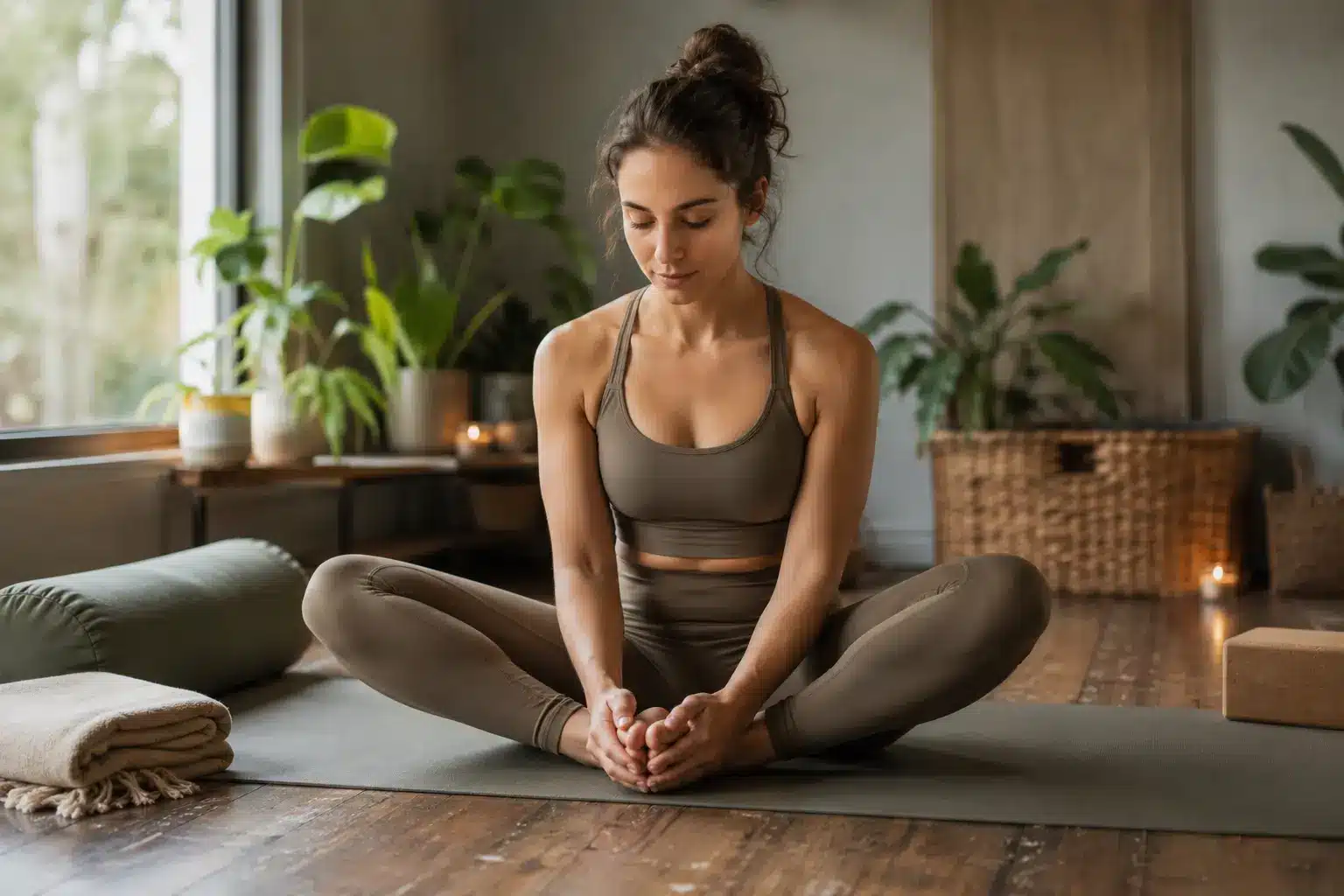
- Reclined Butterfly: Lie on your back, bring your feet together, and let your knees open out. Support the knees with pillows if needed. This pose opens the hips, groin, and chest while encouraging release. Hold for 3 to 5 minutes with slow breathing.
- Dragon Pose: Step into a low lunge, lower the back knee, and let the hips soften toward the floor. Avoid forcing the stretch. This pose releases the hip flexors deeply and may bring up emotion. Hold for about 3 minutes per side.
- Sleeping Swan: Bring one shin forward at an angle, then fold over the bent leg. Rest on your forearms or a bolster. This pose targets deep hip tension around the piriformis and outer hips. Hold for 3 to 4 minutes per side.
Yoga Nidra for Grief: Rest as Practice
Yoga Nidra, sometimes called yogic sleep, is a guided practice conducted entirely lying down. You follow verbal instructions that move your awareness through different parts of the body while remaining at the threshold between waking and sleep. It requires no physical movement and no prior yoga experience.
For grieving people, Yoga Nidra offers something that active yoga practice sometimes cannot: permission to completely stop. Not to push through. Not to breathe into it. Just to stop, be supported by the floor, and be guided somewhere quieter than the inside of your own mind.
Research suggests that a single 30-minute Yoga Nidra session can be equivalent to two to four hours of regular sleep in terms of nervous system restoration. For someone in acute grief, whose sleep is often fragmented and whose body is chronically depleted, that kind of rest matters.
To begin, search for a guided Yoga Nidra session of 20 to 40 minutes on YouTube. Choose one with a calm, slow voice. Lie on your back with a blanket, eye pillow, and any props that make you comfortable. If you fall asleep, that is not a failure. It means your body needed sleep more than it needed awareness, and that is useful information too.
Breathing Practices for Grief
Use breathwork when you want breath-based support without adding movement. These three practices each serve a different purpose, and none of them requires prior experience or special equipment.
Extended Exhale Breathing
Extended Exhale Breathing can help when your body feels hurried, alert, or unable to settle after a hard moment. The longer out-breath activates the parasympathetic nervous system more directly than the in-breath, which is why it works even when active calming techniques do not.
Start with a small count: breathe in for three counts and breathe out for four. If that feels easy, extend the exhale to five. Practice for 1 to 3 minutes, and stop if your body feels strained. The goal is a gentle ratio, not a dramatic one.
| Tip: Keep the count gentle. If counting makes you tense, drop the numbers entirely and simply let the out-breath become slightly longer than the in-breath. The ratio matters less than the direction. |
Soft Sigh Breath
Soft Sigh Breath is useful when emotions feel close to the surface but words do not come easily. Inhale gently through your nose or mouth, then open your mouth and let the sound leave softly. Repeat three to five times, then pause and notice what feels different.
Keep the sigh quiet enough that it feels natural, not performed. This is not about vocalizing dramatically. It is about giving the body a small, honest release.
Hand-on-Heart Breathing
Hand-on-Heart Breathing works well when grief feels lonely, distant, or hard to locate. Place one palm over your heart area and let the other hand rest wherever it feels easy. Notice warmth, weight, pressure, or movement under your hand. Stay for about two minutes.
You are not trying to change the breath. You are simply keeping yourself company, which is often the most necessary thing.
Grief Yoga Techniques Beyond Poses
Grief yoga is not only about moving through shapes on a mat. Some days, your body may need sound, rhythm, or attention instead. These tools help when emotions feel present but a pose practice feels like too much.
- Soft Sound: Let a sigh, hum, or gentle tone leave your mouth when words feel blocked and your throat needs release.
- Slow Swaying: Rock gently while sitting or standing, so restless energy has a steady rhythm rather than feeling trapped inside your body.
- Body Noticing: Notice one area, like your hands, chest, belly, or feet, without judging, explaining, or trying to change it.
- Name Feelings: Choose one honest word, like sad, tired, angry, numb, or tender, so your mind has somewhere simple to land.
- Kind Phrase: Repeat a gentle line, like “I can go slowly today,” when grief makes you feel rushed or pressured inside.
- Light Shaking: Shake your hands, arms, or shoulders for a few seconds to let tightness move without turning it into exercise.
- Comfort Touch: Place one hand on your chest, belly, or cheek when grief feels lonely and your body needs reassurance.
- Quiet Pause: Stop between techniques and notice what changed, even if you only realize that you need more rest right now.
A Gentle Guided Grief Yoga Practice
A guided practice can help you understand how a session should feel from start to finish. Setting a yoga intention before you begin can anchor the session, particularly on days when grief makes it hard to know what you need. This table focuses on pacing and sequence design so you can use it as a flexible session outline rather than a rigid script.
| Practice Part | Time | What to Do | Main Purpose |
|---|---|---|---|
| Arrive | 2 minutes | Choose a seated or lying position and notice the room around you. | Helps you enter the practice without rushing. |
| Settle | 3 minutes | Let your breathing stay easy while your body adjusts to stillness. | Creates a calm starting pace. |
| Move | 8 minutes | Choose a few gentle movements and leave a pause between each one. | Gives the session a soft middle. |
| Express | 2 minutes | Use sound, silence, or a simple word if it feels natural. | Allows emotion without pressure. |
| Close | 5 minutes | Rest with support and let the practice end quietly. | Gives your body time to finish the session. |
Treat this table as a loose frame rather than a script. You can shorten any part, skip what feels heavy, or stay longer where your body feels steady.
Restorative Yoga for Grief
Restorative yoga is for the days when your body feels worn down and needs support more than movement. Choose one supported shape from the table below and stay for the full time with props doing the work.
| Pose | Props | Time |
|---|---|---|
| Reclined Butterfly | Pillows under knees | 3 to 5 minutes |
| Legs Up the Wall | Wall and blanket | 5 to 10 minutes |
| Supported Savasana | Blanket and eye pillow | 5 to 10 minutes |
| Side-Lying Rest | Pillow between knees | 5 minutes |
Let the props do most of the work. A shorter, well-supported rest is more useful than staying in a shape that feels tense or hard to leave. These easy restorative yoga poses work on their own even outside a dedicated grief practice.
Yoga for Different Types of Grief
Different losses affect the body, routine, and emotions in different ways. This section helps you choose a practice direction based on what you are actually carrying, without forcing a one-size approach.
Yoga After Losing a Loved One

Losing someone close can make ordinary moments feel unfamiliar. Your practice should focus on emotional steadiness and gentle presence rather than trying to create a big release or make the sadness smaller.
- Create a memory boundary: Keep one meaningful item nearby only if it feels comforting, and move it away if it pulls you too deeply into pain during practice.
- Return to the present after: Name the day, place, and one simple thing you will do next so your mind can reorient after practice ends.
Yoga for Pet Loss

Pet loss can hurt deeply because animals are part of your daily rhythm, touch, and home life. Your practice can honor that bond without needing to prove the loss is serious enough for others to understand.
- Honor the routine shift: Practice around a time linked to your pet only if it brings comfort, not if it makes the ache stronger.
- Use familiar softness: Keep a blanket or soft fabric nearby to offer comfort when the absence of physical closeness feels especially strong.
Yoga After Divorce or Breakup

A divorce or breakup can disturb your sense of identity, future, and personal space. Your practice can help you feel more anchored in your own life again, without turning the session into a relationship analysis.
- Mark your own space: Choose one small practice area that belongs to you, especially if your home or routine still feels unsettled.
- Close with one choice: After practice, pick one clear action for yourself, such as eating, resting, or bathing, so the session ends with agency rather than drift.
Yoga for Anticipatory Grief

Anticipatory grief can feel like living between love, worry, and waiting. Since your body may already be at a high level of alertness, your practice should stay predictable and steady rather than emotionally intense.
- Keep the pattern familiar: Repeat the same short practice each time so your body does not have to adjust to something new on top of everything else it is managing.
- Practice before hard moments: Use a brief session before visits, calls, or caregiving tasks to help yourself enter them with more steadiness.
Yoga for Collective Grief

Collective grief can come from tragedy, community loss, violence, disaster, or painful world events. It may feel wide and hard to place. Your practice can help you feel connected without making you carry everything on your own.
- Choose shared presence: Practice with others, join a quiet group pause, or sit near someone safe if being alone makes the grief heavier.
- Protect the return: After practice, avoid jumping straight back into upsetting news. Give your body a calmer bridge into the rest of the day.
How Often Should You Practice Yoga for Grief?
Start with 5 to 15 minutes, two to four times a week, then adjust based on how your body responds. Frequency should depend on energy, sleep, appetite, and how much daily life already asks of you.
On lighter days, a full short practice may feel supportive. On drained days, one quiet posture may be enough. You can also reduce the time during anniversaries, family events, or work stress because grief often feels stronger around triggers. Keep one simple record after practice: better, same, or worse. That note helps you learn what your body can manage over time.
The goal is not a perfect routine. It is a repeatable pace that feels kind, realistic, and easy to return to without pressure.
What If You Cry During Yoga for Grief?
Crying during yoga for grief can happen when movement, quiet, or contact with the body makes emotion easier to feel. It does not mean the practice is wrong, excessive, or a breakdown. If tears come, pause first and let the moment stay plain.
Notice whether you feel safe, oriented, and able to choose what happens next. If yes, you may continue slowly. If no, stop the session, sit upright, look around, and bring attention back to the room. Avoid judging the amount of tears or searching for a reason. The body may release before the mind understands. Your only job in that moment is to stay gentle and grounded with yourself.
Tips for Practicing Yoga for Grief at Home
Home practice should feel easy to begin, pause, and leave. Before you start, think about what will help you feel steady when emotions run high.
- Choose one simple spot: Pick a small area where you can sit or lie down without moving furniture or making the space look perfect.
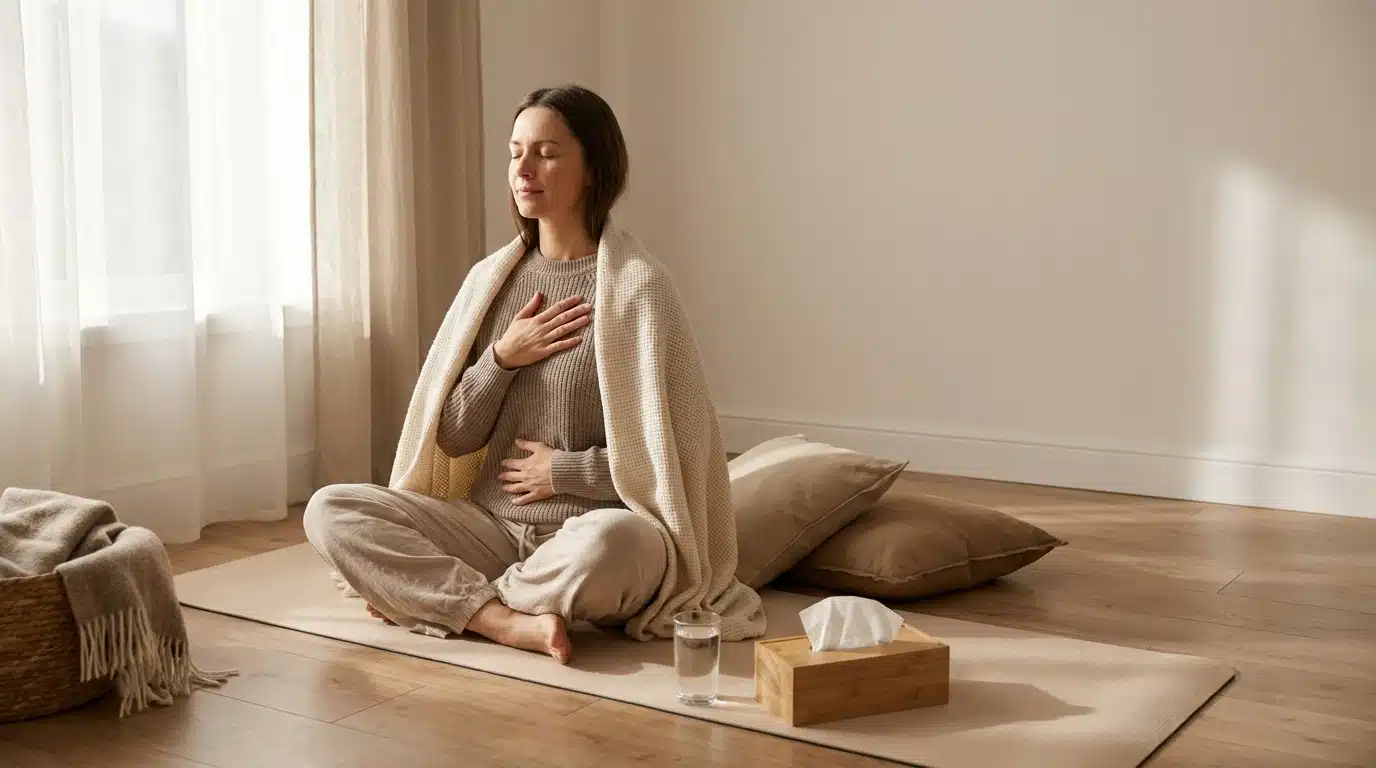
- Keep comfort items close: Place tissues, water, a blanket, and a pillow nearby so you do not have to search for support mid-practice.
- Set a clear time limit: Decide your practice length before starting, even if it is only five minutes, so the session feels contained and safe.
- Use props early: Add pillows, blankets, blocks, or wall support before discomfort arises, rather than waiting until your body feels strained.
- End with a normal action: Wash your face, drink water, step outside, or send one text so your body can gently transition back into the rest of the day.
Grief yoga works best as a standalone session or as a cooldown, not as a warm-up for more vigorous practice. The nervous system needs a full closure, not an interrupted one.
Here are the questions I am asked most often by students who are new to this practice. Here are honest answers based on my experience teaching grief yoga.
Frequently Asked Questions
Is yoga for grief safe during intense emotional pain?
It can be safe when you keep it gentle and stop before you feel overwhelmed. Avoid forcing deep stretches, long stillness, or strong breathwork. If grief feels unsafe, extreme, or linked to thoughts of self-harm, yoga should not be your only support. Please reach out for trained help alongside any movement practice.
Should I practice yoga for grief alone or with a grief yoga teacher?
Practicing alone can feel private, but a trained teacher may help if emotions rise quickly or your body feels difficult to read. A grief-informed or trauma-informed teacher can offer safer pacing, modifications, and support. Choose group practice only if being around others feels comforting rather than stressful. Both approaches are valid and can be combined.
Can yoga for grief help with anger after loss?
Yes. Gentle shaking, slow standing movement, longer exhales, or supported poses can give that energy direction. Anger is a physical state as much as an emotional one, and movement gives it somewhere to go other than inward. The goal is not to hide anger or talk yourself out of it. It is to feel it without letting it take over your whole body.
What is the difference between grief yoga and regular yoga?
Grief yoga prioritizes emotional safety, nervous system regulation, and somatic release over physical advancement. There are no goals around flexibility, strength, or progression. Modifications are not optional extras; they are the default. Grief yoga also explicitly makes room for tears, stillness, sounds, and stopped sessions, which most regular yoga classes do not normalize. If you have been avoiding yoga because it felt too demanding while grieving, grief yoga is specifically designed to remove those barriers.
What should I avoid during yoga for grief?
Avoid anything that makes you feel trapped, pushed, dizzy, or emotionally flooded. Skip intense flows, long breath holds, deep backbends, and poses that feel exposing or unsafe. You should also avoid comparing your practice to anyone else’s. Grief needs choice, patience, and a pace your body trusts.
How is yin yoga different from restorative yoga for grief?
Yin yoga holds poses for three to five minutes and targets connective tissue, which often produces a slow, deep physical and emotional release. Restorative yoga uses more props to support the body in fully passive positions and is focused on the nervous system rather than tissue stretch. Both are valuable for grief. Yin yoga is useful when you want to work with tension. Restorative yoga is better on days when you simply need to be held and supported without doing anything.
Does yoga nidra help with grief?
Yoga Nidra can be particularly helpful for grieving people who are struggling with sleep disruption, dissociation, or an inability to rest even when they are exhausted. It is conducted lying down with no physical movement required, which makes it accessible on the most difficult days. A 20 to 30-minute Yoga Nidra session can support nervous system restoration in ways that parallel several hours of sleep, making it one of the more practical tools available for grief-related fatigue.
Final Verdict
When I introduced a grief-focused yin sequence into my regular rotation, I watched students who had been unable to cry for months suddenly find that three minutes in Dragon Pose opened something they had been protecting without realizing it. That is not magic. That is what happens when you give a body that has been bracing for weeks a long, supported invitation to let go.
Yoga for grief and loss works best not as a cure but as a container: something reliable you can return to when the weight of loss becomes hard to carry alone. Start with the 15-minute sequence in this guide.
If that feels like too much, start with Seated Breath Awareness and a hand on your heart. Give it two weeks of two or three sessions. You will learn more about what your body needs in that time than any advice can tell you in advance.
Sources
Goveas, JS et al., “Iyengar yoga and health education interventions for prolonged grief disorder in later life: feasibility of a randomized controlled trial.” Scientific Reports, 2025. https://doi.org/10.1038/s41598-025-28397-5
National Center for Complementary and Integrative Health, “Yoga: What You Need To Know.” U.S. Department of Health and Human Services. https://www.nccih.nih.gov/health/yoga-what-you-need-to-know
The American Brain Foundation, “How Grief Affects the Brain.” americanbrainfoundation.org
Helbert, Karla. Yoga for Grief and Loss. Jessica Kingsley Publishers, 2015. ISBN 9781848192041.