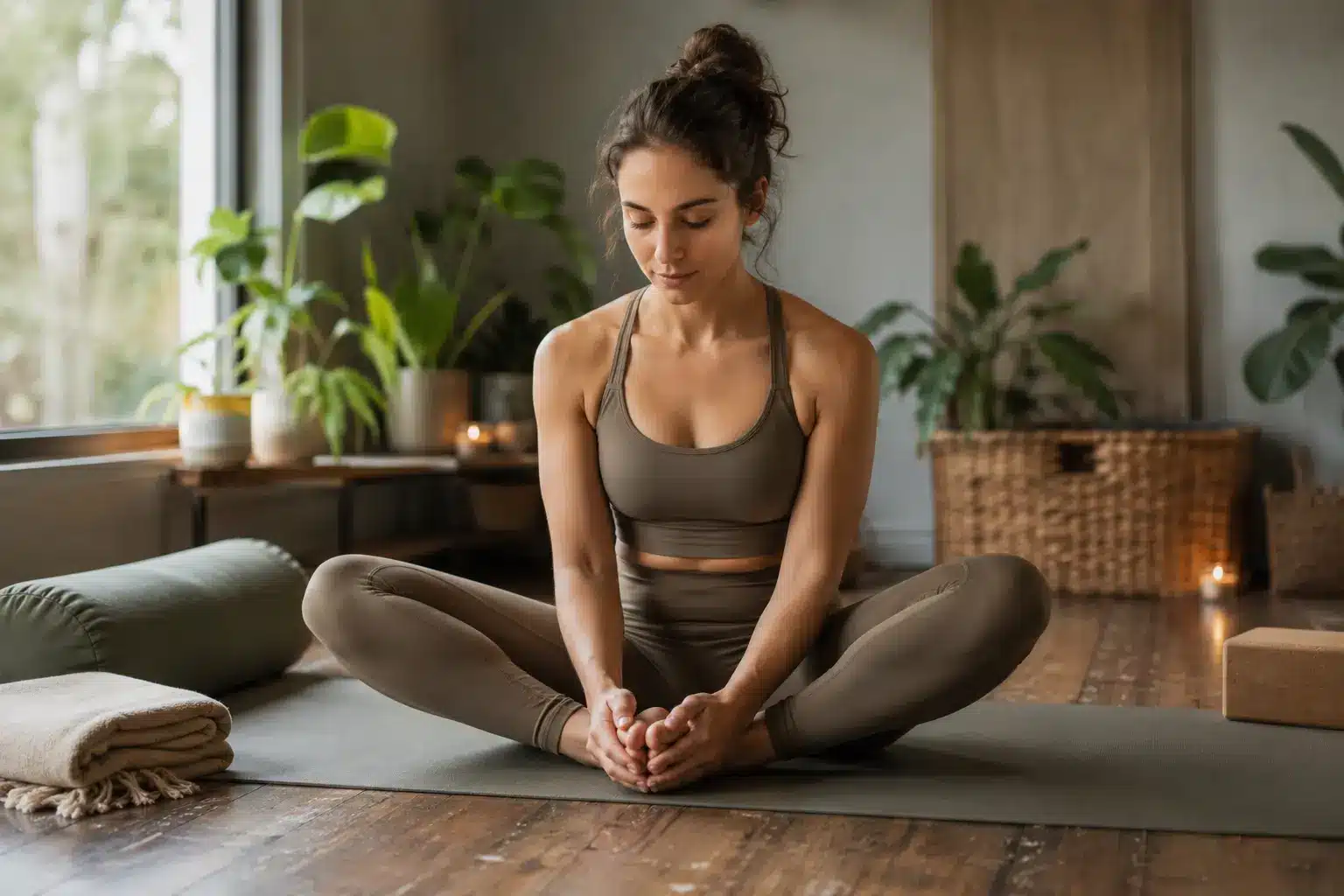
Heart-opening yoga poses help improve posture, reduce tightness, and support better breathing, especially if you spend long hours sitting or leaning forward.
I’ve seen how quickly these poses can change the way your body feels, opening the chest and easing shoulder tension almost immediately. They work by stretching the front body while strengthening the back, helping you stand and move with more ease.
If you’ve been feeling stiff, closed off, or low on energy, these poses can make a noticeable difference. They also support relaxation by releasing built-up stress in the body.
Here, you’ll learn simple heart-opening poses, their benefits, and how to include them in a routine that feels natural and easy to follow.
Understanding Heart-Opening Yoga Pose
Heart-opening yoga poses stretch and expand the chest, shoulders, and upper back.
In yoga, these poses are closely related to backbends, but the distinction matters: a backbend focuses on spinal mobility, while a heart opener actively brings the chest, ribcage, scapulae, and thoracic spine into the work.
Poses like Cobra (Bhujangasana), Camel (Ustrasana), and Bridge (Setu Bandhasana) are classic examples.
Physically, they open the body’s chest cavity, allowing for deeper breathing and better circulation. Emotionally, they help release stored stress, anxiety, and tension, promoting a sense of calm and balance.
In yogic philosophy, these poses activate the Anahata chakra, the heart energy center associated with love, compassion, and connection.
When this center is open, practitioners commonly report feeling more receptive, less guarded, and more connected to themselves and others.
These poses are important in your practice because they not only improve physical flexibility but also support emotional healing by helping you connect more deeply with yourself, reducing stress, and encouraging emotional release.
Best Heart Opening Yoga Poses to Include in Your Practice
1. Cobra Pose

Cobra Pose is a gentle backbend that helps open your chest and improve posture. It’s a great heart opener for beginners and daily practice.
I cue Cobra in almost every beginner class I teach. It is the gateway pose for heart opening. Once students feel their chest lift and their breath deepen, they understand what we mean by “opening the heart.” Start here if you are new to backbends.
How to Do It:
- Start by lying flat on your stomach, legs extended and feet hip-width apart.
- Place your palms flat on the floor, directly under your shoulders. Keep your elbows bent and close to your body.
- As you inhale, press your palms into the floor, lifting your chest off the ground. Keep your elbows slightly bent and engage your back muscles.
- Continue lifting your chest, arching your back while keeping your hips and legs on the floor. Avoid straining your lower back.
- Hold the position for a few breaths, keeping your neck and shoulders relaxed. Focus on deep breathing as you stretch the chest.
- Exhale and gently lower your chest and forehead back to the ground.
Suitable For: This pose is perfect for beginners and those looking to improve posture, relieve back tension, and gently stretch the chest and shoulders. It’s also great for increasing flexibility in the spine.
2. Camel Pose

Camel Pose is a deeper heart-opening stretch that targets the front of your body. It’s especially helpful if you often feel tight from sitting.
How to Do It:
- Begin by kneeling with your knees hip-width apart and your hands on your lower back for support.
- As you lift your chest, gently begin to arch your back, keeping your core engaged.
- Slowly reach back with your hands to grab your heels, maintaining a stable, controlled movement.
- Avoid straining your neck. Keep it neutral and aligned with your spine for a safe stretch.
- Hold the pose for several breaths, focusing on deep breathing while maintaining the arch in your back.
Modification: If full Camel feels too intense, tuck your toes under to raise your heels, making them easier to reach. Blocks placed on either side of your feet are another excellent option. The goal is chest opening, not heel-reaching
Suitable For: This pose is ideal for improving flexibility in the chest and spine, releasing tension from sitting, and supporting emotional openness.
3. Bridge Pose

Bridge Pose is a calming backbend that strengthens your lower body while opening your chest. It’s a supportive pose that feels both gentle and grounding.
How to Do It:
- Start by lying on your back with your knees bent and feet flat on the floor, hip-width apart.
- Press your feet firmly into the floor while engaging your glutes and core.
- Slowly lift your hips toward the ceiling, keeping your body in a straight line from your shoulders to your knees.
- Keep your legs and core engaged to maintain stability and avoid strain in your lower back.
- Hold the pose for several breaths, focusing on deep breathing and maintaining the lift in your hips.
Tip for Deeper Chest Opening: Interlace your fingers underneath your lifted hips and draw your shoulder blades toward each other. This small shift turns Bridge from a basic glute exercise into a genuine heart opener by actively expanding the front of the chest.
Suitable For: This pose is great for strengthening the lower back and legs, opening the chest, and promoting balance and calm. It’s also ideal for beginners.
4. Wheel Pose

Wheel Pose is an advanced heart opener that creates a full-body stretch. It builds strength, flexibility, and energy while deeply opening the chest.
I spent two years building toward Wheel in my own practice before my wrists and shoulders were ready. Do not rush this one. A consistent Bridge practice, combined with Camel and Upward-Facing Dog, is the best preparation.
How to Do It:
- Start by lying on your back, knees bent and feet flat on the floor, hip-width apart.
- Position your hands behind your head with palms flat on the floor, fingers pointing toward your shoulders.
- As you inhale, press into your hands and feet to lift your hips and chest toward the ceiling.
- Continue lifting your chest to create a full arch in your back while keeping your legs engaged.
- Hold the position for a few breaths, keeping your chest open and your neck relaxed.
Suitable For: Wheel Pose is ideal for building strength and flexibility, opening the chest and shoulders, and boosting energy. It’s best for those with some yoga experience.
5. Puppy Pose

Puppy Pose is a gentle heart-opening stretch that feels relaxing and accessible. It’s perfect if you want a softer pose to release tension.
Unlike most heart openers, in which the chest faces upward, Puppy Pose flips the orientation: the chest drops toward the floor while the hips stay lifted.
This makes it uniquely effective for releasing the upper thoracic spine and the muscles between the shoulder blades, areas that standard backbends often miss.
How to Do It:
- Begin on all fours with your hands under your shoulders and knees under your hips.
- Slowly walk your hands forward, keeping your hips over your knees, until your chest moves toward the floor.
- Lower your chest toward the floor, allowing your arms to stretch and your back to lengthen.
- Maintain your hips raised over your knees for a deep stretch in the chest and shoulders.
- Hold the position for several breaths, focusing on relaxing your shoulders and deepening the stretch.
Suitable For: Puppy Pose is perfect for stretching the chest and shoulders, relieving upper back tension, and promoting relaxation and emotional balance.
6. Upward-Facing Dog

Upward-Facing Dog is a strong heart-opener that builds upper-body strength. It lifts your chest fully and creates an energizing backbend.
How to Do It:
- Begin in a plank position, keeping your body in a straight line from head to heels and your core engaged.
- Lower your body to the floor, keeping your elbows close to your sides and maintaining a straight line.
- Press your palms firmly into the mat, using your hands to lift your chest and thighs off the ground.
- As you press into your palms, lift your chest and arch your back while keeping your legs and feet grounded.
- Hold the position for several breaths, focusing on deep, energizing breathing and stretching your chest while maintaining the backbend.
Suitable For: Upward-Facing Dog is excellent for stretching the chest, strengthening the spine, improving posture, and increasing flexibility. It’s also a great way to boost energy.
7. Fish Pose

Fish Pose is a gentle chest opener that focuses on the upper body. It helps counter tightness caused by long hours of sitting.
In traditional yogic texts, Matsyasana is considered a counterpose to Shoulderstand and Headstand, but it works beautifully on its own as a dedicated chest opener.
It is particularly effective at targeting the upper chest and throat, a region that most backbends do not fully reach.
How to Do It:
- Start by lying on your back, knees bent, feet flat on the floor, and arms by your sides.
- Press your palms into the floor as you lift your chest and arch your back, preparing for the pose.
- Slowly lower the crown of your head to the floor, supporting the weight with your neck.
- Ensure your core is engaged to prevent strain, while actively opening your chest and shoulders.
- Hold the position for several breaths, focusing on slow and deep breathing, while relaxing your neck and shoulders.
Suitable For: Fish Pose is ideal for stretching the chest, relieving shoulder tension, and promoting calm breathing. It helps counteract the effects of sitting and improves flexibility.
8. Locust Pose

Locust Pose is a strengthening backbend that engages your entire back. It helps improve posture and build steady spinal support.
Most heart-opening sequences focus heavily on passive chest stretching. Locust fills an important gap: it actively strengthens the posterior chain, the erector spinae, rhomboids, and trapezius, which gives your open chest something to hold itself up against.
A chest that stretches but doesn’t support itself will not stay open between sessions.
How to Do It:
- Start by lying flat on your stomach with your arms extended by your sides and palms facing down.
- As you inhale, lift your chest, arms, and legs off the ground, engaging your back and glutes for strength.
- Keep your arms and legs lifted, squeezing your glutes and engaging your back muscles to support your posture and backbend.
- Maintain a neutral neck position, avoiding any strain while keeping your gaze forward or down.
- Hold the position for a few breaths, focusing on lifting and lengthening your chest, legs, and arms with deep, steady breaths.
Suitable For: Locust Pose is excellent for strengthening the lower back, glutes, and spine, while also stretching the chest and shoulders. It helps improve posture and support heart opening.
9. Standing Forward Bend

Standing Forward Bend may look simple, but it helps lengthen the spine and soften tension. It creates space in the back body.
How to Do It:
- Begin by standing with your feet hip-width apart and your arms relaxed at your sides.
- Hinge at your hips, keeping your spine long as you lower your torso toward the floor.
- Reach your hands toward the floor, keeping your legs straight and bending your knees gently if necessary.
- Let your neck relax, allowing your head to hang freely, and gently release any tension in your upper body.
- Hold the position for several breaths, focusing on lengthening your spine and breathing deeply to release any tightness.
Why It’s in a Heart-Opening Sequence: After several backbends, your lumbar spine needs a moment of neutralization. Standing Forward Bend provides that reset, preventing overcompression in the lower back and preparing the body for the next heart opener.
Suitable For: Standing Forward Bend is great for stretching the spine and hamstrings, easing back and shoulder tightness, and promoting a calm, steady breath.
10. Dolphin Pose

Dolphin Pose builds shoulder strength while creating space in the upper body. It is a strong yet steady heart-opening variation.
How to Do It:
- Begin on all fours, with your hands and knees aligned, and your forearms placed on the floor.
- Lower your forearms to the floor, keeping your elbows directly below your shoulders for stability.
- Press into your forearms and lift your hips toward the ceiling, creating an inverted V shape.
- Hold the pose, keeping your back straight and shoulders strong.
- Hold the pose for several breaths, focusing on deep breathing while maintaining the inverted position and strengthening your shoulders.
Suitable For: Dolphin Pose is excellent for building shoulder strength, stretching the chest and upper back, and improving spinal alignment and stability.
11. Sphinx Pose

Sphinx Pose is a gentle backbend that feels steady and supportive. It’s perfect if you want a mild heart opener without deep strain.
How to Do It:
- Start by lying on your stomach, legs extended, with your forearms propped on the floor.
- Place your elbows directly under your shoulders, forearms flat, and gently press into the floor to lift your chest.
- As you press into your forearms, lift your chest toward the ceiling, creating a gentle backbend while keeping your hips grounded.
- Keep your spine lengthened and engage your core to avoid strain while gently opening the chest.
- Hold the pose for several breaths, focusing on deep, steady breathing and maintaining a gentle stretch in your chest and spine.
Suitable For: Sphinx Pose is ideal for gently opening the chest, improving posture, increasing spine flexibility, and promoting calmness through steady breathing.
12. Seated Forward Fold

Seated Forward Fold stretches the back body while creating space in the chest. It’s a quiet pose that encourages stillness and focus.
How to Do It:
- Begin by sitting with your legs extended straight in front of you, keeping your feet flexed and hips active.
- As you sit tall, lengthen your spine and engage your core to prepare for the forward fold.
- Hinge at your hips and slowly fold forward, reaching for your feet or shins while keeping your back straight.
- Allow your neck and shoulders to relax as you fold, avoiding strain on your upper body.
- Hold the position for several breaths, focusing on deep, calming breaths and gently deepening the stretch as you exhale.
Suitable For: Seated Forward Fold is perfect for stretching the back and hamstrings, supporting flexibility, releasing tension, and helping to calm emotional stress.
13. Reclining Bound Angle Pose

Reclining Bound Angle Pose is a restorative heart opener. It allows your body to soften while gently opening the chest and hips.
How to Do It:
- Start by lying on your back, legs extended, and arms relaxed at your sides.
- Bend your knees and bring the soles of your feet together, allowing your knees to fall outward.
- Gently allow your knees to relax and fall outward, opening your hips and releasing tension.
- Keep your spine neutral and let your shoulders rest comfortably on the floor as you settle into the pose.
- Hold the position for several breaths, focusing on deep, steady breathing to promote relaxation and open the chest and hips.
Suitable For: Reclining Bound Angle Pose is great for opening the chest and inner thighs, releasing tension, and calming the nervous system to support emotional ease.
14. Reverse Warrior Pose

Reverse Warrior is a standing heart opener that builds strength and stretches at the same time. It creates space in the front of the body.
How to Do It:
- Begin in Warrior I with your feet wide apart, front knee bent, and back leg straight, facing forward.
- Ensure your front knee is bent to 90 degrees, keeping it aligned with your ankle.
- Reach your back arm upward, allowing your chest to open as you tilt your torso slightly back.
- As you extend your arm, open your chest, and lift your heart, deepening the stretch across the front of your body.
- Hold the position for several breaths, focusing on steady breathing and maintaining balance as you stretch.
Suitable For: Reverse Warrior is great for strengthening the legs and back, improving side body flexibility, and supporting balance and steady energy throughout your practice.
15. Crescent Moon Pose

Crescent Moon Pose is a simple standing backbend that gently lifts your chest. It feels energizing yet controlled and steady.
How to Do It:
- Begin by standing tall with your feet hip-width apart, and stretch your arms overhead with palms facing each other.
- Gently lean back from your waist, lifting your chest toward the ceiling while keeping your legs strong and grounded.
- Activate your core muscles to support your backbend, ensuring your spine stays long and your body remains steady.
- Press your feet firmly into the ground, engaging your thighs and glutes to maintain balance and stability during the pose.
- Hold the position for several breaths, focusing on deep, steady breathing as you feel the stretch and energy build.
Suitable For: Crescent Moon Pose is great for strengthening the legs and core, stretching the hips, shoulders, and chest, and encouraging both physical and emotional release.
16. Bow Pose

Bow Pose is a strong backbend that deeply opens the chest and front body. It builds strength while creating a powerful heart-opening stretch.
How to Do It:
- Start by lying on your stomach with your knees bent and your feet close to your hips.
- Reach both hands back to hold your ankles, ensuring a firm grip for support.
- As you inhale, lift your chest and thighs off the floor, engaging your back muscles for support.
- Press your feet into your hands to deepen the backbend and lift your chest higher as you engage your core.
- Hold the position for several breaths, focusing on deep breathing as you stretch and strengthen the chest, shoulders, and back.
Suitable For: TheBow Pose is perfect for stretching the chest, shoulders, and hip flexors, strengthening the spine and back muscles, improving posture, and boosting energy.
17. Wild Thing Pose

Wild Thing is a dynamic heart opener that builds strength and flexibility. It creates a full front-body stretch with a sense of expansion.
How to Do It:
- Begin in Side Plank with one hand firmly grounded on the floor and your body in a straight line.
- Step your top foot behind you, placing it on the floor as you continue to open your chest.
- Lift your hips toward the ceiling, and reach your top arm overhead to create a full stretch across your front body.
- Keep your legs and core engaged to support the backbend and maintain balance throughout the pose.
- Hold the position for several breaths, focusing on deep breathing and feeling the stretch as you open your chest and shoulders.
Suitable For: Wild Thing is great for opening the chest and shoulders, strengthening the arms, legs, and core, and building confidence while increasing body awareness.
18. Low Lunge Backbend

Low Lunge with a backbend opens the hips while lifting the chest. It combines grounding strength with an upward heart stretch.
How to Do It:
- Begin by stepping one foot forward into a low lunge position, keeping your knee directly over your ankle.
- Keep your back knee on the floor, ensuring it is aligned with your hips for support as you move into the pose.
- Reach your arms overhead, lengthening through the spine and shoulders while gently arching your back.
- Slowly arch your back, lifting your chest toward the ceiling while keeping your hips grounded and engaged.
- Hold the position for several breaths, focusing on deep, steady breathing and maintaining your balance as you stretch.
Suitable For: Low Lunge with a backbend is great for stretching the chest, hips, and improving flexibility. It strengthens the legs and helps create space for deeper breathing.
19. Half Camel Pose

Half Camel Pose is a steady backbend that opens your chest without going too deep. It helps you build confidence in heart-opening shapes.
How to Do It:
- Begin by kneeling with your knees hip-width apart, keeping your hips stacked over your knees for stability.
- Place one hand on your lower back for support, keeping your core engaged and your spine lengthened.
- Reach the opposite hand toward your heel while gently lifting your chest, ensuring your back stays supported.
- As you lift your chest, arch your back slightly without overextending, keeping your neck relaxed and aligned.
- Hold the position for several breaths, focusing on steady, deep breathing as you stretch your chest and improve posture.
Suitable For: Half Camel Pose is perfect for gradually opening the chest, strengthening the back, improving flexibility, and promoting better posture while encouraging calm breathing.
Benefits of Heart Opening Yoga Poses
Heart-opening yoga poses are powerful for boosting physical flexibility and releasing emotional tension.
- Improved Posture and Lung Capacity: Heart-opening poses help align the spine and open the chest, improving posture and expanding lung capacity.
- Stretching the Chest, Shoulders, and Back: These poses target the upper body, releasing tightness in the chest, shoulders, and back, which can relieve discomfort and increase flexibility.
- Releases Emotional Tension: By focusing on deep breathing and opening the chest, heart-opening poses help release trapped emotions, offering emotional relief and healing.
- Boosts Self-Love and Reduces Stress: These poses help promote emotional balance, boost self-love, reduce anxiety, and calm the mind.
- Promotes Positivity and Mental Clarity: Practicing heart-opening poses helps reduce negative emotions, fosters a more positive mindset, and provides mental clarity.
- Activates the Parasympathetic Nervous System: Deep, slow breathing during these poses stimulates the “rest and renew” response, helping to lower heart rate, ease anxiety, and improve sleep over time.
By regularly practicing heart-opening poses, you can enhance flexibility, reduce stress, and cultivate a deeper sense of self-love. Give them a try and feel the difference!
How to Create a Heart-Opening Yoga Sequence
Creating a heart-opening yoga sequence begins with warming up the body, focusing on gentle stretches for the shoulders, chest, and back. Start with basic stretches, such as Child’s Pose or Downward Dog, to prepare your body.
Then sequence poses that progressively open the chest, such as Cobra, Bridge, and Camel Pose. Transition smoothly between poses, maintaining a slow, mindful breath.
Finish with a cooling down period, such as Puppy Pose or Savasana, to allow the heart to fully relax. Here’s a simple sequence: Child’s Pose, Cobra, Camel, Bridge, and end with Puppy Pose for a balanced, heart-opening flow.
Tips for a Successful Heart Opening Practice
Heart-opening poses can improve both your physical flexibility and emotional well-being. In this section, I’ll share tips to make your practice more successful.
- Focus on Breath: Deep breathing is essential in heart-opening poses. It helps relax your body, enhances stretch, and promotes emotional release during your practice.
- Proper Alignment: Ensure your body is aligned correctly to avoid strain and injury. Proper alignment also ensures you get the most out of each pose. Think of the shoulder blades as a shelf that supports the heart. Drawing them toward each other and down the back is the foundational alignment cue for nearly every heart opener.
- Be Patient and Consistent: Practice heart-opening poses regularly to see the full benefits. Consistency and patience allow for gradual emotional and physical improvement.
- Listen to Your Body: Always pay attention to how your body feels. Modify poses as needed to prevent discomfort and allow gradual progress.
- Use Props for Support: Props like blocks or cushions can help you maintain proper form, especially in challenging poses, offering comfort and enhancing your practice.
With these tips, you can maximize the benefits of heart-opening poses. Stay patient and consistent, and watch how your body and mind respond over time.
Who Should Be Cautious with Heart-Opening Poses
Heart-opening poses are broadly safe, but certain conditions warrant extra care or modification:
- Lower back injury or disc issues: Deep backbends can compress the lumbar spine. Work with Sphinx and Bridge only, and consult a physical therapist or your doctor before attempting Camel, Wheel, or Bow.
- Recent shoulder or rotator cuff injury: Poses like Upward-Facing Dog and Wild Thing place a significant load on the shoulder joint. Substitute Sphinx or Bridge until the shoulder has healed.
- Pregnancy (second and third trimester): Avoid deep prone backbends such as Cobra, Locust, and Bow. Bridge Pose with blocks under the sacrum is a safer alternative.
- High blood pressure or recent heart surgery: Consult your physician before practicing strong inversions or deep backbends that significantly change blood flow dynamics.
- Wrist issues: For poses that require weight-bearing on the wrists (Wheel, Upward-Facing Dog), use fists or yoga wedges to reduce extension strain, or substitute forearm variations where possible
How Often Should You Practice Heart Opening Poses?
Practicing 2–3 times weekly helps improve flexibility, posture, and overall ease. Start slow and stay consistent for steady progress.
| Day | Focus | Recommended Poses |
|---|---|---|
| Day 1 | Gentle opener | Sphinx, Cobra, Bridge, Puppy Pose, Reclining Bound Angle |
| Day 2 | Rest or light | Optional: Seated Forward Fold, Standing Forward Bend |
| Day 3 | Moderate depth | Locust, Upward-Facing Dog, Camel (hands to lower back), Bow |
| Day 4 | Rest | Recovery, gentle walking, or yin yoga |
| Day 5 | Full sequence | Complete a 30-minute sequence using all the heart-opening poses covered above |
Follow this simple plan to stay consistent without overloading your body.
Final Thoughts
Opening your body the right way can change how you move, breathe, and feel day to day. Heart-opening yoga poses help reduce tightness, improve posture, and support deeper breathing when practiced consistently.
I’ve seen that starting with simple poses, focusing on alignment, and building gradually makes a big difference.
Mixing gentle and deeper poses, following a basic sequence, and staying consistent 2–3 times a week helps your body adjust without strain.
Listening to your limits and using support when needed keeps your practice safe and effective.
When you stay consistent, the results go beyond flexibility and show up in how you carry yourself. Try these poses regularly, and share how your body feels after a few sessions.