Does a pounding headache feel like it’s stealing your entire day? I know how frustrating it is when that dull ache or sharp throb makes focusing impossible.
Whether it’s stress-induced tension or a recurring migraine, the search for relief often feels endless. Fortunately, you can find a natural way to settle your nervous system. This is where yoga for headaches becomes a total game-changer.
I’ve found that specific, gentle movements can release the physical tightness and mental pressure that fuel your pain.
Much like finding a sauna detox routine to flush out physical stress, these poses work to reset your body from the inside out.
You will learn the most effective poses, simple breathing techniques, and lifestyle shifts to help prevent future episodes. Let’s reclaim your comfort and get you back to feeling like yourself.
What Causes Headaches and Migraines?
Headaches and migraines often develop due to everyday habits, physical tension, and internal imbalances that affect the body’s nervous system.
- Stress: Mental pressure tightens muscles around the neck and shoulders, leading to tension headaches and triggering migraine episodes over time.
- Dehydration: Lack of water reduces blood flow and oxygen to the brain, which can quickly result in headache pain and fatigue.
- Poor Posture: Sitting for long hours with incorrect posture strains the neck and upper back, gradually building pressure that leads to headaches.
- Irregular Sleep: Inconsistent sleep patterns disrupt brain function and hormone balance, making both headaches and migraines more frequent and intense.
- Tension Headaches vs Migraines: Tension headaches feel like a steady pressure, while migraines are more severe, often causing throbbing pain, nausea, and sensitivity.
- Lifestyle Impact: Daily habits like diet, stress management, hydration, and sleep directly influence how often headaches occur and how intense they become.
What the Research Says About Yoga for Headaches

The clinical evidence is stronger than most people realize.
The CONTAIN trial, published in Neurology (2020), was a prospective randomized controlled trial of 160 patients with episodic migraine. Participants who added yoga to their conventional medical treatment showed significantly greater reductions in headache frequency and intensity, HIT-6 scores, and medication use than the medical-only group over 3 months.
The yoga group also significantly reduced their migraine disability assessment (MIDAS) scores.
A systematic review and meta-analysis published in the Journal of General Internal Medicine analyzed multiple randomized controlled trials and found statistically significant evidence that yoga reduces headache frequency, duration, and pain intensity in tension-type headache patients.
A separate 2022 meta-analysis of six RCTs (445 patients total), published in the American Journal of Emergency Medicine, confirmed that yoga therapy significantly reduced pain intensity (SMD = -1.21), headache frequency (SMD = -1.43), and headache duration compared to control groups.
These are not small pilot studies. This is a growing body of controlled evidence supporting yoga as a clinically meaningful complement to standard headache treatment.
Simple Poses of Yoga for Headache and Migraine Relief
These poses help calm your mind, relax tight neck muscles, and improve blood flow. I suggest practicing them slowly and focusing on steady breathing.
1. Child’s Pose
Best for: Active headache relief | Hold: 1 to 3 minutes | Type: Restorative
Child’s Pose is one of the safest and most calming positions for headache relief. It gently stretches your lower back and shoulders. It also helps your nervous system settle and quiet down.
This pose reduces tension stored in your neck and upper back. The forward fold encourages relaxation and steady, controlled breathing. I have seen many people find immediate relief in this pose when stress starts building behind their eyes.
How to do it:
- Kneel on the floor and make sure your knees feel comfortable.
- Slowly sit back until your bottom rests on your heels.
- Begin lowering your chest gently down toward your thighs.
- Stretch your arms forward along the mat or rest them beside you.
- Let your forehead rest softly and fully on the mat.
- Close your eyes and breathe slowly and deeply through your nose.
2. Legs Up the Wall
Best for: Active headache relief | Hold: 2 to 5 minutes | Type: Restorative inversion
This simple restorative pose allows your body to fully relax without effort. It requires very little strength but offers strong calming effects. I suggest it when migraines feel connected to fatigue, poor circulation, or mental overload.
How to do it:
- Sit sideways next to a wall
- Swing your legs up as you lie down
- Adjust your hips close to the wall
- Keep your back flat on the floor
- Rest your arms loosely by your sides
- Close your eyes and breathe slowly
3. Cat-Cow Pose
Best for: Prevention | Duration: 8 to 10 breath cycles | Type: Mobility/warm-up
Cat-Cow is a gentle, flowing movement that improves spinal mobility and releases stiffness in the neck and shoulders. I recommend it when posture or long hours of sitting trigger upper back tension that spreads into the head.
How to do it:
- Start on hands and knees
- Keep wrists under shoulders and knees under hips
- Inhale and arch your back, lifting your head
- Exhale and round your spine, tucking your chin
- Move slowly with your breath
- Keep movements smooth and controlled
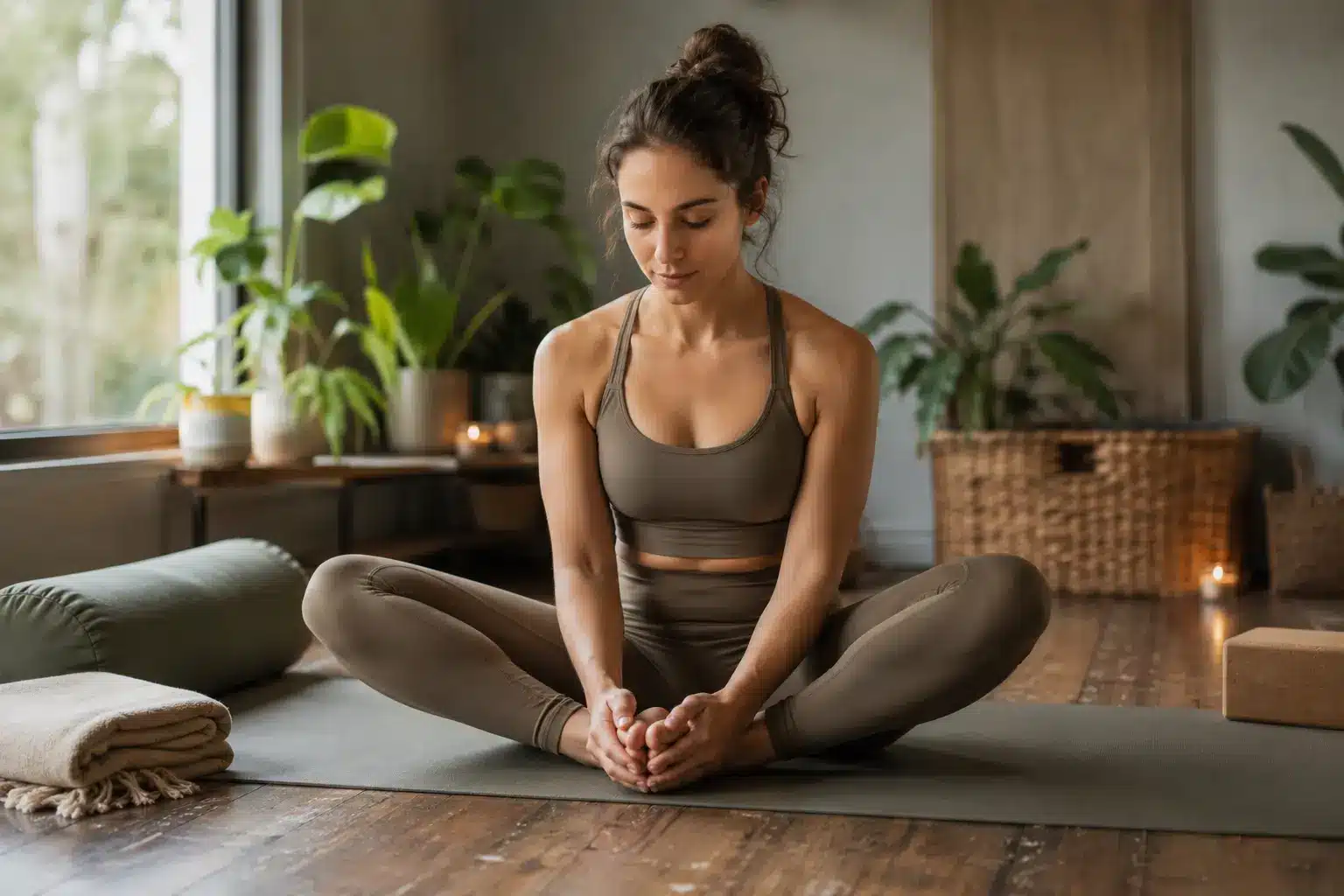
4. Seated Forward Fold
Best for: Prevention and early-stage relief | Duration: 5 to 8 minutes | Type: Targeted release
This forward bend encourages stillness and quiet focus. It gently stretches your spine and hamstrings while helping your mind slow down. I find it especially useful when stress feels mental and physical at the same time.
How to do it:
- Sit with legs extended forward
- Keep your spine straight
- Inhale and lengthen your back
- Exhale and gently fold forward from your hips
- Reach toward your feet without forcing
- Let your neck and shoulders relax
5. Bridge Pose
Best for: Prevention and stress-driven headaches | Hold: 1 to 2 minutes | Type: Forward bend/calming
Bridge Pose strengthens your back while opening the chest and improving breathing capacity. It can help if your headaches are linked to shallow breathing or tight chest muscles from stress and poor posture.
How to do it:
- Lie on your back
- Bend your knees and place your feet hip-width apart
- Keep your arms flat beside your body
- Press your feet into the mat
- Lift your hips slowly upward
- Keep your shoulders grounded and breathe evenly
6. Supine Spinal Twist
Best for: Prevention only | Hold: 30 seconds to 1 minute | Type: Strengthening / chest opener
This relaxing twist gently releases tension along the spine and shoulders. I often suggest it when tightness in the upper back feels like it’s creeping into the head and neck area.
How to do it:
- Lie flat on your back
- Bring your knees toward your chest
- Drop both knees to one side
- Extend your arms outward
- Turn your head in the opposite direction
- Relax fully and breathe deeply
7. Standing Forward Fold
Best for: Active headache relief | Hold: 1 to 2 minutes per side | Type: Restorative / releasing
Standing Forward Fold increases blood flow toward the head and helps relieve tightness from long periods of sitting. I suggest it when pressure builds gradually through the day, and posture plays a role.
How to do it:
- Stand with feet hip-width apart
- Slightly bend your knees
- Hinge forward from your hips
- Let your head hang naturally
- Hold opposite elbows if comfortable
- Keep your neck fully relaxed
Breathing Techniques That Help Headaches
Slow breathing can calm your nerves and reduce pressure in your head. I use these simple methods when stress or migraines start building.
| Technique | How to Do It | How It Helps |
|---|---|---|
| Alternate Nostril Breathing | Breathe through one nostril at a time, switching sides | Balances the nervous system and eases migraines |
| Deep Belly Breathing | Breathe deeply until your stomach visibly rises and falls | Lowers stress and loosens tight muscles |
| Lengthened Exhale | Inhale for 4 counts, exhale for 6 to 8 | Releases tension and slows a building headache |
| Box Breathing | Inhale, hold, exhale, hold, 4 counts each | Steadies stress and calms racing thoughts |
| Humming Bee Breath | Exhale with a soft hum, ears gently closed | Relieves pressure around the eyes and temples |
| Cooling Breath | Inhale through a curled tongue, exhale through the nose | Lowers body heat and soothes tension headaches |
Practice these breathing exercises daily, even when you feel fine. Regular practice helps your body respond faster when headache symptoms begin.
Can Yoga Cure Migraines Permanently?
Yoga can be a powerful tool for managing migraines, but it’s important to set realistic expectations. It does not act as an instant or permanent cure for everyone.
Instead, yoga works by addressing common triggers such as stress, muscle tension, poor posture, and irregular breathing patterns.
Through consistent practice, it helps calm the nervous system, improve blood circulation, and reduce the intensity and frequency of migraine episodes over time.
Many people notice fewer headaches and better overall well-being when yoga becomes part of their daily routine.
The key is consistency, patience, and combining yoga with healthy lifestyle habits for long-term relief rather than expecting immediate results.
Yoga Lifestyle Tips to Prevent Headaches
Small daily habits often make the biggest difference in preventing headaches. Along with your poses, it is vital to stay hydrated and eat regularly to avoid blood sugar drops.
Focusing on internal health by learning to detox your blood can also reduce the body’s toxic load and help minimize chronic head pain.
- Hydration and Nutrition: Drink enough water throughout the day and eat balanced meals on time to prevent dehydration, low blood sugar, and fatigue-related headaches.
- Sleep Routine: Follow a consistent sleep schedule, avoid late-night screen use, and create a calm bedtime routine to reduce migraine and tension headache triggers.
- Daily Yoga Habits: Practice gentle yoga for a few minutes daily to keep your muscles relaxed, improve circulation, and lower stress before headaches begin.
- Stress Management Techniques: Use breathing exercises, meditation, journaling, or short mindful breaks to calm the nervous system and reduce stress-related headache frequency.
- Posture and Ergonomic Fixes: Adjust your chair, screen height, and sitting position to reduce neck, shoulder, and upper back tension caused by long work hours.
These lifestyle changes work best when practiced consistently. Start with one or two habits, then slowly build a routine that feels realistic.
Safety Precautions Worth Knowing Before You Begin
Before starting any yoga routine for headaches, it’s important to move carefully and listen to your body. A safe approach helps prevent worsening symptoms and ensures a more effective, comfortable experience.
- Avoid Straining Poses: Skip any pose that puts direct pressure on the neck or worsens head pain.
- Stop When Needed: If dizziness, nausea, or severe pain occurs during practice, stop immediately.
- Consult a Doctor: See a doctor before starting yoga if migraines are frequent or medically diagnosed.
- Move Slowly: Avoid sudden movements, as quick transitions can trigger headache symptoms.
- Know Your Limits: Gentle and steady practice always works better than forcing a pose.
That’s a Wrap
Living with frequent head pain is exhausting, but you now have a toolkit to fight back.
By practicing these gentle poses and mindful breathing, you address the physical tension and internal stress that often trigger your discomfort.
Remember that consistency is your best friend; even five minutes of daily movement makes a huge difference. Using yoga for headaches helps you stay grounded and improves your circulation so you can find relief naturally.
Your body deserves this break from the constant pressure and strain. I encourage you to try one or two of these poses the next time you feel tension building.
How do you usually handle a building headache? Share your thoughts below or try these tips today.