| Topic | History and origins of yoga |
| Style | Educational, Hatha, and classical traditions |
| Level | All levels, no practice required |
| Time Period Covered | 3000 BCE to the present day |
| Key Traditions | Vedic, Upanishadic, Classical, Hatha, Tantric, Modern |
| Relevant For | Practitioners curious about yoga’s cultural and spiritual roots |
| Disclaimer: This article is for informational and educational purposes only. It does not constitute medical advice. Always consult a qualified healthcare provider before starting a new exercise, nutrition, or wellness program. |
Where Did Yoga Originate?
Yoga originated in ancient northern India, with its earliest roots traced to the Indus-Sarasvati Civilization around 3000 BCE. Here is what that history actually means for the practice most people do today.
In my classes, students ask about yoga’s origins more than almost any other topic. There is a reason for that curiosity. Once you understand where yoga originated, every pose, every breath, and every moment of stillness carries a different weight.
Yoga was never designed as exercise. It was a complete system for uniting body, mind, and spirit, built by practitioners who spent lifetimes refining it. What you practice on the mat today is the latest chapter in a story that is over 5,000 years long.
This guide walks through every major period of that story, from the first archaeological hints in the Indus Valley to the global yoga boom of the 20th century, including sections on the Bhagavad Gita, the four paths of yoga, and how Swami Vivekananda carried these teachings to the West.
Understanding this lineage gives you a deeper appreciation for a practice that shaped wellness worldwide.
The Indus Valley Civilization: The Earliest Archaeological Evidence
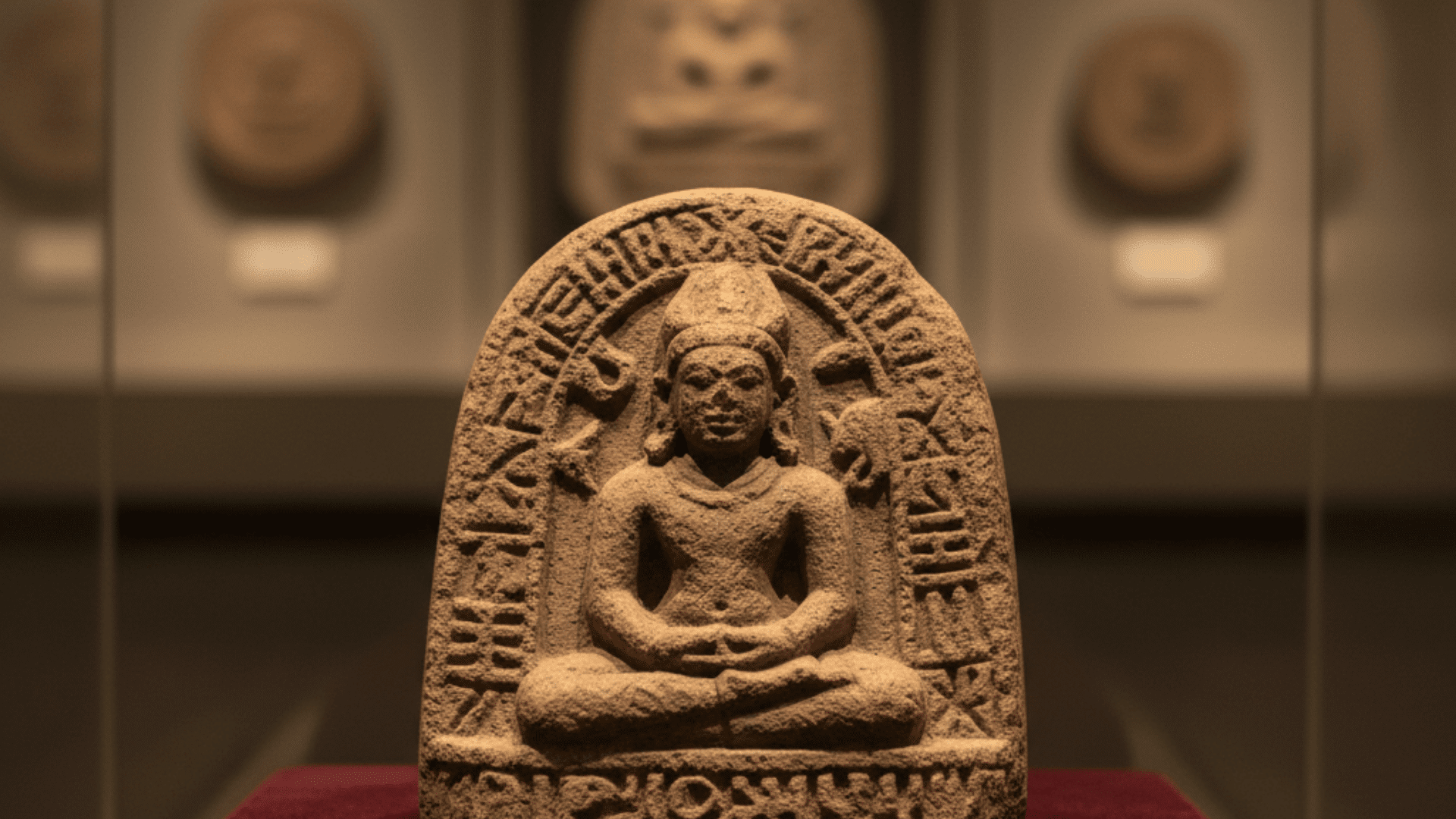
The oldest physical evidence connected to yogic practice comes from the Indus-Sarasvati Civilization, one of the ancient world’s largest urban cultures. Stone seals dating from roughly 3300 to 1300 BCE show figures seated in cross-legged, meditative postures. These are the oldest artifacts that hint at something resembling contemplative practice.
Scholars treat this evidence carefully. The seals are symbolic images, not yoga manuals, and their direct link to classical yoga is interpretive rather than conclusive.
What archaeologists do agree on is that these artifacts point to ritualistic or meditative behavior, establishing a cultural environment that set the stage for everything that followed.
Google Arts and Culture highlights these objects as important cultural markers while noting the speculative nature of any yoga connection.
What the Pashupati Seal Tells Us
The most frequently cited artifact is the Pashupati Seal, found at Mohenjo-Daro. It depicts a figure that some scholars read as a proto-Shiva seated in a posture resembling Mulabandhasana, or a root-lock position.
Hindu tradition describes Lord Shiva as the Adi Yogi, the first teacher of yoga, who passed the knowledge of the practice to his wife Parvati and, through the sacred bull Nandi, eventually to humanity.
Whether or not the seal depicts Shiva, it shows that the seated, inward-facing posture held symbolic significance in pre-Vedic India.
| Note: Archaeological evidence suggests possible precursors to yoga but not organized yogic systems. The textual record, beginning with the Rig Veda around 1500 BCE, provides the clearer foundation for yoga’s conceptual development. |
The Vedic Period: Where Yoga’s Conceptual Roots Begin (1500–500 BCE)
Written records give us a firmer foundation for yoga’s history. The Rig Veda, dating to approximately 1500 BCE, contains the earliest written use of the Sanskrit root yuj, meaning to yoke or to unite. This is where the word yoga comes from.
The Vedas describe rituals and ascetic practices aimed at spiritual concentration and a direct connection between the practitioner and the divine. Yoga was not yet a physical system. It was a framework for devotion and inner discipline.
The Atharva Veda, composed around 1200 BCE, expanded on these ideas with references to breath control and internal energy, foreshadowing the pranayama practices that would later become central to Hatha yoga. These texts make clear that yoga’s ancient roots are inseparable from the spiritual life of ancient India.
The Upanishads: Yoga’s First Mature Philosophy (700–500 BCE)
The Upanishads represent a major turning point in yoga’s development. These philosophical texts shifted focus from external ritual to inner awareness.
The Katha Upanishad, composed around 700 BCE, is among the earliest to describe yoga as a disciplined practice of controlling the mind and senses. It introduces the metaphor of the body as a chariot, the senses as horses, and the intellect as the charioteer, a framework that places conscious self-mastery at the center of practice.
The Shvetashvatara Upanishad goes further, describing meditative techniques and the concept of moksha, or spiritual liberation, as yoga’s highest goal. These texts shift yoga decisively inward, building the philosophical foundation that Patanjali would later systematize into classical yoga.
Students who practice yoga intentions before each session are working from an idea that traces directly back to these early Upanishadic teachings on focused inner awareness.
Classical Yoga: Patanjali’s Yoga Sutras (c. 200 BCE)
Patanjali’s Yoga Sutras represent the first comprehensive codification of yoga as a unified system. Written around 200 BCE, the 195 aphorisms synthesize Samkhya philosophy and the meditative practices already in circulation into what we now call classical yoga.
The most lasting contribution is the eight-limbed path, or Ashtanga, which maps a complete sequence from ethical behavior to spiritual absorption.
| Limb | Sanskrit | Function | Key Elements |
|---|---|---|---|
| 1st | Yama | Ethical restraints | Ahimsa, Satya, Asteya, Brahmacharya, Aparigraha |
| 2nd | Niyama | Personal observances | Saucha, Santosha, Tapas, Svadhyaya, Ishvara pranidhana |
| 3rd | Asana | Stable posture | Steady, comfortable seat; no specific poses described |
| 4th | Pranayama | Breath regulation | Control of inhalation, exhalation, and retention |
| 5th | Pratyahara | Sensory withdrawal | Drawing awareness from external to internal |
| 6th | Dharana | Concentration | One-pointed focus on a single object or concept |
| 7th | Dhyana | Meditation | Sustained awareness without effort |
| 8th | Samadhi | Absorption | Union with the object; realization of kaivalya |
One detail that surprises many practitioners: Patanjali’s Asana limb describes only a steady, comfortable seat. No specific poses are named in the Sutras.
The hundreds of asanas practiced in modern yoga studios were developed centuries later, primarily through Hatha yoga traditions. The Yoga Sutras fell into relative obscurity for several hundred years before colonial-era scholarship revived scholarly interest in the text during the 19th century.
The Bhagavad Gita and the Four Paths of Yoga
While Patanjali’s framework dominates modern yoga education, the Bhagavad Gita, composed around 400 BCE as part of the Mahabharata epic, was the text that actually shaped medieval yogic practice.
The Gita presents a conversation between the warrior Arjuna and Lord Krishna on the eve of battle, covering duty, devotion, and the nature of the self. Through this dialogue, the Gita articulates four distinct paths of yoga, each suited to different temperaments.
These four paths offer the clearest picture of what yoga meant to practitioners across centuries of classical Indian life.
1. Jnana Yoga: The Path of Knowledge
Jnana yoga is the practice of self-inquiry and philosophical study. It asks the practitioner to distinguish between the permanent self (Atman) and the impermanent material world. This path demands rigorous intellectual engagement with texts like the Upanishads and the Gita itself.
In my experience teaching students who come from an academic or analytical background, Jnana yoga tends to resonate most because it meets people where they already are, in their minds, and guides them toward what is beyond thought.
2. Bhakti Yoga: The Path of Devotion
Bhakti yoga is the practice of love and devotion directed toward the divine, whether understood as a personal god, a universal consciousness, or the teacher-student relationship.
Chanting, prayer, and ritual devotion are its primary methods. Bhakti remains the most widely practiced path in India, where it flows through everyday religious life in ways that most Western practitioners never encounter.
3. Karma Yoga: The Path of Selfless Action
Karma yoga is action performed without attachment to its outcome. The Gita frames this as the most direct path for people embedded in worldly life who cannot retreat to monasteries or meditation caves.
Acting skillfully and generously, without ego-driven motivation, is itself the practice. Many Indian independence leaders, including Mahatma Gandhi, drew explicitly from Karma yoga philosophy.
4. Raja Yoga: The Path of Mind Control
Raja yoga is what most Western practitioners think of when they hear the word yoga: the systematic training of the mind through meditation and ethical practice.
Patanjali’s eight-limbed path is its primary manual. Raja means “royal,” reflecting the view that mastery of the mind is the highest form of discipline.
| Instructor Note: In classes, I introduce all four paths early, because different students respond to different entry points. A student who resists meditation may thrive through Karma yoga. A devotional student may unlock their practice through Bhakti. Understanding yoga’s origin and breadth helps every practitioner find their way in. |
Medieval Developments: Hatha Yoga and the Rise of Physical Practice (10th–15th Century)
In the medieval period, yoga shifted toward a more embodied, energy-based approach. This is the phase that most directly produced the physical yoga people practice today.
Tantric traditions introduced the concept of subtle anatomy: chakras (energy centers), nadis (energy channels), and the awakening of Kundalini energy through sustained physical and breathing practice.
The most influential text of this period is the Hatha Yoga Pradipika, written by Swatmarama in the 15th century. It systematized asana, pranayama, and purification rituals (shatkarmas) for the first time as a coherent practice. Crucially, the Hatha Yoga Pradipika does not treat physical practice as an end in itself.
It frames asana and pranayama as preparation for meditation, the body made stable and clear so that the mind can turn inward. That framing is worth carrying into every physical practice today.
Asana practice in this period also expanded well beyond seated meditation postures. Dynamic, strength-demanding positions began to appear in texts, establishing the idea that the body itself is a vehicle for spiritual transformation, not an obstacle to it.
Yoga Spreads to the West: The Modern Era (19th Century to Present)
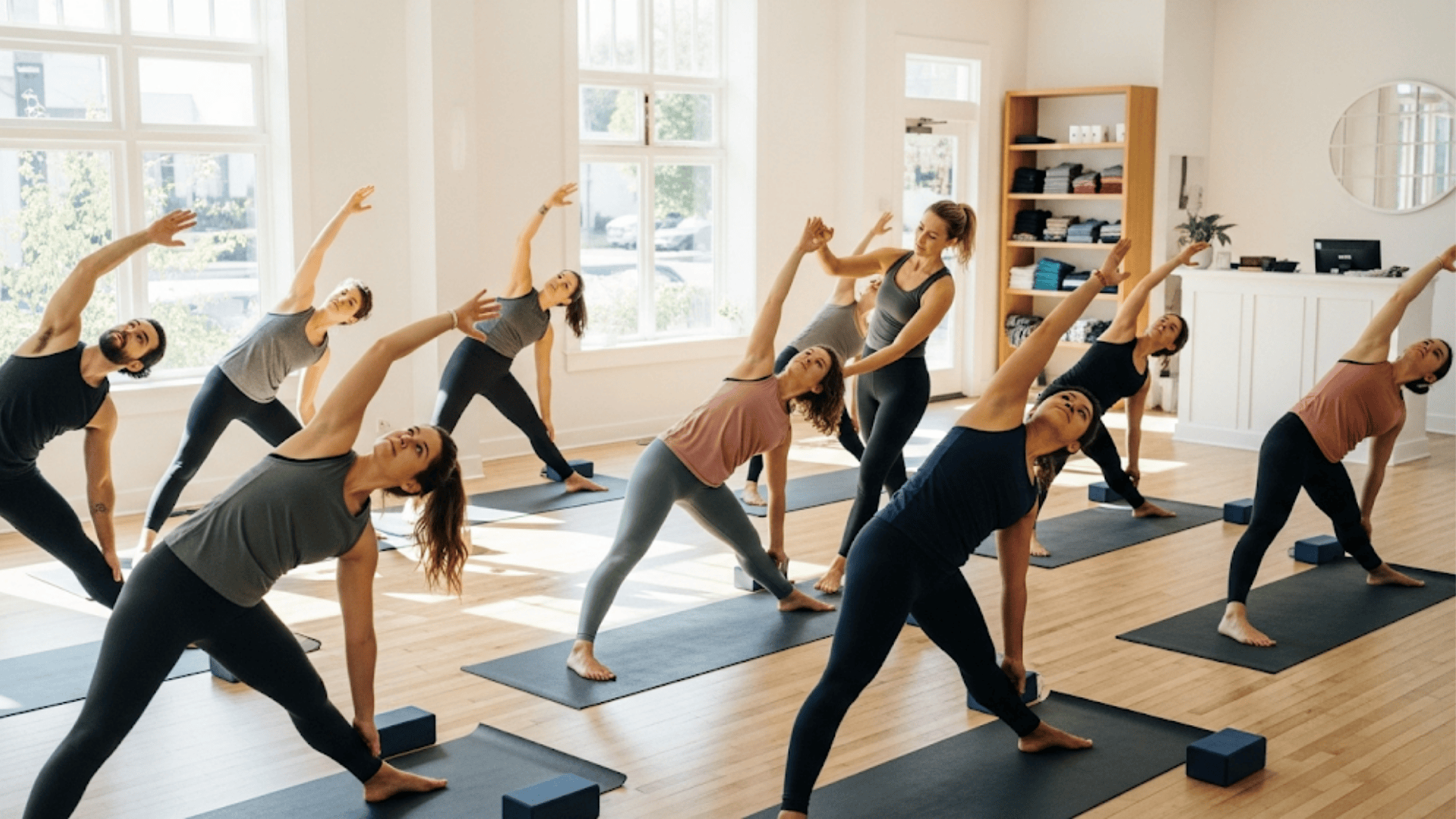
Yoga’s global expansion began with a single lecture. In 1893, Swami Vivekananda addressed the Parliament of the World’s Religions in Chicago, introducing the philosophy of Vedanta and yoga to a Western audience that had never encountered it systematically.
His talks were received with sustained applause, and he spent the next several years teaching across the United States and Europe. Vivekananda’s influence on how the West understands yoga cannot be overstated: he reframed it as a universal, non-sectarian path toward self-realization, accessible to people of any background.
Tirumalai Krishnamacharya and Modern Postural Yoga
The physical form of yoga most people practice today was largely shaped by one teacher: Tirumalai Krishnamacharya, who taught in Mysore, India, from the 1920s onward.
Krishnamacharya integrated classical yogic teachings with elements of Western gymnastics and Indian wrestling traditions, creating a dynamic, sequenced asana practice unlike anything codified before. His students include B.K.S. Iyengar, K. Pattabhi Jois, and Indra Devi, each of whom spread distinct yoga lineages worldwide.
This modern postural yoga represented a deliberate shift in emphasis: from meditation and spiritual liberation as primary goals toward physical health and vitality. The shift aligned with Indian nationalist aims during the colonial period, where a strong, disciplined body carried political symbolism.
A consistent 28-day chair yoga challenge practice, for example, builds exactly the kind of daily physical consistency that this modern lineage values most.
Global Spread and Commercialization
From the 1960s onward, yoga spread rapidly through North America and Europe. It diversified into dozens of styles, including Bikram, Kundalini, Ashtanga, Yin, and restorative yoga, each emphasizing different aspects of the tradition.
The 1980s saw yoga fully enter the Western fitness market. Today, it is a multi-billion dollar global industry, encompassing studios, teacher training programs, apparel, equipment, and digital platforms.
On December 11, 2014, the United Nations General Assembly designated June 21 as the International Day of Yoga, a formal recognition of yoga’s origins in India and its global reach. That designation marked a significant moment: an acknowledgment at the highest international level of yoga’s birthplace and its continuing importance to world wellness culture.
Common Myths About Yoga’s Origins
Yoga’s long history has generated persistent misconceptions worth addressing directly.
Myth 1: Yoga started outside India. The historical and archaeological record is consistent. Yoga originated in ancient India over 5,000 years ago, with textual roots in the Rig Veda and physical antecedents in the Indus-Sarasvati Civilization. No credible scholarly tradition places its origin elsewhere.
Myth 2: Yoga is just exercise. Classical yoga, as described in the Yoga Sutras and the Bhagavad Gita, places asana as one component of a much larger system aimed at spiritual liberation. The modern emphasis on physical postures is a development of the last 100 years, not the tradition’s historical center of gravity.
Myth 3: Yoga belongs to one religion. Yoga has influenced and been influenced by Hinduism, Buddhism, and Jainism. Today it is practiced in spiritual, secular, and therapeutic contexts worldwide. Its principles are drawn from multiple traditions, not a single creed.
Myth 4: Patanjali invented yoga. Patanjali codified yoga into a systematic text. The practice itself predates him by at least a thousand years, visible in the Upanishads and, arguably, the Indus Valley seals.
Why Yoga’s Origin Matters to Your Practice Today
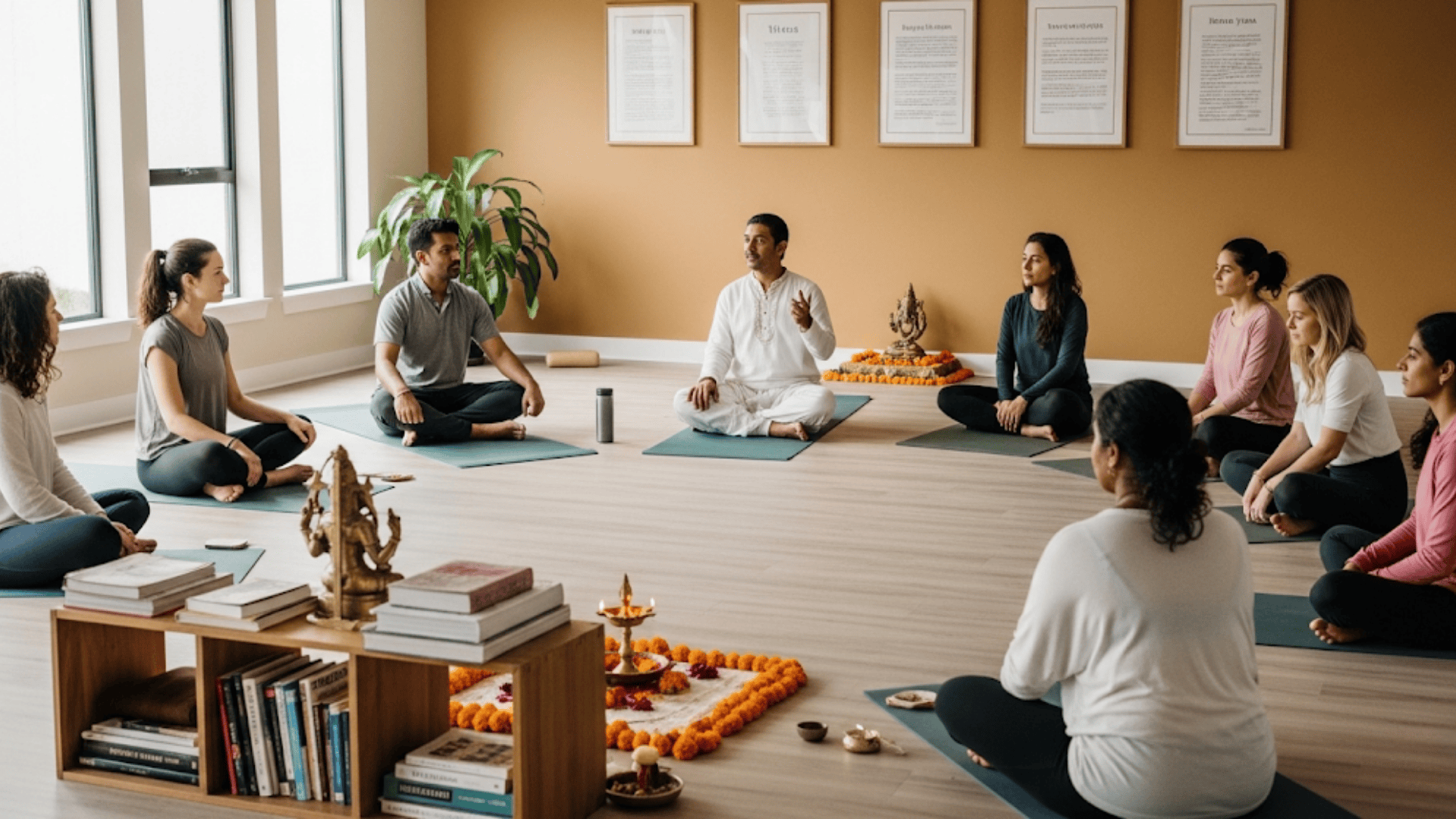
Knowing that yoga originated in ancient India is not just a historical footnote. It shapes how the practice is taught and received today. As yoga spread globally, many studios began offering only its physical dimension without acknowledging the cultural and philosophical context that gave it meaning.
Indian scholars and practitioners have increasingly called for a return to that context: using Sanskrit names accurately, crediting classical texts, and teaching ethical foundations alongside poses.
These conversations are not about exclusion. They are about depth. A practitioner who understands the four paths of yoga, the meaning of the eight limbs, and yoga’s roots in the Vedas is better equipped to use the practice well. The tradition gives you more tools, not fewer.
For students interested in going deeper, the principles behind controlled, progressive physical training connect directly to how Hatha yoga treats the body: as something to be developed with patience, precision, and a long-term view, not pushed past its limits for short-term results.
Frequently Asked Questions About Yoga’s Origins
What does the word yoga mean?
The word yoga comes from the Sanskrit root “yuj,” which means to yoke, join, or unite. In practice, it points to the connection between body, mind, breath, and awareness. This meaning explains why yoga was originally more than physical movement.
Was yoga always based on poses?
No, yoga was not always centered on poses. Early yoga focused more on meditation, breath, discipline, and spiritual awareness. Physical postures became more developed later, especially through Hatha yoga and modern postural yoga traditions.
What is the oldest yoga text?
The Rig Veda is often considered the earliest text linked to yoga’s roots. It does not describe modern yoga poses, but it includes early ideas around discipline, ritual, and union. Later texts developed yoga into a clearer philosophy and practice system.
Why is breath important in yoga history?
Breath became important because ancient practitioners saw it as a link between the body, mind, and inner energy. Over time, pranayama developed as a formal practice. It helped prepare the mind for meditation and supported deeper self-control.
What role did monks play in yoga?
Monks, sages, and ascetics helped preserve and develop yoga through study, meditation, teaching, and disciplined practice. Many lived simply and focused on inner awareness. Their work shaped yoga’s philosophical, spiritual, and practical traditions across different periods.
How did Hatha yoga change yoga practice?
Hatha yoga made the body a more active part of the path. It added stronger focus on postures, breath control, purification, and energy practices. This shift helped shape the physical yoga styles many people recognize today.
Why is Sanskrit used in yoga?
Sanskrit is used because many early yoga teachings were written or transmitted in Sanskrit. Pose names, philosophy terms, and chanting often come from this language. Using Sanskrit can help preserve the cultural roots and meaning behind the practice.
Is modern yoga the same as ancient yoga?
Modern yoga is related to ancient yoga, but it is not exactly the same. Ancient yoga focused more on liberation, meditation, and spiritual discipline. Modern yoga often emphasizes posture, flexibility, stress relief, and health, though deeper traditions still remain.
Final Verdict
Looking back at yoga’s origins, I feel a deeper connection to its history and meaning that goes beyond the poses.
It’s amazing to see how yoga has traveled through thousands of years, influenced by culture, philosophy, and modern innovation. This understanding makes every practice feel more alive.
I’m curious to learn what part of yoga’s story resonates with you.
Please share your thoughts or questions, and check out other blogs on the website! No matter your experience level, I hope this glimpse into yoga’s roots inspires a more mindful and respectful practice for you.
Sources
Google Arts and Culture, “Explore the Ancient Roots of Yoga.” artsandculture.google.com
The Yoga Institute, “The Origin of Yoga: Who Invented Yoga?” theyogainstitute.org
Oxford Bibliographies, “Yoga.” oxfordbibliographies.com
United Nations General Assembly, Resolution A/69/L.47 establishing International Day of Yoga, December 2014. un.org