Meditation can feel like a simple word until faith enters the room. One person hears it and thinks of quiet prayer, Scripture, and peace with God. Another hears it and worries about emptying the mind, chanting, or stepping into beliefs that do not fit Christianity.
That is why the question is meditation a sin deserves a careful answer, not a quick yes or no tossed across the internet like a paper plate at a picnic.
As a meditation teacher trained in Zen traditions and modern psychology, I care about calm, focus, and honest inner work. But I also understand that Christians need more than “it helps you relax.” You need to know how meditation fits with Scripture, prayer, and conscience.
So let’s start with the meaning of meditation before deciding what is safe, wise, or spiritually off-track.
| ⚠️ Advisory: This article is for educational and informational purposes only. It does not replace guidance from your pastor, priest, spiritual director, counselor, or doctor. Christian views on meditation can differ by tradition, intent, and method. If a practice troubles your conscience, speak with a trusted faith leader before continuing. |
What Does Meditation Mean to Christians?
For Christians, meditation usually means thoughtful reflection on God, Scripture, prayer, or truth. It is not mainly about making the mind blank. It is about giving the mind a holy place to rest.
That matters because the word “meditation” can mean different things in different settings.
In a Christian setting, meditation may include:
- Reading one Bible verse slowly
- Sitting quietly with a prayer
- Thinking about God’s character
- Reflecting on sin, mercy, grace, or obedience
- Letting Scripture shape your next choice
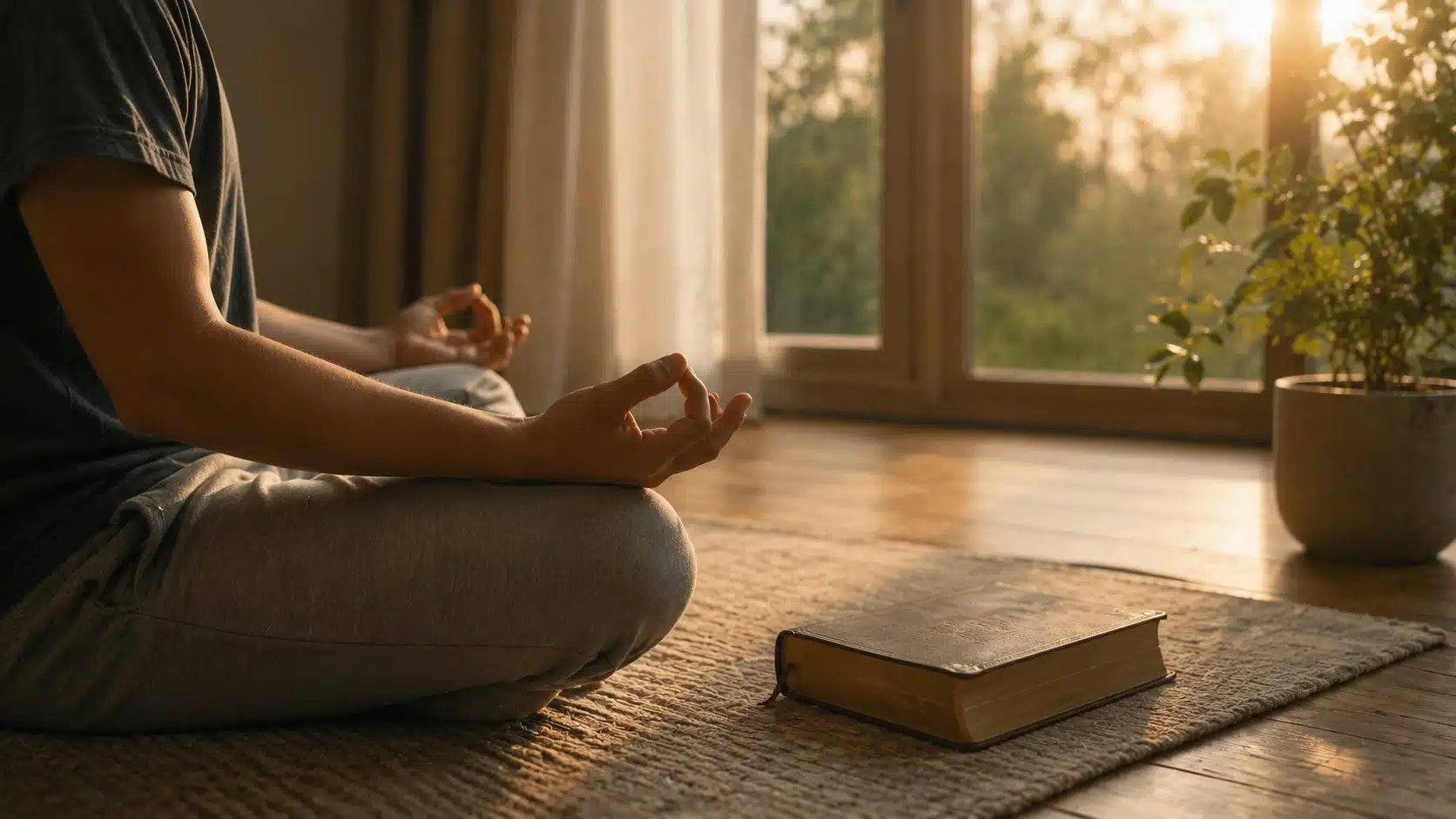
The Bible uses meditation as a word for deep, steady attention. In Joshua 1:8, Joshua is told to meditate on the Book of the Law day and night so that he may obey what is written. That is not vague spirituality. It is a focused reflection that leads to faithful living.
The key is focus. Meditation takes the shape of whatever it centers on. If it centers on God’s Word, it becomes a way to listen, remember, and respond. If it centers on a belief system that pulls you away from Christ, that becomes a different matter.
So before asking if meditation is sinful, ask a clearer question: what is this practice asking your heart and mind to trust?
Is Meditation a Sin?
Meditation is not automatically sinful in Christianity. The better question is not only “Am I meditating?” but “What is this practice forming in me?” A quiet practice can support prayer, patience, and self-control. It can also become spiritually unhealthy if it teaches you to seek peace apart from God.
Think of meditation like a room. The room itself is neutral, but what you invite into that room matters. If the practice helps you reflect on Scripture, confess honestly, give thanks, or sit quietly before God, it can fit a Christian life.
But if it asks you to depend on another spiritual power, repeat words tied to worship outside Christ, or treat inner calm as your highest good, then a Christian should step back. The issue is not stillness. The issue is spiritual direction.
So, is meditation a sin? Not by itself. It becomes a concern when it moves from calm reflection into a belief system that competes with Christian faith.
Is Meditation Against the Bible?
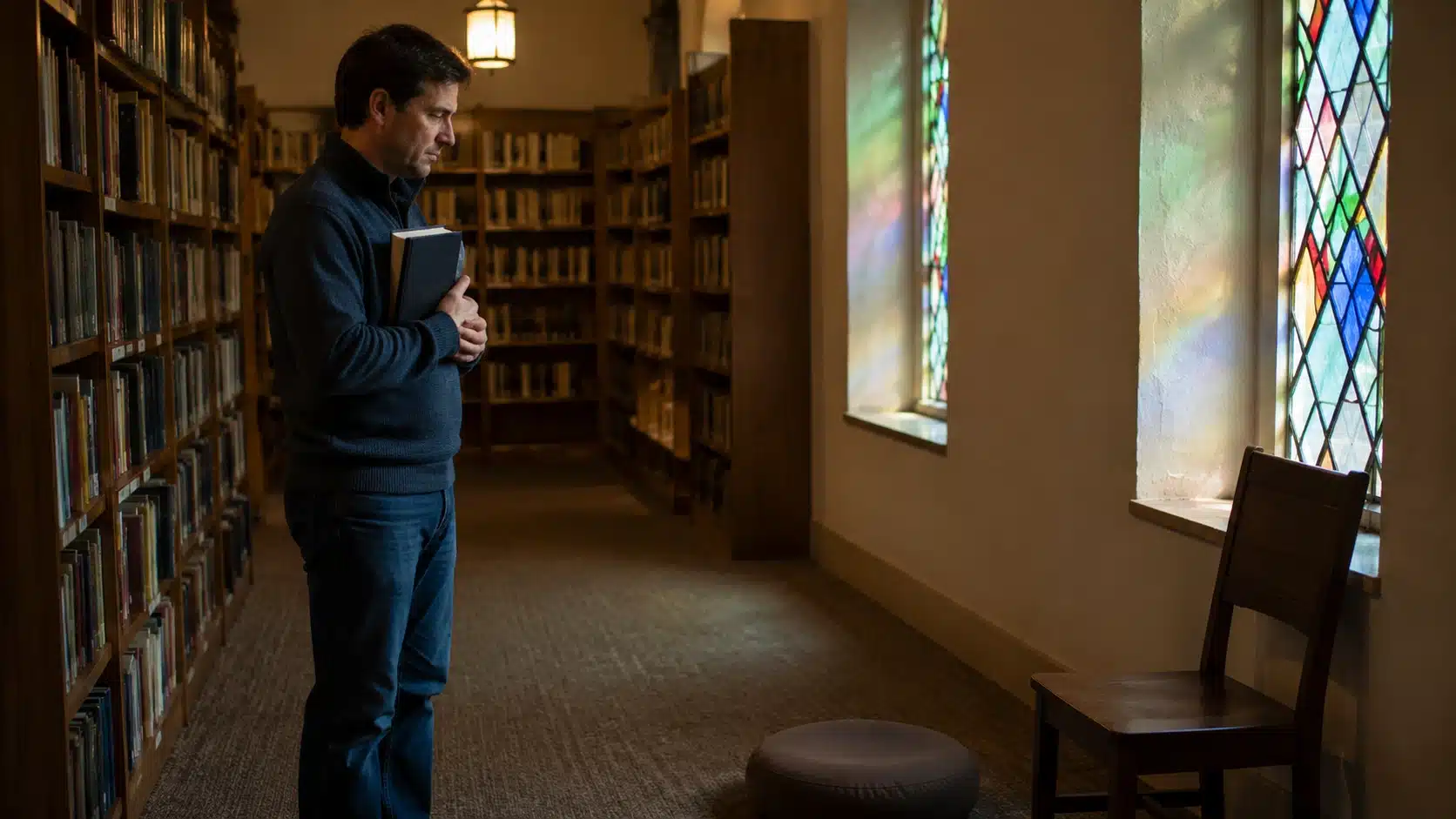
No, meditation is not against the Bible when it means reflecting on God, His Word, and faithful living. The Bible does not treat the mind as something to ignore. It treats the mind as something to train toward truth.
| Type of meditation | What it focuses on | Biblical concern | Christian-safe adjustment |
| Biblical meditation | Scripture, God’s works, prayer | None when practiced faithfully | Keep the focus on God’s truth and response |
| Breath-based calming | Breathing, body awareness, stress relief | Can become unclear if mixed with foreign spiritual claims | Use it as a settling tool before prayer |
| Mindfulness practice | Present-moment awareness | May feel too self-centered if God is absent from the frame | Add gratitude, prayer, or Scripture reflection |
| Mantra-based practice | Repeated sounds or phrases | Concern rises if the phrase has a non-Christian worship meaning | Use a short Bible phrase or breath prayer |
| Eastern spiritual meditation | Enlightenment, deities, energy systems, non-Christian doctrine | May conflict with Christian worship and belief | Avoid forms that ask for spiritual loyalty outside Christ |
This is where many articles stay too vague. They say “intent matters,” but the real issue is formation. A repeated practice trains the heart over time.
If meditation trains you toward God, humility, and obedience, it can be faithful. If it trains you away from God’s truth, it becomes spiritually unsafe.
That is why the question of meditation against the bible needs a careful answer. The Bible supports meditation on God. It does not support spiritual practices that replace Him.
What Does the Bible Say About Meditation?
The Bible speaks about meditation as active reflection. It is not passive drifting. It is not zoning out. It is the mind returning to God’s truth until that truth shapes how a person lives.
A few verses help make this clear.
- Joshua 1:8: Meditation is tied to obedience. The verse connects steady reflection with careful action, which means Biblical meditation should affect real-life choices.
- Psalm 1:2: The blessed person delights in God’s law and meditates on it day and night, as seen in Psalm 1:2 . This shows meditation as steady love for God’s instruction.
- Psalm 119:15: Meditation includes thinking about God’s ways. It is not only about reading words. It is letting those words guide attention and conduct.
- Philippians 4:8: Christian thought should rest on what is true, noble, right, pure, lovely, and praiseworthy. That gives Christians a healthy filter for the mind.
This also answers a common search question: what does Jesus say about meditation? Jesus does not give a modern meditation method, but His life shows prayer, solitude, Scripture, and deep communion with the Father. That gives Christians a pattern: quiet is good when it leads toward God.
Now the practical question comes next. Can a Christian meditate today without crossing spiritual lines?
Can Christians Meditate Without Compromising Their Faith?
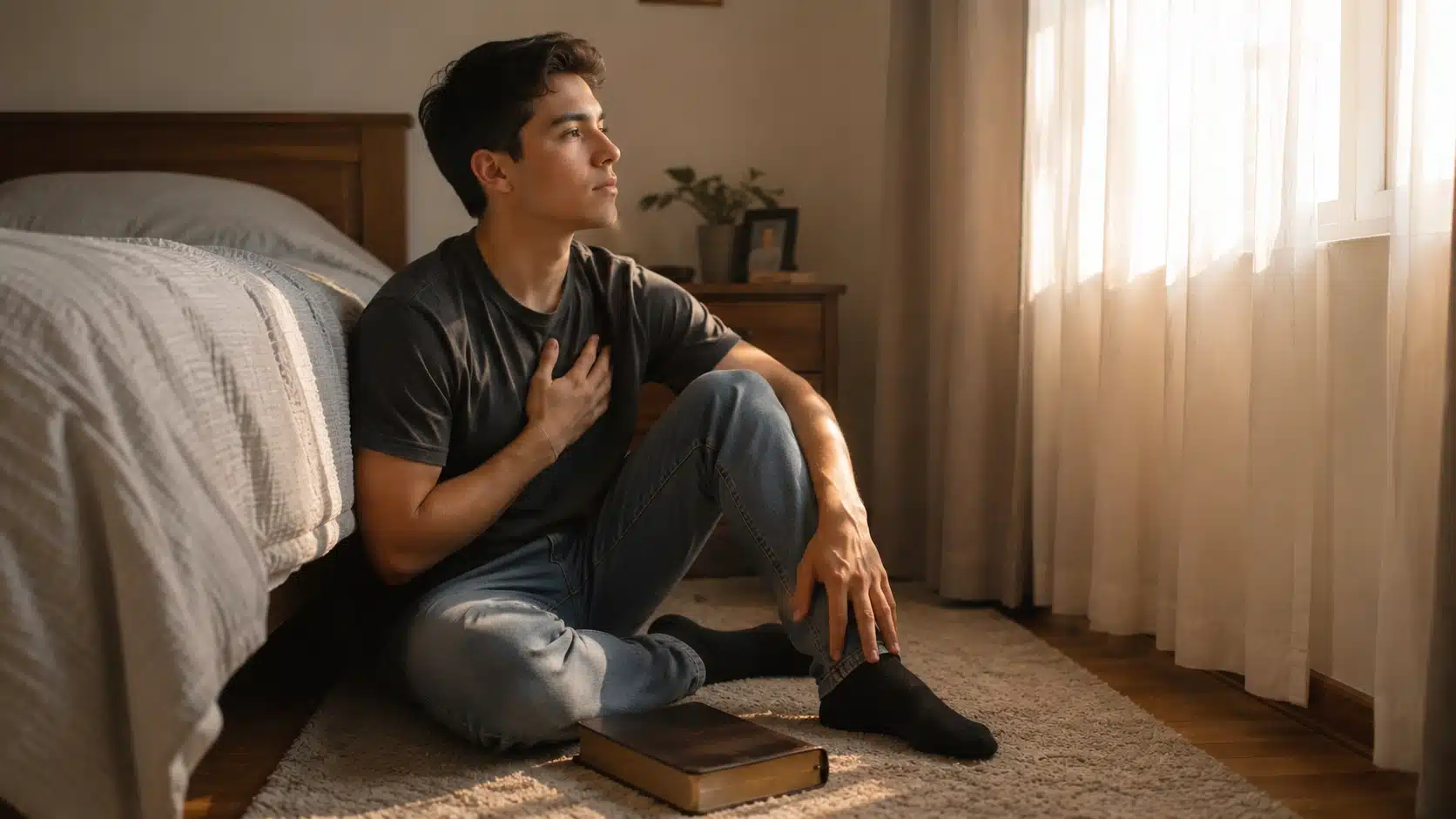
Yes, Christians can meditate without compromising their faith when the practice stays rooted in God, Scripture, prayer, and conscience. The goal is not to follow a method blindly, but to check whether it leads you toward God with peace, humility, and clear faith.
1. Check the Focus
Focus is the first place to look because meditation always trains attention. A Christian practice can include silence, stillness, or slow breathing, but the mind should have a faithful center.
If your attention returns to God’s presence, a Bible verse, confession, gratitude, or prayer, the practice has a Christian direction. If it pulls you toward worship or trust outside God, pause and rethink it.
2. Check the Method
The method matters because not every practice called meditation is built on the same beliefs. Sitting quietly, breathing slowly, or reflecting on Scripture can be simple and faith-friendly.
Other methods may include chants, symbols, visualizations, or spiritual claims. Look closely at what the practice asks you to say, imagine, trust, or seek before deciding if it fits your Christian life.
3. Check the Fruit
A helpful Christian meditation practice should lead to better prayer, steadier love, humility, patience, and obedience. It should not make you feel proud, spiritually detached, or dependent on a technique for peace.
Ask what the practice produces after you finish. If it helps you return to God with a calmer and more honest heart, that is a good sign.
4. Check Your Conscience
Conscience matters because faith is not only about what looks acceptable from the outside. If a practice keeps troubling you, pause instead of forcing yourself through it.
That does not mean every worry is correct, but it does mean your concern deserves care. Speak with a pastor, priest, or mature Christian who can help you sort fear from real spiritual warning.
This kind of check keeps the section practical. It gives the reader a way to decide, not just another repeated warning.
How Do Different Christian Traditions View Meditation?
Christian traditions do not all speak about meditation in the same way. Some use the word often. Some prefer terms like prayer, reflection, contemplation, or Scripture reading. The main difference is usually the method, not the value of quiet attention itself.
- Catholic: Catholic teaching includes meditation as part of prayer. The Catechism describes meditation as a prayerful search that uses thought, imagination, emotion, and desire, as shown in the Catechism of the Catholic Church.
- Protestant: Many Protestants support meditation on Scripture, especially when it leads to repentance, faith, and obedience. Some are cautious about imported methods linked to non-Christian beliefs.
- Orthodox: Orthodox Christians often value stillness, repeated prayer, and attention to God. Practices are usually guided by spiritual guidance, not treated as self-made techniques.
- Evangelical: Evangelical Christians often welcome Scripture meditation and prayerful reflection. They may be more cautious about empty-mind language, mantras, or practices tied to other spiritual systems.
- Non-denominational: Views vary widely. Some churches use guided Christian meditation. Others avoid the term because it sounds too linked with Eastern religion or modern wellness trends.
So, is meditation against the bible according to every Christian group? No. The disagreement usually concerns what kind of meditation is being practiced and what beliefs accompany it.
How Can Meditation Draw You Closer to God?
Meditation can draw a Christian closer to God when it slows the mind enough to notice, receive, and respond to truth. It becomes a quiet space where Scripture is not rushed, and prayer is not treated like a quick errand.
Think of it this way. Reading a verse is like hearing a sentence. Meditating on it is like staying with that sentence until it starts asking something of you.
For example, if you meditate on “The Lord is my shepherd,” you might ask:
- What does this show me about God?
- Where am I acting like I have no shepherd?
- What fear do I need to bring into prayer?
- What would trust look like today?
That kind of meditation is not spiritual laziness. It is attention with purpose.
This is why the question is meditation a sin can be too flat by itself. A better question is: does this practice help me love God with my heart, soul, mind, and strength?
If the answer is yes and the method aligns with the Christian faith, meditation can become a simple way to pray more honestly.
What Types of Meditation Should Christians Be Careful With?
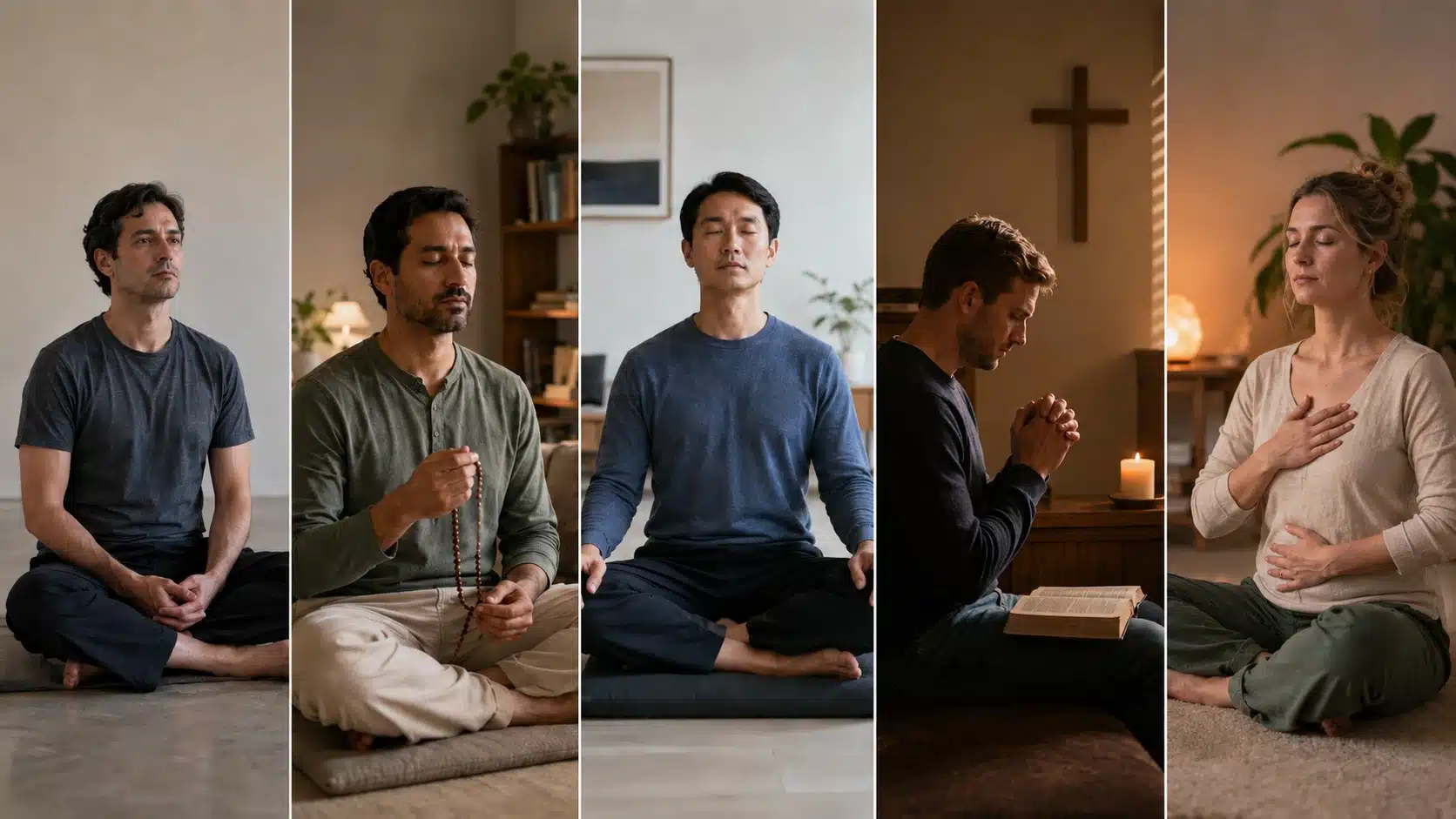
Christians should be careful with meditation practices that come with spiritual claims, worship language, or a view of peace that leaves God out completely.
The point is not to fear every quiet practice. The point is to notice when a practice is teaching more than relaxation.
| Practice | Why Christians may pause | Safer Christian alternative |
| Empty-mind meditation | Some Christians worry it leaves the mind spiritually unguarded | Use a Scripture-based focus instead |
| Mantra meditation | The phrase may carry religious meaning outside Christianity | Repeat a Bible phrase or short prayer |
| Transcendental Meditation | It may include spiritual roots or claims that some Christians reject | Choose simple silence before prayer |
| Deity-focused meditation | It may direct worship away from the Christian God | Meditate on God’s character in Scripture |
| Energy-centered meditation | It may teach a view of the body and spirit outside Christian belief | Use body awareness only as a calming tool |
A helpful rule is this: if a practice only helps your body settle, examine it wisely. If it asks for spiritual trust, examine it more seriously. That keeps the advice balanced and avoids making every breathing exercise sound dangerous.
How Can a Christian Start Meditating Biblically?
A Christian can start Biblical meditation with one short passage, a quiet space, and a simple prayer. No special pose, paid app, or dramatic setup is needed.
Try this small practice:
- Choose one short Bible passage: Pick one verse or a few lines, not a full chapter. Start small so your mind can stay with the meaning.
- Read it slowly twice: The first reading helps you understand the words. The second reading helps you notice what stands out.
- Ask what it says about God: Look for God’s character, promise, command, mercy, holiness, or care.
- Ask what it shows about you: Notice where the verse comforts, corrects, warns, or invites you.
- Pray one honest sentence: Keep it plain. “God, help me trust this today” is better than a fancy prayer you do not mean.
- Sit quietly for two minutes: Let the verse stay with you. If your mind wanders, return gently. Minds wander. That is their full-time hobby.
- Write one next step: End with one small action, like apologizing, resting, forgiving, giving thanks, or reading the verse again later.
This kind of practice keeps meditation grounded. It does not ask you to chase a strange experience. It asks you to slow down enough to respond to God.
When Should a Christian Stop or Seek Guidance?
A Christian should stop or pause a meditation practice when it creates spiritual confusion, fear, pressure, or distance from God. This is different from ordinary distraction. Everyone gets distracted. The concern is when the practice starts shaping your beliefs, worship, or conscience in a troubling way.
Pause if:
- A teacher or app asks you to accept beliefs that conflict with Christianity
- You feel drawn toward worship outside Christ
- The practice makes prayer feel unnecessary
- You feel pressured to ignore your conscience
- The practice causes panic, distress, or trauma-related discomfort
- You feel less grounded in Scripture after doing it
If the issue is spiritual, speak with a trusted faith leader. If the issue is anxiety, panic, trauma, or mental health, speak with a qualified professional too. A wise Christian approach can respect both faith and emotional care.
Can Christians Use Meditation for Stress or Anxiety?

Yes, Christians can use meditation for stress or anxiety when it supports calm, prayer, and wise care. Slow breathing, quiet reflection, and Scripture-based meditation can help the body settle before prayer or rest.
Still, meditation should not replace medical care, counseling, church support, or honest conversation when anxiety feels heavy.
Meditation and mindfulness may help with stress and anxiety, but the evidence varies, and people should not use it to delay proper care.
For a Christian, the safest path is simple: use meditation as a support, not a savior. Let it make room for prayer, not replace dependence on God.
Frequently Asked Questions
Is it okay to use a meditation app as a Christian?
A Christian can use a meditation app carefully, but should review the language, guidance, and spiritual claims first. If an app uses beliefs that conflict with Christianity, choose another option. A simple timer, Scripture reading, or prayer-based audio may be a safer fit.
Can children or teens practice Christian meditation?
Yes, children and teens can practice Christian meditation in simple ways, like reading one verse, taking quiet breaths, and praying one honest sentence. It should feel safe, short, and age-appropriate. Parents or church leaders should guide the practice with care.
What should I do if meditation makes me uncomfortable?
If meditation makes you uncomfortable, pause and notice why. It may be unfamiliar, too intense, or spiritually unclear. Do not force it. Try Scripture reading, quiet prayer, or guided support from someone you trust before returning to that practice.
Final Thoughts
Meditation is not a single thing. It can be a prayerful reflection, a calming tool, a spiritual practice from another religion, or a mix of methods that need careful sorting. That is why Christians should not answer out of fear alone, nor from trendy culture.
The better answer stays rooted in Scripture, wisdom, and conscience. The question is meditation a sin depends on what the practice focuses on, what it teaches, and where it leads your heart.
If meditation helps you slow down, reflect on God’s Word, pray with honesty, and live with more faith, it can fit a Christian life. If it pulls you from God, pause and ask for guidance.
Comment with the type of meditation you are unsure about, and I’ll help you think through it carefully.