

| Disclaimer: This article is for informational and educational purposes only. It does not constitute medical advice. Always consult a qualified healthcare provider before starting a new exercise, nutrition, or wellness program. |
| Practice | Active transportation and outdoor exercise habits |
| Goal | Reduce personal carbon footprint, improve air quality awareness, build sustainable movement habits |
| Time Required | 15 to 30 minutes per session, 3 to 5 days per week |
| Evidence Level | Well-studied (NIH, EPA, University of Oxford transport research) |
| Who It’s For | Anyone making daily movement and transport choices in urban or suburban settings |
Environmental health covers the everyday conditions around you that shape physical well-being, including air quality, water safety, noise levels, and access to green spaces. It also includes how built environments such as roads, sidewalks, parks, and public spaces shape how often people actually move.
Understanding the health-related fitness components that underpin physical well-being helps clarify why movement choices matter so consistently across all of these dimensions.
When people live in cleaner, safer, and more walkable areas, they are naturally more likely to be active.
Over time, environmental factors and personal habits feed into each other: better surroundings support healthier lifestyles, while active communities tend to advocate for cleaner, more sustainable environments in return.
Describe How Exercise Can Positively Affect Your Environmental Health
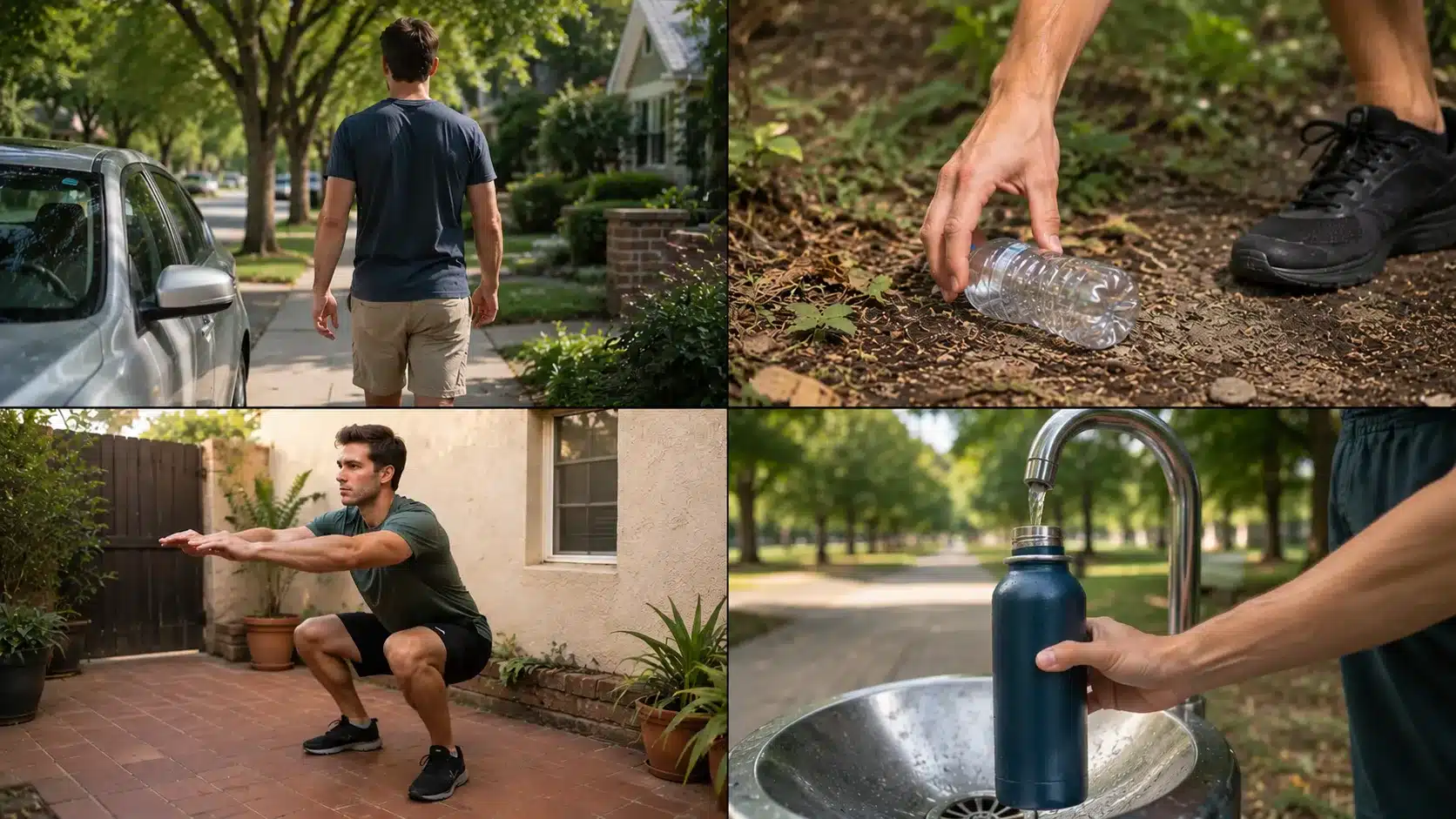
Exercise positively impacts environmental health by reducing pollution, lowering carbon emissions, and encouraging sustainable habits like walking and cycling. These small daily choices support cleaner air, healthier communities, and stronger connections to green spaces.
1. Reduces Air Pollution and Emissions
Exercise such as walking or cycling instead of driving short distances helps lower vehicle emissions released into the air. This directly improves air quality, especially in crowded cities where traffic congestion is high.
Over time, repeated small choices like replacing short car trips with active movement can significantly reduce local pollution levels and create cleaner, healthier breathing environments for communities.
2. Lowers Carbon Footprint
Active transportation reduces reliance on fuel-powered vehicles, which lowers overall carbon emissions. Walking, cycling, and other forms of human-powered movement do not produce direct greenhouse gases.
When more people choose these options regularly, the combined effect contributes to a measurable reduction in a community’s carbon footprint, supporting long-term climate stability and more sustainable urban living patterns.
3. Encourages Green Spaces
Regular outdoor exercise increases public use of parks, walking paths, and open spaces. As demand for these areas grows, cities are more likely to invest in maintaining and expanding green infrastructure.
This leads to improved urban environments with more trees, cleaner air, and better recreational spaces that benefit both physical health and ecological balance in the long term.
4. Builds Sustainable Habits
Regular outdoor exercise increases awareness of surroundings, including air quality, litter, noise, and seasonal changes.
A 2025 study in Behavioral Sciences links physical activity in natural environments with stronger pro-environmental behaviors, such as reduced waste, sustainable travel choices, and participation in conservation activities. This shift is not driven by personality traits but by repeated exposure.
How Much Pollution Can Exercise Reduce Compared to Driving?
| Activity Choice | Estimated Carbon Impact | Best Use Case |
| Walking | Near-zero direct emissions | Trips under 1 mile |
| Cycling | Near-zero direct emissions | Trips of 1 to 5 miles |
| Public transit plus walking | Significantly lower than driving alone | Longer city trips |
| Driving alone | About 404 grams of CO2 per mile | Trips with no safe active option |
| Driving to the gym | Adds travel emissions before exercise begins | When no closer option exists |
These numbers matter because they give concrete weight to choices that might otherwise feel too small to count. A single swap has a small impact. Three times a week for a year reaches 126 kilograms of CO2 avoided. The table above shows where the real leverage points are: short trips under five miles, where active transportation is already practical for most people in urban or suburban settings.
Does Outdoor Exercise Improve Environmental Awareness?
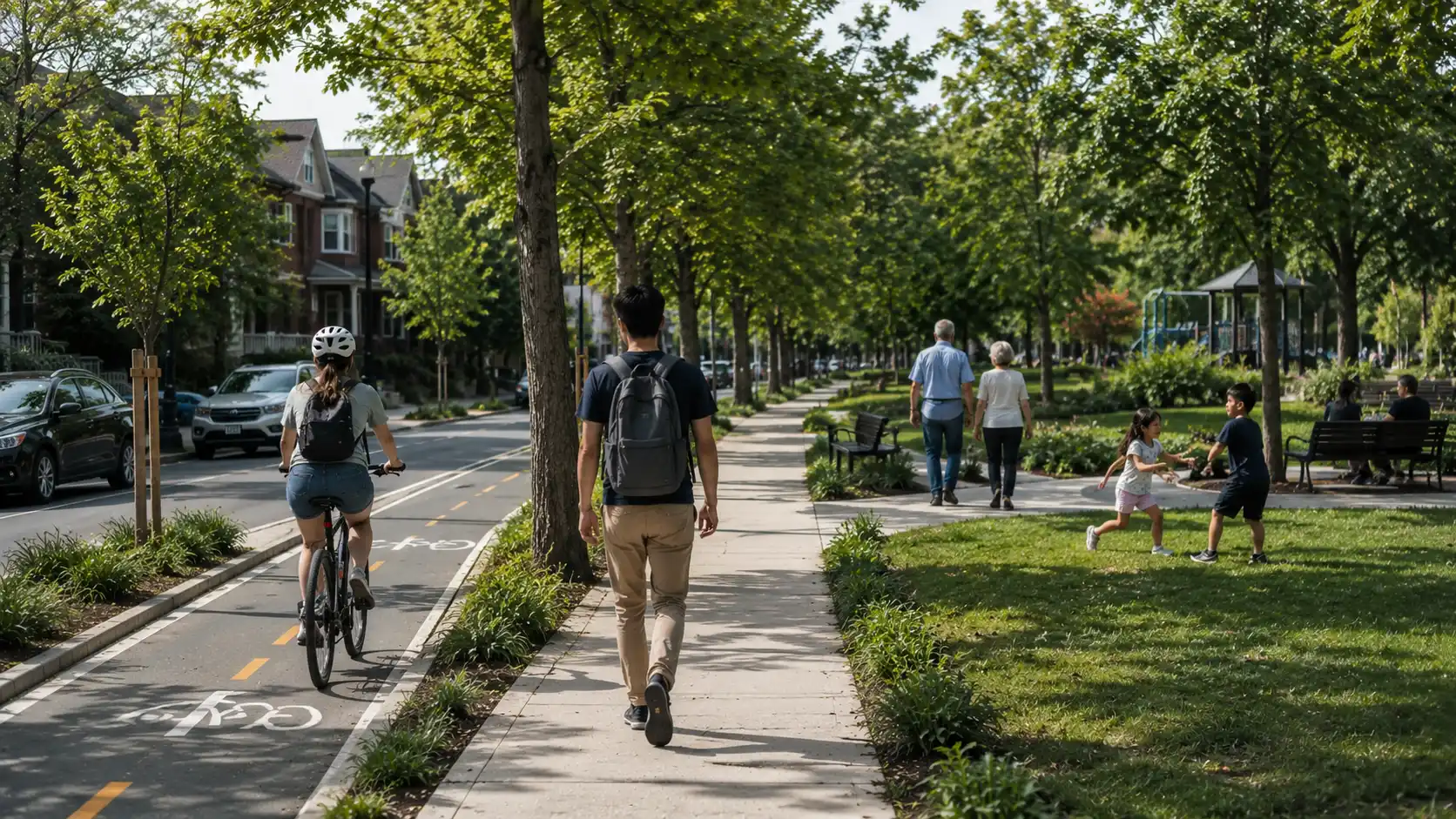
Outdoor exercise strengthens environmental awareness because regular exposure to parks, trails, and natural surroundings helps people notice changes in air quality, cleanliness, noise, and local ecosystems.
When people walk, run, or cycle outdoors frequently, they become more attentive to litter, damaged infrastructure, and seasonal environmental shifts. This repeated interaction builds a sense of responsibility toward shared spaces.
A 2022 meta-analysis published in Urban Forestry and Urban Greening, which reviewed 19 controlled trials involving 1,662 participants, found that green exercise lowers negative affect, including anxiety, tension, and fatigue, compared to indoor exercise.
Separately, research published in the National Institutes of Health database suggests outdoor physical activity is associated with improved mental well-being, which strengthens positive attitudes toward nature and conservation behaviors over time.
The connection here is not purely psychological. Spending time outdoors regularly means you are physically present in the environment you are affecting. That presence, repeated over weeks and months, tends to produce behavior changes that no amount of reading about climate change does on its own.
When Outdoor Exercise Has Limits for Environmental Health
There is a side of this conversation that most articles skip entirely, and it is worth being direct about: outdoor exercise is not unconditionally good for your health on days when air quality is poor.
The EPA’s Air Quality Index runs from 0 to 500. The American College of Sports Medicine recommends reducing outdoor exercise intensity when the AQI exceeds 100 and avoiding vigorous outdoor cardiovascular activity entirely when it exceeds 150, particularly for people with asthma or COPD.
During high-particulate-matter events, hard outdoor runs or cycling can actually increase pollutant exposure compared to staying indoors, because vigorous breathing draws more air through the lungs per minute.
Checking air quality before an outdoor session is not overcautious. It is the practice that makes outdoor exercise genuinely beneficial rather than a net negative on bad-air days.
| Limit | What It Means | What to Do Instead |
| Safety | Walking or cycling is not practical on unsafe roads | Find the closest safe route; advocate for better infrastructure |
| Access | Distance, disability, weather, and poor sidewalks affect choices | Transit plus walking still counts as active transportation |
| Air quality | AQI above 100 raises exposure risk during vigorous exercise | Check AQI first; reduce intensity or move indoors on high-pollution days |
| Scale | Individual habits cannot replace systemic policy changes | Personal action is one lever; policy and infrastructure are others |
The point here is not to discourage outdoor activity. It is to make it smarter. Exercise works best for environmental health when you know the conditions you are exercising in and when communities invest in the infrastructure that makes active transportation a realistic option for more people.
Which Eco-Friendly Exercise Methods Are Easy to Start?
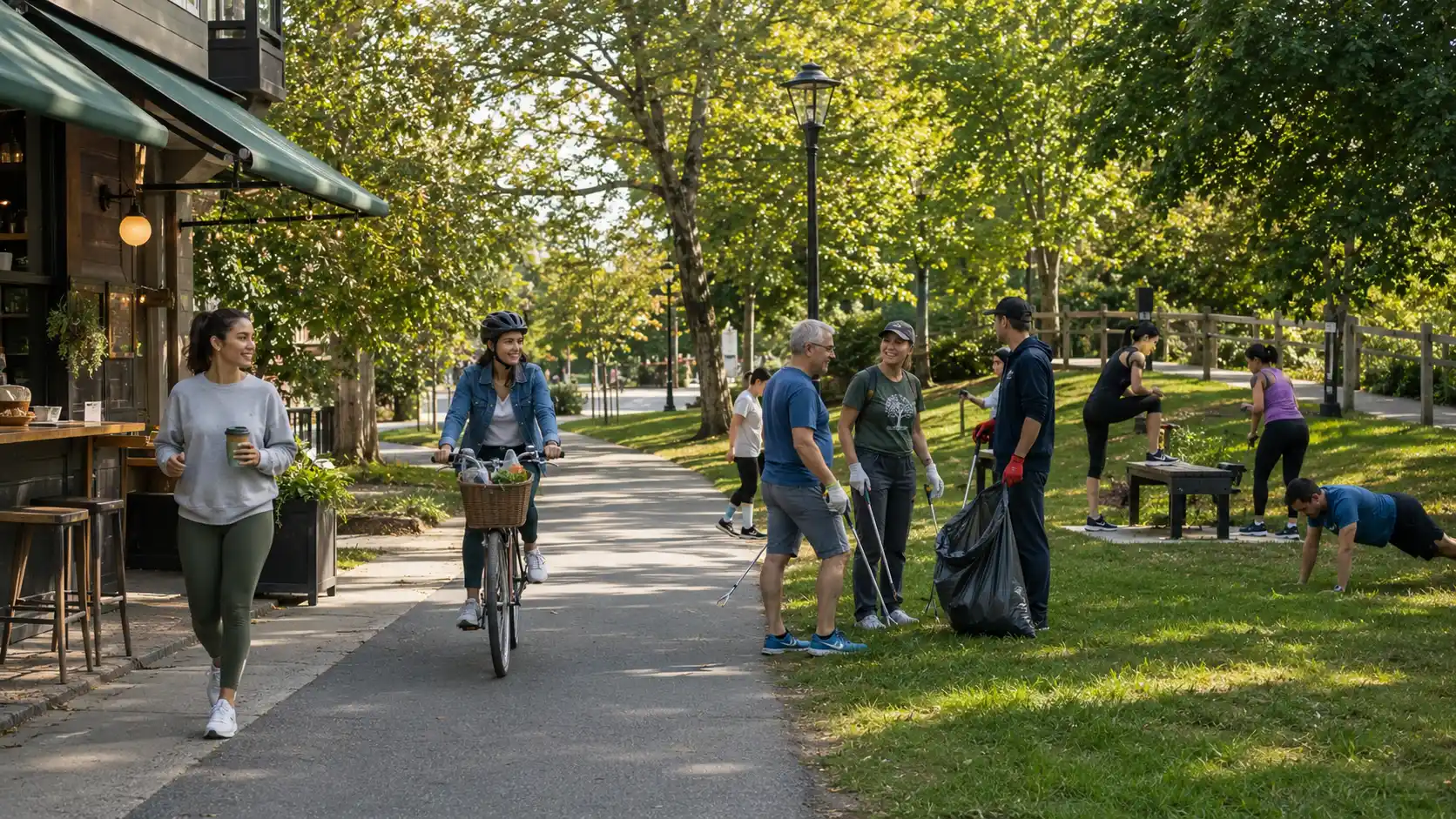
None of this requires a complete lifestyle overhaul or expensive gear. Small, repeatable changes tend to stick better than big ones. The same exercise principles for beginners that govern progressive training also apply here: start with the smallest viable change, repeat it until it is automatic, then build from there. Here are the options that reliably work for people who are starting from a normal weekly routine.
- Walk short errands: Pick one nearby errand each week, such as a pharmacy run or a coffee pickup, and walk it instead of driving, as long as the route feels safe.
- Bike practical routes: Use cycling for trips you make regularly, like a weekly grocery run, rather than only for leisure rides. Practical cycling builds the habit more durably than recreational cycling.
- Try park workouts: Use what is already there. Benches for step-ups, open grass for stretching, trails for intervals. No gym membership required.
- Join local cleanup walks: Some communities organize litter pickups paired with a group walk, combining light movement with care for shared spaces and a social component that makes showing up easier.
- Use reusable gear: A refillable water bottle and a towel you already own go a long way toward avoiding the constant cycle of buying and discarding new fitness products.
- Train close to home: Before driving across town for a class, check what is within walking or biking distance. The carbon cost of getting to your workout matters too.
These options work best when they are genuinely convenient. The goal is to find the swap that costs you the least friction, not the one that sounds most impressive.
How Do Communities Support Exercise That Helps the Environment?
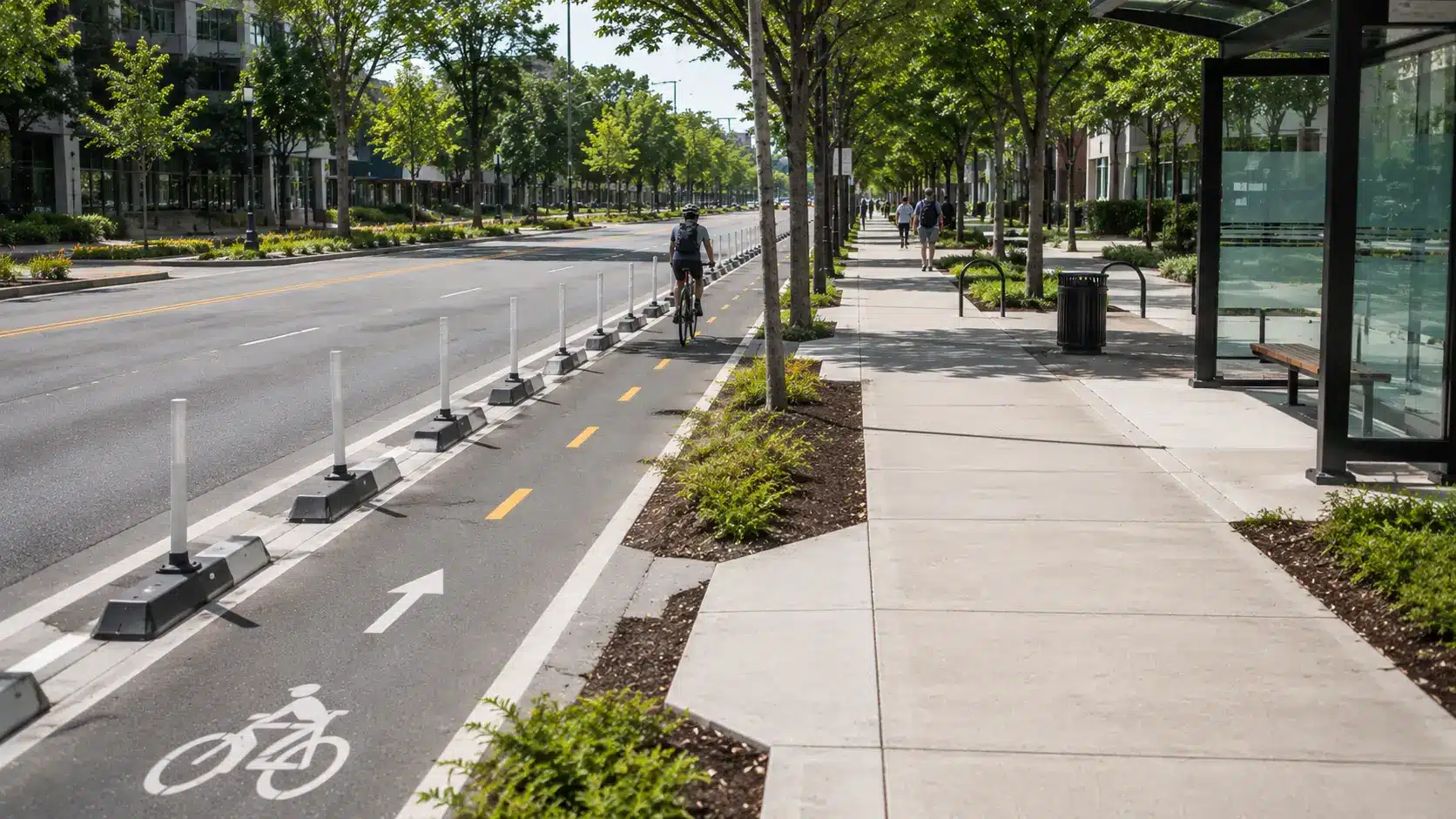
Individual choices matter, but they are shaped heavily by what a neighborhood actually offers. Safe sidewalks and protected bike lanes make a real difference in whether people walk or cycle at all. When a route feels dangerous, most people will not take it regardless of their intentions.
More trees, parks, and trails give people a reason to be outside. Shade on a hot day, a clean path, a patch of greenery: these small details determine whether someone laces up their shoes or stays home.
Public transit paired with walking fills the gap for longer trips. Walking to a bus stop or train station still counts as physical activity and removes the need for a car for the entire journey.
The practical implication for individuals is to use what already exists, advocate for improvements where things are missing, and not treat the current infrastructure as fixed.
Active transportation, green spaces, and consistent outdoor habits are all part of the broader pillars of wellness that support long-term health. Cities invest where they see demonstrated demand.
With both the personal and community picture in view, here are the questions that come up most often when people start thinking through these habits.
Frequently Asked Questions
How does exercise reduce air pollution and carbon emissions?
Exercise reduces air pollution and carbon emissions primarily by replacing short car trips with walking or cycling. Each mile driven in an average passenger vehicle releases about 404 grams of CO2. Replacing even a few short weekly trips with active transportation removes that emission entirely. The effect is direct: no engine running means no exhaust, no fuel combustion, and no particulate matter from that trip. At the community level, higher rates of active transportation lower overall traffic volume, which measurably improves local air quality in urban areas.
What is green exercise and what does the research say?
Green exercise refers to physical activity performed in natural or outdoor settings, such as walking in a park, cycling on a trail, or working out in a garden. A 2022 meta-analysis of 19 controlled trials (Urban Forestry and Urban Greening) found that green exercise reduces negative affect including anxiety, tension, anger, and fatigue compared to indoor exercise. A 2025 Cochrane-inspired review found small-to-moderate positive effects on general health and mental health. The consistent finding across studies is that combining movement with natural exposure produces better psychological outcomes than indoor exercise alone, which over time supports stronger pro-environmental attitudes.
Does outdoor exercise have any negative effects on environmental health?
Yes, under specific conditions. When air quality is poor, vigorous outdoor exercise can increase your total pollutant exposure because you breathe more deeply and more rapidly during exertion. The American College of Sports Medicine recommends checking the Air Quality Index before outdoor workouts and reducing intensity or moving indoors when the AQI exceeds 100. On days when the AQI is above 150, avoiding vigorous outdoor cardio entirely is the safer choice, particularly for anyone with asthma, COPD, or cardiovascular conditions. Checking the AQI takes under 30 seconds and makes outdoor exercise genuinely safer and more effective.
Can gym workouts still support environmental health?
Yes. Gym workouts are not the opposite of eco-friendly habits. The key variables are how you get there and what gear you use. Choose a gym within walking or biking distance when possible. Bring a refillable water bottle. Avoid buying equipment you will use once or twice and then discard. If your gym is only reachable by car, look for a closer option or balance gym sessions with outdoor workouts during the week. A gym membership combined with mindful transport and gear choices has a much lower environmental footprint than the alternative of driving far for every session.
How does walking to work or errands compare to driving for the environment?
For trips under one mile, walking avoids approximately 808 grams of CO2 per round trip compared to driving. Done three times a week over a year, that single habit change avoids roughly 126 kilograms of CO2. For trips of one to five miles, cycling produces near-zero direct emissions compared to roughly 400 to 2,000 grams per car trip depending on distance. The environmental benefit compounds with frequency. The comparison is not about one walk. It is about what that route choice becomes over months and years.
What is the easiest first step to positively affect your environmental health through exercise?
Pick one short trip this week that does not require a car and walk or cycle it instead. A walk to a nearby shop, a bike ride to a regular class, or transit combined with a 10-minute walk to your stop all qualify. Keep it simple and genuinely repeatable, not aspirational. The research on habit formation is consistent on this point: the change that lasts is the one that fits into your existing routine with minimal friction, not the most impressive one you tried once and abandoned.
Final Thoughts
Looking back at that short walk I took instead of driving, it really was such a small thing. But when you describe how exercise can positively affect your environmental health, the real answer is not about grand gestures. It is about small choices that repeat.
A walk here, a bike ride there, a park workout instead of a drive across town. None of it needs to be perfect, and none of it requires guilt if some days a car is simply the right call. What matters is having these options in your back pocket and reaching for them when they fit.
If you have a short trip or outdoor workout you have been meaning to try this week, drop it in the comments. It might be just the nudge someone else needs, too.