

I’ve watched people copy a list of exercises from a PDF, do them for three days, feel nothing, and quit.
A home exercise program is not a list of exercises. It is a structured plan that matches specific movements to a specific goal, with a defined frequency, load, and progression path.
When those four pieces are in place, the plan actually works. Without them, you are just moving through exercises, hoping something sticks.
Understanding the Home Exercise Program
A home exercise program is a planned set of exercises you perform at home to support a specific physical goal.
That goal might be rehab after a knee injury, strength building after a long sedentary period, or improving your balance and mobility as you age.
What all of these have in common is that the program needs to be structured around the real reason you are doing it.
In clinical settings, a home exercise program (often called a HEP) is prescribed by a physical therapist or occupational therapist as an extension of in-clinic care.
Research consistently shows that patients who stick to their home programs recover faster and maintain strength longer than those who rely on clinic visits alone.
One review of ACL rehabilitation outcomes found that patients who completed their home exercises three to five times per week showed significantly better knee function and proprioception at the one-year mark compared to those who exercised only two to three times per week.
For fitness-focused users, the same principle applies. A well-structured approach to the components of health and wellness requires more than showing up to exercise. It requires a plan that progresses with you. That is what separates a home exercise program from just working out.
What Type of Home Exercise Program Do You Need?
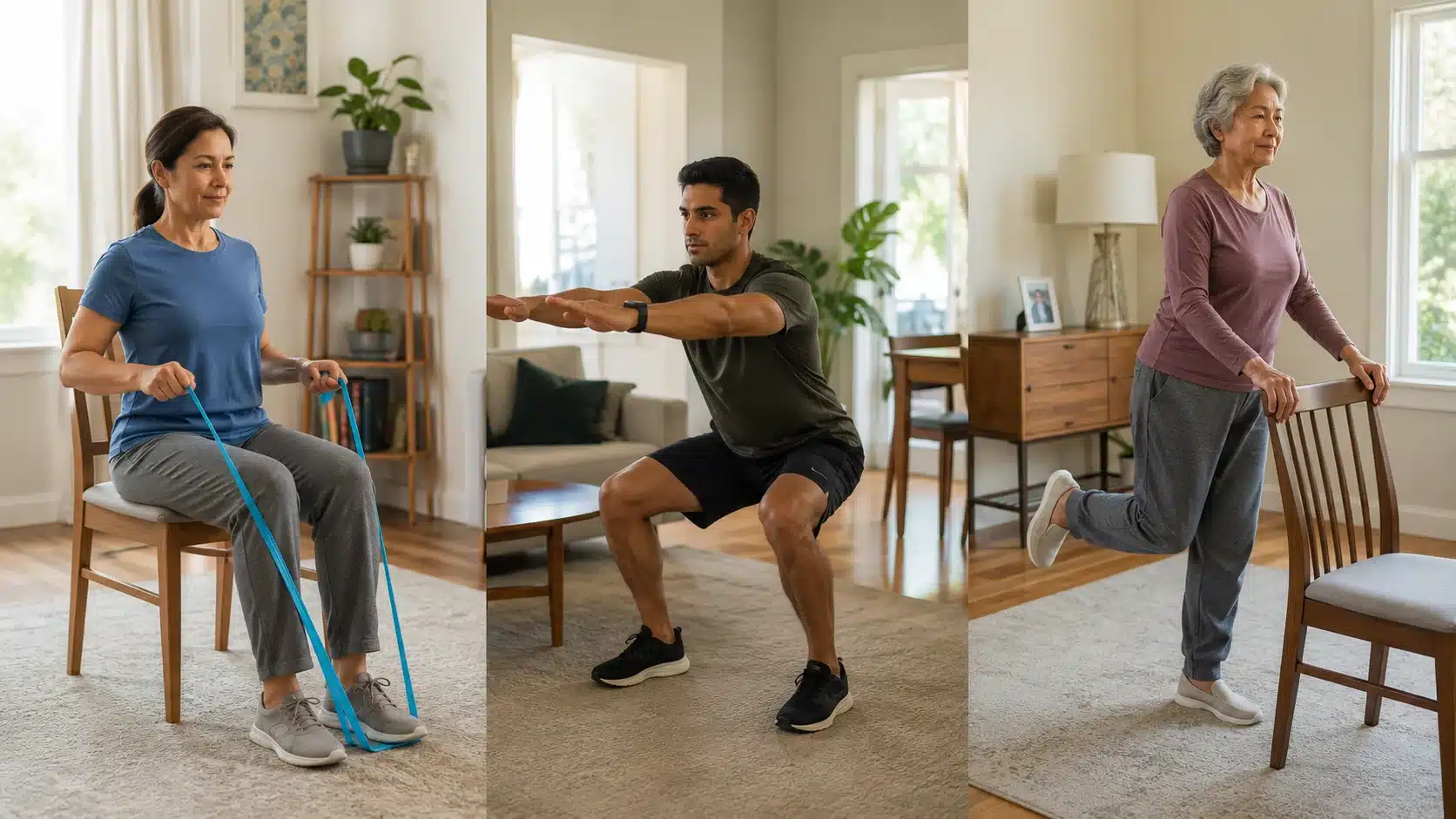
The right plan depends entirely on why you need it. A person recovering from knee surgery needs a different starting point than someone building strength after months at a desk. Before you choose any tool or platform, match the program type to your actual situation.
Rehab-Based Program
This is the type most commonly prescribed by physical therapists, occupational therapists, and athletic trainers.
It focuses on restoring movement, reducing pain, rebuilding strength, and improving balance after injury or surgery.
When I program this for clients in rehab, the emphasis is always on controlled movement quality over load or speed.
Fitness-Based Program
This type focuses on general strength, flexibility, cardiovascular health, or daily energy without a clinical recovery goal.
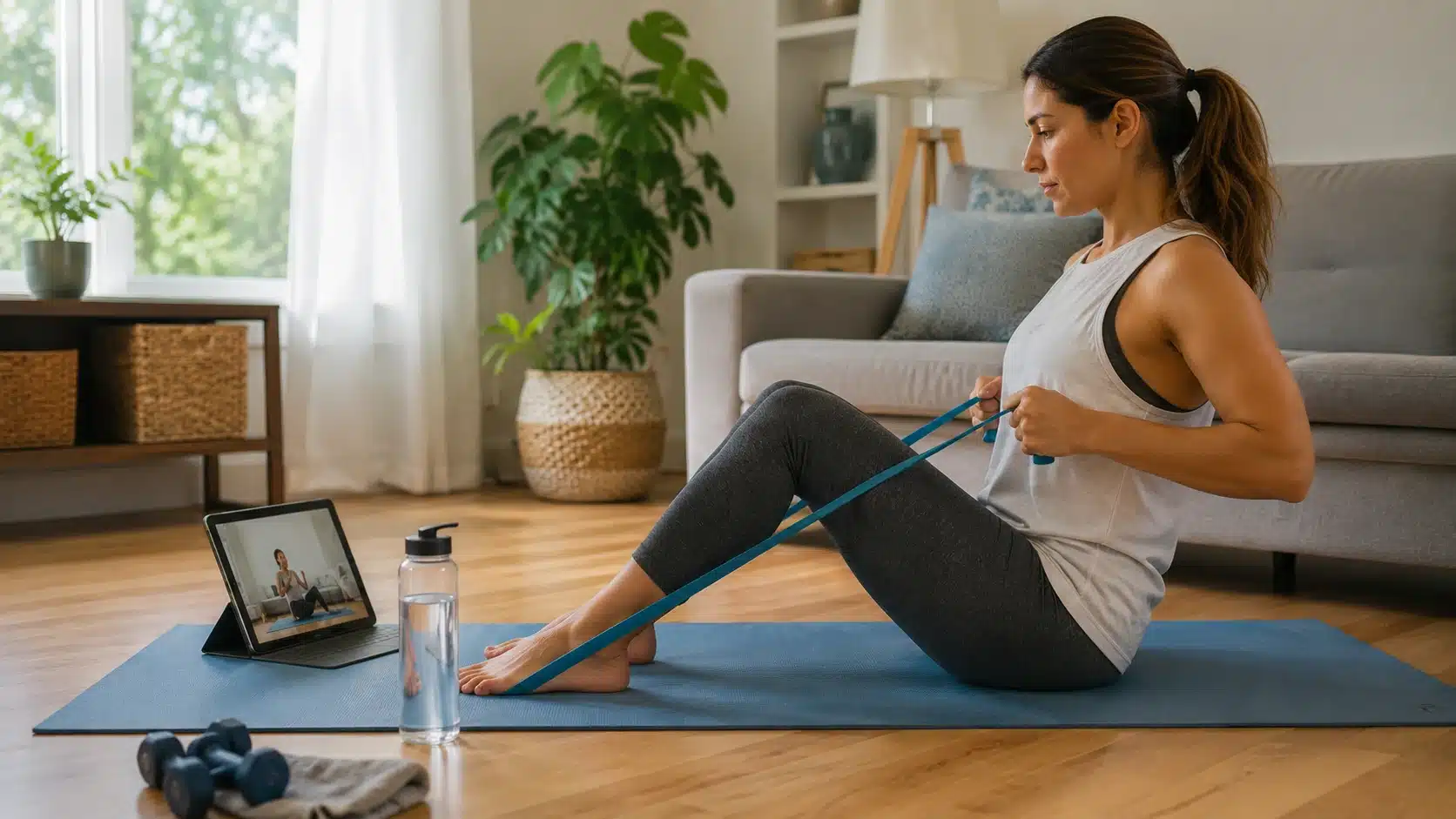
It often uses bodyweight movements, resistance bands, light dumbbells, or walking. Structure still matters here. A vague collection of exercises is not a program.
Condition-Sensitive Program
Certain health conditions change what exercises are appropriate and at what intensity.
Diabetes, cardiac conditions, hypertension, arthritis, nerve symptoms, and balance disorders all require extra care when selecting and progressing movements.
Work with a clinician to set safe thresholds before you build this type of plan independently.
Beginner-Friendly Program
For someone returning to movement after a long break, the most important feature is that the plan starts slowly enough to actually follow.
In my own training experience, the biggest mistake I see with beginners is starting at an intensity that is too high to repeat consistently.
A plan you do three times per week for four weeks beats an intense plan you abandon after five days.
Goal-Specific Program
One clear outcome makes a plan easier to build and easier to assess. Better balance, stronger knees, improved shoulder mobility, or more stamina are all valid single goals.
The tighter your focus, the better your exercise selection, and the more clearly you can track whether the plan is working.
How to Build a Home Exercise Program That Actually Sticks
Most home programs fail for one of three reasons: the plan is too vague, the starting intensity is too high, or the plan never gets adjusted.
Here is the framework I use when building home exercise programs for my own clients.
1. Set One Clear Goal
Choose one main reason for the plan. Knee strength, better posture, shoulder mobility, improved cardio, or general fitness.
One goal keeps exercise selection focused and makes it easier to tell whether the plan is working after two to four weeks.
2. Check Your Limits Before You Start
Assess your starting point honestly. Note any pain, stiffness, balance issues, strength deficits, and energy levels before choosing exercises.
A common mistake is selecting exercises based on what you want to do rather than what your body can currently manage safely. The starting point should be slightly easier than you think you need.
3. Choose the Right Exercises
Pick movements that match both your goal and your current ability. Fewer exercises done correctly are always better than a long list done poorly.
For lower-body strength and function, the foundational movements- squats, lunges, glute bridges, and step-ups- cover most of what the research supports for functional training at home.
For the upper body, push variations and row variations cover the basics.
| Trainer Tip: When choosing exercises, pick two you have already done. Familiarity matters for adherence. If every exercise in your program requires learning new coordination, the barrier to starting is higher than it needs to be. |
4. Set Reps, Sets, and Frequency Before You Begin
Do not leave the dosage vague. Decide the number of sets, repetitions, days per week, and effort level before you start.
Use straightforward cues: easy means you could do five more reps, moderate means you could do two more, and challenging but controlled means form is still solid at the last rep.
Write the plan down, even if it is just on a note on your phone.
5. Define Your Stop Signs
Every home exercise program needs clear criteria for when to pause and reassess.
Stop and consult a healthcare provider if you experience sharp or shooting pain, dizziness, numbness, tingling, chest discomfort, unusual shortness of breath, or symptoms that worsen with each session.
Mild soreness 24 to 48 hours after exercise is normal. Pain during exercise is not.
6. Track and Review Progress Every Two Weeks
Use a checklist, app, notebook, or simple spreadsheet to record what you did, how it felt, and whether you had any pain or difficulty.
Review after two weeks and adjust only one variable at a time. If you change the exercise, the reps, and the resistance simultaneously, you lose the ability to understand what is actually working.
The Home Exercise Program Adherence Problem
Only about 30 percent of patients actually follow through consistently with their prescribed home exercise programs. That is not a motivation problem. It is a design problem.
Programs that are too long, too complicated, or too difficult to fit into a real schedule get abandoned.
The research on adherence points to a few consistent drivers.
- Programs with clear video demonstrations have higher completion rates than written instructions alone.
- Programs that are shorter (three to five exercises at 15 to 20 minutes) are completed more consistently than longer ones.
- And programs that are reviewed and updated at regular intervals keep patients engaged longer than static plans that never change.
If you have been given a home exercise program by a physical therapist, one of the most effective things you can do for adherence is schedule a specific time each day for the exercises and tie them to an existing habit, such as right after breakfast or before your evening shower.
Best Rehab-Focused Home Exercise Programs
Rehab-focused platforms are designed for people recovering from injuries, surgery, chronic pain, or movement limitations.
These tools are most often used within a clinical workflow, where a physical therapist prescribes specific exercises and monitors progress between visits.
If you are working with a therapist, ask whether their practice uses any of the platforms below.
1. MedBridge

MedBridge is one of the most widely used rehabilitation platforms for physical therapists and occupational therapists.
It combines exercise prescription tools with patient education materials, so patients receive not just what to do but also why they are doing it.
That context makes a real difference for adherence. The platform supports remote therapeutic monitoring, so therapists can track whether patients are completing exercises between clinic visits.
Key features: large rehab exercise library, guided video demonstrations, custom HEP builder, remote therapeutic monitoring, patient education resources, progress tracking.
2. Physitrack

Physitrack is built for clinicians managing patients both in-person and remotely. It works well for musculoskeletal injuries, post-surgical recovery, and long-term rehabilitation plans.
Its pain-tracking feature allows patients to record symptom changes throughout the program, providing therapists with clearer data to adjust exercise dosage at subsequent visits.
Key features: custom exercise programs, telehealth support, progress monitoring, pain tracking, outcome reporting, mobile app access.
3. WebPT

WebPT integrates home exercise program creation with full practice management tools, making it well-suited for physical therapy clinics that want exercise prescription built into their daily workflow.
Individual users who do not have a therapist connection will find limited value, but for clinic-based HEP delivery, it is one of the stronger options available.
Key features: HEP creation, patient notes, progress tracking, telehealth tools, communication features, clinic workflow integration.
4. WebExercises

WebExercises serves clinicians across physical therapy, chiropractic, and orthopedic rehab who need a fast way to prescribe evidence-based exercises.
Its large database and pre-built template structure make program creation efficient, which is valuable in a high-volume clinic setting where therapist time is limited.
Key features: large exercise library, digital and printable plans, evidence-based protocols, patient-friendly instructions, program templates, multidisciplinary support.
Fitness Improvement Home Exercise Programs
For users who are not in clinical recovery and want to build strength, improve conditioning, or establish a consistent movement habit, general fitness apps offer more flexibility and better variety than rehab platforms.
These are not medical tools, but for healthy adults building a home exercise program around fitness goals, they cover the basics well.
5. Nike Training Club

Nike Training Club provides a free workout library that covers strength, mobility, yoga, and conditioning.
It works well for beginners and busy users who need variety without paying for a subscription. The session lengths are flexible, which is one of its most practical features for home use.
Key features: free workout library, strength and mobility sessions, yoga options, beginner-friendly routines, flexible session lengths.
6. Apple Fitness+
Apple Fitness+ is strongest for users already in the Apple ecosystem who want trainer-led classes with Apple Watch data integration.
It covers a wide range of movement styles and includes meditation and yoga alongside strength and HIIT, making it a full-spectrum option for a general home exercise routine.
Key features: personalized workout plans, strength and HIIT sessions, yoga and Pilates, meditation, Apple Watch integration.
7. Future

Future is the right choice for users who want a dedicated coach rather than a library to browse. A real coach builds your weekly plan, tracks your progress, and adjusts the program as your fitness changes.
I’ve seen how valuable direct accountability is for people who struggle with self-directed training. The cost is higher than a general app, but the consistency outcomes justify it for the right user.
Key features: personal fitness coach, weekly custom plans, direct coach messaging, wearable integration, progress-based plan adjustments, goal-focused training.
Home Exercise Program vs Workout App: What to Choose
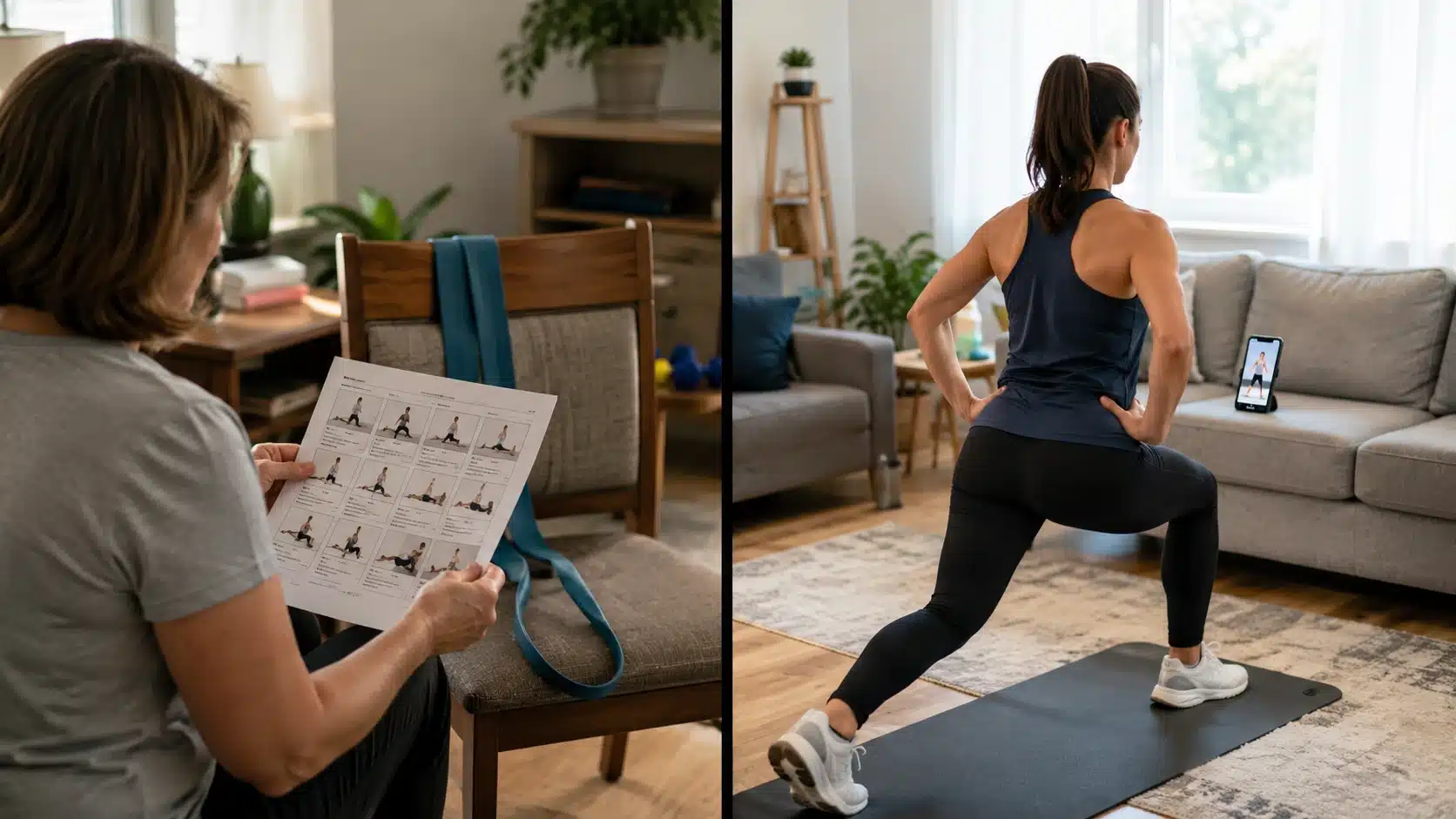
These two tools are often confused but serve genuinely different purposes.
A home exercise program is structured around a specific therapeutic or performance goal, often designed or reviewed by a clinician.
A workout app is a content library you navigate based on personal preference. Knowing which one fits your situation saves time and reduces the risk of choosing the wrong approach.
| Factor | Home Exercise Program | Workout App |
|---|---|---|
| Best for | Rehab, pain recovery, mobility, balance, structured goals | General fitness, strength, cardio, yoga, habit building |
| Customization | Built around a specific condition, injury, or recovery goal | Based on fitness level, workout preference, or time available |
| Tracking | Tracks pain, symptoms, exercise completion, recovery progress | Tracks workouts, calories, streaks, heart rate, activity time |
| Rehab use | Better suited for rehab, especially with clinician involvement | Not designed for injury recovery or medical conditions |
| Cost | Often included through a clinic, paid platform, or therapist | Free, subscription-based, or bundled with a fitness service |
| Coaching support | May include therapist guidance, patient notes, clinical updates | May include trainer videos, coaching, or app-based support |
If you are in recovery or managing a health condition, a clinical HEP platform or therapist-prescribed program gives you better oversight.
If your goal is general fitness and you are healthy enough to train independently, a workout app gives you more variety and lower cost. Both can work.
The choice comes down to what level of structure and clinical guidance your situation requires.
A Sample Weekly Home Exercise Program Routine
A balanced weekly routine does not require daily intense sessions. A mix of strength, mobility, light cardio, and recovery days builds consistent progress without overloading the body.
The plan below is a general starting template, not a prescribed medical program.
| Day | Focus | What to Include |
|---|---|---|
| Day 1 | Strength and mobility | Squats, glute bridges, push-ups, gentle hip mobility work |
| Day 2 | Light cardio | Walking, cycling, or low-impact movement at easy pace |
| Day 3 | Stretching and balance | Dynamic stretching, single-leg balance work, gentle hip and ankle mobility |
| Day 4 | Strength | Lunges, step-ups, resistance band rows, shoulder press |
| Day 5 | Mobility and core | Controlled mobility work, bird-dog, dead bug, and plank variations |
| Day 6 | Light activity | Walking, stretching, or a short low-effort movement session |
| Day 7 | Rest or recovery | Full rest, breathing work, or very gentle movement only |
Adjust this template to match your current fitness level and recovery needs. If you are using a home exercise program for rehab, follow your provider’s specific plan rather than a general template.
The right weekly structure for rehabilitation looks different from a general fitness schedule.
How to Progress Your Home Exercise Program Over Time
Progression is where most home exercise programs break down. One of my core rules when programming is this: change only one variable at a time.
If you increase the reps, keep the sets and resistance the same. If you add resistance, keep the reps and sets the same.
Changing everything at once makes it impossible to understand what is driving improvement or causing problems.
A safe and effective progression sequence looks like this.
- In the first two weeks, focus on form and consistency at a moderate effort level.
- In weeks three and four, add two to three reps per set if the movement feels controlled at every rep.
- In weeks five and six, increase resistance by the smallest available increment.
- After six weeks, reassess the exercise selection itself.
If your goal was knee strength and your single-leg squat is now pain-free and controlled, that exercise has done its job.
You can either progress to a more challenging variation or redirect effort to a different movement gap.
This same logic applies to eccentric quad exercises, which are particularly effective for knee pain and tendon rehabilitation.
The progression from bilateral to single-leg work follows this slow, controlled model, and the outcomes justify the patience required.
Common Mistakes to Avoid in a Home Exercise Program
I’ve seen the same patterns repeatedly in people who abandon home programs within two weeks. The following mistakes are the most common, and most of them stem from design errors rather than effort deficits.
- Starting too hard too soon. A plan that is slightly too easy to complete consistently beats a hard plan you never finish. Begin easier than you think you need to, then build from a reliable baseline.
- Copying exercises without a goal. Exercises must be chosen to serve a specific purpose. If you cannot explain why each exercise is in your program, it probably should not be there.
- Skipping the warm-up. Five to ten minutes of gentle movement before loading the joints reduces injury risk and improves the quality of the session. Cold tissue under load is a risk most people underestimate.
- Ignoring pain signals. Mild soreness 24 to 48 hours after exercise is expected. Sharp pain during a movement, joint pain that persists after exercise, or pain that worsens over consecutive sessions are signs the program needs to change.
- Never adjusting the plan. A program that was right for week one is not automatically right for week six. Progression requires deliberate updates. A static plan produces static results.
- Too many exercises. Five to seven exercises per session are usually enough. More does not mean better, and longer sessions are harder to complete consistently.
When to See a Professional Before Starting
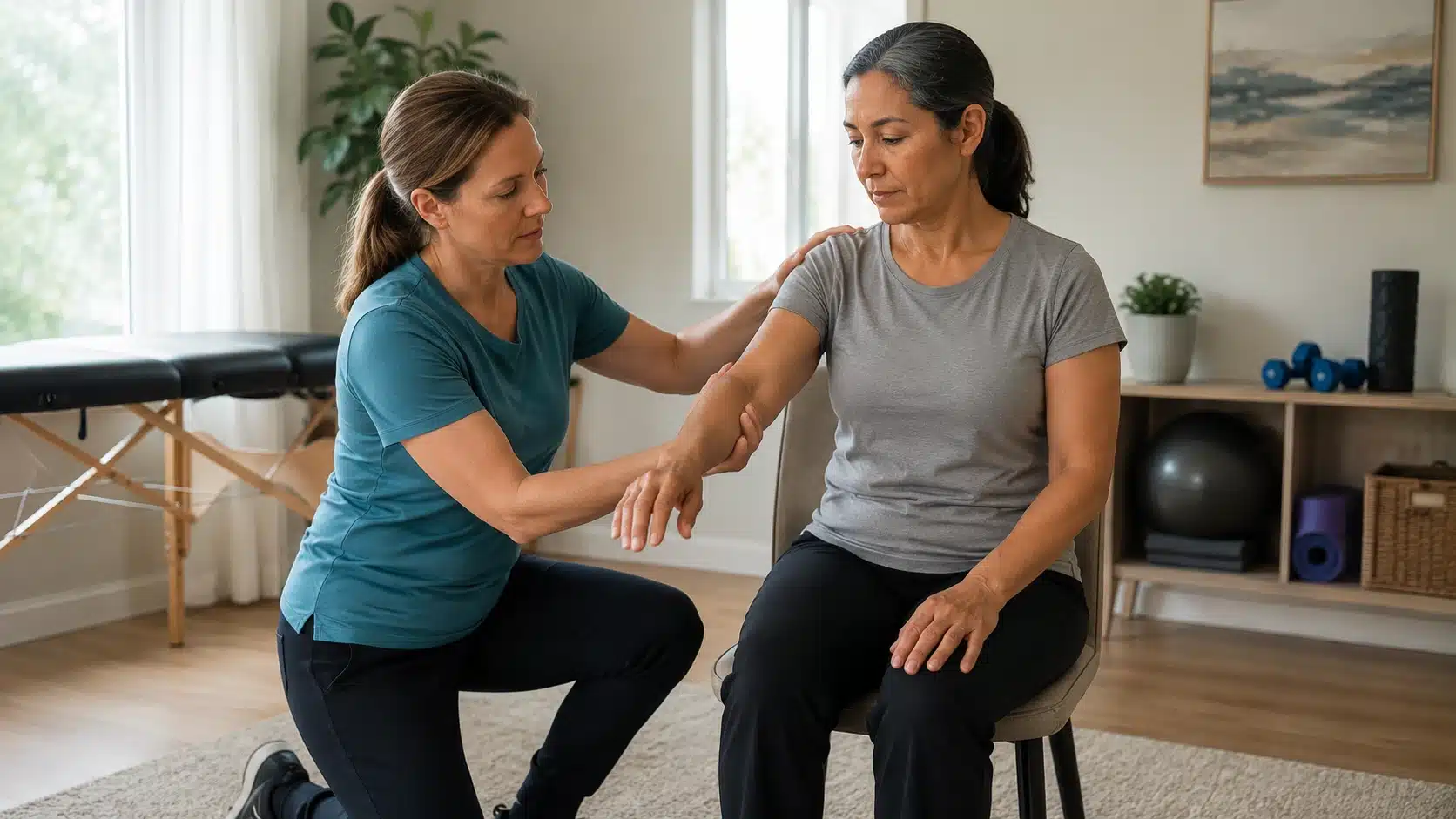
Many people can begin a light home exercise program safely on their own. But some situations require a clinical assessment before you start.
Get medical clearance before building your own plan if you have recently had surgery, are managing an acute injury, or experience any of the following:
- Sharp or worsening pain during activity
- Chest discomfort or pressure
- Shortness of breath at low effort
- Dizziness or fainting
- Numbness or tingling in the limbs
- Poor balance or a history of falls
- New pain after previously starting a program
You should also seek professional guidance if youmanage diabetes, cardiovascular disease, high blood pressure, pregnancy, postpartum recovery, or neurological conditions.
A clinician can set safe exercise limits, identify movement patterns to avoid, and design a program that fits your medical reality. That is not overcaution. It is how a home exercise program becomes genuinely useful rather than a guessing game.
For those returning from injury, structured exercise adaptations during periods of limited mobility can maintain conditioning without compromising recovery.
Frequently Asked Questions
These are the questions I hear most often from people starting or refining a home exercise program.
How do I create a home exercise program?
Start by identifying one clear goal, then choose three to five exercises that directly address that goal at your current ability level. Set a specific rep scheme, number of sets, and weekly frequency before you begin. Write it down. Include a short warm-up and define your stop criteria for pain or symptoms. Review the program after two weeks and change only one variable at a time. If you are recovering from an injury or managing a health condition, consult a physical therapist before designing the program independently.
What exercises help lower A1C at home?
Regular aerobic exercise is one of the most evidence-supported interventions for improving insulin sensitivity and lowering A1C. Walking, cycling, and low-impact cardio performed at a moderate pace for 30 minutes most days of the week have been shown in multiple studies to produce meaningful reductions in blood glucose over 12 to 16 weeks. Resistance training, including bodyweight squats, glute bridges, and resistance band exercises, also improves glucose uptake in skeletal muscle.
Are 30-minute home workouts effective?
Yes, consistently. A 30-minute session that is well-structured, matched to your fitness level, and performed regularly will produce meaningful improvements in strength, cardiovascular fitness, and mobility for most adults.
What is the 3-3-3 rule for exercise?
The 3-3-3 rule is a simple structure for creating a balanced home workout. It involves performing three strength exercises, three cardiovascular or conditioning movements, and three mobility or stretching exercises in a single session.
Summing Up
A home exercise program is worth building if you build it correctly.
That means one clear goal, a handful of well-chosen exercises, a defined dose and frequency, stop criteria you will actually follow, and a two-week review cycle.
Without those elements, you have a list of exercises, not a program. The difference between the two is the difference between results and frustration.
Start with three to five exercises, a 15 to 20 minute session, and a commitment to reviewing progress at two weeks before changing anything.
That is the version of a home exercise program that actually produces outcomes worth the effort.
Sources
- Maddison, R., et al. “Home-Based Physical Activity Interventions: An Overview of Systematic Reviews.” Sports Medicine, 2022. https://pubmed.ncbi.nlm.nih.gov/
- Nicolson, P.J.A., et al. “Outcomes of a digital rehabilitation program for patients with chronic shoulder pain.” BMC Musculoskeletal Disorders, 2023. https://www.ncbi.nlm.nih.gov/pmc/articles/PMC11025514/
- ACSM, “Physical Activity Guidelines for Americans.” American College of Sports Medicine, 2022. https://www.acsm.org/
- Snyder Valier, A.R., et al. “Home Exercise Program Adherence in Rehabilitation Research: A Systematic Review.” Journal of Athletic Training, 2021. https://pubmed.ncbi.nlm.nih.gov/