| Disclaimer: This article is for informational and educational purposes only. It does not constitute medical advice. Always consult a qualified healthcare provider before starting a new nutrition or wellness program, particularly if you have a pre-existing condition such as diabetes, kidney disease, or digestive disorders. |
| Recipes Covered | 17 detox juice recipes across green, citrus, beet, and tropical bases |
| Skill Level | Beginner-friendly |
| Equipment | Juicer or standard blender |
| Prep Time | 3 to 8 minutes per recipe |
| Best Time to Drink | Morning on an empty stomach, or mid-day reset |
| Primary Goals | Hydration, digestion support, immunity, natural energy |
What Detox Juice Recipes Actually Do for Your Body
Cleansing juice recipes deliver concentrated vitamins, minerals, and antioxidants from fruits and vegetables in a form that your digestive system absorbs quickly.
Here is what the numbers tell you: a single serving of a green juice combining cucumber, spinach, apple, and lemon can supply more than 80% of your daily Vitamin C and a meaningful dose of Vitamin K, folate, and potassium in under 100 calories. That is a strong nutritional return for a five-minute prep.
Worth being clear about upfront: your liver and kidneys handle detoxification as a biological function. No juice flushes toxins the way some marketing suggests.
What these detox juice recipes genuinely do is supply the micronutrients those organs need to work efficiently, support hydration, and make it easier to hit your daily produce targets. That is a real benefit, and it is the one worth focusing on.
I find these recipes most useful as a practical daily habit rather than a periodic cleanse. When paired with a solid diet, they fill the nutrient gaps most people consistently miss.
If you are also following a structured 7-day detox plan, these juices integrate naturally into that schedule without requiring separate prep work.
Juicer vs. Blender: Which One to Use for Detox Juice Recipes
Choosing between a juicer and a blender changes the final drink in terms of texture, fiber content, and nutrient delivery. Both tools support detox juice recipes, but they serve slightly different health and lifestyle goals depending on how you want to consume fruits and vegetables.
| Feature | Juicer | Blender |
|---|---|---|
| Fiber Content | Removes most fiber | Keeps all fiber |
| Texture | Thin, smooth liquid | Thick, smoothie-like |
| Nutrient Absorption | Faster absorption | Slower, steady digestion |
| Satiety | Low fullness | Keeps you full longer |
| Cleanup | Moderate effort | Easy cleanup |
A juicer extracts liquid and removes fiber, giving a concentrated dose of vitamins and plant nutrients. This can support quick nutrient intake, especially for detox-style drinks. However, it reduces fiber intake and may cost more due to equipment and maintenance needs.
A blender keeps the full fiber content, which slows sugar absorption and supports digestion and fullness. This makes blended detox drinks more suitable as light meal replacements rather than quick nutrient shots.
The Best Detox Juice Recipes
1. Classic Green Cleanse
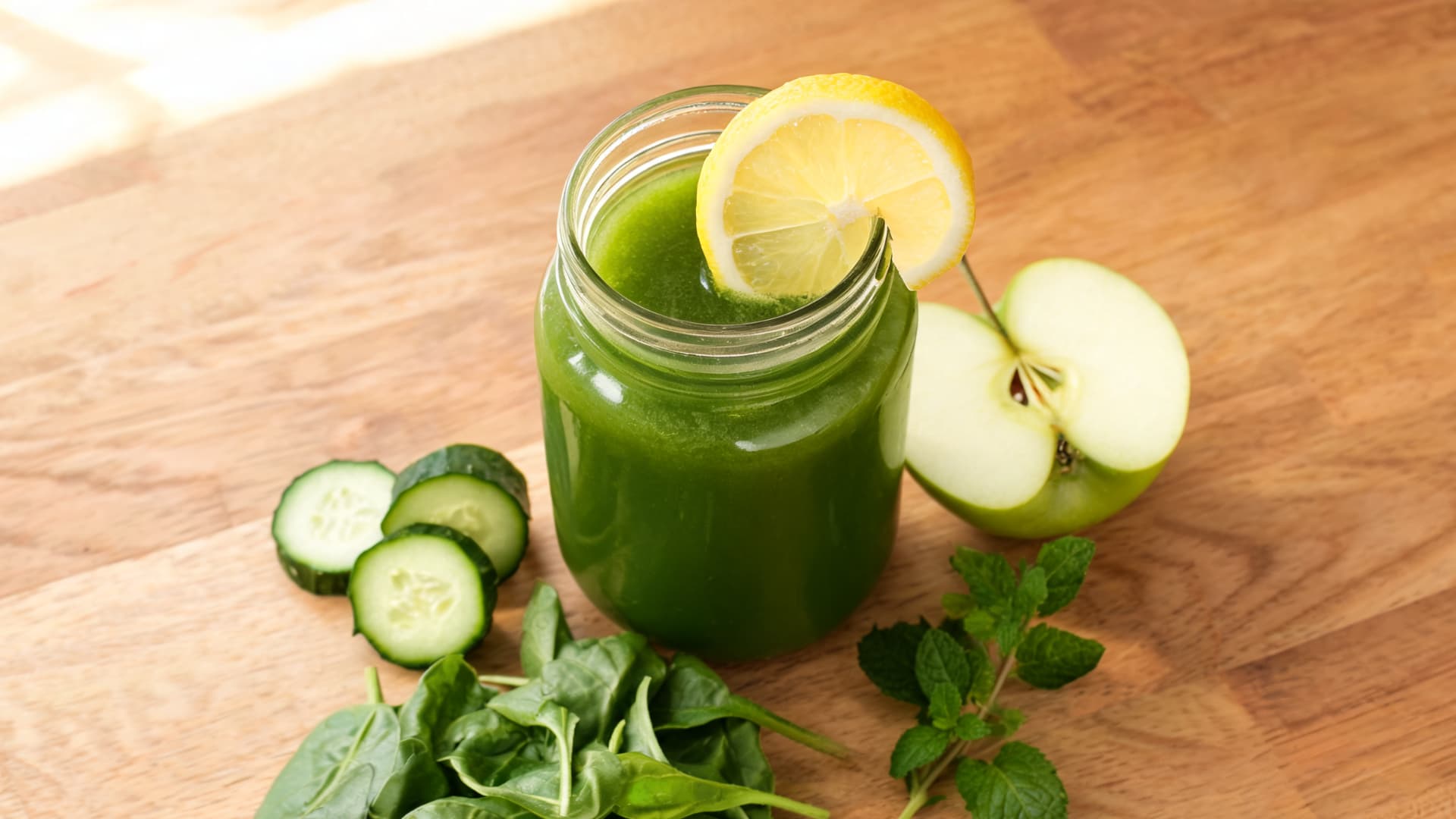
A solid daily driver. The cucumber base provides about 95% water content by weight, which means most of the volume in this glass is pure hydration. Spinach contributes Vitamin K and iron. The apple brings natural sweetness without a high sugar load, roughly 19 grams of natural sugar per medium apple versus the 39 grams in a can of soda.
Prep Time: 6 to 8 minutes.
Ingredients: 1 cucumber, 1 green apple, 2 cups spinach, 1/2 lemon, mint leaves (optional).
Method:
- Wash all ingredients thoroughly under cold running water to remove dirt, pesticides, and surface residues.
- Peel the lemon completely and optionally peel the cucumber if it is not organic or if a smoother taste is preferred.
- Core the apple and chop the cucumber, apple, and lemon into medium-sized pieces for easier blending or juicing.
- Add spinach first into the blender or juicer to create a smooth base and help with even mixing.
- Add the chopped cucumber, apple, and lemon on top of the spinach to balance the extraction of flavors and nutrients.
- Blend or juice until smooth and fully combined, ensuring no large chunks remain.
- Add a small splash of water if needed to adjust consistency and make blending easier.
- Strain if preferred for a lighter, smoother texture without pulp.
- Pour into a glass immediately and serve fresh to preserve maximum nutrients, enzymes, and flavor.
Optional swaps: Replace spinach with kale for a stronger chlorophyll profile, or add two stalks of celery for extra potassium.
Nutritional profile: Vitamin C, Vitamin K, iron, folate, antioxidants, hydrating electrolytes.
2. Citrus Ginger Morning Cleanser
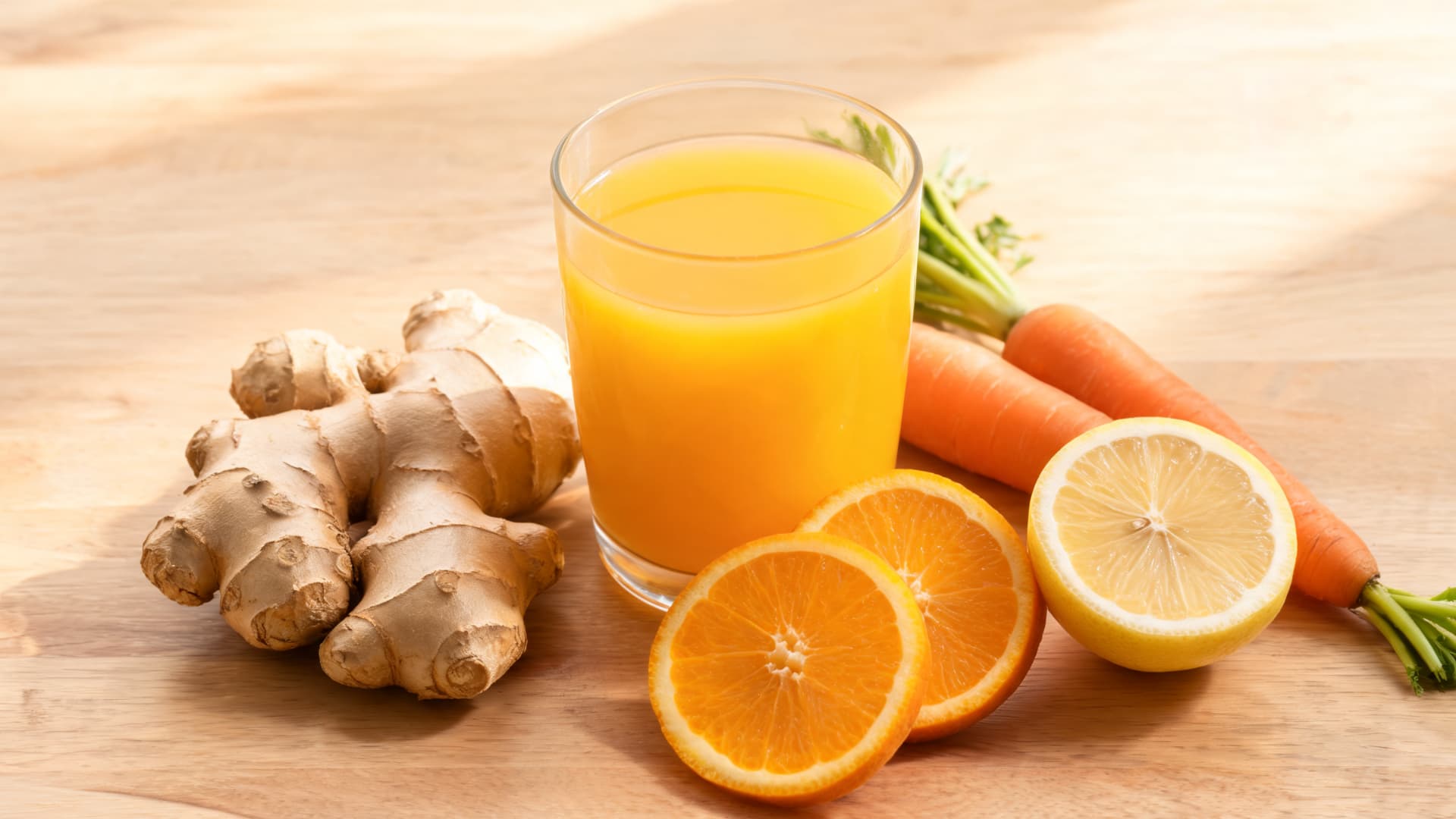
Ginger is what makes this recipe worth making. A 2019 review in the International Journal of Preventive Medicine found that gingerol, the active compound in fresh ginger, supports gastric motility and can reduce nausea and bloating at doses as low as 1 gram, which is roughly what a half-inch piece provides.
Orange and carrot give you Vitamin C and beta-carotene in a single glass.
Prep Time: 6 minutes.
Ingredients: 1 orange, 1/2 lemon, 1 carrot, 1 inch fresh ginger.
Method:
- Wash all ingredients thoroughly under cold running water to remove dirt, pesticides, and any surface residue.
- Peel the orange and lemon completely to reduce bitterness and improve overall taste and smoothness.
- Scrub the carrot well and chop it into small pieces to make blending or juicing easier.
- Slice the ginger thinly to help release its natural juices, aroma, and active compounds more effectively.
- Add all ingredients into a blender or juicer in layers to support smoother blending and better extraction.
- Blend or juice until the mixture is completely smooth and well combined with no visible chunks.
- Strain the juice if a lighter, cleaner texture is preferred without pulp.
- Serve immediately to preserve maximum nutrients, freshness, and natural flavor.
Optional swaps: Add 1/2 teaspoon of turmeric powder and a pinch of black pepper. The piperine in black pepper increases curcumin absorption from turmeric by up to 2000%, according to research published in Planta Medica.
Nutritional profile: Vitamin C, beta-carotene, gingerol, antioxidants.
3. Beet and Carrot Liver Support Juice
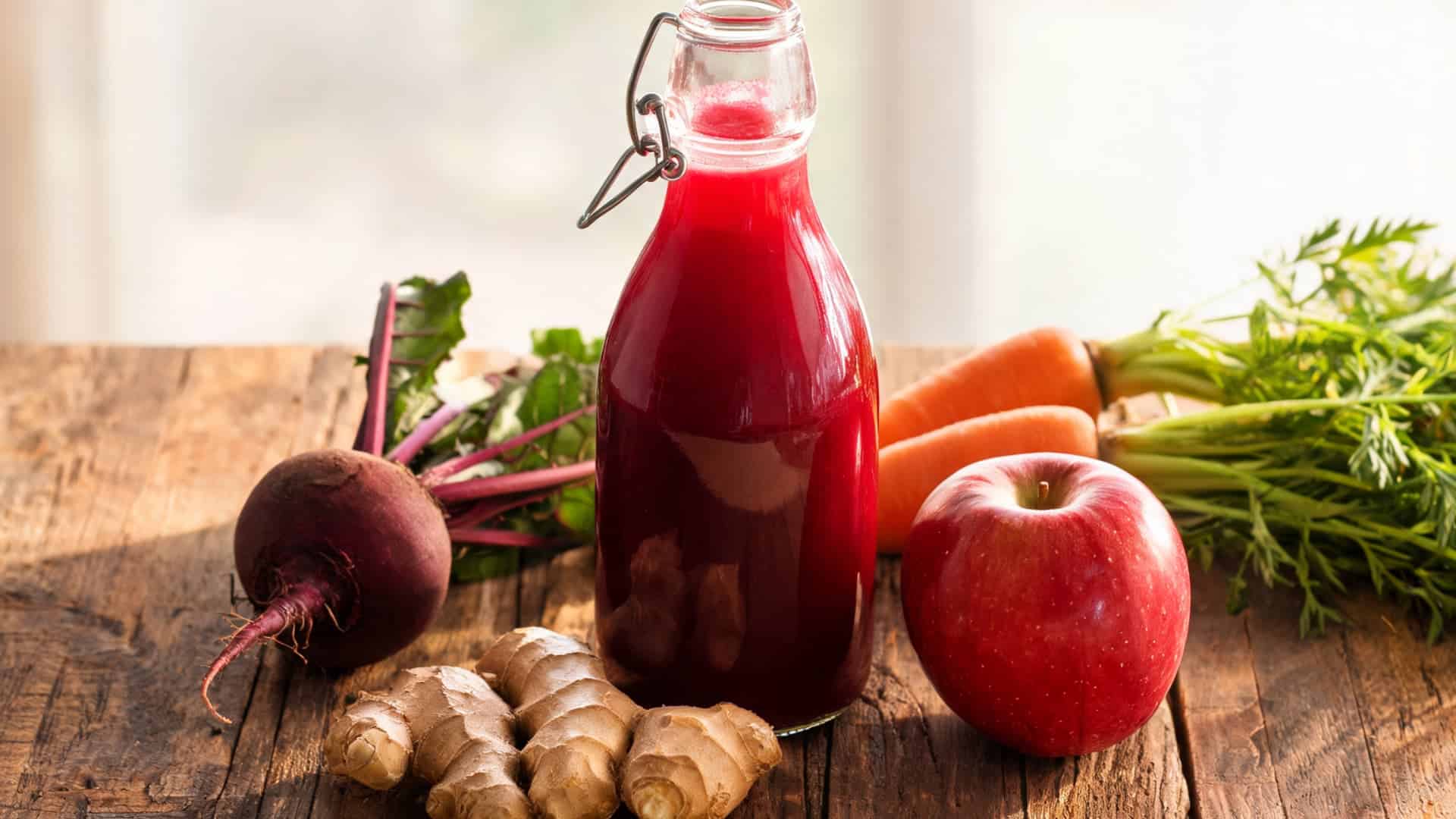
The nitrates in beet are the active ingredient that gives this recipe its circulation and energy reputation. A 2017 study published in Nutrients confirmed that dietary nitrate from beet converts to nitric oxide in the body, which relaxes blood vessels and improves oxygen delivery to muscle tissue. This is a pre-workout or morning recipe worth returning to.
Prep Time: 7 minutes.
Ingredients: 1 beet, 2 carrots, 1 apple, 1 inch fresh ginger.
Method:
- Wash the beet thoroughly under running water to remove soil, grit, and any residue.
- Peel the beet and ginger carefully, then chop all ingredients into small, even-sized chunks for easier processing.
- Add the beet first into the juicer to help break down its dense texture more efficiently.
- Follow with carrots, apples, and ginger, adding them in layers for balanced flavor and better extraction.
- Blend or juice until the mixture is smooth, rich, and deep red, with no large pieces remaining.
- Strain if preferred for a lighter texture and smoother drinking experience.
- Serve immediately to preserve maximum freshness, nutrients, and natural flavor quality.
Optional swaps: Add half a lemon for brightness, or substitute one carrot with two celery stalks for a lower-sugar version.
Nutritional profile: Iron, folate, nitrates, Vitamin A, antioxidants.
4. Green Apple Spinach Boost
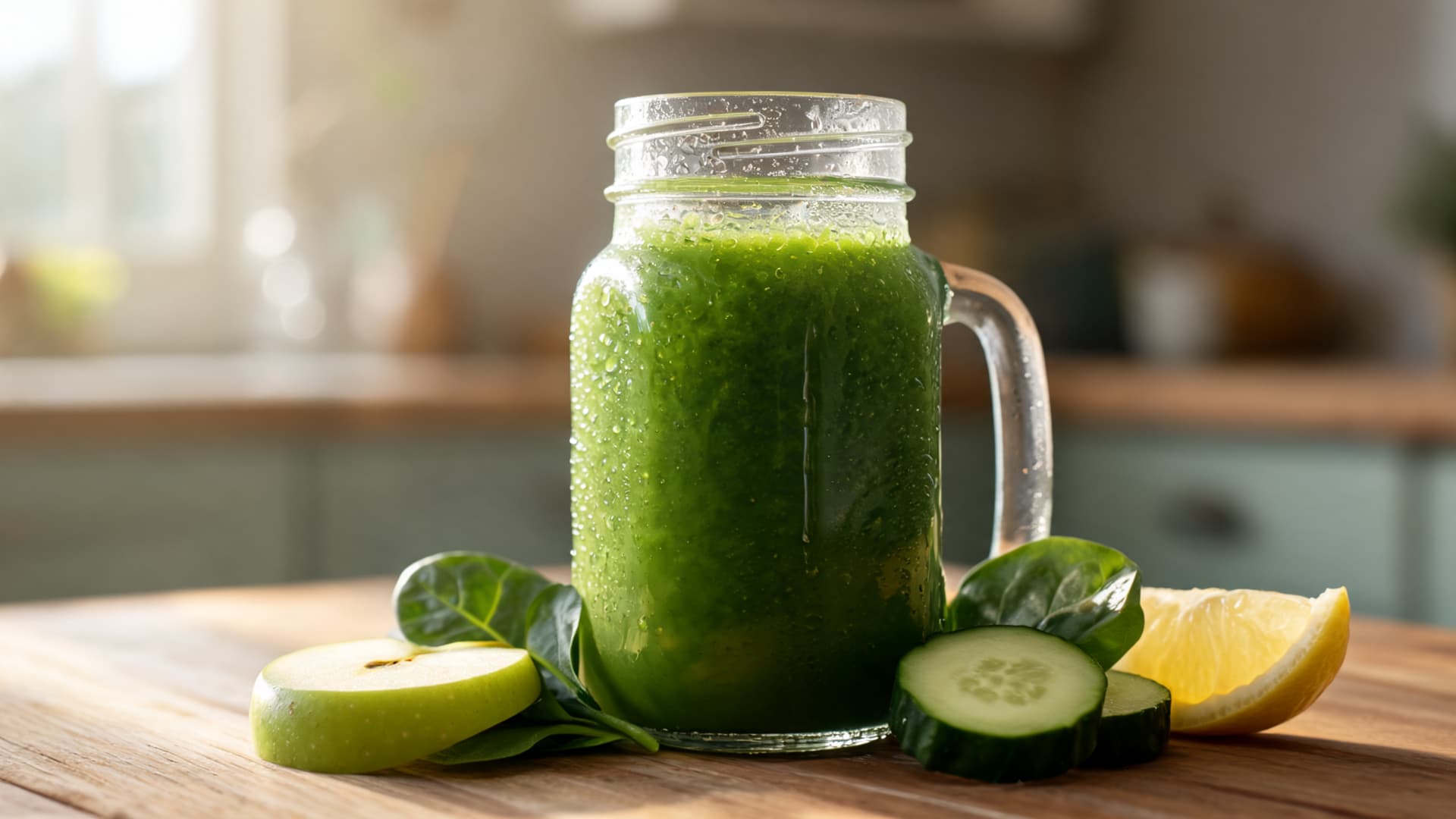
Functionally similar to the Classic Green Cleanse but with a lighter cucumber-to-apple ratio that brings out more of the green apple tartness. Green apples contain slightly less sugar than red varieties, about 16 grams per medium fruit versus 19, which matters if you are watching your daily sugar intake.
Prep Time: 5 to 6 minutes.
Ingredients: 1 green apple, 1 cucumber, 2 cups fresh spinach, 1/2 lemon.
Method:
- Wash all ingredients thoroughly under cold running water to remove dirt, residue, and any surface impurities.
- Core the apple carefully, then chop it into medium-sized pieces for easier blending or juicing.
- Chop the cucumber into smaller chunks to ensure smoother blending and better juice extraction.
- Add spinach first into the blender or juicer to create a smooth, nutrient-rich liquid base.
- Add the apple, cucumber, and lemon on top, then blend or juice until fully smooth and well combined.
- Blend thoroughly until no solid pieces remain and the texture becomes even and consistent.
- Strain if preferred for a lighter, smoother juice and serve immediately for maximum freshness and nutrient retention.
Optional swaps: Replace spinach with kale, or add two celery stalks for a stronger potassium content.
Nutritional profile: Chlorophyll, Vitamin K, antioxidants, natural hydration compounds.
5. Carrot Orange Glow Juice
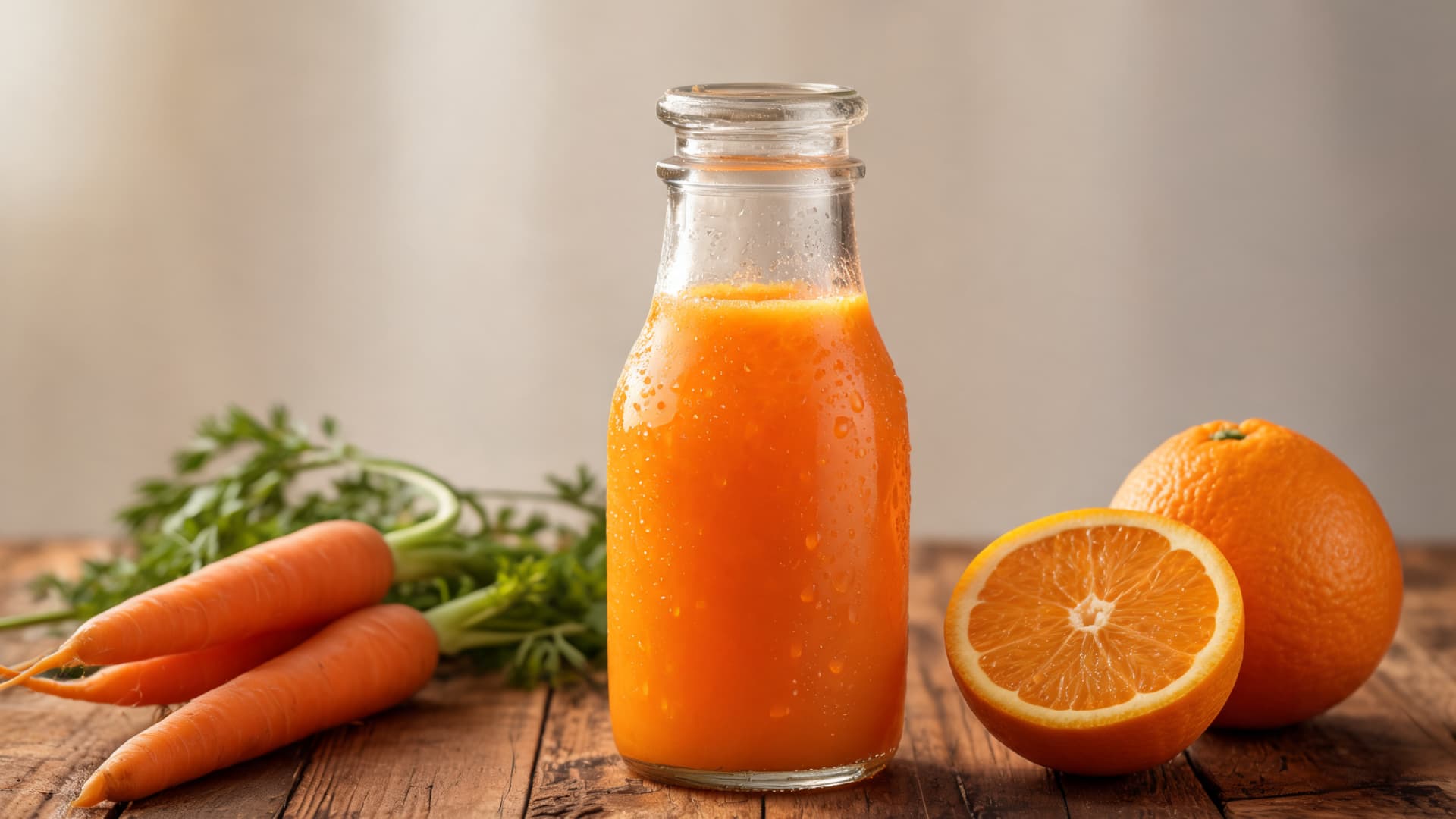
Three medium carrots supply approximately 800 micrograms of beta-carotene, which the body converts to Vitamin A. Two oranges add about 140 milligrams of Vitamin C, more than 150% of the daily recommended intake. Together this is one of the highest-yield two-ingredient combinations in any detox juice recipe list.
Prep Time: 5 minutes.
Ingredients: 3 carrots, 2 oranges.
Method:
- Wash the carrots thoroughly under cold running water and scrub well to remove any dirt or surface residue.
- Peel the oranges completely to reduce bitterness and enhance the natural sweetness of the juice.
- Chop the carrots into smaller sticks or chunks to make blending or juicing easier and more efficient.
- Add the carrots first into the juicer to create a strong, nutrient-rich base.
- Add the oranges gradually, then blend or juice until the mixture is smooth and fully combined.
- Ensure the texture is even with no large pieces remaining for a consistent drink.
- Serve immediately to preserve maximum freshness, flavor, and nutrient content.
Optional swaps: Add a half-inch of fresh ginger for digestive support, or a quarter teaspoon of turmeric for additional anti-inflammatory compounds.
Nutritional profile: Beta-carotene, Vitamin C, natural sugars, antioxidants.
6. Cucumber Mint Refresher
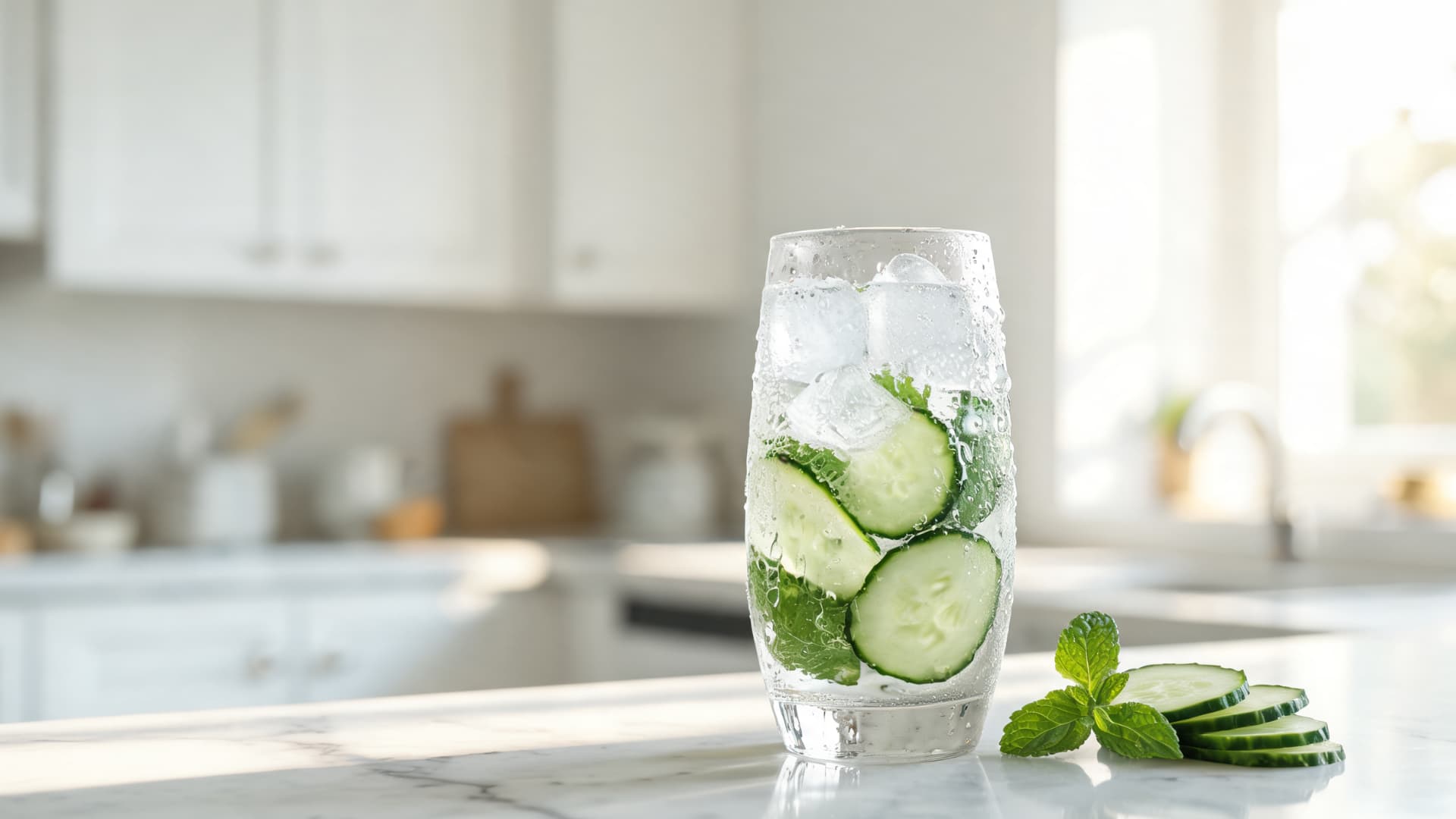
The lowest-calorie recipe on this list, and one of the most practical. Cucumber is roughly 96% water by weight, which makes it as much a hydration tool as a nutrition one. Mint adds menthol compounds that relax the gastrointestinal tract, making this a useful option after a large meal or during high-heat days.
Prep Time: 4 to 5 minutes.
Ingredients: 1 cucumber, a small handful of mint leaves, 1/2 lemon.
Method:
- Wash cucumber and mint leaves thoroughly under cold running water to remove any dirt, residue, or impurities.
- Chop the cucumber into medium-sized chunks to ensure smooth, efficient blending or juicing.
- Lightly crush mint leaves between your fingers to release their natural oils and enhance aroma and flavor.
- Add mint leaves and lemon first to the blender to create a stronger, more infused base flavor.
- Add cucumber and blend or juice until the mixture becomes smooth, fresh, and well combined.
- Blend for a few extra seconds if needed to fully break down all ingredients and improve texture.
- Strain if preferred for a lighter consistency and a cleaner drinking experience.
- Serve chilled immediately to enjoy maximum freshness, cooling, and nutritional benefits.
Optional swaps: Replace lemon with lime, or add a few fresh basil leaves for a different herbal note.
Nutritional profile: Hydration, electrolytes, Vitamin C, cooling volatile compounds from mint.
7. Pineapple Ginger Digest
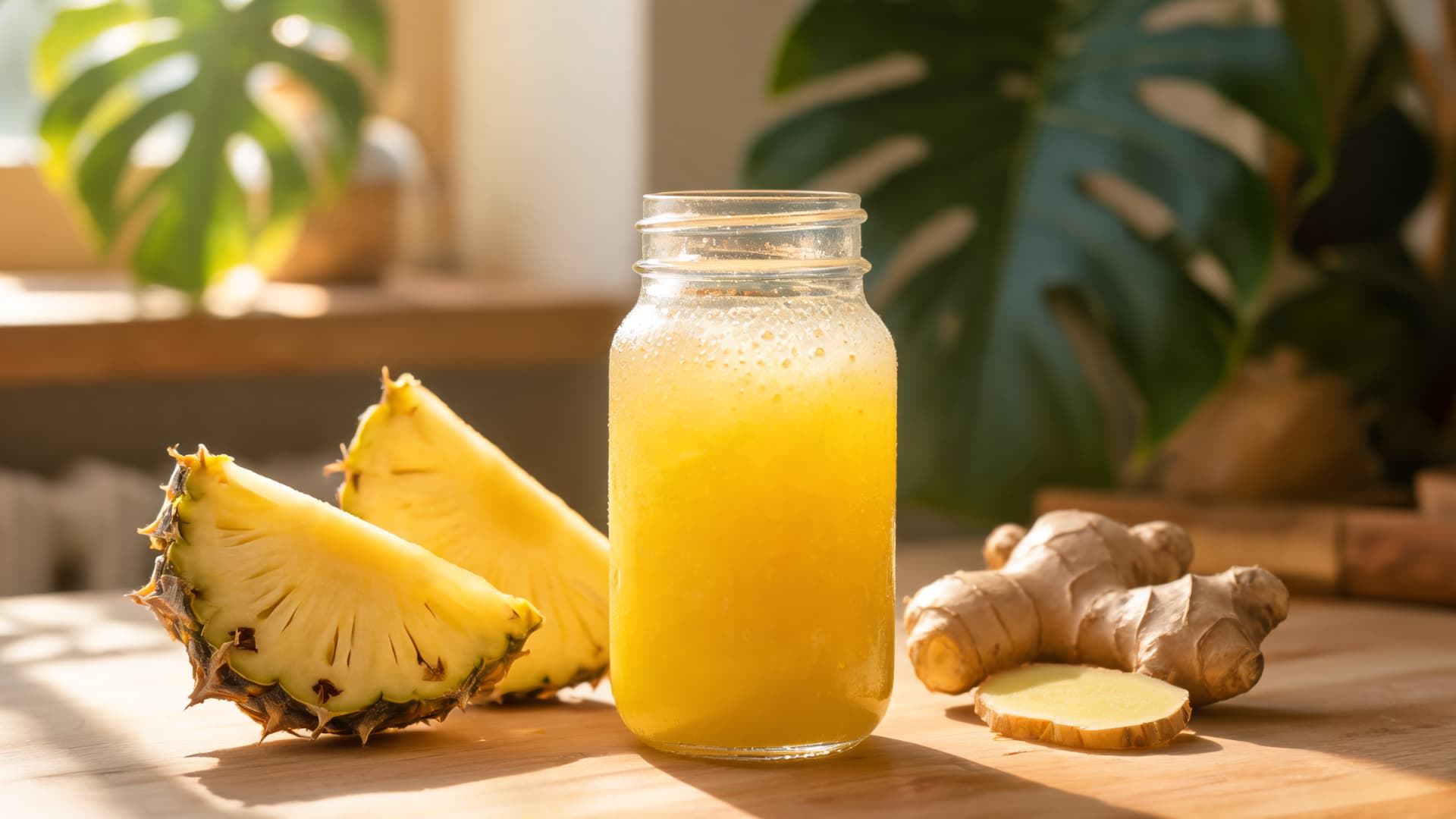
Bromelain is the compound that makes pineapple worth including in a digestion-focused recipe. It is a proteolytic enzyme, meaning it helps break down dietary protein. A 2016 review in Biomedical Reports noted bromelain’s role in reducing gastrointestinal inflammation and improving nutrient absorption, particularly after heavy meals.
Prep Time: 5 to 6 minutes.
Ingredients: 1 cup fresh pineapple, 1 inch fresh ginger.
Method:
- Wash the pineapple and ginger thoroughly under cold running water to remove any dirt, debris, or residue.
- Peel the pineapple carefully and remove the core if it is hard, fibrous, or difficult to blend.
- Slice the ginger into thin pieces to help release its juice, aroma, and active compounds more effectively.
- Add the pineapple first to the blender or juicer to create a smooth, juicy base.
- Add ginger and blend or juice until the mixture becomes fully smooth and well combined.
- Blend for a few extra seconds if needed to break down all fibers and improve texture.
- Strain if preferred for a lighter, clearer juice consistency without pulp.
- Serve immediately to preserve maximum enzyme activity, freshness, and natural flavor.
Optional swaps: Add fresh mint for a cooling effect, or squeeze in half a lime for a tangy digestive lift.
Nutritional profile: Bromelain, Vitamin C, manganese, natural digestive enzymes.
8. Watermelon Hydration Juice
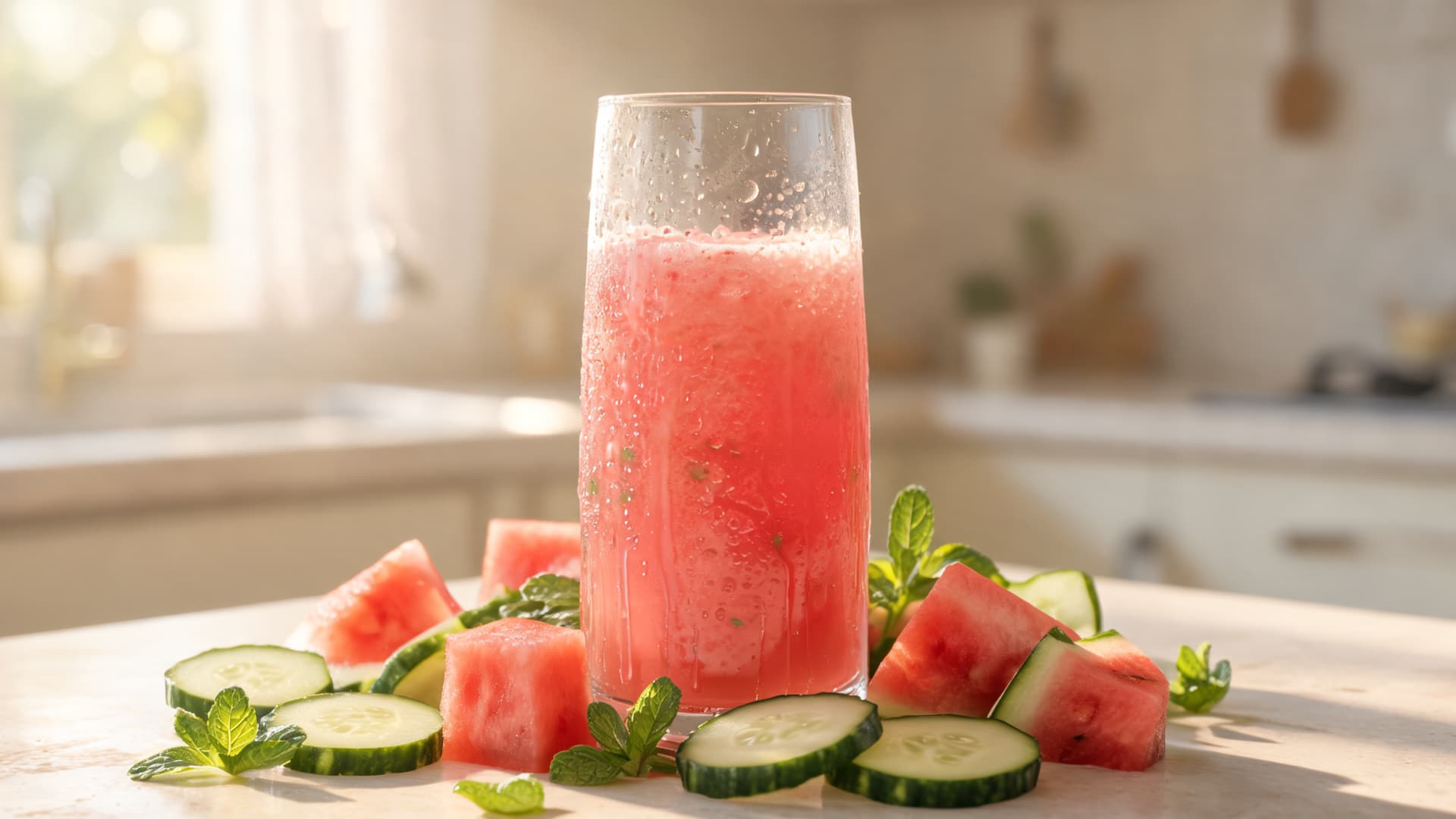
Watermelon is around 92% water and supplies L-citrulline, an amino acid that supports nitric oxide production and blood vessel dilation.
Two cups of watermelon provide approximately 250 milligrams of L-citrulline, a dose range associated with improved exercise recovery in peer-reviewed research. This makes it more useful than it might appear for people who exercise.
Prep Time: 4 to 5 minutes.
Ingredients: 2 cups fresh watermelon, cubed and seedless, a few fresh mint leaves.
Method:
- Wash the watermelon exterior and mint leaves thoroughly under cold running water to remove dirt and residue.
- Cut the watermelon into small cubes and remove the seeds, if present, for a smoother texture.
- Lightly crush mint leaves to release their natural oils and enhance freshness and aroma.
- Add watermelon first into the blender or juicer to create a naturally juicy liquid base.
- Add mint and blend or juice until the mixture becomes smooth, light, and watery.
- Blend for a few extra seconds if needed to fully break down fibers and improve consistency.
- Strain if preferred for a cleaner, pulp-free texture.
- Serve chilled immediately for maximum hydration, cooling, and freshness.
Optional swaps: Add a squeeze of lime for a tangy finish, or replace half the watermelon with coconut water for added potassium.
Nutritional profile: Water content, potassium, L-citrulline, antioxidants including lycopene.
9. Lemon Ginger Detox Shot
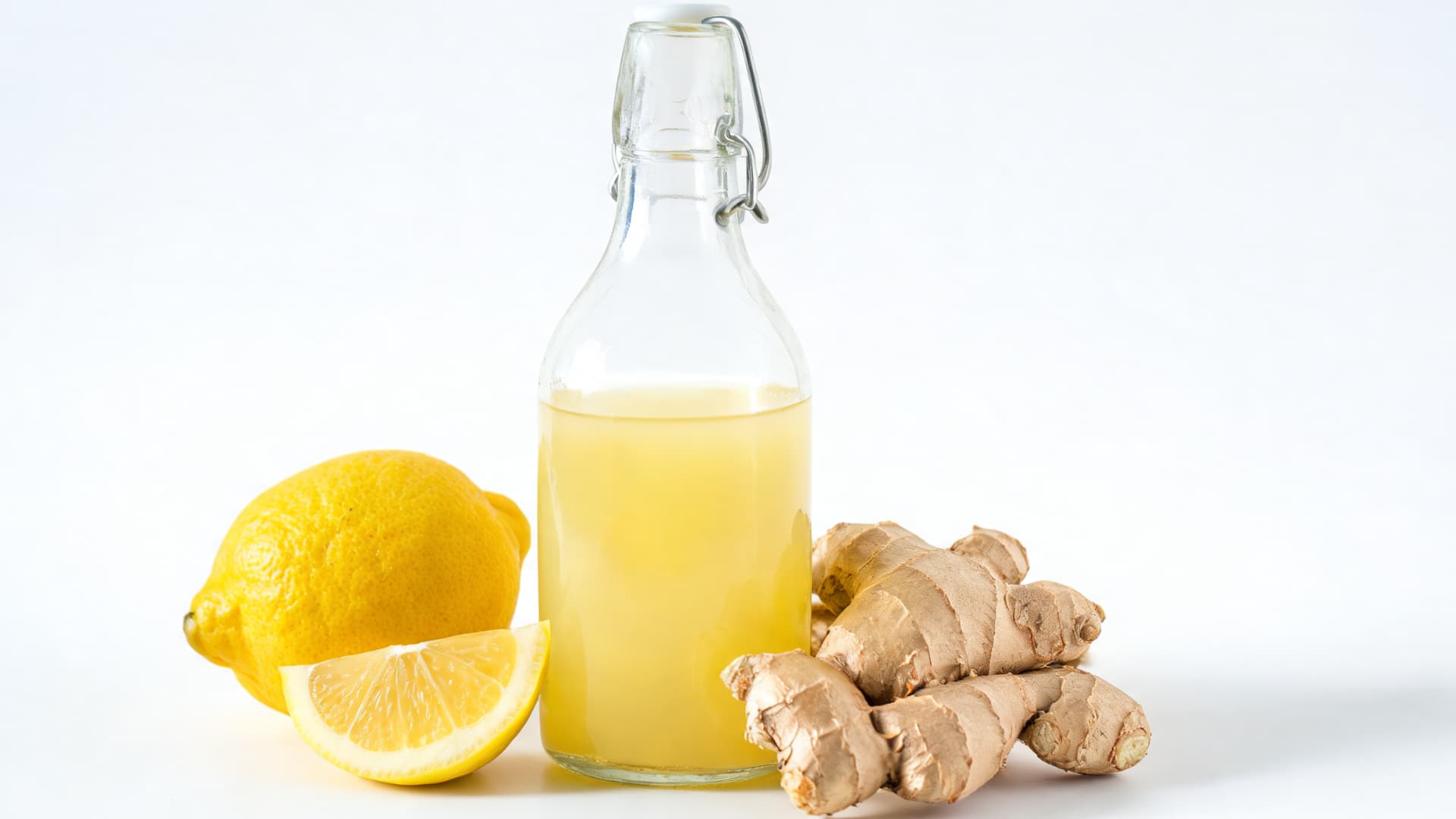
Two-ingredient, high-concentration, and done in under four minutes. One lemon provides about 30 to 40 milligrams of Vitamin C.
Combined with the gingerol from an inch of fresh ginger, this delivers a meaningful anti-inflammatory and immune-supportive dose in roughly 30 milliliters. Consumed on an empty stomach in the morning, the acidity also stimulates gastric acid production, which primes digestion for the first meal of the day.
Prep Time: 3 to 4 minutes.
Ingredients: 1 lemon, 1 inch of fresh ginger.
Method:
- Wash the lemon and ginger thoroughly under cold running water to remove dirt and any surface residue.
- Peel the lemon completely to reduce bitterness and improve the smoothness of the final shot.
- Slice ginger into small, thin pieces to help release its juice, aroma, and active compounds more easily.
- Add lemon and ginger into a blender with a small amount of water to help the blending process.
- Blend until the mixture becomes smooth, concentrated, and well combined.
- Strain the mixture carefully to remove pulp and achieve a smooth, clear shot.
- Serve immediately for maximum potency, freshness, and nutritional benefits.
Optional swaps: Add a pinch of cayenne pepper to further stimulate circulation, or a quarter teaspoon of turmeric with black pepper for a broader anti-inflammatory profile.
Nutritional profile: Vitamin C, gingerol, natural anti-inflammatory compounds.
10. Apple Celery Cleanse
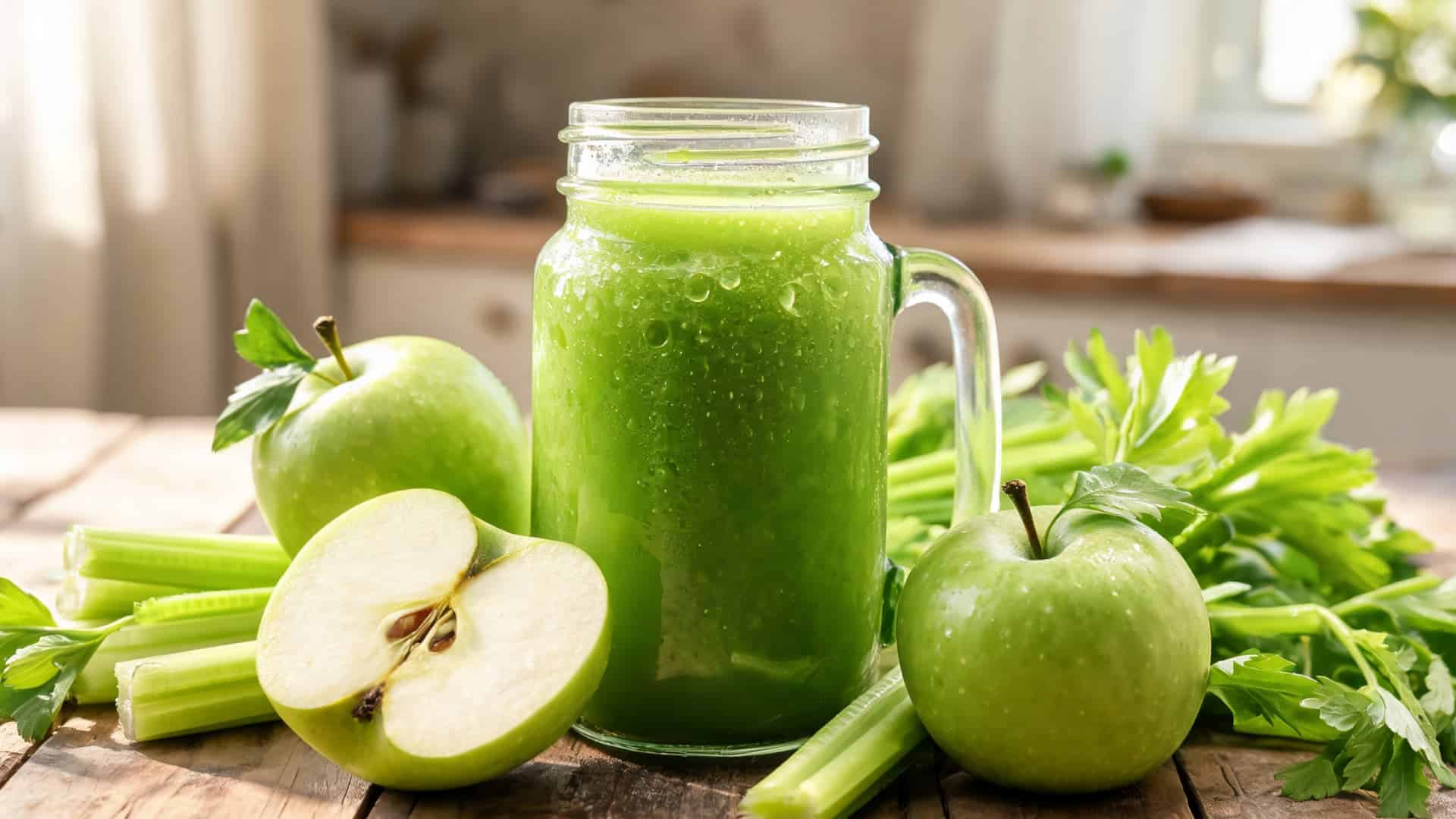
Celery is a reliable low-sugar juice base. Two stalks provide potassium, folate, and about 10 milligrams of Vitamin C at roughly 10 calories total. Paired with two apples at around 190 calories combined, this is one of the lower-sugar green juice combinations on this list while still tasting noticeably sweet.
Prep Time: 5 to 6 minutes.
Ingredients: 2 apples, 2 celery stalks.
Method:
- Wash apples and celery thoroughly under cold running water to remove any dirt, residue, or impurities.
- Core the apples and chop both apples and celery into medium-sized, even pieces for easier blending or juicing.
- Add celery first into the blender or juicer to create a strong, hydrating liquid base.
- Add apples and blend or juice until the mixture becomes smooth and fully combined.
- Add a small splash of water if needed to help blending and adjust the consistency.
- Blend for a few extra seconds if required to fully break down fibers and improve texture.
- Strain if preferred for a lighter, smoother juice without pulp.
- Serve immediately to preserve maximum freshness, nutrients, and natural flavor.
Optional swaps: Add half a cucumber for extra hydration, or half a lemon for a sharper flavor.
Nutritional profile: Fiber, Vitamin K, potassium, folate, antioxidants.
11. Spinach Kiwi Green Juice
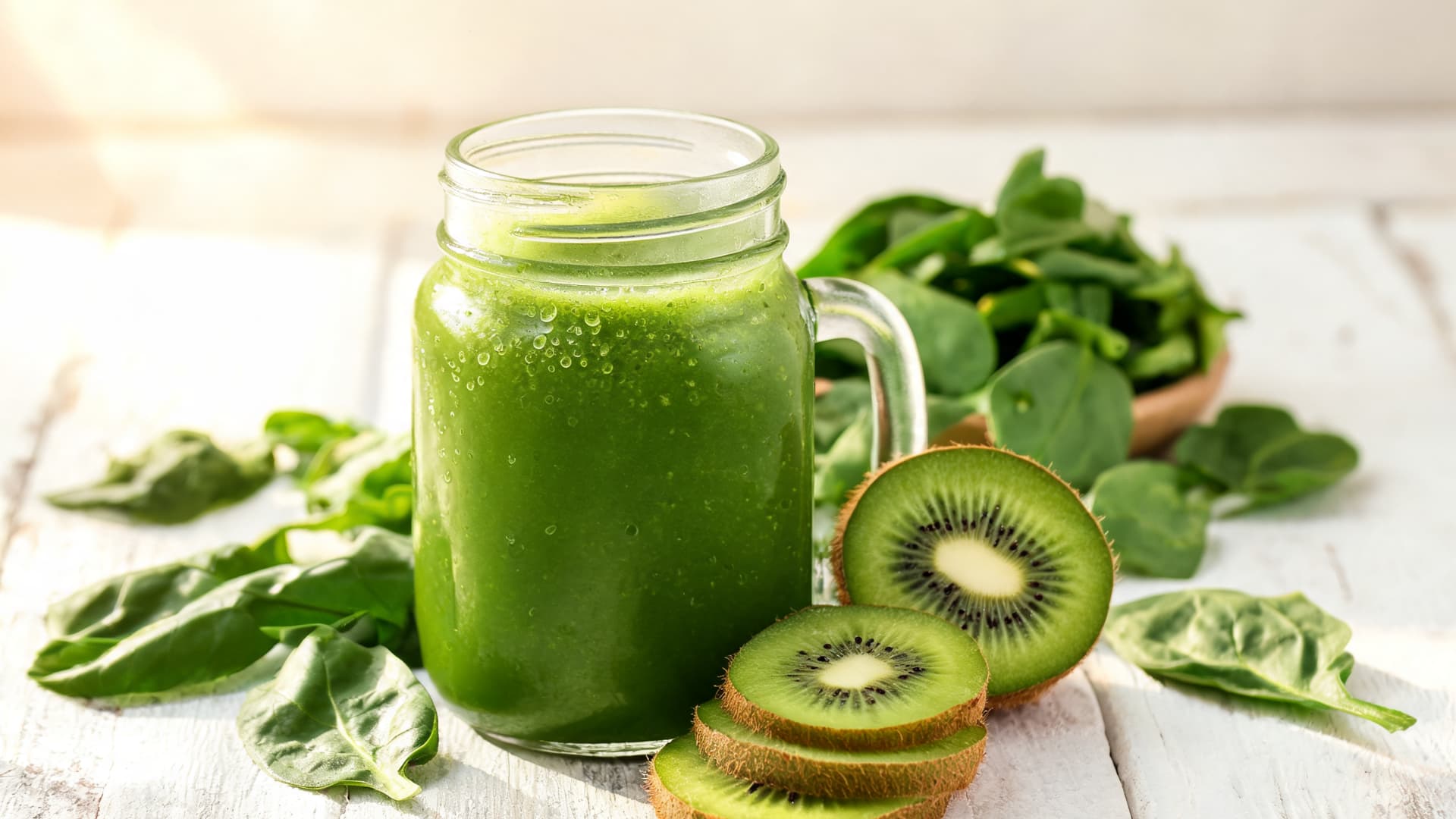
Kiwi is one of the most Vitamin C-dense fruits available. A single green kiwi provides about 64 milligrams of Vitamin C per 100 grams, more per gram than an orange. Two kiwis and two cups of spinach together supply Vitamin C, Vitamin K, folate, and chlorophyll in a single glass that takes under six minutes to prepare.
Prep Time: 5 to 6 minutes.
Ingredients: 2 kiwis, 2 cups fresh spinach, 1/2 green apple (optional for sweetness).
Method:
- Wash spinach thoroughly under cold running water to remove dirt, grit, or residue from the leaves.
- Peel the kiwis and chop them into medium-sized pieces for easier blending or juicing.
- Core the apple if using and cut it into small chunks to ensure smoother blending and extraction.
- Add spinach first to the blender or juicer to create a smooth, nutrient-rich base.
- Add kiwi and apple, then blend or juice until the mixture becomes fully smooth and evenly green.
- Blend for a few extra seconds if needed to break down any remaining fibrous bits.
- Strain if preferred for a lighter texture and a smoother drinking experience.
- Serve immediately to preserve maximum freshness, nutrients, and natural flavor.
Optional swaps: Replace the apple with half a cucumber for a lower-sugar, more hydrating version.
Nutritional profile: Vitamin C, Vitamin K, chlorophyll, folate, antioxidants.
12. Beet Berry Antioxidant Juice
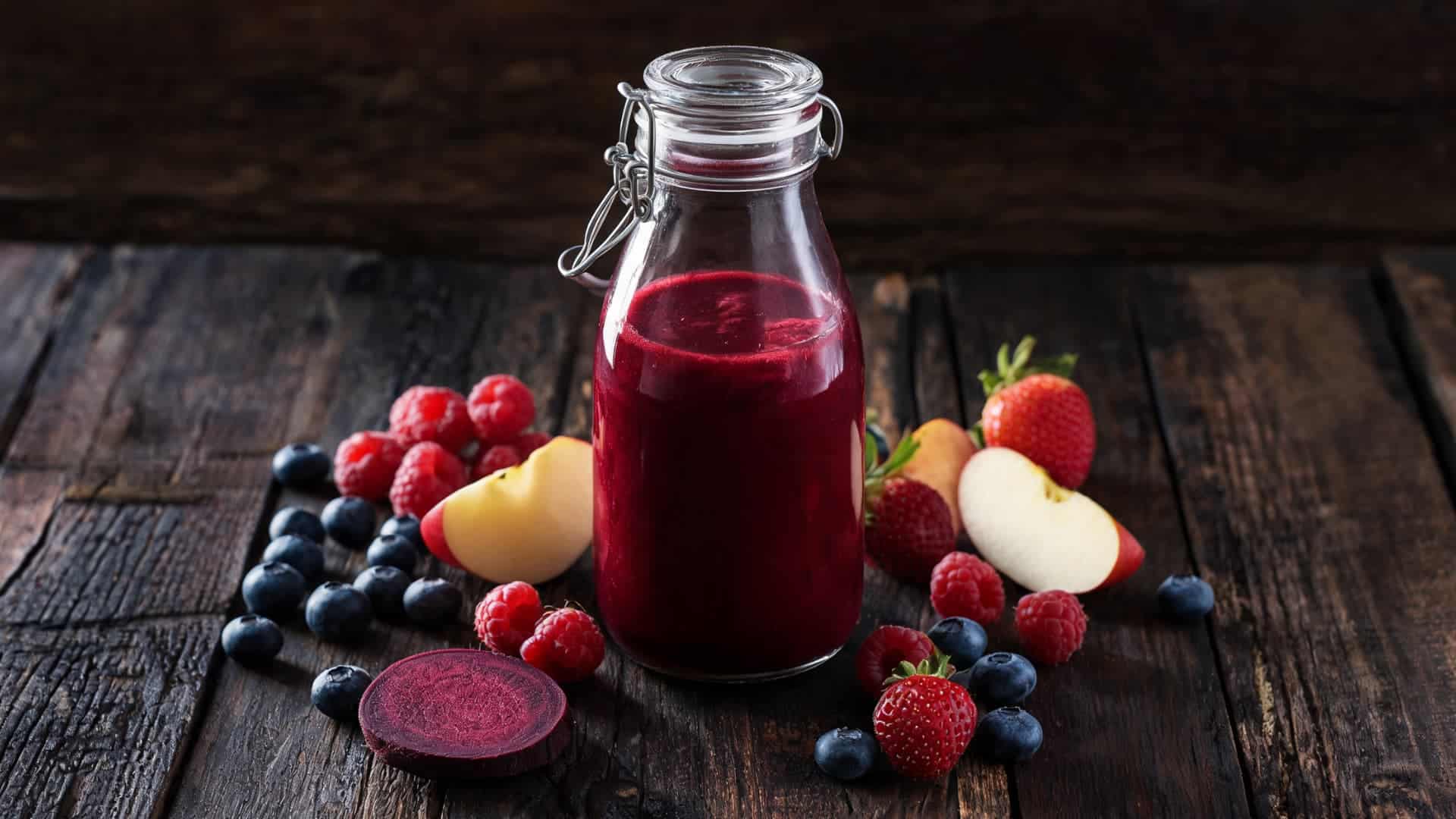
Anthocyanins from the berries and betalains from the beet make this one of the highest antioxidant-density combinations in this list. The ORAC value of blueberries alone runs around 4,669 units per 100 grams. Add in the beet’s folate and iron and the green apple’s quercetin, and you get a recipe that earns its reputation as a recovery and blood health option.
Prep Time: 6 to 7 minutes.
Ingredients: 1 beet, 1 cup mixed berries (strawberry, blueberry, raspberry), 1 green apple.
Method:
- Wash beet, berries, and apple thoroughly under cold running water to remove dirt, residue, and impurities.
- Peel the beet carefully and chop it into small cubes for easier blending or efficient juicing.
- Core the apple and cut it into medium-sized pieces to ensure smoother blending and better extraction.
- Add the berries first to the blender to create a soft, juicy liquid base.
- Add the beet and apple, then blend or juice until the mixture is smooth, thick, and deep red.
- Blend for a few extra seconds, if needed, to fully break down the fibrous texture and improve consistency.
- Strain if preferred for a lighter, smoother juice without pulp.
- Serve immediately to preserve maximum antioxidant strength, freshness, and natural flavor.
Optional swaps: Add half a lemon for acidity, or half an inch of ginger for added digestive support.
Nutritional profile: Anthocyanins, iron, folate, betalains, quercetin, Vitamin C.
13. Orange Carrot Immunity Juice
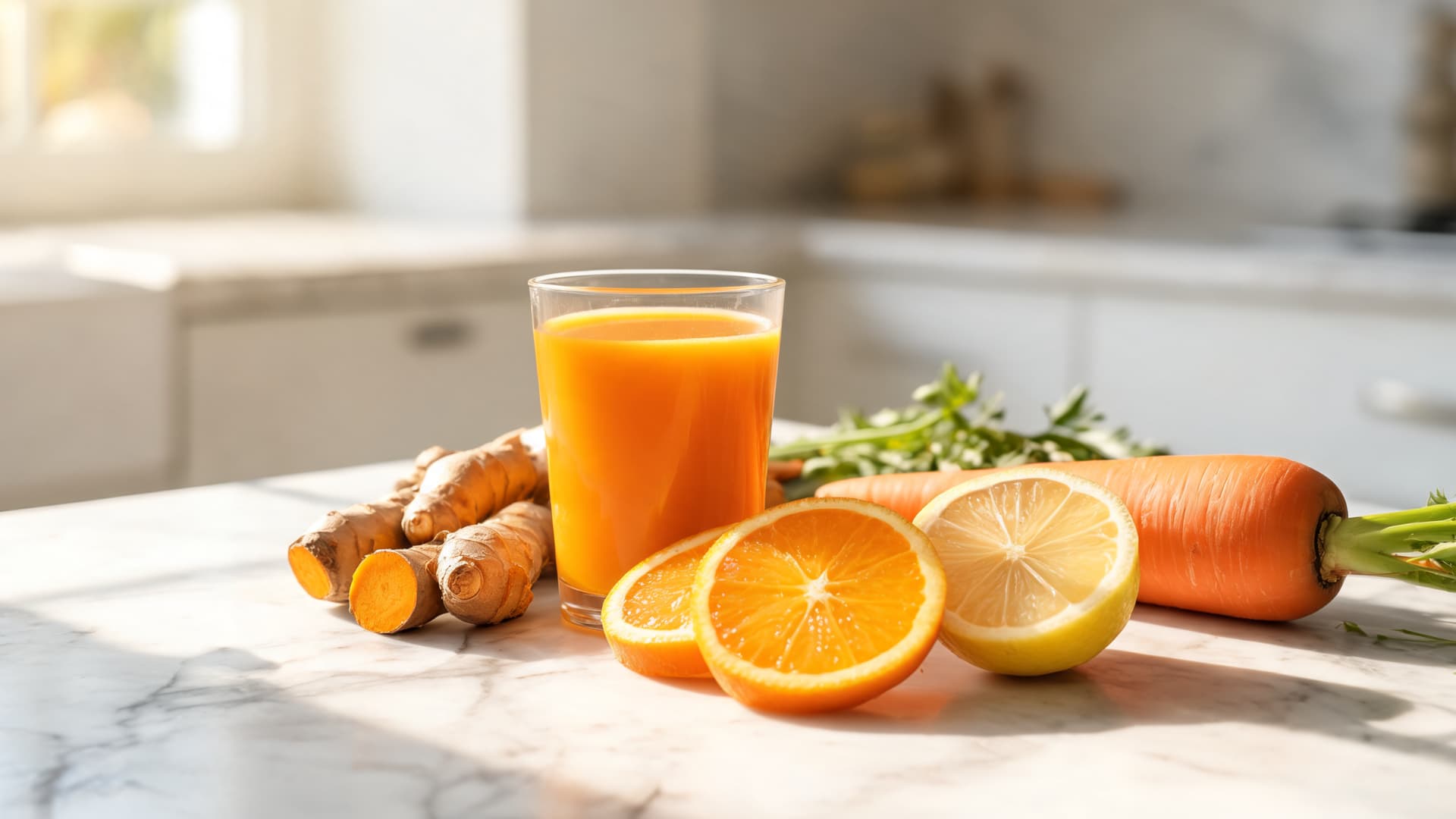
Three oranges provide around 210 milligrams of Vitamin C, nearly 2.5 times the daily recommended intake. Two to three carrots add beta-carotene that converts to Vitamin A, essential for mucosal immunity, the first line of physical defense against pathogens. The optional ginger brings gingerol, which is associated with reduced pro-inflammatory cytokine activity.
Prep Time: 5 to 6 minutes.
Ingredients: 3 oranges, 2 to 3 carrots, 1/2 inch fresh ginger (optional).
Method:
- Wash oranges and carrots thoroughly under cold running water to remove any dirt, residue, or impurities.
- Peel the oranges completely to reduce bitterness and improve the natural sweetness of the juice.
- Scrub the carrots well and chop them into small, even pieces for easier blending or juicing.
- Add carrots first into the blender or juicer to build a strong, nutrient-rich base.
- Add oranges and ginger, then blend or juice until the mixture becomes smooth and fully combined.
- Blend for a few extra seconds if needed to fully break down fibers and improve texture.
- Strain if preferred for a lighter consistency and smoother drinking experience.
- Serve immediately to preserve maximum freshness, flavor, and nutritional value.
Optional swaps: Add a quarter teaspoon of turmeric for broader immune support, or swap ginger for lemon for a sharper citrus flavor.
Nutritional profile: Vitamin C, beta-carotene, Vitamin A, antioxidants, gingerol.
14. Cucumber Lemon Cooler
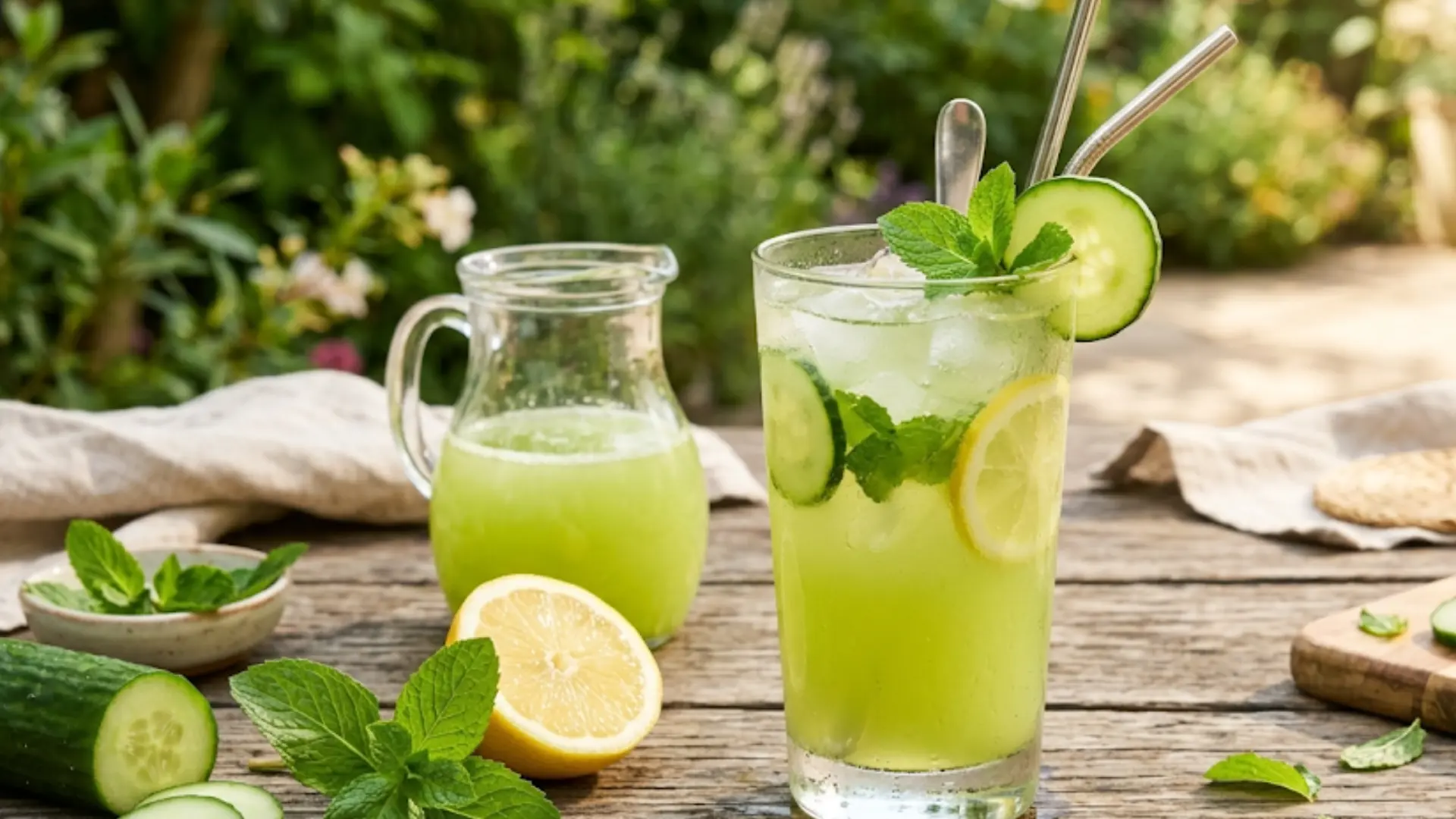
A three-ingredient recipe that works because the ingredients are complementary, not redundant. Cucumber adds volume and hydration. Lemon adds Vitamin C and acidity that brightens the flavor. Mint, if included, adds menthol compounds that produce a genuine cooling sensation, useful during high-heat days or after exercise.
Prep Time: 4 to 5 minutes.
Ingredients: 1 cucumber, 1 lemon, a few mint leaves (optional).
Method:
- Wash cucumber, lemon, and mint leaves thoroughly under cold running water to remove dirt, residue, and impurities.
- Peel the lemon completely to reduce bitterness and improve the smooth, refreshing taste.
- Chop the cucumber into medium-sized chunks for easier blending or juicing.
- Add mint leaves to the blender first to release their natural oils and enhance freshness.
- Add cucumber and lemon, then blend or juice until the mixture becomes smooth and light.
- Blend for a few extra seconds, if needed, to fully break down the ingredients and improve texture.
- Strain if preferred for a lighter, clearer juice without pulp.
- Serve chilled immediately for maximum cooling, freshness, and hydration.
Optional swaps: Swap lemon for lime, or add fresh basil for a more aromatic profile.
Nutritional profile: Hydration, Vitamin C, electrolytes, menthol cooling compounds.
15. Mango Turmeric Glow Juice
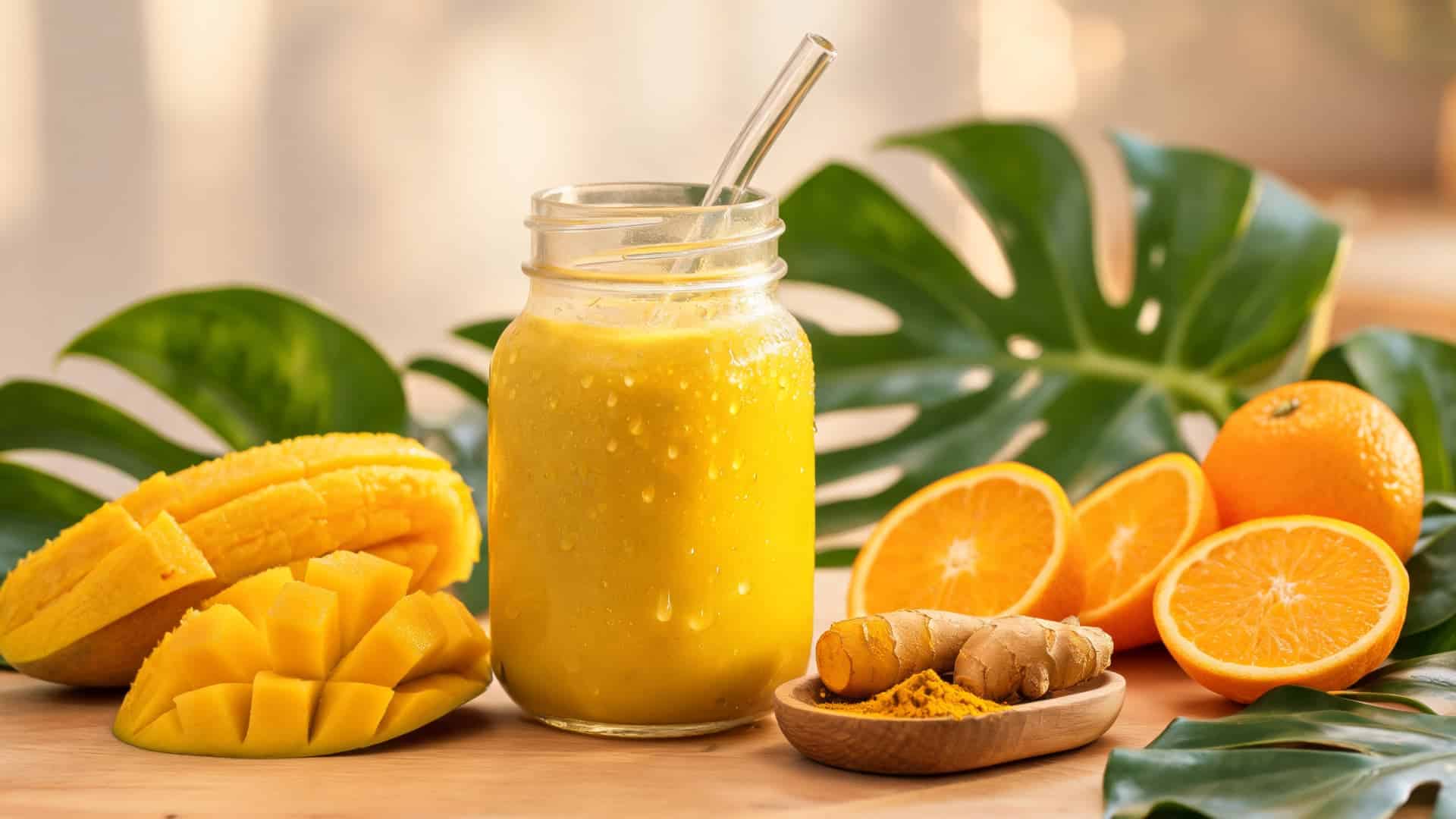
Curcumin, the active compound in turmeric, is poorly absorbed on its own, with bioavailability below 1% in most conditions. Adding black pepper dramatically improves this.
One ripe mango also contributes around 60 milligrams of Vitamin C and 168 micrograms of beta-carotene, making it a useful skin-health recipe from a micronutrient standpoint, not a marketing one.
Prep Time: 6 to 7 minutes.
Ingredients: 1 ripe mango, 1 inch fresh turmeric root, 1/2 orange (optional for sweetness).
Method:
- Wash mango, turmeric, and orange thoroughly under cold running water to remove dirt, residue, and impurities.
- Peel the mango and cut it into medium-sized chunks for easier blending and a smoother texture.
- Peel the turmeric carefully and slice it into thin pieces to improve juice extraction and release its active compounds.
- Add mango first into the blender to create a smooth, creamy base for the juice.
- Add turmeric and orange, then blend or juice until the mixture becomes creamy, golden, and well combined.
- Blend for a few extra seconds if needed to fully break down fibers and improve consistency.
- Strain if preferred for a lighter texture and smoother drinking experience.
- Serve immediately to preserve maximum nutrients, freshness, and natural flavor.
Optional swaps: Add half a cup of pineapple for extra sweetness, or a quarter inch of fresh ginger for additional anti-inflammatory compounds.
Nutritional profile: Curcumin, Vitamin C, beta-carotene, mangiferin, antioxidants.
16. Apple Beet Energy Juice
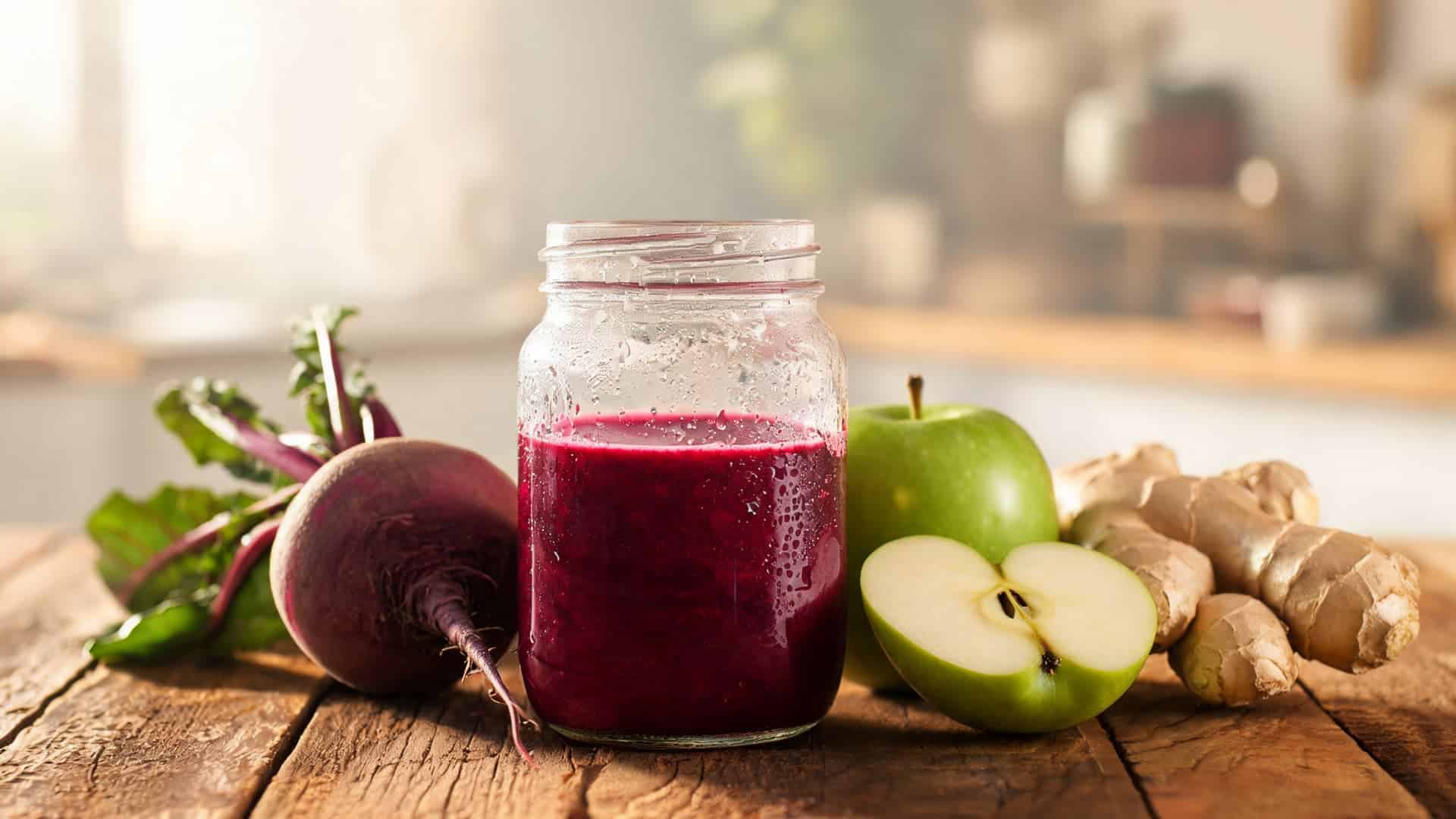
Two apples provide natural sugars in the form of fructose, around 38 grams total. Combined with beet nitrates, this gives you an immediate energy source alongside the slower vasodilation effect of nitric oxide.
This is a pre-exercise recipe that functions differently from the pure beet-carrot combination. The apple’s sugar hits faster.
Prep Time: 5 to 6 minutes.
Ingredients: 1 beet, 2 apples, 1/2 inch fresh ginger (optional).
Method:
- Wash beets and apples thoroughly under cold running water to remove dirt, residue, and any surface impurities.
- Peel the beet carefully and chop it into small, even cubes for easier blending or juicing.
- Core the apples and cut them into medium-sized chunks to ensure smoother blending and better extraction.
- Add beet first into the blender or juicer to create a strong, nutrient-rich base.
- Add apples and ginger, then blend or juice until the mixture becomes smooth and fully combined.
- Blend for a few extra seconds if needed to fully break down fibers and improve texture.
- Serve immediately to preserve maximum freshness, natural flavor, and energy-boosting benefits.
Optional swaps: Add half a lemon for a fresher taste, or one celery stalk for a lower-sugar, more hydrating version.
Nutritional profile: Iron, dietary nitrates, natural fructose, antioxidants, Vitamin C.
17. Tropical Detox Blend
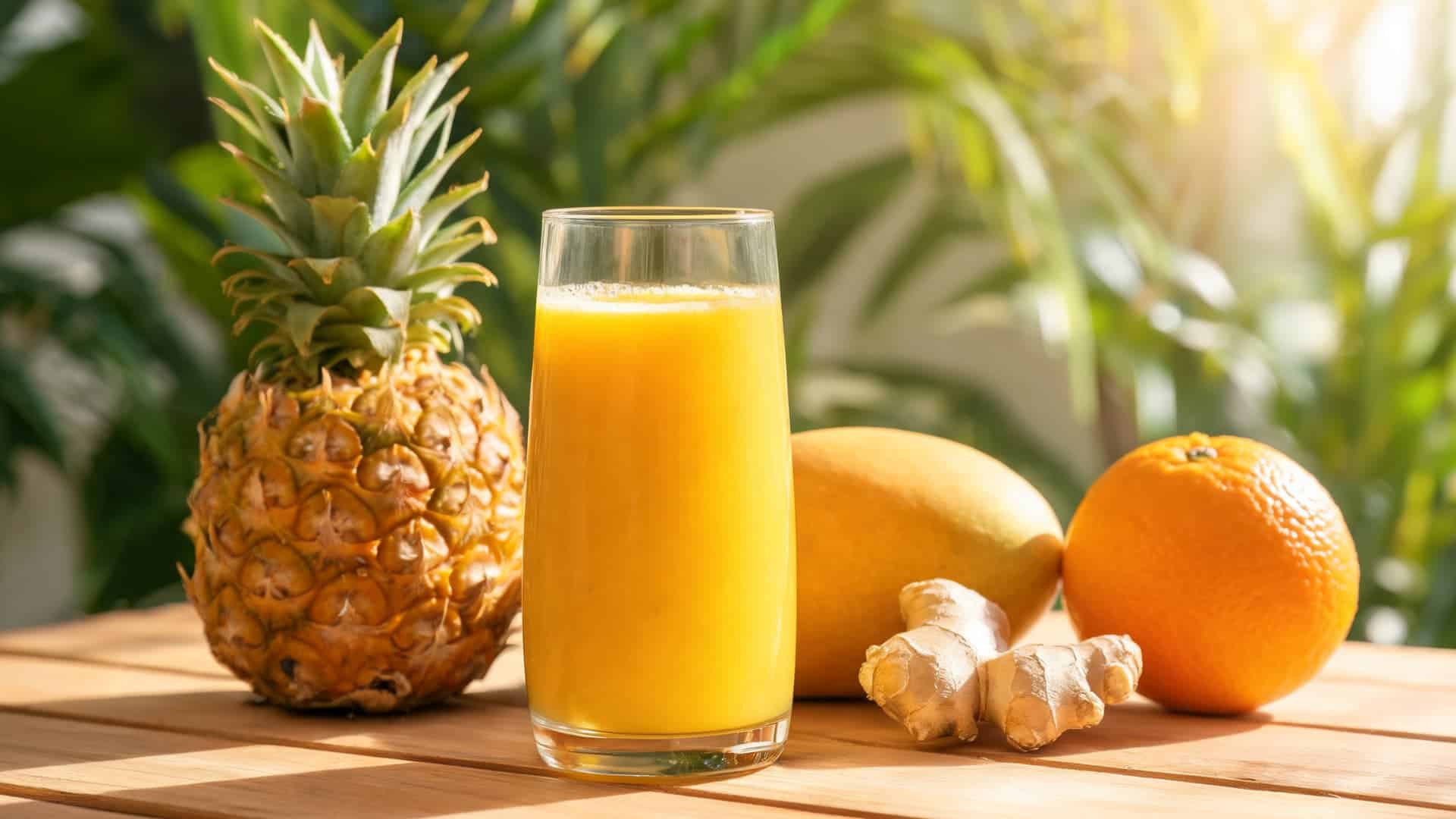
The highest-sugar recipe in this collection. One cup of pineapple, one mango, and one orange together deliver roughly 60 grams of natural fruit sugar. Worth knowing before you make it a daily habit, particularly if you are managing blood sugar.
As an occasional post-workout or weekend recipe, it is nutritionally strong: bromelain from pineapple, mangiferin from mango, and Vitamin C from both orange and pineapple make this a solid antioxidant delivery vehicle.
Prep Time: 6 to 8 minutes.
Ingredients: 1 cup pineapple, 1 mango, 1 orange, 1/2 inch fresh ginger (optional).
Method:
- Wash all fruits thoroughly under cold running water to remove dirt, residue, and surface impurities.
- Peel the pineapple, mango, and orange completely, removing any tough skins and seeds if present.
- Chop all fruits into medium-sized chunks to make blending or juicing easier.
- Add the pineapple first to the blender to create a naturally juicy, smooth base.
- Add mango, orange, and ginger, then blend or juice until the mixture becomes fully smooth and tropical.
- Blend for a few extra seconds, if needed, to fully break down the fibrous texture and improve consistency.
- Strain if preferred for a lighter texture and a smoother drinking experience.
- Serve immediately, chilled if possible, to preserve maximum freshness, flavor, and nutrient quality.
Optional swaps: Add fresh mint for a cooling note, or squeeze in lime juice for a tangier finish.
Nutritional profile: Vitamin C, bromelain, mangiferin, digestive enzymes, antioxidants.
How to Match Detox Juice Recipes to Your Goal
Not every detox juice recipe on this list serves the same purpose. Here is how to match the recipe to what you actually want from it.
For daily hydration and general nutrition, the Cucumber Mint Refresher, Classic Green Cleanse, and Cucumber Lemon Cooler are the most sustainable options. Low in sugar, mild in flavor, and quick to prepare.
For circulation and natural energy before exercise, the Beet and Carrot Liver Support Juice and the Apple Beet Energy Juice are the most targeted. The nitrate content in beet root is well-documented for its role in improving blood flow and reducing the oxygen cost of submaximal exercise, according to a 2012 meta-analysis in the Journal of the Academy of Nutrition and Dietetics.
For immunity, the Orange Carrot Immunity Juice and Citrus Ginger Morning Cleanser deliver the highest concentrations of Vitamin C and beta-carotene per serving.
For digestion after a heavy meal, the Pineapple Ginger Digest is the most targeted option because of the bromelain content. The detox smoothie recipes also work well if you prefer a fiber-rich alternative that keeps you fuller longer.
For weight management specifically, prioritize the lower-sugar options: Classic Green Cleanse, Apple Celery Cleanse, Cucumber Mint Refresher, and Spinach Kiwi Green Juice. Using a blender rather than a juicer for these keeps the fiber in, which slows sugar absorption and extends satiety.
How to Get the Most from Your Detox Juice Recipes
Here is what the research and practical experience agree on for maximizing the nutritional return from these recipes.
Use produce within two to three days of purchase. Nutrient degradation begins at harvest, and Vitamin C in particular drops significantly within a week of storage even under refrigeration. Fresh is not just better for flavor; it is better for nutritional yield.
Drink immediately after making. Oxidation begins the moment juice is exposed to air. A 2017 study in Food Science and Technologymeasured Vitamin C loss of up to 40% in unpasteurized citrus juice stored for 24 hours at 4 degrees Celsius. If you need to prep in advance, store juice in airtight glass containers filled to the top to minimize oxygen contact, and consume within 24 hours.
Balance sweet fruit with vegetables. The Tropical Detox Blend and Carrot Orange Glow Juice taste great, but their sugar content means they work better as occasional recipes rather than daily staples. The general guideline I use: aim for a juice that is at least 60% vegetable by volume and no more than 40% fruit.
Include a fat source nearby. Fat-soluble vitamins like Vitamin A and Vitamin K from recipes containing carrot and spinach are absorbed significantly better when consumed alongside dietary fat. Eating a small amount of avocado, nuts, or olive oil around the same time as your juice improves the absorption of those nutrients in ways that drinking juice alone does not.
For people following a broader liver support protocol, the liver cleanse juice structured three-day approach that uses several of these recipes in a specific sequence.
Common Mistakes That Reduce the Value of Detox Juice Recipes
Four specific errors come up consistently when people start incorporating these recipes and do not get the results they expected.
Using fruit-dominant recipes every day. A green juice that is 70% apple and orange juice is nutritionally comparable to fruit juice, with a high sugar load and lower vegetable micronutrient density. Rotate toward vegetable-forward recipes for daily use and reserve the sweeter combinations for post-workout or occasional use.
Replacing meals rather than supplementing them. A single 16-ounce serving of most detox juice recipes supplies between 80 and 200 calories, almost no protein, and minimal fat. This does not replace a balanced meal. Using juice as a complete meal replacement over multiple days will cause caloric and protein deficits that produce fatigue, not improved wellness.
Storing juice in plastic or partially filled containers. Oxygen and light degrade nutrients faster than refrigerator temperature alone can compensate for. Glass containers filled to the brim and sealed immediately are the correct storage method.
Skipping low-quality produce without organic options. Conventionally grown spinach, strawberries, and apples regularly appear on the Environmental Working Group’s high-pesticide lists. If organic is not available for these specifically, rinse produce thoroughly under cold running water for at least 30 seconds and consider peeling where appropriate.
Frequently Asked Questions
Can detox juice recipes help with weight loss?
They can support weight management when used as low-calorie, nutrient-dense additions to a reduced-calorie diet, particularly the vegetable-forward recipes like the Classic Green Cleanse and Apple Celery Cleanse. The mechanism is straightforward: replacing higher-calorie snacks or drinks with a 100 to 150-calorie juice reduces total daily calorie intake. However, juice alone does not produce weight loss. The dietary context around the juice is what determines the outcome.
What is the best detox juice recipe for beginners?
The Carrot Orange Glow Juice is the most beginner-friendly recipe in this collection. Two ingredients, naturally sweet, no bitterness, and no straining required unless you prefer a smoother texture. It also delivers one of the highest vitamin yields per minute of preparation time. Once comfortable with the process, the Classic Green Cleanse is the logical next step toward vegetable-dominant recipes.
When is the best time to drink detox juice?
Morning, before eating, is the most commonly recommended timing, and the reasoning is sound. Without competing food in the stomach, the water-soluble nutrients in juice, particularly Vitamin C and B vitamins, absorb quickly and without competition from fiber or fat slowing the process. That said, any time of day is better than not at all. Mid-afternoon is a reasonable alternative if mornings are too compressed.
How long can you store homemade detox juice?
Up to 24 hours in an airtight glass container filled to the top and refrigerated. After 24 hours, Vitamin C loss becomes significant and bacterial growth is a concern. Freezing in ice cube trays extends usable life to about two weeks. Thaw in the refrigerator overnight and consume within 24 hours of thawing. Do not refreeze after thawing.
Are detox juice recipes safe for people with diabetes?
Fruit-dominant recipes carry a meaningful glycemic load and should be approached cautiously by people managing blood sugar. The lower-sugar options in this list, specifically the Cucumber Mint Refresher, Cucumber Lemon Cooler, and the Lemon Ginger Detox Shot, are more appropriate starting points. Anyone managing diabetes should consult a registered dietitian before adding regular juice to their diet, as even natural fruit sugars affect glucose levels.
Bringing It All Together
Detox juice recipes are a simple, enjoyable way to bring fresh nutrients and hydration into your daily routine. I’ve shared combinations for everyday use and goal-based benefits so you can experiment and find what works for you.
By focusing on fresh ingredients, proper prep, and mindful consumption, you can maximize flavor and wellness impact. I encourage you to try these juices, adjust them to your taste, and see how they make you feel.
Share your favorite recipes, comment with your results, or explore more tips in related blogs to continue building healthy habits.