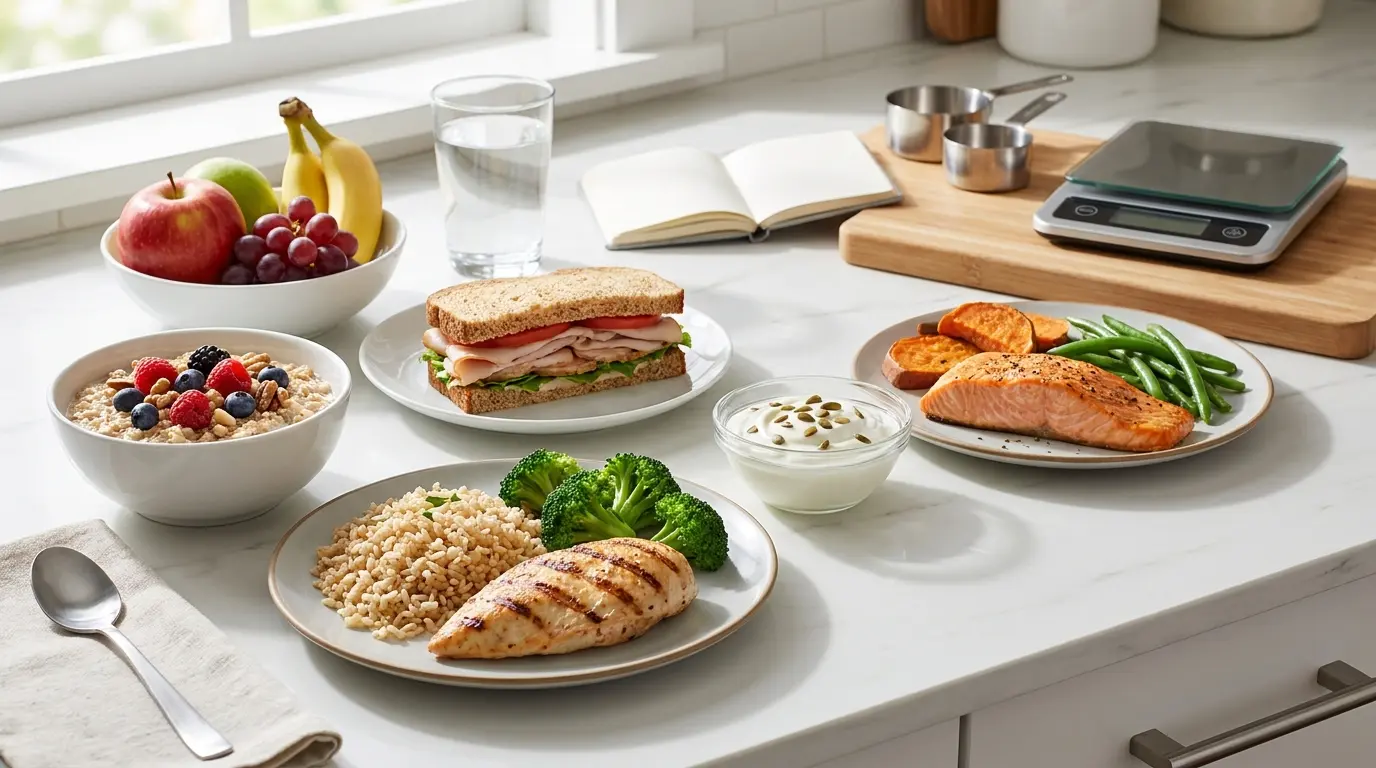

Planning meals around 1200 calories can feel confusing when hunger, portion sizes, and daily routines all converge at once. A 1200-calorie meal plan gives you a clear way to organize your meals and snacks for breakfast, lunch, and dinner without turning every bite into guesswork.
You get simple meal ideas built around lean protein, fiber-rich carbs, fruits, vegetables, and measured fats, so the day feels balanced instead of random. Having put together plans like this for friends juggling office lunches and school pickups, I’ve found that structure matters most when calories are limited, because one small choice can change the whole day.
The sections ahead break down what to eat, how to portion meals, which snacks fit best, and how to keep the plan practical with foods found in regular U.S. grocery stores for busy weeks at home.
| Disclaimer: This article is for informational and educational purposes only. It does not constitute medical advice. A 1200-calorie meal plan is a significant calorie restriction that is not appropriate for everyone. Always consult a qualified healthcare provider before starting any new diet or nutrition program, particularly one involving a large calorie deficit. |
Science Behind 1200 Calories & Weight Loss
Weight loss occurs when the body remains in a calorie deficit, meaning it burns more calories than it consumes. Your daily calorie needs, or TDEE, depend on age, sex, height, weight, activity, and metabolism. For many adults, 1200 calories creates a deficit, but the size of that deficit varies from person to person.
A safe, realistic result is often about 1 to 2 pounds per week, a pace the CDC links to better long-term results, though early changes may include water weight. At 1200 calories, macronutrients matter because every bite has to work harder.
Protein helps protect muscle and control hunger. Carbs give energy for daily tasks and workouts. Fats support hormones, fullness, and nutrient absorption. The goal is not just fewer calories, but balanced meals that support the body during everyday routines and steady weight-loss goals.
What a Balanced 1200 Calorie Day Requires
At 1200 calories, every food choice needs to support fullness, energy, and basic nutrition. Eating 1200 calories from sugary snacks will affect the body very differently from eating 1200 calories from lean protein, vegetables that pack in fiber without many carbs, whole grains, fruit, and healthy fats.
The four nutrient groups below help make a 1200-calorie meal plan more balanced and easier to follow.
| Nutrient | Daily Target | Best Sources | Why It Matters |
|---|---|---|---|
| Protein | 70–90g | Chicken breast, turkey, eggs, tuna, salmon, Greek yogurt, cottage cheese, tofu, beans | Helps protect lean muscle, controls hunger, supports fullness, and makes lower-calorie meals more satisfying |
| Carbohydrates | 110–140g | Oats, brown rice, quinoa, sweet potato, whole wheat bread, berries, beans | Gives steady energy, supports daily movement, adds fiber, and helps prevent energy crashes during the day |
| Healthy Fats | 30–40g | Olive oil, avocado, peanut butter, almonds, walnuts, chia seeds | Supports hormones, helps absorb fat-soluble vitamins, and keeps meals filling when portions are measured carefully |
| Micronutrients | Half the plate from produce | Spinach, broccoli, zucchini, cucumber, bell peppers, carrots, berries, oranges | Adds vitamins, minerals, fiber, and meal volume without using too many calories |
When these four areas are covered, a 1200-calorie day feels more structured and less restrictive. If one is missing, hunger, low energy, or cravings can show up quickly.
The 7-Day 1200 Calorie Meal Plan: Full Breakdown
The plan below shows how a 1200-calorie day can look across a full week, using simple meals, steady protein, and easy grocery staples from U.S. stores.
Day 1: 1200 Calories | 85g Protein
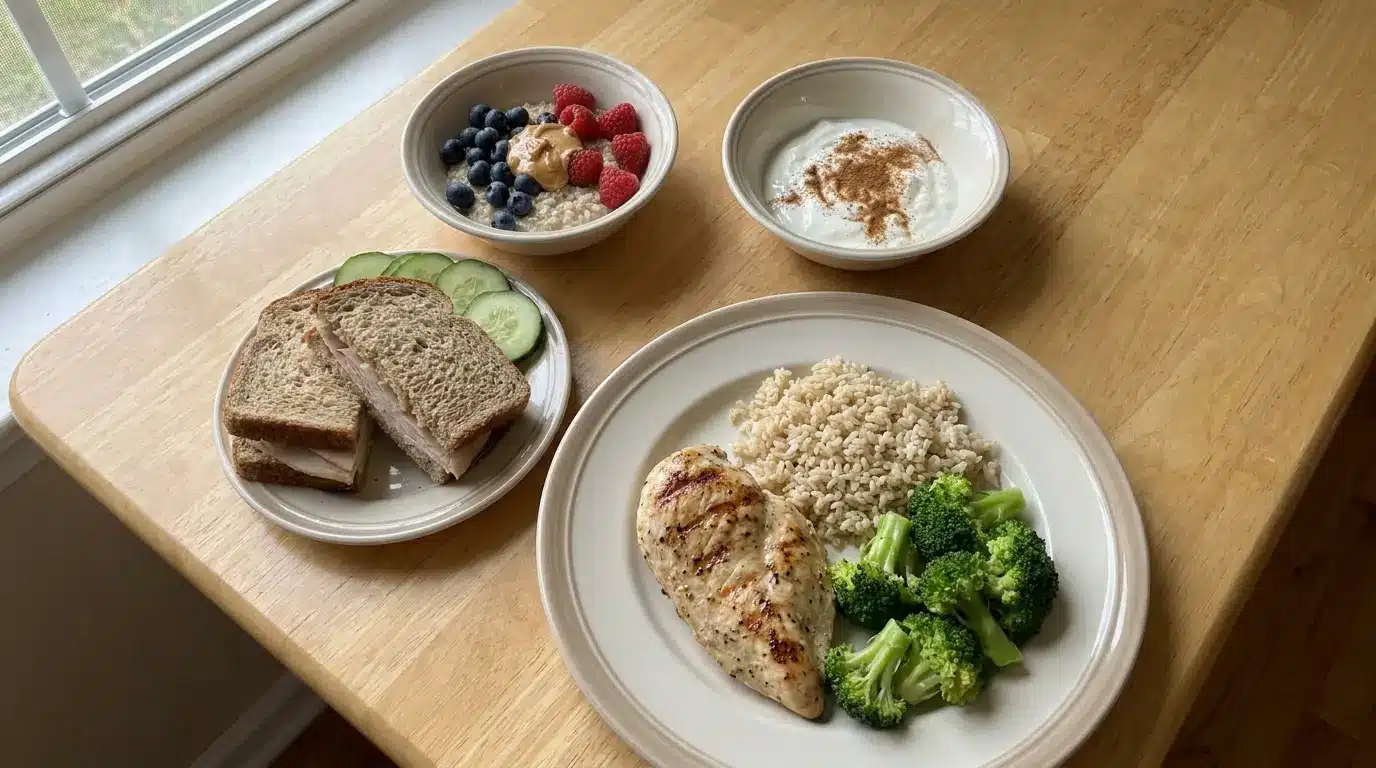
Day 1 keeps the meals simple, steady, and easy to follow. The oatmeal breakfast gives slow-digesting carbs and fiber, while peanut butter’s protein content per serving adds a small boost of fullness.
Lunch stays practical with a turkey sandwich that fits regular work or school routines. Greek yogurt adds protein without many calories, and dinner brings in lean chicken, brown rice, and broccoli for a balanced finish.
- Breakfast: ½ cup oats + ½ cup berries + 1 tbsp peanut butter + black coffee (310 cal)
- Lunch: Turkey sandwich with 3 oz turkey breast, whole wheat bread, lettuce, tomato, mustard + cucumber slices (360 cal)
- Snack: Plain Greek yogurt with cinnamon (150 cal)
- Dinner: Grilled chicken breast, ½ cup brown rice, steamed broccoli + 1 tsp olive oil (380 cal)
Day 2: 1200 Calories | 90g Protein
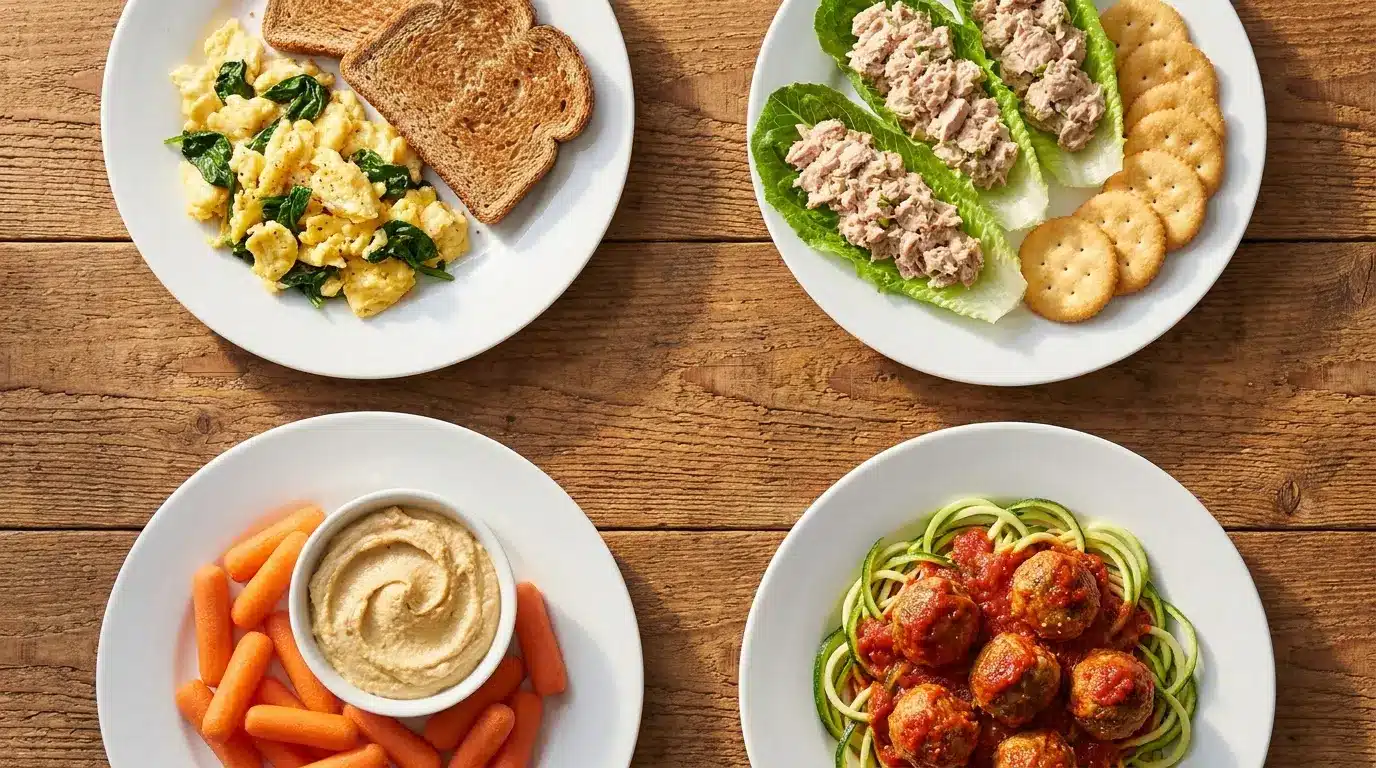
Day 2 is designed for people who want meals that feel light yet filling. Eggs at breakfast provide protein early, while spinach and toast add volume and steady energy. Tuna makes a high-protein lunch without much prep.
The hummus snack adds a creamy texture with carrot fiber, and turkey meatballs at dinner make the day feel more satisfying without heavy pasta.
- Breakfast: 2 scrambled eggs + spinach + 1 slice of whole wheat toast (300 cal)
- Lunch: Tuna lettuce wraps with 1 can of tuna in water, mustard, celery, + whole grain crackers (330 cal)
- Snack: Baby carrots + 3 tbsp hummus (150 cal)
- Dinner: Turkey meatballs with zucchini noodles, marinara sauce, and side salad (420 cal)
Day 3: 1200 Calories | 95g Protein
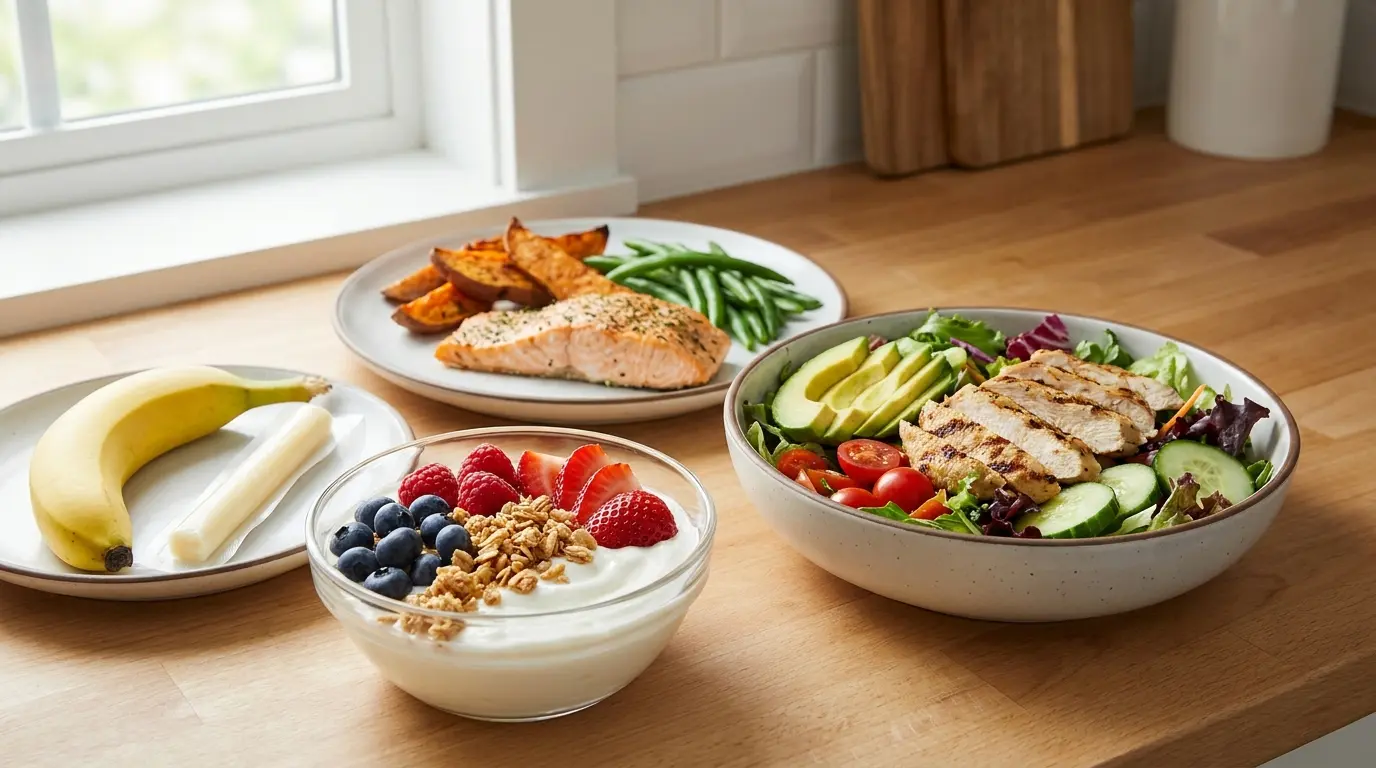
Day 3 adds more variety through dairy, poultry, fish, fruit, and vegetables. Greek yogurt keeps breakfast high in protein, while berries and granola add sweetness and crunch in controlled portions.
The chicken salad at lunch gives a fresh, high-volume meal with healthy fat from avocado. A banana and string cheese snack helps manage afternoon hunger, and salmon at dinner adds rich flavor, protein, and omega-3 fats.
- Breakfast: Greek yogurt bowl with berries + 2 tbsp low-sugar granola (290 cal)
- Lunch: Grilled chicken salad with lettuce, cucumber, tomato, avocado, and light dressing (350 cal)
- Snack: 1 small banana + light string cheese (130 cal)
- Dinner: Baked salmon, green beans, and roasted sweet potato (430 cal)
Day 4: 1200 Calories | 82g Protein
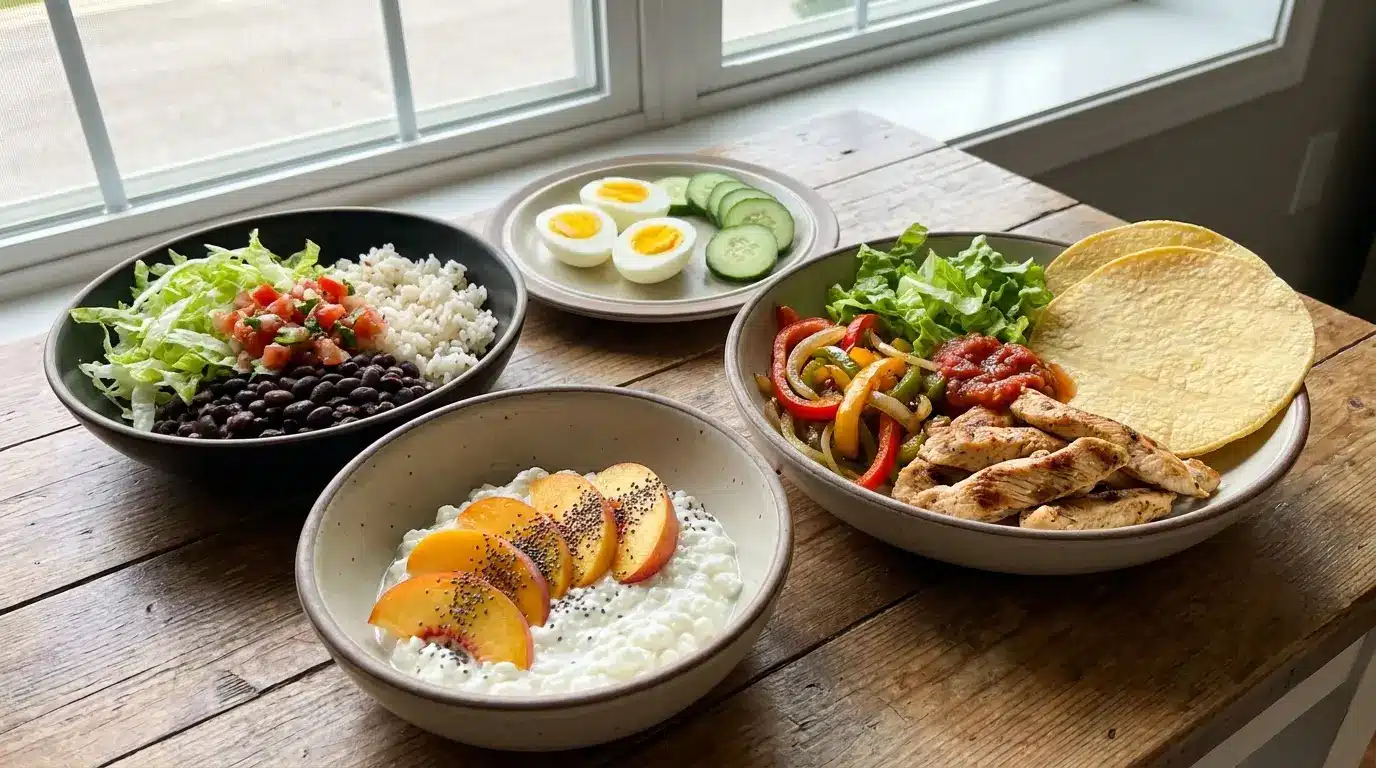
Day 4 includes more plant-based fiber while still keeping protein in place. Cottage cheese gives breakfast a creamy, filling base, protein-to-carb ratio of cottage cheese holds up well at this calorie level, and peaches make it naturally sweet. The black bean bowl at lunch adds slow-digesting carbs, fiber, and texture.
A hard-boiled egg keeps the snack simple, while the chicken fajita bowl brings bold flavor from peppers, onions, salsa, and seasoning without relying on high-calorie toppings.
- Breakfast: Cottage cheese with sliced peaches + chia seeds (300 cal)
- Lunch: Black bean bowl with ½ cup brown rice, lettuce, salsa, and bell peppers (360 cal)
- Snack: 1 hard-boiled egg + cucumber slices (150 cal)
- Dinner: Chicken fajita bowl with peppers, onions, lettuce, salsa, and 1 small corn tortilla (390 cal)
Day 5: 1200 Calories | 100g Protein
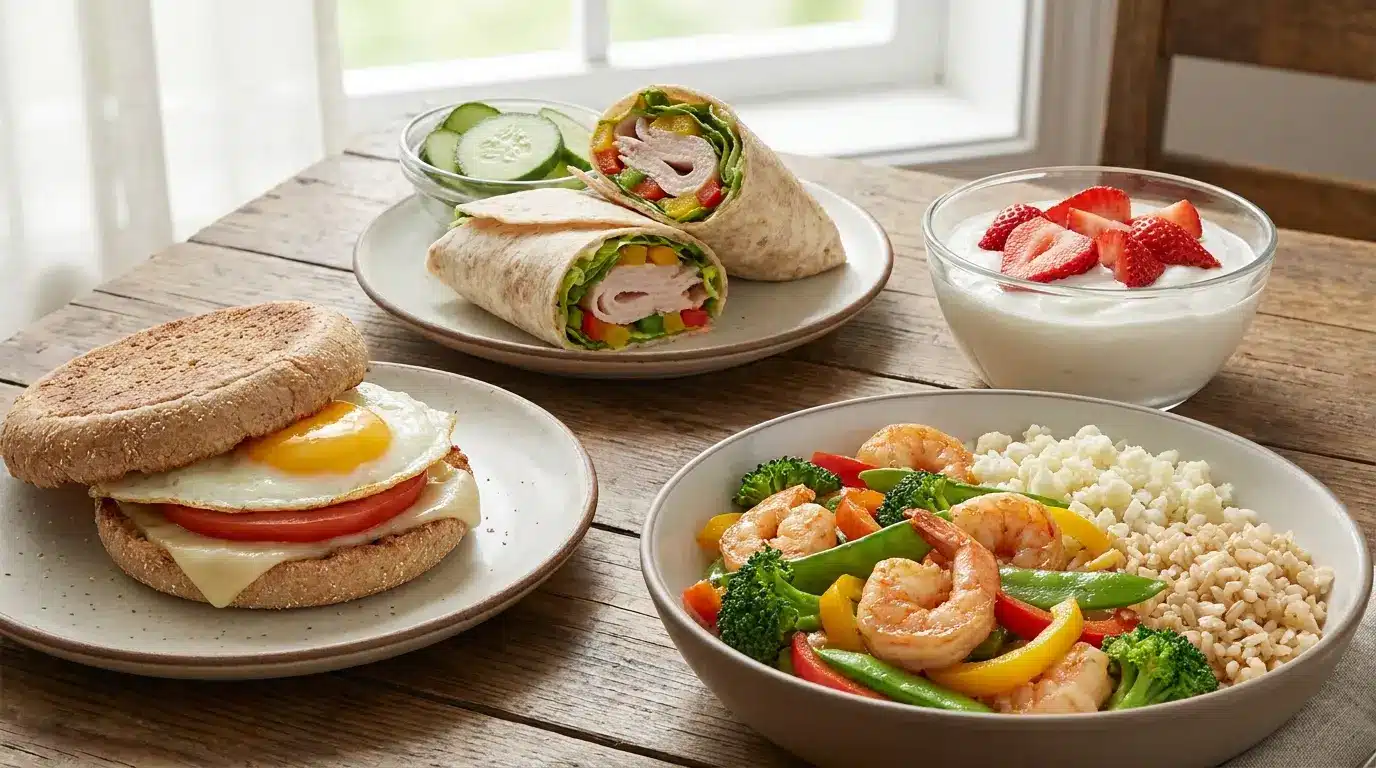
Day 5 is the strongest protein day in the plan, which can help if hunger tends to build later in the week. The English muffin breakfast feels familiar but stays portion-controlled. A turkey wrap makes lunch quick and easy to pack.
Greek yogurt with strawberries adds protein and freshness between meals. Dinner uses shrimp because they are lean, fast to cook, and pair well with vegetables, cauliflower rice, and brown rice.
- Breakfast: Whole wheat English muffin with 1 egg, tomato, and light cheese (300 cal)
- Lunch: Turkey and veggie wrap with mustard + cucumber slices (330 cal)
- Snack: Greek yogurt cup + strawberries (150 cal)
- Dinner: Shrimp stir-fry with frozen mixed vegetables, cauliflower rice, garlic, and ½ cup brown rice (420 cal)
Day 6: 1200 Calories | 88g Protein
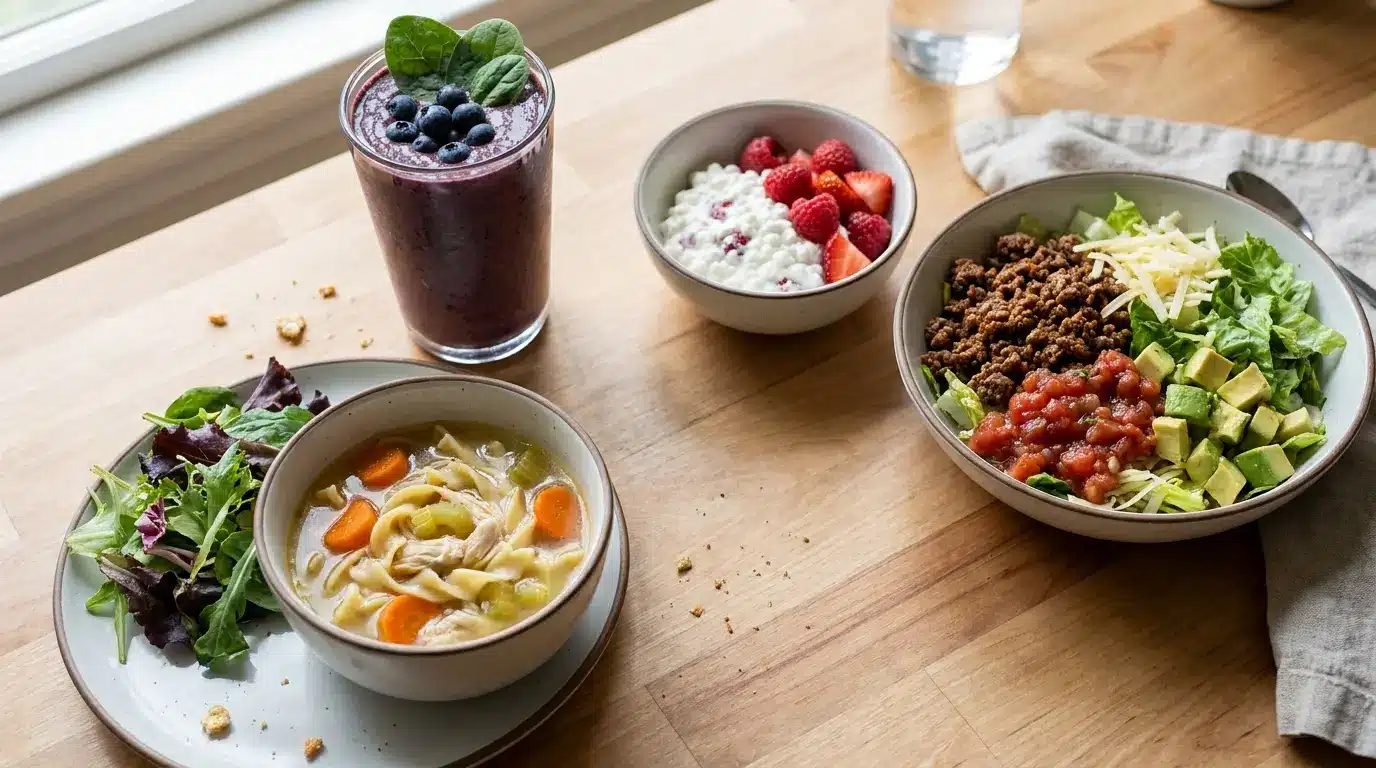
Day 6 focuses on low-effort meals that still feel balanced. The smoothie is useful on rushed mornings because it combines protein, fruit, greens, and liquid into one meal.
Chicken noodle soup at lunch gives warmth and comfort without feeling too heavy. Cottage cheese keeps the snack protein-rich, and the taco salad at dinner adds crunch, flavor, and healthy fat while keeping the meal lighter than a regular taco plate.
- Breakfast: Protein smoothie with unsweetened almond milk, berries, spinach, and protein powder (310 cal)
- Lunch: Chicken noodle soup with side salad and light dressing (340 cal)
- Snack: Cottage cheese with berries (150 cal)
- Dinner: Lean beef taco salad with lettuce, salsa, avocado, and a small amount of shredded cheese (400 cal)
Day 7: 1200 Calories | 85g Protein
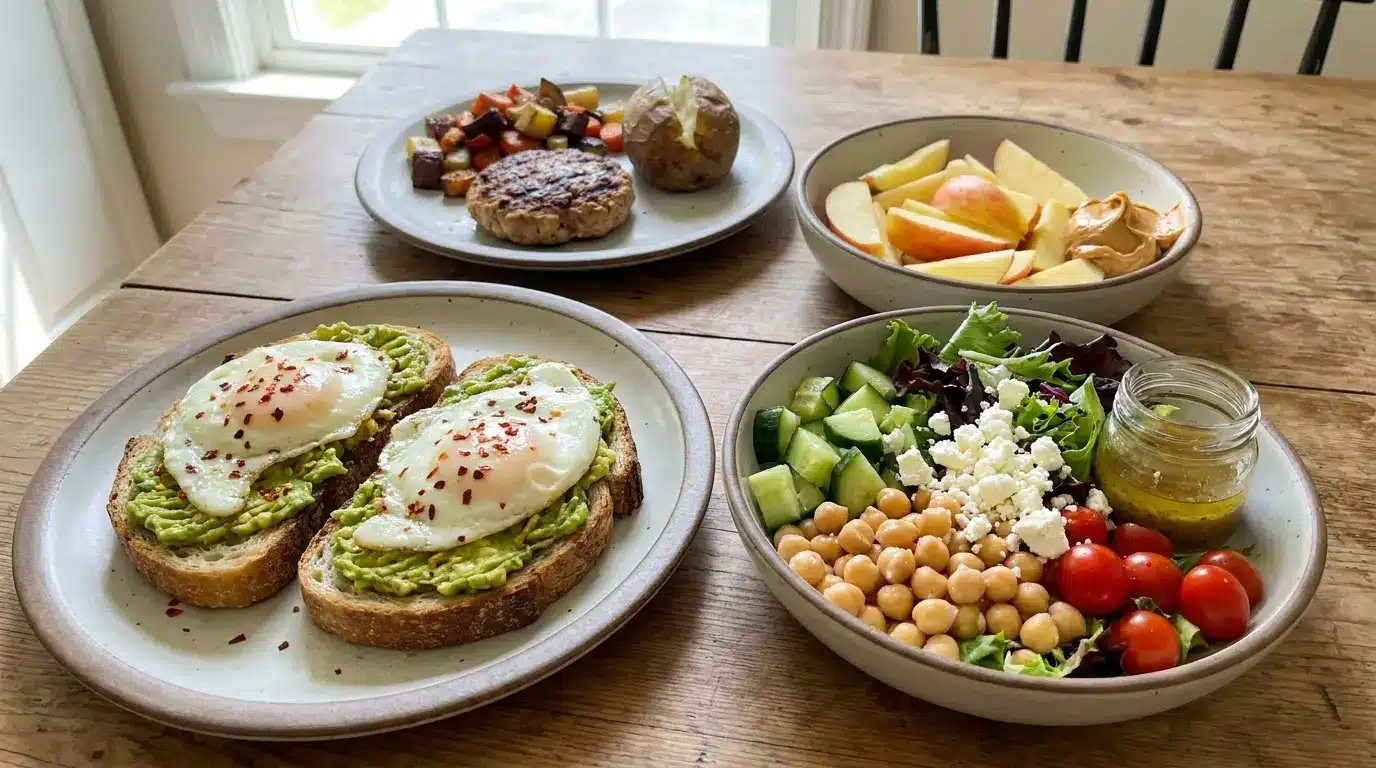
Day 7 ends the week with meals that feel flexible and easy to repeat. Avocado toast gives breakfast a mix of protein, carbs, and fat in a small portion. The chickpea salad bowl adds fiber and Mediterranean-style flavor through feta, vegetables, and light dressing.
Apple with peanut butter makes the snack simple but satisfying. Dinner uses a turkey burger patty with vegetables and potatoes for a filling end to the day.
- Breakfast: Avocado toast with 1 egg on whole wheat bread (300 cal)
- Lunch: Chickpea salad bowl with cucumbers, tomatoes, lettuce, feta, and light dressing (350 cal)
- Snack: Apple slices with 1 tbsp peanut butter (140 cal)
- Dinner: Turkey burger patty with roasted vegetables and a small baked potato (410 cal)
The weekly plan should feel useful, not rigid. Repeat favorite meals, change protein sources, and keep the same calorie ranges when swapping foods.
1200 Calorie Meal Plan Grocery List
Building a grocery list before the week starts is one of the most reliable ways to stay on plan. Here is what covers all seven days above, organized by category for a standard US grocery store run.
| Proteins | Produce | Grains & Carbs | Pantry | Dairy & Extras |
|---|---|---|---|---|
| Chicken breast | Spinach | Rolled oats | Peanut butter | Unsweetened almond milk |
| Ground turkey or turkey breast | Broccoli | Brown rice | Olive oil | Light string cheese |
| Salmon or canned tuna | Zucchini | Whole wheat bread | Mustard | Feta cheese |
| Eggs | Cucumber | Whole wheat English muffins | Salsa | Protein powder (optional) |
| Greek yogurt | Bell peppers | Whole grain crackers | Hummus | |
| Cottage cheese | Cherry tomatoes | Corn tortillas | Marinara sauce | |
| Tofu | Mixed greens or romaine | Cauliflower rice | Hot sauce |
Easy 1200 Calorie Meal Swaps
Swaps help you stay on plan when food gets boring or one item is not available. The key is trading similar foods, not removing whole meals.
| Instead Of | Try This |
|---|---|
| Bagel with cream cheese | English muffin with egg |
| Regular chips | Air-popped popcorn |
| Creamy pasta | Turkey meatballs with zucchini noodles |
| Sugary cereal | Oatmeal with berries |
| Large burrito | Chicken taco salad |
| Fried chicken sandwich | Grilled chicken wrap |
| Heavy ranch | Salsa or light dressing |
| Ice cream bowl | Greek yogurt with berries |
A good swap should still feel like food you enjoy. If a meal feels too strict, it will be harder to repeat. Keep flavor high with mustard, salsa, hot sauce, herbs, spices, lemon juice, and vinegar.
How Much Weight Can You Lose on 1200 Calories Per Day?
Weight loss on this plan depends on your maintenance calories, body size, activity level, sleep, stress, and protein intake. If your daily maintenance sits around 1800 to 2200 calories, eating 1200 creates a 600 to 1000-calorie daily deficit.
Over a full week, that amounts to a 4,200 to 7,000-calorie deficit, which can translate to roughly 1.2 to 2 pounds of fat loss.
The scale may move faster in the first few days, especially if carb intake drops. That early change is often tied to water weight and lower glycogen stores, not pure fat loss. It can feel motivating, but it should not be mistaken for the normal weekly fat-loss rate.
Real fat loss happens more slowly. The quality of the weight lost depends on protein intake, strength training, sleep, and how well meals cover vitamins, minerals, and fiber. A 1200-calorie plan that is high in protein and produce is more likely to protect muscle than one based on low-calorie packaged foods.
Here is what the numbers mean in practical terms at different maintenance levels:
| Your Maintenance Calories | Daily Deficit at 1200 Cal | Estimated Weekly Fat Loss |
|---|---|---|
| 1400 cal/day | 200 cal | ~0.4 lb/week |
| 1800 cal/day | 600 cal | ~1.2 lb/week |
| 2200 cal/day | 1000 cal | ~2 lb/week |
| 2500 cal/day | 1300 cal | ~2.5 lb/week |
The larger the deficit, the more important protein, fiber, sleep, hydration, and recovery become. Cutting calories without supporting these areas can lead to stronger cravings, low energy, poor workouts, and quick rebound eating.
Who Should (and Shouldn’t) Follow a 1200 Calorie Plan
A 1200-calorie plan can suit some people, but it depends on body size, activity level, health needs, and how well the meals are balanced.
| Who Should Follow | Who Shouldn’t Follow |
|---|---|
| Smaller-framed or less active adults with lower calorie needs | Active men, intense exercisers, or people with physically demanding jobs |
| Adults following a doctor-approved weight loss plan | Pregnant or breastfeeding women |
| People who can meet protein, fiber, and nutrient needs within 1200 calories | Teenagers and young adults who are still growing |
| who feel full, steady, and energized on lower calories | People with diabetes, thyroid, kidney, heart, or hormonal conditions without medical guidance |
| People use it as a short-term structured plan without stress | People with a current or past history of disordered eating |
A 1200-calorie plan should feel structured, not punishing. If hunger, fatigue, dizziness, or stress increases, the plan may need more calories or professional guidance.
The Psychological Effects of a 1200 Calorie Meal Plan
A 1200-calorie meal plan affects more than food intake. For many people, this level creates a noticeable calorie deficit, which can increase hunger, cravings, and mental effort around meals. These reactions are not always signs of poor willpower. They can be normal responses when the body is getting less energy than usual.
The most common psychological effects during a lower-calorie plan may include:
- Increased irritability, especially when meals are too small, protein is low, or long gaps happen between meals.
- More frequent thoughts about food, including cravings for sweet, salty, or high-calorie foods.
- Mood changes, especially if sleep, hydration, and nutrient intake are also poor.
- Social discomfort around meals, such as feeling unsure what to order or how to track restaurant food.
- Lower concentration, mainly when calories are too low for personal activity level or meals lack enough carbs.
- Stress around tracking, especially if calorie counting starts to feel strict, obsessive, or guilt-driven.
Understanding these responses matters because it helps you adjust the plan rather than blame yourself. Adding more protein, fiber-rich vegetables, water, and steady meal timing can make the plan easier to handle. Some people may also do better with a slightly higher-calorie day when energy, mood, or hunger becomes difficult to manage.
| Important: Anyone with a current or prior history of disordered eating should not follow a 1200-calorie plan without direct guidance from a registered dietitian or healthcare provider. Even moderate calorie restriction can bring back harmful food rules, anxiety, or binge-restrict patterns. |
Common Mistakes on a 1200 Calorie Meal Plan
Even with balanced meals, small planning gaps can make a 1200-calorie plan harder than it needs to be. These mistakes often show up quietly.
- Copying a plan without considering personal needs: A meal plan should align with body size, activity level, health, and hunger levels. Blindly following numbers can make the plan too hard.
- Choosing meals that lack staying power: Some meals look healthy but digest too fast. Add enough texture, fiber, and protein so hunger does not return quickly.
- Ignoring sodium and packaged meal limits: Frozen meals, deli meats, soups, and sauces can be high in sodium. This may cause bloating and confusing changes on the scale.
- Not planning for social meals: Restaurant dinners, parties, and takeout can disrupt the day fast. Check menus early and decide portions before ordering.
- Removing all favorite foods: Cutting out every food you enjoy can make cravings stronger. Small planned portions can help the plan feel more realistic.
- Expecting the scale to drop daily: Weight can fluctuate due to water, digestion, sodium, and hormones. Track weekly trends instead of judging one day.
Avoiding these mistakes makes the plan easier to repeat. The goal is not perfection, but a routine that supports hunger, energy, and consistency without stress.
Frequently Asked Questions
What should be done if weight loss stops?
A short stall does not always mean failure. Check portion accuracy, weekend intake, sleep, sodium, and activity first. If weight remains unchanged for several weeks, the plan may need small adjustments to movement, calories, or meal quality.
Can a 1200 calorie meal plan be dairy-free?
Yes, it can be dairy-free with simple swaps. Use tofu, eggs, tuna, chicken, turkey, beans, lentils, or dairy-free protein shakes for protein. Choose unsweetened almond, soy, or oat milk, and check labels for added sugar and calories.
Does this plan need a multivitamin?
A 1200-calorie plan can fall short on certain vitamins and minerals simply because there is less room for variety, even with careful choices. A daily multivitamin can help close small gaps, but it works best alongside food rather than replacing it. Check with a healthcare provider before adding one, especially if you take other medications.
Can exercise be added to a 1200-calorie plan?
Light activity like walking usually fits well within this calorie range. Intense training, heavy lifting, or long cardio sessions may need a higher calorie or protein allowance to support recovery. Adding hard workouts on top of a 1200-calorie deficit without adjusting intake can lead to fatigue or muscle loss over time.
Is weighing every meal required?
No, every meal does not need to be weighed forever. Weighing is most helpful at the start to learn portions. After that, many people use measured containers, repeated meals, and label checks to stay close without tracking every bite.
Final Thoughts
A lower-calorie plan works best when it feels planned, not forced. After helping friends and clients work through plans like this, I keep coming back to meals that provide steady protein, fiber, produce, healthy fats, and enough flexibility to fit into real days.
You have seen how calories, portions, meal prep, safety, tracking, and mindset all connect. That matters because a 1200-calorie meal plan is easier to follow when it supports energy instead of creating stress. You do not need perfect meals.
You need repeatable choices, honest portions, and a plan that respects your body’s signals. Start with the meals that feel most realistic, adjust when hunger or energy changes, and share your thoughts or favorite tips in the comments.