
| Style | Hatha / Vinyasa / Ashtanga |
| Level | Beginner to Intermediate (with modifications) |
| Duration | Hold 5 breaths per side (30–60 seconds) |
| Props Needed | Yoga blocks (optional but recommended for beginners), mat, wall, or chair for support variations |
| Best Time | Mid-flow, after a standing warm-up, morning or evening |
| Avoid If | Recent hamstring injury, acute sciatica, uncontrolled high blood pressure, third trimester of pregnancy |
Some yoga poses look calm until your hamstrings start talking back.
That is how Pyramid Pose can feel when your stance, hips, or spine are not set up well. I like this pose because it teaches you how to stretch with control instead of forcing your body lower.
Pyramid Pose can help you build steadier legs, better balance, and a longer spine, but only when you know how to adjust it for your body.
Here, you will learn what the pose is, how to practice it safely, which alignment cues matter most, and which variations can make it feel more supported.
Understanding Pyramid Pose
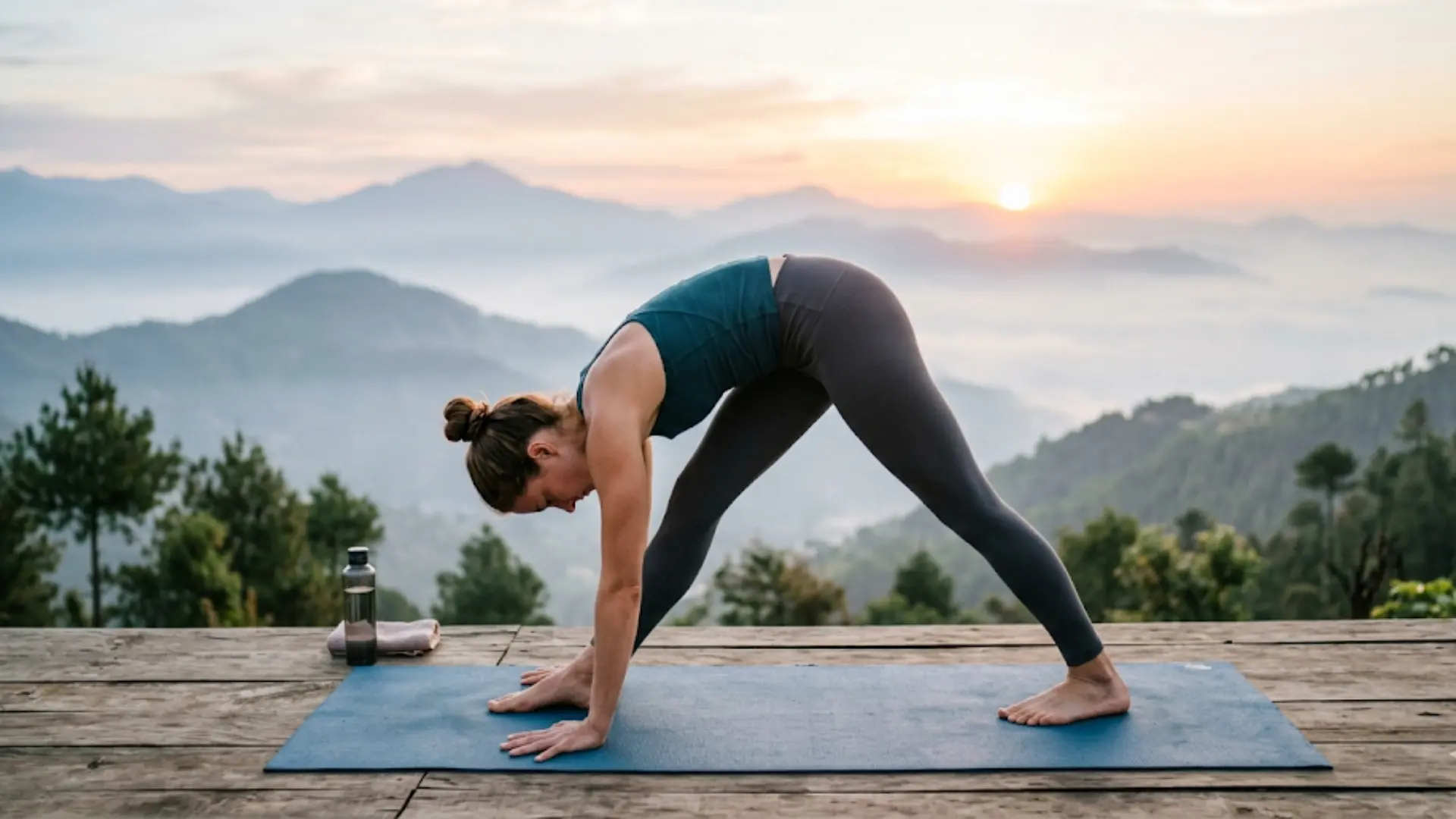
Pyramid Pose is a standing forward fold with a staggered stance: one foot forward, one foot back, both flat on the mat, with the upper body folding over the front leg. The front knee stays mostly straight. The back foot grounds firmly, turned outward at roughly 45 to 60 degrees. The result is a deep, controlled stretch through the hamstrings, hips, calves, and spine.
The Sanskrit name Parsvottanasana breaks down directly: Parsva means side or flank, Uttana means intense stretch, and Asana means pose. Together, it translates to Intense Side Stretch Pose, which is accurate. The stretch runs not just down the backs of the legs but along the entire back body and sides of the torso when the pose is practiced with real spinal length.
The pose appears in Ashtanga, Hatha, and Iyengar traditions and is commonly placed in standing flows before deeper hamstring work. In the Ashtanga primary series, it is paired with the traditional Reverse Prayer hand position (Paschima Namaskar), which adds a chest-and-shoulder opening that the more commonly taught hands-to-blocks variation does not.
Is Pyramid Pose Beginner-Friendly?
Yes, beginners can practice the Pyramid Pose safely when they use the right support. You do not need to touch the floor or keep both legs perfectly straight to get value from the pose.
Blocks are one of the best tools for beginners. They bring the floor closer, help you keep your spine long, and reduce strain in the hamstrings and lower back.
A shorter stance can also make the pose easier. When your feet are closer together, your balance usually feels steadier, and your hips have less work to do. You can also keep a soft bend in your front knee. This protects the hamstring and helps your lower back stay more relaxed.
Benefits of Pyramid Pose
The benefits of Pyramid Pose come from steady, controlled effort rather than from how deeply you fold. In my classes, I always remind students that a smaller fold with a long spine delivers more than a deep fold with a rounded back.
When you move slowly and keep your structure intact, the pose reaches the hamstrings, hips, spine, and even the digestive organs in a way that forced depth never can.
- Stretches the hamstrings and calves: The front leg receives a deep stretch along the back of the thigh and into the calf. Students with tight hamstrings from running, cycling, or long hours of sitting notice this immediately.
- Lengthens and strengthens the spine: A long spine in the fold creates sustainable space between the vertebrae, which reduces lower back strain and improves posture over time.
- Engages the glutes and pelvic floor: Keeping the hips square requires the glutes and outer hip muscles to work actively. This builds pelvic stability that carries over into standing balance poses.
- Stimulates abdominal organs: As the torso folds forward, the abdominal organs receive a gentle compression and release. This can support digestion and help ease tension held in the belly.
- Builds balance and proprioception: The staggered, narrow stance trains your feet, ankles, legs, and core to communicate with each other. Students who practice this regularly develop noticeably steadier standing balance.
- Opens the chest and shoulders (with Reverse Prayer): The traditional hand position draws the shoulder blades back and opens the front chest. This is particularly valuable for people who spend long hours seated at a desk.
- Prepares the body for deeper forward folds: The hip hinge pattern learned in Pyramid Pose transfers directly to Standing Forward Fold and Reverse Warrior Pose, making transitions between them cleaner and safer.
Instructor Note: In my experience, runners and cyclists benefit enormously from Pyramid Pose because it targets precisely the hamstring and hip flexibility that their training shortens. If you notice one side feels significantly tighter than the other, that asymmetry is worth paying attention to beyond just this pose.
How to Warm Up for Pyramid Pose
Jumping into Pyramid Pose with cold hamstrings is one of the most common reasons students either feel pain or get very little out of the stretch. A short targeted warmup makes a measurable difference. In my classes, I spend 5 to 8 minutes preparing before introducing the pose, and students consistently report that the pose feels completely different afterward.
The following sequence opens the hamstrings, releases the hip flexors, and settles the nervous system enough to allow a genuine fold without bracing or clenching.
- Downward Facing Dog (5 breaths): Walk the heels gently down toward the mat, alternating between feet. This warms the calves and the full back-body line that Pyramid Pose will target.
- Low Lunge / Crescent Lunge (5 breaths each side): Drop the back knee and sink the hips forward. This opens the hip flexors of the back leg, which need to lengthen to allow the hips to square in Pyramid Pose.
- High Lunge (5 breaths each side): Keep the back knee lifted and press firmly through the back heel. This begins to build the leg engagement and hip-forward orientation you will need.
- Standing Forward Fold with bent knees (5 breaths): From standing, fold with a generous bend in both knees. Allow the spine to release fully before slowly straightening the legs as far as comfort allows.
- Half Splits / Ardha Hanumanasana (5 breaths each side): From a Low Lunge, shift your hips back over the back knee and extend the front leg, reaching the heel forward. This is the most direct hamstring preparation for Pyramid Pose.
After this sequence, your body is ready. The difference between practicing Pyramid Pose cold and practicing it after this warmup is significant enough that I consider it mandatory rather than optional.
Pyramid Pose: Step-by-Step Guide for Beginners
When I guide someone into Pyramid Pose, I like to slow everything down before the fold begins. The setup matters more than how low you go. A steady stance, soft front knee, and long spine can completely change how the pose feels. Once your base feels stable, the forward fold becomes much safer and more useful.
Step 1: Set Your Foundation

Stand with your feet a little wider than hip-width apart and point your toes forward. Spread your toes, press through all four corners of your feet, and feel steady before moving deeper.
Keep your spine tall, chest lifted, and shoulders relaxed. This early setup helps you build balance and awareness so Pyramid Pose feels controlled instead of rushed or forced.
Step 2: Warm Up the Side Body and Hamstrings

Before entering Pyramid Pose, gently warm your body. Reach one arm up and over to stretch each side, then fold forward with bent knees to loosen the hamstrings.
Keep the movement slow and breathe deeply. This preparation helps your legs, hips, ribs, and spine feel more open, making the final pose safer and easier to hold with proper alignment.
Step 3: Place Your Feet for Pyramid Pose

Step your right foot forward and your left foot back. Point the front toes straight ahead and angle the back toes slightly toward the front corner of the mat.
Keep your feet on two parallel lines instead of one tight line. This wider stance gives your hips more space and helps protect your lower back as you square the pelvis forward.
Step 4: Lift Through the Chest and Ground Through the Back Body

Place your hands on your waist or bring one hand to your front body and one to your back body. Lift through your chest while grounding through your tailbone and back heel.
Draw your lower ribs in gently and keep your front knee slightly soft. This creates length through the spine and stability through the legs before folding forward.
Step 5: Choose Your Arm Position

Select one of the three options below based on your shoulder and wrist mobility. The goal is to keep your chest open and your neck relaxed, regardless of which option you choose.
- Hands on hips: Best for beginners learning the hip hinge and for anyone whose balance feels unsteady.
- Elbows or opposite wrists held behind the back: A useful middle step that opens the chest moderately without demanding full shoulder mobility.
- Reverse Prayer (Paschima Namaskar): Bring the palms together behind the back, fingertips pointing upward toward the shoulder blades. This is the traditional Ashtanga arm position and adds a significant chest and shoulder opening. If your palms cannot meet, hold opposite elbows instead.
Step 6: Hinge Forward from the Hips

Take a deep breath in, lengthen your spine, and begin folding from your hip creases. Send your tailbone back as the crown of your head reaches forward. Keep your back flat at first instead of rounding quickly. Your front leg can stay softly bent. This helps stretch the hamstrings while keeping the spine long and supported.
Step 7: Lower Your Hands or Use Blocks

From the flat-back position, lower your hands toward the floor or place them on yoga blocks. Blocks are helpful if the floor feels far away or your back starts to round.
Keep pressing through both feet, especially the back heel. Let your hips square naturally without forcing them. Stay connected to your breath as the stretch deepens.
Step 8: Hold, Breathe, and Come Out Slowly

Hold the pose for a few slow breaths. Keep your neck soft, shoulders relaxed, and spine long. Avoid locking the front knee or pulling the body down aggressively.
To come out, bend the front knee slightly, press through both feet, and rise with a long spine. Repeat on the other side, noticing how each side feels different.
For more details, refer to the video below.
Pyramid Pose Alignment Cues
Small alignment changes can make Pyramid Pose feel safer, steadier, and more useful. Focus on your base first, then let the fold happen with control.
- Keep Your Feet Stable: Keep your front foot facing forward and turn your back foot slightly out for support.
- Keep the Front Knee Soft: Avoid locking your front knee, as this can strain the hamstring.
- Keep Your Spine Long: Reach your chest forward before folding lower.
- Use Blocks When Needed: Place blocks under your hands if reaching the floor rounds your back.
- Keep the Neck Relaxed: Keep your neck in line with your spine, rather than letting it drop heavily.
- Length before depth: A smaller fold with a long spine is safer than a deep fold with a rounded back.
These small cues help you stay steady, protect your hamstrings, and get more value from Pyramid Pose without forcing the fold.
Pyramid Pose Variations and Modifications
like using variations because they make Pyramid Pose more honest and accessible. Some bodies need blocks, some need a chair, and some need a shorter stance. These are not easier versions in a negative sense; they are smarter ways to practice. A supported variation can help you maintain a long spine, steady hips, and a calm breath while still receiving the benefits of the pose.
1. Pyramid Pose with Blocks

This variation brings the floor closer, making it ideal for beginners, for those with tight hamstrings, or for anyone whose back rounds during the fold.
Place one block under each hand and choose a height that lets your spine stay long. Instead of reaching for the floor, focus on folding from your hips while keeping your chest gently forward. This helps you feel the stretch without pulling too hard on the hamstrings or lower back.
Goal: Long spine with supported forward fold. Best for: Beginners and tight hamstrings.
2. Short-Stance Pyramid Pose

This version makes Pyramid Pose easier by bringing the back foot closer to the front foot. A shorter stance gives you more control and often feels steadier.
It is helpful when your hips feel stiff, your balance feels shaky, or the full pose feels too strong. Keep both feet grounded, soften your front knee, and fold only as far as your spine can stay long. The goal is control, not depth.
Goal: Control and stability. Best for: Beginners and stiff hips.
3. Hands-on-Hips Pyramid Pose

This variation helps you feel your hip position before you fold. Place both hands on your hips so you can notice if one side shifts too far forward or back.
As you fold, keep your hands there and move slowly. This helps you learn how your hips, legs, and spine work together. It is a useful version when you want to build better alignment without worrying about where your hands should go.
Goal: Body awareness and hip alignment. Best for: Learning correct mechanics.
4. Pyramid Pose at the Wall

This version provides extra support by allowing your hands to press into a wall. It works well if balance feels difficult or your lower back needs a gentler setup.
Stand facing a wall, step back one foot, and place your hands on the wall at chest height. Fold only slightly while keeping your spine long. The wall helps you stay steady, reduce strain, and focus on your legs without forcing the forward fold.
Goal: Safe hamstring stretch without full inversion. Best for: High blood pressure, pregnancy, and back sensitivity.
5. Pyramid Pose with Chair Support

This supported version uses a chair instead of blocks or the floor. Rest your hands on the chair seat or the back, whichever feels better.
It is helpful for seniors, beginners, or anyone with limited mobility. The chair gives you a higher point of contact, so you can fold with less pressure on your hamstrings and lower back. Keep your front knee soft and your spine long.
Goal: Chest and shoulder opening combined with full hamstring stretch. Best for: Intermediate practitioners with adequate shoulder mobility.
Pyramid Pose vs. Triangle Pose and Half Splits
Pyramid Pose is often confused with Triangle Pose because both involve a wide stance and a stretch through the legs. The differences in body position, direction of movement, and what the pose primarily demands are significant enough that it is worth understanding them clearly before choosing how to sequence these poses.
| Category | Pyramid Pose | Triangle Pose | Half Splits |
|---|---|---|---|
| Body position | Staggered standing stance | Wide standing stance | Low position with one knee down |
| Main movement | Folds forward over one leg | Opens sideways through the torso | Folds over one extended leg |
| Main stretch | Front hamstring and calf | Side body, hips, and hamstrings | Front hamstring |
| Balance demand | Moderate | Moderate | Low |
| Hip position | Hips face forward | Hips open to the side | Hips face forward |
| Best for | Hamstring stretch and hip control | Side body opening and balance | Supported hamstring stretch |
| Key cue | Length before depth | Open the chest sideways | Keep the front foot activeThe TheThe |
Pyramid Pose stands out because it gives you a strong hamstring stretch while also asking for balance, hip control, and steady leg engagement.
Who Should Avoid or Modify Pyramid Pose
I always prefer to modify the Pyramid Pose early rather than wait until discomfort shows up. If your lower back feels tight, your hamstring feels sore, or your balance feels shaky, that is useful feedback. Blocks, a chair, a wall, or a shorter stance can help you keep the pose safe without skipping it completely.
- Recent hamstring injury: Bend the front knee or skip the pose until the hamstring has fully healed.
- Lower back pain: Use blocks, a wall, or a shorter stance to reduce strain during the forward fold.
- Sciatica symptoms: Deep forward folds may not feel safe for some people and can worsen nerve discomfort.
- Hip or knee pain: Avoid forcing the hips into a square position, as this can pull on the knee, ankle, or lower back.
- Balance problems: Use a wall, a chair, or a wider stance to steady the pose.
- Pregnancy: Deep forward folding may require adjustments, especially later in pregnancy as the belly grows.
Disclaimer: Always check with a healthcare provider or certified yoga teacher before practicing if you have pain, injury, or a medical condition.
When in doubt, practice Pyramid Pose with blocks or chair support so you can keep your spine long without forcing the fold.
Common Pyramid Pose Mistakes and How to Fix Them
The most common mistake I see in Pyramid Pose is trying to reach the floor too quickly. This often causes the spine to round, the front knee to lock, or the breath to become tense. I prefer to fix the foundation first. Widen the feet, soften the knee, use blocks, and reach the chest forward. The pose usually becomes steadier almost immediately.
| Mistake | Why It Happens | How to Fix |
|---|---|---|
| Rounding the back | Your hands reach for the floor too soon. | Use blocks and keep your chest reaching forward. |
| Locking the front knee | You try to deepen the stretch by straightening the leg too much. | Keep a soft bend in the front knee. |
| Standing on a tightrope | Your feet are too narrow, which makes balance harder. | Keep your feet hip-width apart. |
| Forcing the hips square | You try to make the hips face forward perfectly. | Gently guide the hips forward without force. |
| Lifting the back heel | The back foot loses contact with the mat. | Press the outer edge of the back foot down. |
| Dropping the head too soon | The neck falls before the spine is ready. | Keep your neck long and relaxed. |
| Holding the breath | You tense up while trying to hold the pose. | Stay for 3 to 5 slow breaths. |
None of these mistakes means you are doing the pose “badly.” They are common habits, and small changes can make Pyramid Pose feel steadier, safer, and easier to control.
Tips to Get Better at Pyramid Pose
Pyramid Pose gets easier when you build the pose slowly instead of rushing into the deepest fold.
- Warm up first: Practice Downward Dog, Low Lunge, Half Splits, and Standing Forward Fold before moving into Pyramid Pose.
- Use props early: Blocks help you feel the pose correctly without rounding your back or straining your hamstrings.
- Keep the front knee soft: a slight bend protects the hamstring and helps keep your spine long.
- Practice near a wall: Use a wall for balance support if your stance feels shaky.
- Focus on the hip hinge: let the fold come from your hips, not your lower back.
- Do both sides evenly: One side may feel tighter than the other, and that is completely normal.
Small changes like props, slower movement, and steady breathing can make Pyramid Pose feel safer and more controlled.
Frequently Asked Questions
What yoga poses are good for scoliosis?
Gentle side stretches, Cat-Cow, Child’s Pose, Sphinx Pose, Mountain Pose, and supported twists may help some people with scoliosis. Work with a trained teacher to keep both sides safe.
What yoga poses help with IBS?
Gentle twists, Wind-Relieving Pose, Child’s Pose, Cat-Cow, Supine Twist, and Legs-Up-the-Wall may help ease gas, bloating, and stress linked with IBS. Avoid deep pressure during flare-ups.
What is the hardest yoga pose to hold?
The hardest pose depends on strength, balance, and mobility. Many students find Handstand, Forearm Stand, Peacock Pose, or Scorpion Pose hard because they need strong shoulders and core control.
What is harder, Bikram or Vinyasa?
Bikram can feel harder due to the heated room and the fixed sequence. Vinyasa can feel harder if the class moves fast with many strength-based transitions.
Final Thoughts
Pyramid Pose becomes more useful when you stop treating it like a test of flexibility. I like to think of it as a pose that teaches steady effort, patient breathing, and honest body awareness.
You learned how to set your feet, soften your front knee, lengthen your spine, and fold without dumping pressure into your lower back.
You also saw how blocks, a wall, a chair, or a shorter stance can make Pyramid Pose safer and more effective. These small choices help you stretch with better control and less strain.
Try the tips in your next practice, and notice where your body feels the biggest difference.