
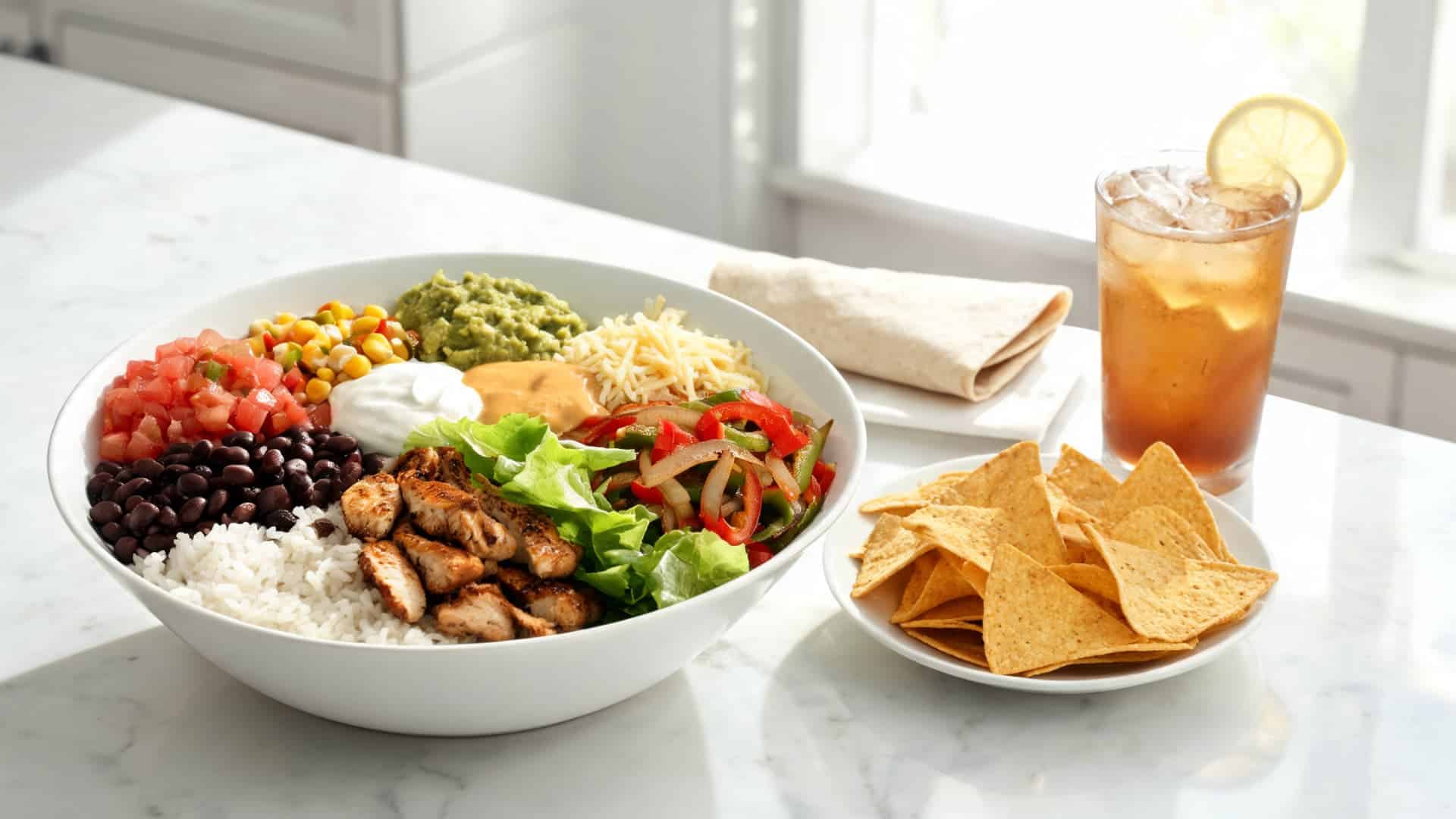
A burrito bowl can look lighter than a burrito, but the calories can climb fast. I know it can be hard to tell if your order is a light lunch or a full day’s worth of calories.
The calories in burrito bowl meals can range from about 400 for a smaller, lighter bowl to 1,000+ for a loaded bowl with rice, beans, cheese, sour cream, guacamole, queso, chips, or a tortilla.
Chipotle bowl nutrition also changes with every ingredient you pick, so a custom order needs more than a rough guess.
This guide helps you compare common calorie ranges, spot the biggest add-ons, and use the official Chipotle calculator with more confidence.
Burrito Bowl Calories Before You Order
A burrito bowl usually has about 400 to 900 calories, but the exact amount can vary widely depending on how it is built.
A smaller bowl with lettuce, grilled chicken, salsa, and light rice may stay closer to the lower end. A loaded bowl with rice, beans, cheese, sour cream, guacamole, queso, chips, or a tortilla can pass 1,000 calories.
That is why “burrito bowl” does not have one fixed calorie count. Two bowls can look almost the same but land in very different ranges because of portion size, toppings, sauces, and sides.
The best way to estimate your bowl is to count it in parts. Start with the base, then add protein, beans, toppings, sauces, and any sides. This gives you a much better number than relying on one average estimate.
Average Burrito Bowl Calories by Serving Size
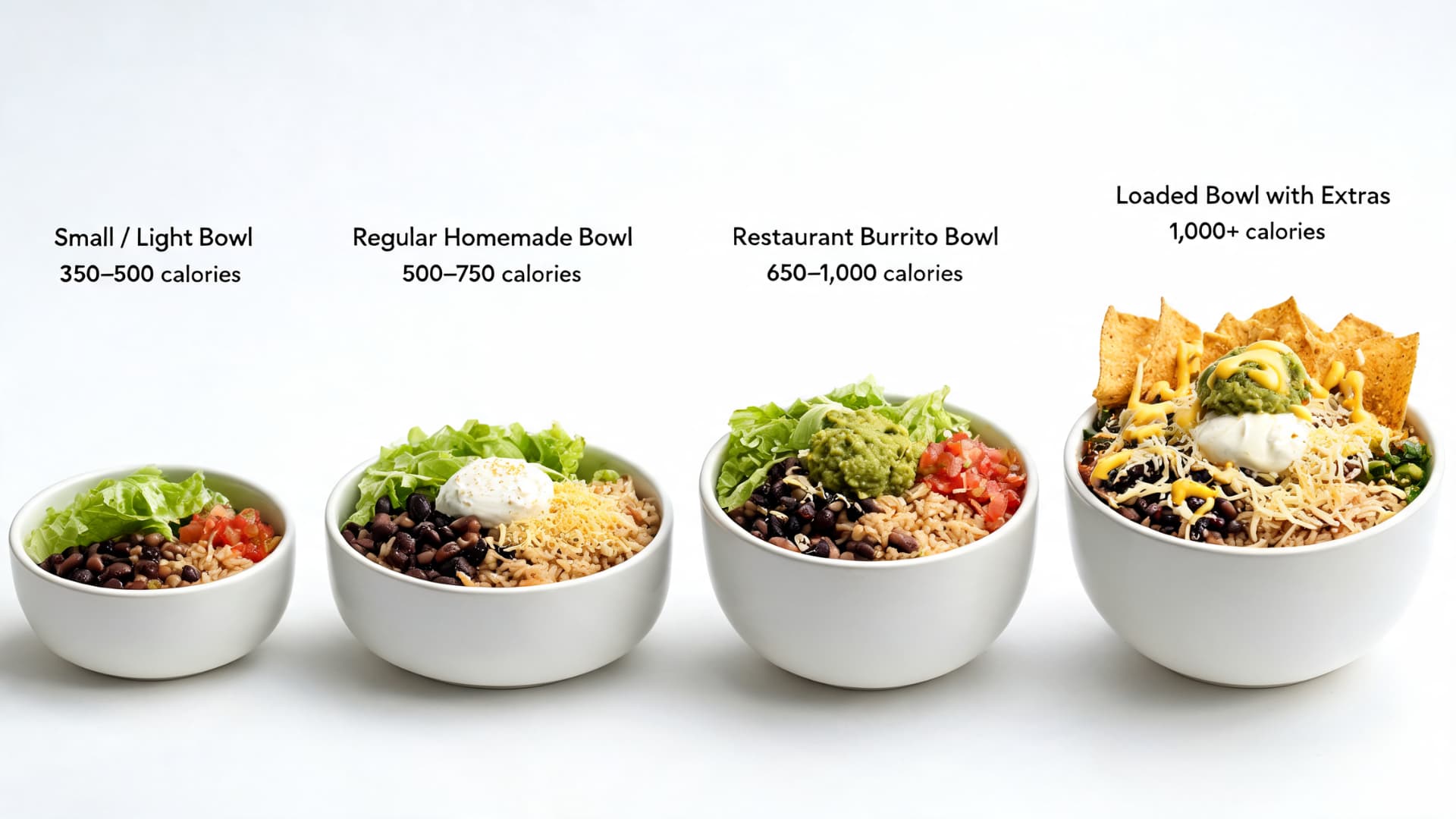
Burrito bowl calories can vary widely depending on the serving size. A smaller bowl may work as a lighter meal, while a restaurant or loaded bowl can be much higher once rice, beans, toppings, and sides are added.
| Burrito Bowl Type | Estimated Calories |
|---|---|
| Small or light bowl | 350 to 500 calories |
| Regular homemade bowl | 500 to 750 calories |
| Restaurant burrito bowl | 650 to 1,000 calories |
| Loaded bowl with extras | 1,000+ calories |
These ranges are a starting point, not an exact number. For the closest estimate, check the portion size and count each ingredient, especially rice, beans, cheese, sour cream, guacamole, queso, chips, and tortillas.
Two burrito bowls can look similar but have very different calorie counts. Portions matter, too.
Restaurant bowls are not always measured the same way, so one scoop of rice or guacamole may be larger than expected. That is why it is better to check each ingredient rather than rely on a single average number.
Use Chipotle’s Calculator to Build Your Bowl
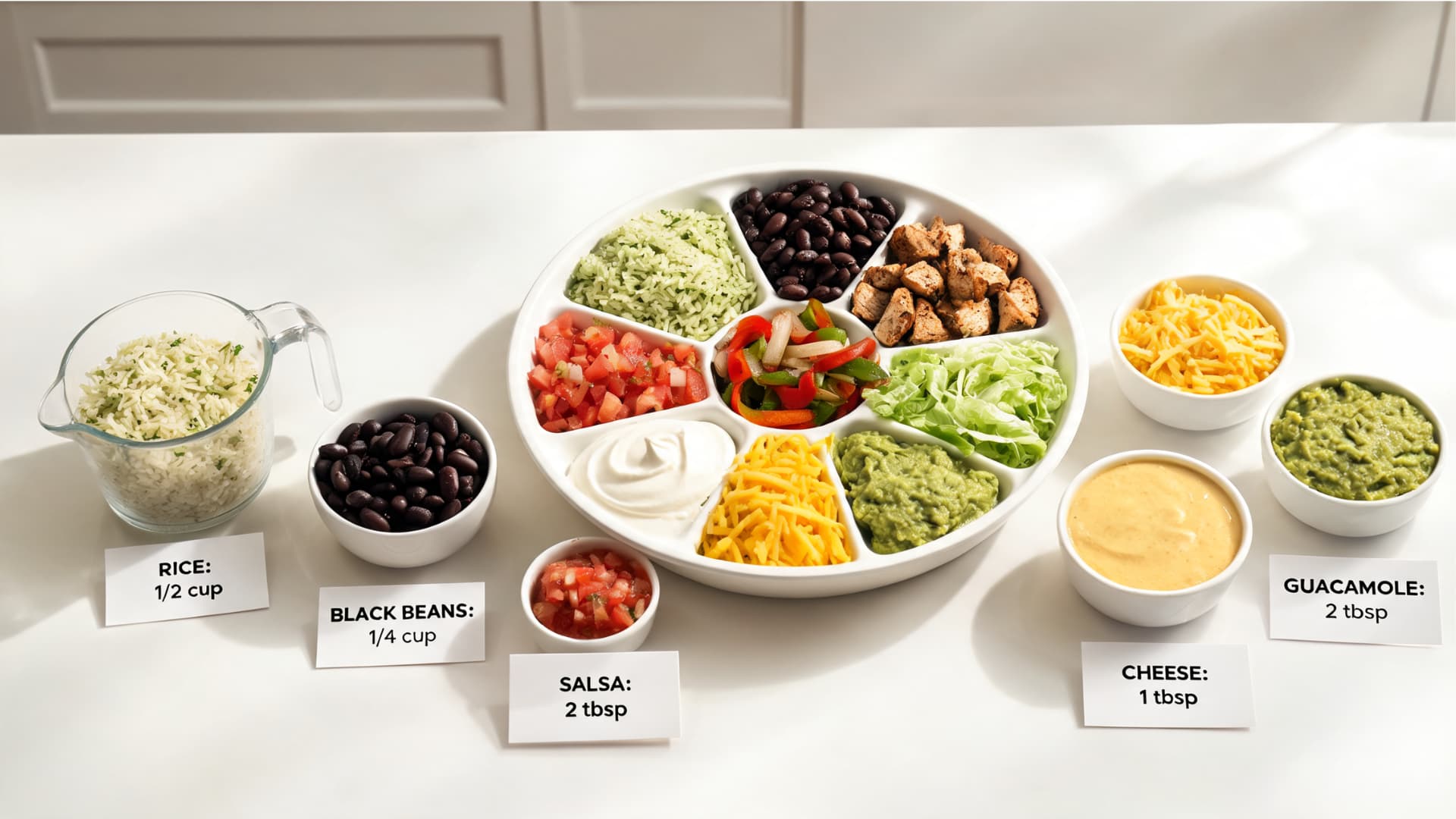
Chipotle bowl nutrition changes with every ingredient you add, so a single average number is not enough for a custom order.
The official Chipotle nutrition calculator is the best place to check the exact nutrition for your burrito bowl before you order. It lets you choose each ingredient and see how the calories, protein, carbs, fat, and other nutrition details change.
Step 1: Select Burrito Bowl
Start by opening Chipotle’s official nutrition calculator and choosing Burrito Bowl as the meal type.
Chipotle also has a burrito bowl nutrition page that breaks down proteins, rice, beans, toppings, and sides with calories, fat, protein, and carbs. This gives you a better starting point than a generic calorie estimate.
Step 2: Add Your Base
Your base has a major effect on calories and carbs. Rice is one of the biggest calorie sources in many burrito bowls.
Chipotle lists both white rice and brown rice at 210 calories per serving, though their carb and fat values are not exactly the same. If you want a lighter bowl, you can compare rice with greens, lettuce, or no rice before adding the rest of your ingredients.
Step 3: Pick Your Protein
Protein changes both the calorie count and the macros. Chipotle’s current burrito bowl nutrition page lists options such as chicken, steak, barbacoa, carnitas, sofritas, and veggie.
For example, chicken is listed at 180 calories per serving, while steak is listed at 150 calories per serving. If protein is your main goal, check the protein amount too, not just the calories.
Step 4: Add Beans and Toppings
Beans, salsa, fajita veggies, cheese, sour cream, queso, and guacamole can all change the final total.
Chipotle lists black beans and pinto beans at 130 calories per serving, while guacamole is listed at 230 calories per serving.
Salsa and lettuce may keep the bowl lighter, while cheese, sour cream, queso, and guacamole can raise calories more quickly.
Step 5: Check Calories, Protein, Fat, and Carbs
Do not stop at total calories. A bowl can be lower in calories but still high in sodium, or higher in calories but more filling because it has more protein and fiber.
Check protein, carbs, fat, fiber where available, and sodium if you are tracking overall nutrition. This helps you understand the full meal, not just the calorie number.
Step 6: Save or Compare Two Bowl Builds
Before ordering, compare two versions of your bowl.
One build might include rice, beans, chicken, cheese, sour cream, and guacamole. A lighter build might use greens, chicken, fajita veggies, salsa, and lettuce.
Seeing both totals side by side makes it easier to choose the bowl that fits your goal without guessing.
Burrito Bowl Calories by Ingredient
The easiest way to estimate the calories in a burrito bowl is to break the bowl into parts.
Start with the base, then add protein, beans, toppings, sauces, and sides.
This gives you a more realistic number than using an average calorie count for every bowl.
1. Base Ingredients
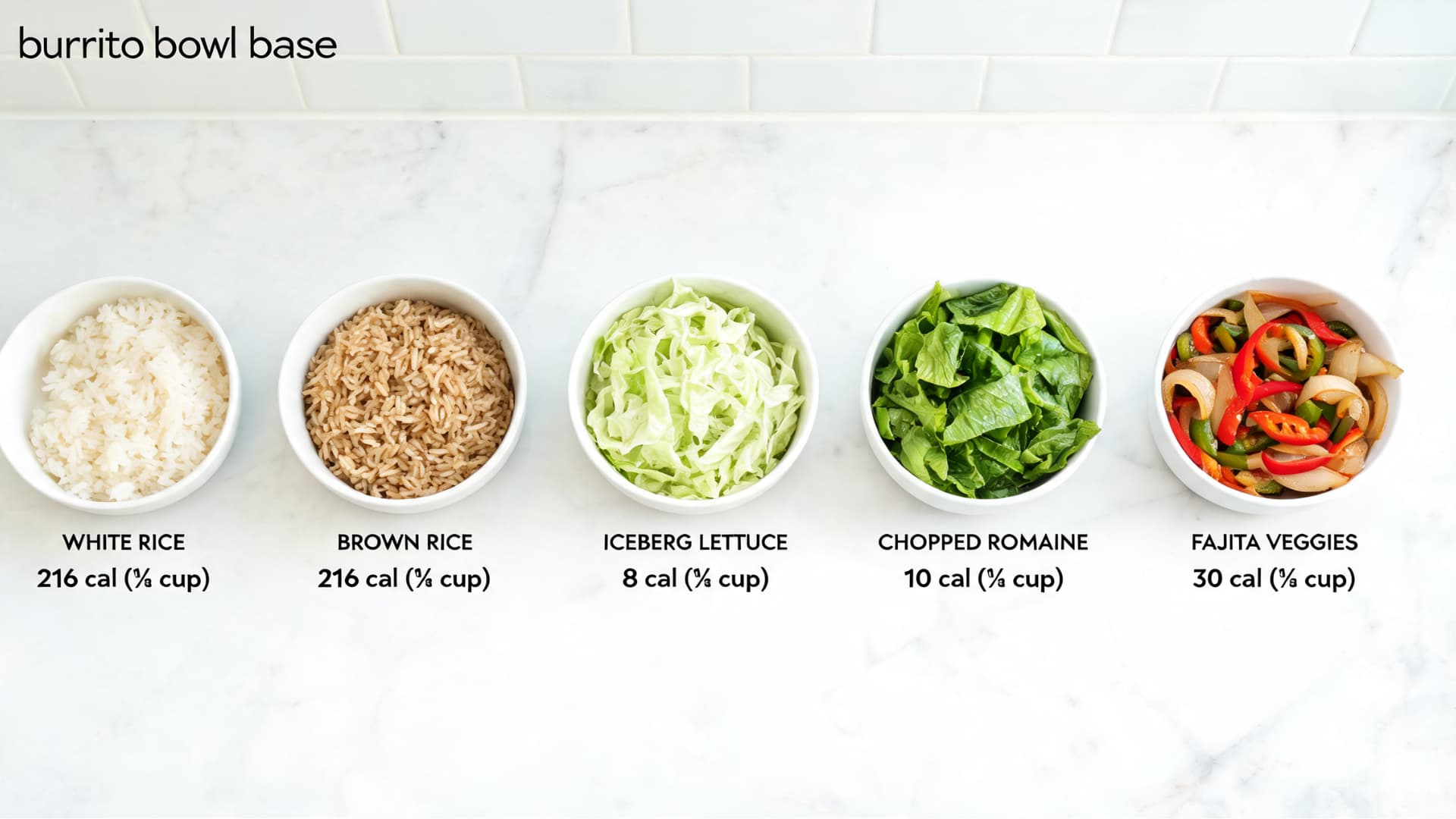
The base sets the first calorie layer of your bowl. Rice adds the most calories here, while lettuce and fajita vegetables keep the bowl lighter.
| Base Ingredient | Calorie Impact | What to Know |
|---|---|---|
| White rice | Moderate to high | Adds carbs and calories. Extra rice can raise the total quickly. |
| Brown rice | Moderate to high | Similar to white rice in calories, but may add a little more fiber. |
| No rice | Low | Helps lower calories and carbs. |
| Lettuce base | Low | Adds volume without many calories. |
| Fajita vegetables | Low | Adds flavor, texture, and volume without making the bowl much heavier. |
If you want a lighter bowl, ask for lettuce, fajita vegetables, or light rice. If you want a more filling bowl, rice can still fit, but the portion matters.
2. Protein Options
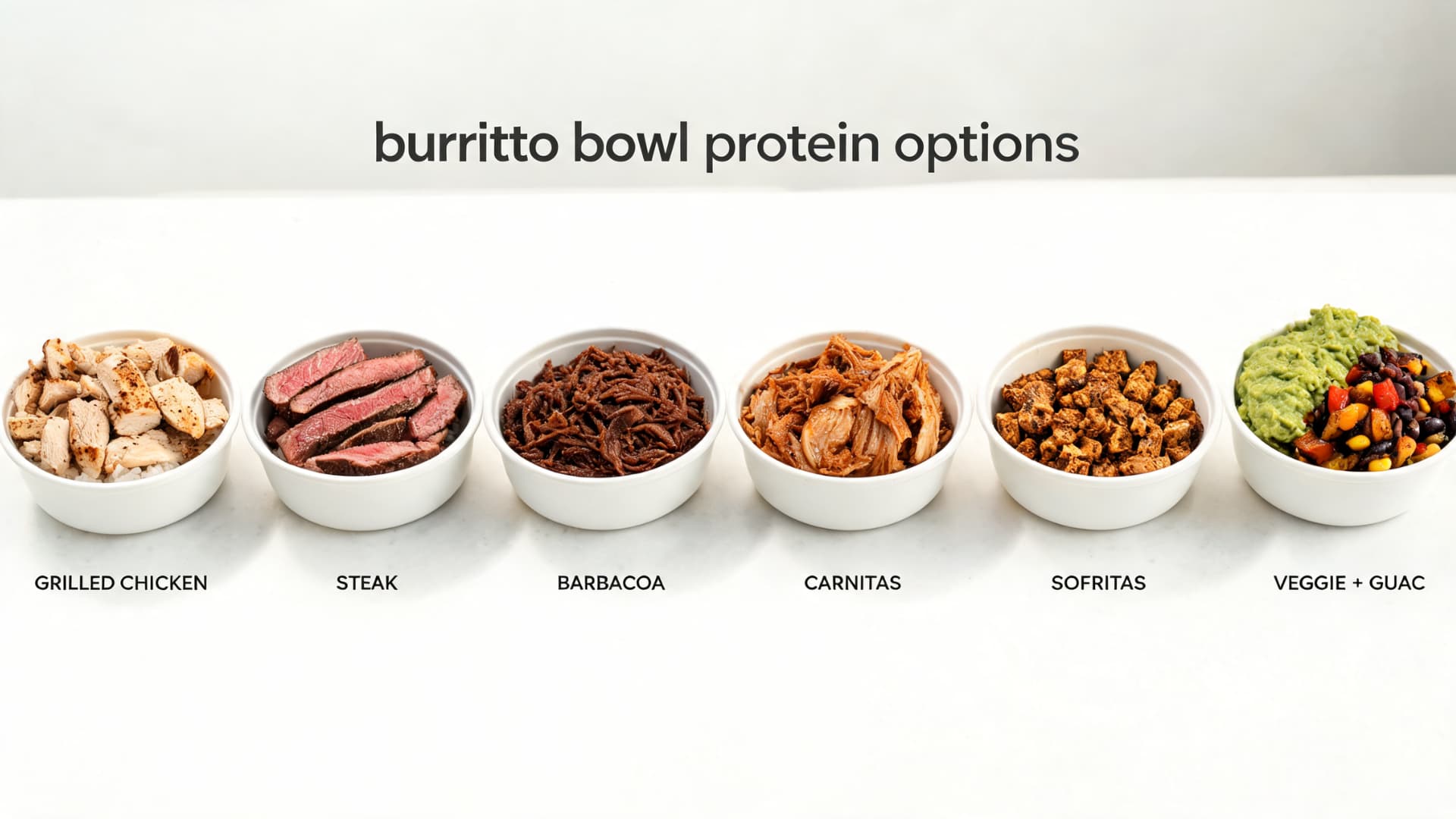
Protein can make a burrito bowl more filling. Chicken is often a leaner choice, while carnitas, barbacoa, sofritas, or double protein can change the total depending on the full build.
| Protein Option | Calorie Impact | What to Know |
|---|---|---|
| Chicken | Moderate | A common high-protein choice for a balanced bowl. |
| Steak | Moderate | Adds protein and flavor; calorie content depends on portion size. |
| Barbacoa | Moderate | A flavorful protein option that can fit many bowl builds. |
| Carnitas | Moderate to high | Usually richer than leaner protein choices. |
| Sofritas | Moderate | A plant-based option, but sodium can be worth checking. |
| Veggie bowl with guacamole | Moderate to high | Can be filling, but guacamole adds calories. |
A higher-protein bowl can still be moderate in calories if you keep toppings simple. Add salsa, lettuce, and fajita vegetables before stacking cheese, sour cream, queso, and guacamole.
3. Beans, Salsa, and Toppings
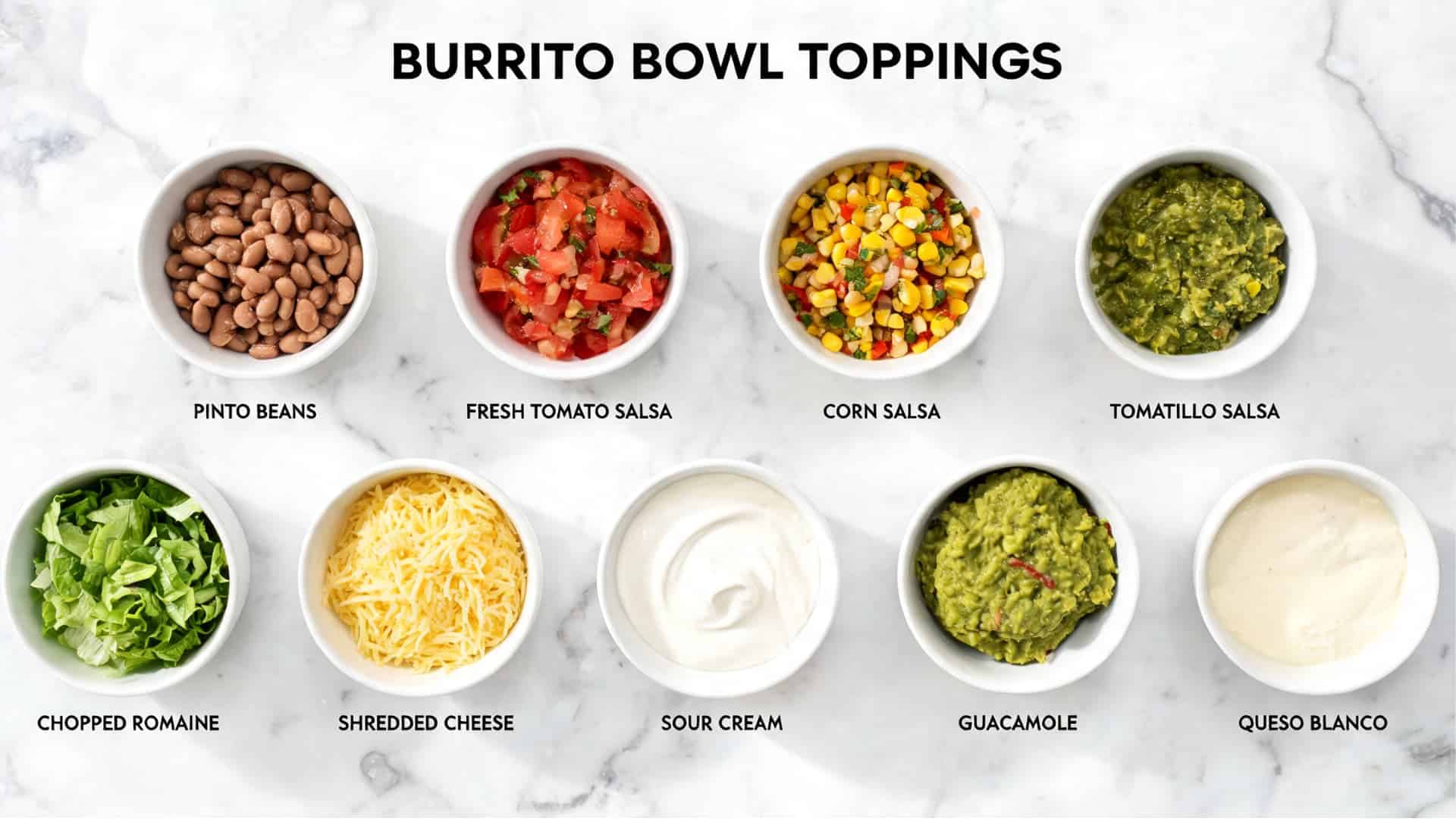
Beans, salsa, and toppings can make the bowl more filling and flavorful. Some add very few calories, while others can change the total fast.
| Ingredient | Calorie Impact | What to Know |
|---|---|---|
| Black beans | Moderate | Adds fiber, carbs, and plant-based protein. |
| Pinto beans | Moderate | Similar to black beans, with fiber and carbs. |
| Fresh tomato salsa | Low | Adds flavor with fewer calories. |
| Corn salsa | Moderate | Higher in calories than lighter salsa options because of the corn. |
| Tomatillo salsa | Low | Adds flavor without a major increase in calories. |
| Cheese | Moderate | Adds fat, sodium, and calories. |
| Sour cream | Moderate | Adds creaminess but can stack quickly with cheese or queso. |
| Guacamole | Moderate to high | Adds healthy fats and fiber, but it is calorie-dense. |
| Queso blanco | Moderate to high | Adds calories, fat, and sodium. |
| Romaine lettuce | Low | Adds crunch and volume with very few calories. |
For a lighter bowl, use salsa, lettuce, and fajita vegetables for flavor. If you want a richer topping, choose one from cheese, sour cream, guacamole, or queso instead of adding all of them.
4. Sides That Change the Total Fast
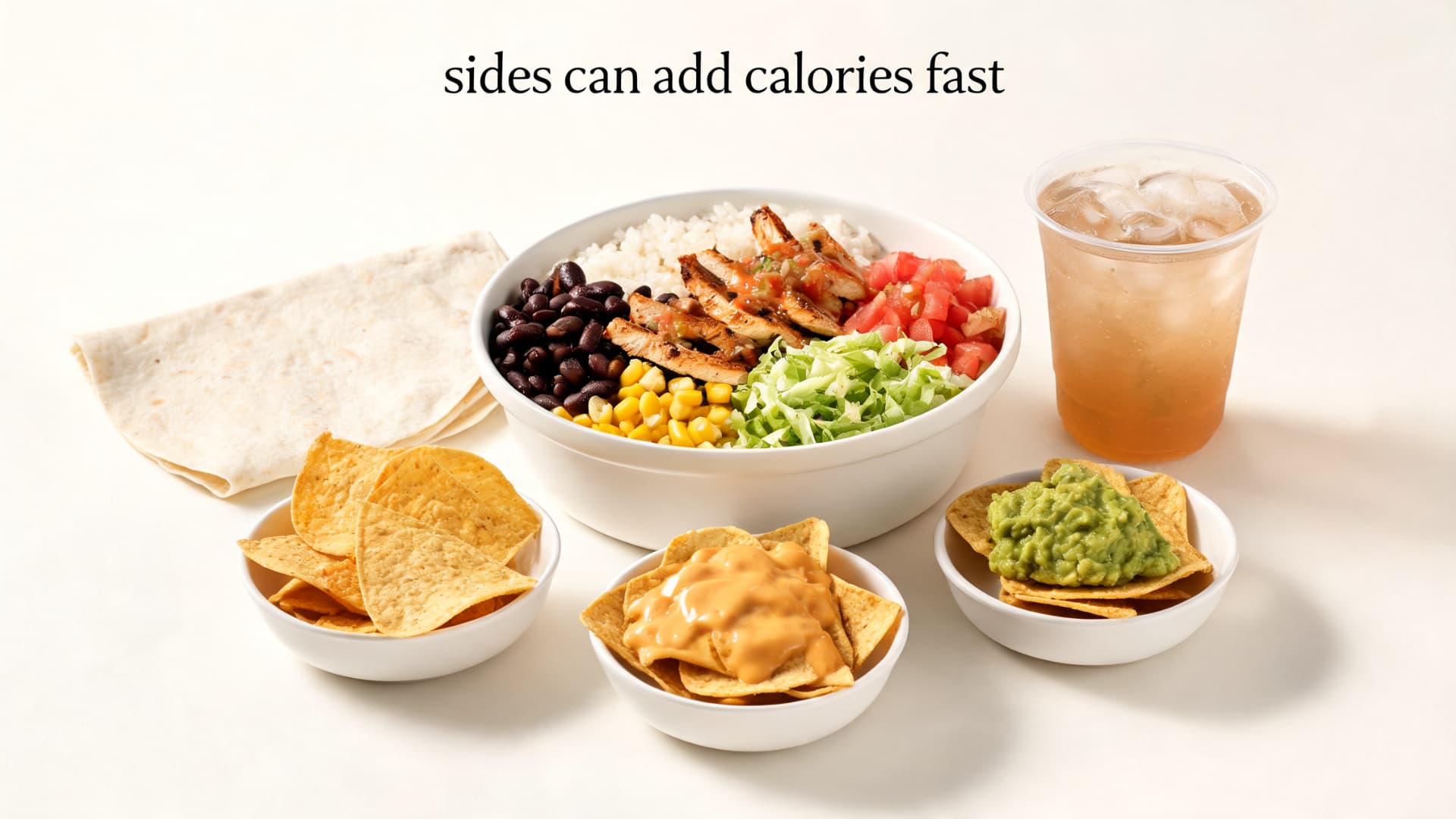
Sides can turn a moderate burrito bowl into a much higher-calorie meal. Chips, queso, guacamole, tortillas, and sugary drinks should be counted as part of the full order.
| Side Item | Calorie Impact | What to Know |
|---|---|---|
| Tortilla on the side | High | Adds extra carbs and calories, even if the meal is still called a bowl. |
| Chips | High | Can add several hundred calories before dips are included. |
| Chips and guacamole | Very high | Adds calories from both chips and avocado-based fat. |
| Chips and queso | Very high | Adds calories, fat, and sodium quickly. |
| Sugary drinks | Moderate to high | Adds calories without making the meal much more filling. |
If you are tracking calories, count the whole order, not just the bowl. A bowl may look balanced on its own, but chips, queso, guacamole, a tortilla, or a drink can push the meal much higher.
Lower-Calorie Burrito Bowl Build
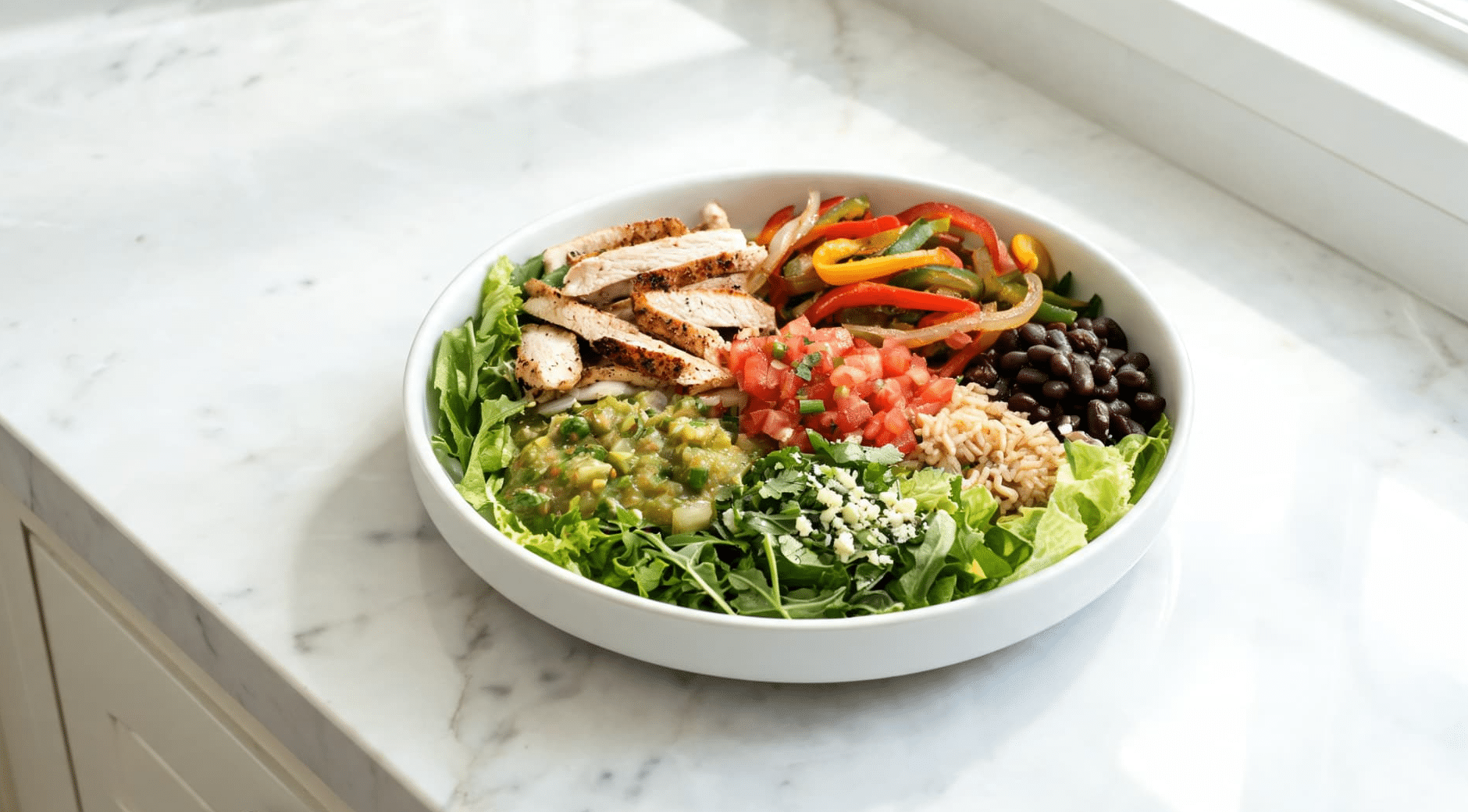
A lower-calorie burrito bowl does not have to feel plain. The goal is to keep the bowl high in volume and flavor while limiting the ingredients that add calories quickly, like queso, sour cream, extra cheese, chips, and large rice portions.
Best Ingredients for a Lighter Bowl
Start with lettuce or greens as the base, then add chicken or steak for protein.
Fajita veggies, fresh tomato salsa, tomatillo salsa, and extra lettuce can add flavor, crunch, and volume without making the bowl much heavier.
Light cheese can fit if you want it, but skipping cheese will lower the total more. Queso and sour cream are usually easier to leave off when calories matter.
Guacamole can still work, but add it only if it fits your calorie target since Chipotle lists guacamole at 230 calories per serving. (Chipotle)
Simple Lower-Calorie Bowl Formula
Greens + lean protein + beans or light rice + fajita veggies + salsa + lettuce
This formula keeps the bowl filling without relying on too many calorie-dense extras. Greens and lettuce add volume, protein helps with fullness, and salsa gives flavor.
Beans or light rice can make the bowl more satisfying, but keeping the portion smaller helps control calories and carbs.
Higher-Protein Burrito Bowl Build
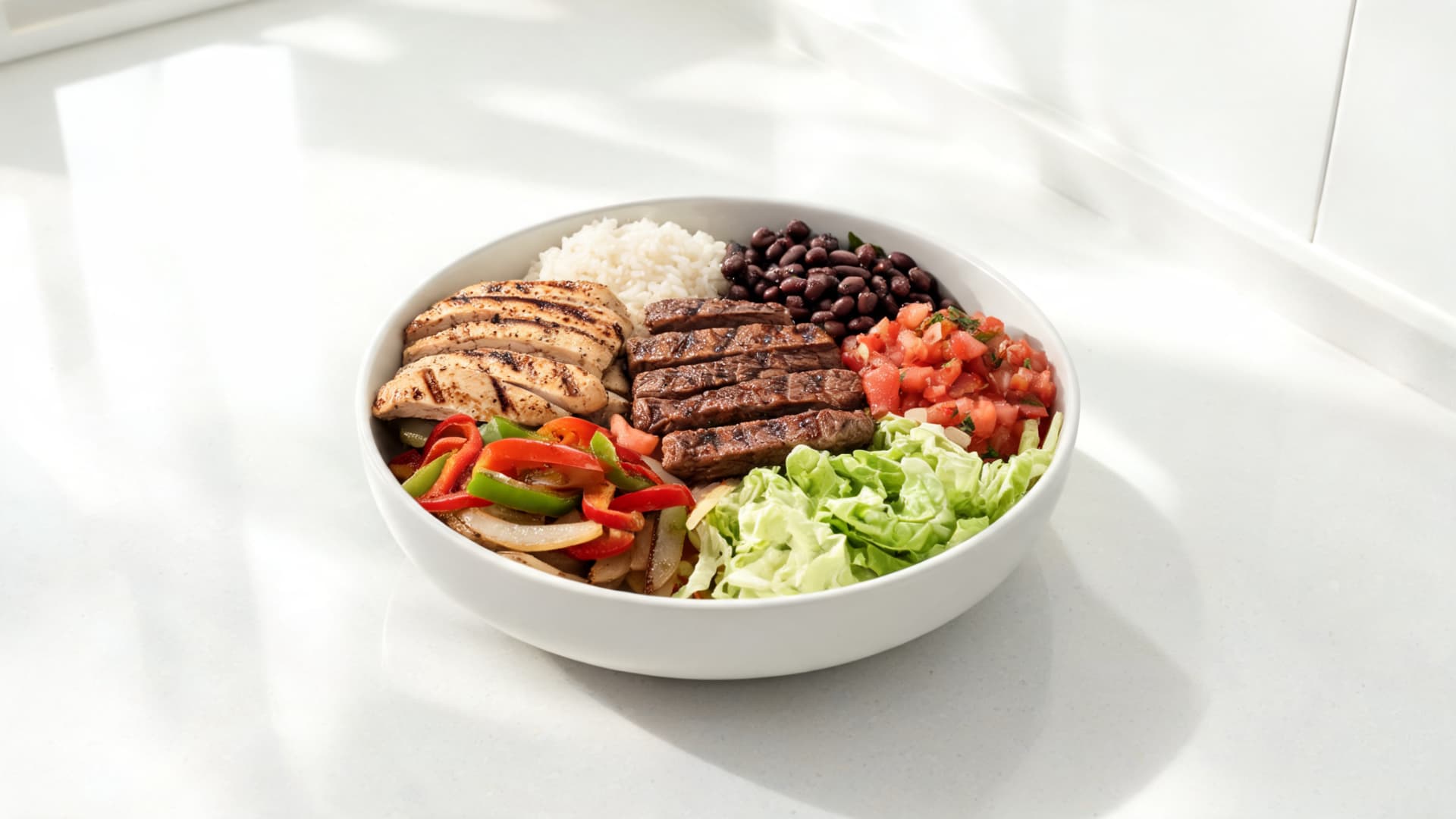
A higher-protein burrito bowl starts with a strong protein choice, then adds ingredients that support fullness without turning the meal into a loaded bowl.
Chipotle’s nutrition calculator includes a High Protein Menu option, and Chipotle says its menu makes it easy to build higher-protein meals with choices like double protein or beans.
Best Ingredients for More Protein
Chicken, steak, barbacoa, and double protein are common choices when protein is the main goal. Beans can also help because they add plant-based protein, fiber, and carbs.
Cheese can add some protein too, but it should be used in moderation because it also adds fat, sodium, and calories.
A simple high-protein build could use chicken or steak, beans, fajita veggies, salsa, lettuce, and light rice.
If you need more protein, doubling the protein can work, but it should be counted in the full calorie total.
What to Watch
High-protein bowls can become high-calorie when double protein is paired with rice, cheese, sour cream, queso, guacamole, and chips. That combination may be filling, but it can quickly raise calories, fat, carbs, and sodium.
Chipotle also highlights high-protein menu options, including bowls and other meals built around protein-focused ordering.
Its build-your-own format can help guests create meals with lean protein, beans, veggies, and lighter toppings, which makes it easier to compare a heavier build with a simpler one before ordering.
What Adds the Most Calories to a Burrito Bowl?
The biggest calorie jumps usually come from extras, not the basic bowl itself. Rice, beans, and protein make up the meal, but chips, tortillas, queso, sour cream, cheese, guacamole, extra rice, and double protein can quickly raise the total.
| Add-On | Why It Raises Calories | Lower-Calorie Swap |
|---|---|---|
| Chips | Adds a large side portion of carbs and fat. | Skip chips or split them. |
| Tortilla | Adds extra calories and carbs outside the bowl. | Choose a bowl without a tortilla. |
| Guacamole | Adds calorie-dense fats. | Use a smaller portion or skip another creamy topping. |
| Queso | Adds fat, sodium, and calories. | Use salsa for flavor. |
| Sour cream | Adds fat and calories. | Choose salsa or fajita vegetables. |
| Cheese | Adds fat, sodium, and calories. | Use less cheese or choose one creamy topping. |
| Extra rice | Adds more carbs and calories. | Ask for light rice or add lettuce. |
| Double protein | Adds protein but also calories. | Use a single protein unless protein is the main goal. |
You do not have to avoid every higher-calorie topping. The easier approach is to choose what matters most.
Burrito Bowl Calories by Brand or Style
Burrito bowl calories can vary widely depending on where the bowl comes from.
A Chipotle bowl, Qdoba bowl, homemade bowl, and meal prep bowl may all use similar ingredients, but the portions, toppings, sauces, and cooking methods can make the final calorie count very different.
Chipotle Burrito Bowl
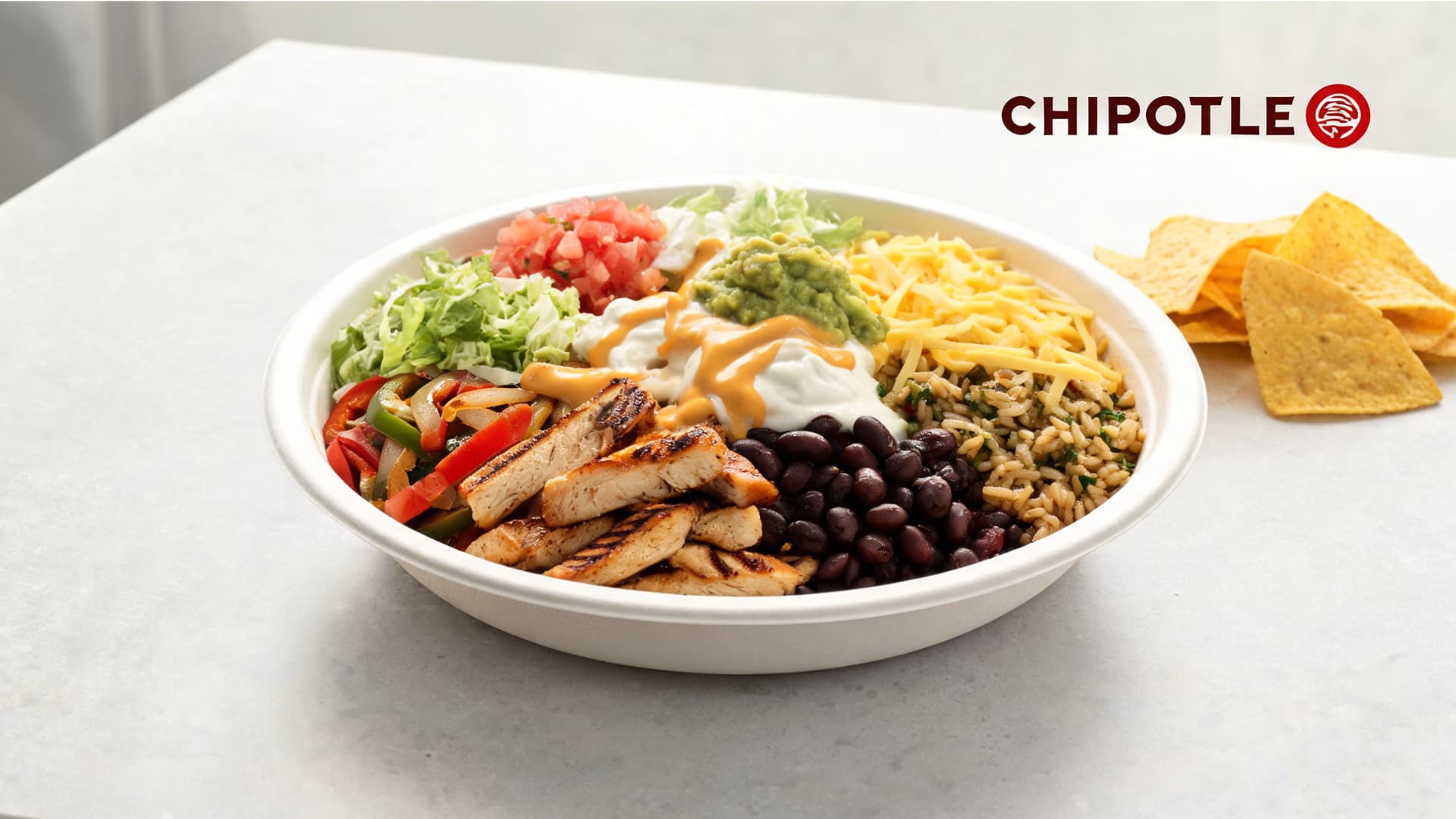
A Chipotle burrito bowl is one of the harder bowls to estimate with one simple calorie number because it is built ingredient by ingredient. The final total depends on the base, protein, beans, salsa, toppings, and sides you choose.
Rice, beans, chicken, steak, barbacoa, carnitas, sofritas, cheese, sour cream, guacamole, queso, chips, and a tortilla on the side can all change the calorie count.
A lighter Chipotle bowl might use greens or light rice, chicken, fajita veggies, fresh tomato salsa, tomatillo salsa, and lettuce.
A heavier bowl might include rice, beans, double protein, cheese, sour cream, guacamole, queso, chips, or a side tortilla. Both are still burrito bowls, but the nutrition totals can be very different.
Qdoba Burrito Bowl
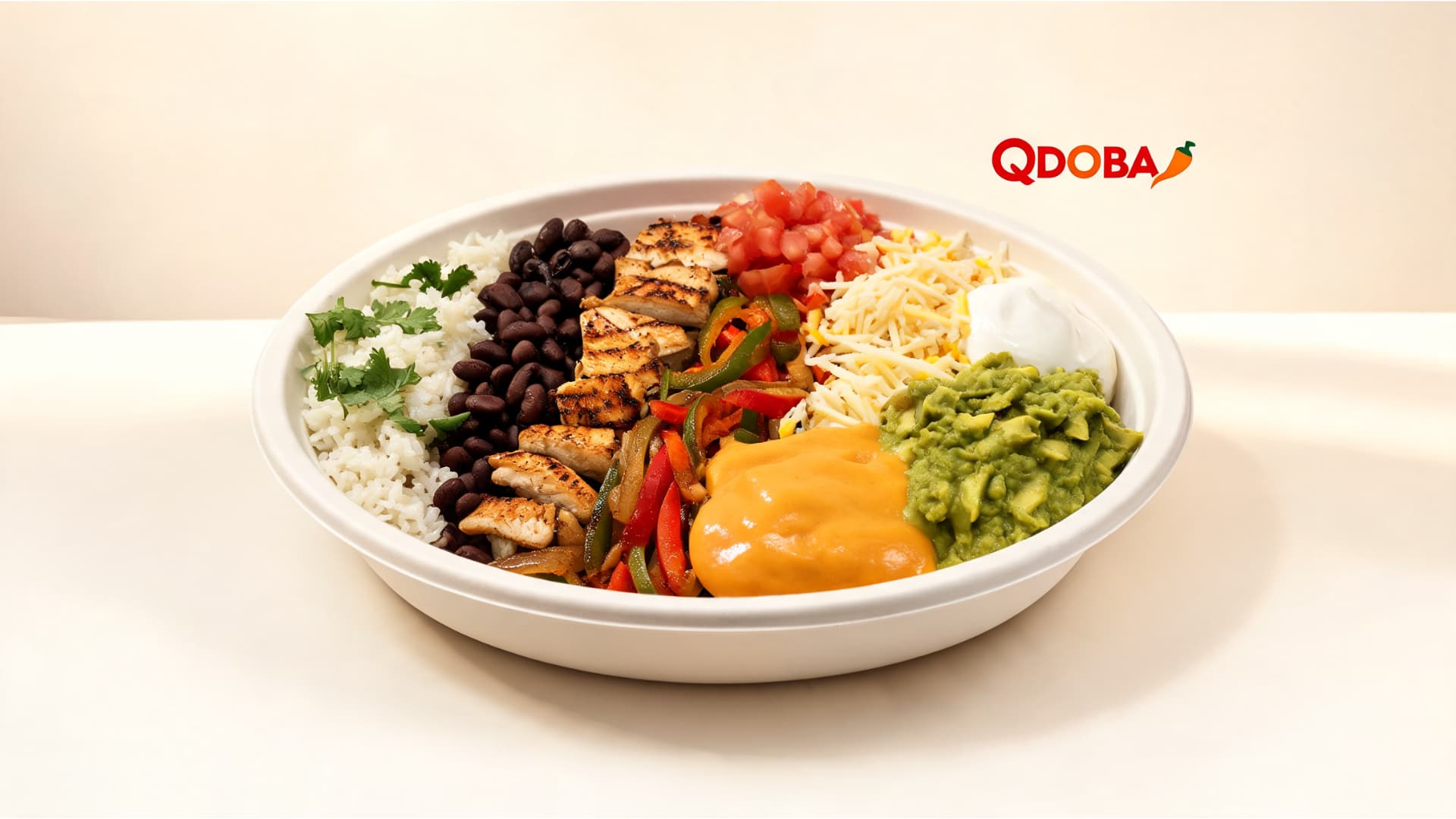
A Qdoba-style burrito bowl can vary widely because the menu is also built around customization.
The final calorie count depends on your base, protein, beans, queso, guacamole, cheese, sour cream, salsa, vegetables, sauces, chips, and portion size.
One thing that makes Qdoba different is that queso and guacamole are common add-ons in many bowl builds. They can make the bowl taste richer and more filling, but they also increase the total calories.
A bowl with rice, beans, grilled protein, queso, guacamole, sour cream, and chips will land much higher than a simpler bowl with rice, beans, protein, salsa, and vegetables.
Homemade Burrito Bowl
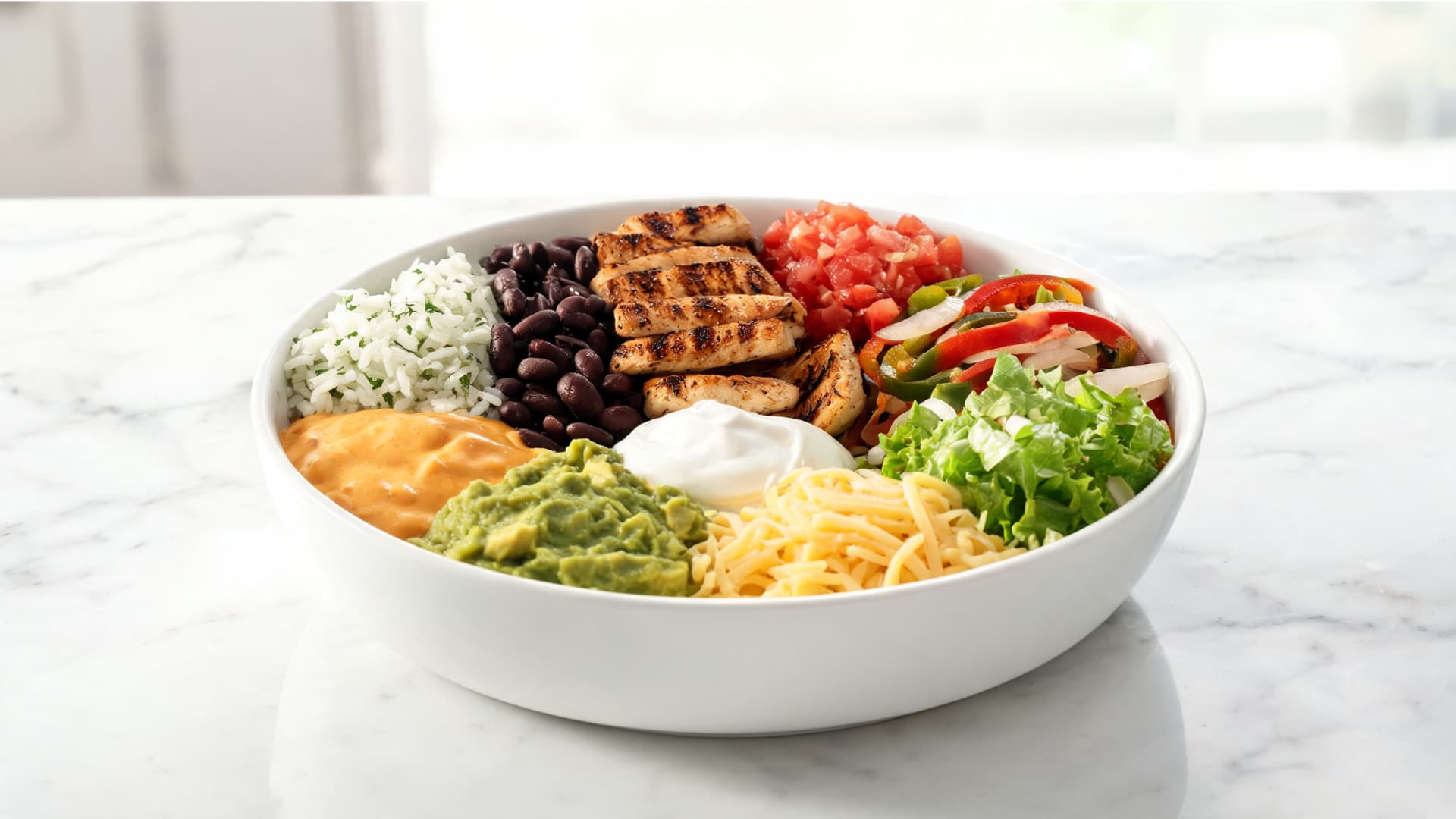
A homemade burrito bowl can be easier to control because you decide exactly what goes into it. The calorie count can be higher or lower depending on your rice portion, protein amount, beans, vegetables, cheese, sauce, oil, and toppings.
A lighter homemade bowl might use lettuce, grilled chicken, salsa, fajita vegetables, and a small scoop of rice. This keeps the bowl filling while limiting heavier extras.
You can also add beans for fiber and protein, but measuring the portion helps keep the total more accurate.
A higher-calorie homemade bowl might include a full rice base, beans, ground beef, cheese, sour cream, guacamole, and tortilla chips. Cooking oil can also add calories quickly, especially if you sauté vegetables or cook meat with more than you realize.
For the best estimate, measure rice, oil, cheese, sauces, and guacamole. These ingredients are easy to overpour or overscoop, so measuring them makes it much easier to track homemade burrito bowl calories.
Meal Prep Burrito Bowl
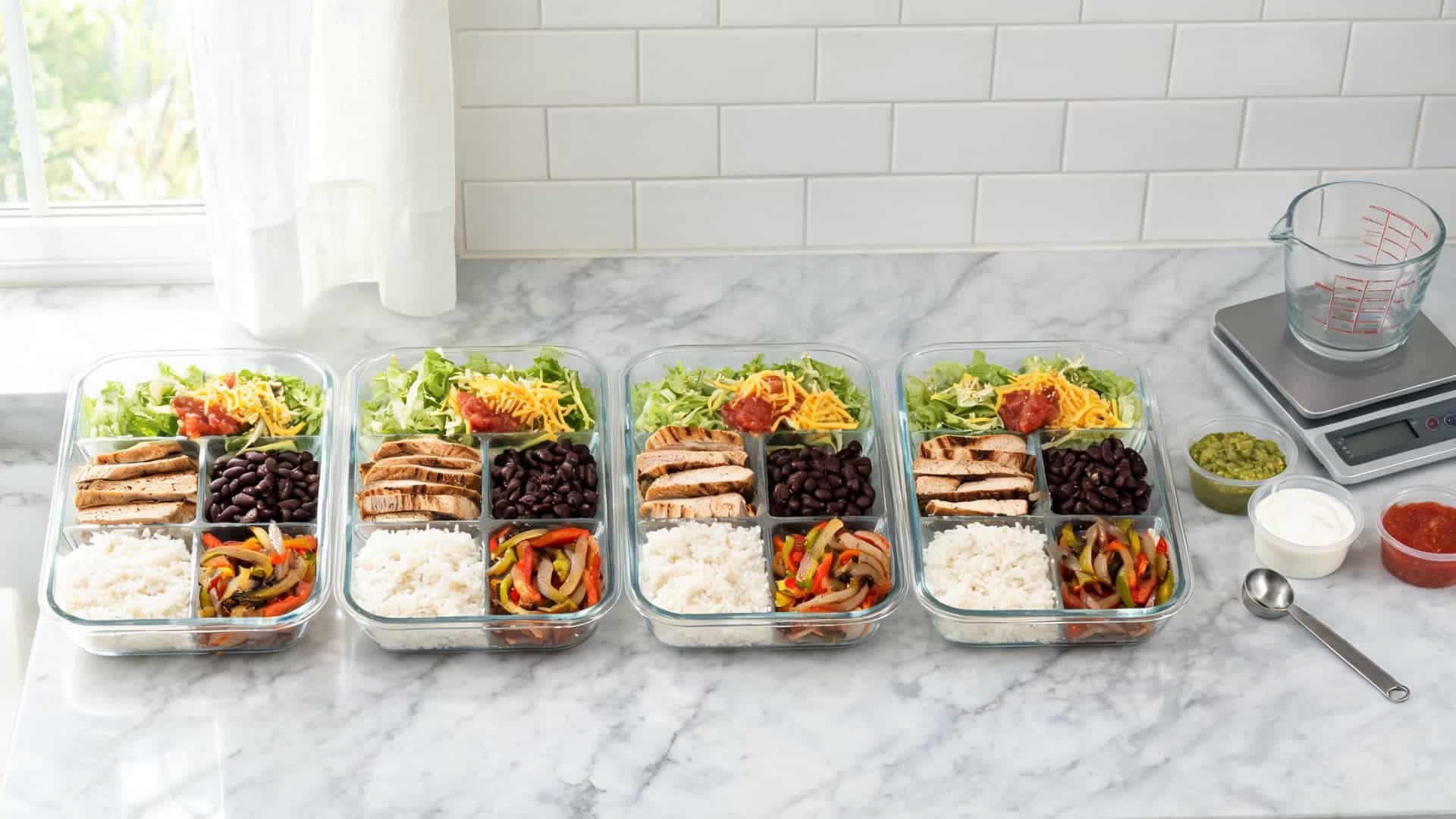
Meal prep burrito bowls are often easier to track because the ingredients are weighed, measured, or portioned before the meals are stored. This helps keep each bowl more consistent, so you are not guessing every time you eat.
You can build meal prep bowls around one clear goal. For a lighter bowl, use more lettuce, fajita vegetables, salsa, and lean protein. For a more filling bowl, add beans, chicken, steak, or another protein with a measured portion of rice.
Meal prep also makes it easier to control ingredients that can quietly raise calories, such as oil, cheese, sauces, sour cream, guacamole, and queso. If you want the most accurate calorie estimate, measure those items before adding them to each container.
A simple meal prep bowl might include rice, black beans, grilled chicken, fajita vegetables, lettuce, and salsa. Keep wet toppings like guacamole, sour cream, or queso in small containers until you are ready to eat.
Common Burrito Bowl Calorie Mistakes
Even when a burrito bowl looks simple, it is easy to miss a few items that can change the total for the full meal. These mistakes are common with restaurant bowls, packaged bowls, and homemade versions.
- Counting the bowl but not the chips can leave out several hundred calories from the full order.
- Forgetting the tortilla on the side can make the meal look lighter than it really is.
- Assuming every bowl is low calorie can be misleading because toppings and sides change everything.
- Ignoring extra rice or double protein can throw off the estimate, especially in restaurant bowls.
- Treating guacamole as calorie-free is a mistake, even though it provides healthy fats and fiber.
- Looking only at calories can miss sodium, which can climb quickly with salsa, beans, meats, cheese, queso, and chips.
- Using one generic calorie number for every brand does not work because portions and recipes vary.
The easiest fix is to count the whole meal, not just the bowl name. Check the base, protein, toppings, sauces, and sides before deciding if the number is accurate.
Signs Your Bowl May Be 1,000+ Calories
A burrito bowl can exceed 1,000 calories faster than expected when several high-calorie items are combined. Watch for these signs before you order.
- Rice and beans together are common and can fit a balanced meal, but they add a solid calorie base.
- Multiple creamy toppings like cheese, sour cream, queso, and guacamole can stack quickly.
- Chips on the side can shift the meal from moderate to high calorie.
- Double protein can help with protein goals, but it still adds calories.
- Large portions matter because restaurant scoops are not always exact.
You do not need to avoid all of these. Just choose the extras that matter most, then keep the rest of the bowl simpler.
Frequently Asked Questions
Can you make a burrito bowl ahead of time?
Yes, burrito bowls work well for meal prep if you store wet toppings separately. Keep salsa, sour cream, guacamole, or queso in small containers so the rice, beans, protein, and vegetables do not turn soggy.
How long does a homemade burrito bowl last in the fridge?
A homemade burrito bowl usually lasts three to four days in the fridge when stored in an airtight container. Keep cold toppings separate and reheat only the rice, beans, protein, and cooked vegetables.
What is the best protein for a lighter burrito bowl?
Grilled chicken is often a simple, lighter protein choice because it is filling and easy to pair with salsa, lettuce, beans, and vegetables. Sofritas, steak, or beans can also work depending on your preferences.
Can I make a burrito bowl without beans?
Yes, you can skip beans and still make a filling bowl. Add extra vegetables, lean protein, salsa, lettuce, or a small portion of rice to keep the bowl balanced without relying on beans.
What sauces are best for a lower-calorie burrito bowl?
Salsa-based sauces are usually easier to fit into a lower-calorie bowl than creamy sauces. Fresh tomato salsa, tomatillo salsa, or hot salsa can add flavor without using sour cream, queso, or heavy dressing.
The Bottom Line
Your burrito bowl does not need to be confusing once you break it down by ingredient.
Rice, beans, protein, salsa, cheese, sour cream, guacamole, queso, chips, and tortillas can all shift the final number. That is why the calorie counts for burrito bowl meals depend on the full build, not just the name.
Chipotle bowl nutrition is easiest to check using the official calculator, which shows how each choice affects calories, protein, carbs, fat, and sodium. I’d start with your base, count every topping, and include sides before deciding if the meal fits your goal.
Use these tips before your next order, and read my other nutrition guides for more simple comparisons.