

The ATG split squat doesn’t look like much at first glance. But once you try it, you quickly realize it’s one of those exercises that humbles you fast.
I’ve been learning about this movement for a while now, and honestly, the more I learn, the more interesting it gets. From its roots in Olympic weightlifting to its growing reputation for fixing stubborn knee pain, there’s a lot going on beneath the surface.
I’ll cover what ATG actually stands for, how to perform it correctly, the muscles it targets, and why athletes and rehab professionals are paying attention to it.
There’s also a breakdown of how it compares to other squat variations and the common mistakes worth avoiding. Let’s get into it.
What Does ATG Stand for in ATG Split Squats?
ATG stands for Ass-to-Grass, which means squatting as deep as possible, going beyond parallel to fully engage your hips, knees, and ankles. In the ATG split squat, this extra depth is key.
Unlike other squat variations that stop at parallel, this movement pushes your range of motion to its limits. This deep squat targets muscles more intensely and improves joint mobility by forcing the body to work through its full range.
The deeper you go, the harder the muscles and joints must work, helping you build strength and flexibility. This unique focus on depth makes the ATG split squat an effective exercise for improving both strength and mobility.
How to Perform the ATG Split Squat
ATG split squats build deep knee strength, hip mobility, and single-leg control. When performed with full range and clean form, they reinforce strong joint alignment that carries over to running, jumping, and heavy lifting.
Step 1: Set Up the Exercise
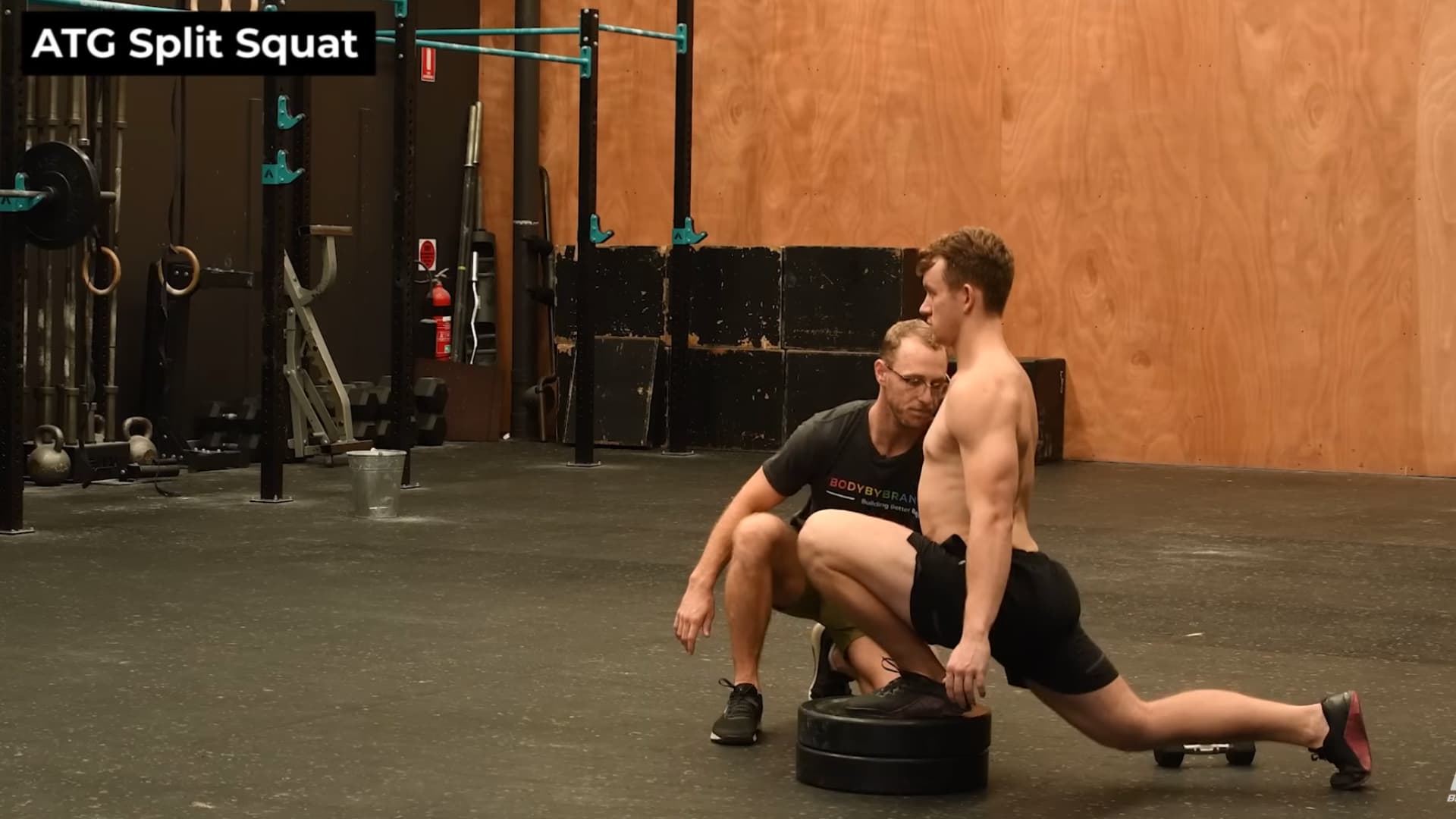
Start by standing with your feet about shoulder-width apart.
Place your back foot on a bench or box behind you. Make sure the top of your foot rests comfortably on the surface. Your front foot should stay flat on the floor, directly under your hip. Keep a slight bend in your front knee.
Take a moment to find your balance before you begin. A stable setup makes the rest of the movement feel smoother and safer.
Step 2: Maintain Proper Form
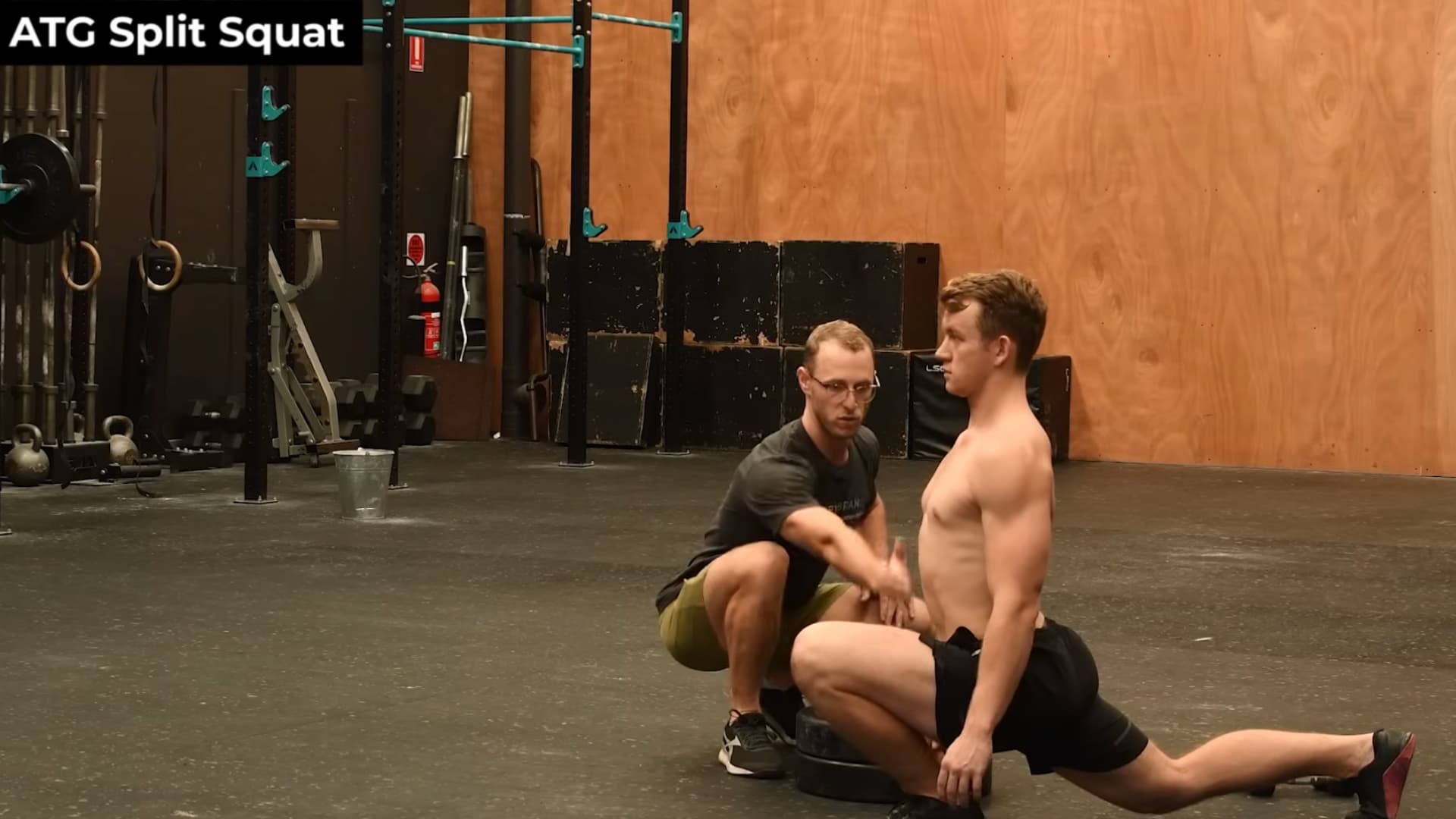
Stand tall through your torso. Do not lean forward or round your back as you move.
Tighten your core to help keep your body steady. Press evenly through the heel and ball of your front foot. That front leg should carry most of your weight.
Keep your back leg straight and active. Squeeze your glutes to help maintain that extended position. A strong posture here protects your knees and improves your control.
Step 3: Perform the Movement
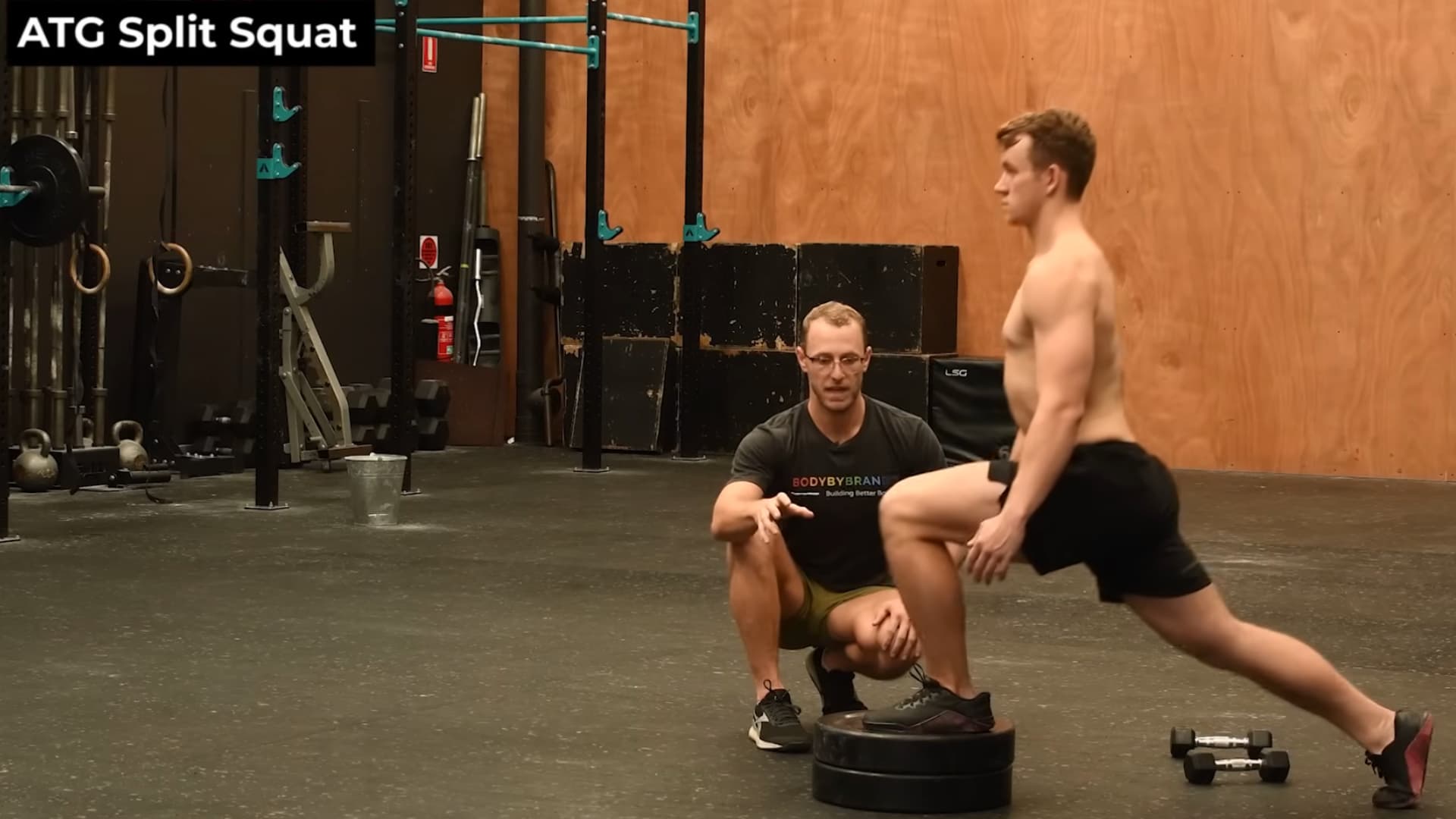
Slowly lower your body by bending your front knee. Let your back leg stretch as you descend.
Lower until your front hamstring gently meets your calf, maintaining a full range of motion. If that depth feels too challenging, raise your front foot slightly on a plate or block.
As you move down, keep your knee tracking over the middle of your foot. Do not let it cave inward or drift outward. Controlled depth builds strength and stability together.
Step 4: Progress to Variations
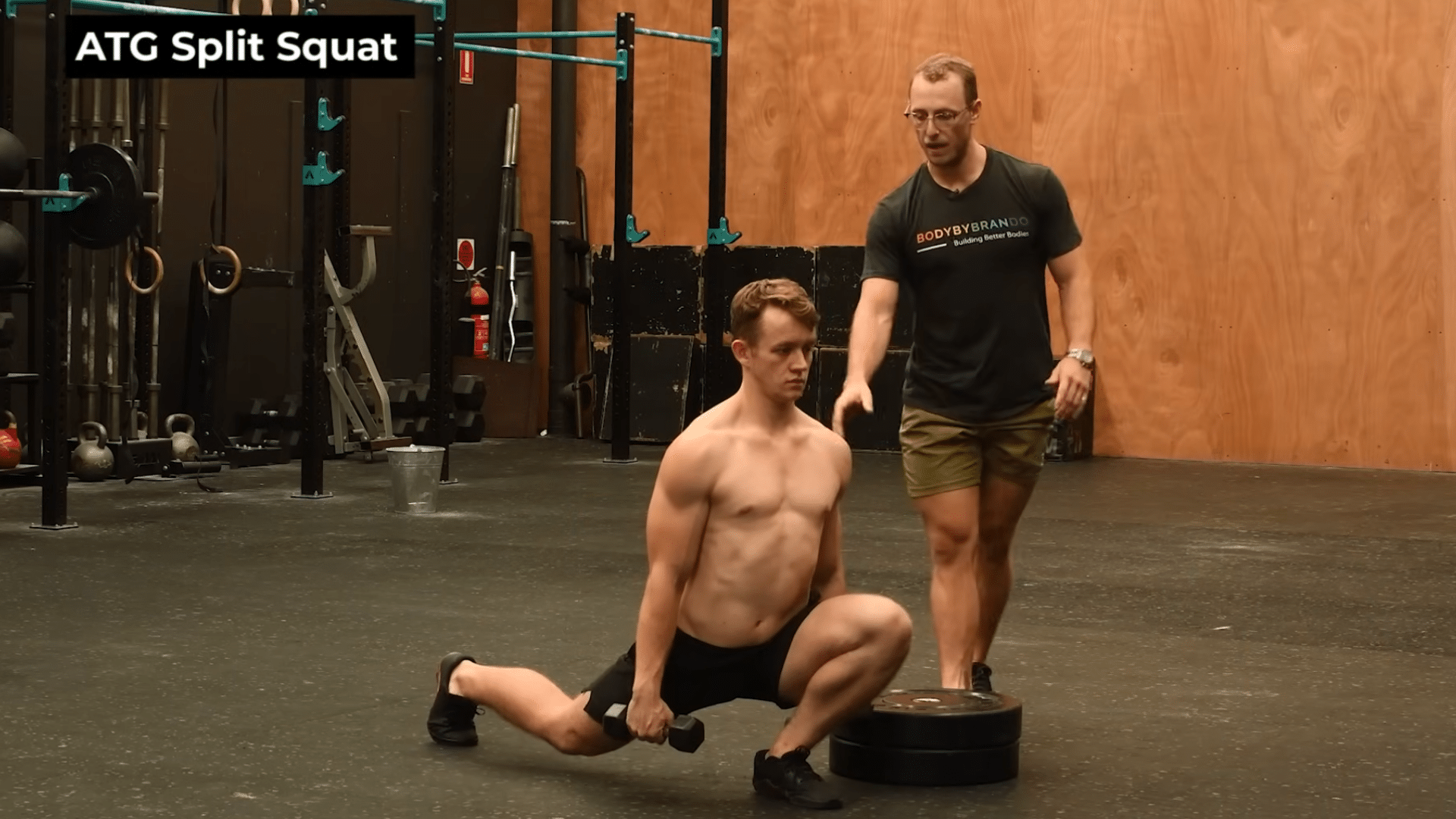
Once the basic movement feels solid, you can add different options.
Hold the bottom position for a few seconds to build strength and balance. Or perform steady repetitions, lowering and rising with control each time.
If you want more of a challenge, hold a dumbbell or a barbell at your sides. Keep the same posture and alignment as you add weight. Good form should always come before added resistance.
The History and Origins of the ATG Split Squat
The ATG Split Squat gained popularity among modern strength coaches who emphasized full-range-of-motion training.
While split squats themselves have been used for decades in athletic programs, the deeper ATG variation became widely recognized through coaches who promoted knee strength, mobility, and joint resilience.
The movement focuses on allowing the front knee to travel forward over the toes while maintaining control and balance. This approach challenged the long-held belief that knees should never pass the toes during squats.
Over time, athletes began using the ATG Split Squat to improve knee health, ankle mobility, and lower body strength. Today, it’s commonly included in performance training and injury prevention programs.
The Significance of the ATG Split Squat
The ATG split squat reflects a broader shift in how coaches and clinicians view deep knee flexion. For years, deep squatting was discouraged because of concerns about knee and spinal stress.
More recent evidence has challenged that idea. A well-known review published in Sports Medicine by Hartmann, Wirth, and Klusemann (2013), titled “Analysis of the Load on the Knee Joint and Vertebral Column with Changes in Squatting Depth and Weight Load,” found no increased injury risk to passive knee structures during deep squats when they are performed with proper technique and gradual load progression.
The authors also reported improved load distribution at greater knee flexion angles. This supports the foundation of the ATG split squat: when trained with control and appropriate progression, full-range movements can strengthen connective tissue, improve joint capacity, and contribute to long-term knee resilience.
Benefits of ATG Split Squats
The ATG split squat delivers more than just muscle. Here’s what makes it worth adding to your routine.
- Improving Flexibility and Mobility: The deep range of motion gradually opens up tight hip flexors and calves. Over time, this improved flexibility carries over into everyday movement, making basic actions like walking, climbing stairs, and sitting feel noticeably easier.
- Building Lower Body Strength: ATG split squats recruit the quads, glutes, and hamstrings through a full range of motion. That means more muscle fibers are engaged compared to shallow squat variations, making it one of the more effective lower-body strength builders available.
- Knee Health and Stability: By encouraging the knee to track over the toes and improving ankle dorsiflexion, the ATG split squat builds long-term joint resilience. It’s especially useful for those managing knee discomfort or looking to prevent future injuries.
These benefits compound over time; the more consistently you train this movement, the more your strength, mobility, and joint health improve together.
ATG Split Squat vs. Other Squat Variations
Not all squat variations serve the same purpose. Here’s how the ATG split squat stacks up against the most common ones.
| Variation | Key Focus | Muscles Targeted | Difficulty | Best For |
|---|---|---|---|---|
| ATG Split Squat | Full depth, knee & ankle mobility | Quads, glutes, hamstrings, calves | Intermediate | Knee health, mobility, unilateral strength |
| Bulgarian Split Squat | Rear foot elevated, hip flexibility | Quads, glutes, hamstrings | Intermediate–Advanced | Glute development, hip mobility |
| Pistol Squat | Single leg, full bodyweight | Quads, glutes, core | Advanced | Balance, unilateral strength, and mobility |
| Conventional Squat | Bilateral, general strength | Quads, glutes, hamstrings | Beginner–Intermediate | Overall lower body strength, muscle mass |
| Goblet Squat | Upright torso, beginner-friendly | Quads, glutes, core | Beginner | Form practice, mobility warm-up |
Each variation has its place depending on your goals, fitness level, and what your body needs right now.
The Bottom Line
The ATG split squat is one of those rare exercises that works on multiple levels at once, building strength, improving mobility, and supporting long-term knee health all at the same time.
From its Olympic weightlifting origins to Ben Patrick’s modern revival, this movement has earned its place in serious training routines. The step-by-step breakdown, muscle benefits, and comparisons covered here should provide a solid foundation for starting with confidence.
Whether the goal is injury prevention, athletic performance, or simply moving better day to day, the ATG split squat is worth the effort it demands.
Give it a try and see how it fits into your routine. Have questions or experiences to share? Drop them in the comments below.