

Neck tension has personally disrupted my focus, sleep, and daily comfort more times than my count.
Long hours at a desk, stress quietly pooling at the base of my skull, and that stubborn stiffness that no amount of stretching seemed to fix, it was a cycle that felt hard to break.
What finally made a difference wasn’t a clinic visit or a prescription, but getting familiar with the right neck massage techniques.
These methods are straightforward, require no special equipment, and are genuinely effective at releasing tight, overworked muscles.
I have covered some practical techniques for you, including what to avoid, helpful tips, and who benefits most from making this a regular habit.
The Importance of Neck Massages for Daily Comfort
Neck massages focus on the muscles, tendons, and soft tissues of the neck, helping to release tightness and improve mobility.
They can be done professionally or as part of a home self-care routine, using your hands, massage balls, or other tools.
Regular neck massage not only eases stiffness but also promotes healthier movement patterns, making daily tasks more comfortable and reducing discomfort caused by long hours at a desk or stress.
Key benefits include:
- Easing tension in the trapezius, scalenes, and suboccipital muscles
- Improving blood flow and promoting flexibility
- Supporting proper posture and reducing headache frequency
- Encouraging relaxation and relieving stress naturally
Neck massages are a simple yet effective way to care for your body daily.
Effective Neck Massage Techniques for Relieving Tension
From simple hand movements to prop-based methods, these nine techniques cover a range of approaches so you can find what works best for your neck and schedule.
1. Gentle Kneading (Petrissage)

Gentle kneading is one of the most widely used massage techniques and is a good starting point for anyone new to neck massage.
How to do it:
- Sit comfortably with your back straight and shoulders relaxed.
- Use your fingers and palms to slowly knead the neck muscles, beginning at the base of the skull.
- Work downward toward the shoulders using small, circular motions.
- Apply moderate pressure, firm enough to feel the muscle, but not painful.
- Spend extra time on areas that feel particularly tight or knotted.
- Continue for 3–5 minutes per session.
Why it works: Petrissage is a French term borrowed from classical massage therapy, and it remains a go-to starting technique because it gently warms the tissue before deeper work.
2. Tennis Ball Self-Massage

This technique uses a simple prop to reach areas that are hard to access with your hands alone.
How to do it:
- Lie flat on your back on a firm surface, such as a yoga mat or carpet.
- Place a tennis ball under the back of your neck, targeting a tense spot.
- Let the weight of your head apply pressure to the ball.
- Slowly roll your head side to side, allowing the ball to work across tight areas.
- Pause and hold each position for 5–10 deep breaths before moving on.
- Avoid placing the ball directly on the spine.
Why it works: The tennis ball acts as a targeted pressure tool, making it particularly useful for people who carry chronic tension in the suboccipital region.
3. Trigger Point Relief

Trigger points are small, hyper-sensitive muscle knots that refer pain to other areas; addressing them can provide significant relief.
How to do it:
- Use your fingers to locate a tender, tight spot in the neck or upper back.
- Apply firm, direct pressure using one or two fingertips.
- Hold steady pressure for 5–10 seconds without rubbing.
- Release slowly, then take a few deep breaths before repeating.
- Move to a new trigger point only after the previous one softens.
- Limit trigger point work to 2–3 spots per session to avoid soreness.
Why it works: Trigger point therapy was popularized by Dr. Janet Travell and is now widely used by physical therapists to treat referred neck and shoulder pain.
4. Neck Squeeze and Turn

This technique combines gentle squeezing with controlled head movement, making it effective for releasing the lateral neck muscles.
How to do it:
- Sit or stand upright with your spine aligned.
- Wrap the fingers of one hand around the side of your neck.
- Gently squeeze the neck muscles while slowly turning your head in the opposite direction.
- Hold the stretched position for 3–5 seconds.
- Return your head to the center, then release the squeeze.
- Repeat on the opposite side, using the other hand.
Why it works: This movement simultaneously stretches and compresses the neck muscles, creating a dual-action release that many people find instantly relieving.
5. Occipital Stroke

The occipital region at the base of the skull is a major tension hotspot, especially for people who experience tension headaches.
How to do it:
- Sit comfortably and interlace your fingers behind your head.
- Rest the weight of your head gently into your palms.
- Use your thumbs to apply upward pressure along the base of the skull (occipital ridge).
- Move your thumbs outward in slow, small circles toward your ears.
- Breathe deeply and allow the neck muscles to relax fully.
- Spend 2–3 minutes on this area.
Why it works: Massaging the occipital region can help ease tension headaches because tight suboccipital muscles can compress nearby nerves and blood vessels.
6. Push-Pull Technique
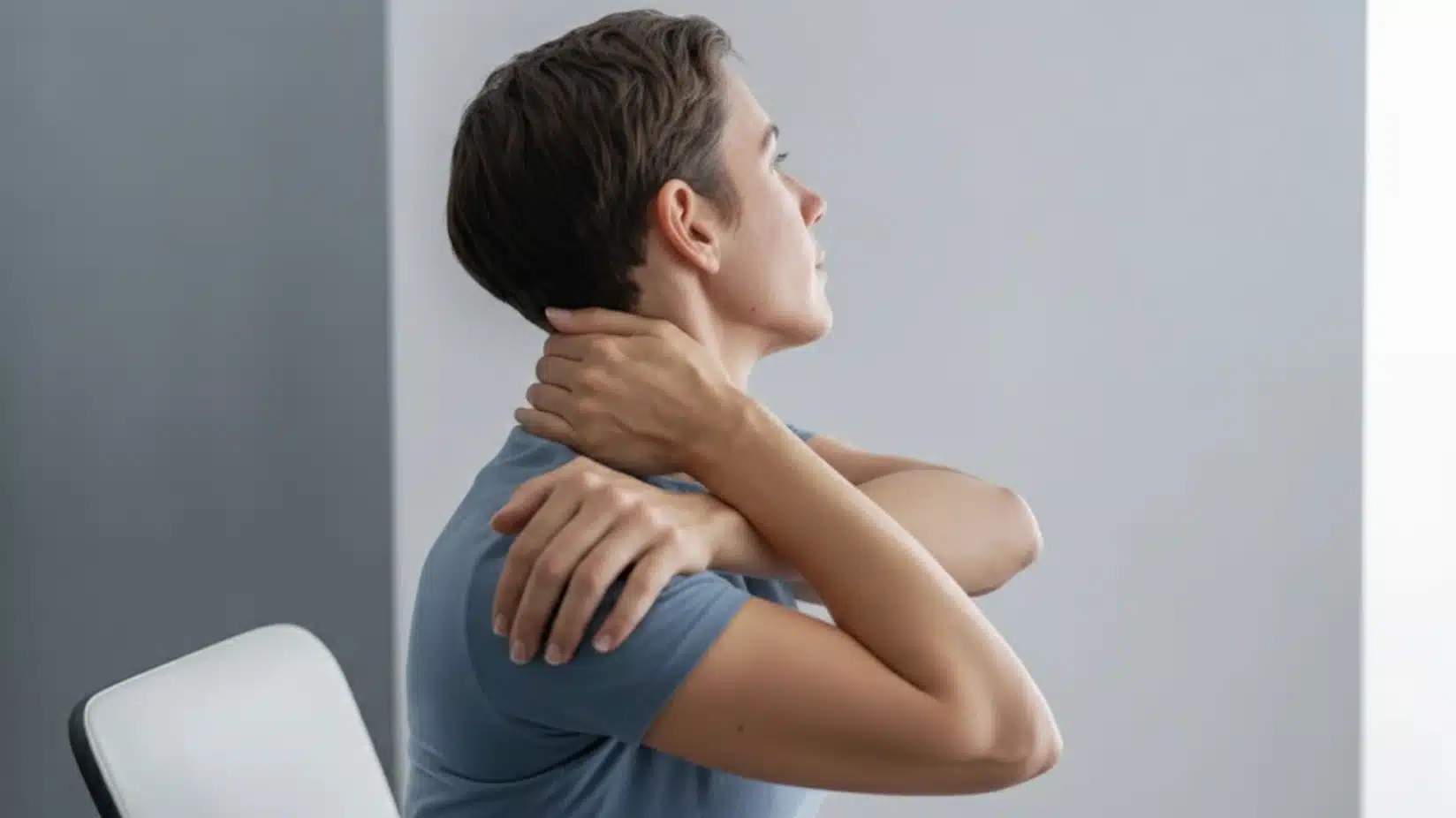
This method uses opposing forces applied by both hands to create traction in the neck, helping decompress tight joints and muscles.
How to do it:
- Sit straight with your shoulders relaxed.
- Place one hand flat on top of your shoulder and press gently downward.
- Use your other hand to cradle the opposite side of your neck and apply gentle upward traction.
- Hold this opposing pressure for 5–8 seconds.
- Release slowly and repeat on the other side.
- Perform 3–4 repetitions per side.
Why it works: The push-pull approach mimics light cervical traction, a technique used by physiotherapists to relieve nerve compression and muscle tension simultaneously.
7. Scalene Muscle Release
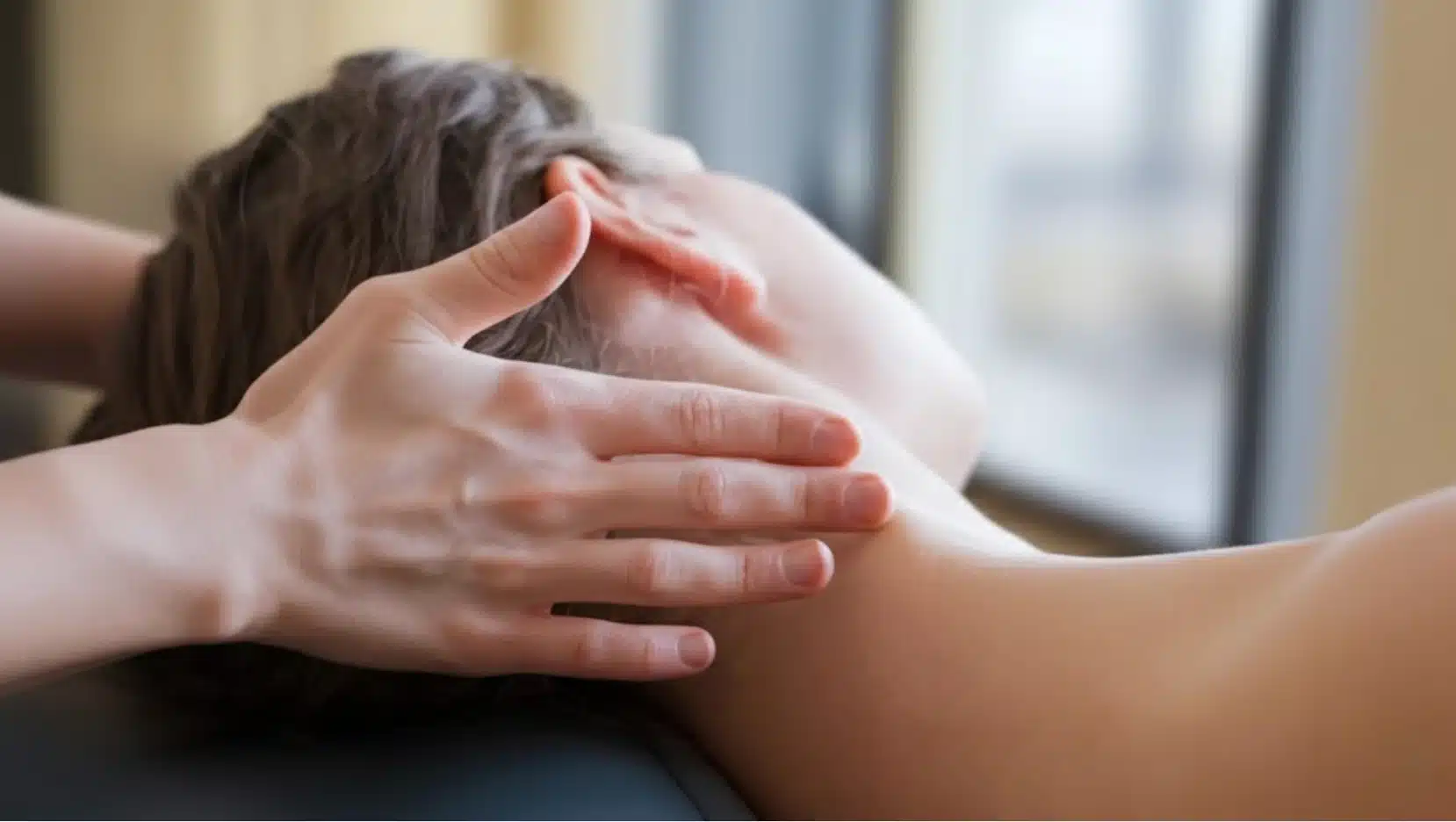
The scalene muscles run along the sides of the neck and are frequently overworked in people who breathe from the chest rather than the diaphragm.
How to do it:
- Sit upright and locate the scalene muscles on either side of your neck (between the ear and collarbone).
- Place two or three fingers gently on the muscle.
- Tilt your head slightly toward the opposite side to create a gentle stretch.
- Apply slow, circular finger pressure along the muscle length.
- Add light head rotation for a deeper release.
- Work each side for 1–2 minutes.
Why it works: Scalene tightness is often linked to poor breathing habits and forward head posture, making this release especially valuable for desk workers and those managing chronic neck stiffness.
8. Upper Trapezius Release
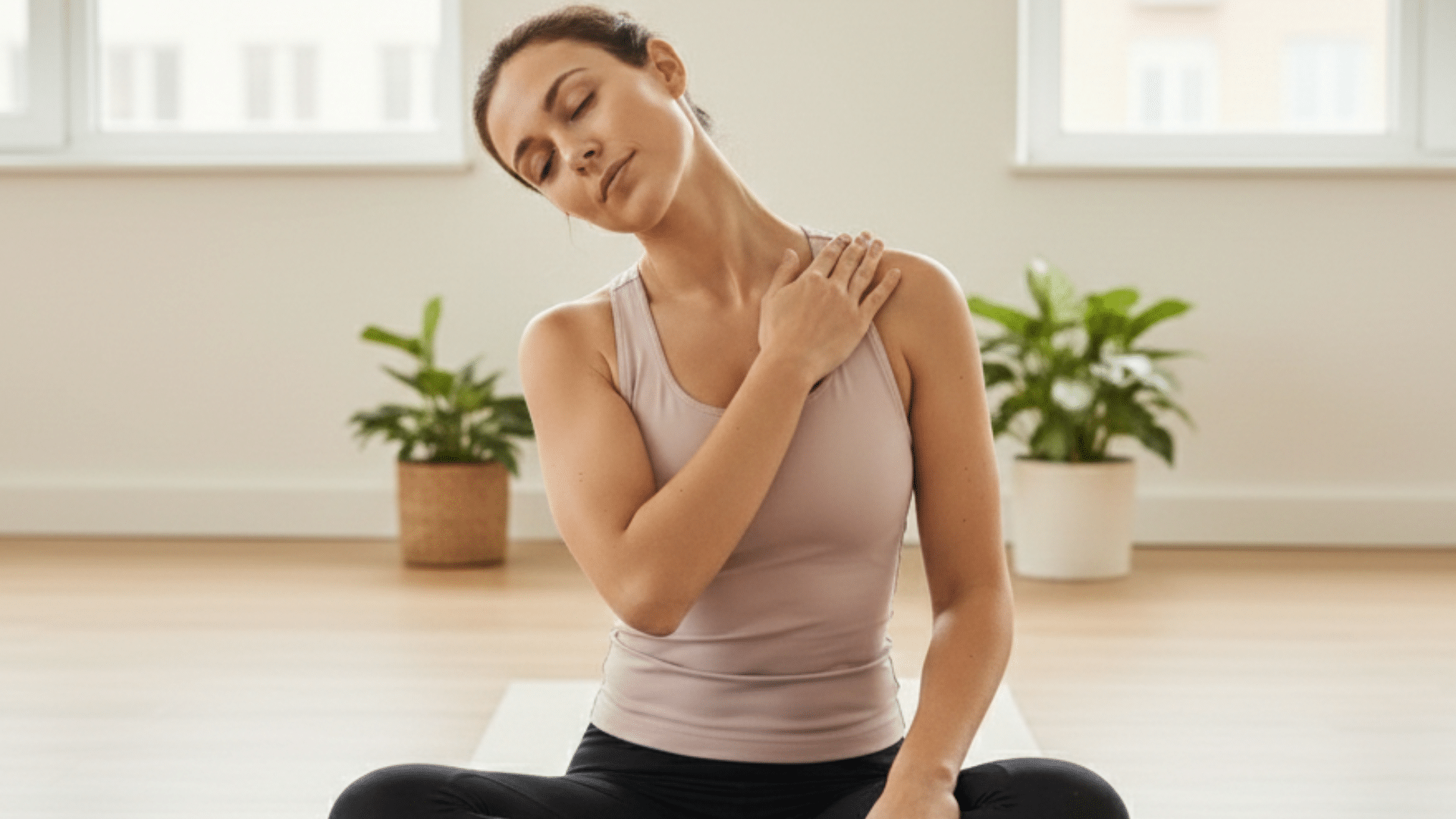
The upper trapezius is the muscle that runs from the neck to the shoulder, one of the most commonly tensed muscles in the body.
How to do it:
- Drop your shoulders back and down, away from your ears.
- Tilt your head slowly to one side until you feel a stretch along the opposite shoulder.
- Use the hand on the stretched side to apply gentle downward pressure to the upper trapezius muscle.
- Hold for 5–10 seconds, then slowly release.
- Switch to the other side and repeat.
- Perform 3 repetitions on each side.
Why it works: The upper trapezius is highly sensitive to emotional stress, which is why many people instinctively raise their shoulders when anxious or under pressure. Regular release work here pays off significantly over time.
9. Hook Technique

The hook technique uses curved fingers to target deep tension spots along the neck and upper back that are otherwise difficult to reach.
How to do it:
- Curl your fingers into a hook shape, using the tips for focused pressure.
- Reach across to the opposite side of your neck or the top of your shoulder blade.
- Apply slow, circular pressure on any area that feels tender or tight.
- Gradually work your way from the neck downward toward the shoulder.
- Focus on each tight area for 10–15 seconds before moving on.
- Keep pressure firm but controlled, avoid digging in aggressively.
Why it works: This technique is commonly taught in self-myofascial release and is particularly useful for reaching the levator scapulae, which sit deep along the inner edge of the shoulder blade.
Who Should Practice Neck Massages?
Neck massages are helpful for a wide range of people, particularly those experiencing stiffness, tension, or stress in the neck and shoulders.
Office workers and remote employees who spend long hours at screens often develop forward head posture and tight muscles, making regular neck massage a practical solution.
Individuals with stress-related tension or minor muscle strains can also find relief, as gentle techniques help reduce stiffness and promote faster recovery.
Athletes and physically active people benefit from post-workout massages that prevent overuse soreness and maintain flexibility. Additionally, consistent massage can reduce the frequency and intensity of tension headaches.
However, anyone with cervical issues, recent neck injuries, or nerve symptoms like tingling or numbness should consult a healthcare professional before attempting these techniques.
Common Mistakes to Avoid During Neck Massages
Even a well-intentioned massage can backfire if done incorrectly. Knowing what to avoid is just as important as knowing what to do. Mistakes that reduce effectiveness or cause harm:
- Too much pressure: aggressive force on the neck can bruise tissue or irritate nerves.
- Moving too fast: slow, steady strokes release muscles; speed works against you.
- Massaging the front of the neck: the carotid artery and thyroid sit here; leave this area alone.
- Poor posture while massaging: slouching cancels out the relief you’re working to create.
- Skipping the warm-up: cold muscles pushed too hard risk micro-tears and post-session soreness.
- Repeating one technique: cycle through 2–3 methods per session for better, more balanced results.
The goal is always comfort and gradual relief; any technique that causes sharp, shooting, or worsening pain should be stopped immediately.
Final Thoughts
Looking back, building a reliable practice around neck massage techniques genuinely shifted how my body handles daily stress. The physical relief was expected, but the mental clarity that followed each session was a welcome surprise.
These methods covered here give you a solid range to work with, from gentle kneading to deeper trigger point work, so you can match the approach to your schedule and where tension tends to settle.
Start slow, layer in new techniques as you grow more confident, and always let your body guide the pressure. Consistency matters far more than intensity. Tried any of these techniques? Drop your experience or questions in the comments below.