
When I started working with clients who had an apron belly, I noticed the same pattern every time: they were already doing something right.
Walking daily, cleaning up their nutrition, adding some core work. But the fold in the mirror looked unchanged, and the frustration was building.
The honest truth is that an apron belly before and after exercise progress is real, but it doesn’t always show up where or when people expect it.
This guide covers what an apron belly actually consists of, what causes it, which exercises move the needle at each stage, how hormones and nutrition factor in, and exactly what changes over a realistic timeline.
No overclaiming, no shame. Just what the research and my experience programming for clients with this concern actually support.
What is an Apron Belly?
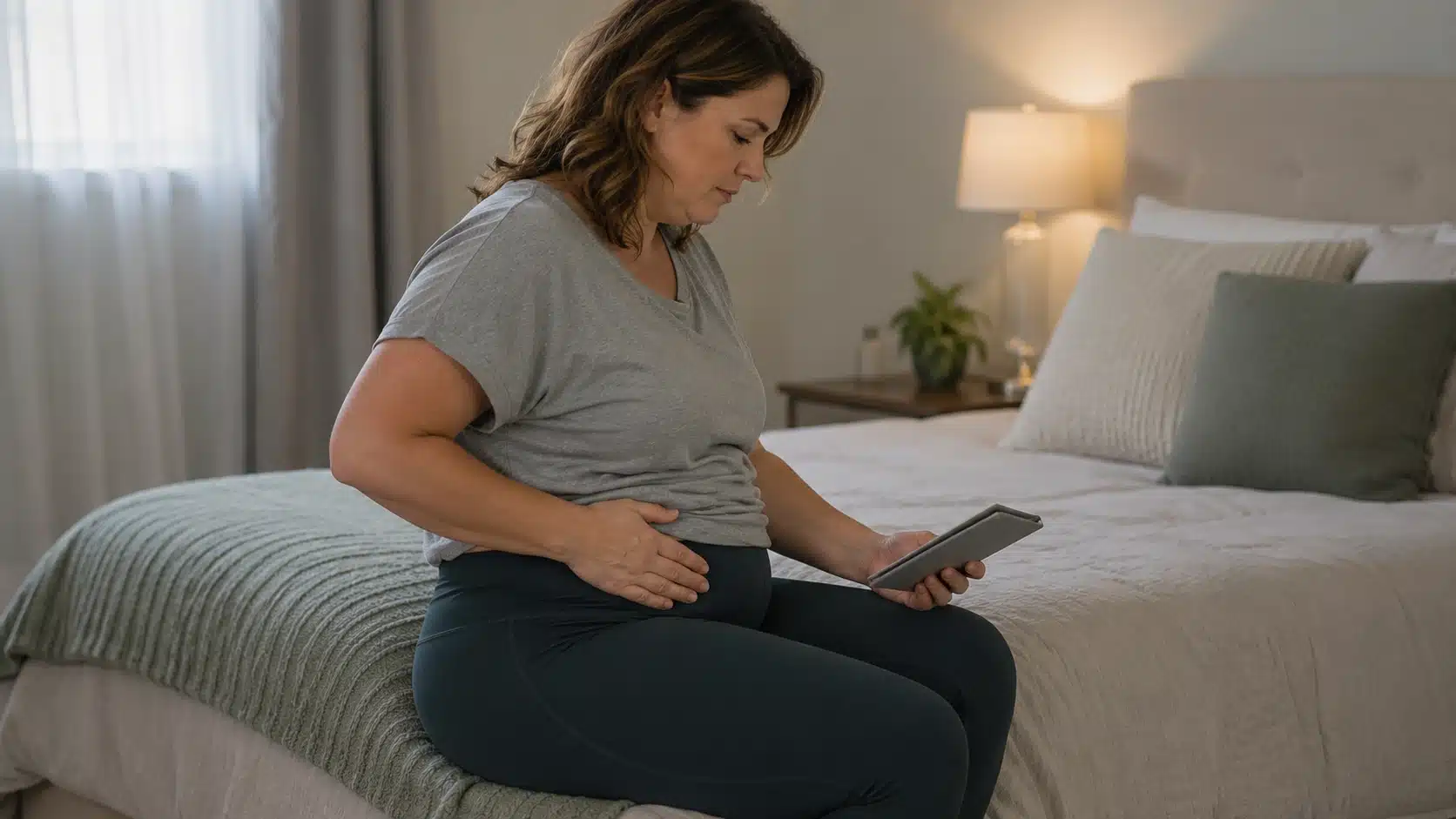
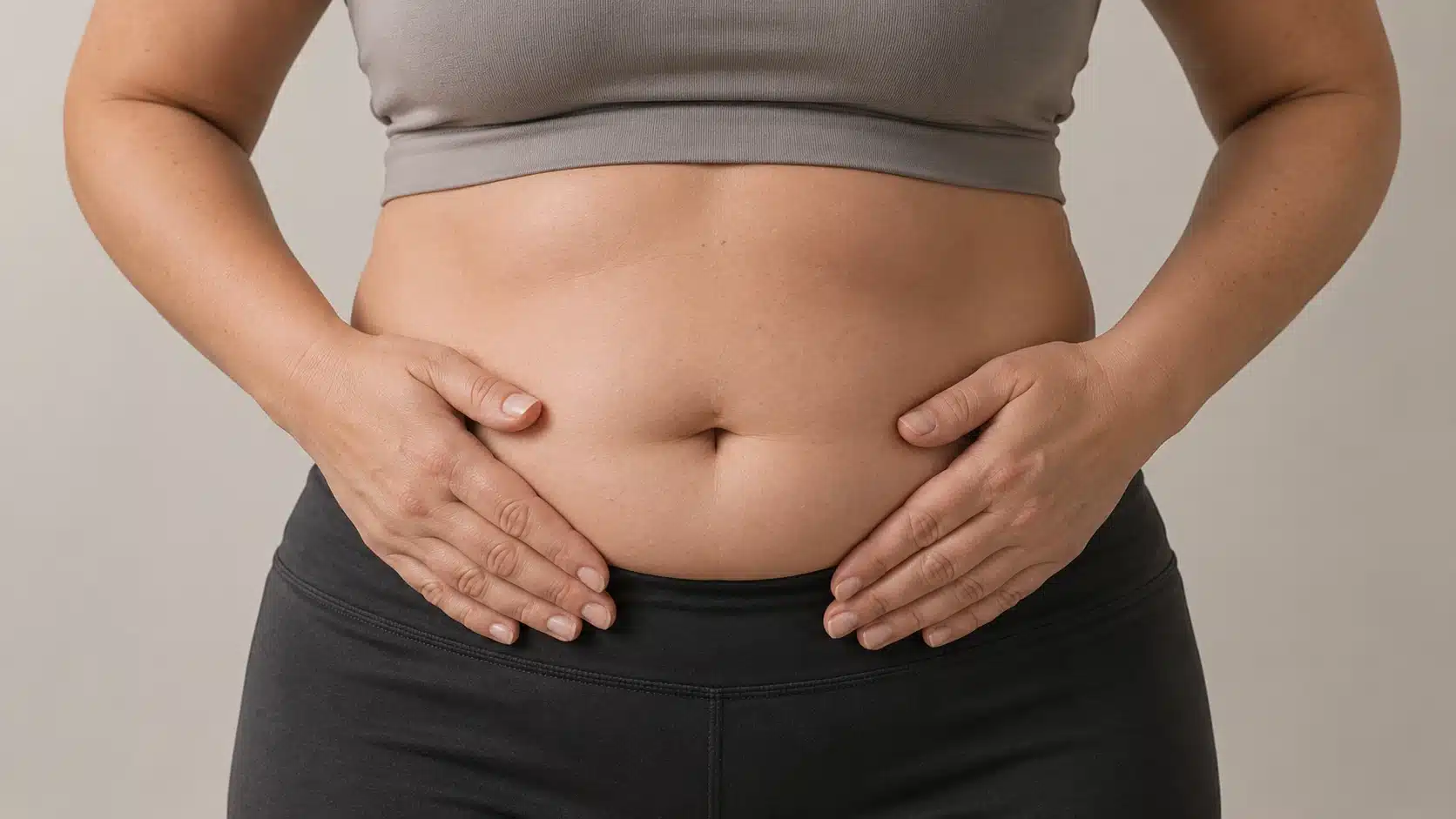
An apron belly is a lower abdominal overhang that extends past the waistband, sometimes reaching the upper thighs.
The medical term is pannus or panniculus. It is made up of subcutaneous fat, stretched skin, or a combination of both, and the ratio between those two components matters enormously for what any exercise plan can realistically achieve.
This is not simply a cosmetic concern. Depending on the size and degree of skin contact, an apron belly can cause chafing, rashes, sweat buildup, odor, lower back strain, posture shifts, and difficulty with certain movements.
Clothes that fit everywhere else may not accommodate the fold comfortably. These are daily discomforts that deserve practical answers.
Before choosing any exercise plan, it helps to understand what the overhang mostly consists of. Fat can shrink with overall fat loss.
Muscle tone can improve with training. Loose skin may improve slightly for some people but may not fully tighten after significant stretching.
Knowing which factor is dominant for you helps set realistic expectations for what a natural plan can change.
What Causes an Apron Belly?
What causes an apron belly is rarely one single factor, and that is exactly why two people can follow the same program and see very different outcomes. The most common contributing factors include:
- Pregnancy: Carrying a baby stretches abdominal skin and muscles significantly. After delivery, the skin does not always return to its previous position, and C-section changes can alter how the lower belly sits and heals.
- Major weight gain followed by weight loss: Fat tissue stretches the skin over time. When that fat is lost, the skin may not have enough elasticity to shrink back fully, particularly after large or rapid changes in body weight.
- Aging: Skin loses collagen and elasticity naturally with age, making the lower belly more likely to hang or fold even without significant weight changes.
- Genetics: Body fat distribution is partly genetic. Some people store fat preferentially in the lower abdomen, which contributes to the overhang pattern regardless of overall weight.
- Repeated weight fluctuations: Multiple cycles of gaining and losing weight can reduce skin’s ability to adapt, leaving persistent looseness even at lower body weights.
- Abdominal surgery: Procedures that affect the abdominal wall, including C-sections and other surgeries, can alter how tissue sits and moves.
The American College of Obstetricians and Gynecologists supports gradual return to activity after pregnancy, particularly when postpartum recovery and any underlying pelvic floor concerns are addressed first. If you are in that situation, read through the safety guidance below before starting any core program.
The Role of Hormones in Apron Belly Development
This is the section most exercise articles skip, and it explains why some people struggle disproportionately with lower belly fat despite consistent effort. In my experience coaching clients, hormonal factors are often the silent variable in stubborn apron belly cases.
Cortisol and Chronic Stress
Elevated cortisol from chronic stress directly promotes visceral fat storage in the lower abdomen.
Clients who exercise regularly but sleep poorly and carry high daily stress often see slower apron belly progress than their effort levels would suggest.
Managing sleep, recovery, and stress is not separate from your training plan. It is part of it.
Estrogen Decline During Perimenopause and Menopause
As estrogen levels decline during perimenopause and menopause, fat distribution shifts from the hips and thighs toward the abdomen.
Women who previously carried weight elsewhere may notice the apron belly developing or worsening during this phase regardless of diet or exercise habits.
This is a physiological shift, not a failure of the plan. The exercise approach remains the same, but expectations for the timeline need to be adjusted accordingly.
Insulin Resistance
When cells stop responding to insulin efficiently, the body stores more fat in the abdominal region. A diet high in refined carbohydrates accelerates this process.
If you have been consistent with training and nutrition for four to six months without meaningful change, a metabolic panel from your doctor is a sensible next step rather than simply increasing workout intensity.
Diastasis Recti
A common postpartum condition where the abdominal muscles separate along the midline, diastasis recti can make the belly protrude significantly even at a healthy weight.
If you notice a visible ridge or dome down the center of your abdomen during core exercises, stop standard crunches and sit-ups immediately.
A pelvic floor physical therapist can assess and guide a corrective program. The exercises in this article, particularly dead bugs and pelvic tilts, are generally safe for mild diastasis recti but should be confirmed with a professional if you suspect it.
| Safety Note: If you have been postpartum for less than six weeks, or if you had a C-section, get medical clearance before beginning any core training. Standard abdominal exercises before the abdominal wall has healed can worsen diastasis recti and delay recovery. |
Can Exercise Really Change an Apron Belly?
Exercise can help, and the degree depends on what the apron belly is primarily made of.
If the overhang includes a meaningful amount of subcutaneous fat, a consistent program combining full-body movement, strength training, and gradual changes in nutrition can reduce overall body fat over time, potentially reducing the size of the fold.
The CDC recommends at least 150 minutes of moderate aerobic activity weekly, combined with muscle-strengthening work on two or more days, as a foundation for adult weight management and physical health.
If the primary issue is stretched skin with less fat remaining, exercise can improve muscle tone, posture, and how the belly feels during movement, without fully removing the hanging skin.
That is not a failure of the plan. It is the physical reality of how skin responds after significant stretching. MedlinePlus notes that after significant weight loss, skin may not be elastic enough to return to its previous shape, which means nutrition supports fat reduction but cannot guarantee full skin tightening on its own.
Tracking the apron belly before and after exercise progress should include more than photos. Better walking comfort, stronger core control, reduced chafing, improved posture, and easier clothing fit are all real results worth noting even when the fold looks similar in a picture.
9 Best Exercises to Help Reduce an Apron Belly Naturally
There is no single movement that removes an apron belly. Learning how to get rid of an apron belly naturally involves a layered approach: calorie-burning activity, deep core work, full-body strength, skin comfort habits, and support strategies that make daily movement easier.
Here is what that looks like in practice, with the specific progressions I use when programming for clients at this stage.
1. Brisk Walking
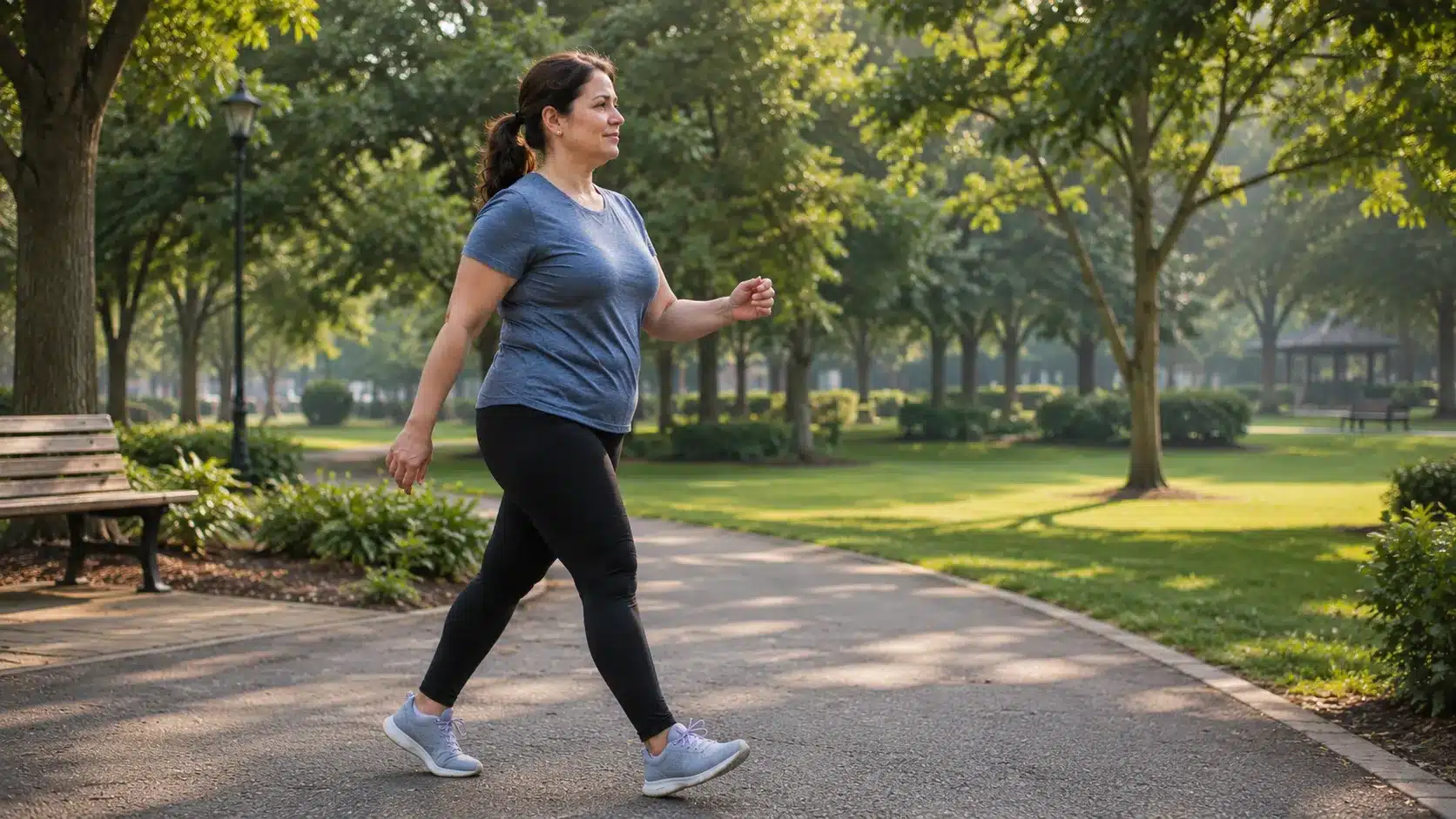
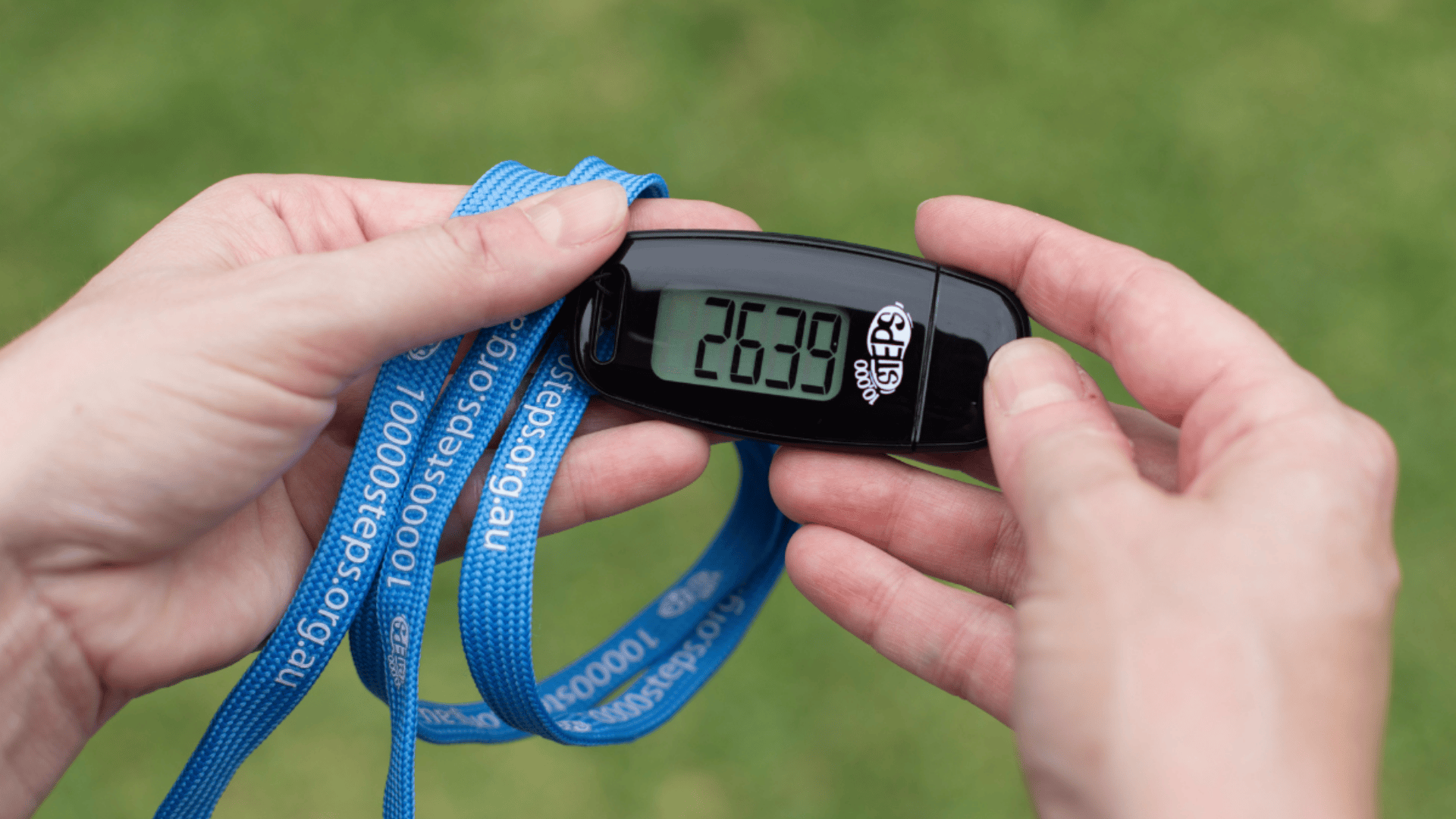
Walking is the most accessible starting point. It supports calorie burn, heart health, joint-friendly movement, and long-term consistency without requiring equipment.
For clients with belly movement discomfort, I always start here before adding anything else. Start with 10 to 15 minutes daily and build gradually.
Aim for 30 to 45 minutes of brisk walking most days once comfortable. Walking frequently and consistently matters more than speed or distance at the beginning.
Trainer Tip: Swing your arms actively during your walk and maintain an upright posture with your shoulders back. This small adjustment engages your core throughout the walk rather than letting the belly hang passively.
2. Full-Body Strength Training
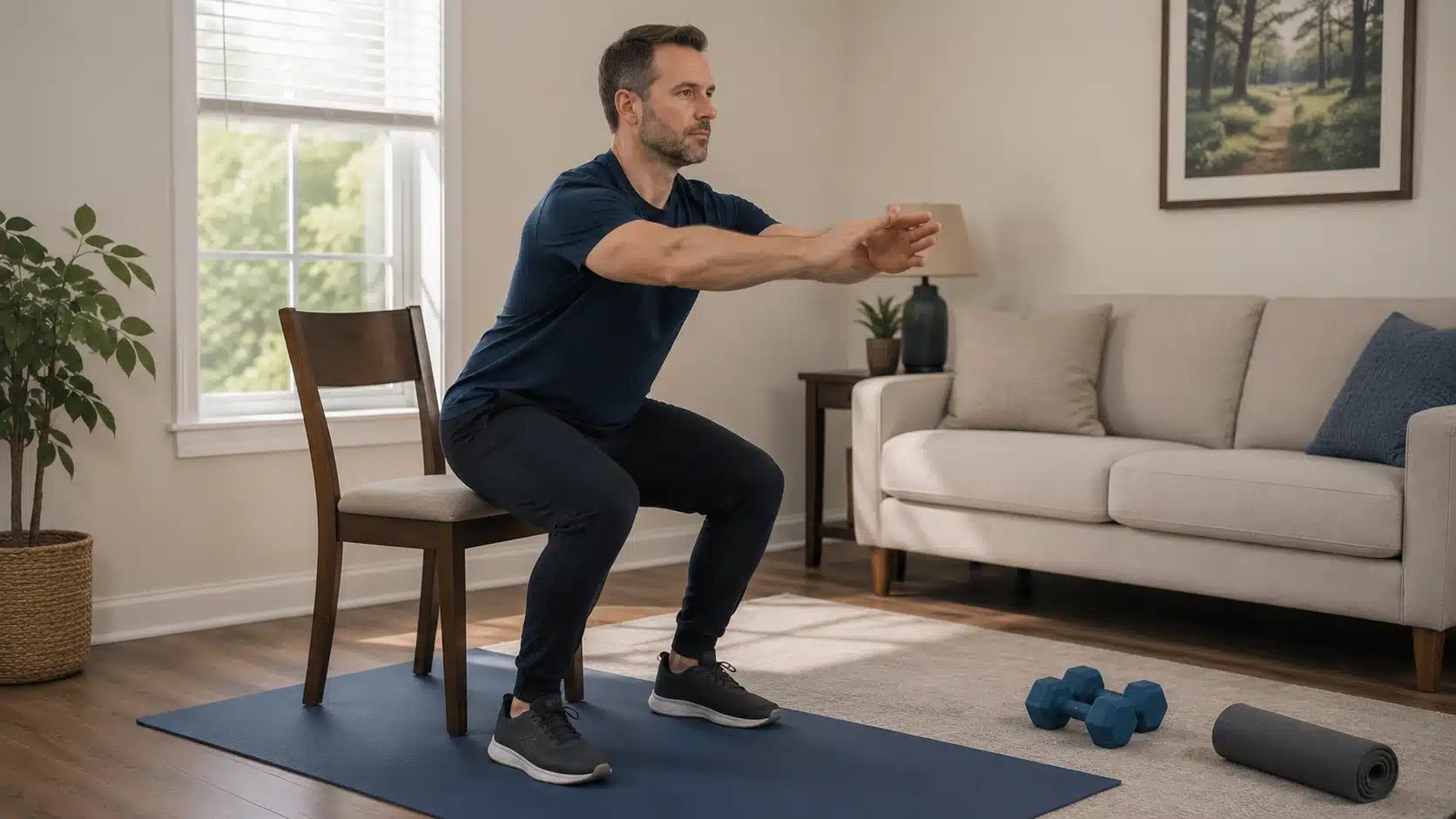
Strength training does not spot-reduce the belly, but it supports muscle retention, metabolic function, posture, and long-term weight management.
Squats to a chair, hip hinges, rows, presses, and step-ups all involve large muscle groups that burn more energy and improve overall body composition.
Two to three sessions weekly, 20 to 30 minutes each, is a realistic starting point. These toning exercises for body composition pair well with the core movements below.
Beginner progression: Bodyweight squats to a chair (8-10 reps), wall push-ups (8-10 reps), hip hinges with no weight (10 reps). Two sets each.
Intermediate: Add dumbbells to squats and hinges, progress to full push-ups.
Advanced: Incorporate resistance bands or a dedicated weighted core training session once weekly.
3. Dead Bugs
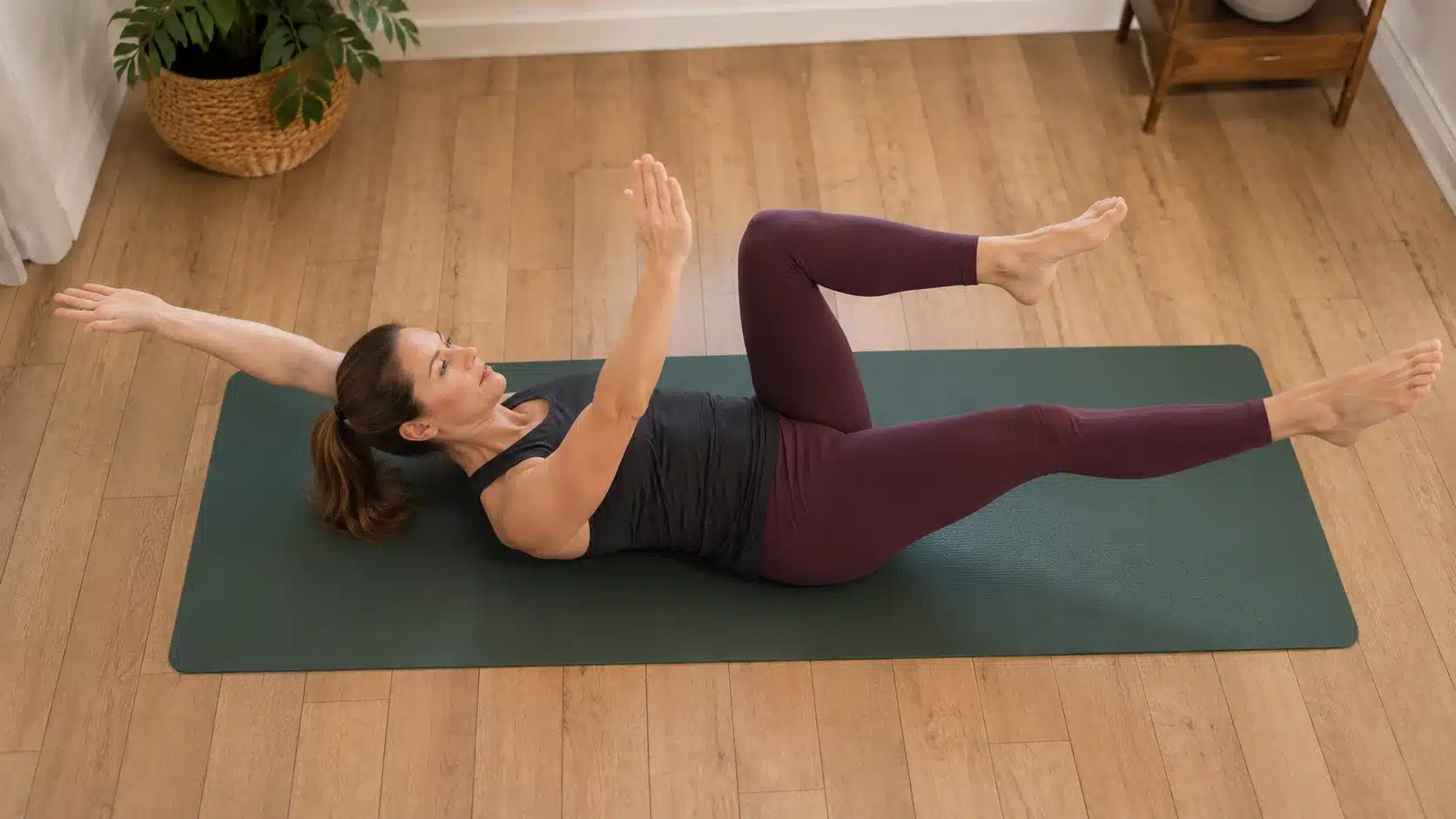
Dead bugs train the deep abdominal muscles, specifically the transverse abdominis, without aggressive spinal flexion.
This is one of the most valuable core exercises I program for apron belly because it builds the deep stabilizers that actually pull the belly inward, not just the superficial muscles that show in mirror photos.
Lie on your back, extend the opposite arm and leg slowly while keeping the lower back pressed firmly into the floor, return slowly, and repeat on the other side. Three sets of 8 to 10 reps per side, with a 3-second lowering phase.
Common mistake I see: letting the lower back arch away from the floor as the leg lowers. If that happens, reduce the range of motion until your core is strong enough to hold the position. Range comes later. Control comes first.
4. Pelvic Tilts
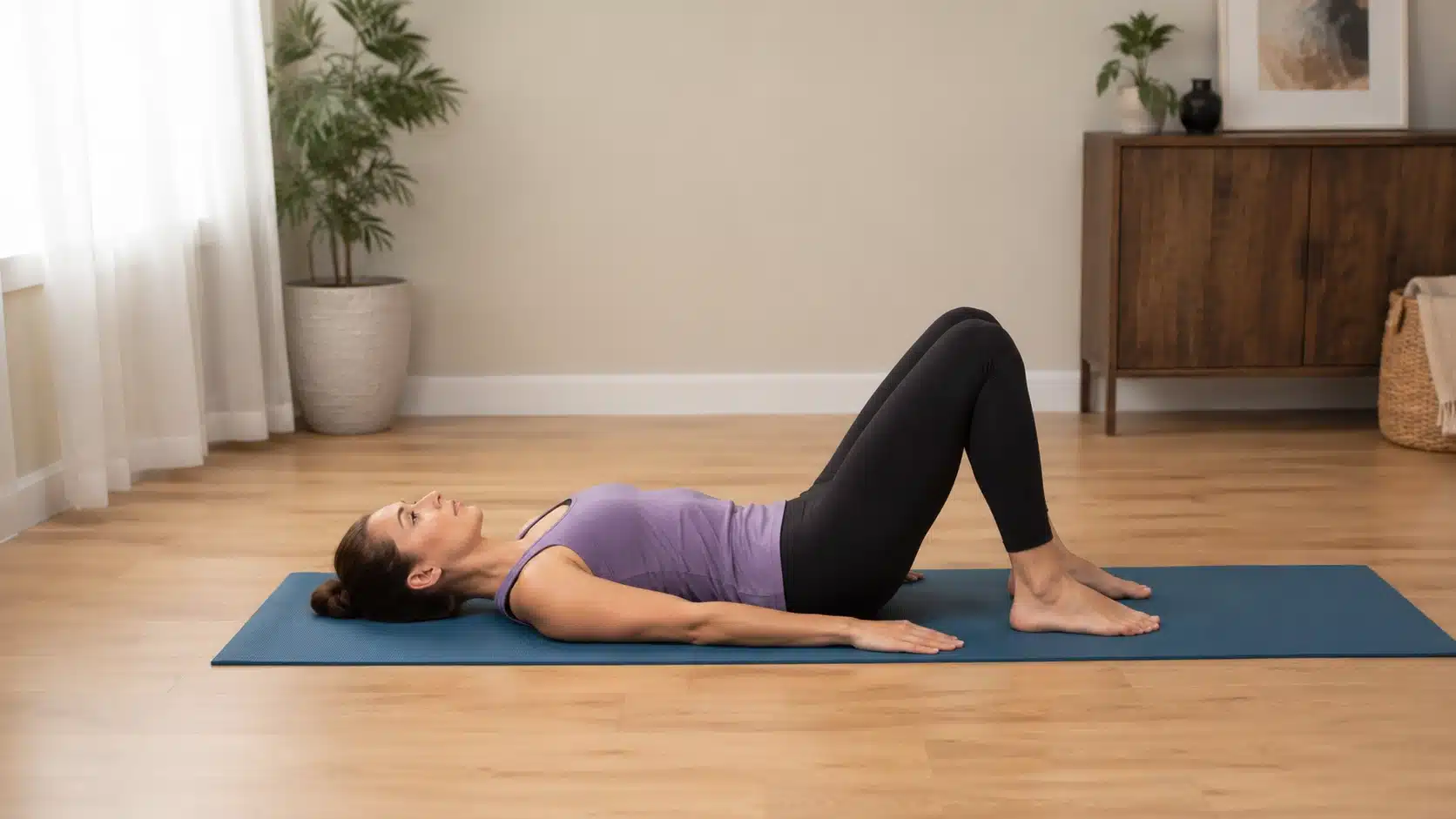
Pelvic tilts reconnect you with the lower abdominal wall and help correct anterior pelvic tilt, a posture pattern where the hips tip forward and push the lower belly outward.
This postural issue alone can make the apron belly look significantly larger than it actually is. Lie flat with knees bent, gently tilt the pelvis upward so the lower back presses into the floor, hold for three to five seconds, then release.
Two to three sets of 10 reps. This movement is particularly useful for postpartum readers with medical clearance and for anyone experiencing lower back tension during daily activity.
5. Bird Dogs
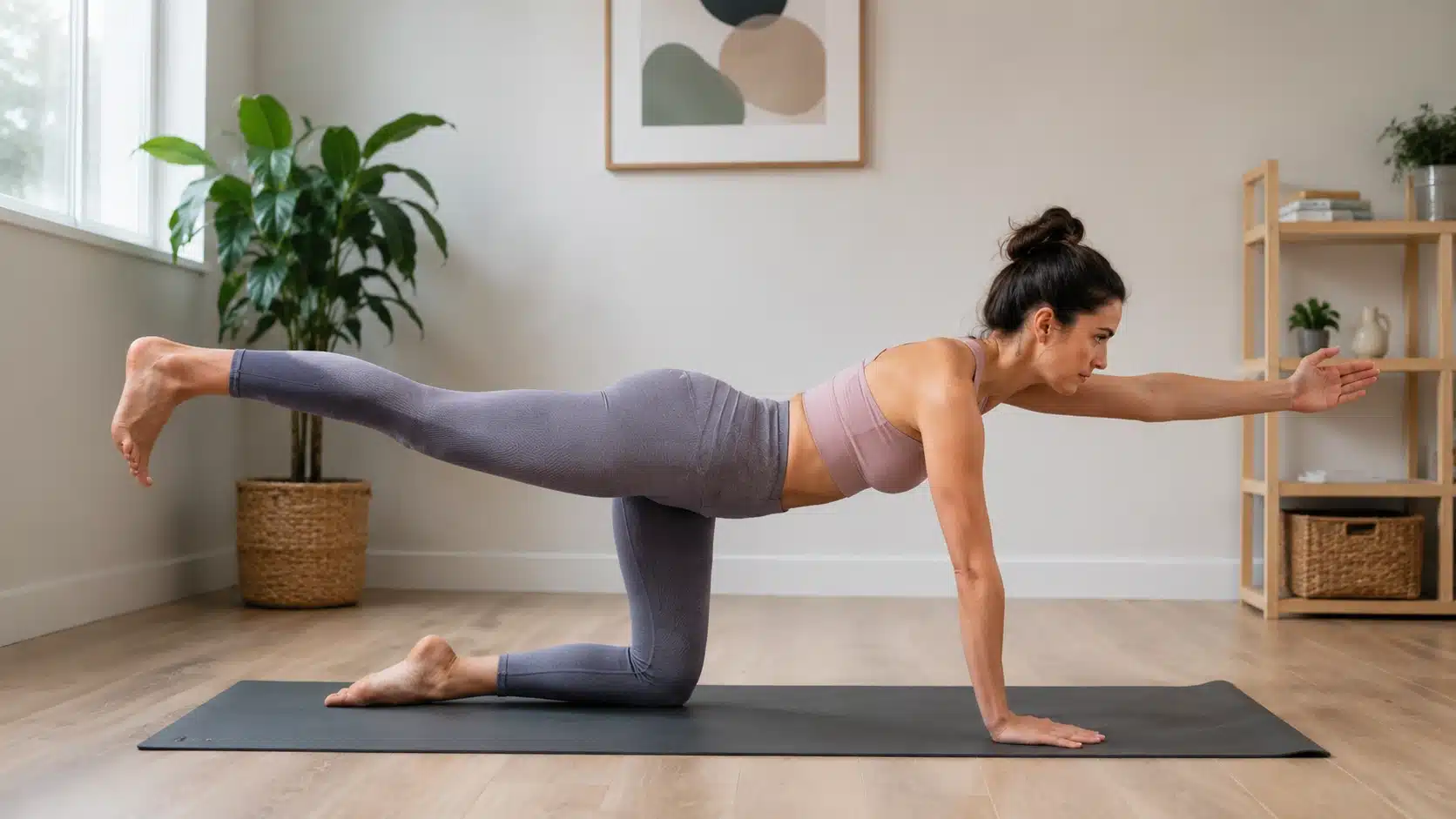
Bird dogs build stability across the core and back simultaneously. Starting on hands and knees, extend the opposite arm and leg slowly while keeping the hips level, hold two seconds at full extension, then lower slowly.
Three sets of 8 per side. When I program this for clients who cannot tolerate floor crunches due to belly pressure, bird dogs become the cornerstone of their core routine.
The anti-rotation demand is high despite the low-impact nature of the movement.
6. Glute Bridges
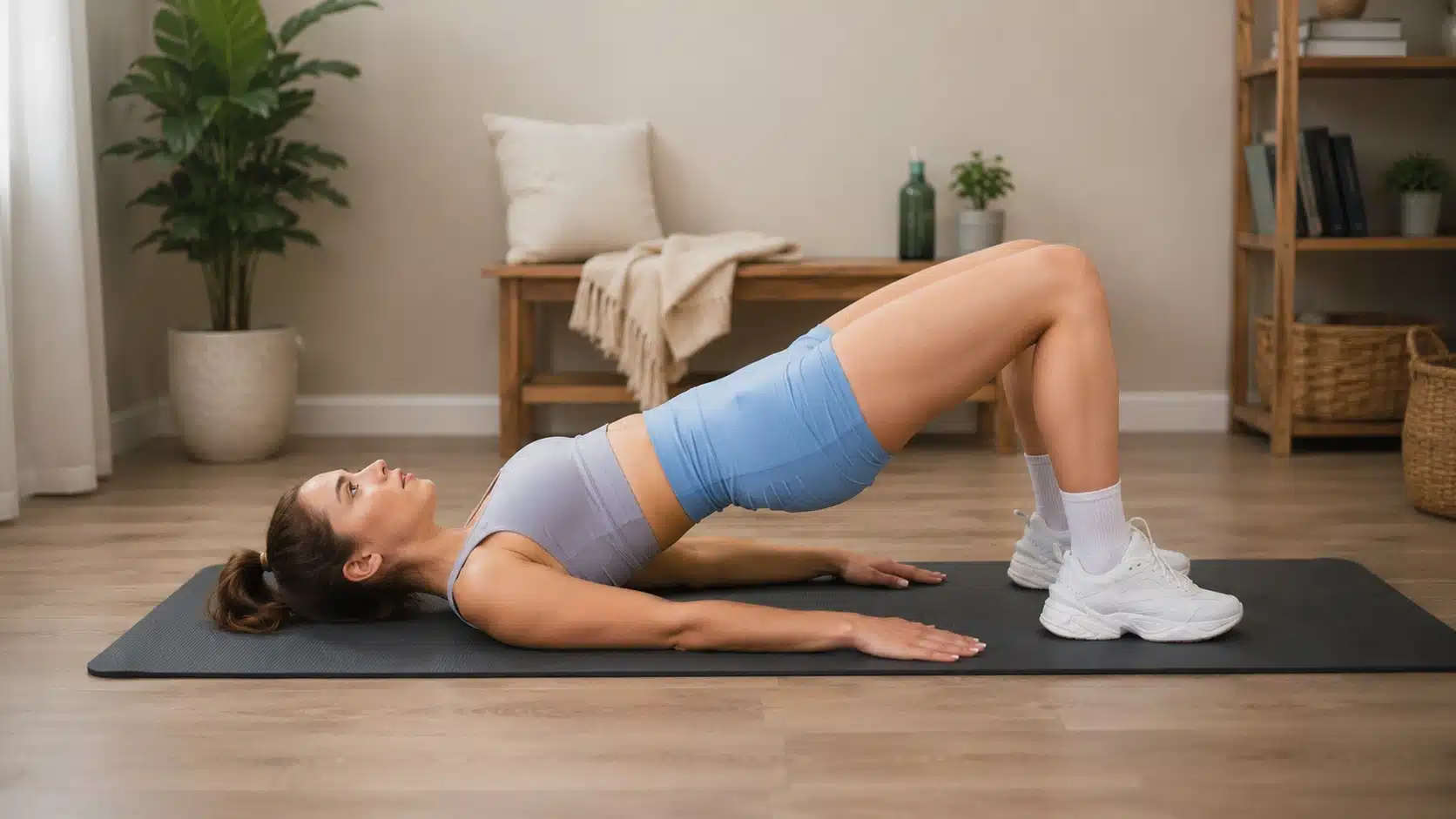
Strong glutes and hips support better posture and reduce lower back strain during walking and standing.
Lie flat and press the hips upward while engaging the core and squeezing the glutes firmly at the top. Hold two to three seconds, lower slowly, repeat for 12 to 15 reps, two to three sets.
The posterior chain is frequently undertrained in people with belly-related posture issues, and glute weakness is often a direct contributor to the anterior pelvic tilt that worsens the overhang appearance.
Building this up is part of the structural fix. For a more targeted glute approach, adding glute med exercises to your weekly routine addresses the lateral hip stability that walking and posture depend on.
7. Standing Marches
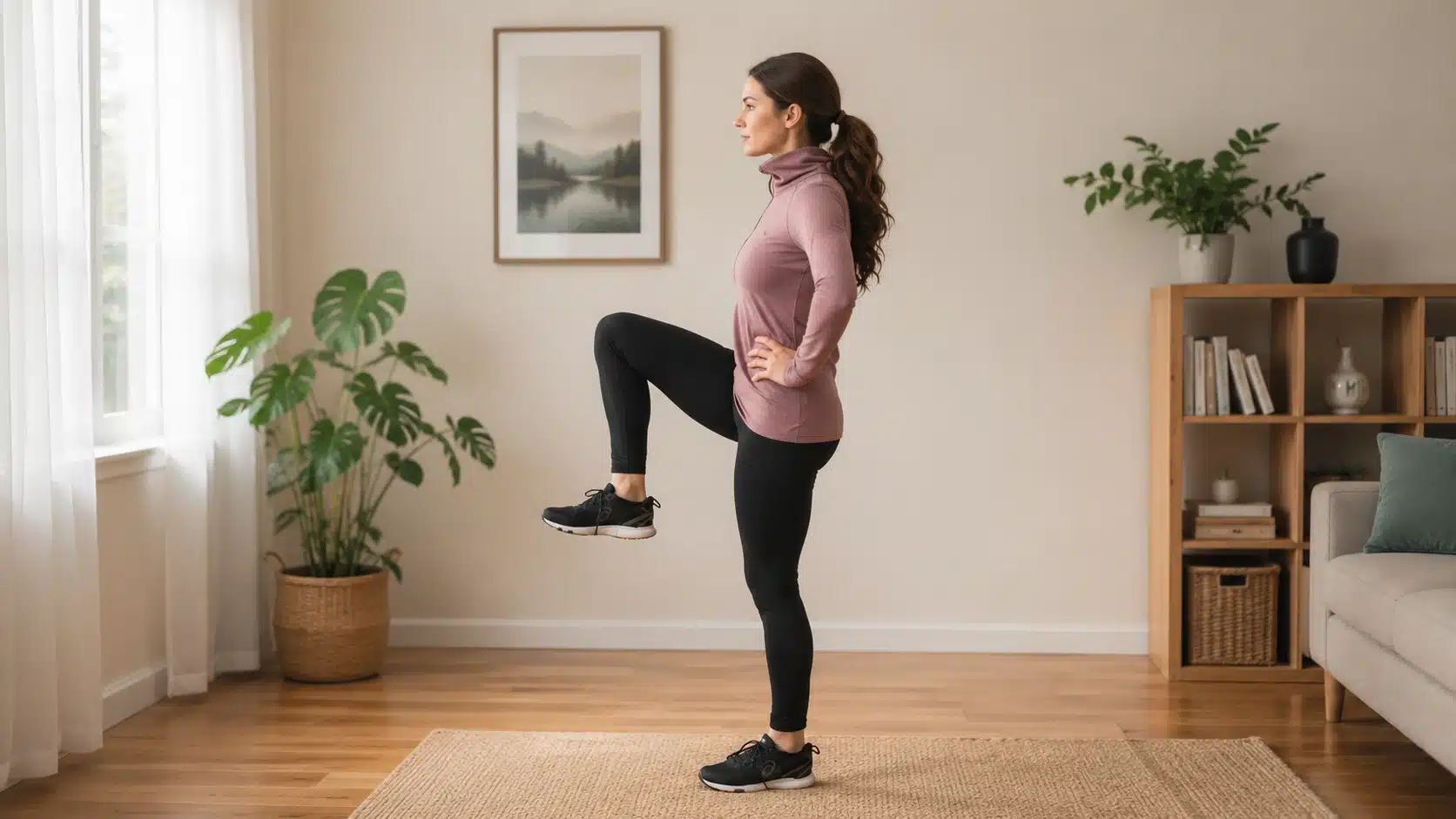
Standing marches are a beginner-friendly core and balance option for readers who find floor exercises uncomfortable due to belly pressure or limited mobility.
Lift one knee to hip height slowly while breathing steadily, lower with control, alternate sides. Two sets of 20 total reps (10 each side).
This engages deep stabilizers and improves awareness of upright posture without any floor contact, making it a strong bridge movement while you build the floor exercise capacity.
8. Skin-Fold Comfort and Hygiene
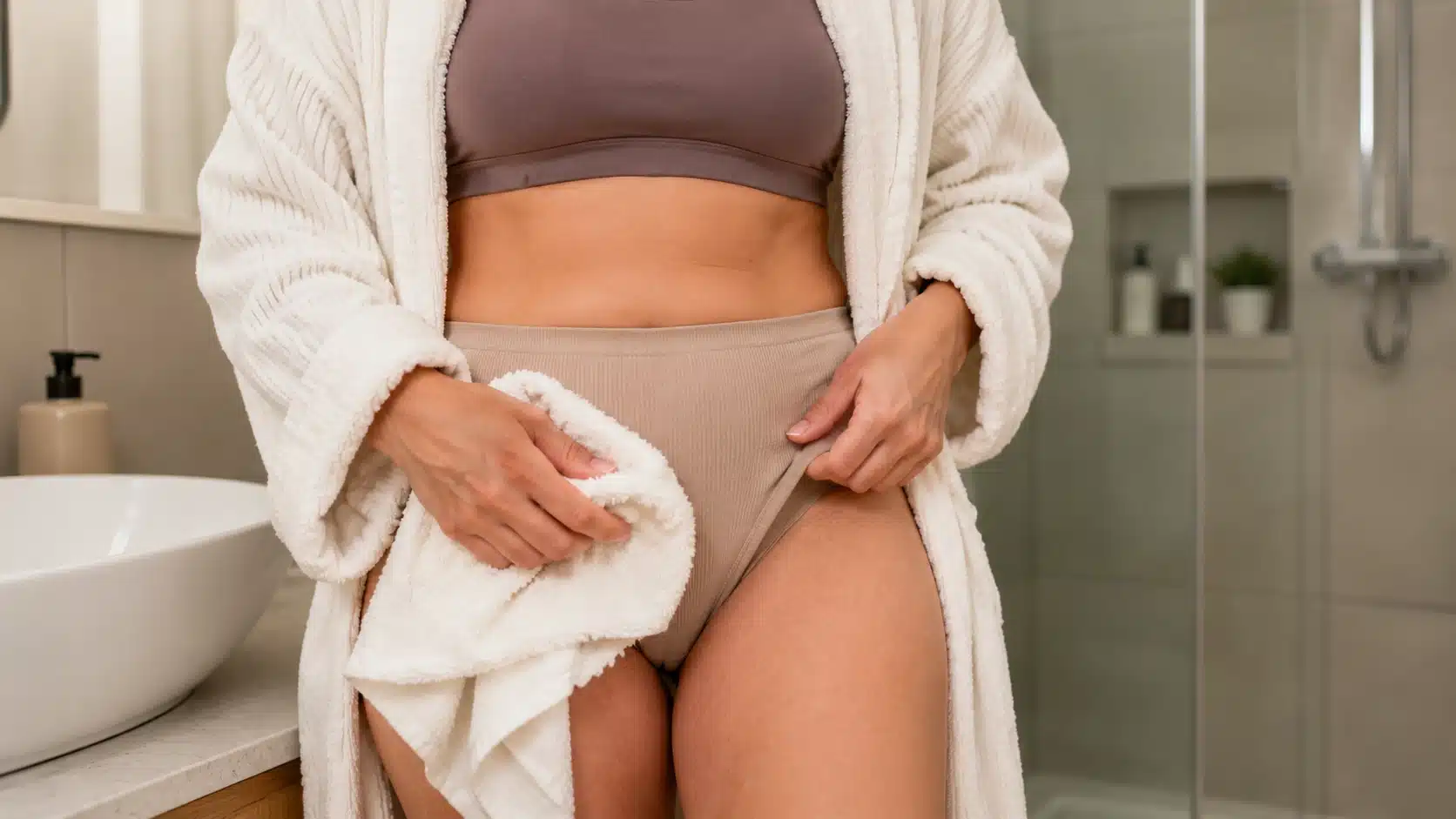
Keeping the fold clean and dry is part of managing apron belly symptoms, not just personal care. Dry carefully after showers, change sweaty clothes promptly, and use moisture-wicking fabrics during activity.
If the skin inside the fold shows persistent redness, odor, broken skin, or signs of infection, that warrants a medical appointment rather than a home remedy.
Skin fold infections (intertrigo) require antifungal or antibiotic treatment to prevent worsening and should not be managed through exercise modifications alone.
9. Supportive Clothing
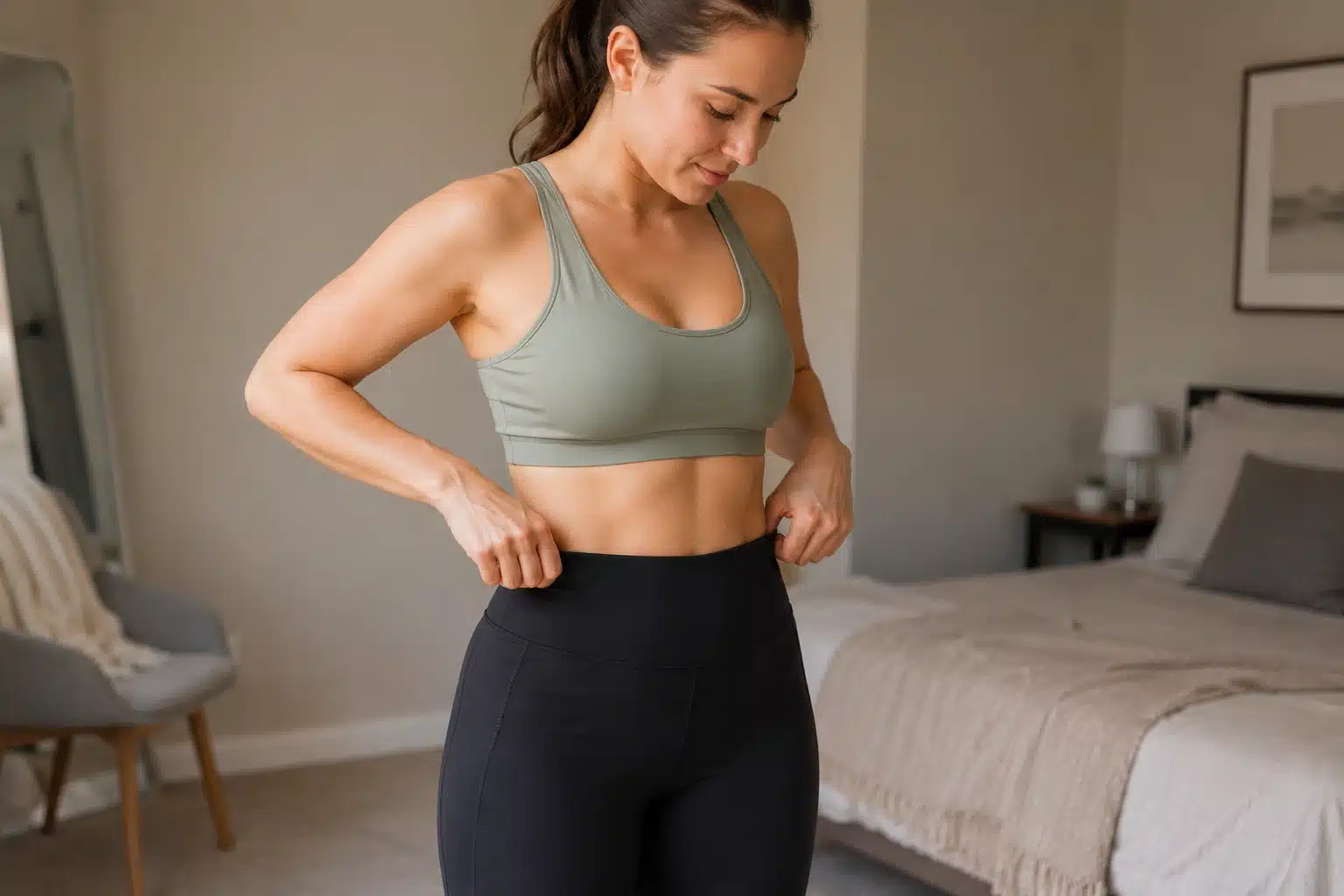
High-waist leggings, anti-chafe shorts, and moisture-wicking fabrics reduce friction during movement.
Compression garments designed for support during activity, not permanent compression, can make walking and strength work more comfortable.
For postpartum readers, abdominal support wraps can reduce discomfort during the early weeks of returning to activity, though they should be used as a support tool rather than a substitute for progressive core rebuilding.
What Diet Changes Help Reduce an Apron Belly Naturally?
Diet cannot target only the lower belly fold, but it can support gradual fat loss when the apron belly includes stored fat.
If loose skin is the main issue, food changes still help with energy, recovery, and weight stability, but they cannot fully tighten stretched skin on their own.
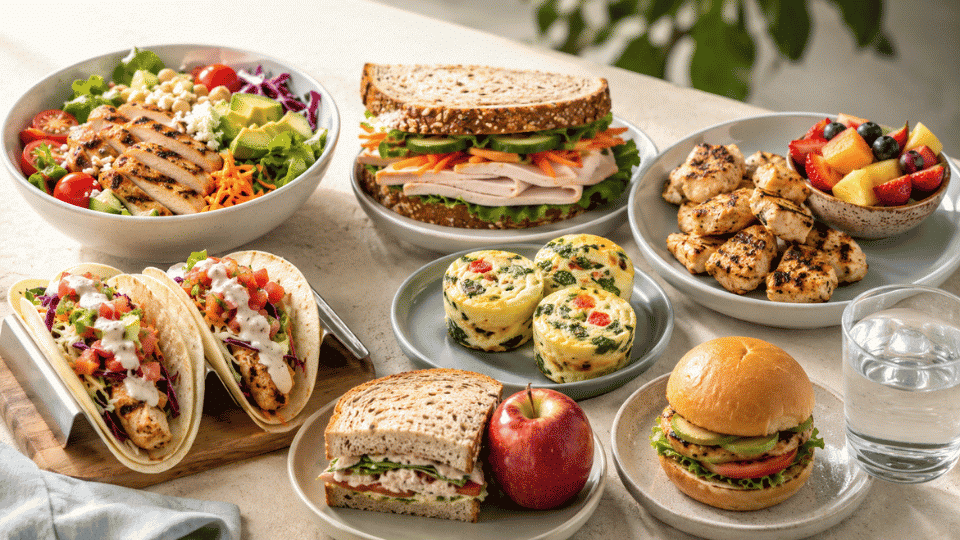
Here are the changes that consistently move the needle for the clients I work with:
| Diet Change | How It Helps | Simple Way to Start |
| Add protein to each meal | Preserves muscle during fat loss and keeps meals filling longer | Eggs, yogurt, fish, chicken, tofu, beans, or lentils at every meal |
| Eat more fiber | Supports fullness and steadier portion control | Add vegetables, fruit, oats, beans, or whole grains at each meal |
| Reduce sugary drinks | Cuts calories that do not support fullness or muscle | Replace soda, juice, and sweet coffee drinks with water or unsweetened tea |
| Build balanced plates | Keeps meals steady and repeatable across the week | Pair protein, vegetables, fiber-rich carbs, and a small amount of fat |
| Keep meals regular | Reduces overeating after long food gaps | Use a simple meal and snack rhythm that fits your actual schedule |
| Avoid crash diets | Prevents fatigue, cravings, muscle loss, and rebound weight gain | Change one habit at a time for at least two weeks before adding another |
| Hit your protein target | Protects muscle mass during caloric reduction | 0.7 to 1 gram of protein per pound of body weight daily is a good working range |
| Stay hydrated | Supports workouts, energy, and digestive function | Keep water nearby during walks, workouts, and meals throughout the day |
How to get rid of apron belly naturally is not about one special food. A better plan is repeatable meals, regular movement, strength training, and enough time for overall body fat to change.
A registered dietitian can give a protein target specific to your body weight, health history, and activity level if you want precision beyond the general range above.
Gradual Nutrition Changes

Sustainable fat loss supports how to get rid of an apron belly naturally better than any single exercise.
A protein-forward approach with fiber-rich foods, regular meals, and hydration creates a gradual caloric adjustment without extreme restriction.
The strongest natural plan is not one movement done perfectly. It is consistent movement, strength work, skin care habits, and nutrition changes repeated over months, not weeks.
A Weekly Exercise Plan for Apron Belly: What to Do and When
One thing I see consistently is that people have the right individual exercises but no structure around them.
Here is the weekly template I use as a starting point for clients working on apron belly before and after exercise results.
It is built around the moves in this article and can be adjusted based on your current fitness level.
| Day | Activity | Duration |
| Monday | Brisk walk + pelvic tilts + standing marches | 30 min walk, 10 min core |
| Tuesday | Full-body strength: chair squats, hip hinges, rows, presses | 25 to 30 min |
| Wednesday | Brisk walk (active recovery) | 20 to 30 min |
| Thursday | Dead bugs + bird dogs + glute bridges (3 rounds) | 20 min |
| Friday | Full-body strength (repeat Tuesday session) | 25 to 30 min |
| Saturday | Longer brisk walk | 40 to 45 min |
| Sunday | Rest or gentle stretching | As needed |
This template totals approximately 180 minutes of movement per week, which meets CDC guidelines for aerobic activity and includes two full-body strength sessions.
Adjust the walk duration down in week one if needed. The core sessions are short by design. Consistency over four weeks is more valuable than intensity in week one.
Apron Belly Before and After Exercise: What Changes Over Time?
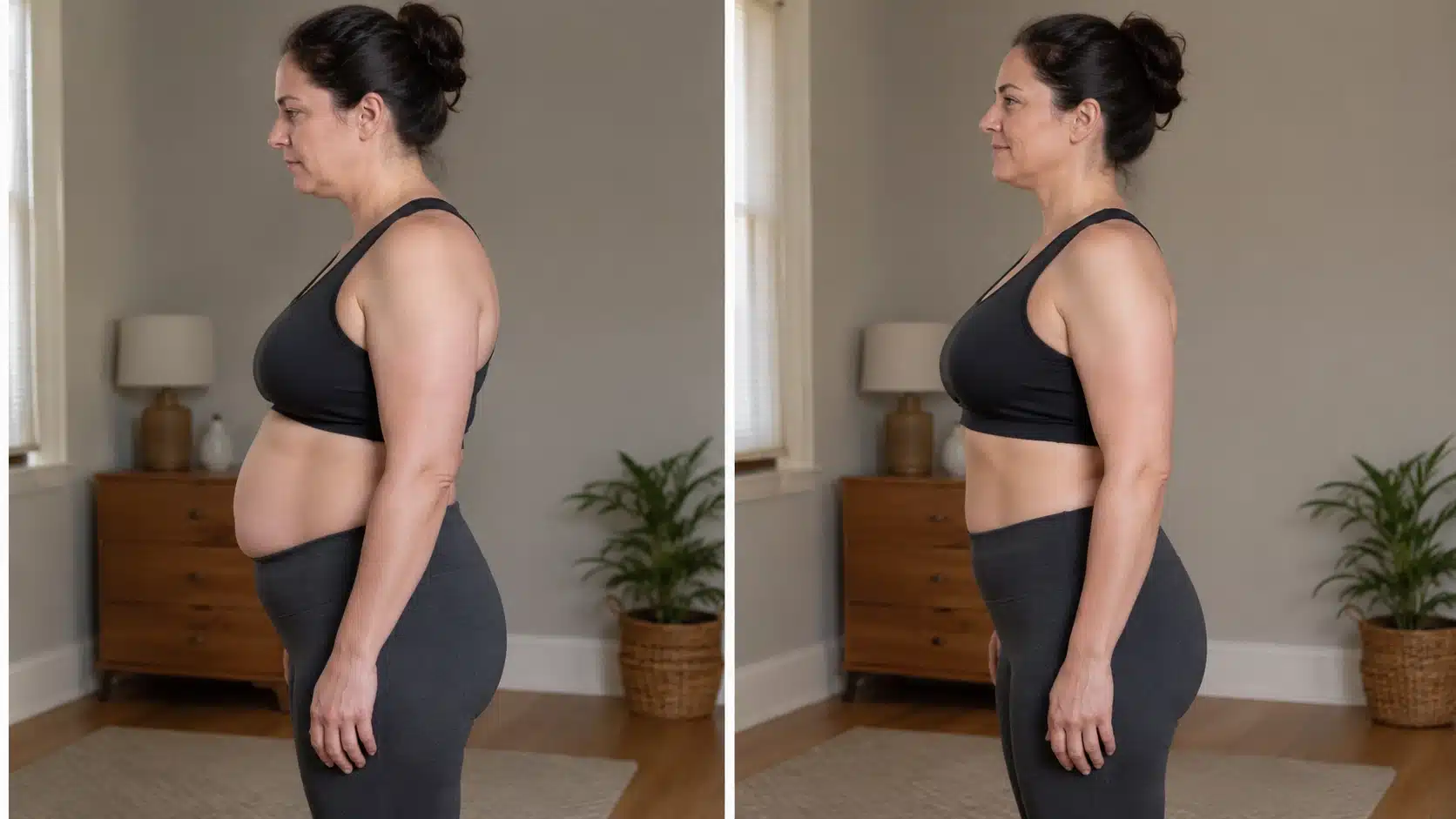
Understanding the realistic timeline for apron belly before and after exercise changes helps manage expectations without losing motivation. Here is what tends to shift, and what may stay the same:
| Timeframe | What May Improve | What May Not Change Much |
| 2 to 4 weeks | Walking stamina, less stiffness, better routine, improved energy | Visible fold size looks similar; this is normal and expected |
| 6 to 8 weeks | Stronger core, improved posture, less lower back tension, easier movement | Loose skin may still hang; posture improvement is often more visible than fat change |
| 3 to 6 months | Fat loss visible if nutrition and training are consistent; 1 to 2 inches off the waist is realistic | Skin laxity after pregnancy or major weight loss may remain |
| 6 months and beyond | Body composition shifts, daily comfort improves significantly, and clothing fits better | A large pannus may still need medical review regardless of the progress made |
A slower visible change does not mean the plan is failing. For most people, comfort, posture, and stamina improve well before the mirror reflects those changes.
I tell clients to take progress notes on how their clothes fit, how their walk feels, and how their back holds up during a long day. Those indicators often shift weeks before photos do.
Can an Apron Belly Cause Health Problems?
An apron belly is not always only a cosmetic concern. When the fold rests against skin, clothing, or the upper thighs, it can create friction, sweat buildup, and real daily discomfort.
The concern depends on fold size, skin sensitivity, hygiene access, heat, activity level, and any existing medical conditions.
- Skin irritation (intertrigo): Moisture and rubbing under the fold can lead to redness, itching, soreness, or burning. This is one of the most common and most manageable symptoms.
- Chafing during movement: Walking, workouts, and long periods of standing may feel uncomfortable if the skin rubs against clothing or itself.
- Rashes or odor: Trapped sweat makes the area harder to keep dry, which can increase irritation or odor, particularly in hot weather or during exercise.
- Lower back and posture discomfort: Extra weight at the front of the body affects standing posture and may make the lower back feel strained after long periods of standing or walking.
- Exercise barriers: Pain, bouncing, or rubbing can make walking and strength training harder to maintain consistently, which is one reason supportive clothing matters.
- Clothing discomfort: Waistbands, seams, and tight workout gear may press into the fold or worsen friction during activity.
Seek medical care for persistent rash, bleeding, broken skin, spreading redness, swelling, fever, strong odor, or pain that does not improve with hygiene changes.
These signs suggest a skin fold infection (intertrigo or candidiasis) that requires treatment rather than just lifestyle management.
When is a Medical Conversation Worth Having?

When the fold causes pain, persistent skin infections, mobility difficulties, or significant emotional distress, exercise alone may not be enough, and a medical conversation becomes appropriate.
MedlinePlus distinguishes a panniculectomy, which removes excess overhanging skin and fat from the lower abdomen, from an abdominoplasty, which may also address underlying muscles.
Panniculectomy may be covered by health insurance if the fold causes documented medical problems such as recurrent skin infections, rashes, or mobility impairment.
Neither is a fitness recommendation here, but knowing the distinction helps you understand what a clinician might discuss if the situation warrants it.
A pelvic floor physical therapist is worth seeing if the apron belly developed after pregnancy or C-section, or if there is any pelvic pain, pressure, or suspected diastasis recti.
This referral is often more immediately useful than a surgical consideration for postpartum cases.
A registered dietitian can help if weight management feels cyclical, previous diets keep backfiring, or food choices feel consistently difficult to manage on your own.
Frequently Asked Questions About Apron Belly and Exercise
These are the questions I hear most often from clients and readers working through this concern. The answers draw from both the research and practical programming experience.
How to get rid of apron belly without surgery?
Combine consistent full-body exercise, gradual nutrition changes, and proper skin fold hygiene over several months.
Fat reduces through a caloric deficit; loose skin may not fully retract but improves with better posture, stronger core and glutes, and reduced fat. Most people following a consistent plan see real changes within six months.
What causes an apron belly even at a healthy weight?
Usually loose skin rather than fat — tissue stretched beyond its ability to retract after pregnancy, prior obesity, rapid weight loss, or aging. Genetics also influence how skin responds to stretching.
Exercise and nutrition optimize muscle tone and appearance, but cannot restore permanently altered skin elasticity. This is physiology, not personal failure.
Does belly fat and loose skin respond differently to exercise?
Yes. Subcutaneous fat shrinks with consistent training and nutrition; loose skin may not tighten regardless of effort. Most apron bellies involve both, so results vary.
Someone whose overhang is mostly loose skin will see different visual outcomes than someone carrying mostly fat, even following the same program with equal consistency.
Can an apron belly cause back pain?
Yes. A lower abdominal overhang shifts your center of gravity forward, increasing load on the lower back and hips.
Anterior pelvic tilt (common with apron belly) shortens hip flexors and weakens glutes, reducing pelvic stability. Strengthening the core, glutes, and posterior chain reduces this strain over time, even before the fold visibly changes.
How much protein should I eat when trying to reduce an apron belly naturally?
Aim for 0.7–1 gram per pound of bodyweight to preserve muscle during fat loss. For a 160-pound person, that’s roughly 112–160 grams daily, spread across three to four meals.
Protein manages hunger, supports recovery, and protects lean mass. A registered dietitian can tailor the target to your specific needs and health history.
Why do I have an apron belly even though I exercise regularly?
The overhang may be primarily loose skin, which exercise cannot tighten. Hormonal factors (elevated cortisol, insulin resistance, or menopause-related estrogen decline) can also stall fat loss.
Anterior pelvic tilt makes the fold appear larger than it is. Often, nutrition is the missing variable. Address all these factors rather than simply adding more training volume.
Is it safe to exercise with skin irritation or a rash in the fold?
Light walking is usually fine if irritation is mild and skin is unbroken. Avoid exercises that increase fold friction during flare-ups.
Keep the area clean and dry, and wear moisture-wicking clothing. See a doctor if rash, odor, or broken skin persists beyond a few days. Skin fold infections require medical treatment, not home remedies.
Can posture affect how an apron belly looks and feels?
Significantly. An anterior pelvic tilt (hips tipping forward) pushes the lower belly outward, making the fold more pronounced.
Pelvic tilts, glute bridges, and dead bugs directly correct this pattern. Many people notice a visible improvement in how their belly sits within six to eight weeks, even before meaningful fat loss has occurred.
Summing Up
My honest answer after programming for many clients with this concern: yes, with the right expectations. Apron belly before and after exercise results are real, but they show up in stages.
The first changes are usually in how you move and how the belly feels during activity, not in how it looks in a photo.
The dead bug and pelvic tilt combination alone can noticeably shift the posture pattern that makes the fold look larger than it is, often within six to eight weeks.
Combined with consistent walking, two strength sessions weekly, and a protein-forward nutrition approach, meaningful visible change follows for most people by months three to six.
Start this week with the core circuit on Thursday and a 20-minute walk today. That combination is the foundation on which everything else is built.
Sources
- American College of Obstetricians and Gynecologists, “Exercise After Pregnancy.” https://www.acog.org/womens-health/faqs/exercise-after-pregnancy
- Centers for Disease Control and Prevention, “Physical Activity Guidelines for Adults.” https://www.cdc.gov/physical-activity-basics/guidelines/adults.html
- MedlinePlus, “Loose Skin After Weight Loss.” https://medlineplus.gov/ency/patientinstructions/000958.htm
- MedlinePlus, “Panniculectomy.” https://medlineplus.gov/ency/article/007739.htm