
| Exercise Type | Strength and Core Training |
| Difficulty | Advanced |
| Duration | 3 to 5 controlled reps, or 5 to 10 seconds per negative rep |
| Props Needed | Flat bench, sturdy pole, rack, or heavy stable object for support |
| Best Time | After a warm-up, during core training, or near the start of a strength workout |
| Style | Calisthenics and Strength-Based Training |
| Avoid If | Sharp lower back, neck, shoulder, hip, or wrist pain; poor core control; or unsafe support setup |
The dragon flag exercise is one of the most demanding bodyweight movements you can train. A single rep tells you exactly how well your core, lats, glutes, and hip flexors are working together, and whether you can stay rigid under real tension. That full-body demand is what makes it worth building toward.
| Disclaimer: This article is for informational purposes only and does not constitute medical advice. Consult a licensed physician, physical therapist, or certified personal trainer before attempting the dragon flag exercise, especially if you have any history of back, neck, shoulder, or hip injury. |
What Is the Dragon Flag Exercise?
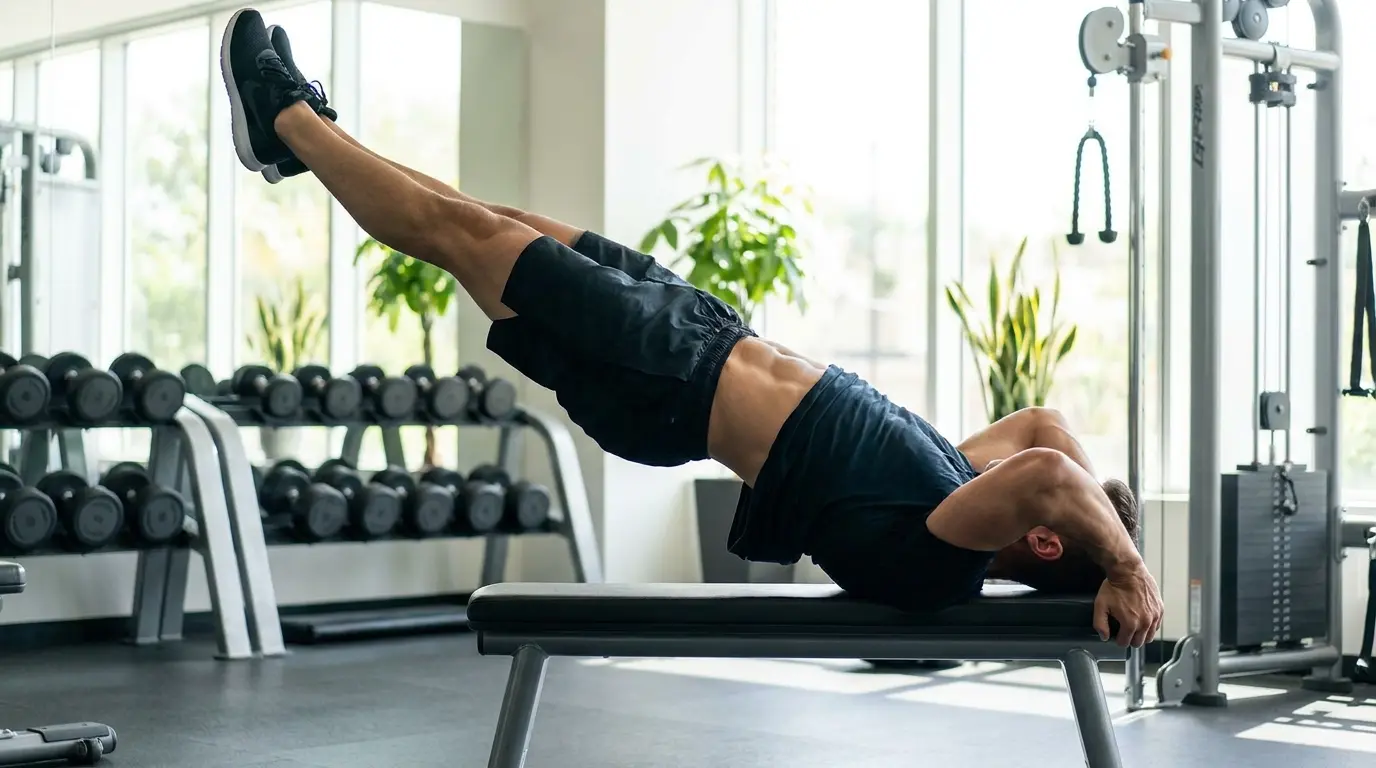
The dragon flag exercise is an advanced bodyweight movement performed lying on a bench or stable surface.
You anchor your upper back and shoulders, grip a support behind your head, and lift your entire body into a straight line, then lower it slowly under full control. Nothing touches the surface except your upper back. Everything else must hold rigid.
What makes it different from most core exercises is the lever length. Your legs are far from the pivot point, which forces the rectus abdominis, obliques, transverse abdominis, lats, glutes, and hip flexors to work simultaneously just to resist gravity.
Most ab exercises train flexion or extension in isolation. The dragon flag trains total-body rigidity, which is a different and harder skill to build.
The exercise is widely linked to Bruce Lee, who was known for using it as a core strength benchmark.
That association has contributed to its reputation, but the reason it has stayed relevant in strength training and calisthenics is more practical: it produces the kind of core control that carries over to front levers, handstand push-ups, and heavy compound lifts, in ways that crunches and leg raises alone do not.
Quick Facts: Dragon Flag Exercise
| Condition / Goal | Advanced core strength, total-body tension, and anti-extension control |
| Primary Mechanism | Isometric spinal flexion under a long lever, requiring coordinated activation of the abs, lats, glutes, and hip flexors to resist gravity |
| Evidence Level | Well-studied as a compound core movement, multi-muscle compound exercises show stronger core stability outcomes than isolated ab work |
| Who It Is For | Intermediate to advanced trainees with existing core base; calisthenics athletes building toward front lever, L-sit, or planche |
| Who Should Avoid | Anyone with an active lower back, neck, or shoulder injury, beginners without a foundation in hollow body holds, and leg raises |
What Actually Happens in Your Body During a Dragon Flag
When you lower your body in the dragon flag position, your rectus abdominis and transverse abdominis are performing isometric spinal flexion, which means they are contracting hard without your spine actually curving.
This is also why the exercise is highly effective for building defined dragon flag abs, since the rectus abdominis and deep core muscles must stay fully engaged throughout the movement.
Your latissimus dorsi and teres major are performing shoulder extension, pulling the anchor point toward your hips to maintain that rigid straight line. Your glutes are contracting to keep the hips open and prevent the pelvis from dropping.
The hip flexors are working to hold the legs in line with the torso. Even the forearms and triceps are involved, gripping and bracing the support above your head.
A 2019 study published in the Journal of Sports Science and Medicine confirmed that exercises requiring simultaneous engagement of multiple muscle groups produce stronger improvements in core stability than isolated ab movements.
The dragon flag fits that pattern directly. The coordination demand is part of why progress feels slow at first: the nervous system needs time to recruit all of those muscle groups in sequence, not just the abs in isolation.
Muscles Worked in the Dragon Flag Exercise
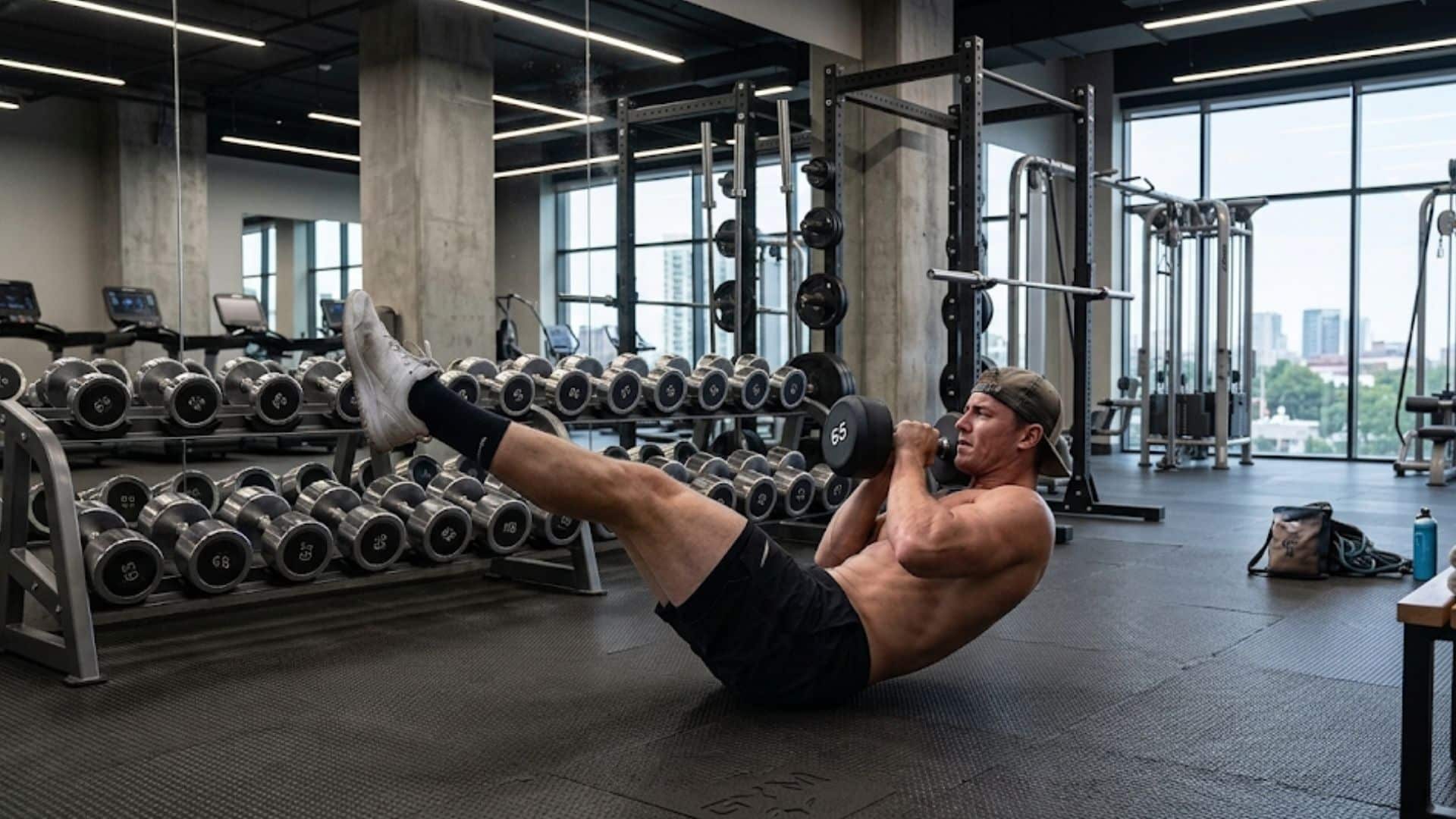
The dragon flag works far more than the abs. Here is a breakdown by muscle group and what each one is doing during the movement.
- Rectus abdominis and obliques: The primary muscles resisting gravity and keeping the spine neutral through the full range.
- Transverse abdominis: The deep stabilizing layer that braces the trunk and supports the lumbar spine under load.
- Latissimus dorsi and teres major: Performing shoulder extension to anchor the movement and keep the body rising and lowering as one unit.
- Glutes: Contracting to maintain hip extension and prevent the pelvis from sagging out of alignment.
- Hip flexors: Holding the legs in line with the torso, especially during the lowest part of the range.
- Posterior deltoid and trapezius: Supporting the shoulder position throughout the movement.
- Quadriceps: Keeping the knees extended and the legs tight during full reps.
Understanding this list matters for programming. If the lower back gives out first, the abs and lats are not yet strong enough for that range. If the hips drop first, the glutes and hip flexors need more specific training. Each breakdown tells you exactly where to focus your progressions.
How to Do the Dragon Flag Exercise: Step-by-Step Progression
Rushing this movement leads to poor form, stalled progress, and unnecessary lower back strain. This step-by-step dragon flag progression is important for safely building strength without straining your lower back.
Step 1: Build Your Base With Leg Raises
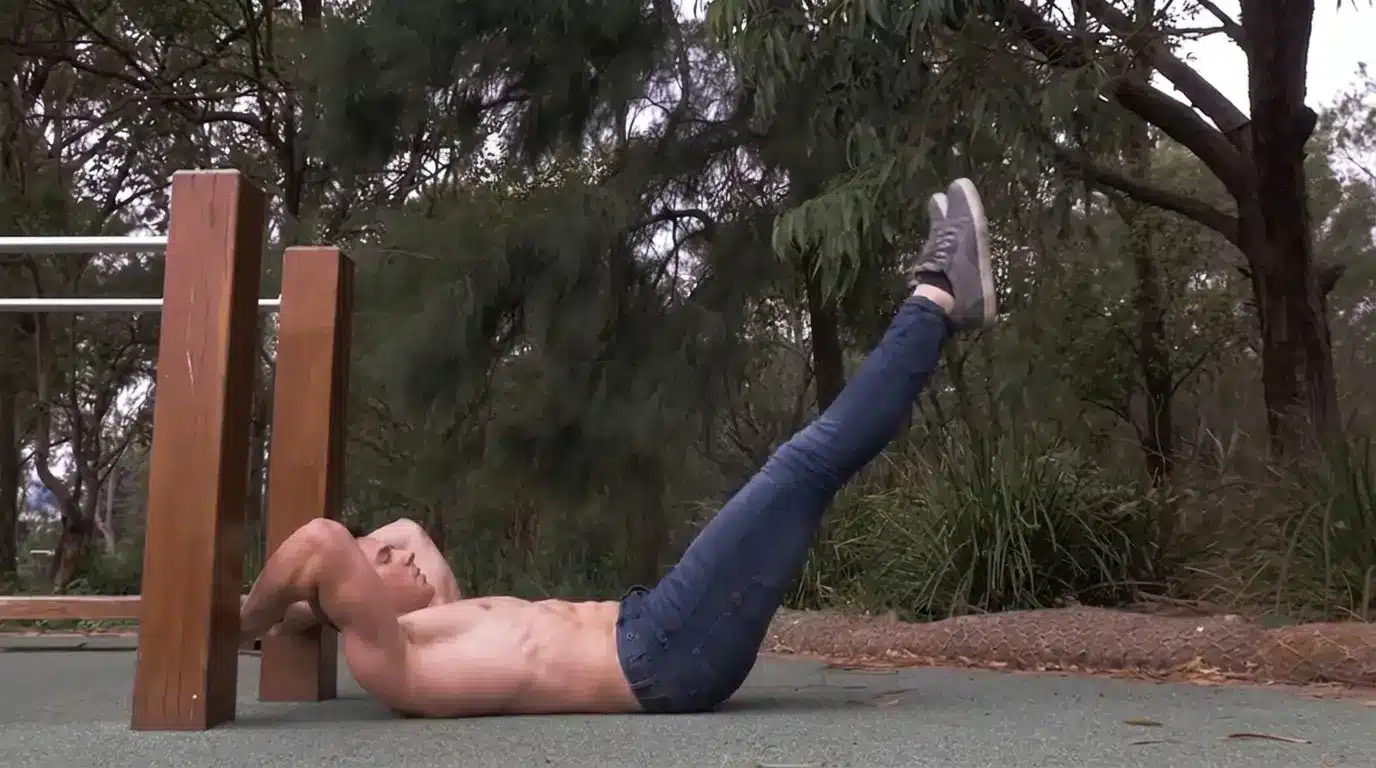
Lying leg raises teach the body the starting position for the dragon flag. Lift and lower your legs slowly with the lower back pressed flat. At the top, let the hips rise slightly and shift your weight toward the upper back. No swinging. The abs and lats should be doing the work, not momentum. Hold that top position for one second on each rep before lowering. Master 3 sets of 10 clean reps before moving to step 2.
Step 2: Learn Lower Back and Core Control
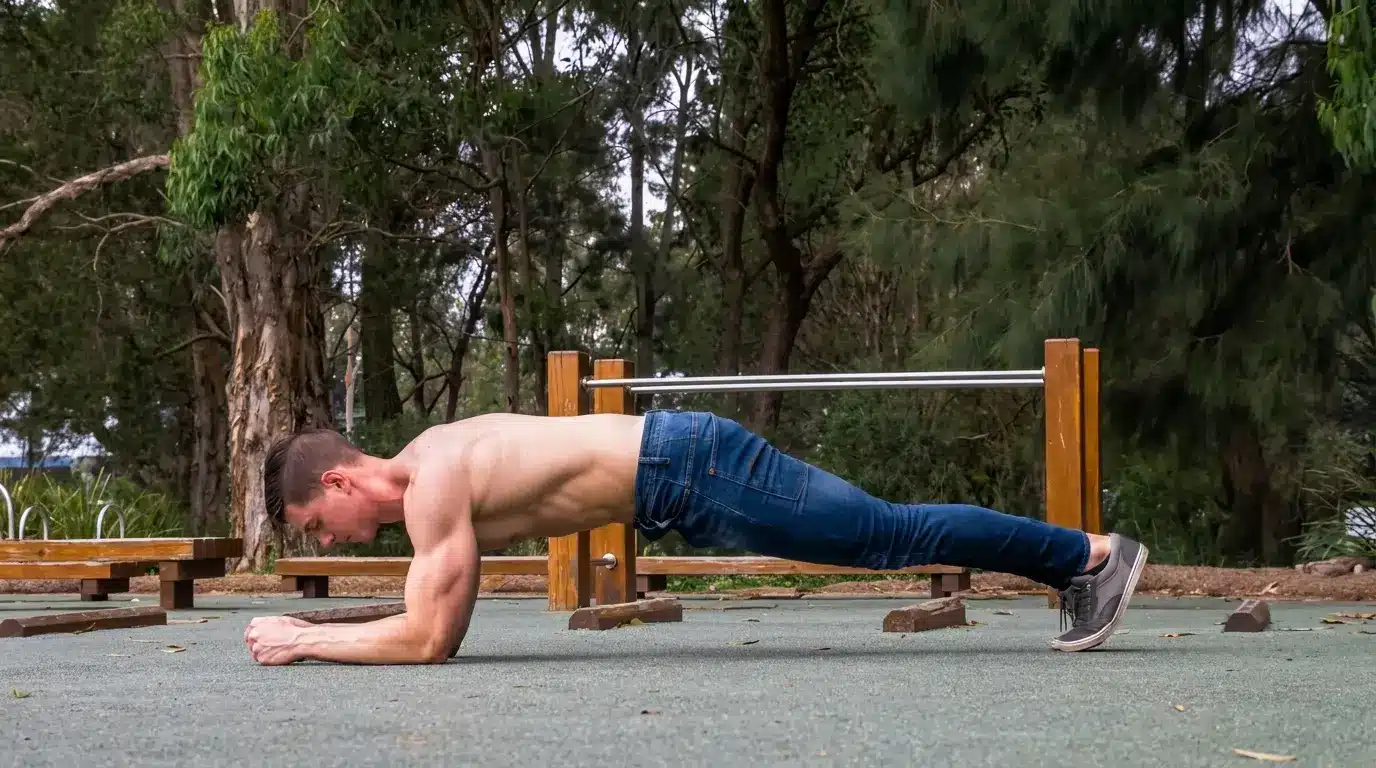
Move to a forearm plank and focus entirely on keeping the lower back flat while the legs are extended. Squeeze the abs, tuck the pelvis slightly, and avoid letting the hips rise or sink. If you are new to this kind of bracing, starting on your elbows gives more surface area for stability. This position teaches the specific core bracing pattern the dragon flag requires: abs locked, spine neutral, everything rigid from the start of the movement to the finish.
Step 3: Practice Rollout-Style Control
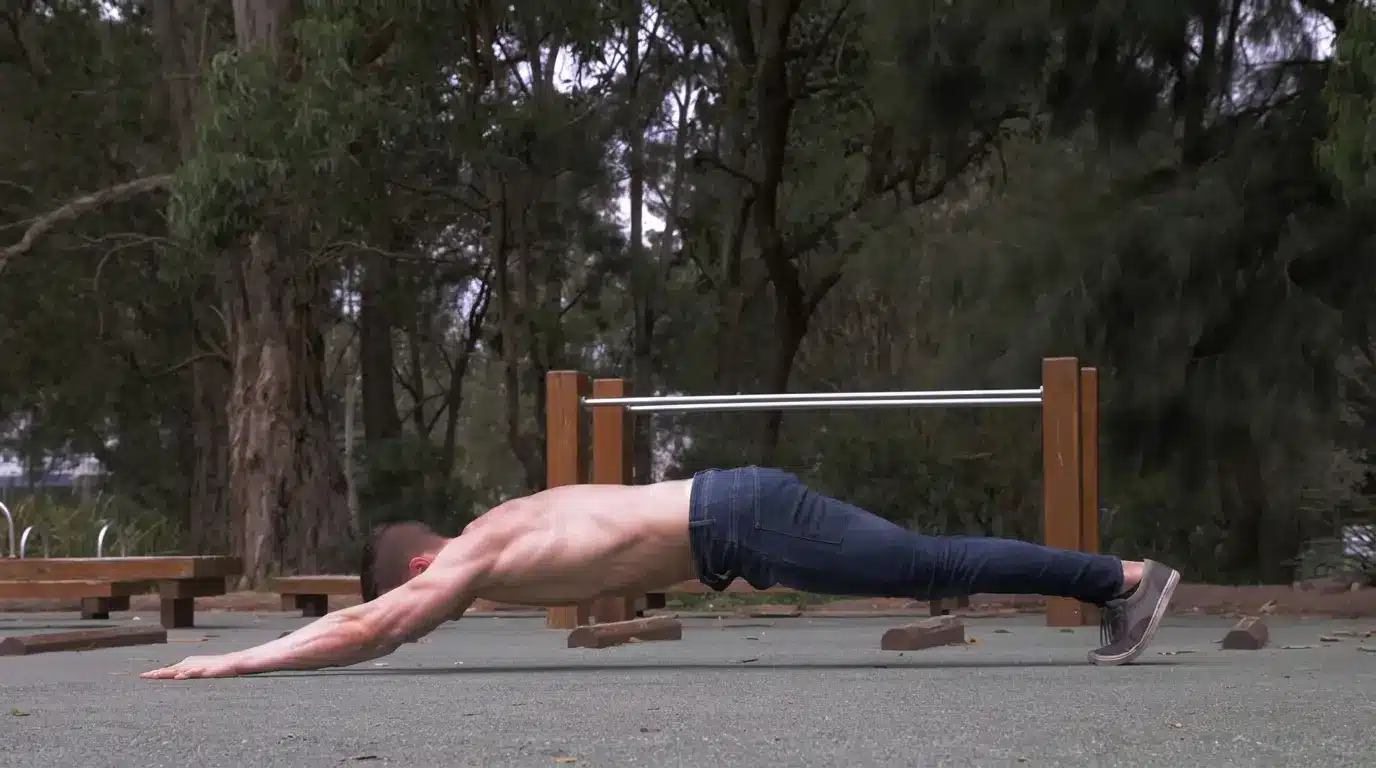
From a push-up position with hands fixed, walk your feet backward while keeping the midsection stable. Think of it as a reverse ab wheel rollout: the legs and torso extend away while the core fights to stay rigid.
Stop the moment the lower back begins to arch. This drill directly mirrors the anti-extension demand of the dragon flag, and it shows you exactly how far your range currently is before form breaks down.
Step 4: Train the Tuck and Top Position
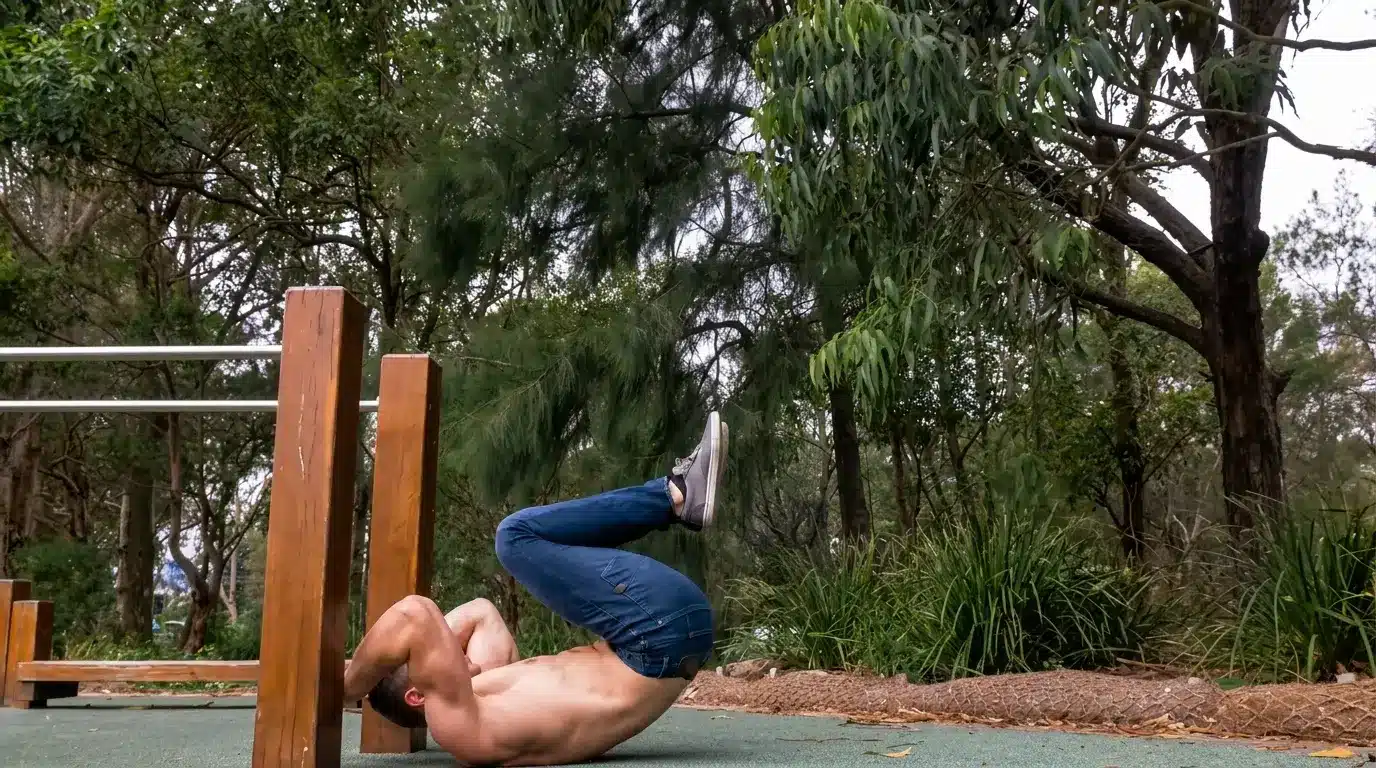
Set up on a bench and grip the support behind your head. From a tucked position with knees bent toward your chest, extend your hips upward toward vertical. Hold that position for 2 to 3 seconds, squeezing the abs, glutes, and legs together.
As you build control, extend the legs straighter while holding the top position. The closer your legs get to the ground, the harder this becomes. Stay in the range where you can hold clean tension for the full hold time.
Step 5: Build Strength With Slow Negatives
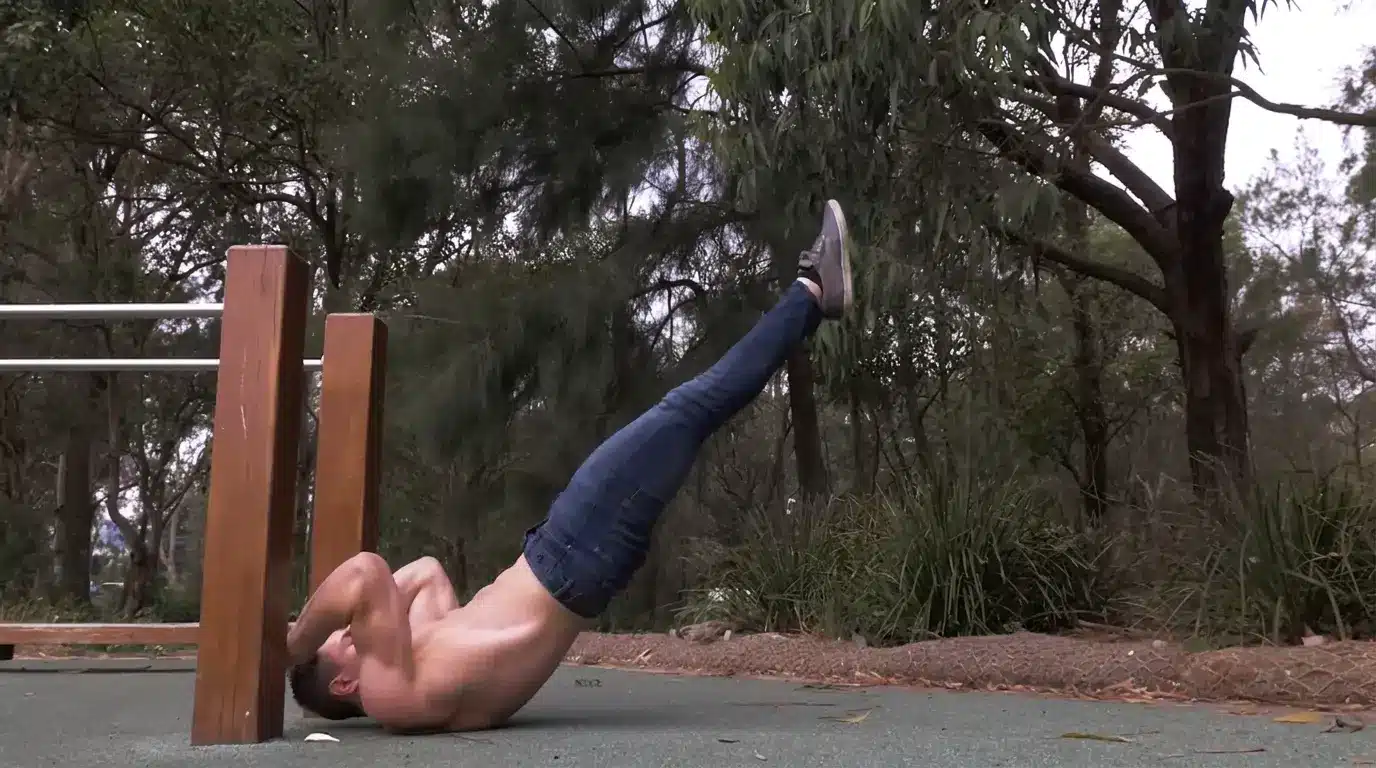
Start from the top of the dragon flag position and lower your body under control, aiming for 5 to 8 seconds on the way down. Stop before the lower back arches or the hips drop. When form starts to break, tuck the knees and reset from the top.
Negatives are one of the most effective ways to build strength in calisthenics because the eccentric phase, the controlled lowering, creates more muscle tension than the lifting phase. This step develops the specific strength needed for the hardest portion of a full dragon flag rep.
Step 6: Progress to Short Lever, Straddle, and Full Dragon Flag
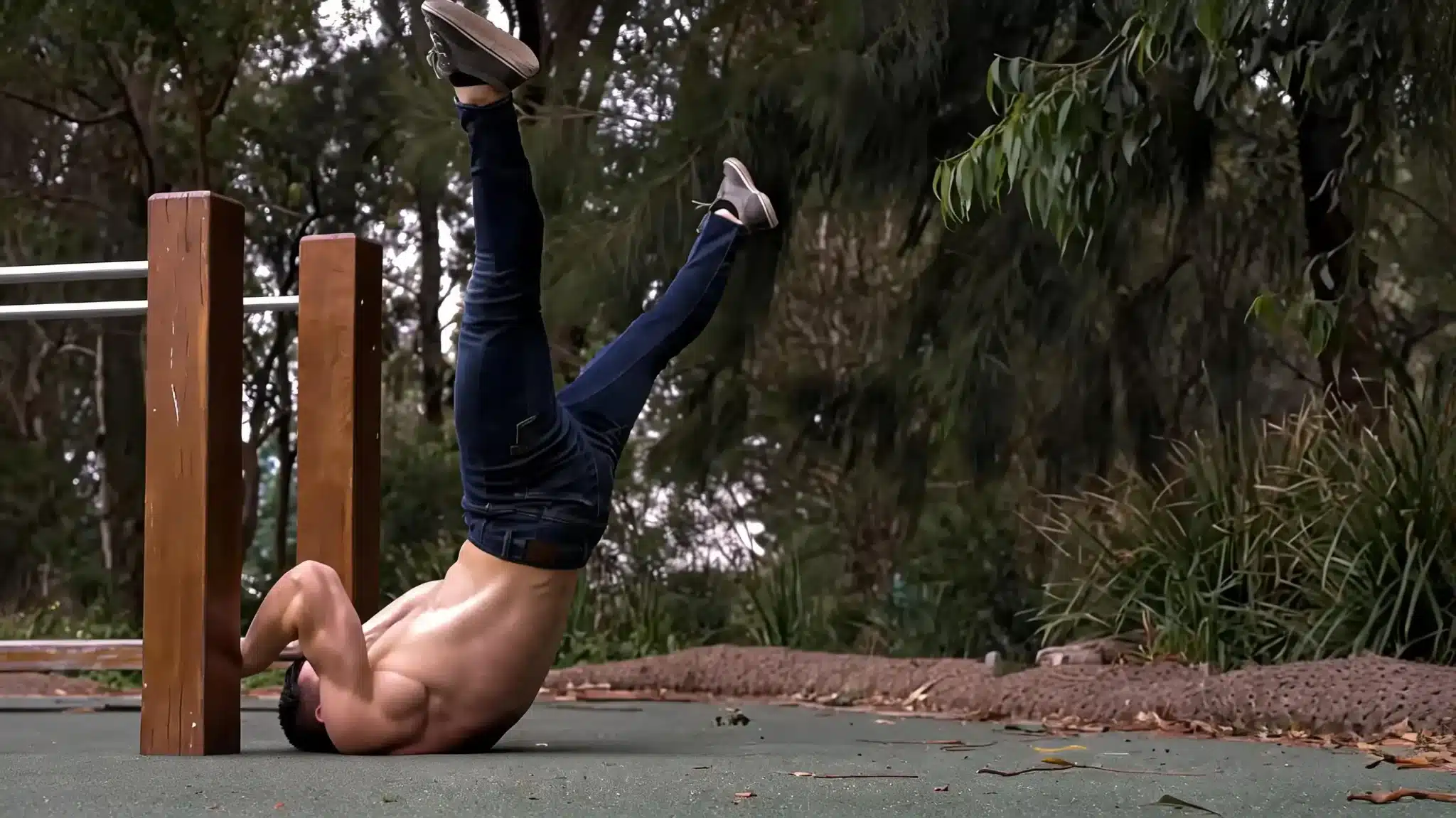
Once negatives feel manageable across 3 to 4 reps per set, introduce the short-lever dragon flag by bending the knees to roughly 90 degrees. Then try straddle dragon flags with the legs spread wide, which reduces the effective lever length.
Finally, move to full legs-together reps with a reduced range first, adding depth gradually over weeks. Throughout every variation, grip the support firmly, keep the lats engaged, and move the body as one rigid unit rather than letting the hips lead.
| Caution: Stop any rep the moment your lower back starts to arch or feels strained. A shorter controlled range is always safer and more productive than forcing a full-range rep with poor form. |
Each step here is a prerequisite for the next. Moving up before the current level feels completely stable tends to produce the form breakdown and stalled progress that frustrates most people trying to learn this movement.
When to Move to the Next Progression
Most people advance too quickly because a session feels easy. One strong workout is not the signal. The standard I use with clients is to require all three of the following to be true across at least three consecutive training sessions before progressing:
- Controlled speed is consistent: Every rep and set moves at a deliberate pace, with no swinging or momentum at any point.
- Lower back stays comfortable: No discomfort during the session, and no soreness in the lower back the following day.
- Body alignment holds: No excessive hip bending, arching, or visible shaking through the set.
If one session feels strong and the next feels unstable, stay on that variation. Consistent performance across multiple sessions is the real indicator of readiness, not a single peak effort.
Key Form Cues for the Dragon Flag Exercise
Form details matter more here than in most exercises because small breakdowns in alignment shift load directly onto the lower back. These cues are the ones I return to most often.
Keep the ribs down throughout the entire movement so the lower back does not overarch at the bottom. Squeeze the glutes to maintain hip extension and prevent the pelvis from sagging.
Move slowly through every inch of the range rather than letting the legs drop with gravity. Think of the body as one long, stiff board: legs, hips, and torso moving together as a unit, not as separate segments.
Breathe steadily and keep the neck relaxed. Gripping the support firmly activates the lats, which helps maintain the rigid line. If the legs drop ahead of the hips, the lower back is about to take the load. Stop the rep there, tuck, and reset from the top.
Beginner Dragon Flag Workout Plan
This plan runs two days per week with at least one rest day between sessions. Keep at least one full recovery day between sessions, and stop each exercise the moment form begins to break down.
| Exercise | Sets | Reps or Time |
|---|---|---|
| Hollow Body Hold | 3 | 15 to 25 seconds |
| Reverse Crunch | 3 | 10 to 12 reps |
| Lying Leg Raise | 3 | 8 to 10 reps |
| Tuck Dragon Flag | 3 | 3 to 5 reps |
| Plank | 2 | 30 to 45 seconds |
Start at the lower end of each range if form breaks early in a set. Add reps or time only when every set feels controlled from start to finish. This session should leave the abs fatigued. If the lower back is what feels worked, reduce the range or return to hollow holds and reverse crunches for another two to three weeks before revisiting the tuck dragon flag.
How to Program the Dragon Flag Into Your Training
The dragon flag is a skill movement, not a high-rep conditioning finisher. Programming it like the latter leads to form breakdown and slow progress. The approach that works is low volume, high quality, and consistent spacing.
- 2 to 3 sessions per week, never on consecutive days
- 3 to 4 sets of your current progression level per session
- Keep reps between 2 and 6, prioritizing quality over quantity
- Pair with hollow body holds or a plank as a warm-up to prime the core first
- Allow 48 hours between sessions: the eccentric loading from slow negatives creates real muscle fatigue that needs time to clear
| Note: Dragon flags create heavy core fatigue, particularly during slow negatives. Keep total volume low and allow adequate recovery before training them again. |
Common Mistakes During the Dragon Flag Exercise
These are the errors I see most consistently. Each one either reduces the training effect or creates unnecessary stress on the lower back.
- Dropping too fast: Lowering too quickly removes control, reduces core tension, and places excess stress on the lumbar spine.
- Arching the lower back: An arched lower back shifts tension away from the abs and signals the movement has exceeded the current strength level.
- Folding at the hips: Bending at the hips breaks the straight-line shape the dragon flag requires and turns it into a different exercise.
- Overusing the arms: Pulling too hard with the arms reduces the demand on the core and changes the purpose of the movement.
- Training without adequate recovery: Practicing too frequently fatigues the abs and hip flexors, which makes clean form harder to maintain and form breakdown more likely.
- Skipping progressions: Attempting full reps before the foundational steps are solid almost always produces poor control and stalled progress.
| Caution: Core fatigue is normal and expected. Sharp pain in the back, neck, hips, or shoulders is not. Stop and adjust if any sharp pain appears. |
How Often Should You Train Dragon Flags?
Two sessions per week is the right starting point for most people. That frequency gives enough practice repetitions to build the pattern without overloading the abs, hip flexors, and lower back before they can recover.
If you are new to the movement, start with one short session and add a second only when recovery feels clean. Mild soreness in the abs the following day is normal. Soreness or tightness in the lower back, hips, or neck means the load or range was too much and needs to be reduced.
Keep total volume to 3 to 5 sets per session. The moment form starts to degrade within a set, end the exercise. Tired reps in a skill-based movement reinforce poor patterns more than they build strength.
Dragon Flag Versus Other Core Exercises
The dragon flag is often grouped with ab exercises, but it trains a different quality than most of them. This comparison makes the distinction clear.
| Exercise | Primary Focus | Difficulty | Key Difference |
|---|---|---|---|
| Dragon Flag | Full-body rigidity and core control | Very High | Entire body moves as one rigid unit |
| Hanging Leg Raise | Lower abs and hip flexors | Moderate to High | Legs move independently of the torso |
| Ab Wheel Rollout | Anti-extension core strength | High | Challenges core stability through an extended range |
| Hollow Body Hold | Core bracing and body tension | Beginner to Moderate | Static hold that builds the foundational tension the dragon flag requires |
| V-Ups and Sit-Ups | Upper abs and hip flexion | Low to Moderate | Spine flexes repeatedly under lower total-body tension |
| Plank | Core endurance and stability | Beginner | Static position rather than moving through a range under load |
The dragon flag stands apart because it demands isometric strength across the entire torso while the body moves through a full range. Unlike exercises that train a single region of the core, it requires the abs, glutes, lats, and hip flexors to work together in real time to prevent spinal collapse. That coordination is what makes it both harder and more transferable than most isolated ab work.
Signs You Are Ready for the Full Dragon Flag
These are the benchmarks I use before recommending full reps to anyone. They need to be consistent across multiple sessions, not just achieved once.
- Core endurance: Hold a hollow body position for at least 30 seconds without losing tension or allowing the lower back to rise off the floor.
- Leg raise control: Perform slow lying leg raises with the lower back staying flat throughout the full range.
- Tuck dragon flag mastery: Complete 5 controlled tuck dragon flag reps with consistent body alignment and no hip collapse.
- Negative strength: Lower through dragon flag negatives for at least 5 seconds under control, repeatedly, across multiple sets.
- Back stability: Finish training sessions without lower back discomfort during or after.
- Fatigue management: Maintain rib-down alignment and full-body tension even in the final reps of a set, not just the first.
Hitting these benchmarks consistently is a reliable signal that the foundation is solid enough to handle the full movement. Progress only when control is repeatable, not when one great session suggests it might be possible.
Frequently Asked Questions
What is the best shoe choice for dragon flags?
Go barefoot or wear ultra-light shoes. Heavy footwear adds weight to the very end of your body’s lever, making the lowering phase significantly harder on your lower abs. Minimalist footwear helps keep the total leg weight manageable as you build initial strength.
Can a resistance band help learn the move?
Yes. Loop a band around a rack and your ankles or hips. The band provides maximum assistance at the bottom where the lever is longest and the exercise is hardest, helping you safely learn proper alignment before handling your full bodyweight.
Should your head lift off the bench?
No. Keep your head and cervical spine resting flat. Lifting your head shifts tension into your neck muscles and disrupts your leverage. Push down slightly through your upper back and shoulders to create a stable foundation against the bench.
How does grip width affect the exercise?
A shoulder-width grip is optimal. Gripping too wide reduces your lats’ ability to pull effectively, while a grip that is too narrow places excessive stress on your wrists and elbows. Keep your hands evenly spaced to maintain balanced tension.
Does the dragon flag improve your posture?
Indirectly, yes. By strengthening your anti-extension capabilities and forcing deep glute activation, it helps counteract the anterior pelvic tilt caused by prolonged sitting. This teaches your nervous system to maintain a more neutral pelvis during daily standing.
Can ankle weights progress the movement?
Yes, but only for advanced athletes. Because the legs form the end of a long lever, adding even small weights to your ankles exponentially increases the torque on your core. Use them only when bodyweight reps are completely effortless.
Does elbow positioning matter during a rep?
Yes. Keep your elbows tucked inward and pointing forward rather than letting them flare out sideways. Flaring your elbows stresses the shoulder joints and reduces lat engagement, making it much harder to keep your torso rigid and controlled.
Final Thoughts
The dragon flag is really about control, not just hard ab work. I’d treat it as a skill you build step by step, with clean form leading every choice. You learned how the move works, which muscles support it, how to progress safely, and when your body may be ready for harder variations.
You also saw why slow reps, smart recovery, and strong setup matter so much. The dragon flag exercise can help you build serious core strength, but only when you respect the basics first.
Start with the level that matches your control today, then move forward with patience. Try these tips in your next core session and share how your progress feels in the comments