| Exercise Type | Strength / Mobility |
| Muscles Targeted | Quadriceps (VMO), glutes, hamstrings, hip flexors, calves, tibialis anterior, core |
| Difficulty | Beginner to Intermediate (bodyweight first) |
| Equipment | Bench or box; optional slant board, dumbbells, barbell |
| Best For | Knee health, ankle dorsiflexion, unilateral leg strength, and muscle imbalance correction |
| Avoid If | Acute knee injury, recent knee surgery, severe ankle instability (get clearance first) |
The ATG split squat is the exercise that humbled me most when I first added it to my own training. I could squat double bodyweight at the time, and bodyweight ATG split squats still had me shaking at the bottom.
That reaction is completely normal, and it tells you something important: the movement is testing ranges of motion and end-range strength that most training programs never touch.
I have been programming the ATG squat for clients for several years now, and it consistently delivers results in three areas: knee strength, ankle dorsiflexion, and single-leg stability.
Here I will cover exactly what the movement is, how to perform it correctly at every level, the muscles it targets, common mistakes to fix, how to program it, and how it compares to the Bulgarian split squat and other major variations.
| Disclaimer: This article is for informational and educational purposes only. It does not constitute medical advice. Always consult a qualified healthcare provider before starting a new exercise or wellness program, particularly if you have a history of knee, hip, or ankle injury. |
What Does ATG Stand for in the ATG Split Squat?
ATG stands for Ass-to-Grass, which simply means squatting to full depth, well below parallel, until the hamstrings touch the calf. In the context of the split squat, it means the front thigh goes all the way down until the back of the thigh meets the back of the lower leg at the bottom of each rep.
The term was popularized by Ben Patrick, widely known as the Knees Over Toes Guy, whose coaching program centers on building knee resilience through full range-of-motion loading.
The movement itself is not new, having roots in Olympic weightlifting preparation and the work of strength coach Charles Poliquin, who identified the bottom 10 degrees of knee flexion as the primary zone for VMO (vastus medialis oblique) activation. What Patrick did was systematize the progressions and bring the movement to a mainstream fitness audience.
The defining feature of the ATG split squat is that the front knee travels well past the toes as you descend. For decades, this was taught as something to avoid. The evidence has not supported that rule.
A widely cited 2013 review published in Sports Medicine (Hartmann, Wirth, and Klusemann) found no increased injury risk to passive knee structures during deep squats performed with proper technique and gradual load progression, and reported improved load distribution at greater knee flexion angles.
Muscles Worked by the ATG Split Squat
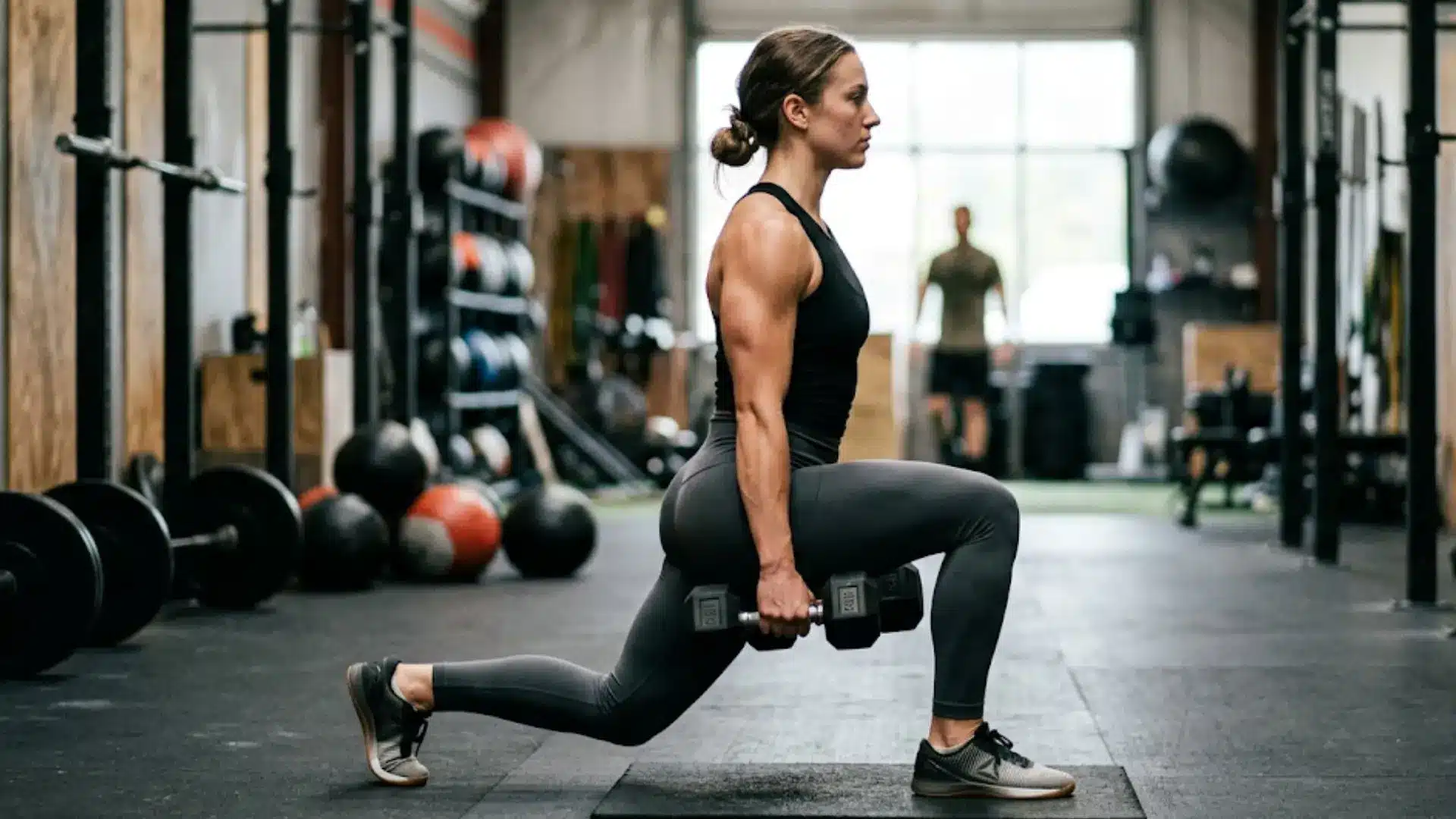
The ATG split squat is one of the most comprehensive lower-body movements available because it targets several muscle groups through their full range simultaneously. Here is what is working during every rep:
1. Quadriceps (with Emphasis on the VMO)
The quads are the primary driver of the ATG split squat, particularly the VMO, the teardrop-shaped muscle on the inner part of the thigh that stabilizes the kneecap and is heavily recruited in the final degrees of knee flexion.
In my experience, clients who struggle with knee tracking problems almost always have a weak VMO, and the ATG split squat addresses that directly. Pairing this movement with eccentric quad exercises in the same training block gives the VMO two different loading stimuli that compound over time.
2. Glutes
The gluteus maximus generates hip extension as you press back to the top.
Research on single-leg lunge variations consistently shows higher glute activation than bilateral squat variations at matched loads, largely because each leg must produce force independently without compensating through the other side.
3. Hip Flexors (Lengthened Under Load)
The back leg’s hip flexors are stretched under load throughout the entire movement. This is one of the most underappreciated benefits of the ATG split squat: it provides a loaded hip flexor stretch that gradually improves range of motion with consistent training, something static stretching alone does not deliver as efficiently.
4. Tibialis Anterior and Calves
The tibialis anterior, the muscle running along the front of the shin, is an active stabilizer as the knee drives forward over the toes. The gastrocnemius and soleus work as stabilizers throughout the bottom position.
Ben Patrick specifically programs tibialis strengthening alongside ATG split squats because a weak tibialis limits how far the knee can safely travel forward and restricts ankle dorsiflexion range.
5. Hamstrings and Core
The hamstrings assist with knee flexion control on the way down and help stabilize the knee joint throughout the movement. The core, including the obliques and transverse abdominis, works continuously to keep the torso upright and prevent the trunk from collapsing forward.
| Trainer Tip: If your front knee caves inward during the ATG split squat, the likely culprit is a weak VMO combined with poor ankle dorsiflexion. Before loading, spend two to three sessions elevating your front foot on a small plate or slant board to reduce the ankle demand and let the knee track cleanly. Fix the pattern before adding weight. |
How to Do the ATG Split Squat with Correct Form
The ATG split squat demands more from your ankles and hips than most single-leg exercises. Getting the setup right is the majority of the battle.
Step 1: Set Up the Exercise
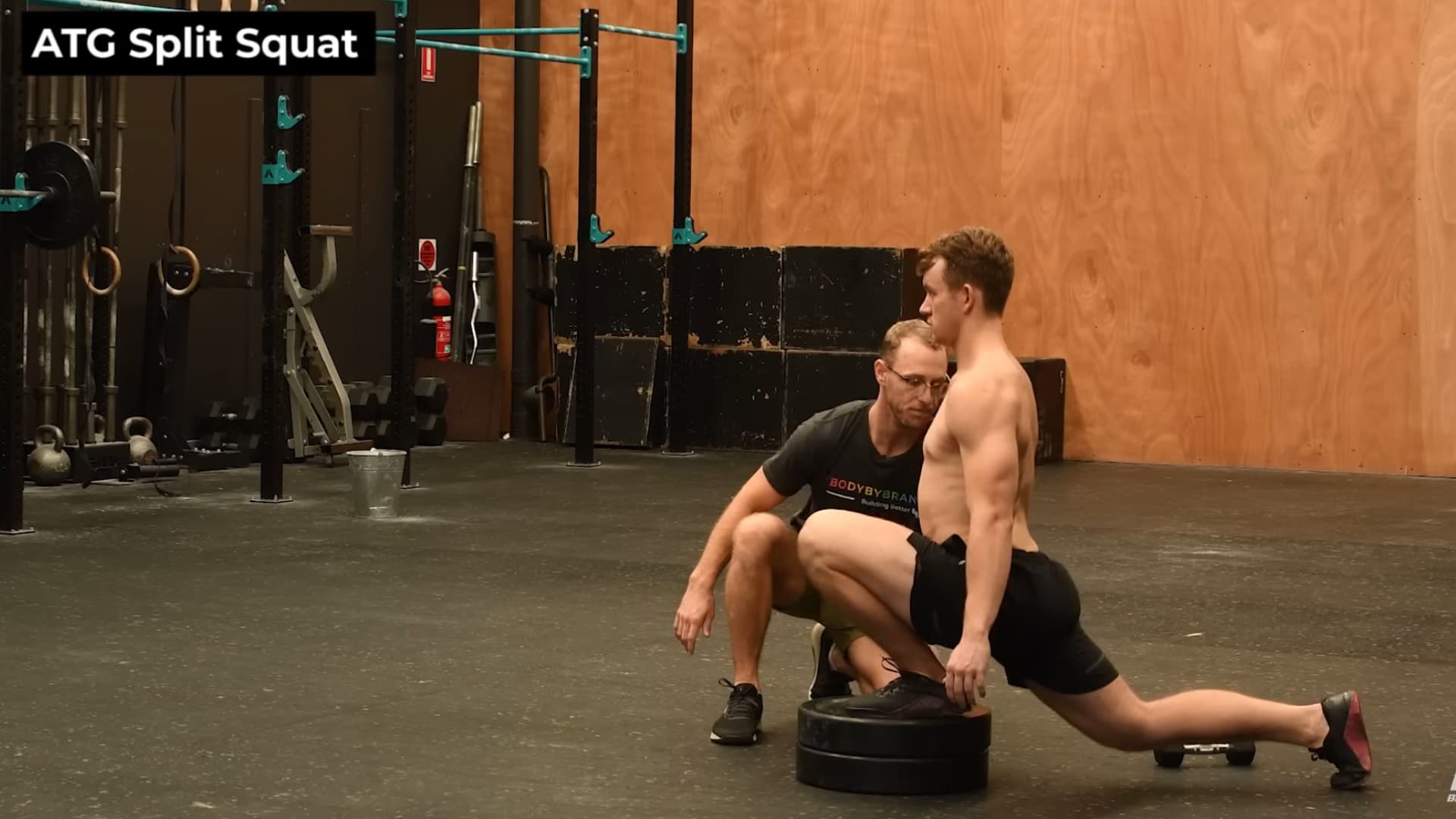
Start by standing with your feet about shoulder-width apart.
Place your back foot on a bench or box behind you. Make sure the top of your foot rests comfortably on the surface. Your front foot should stay flat on the floor, directly under your hip. Keep a slight bend in your front knee.
Take a moment to find your balance before you begin. A stable setup makes the rest of the movement feel smoother and safer.
Step 2: Maintain Proper Form
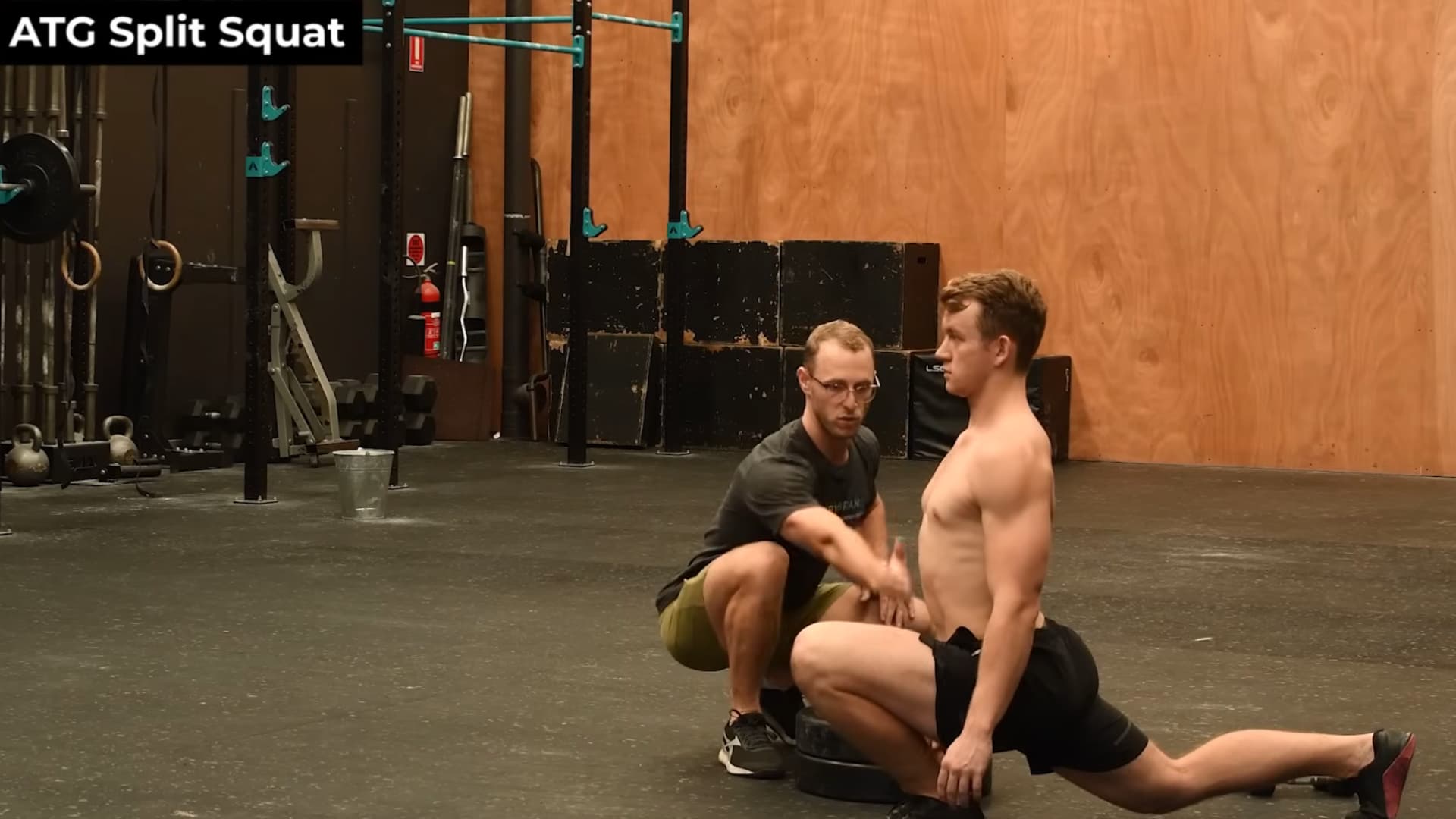
Stand tall through your torso. Do not lean forward or round your back as you move.
Tighten your core to help keep your body steady. Press evenly through the heel and ball of your front foot. That front leg should carry most of your weight.
Keep your back leg straight and active. Squeeze your glutes to help maintain that extended position. A strong posture here protects your knees and improves your control.
Step 3: Perform the Movement
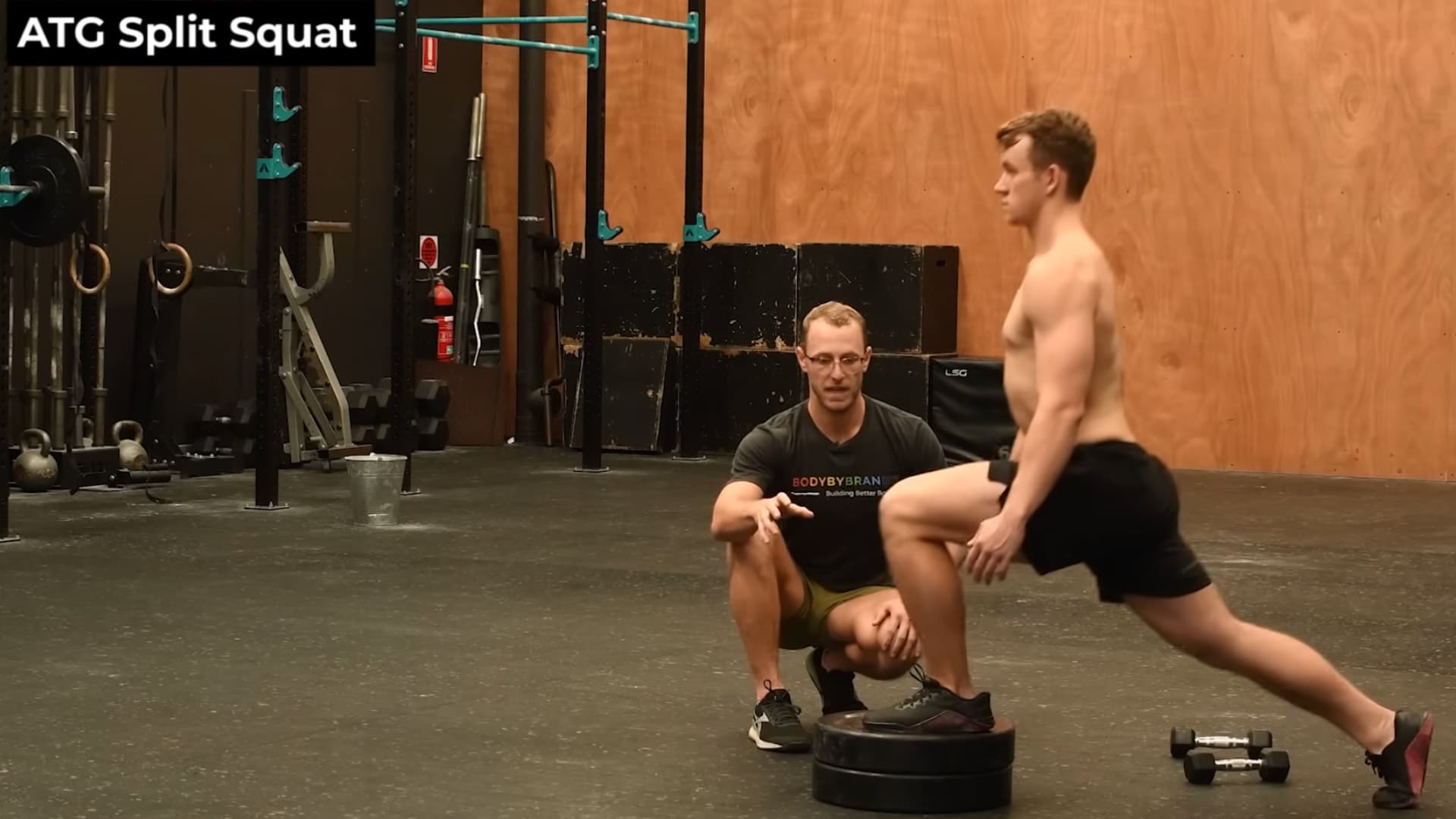
Slowly lower your body by bending your front knee. Let your back leg stretch as you descend.
Lower until your front hamstring gently meets your calf, maintaining a full range of motion. If that depth feels too challenging, raise your front foot slightly on a plate or block.
As you move down, keep your knee tracking over the middle of your foot. Do not let it cave inward or drift outward. Controlled depth builds strength and stability together.
Step 4: Progress to Variations
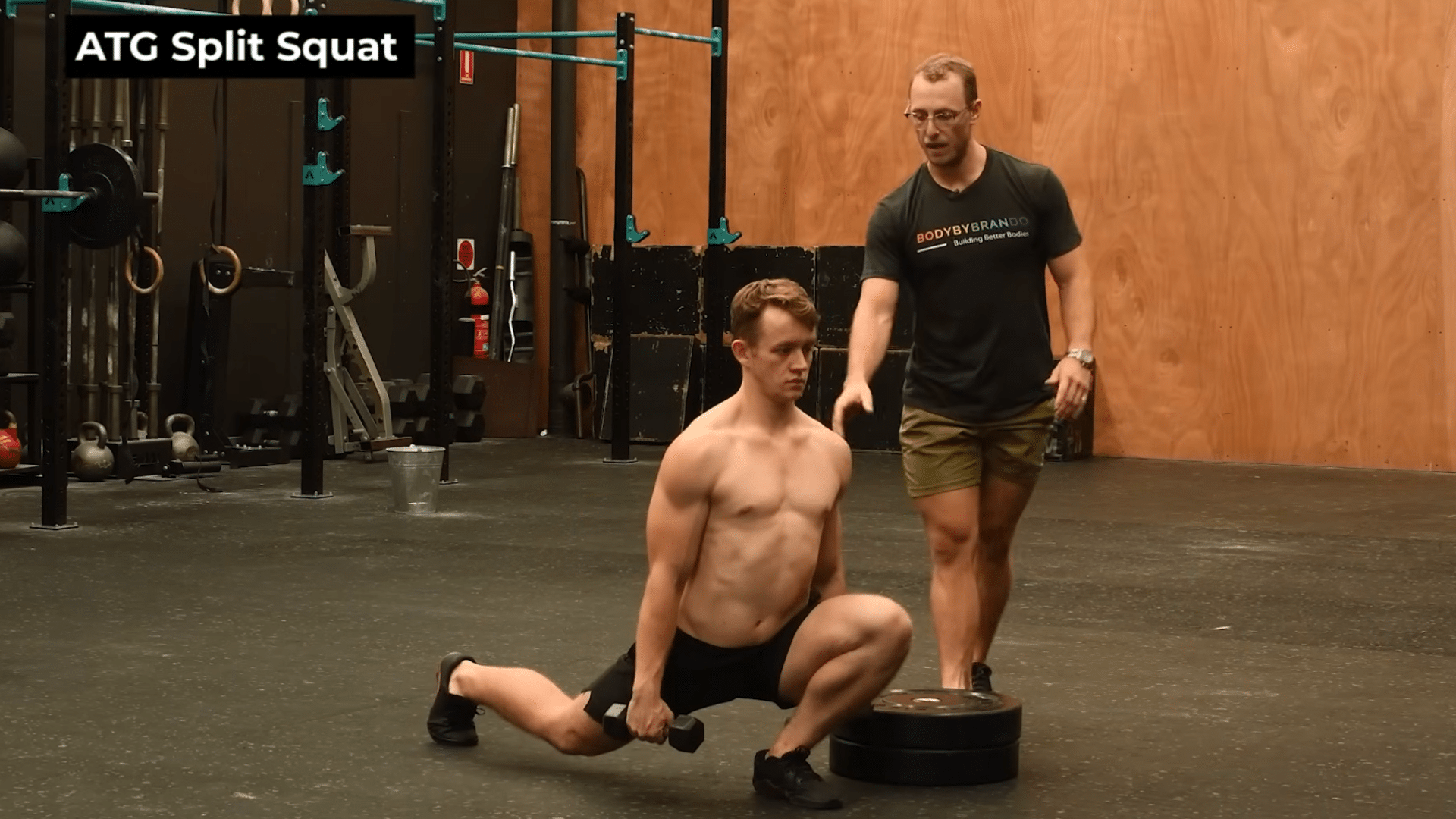
Once the basic movement feels solid, you can add different options.
Hold the bottom position for a few seconds to build strength and balance. Or perform steady repetitions, lowering and rising with control each time.
If you want more of a challenge, hold a dumbbell or a barbell at your sides. Keep the same posture and alignment as you add weight. Good form should always come before added resistance.
| Safety Note: If you feel sharp pain at the front of the knee during the descent, stop the set. Sharp pain is different from the deep burning sensation of the quad being challenged. If the knee pain does not resolve by elevating the front foot and reducing depth, consult a physiotherapist before continuing. For related guidance, the signs and fixes for knee pain when squatting article covers when to modify and when to stop entirely. |
ATG Split Squat Progressions: Beginner to Advanced
The ATG split squat is not a beginner exercise in its full form, but it has a clear progression path that allows almost anyone to work toward it safely. Here is how I sequence this movement with new clients.
Beginner: Assisted ATG Split Squat
Use a doorframe, squat rack upright, or the back of a sturdy chair for support. Hold lightly with both hands and focus entirely on finding full depth and keeping your front heel planted. The goal is not to load the movement; it is to teach your nervous system what the position feels like. Perform 2 to 3 sets of 6 to 8 reps per leg, moving slowly, before considering removing the support.
Criteria to advance: You can complete 3 sets of 10 reps per leg without support, with the heel staying down and the knee tracking cleanly over the toes. If your heel lifts before rep 5, stay at this level and work ankle dorsiflexion alongside.
Intermediate: Front Foot Elevated, Bodyweight or Light Load
Elevating the front foot on a small plate or slant board reduces the ankle dorsiflexion demand and lets the knee travel further forward. This is the classic Ben Patrick entry point for the ATG split squat.
Work 3 to 4 sets of 8 to 12 reps per leg at this stage. Once bodyweight feels controlled, add a light dumbbell held at your side on the working leg (goblet or suitcase style). Target a 3-second lowering phase and a 1-second pause at the bottom before pressing up.
Criteria to advance: You can complete 4 sets of 10 reps per leg with a dumbbell that equals roughly 20 to 25 percent of your bodyweight, maintaining full depth and torso position throughout.
Advanced: Loaded Variations
At this stage, you can progress to dual dumbbells held at your sides, a goblet hold close to the chest (which adds anterior core demand), a front rack barbell position, or a back rack barbell.
Each variation raises the stability demand in a different way. Front rack and back rack versions allow the heaviest loading but require clean torso control. Program advanced loaded variations at 3 to 5 sets of 5 to 8 reps per leg with a controlled tempo.
A plyometric variation, adding an explosive jump from the bottom, is also available at the advanced stage for athletes focused on power development. Keep this variation low rep (3 to 5 per side), prioritize soft landing mechanics, and do not rush to it.
| Trainer Tip: One thing I see regularly is clients rushing from beginner to loaded variations after only a few sessions. Your connective tissue adapts much more slowly than your muscles. Give yourself eight to twelve weeks of consistent, progressive bodyweight and light-load work before increasing significantly. The ATG split squat’s value is in long-term joint capacity, not short-term load progression. |
How to Program the ATG Split Squat
The ATG split squat works best as an accessory exercise, not the main lift of a session. Use it after your primary lower-body movement, then adjust sets, reps, load, and frequency based on your goal and recovery level.
- For Muscle Growth: 3 sets of 8 to 10 reps per leg, with a moderate load (around 15 to 20 percent of bodyweight in each hand to start). Use a 3-second lowering phase and a 1-second pause at the bottom.
- Rest 90 seconds between legs. Program 2 to 3 times per week, rotating with bilateral squat or Romanian deadlift as the primary movement on that day. If you want a clearer picture of how rep ranges affect adaptation, the rep ranges for strength guide breaks down the science simply.
- For Knee Health and Mobility: Perform 2 sets of 12 to 15 reps per leg using bodyweight or light load. Focus on full depth, slow tempo, and keeping the front heel planted. Pair it with tibialis raises or eccentric quad exercises for a stronger knee-focused session.
- For Strength: Perform 2 to 3 sets of 5 reps per leg with a heavier load. Rest for about 2 minutes between sets. Use this approach only after 8 to 12 weeks of consistent practice and clean full-depth form.
- Training Frequency: Train the ATG split squat 2 to 3 times per week for most goals. Use lower loads if training for mobility or knee health. For strength-focused sessions, allow at least 48 hours of recovery between workouts.
Programming matters because the ATG split squat places high demand on the knees, ankles, hips, and balance. Start lighter than expected, keep the movement controlled, and increase load only when depth, knee tracking, and posture stay clean.
Benefits of the ATG Split Squat
The ATG split squat delivers more than just muscle. Here’s what makes it worth adding to your routine.
- Improving Flexibility and Mobility: The deep range of motion gradually opens up tight hip flexors and calves. Over time, this improved flexibility carries over into everyday movement, making basic actions like walking, climbing stairs, and sitting feel noticeably easier.
- Building Lower Body Strength: ATG split squats recruit the quads, glutes, and hamstrings through a full range of motion. That means more muscle fibers are engaged compared to shallow squat variations, making it one of the more effective lower-body strength builders available.
- Knee Health and Stability: By encouraging the knee to track over the toes and improving ankle dorsiflexion, the ATG split squat builds long-term joint resilience. It’s especially useful for those managing knee discomfort or looking to prevent future injuries.
These benefits compound over time; the more consistently you train this movement, the more your strength, mobility, and joint health improve together.
Common ATG Split Squat Mistakes and How to Fix Them
Small form errors can change the purpose of the ATG split squat. This table shows the most common mistakes, why they happen, and how to correct them safely.
| Mistake | Why It Happens | How to Fix It |
|---|---|---|
| Heel Rising Off the Floor | The front heel lifts when ankle dorsiflexion is limited or calves are too tight, turning the movement into a toe-balance drill. | Elevate the front foot on a slant board or small plate. Work on ankle mobility separately and return to flat ground gradually. |
| Forward Trunk Lean | Leaning forward shifts load away from the quad and toward the lower back and hip, changing the purpose of the ATG variation. | Keep the chest tall and torso upright. Move the front foot slightly closer or reduce depth until posture stays controlled. |
| Knee Caving Inward | The knee collapses inward due to weak VMO engagement, poor foot pressure, or lack of control through the bottom range. | Press through the outer edge of the foot and track the knee over the second and third toes. Use a light band during warm-ups if needed. |
| Shallow Depth | Limited mobility, poor control, or fear of full knee flexion can stop the movement before the main benefits appear. | Use front-foot elevation and build depth gradually. Prioritize clean reps, but keep working toward full hamstring-to-calf range over time. |
| Pushing Off the Back Toe | The back foot starts helping when the front quad fatigues, reducing the single-leg strength benefit of the movement. | Slow the tempo and focus on pressing through the front heel. Reduce load or reps instead of letting the back leg take over. |
| Loading Before Mastering Form | Adding weight too early increases stress before the body can control full depth, posture, and knee tracking properly. | Master bodyweight reps first. Then progress slowly to one dumbbell, two dumbbells, and finally barbell variations only when form stays clean. |
Fixing these mistakes makes the ATG split squat safer and more effective. Keep the movement slow, controlled, and honest before increasing depth, load, or training volume.
ATG Split Squat vs. Other Squat Variations
Understanding where the ATG split squat fits in the landscape of single-leg and bilateral squat variations helps you use it more effectively in a complete program.
| Variation | Key Focus | Muscles Targeted | Difficulty | Best For |
|---|---|---|---|---|
| ATG Split Squat | Full depth, knee tracking, ankle dorsiflexion | Quads (VMO), glutes, hip flexors, tibialis, calves | Beginner to Intermediate | Knee health, end-range strength, mobility |
| Bulgarian Split Squat | Rear foot elevated, hip loading | Quads, glutes, hamstrings | Intermediate to Advanced | Glute development, heavy unilateral loading |
| Pistol Squat | Single leg, extended front leg | Quads, glutes, core | Advanced | Balance, total-body control |
| Conventional Back Squat | Bilateral, heavy loading | Quads, glutes, hamstrings, spinal erectors | Beginner to Advanced | Overall lower body strength and mass |
| Goblet Squat | Upright torso, bilateral | Quads, glutes, core | Beginner | Form practice, mobility warm-up |
The key practical distinction: the ATG split squat is more ankle and knee-dominant than the Bulgarian split squat, which is more hip-dominant. Both are excellent. Pairing them in the same training block gives you complete lower-body development and covers both the anterior and posterior chains of the lower body through full range.
Frequently Asked Questions
Why do ATG split squats feel so hard?
ATG split squats feel hard because they challenge strength, balance, ankle mobility, hip flexibility, and knee control at the same time. The deep position loads muscles through ranges most people rarely train, especially the quads, VMO, hip flexors, and stabilizers.
Can ATG split squats improve ankle mobility?
Yes. ATG split squats can improve ankle mobility because the front knee moves forward over the toes while the heel stays down. This position gradually trains ankle dorsiflexion under control, especially when practiced consistently with slow reps and proper foot pressure.
Should my knee go past my toes?
Yes, in the ATG split squat, the front knee is supposed to travel past the toes. That forward knee position is part of the movement’s purpose. The key is progressing slowly, keeping the heel down, and making sure the knee tracks over the foot.
Why does my back leg feel tight?
Your back leg may feel tight because the ATG split squat places the rear hip flexors in a deep stretched position. This is normal if the sensation feels like stretching, not sharp pain. Over time, the movement can improve loaded hip flexor mobility.
Which leg should I train first?
Start with your weaker or less stable leg first. This helps prevent the stronger side from setting the standard and hiding imbalances. Match the same reps on your stronger side instead of doing extra, so both legs develop more evenly over time.
Can ATG split squats build bigger quads?
Yes. ATG split squats can help build bigger quads because they load the front leg through deep knee flexion. The VMO and surrounding quad muscles work hard near the bottom position, especially when you use controlled tempo, full depth, and gradual resistance.
Should I use shoes or go barefoot?
Both can work, but beginners often do better in stable shoes with good grip. Barefoot training gives more foot feedback, but it may feel harder if ankle mobility is limited. Avoid soft running shoes because they can reduce balance and foot stability.
What should I do if I lose my balance?
Use support from a wall, rack, chair, or doorframe until balance improves. Losing balance usually means the movement is too advanced for your current stability level. Slow the rep down, shorten the range slightly, and focus on steady foot pressure.
Final Verdict
The ATG split squat is one of those rare exercises that works on multiple levels at once, building strength, improving mobility, and supporting long-term knee health all at the same time.
From its Olympic weightlifting origins to Ben Patrick’s modern revival, this movement has earned its place in serious training routines. The step-by-step breakdown, muscle benefits, and comparisons covered here should provide a solid foundation for starting with confidence.
Whether the goal is injury prevention, athletic performance, or simply moving better day to day, the ATG split squat is worth the effort it demands.
Give it a try and see how it fits into your routine. Have questions or experiences to share? Drop them in the comments below.
Sources
- Hartmann H, Wirth K, Klusemann M. Analysis of the load on the knee joint and vertebral column with changes in squatting depth and weight load. Sports Medicine. 2013;43(10):993-1008. PubMed
- Lagas IF, et al. Effects of eccentric exercises on improving ankle dorsiflexion in soccer players. BMC Musculoskeletal Disorders. 2021;22:485. PMC
- Frontiers in Bioengineering and Biotechnology. ROM, joint moment, and muscle activation in the split squat. 2023. Frontiers
- Patrick B. ATG (Athletic Truth Group) Training Program. KneesOverToesGuy. 2020 onward.