| Practice | Detox bath for kids |
| Goal | Relaxation, skin comfort, and better sleep |
| Time Required | 15 to 20 minutes, once a week |
| Evidence Level | Anecdotal to preliminary, warm baths are well-studied for relaxation |
| Who It’s For | Children of all ages: adjust ingredients by age and skin sensitivity |
| Avoid If | Open wounds, active skin infection, or sensitivity to any listed ingredient |
Detox baths for kids are a gentle and natural way to help your little ones relax, detoxify, and support their overall well-being.
If you’re a parent looking for ways to boost your child’s health and relaxation without relying on harsh chemicals, a detox bath could be just what you need.
Here, I’m going to show you how easy it is to prepare a detox bath at home, using simple ingredients you probably already have in your kitchen.
From Epsom salt baths to soothing oatmeal and lavender soaks, I’ll guide you through fun, easy recipes.
Plus, I’ll share tips on how often to give these baths and answer some common questions. Let’s dive in!
| Disclaimer: This article is for informational and educational purposes only. It does not constitute medical advice. Always consult a qualified healthcare provider before introducing new wellness practices for your child, especially if they have skin conditions, kidney concerns, or other health considerations. |
What is a Detox Bath for Kids and Why is it Beneficial?
A detox bath for kids is a natural way to help your child relax, soothe their muscles, and support overall well-being.
These baths often use ingredients such as Epsom salts, lavender, or oatmeal, which can help calm your child and promote better sleep.
Parents are increasingly turning to detox baths as a natural remedy to help their kids unwind after a long day, especially after stressful or active times.
Detox baths can also boost immune function, helping your child feel their best while promoting healthy, hydrated skin. This simple practice is an easy and effective way to care for your child’s health at home.
4 Detox Bath Recipes for Kids You Can Make at Home
Each of the detox bath recipes below uses ingredients you likely already have. The differences matter: some are better for sleep, some for skin irritation, and one is better skipped for younger children. Choose based on what your child needs tonight.
1. Epsom Salt Detox Bath
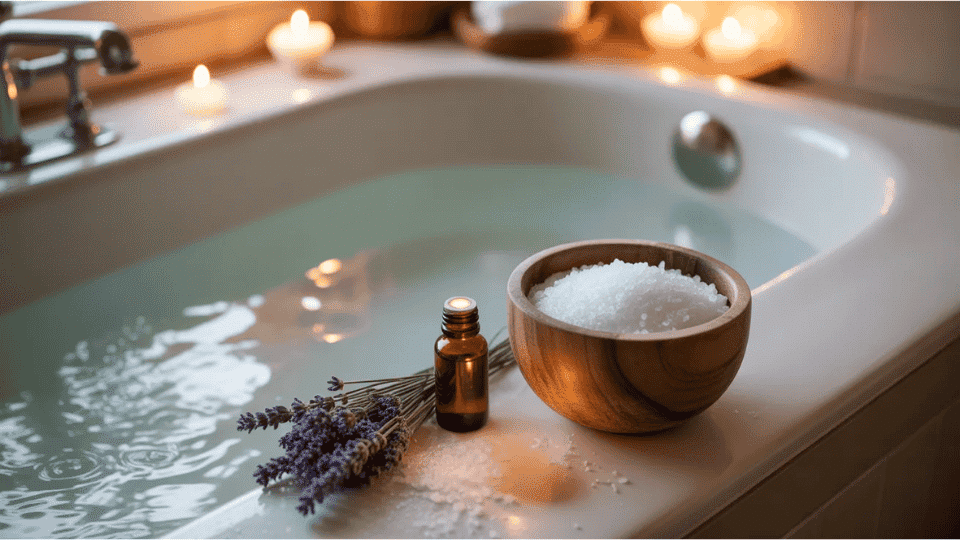
This is the most well-documented option for children. Epsom salt is magnesium sulfate, and magnesium plays a documented role in nervous system regulation and sleep quality. A 2004 study found measurable increases in blood magnesium and sulfate following Epsom salt baths, which is relevant for children who show signs of restlessness or disrupted sleep. The soak is also effective for relieving muscle tension after active days, which makes it useful before bed after sports or high-stimulation afternoons.
Use 1 cup for children under 6 and up to 2 cups for older children. Keep water temperature between 98 and 102 degrees Fahrenheit. Anything hotter can dry skin or cause dizziness in small bodies.
| Parent Tip: If your child has never had an Epsom salt bath, start with half a cup and watch for any skin reaction before the next soak. Most children tolerate it well, but sensitivity varies. |
Ingredients
- 1 to 2 cups Epsom salt (magnesium sulfate)
- 3 to 5 drops lavender essential oil (optional, for children over 2)
- Warm water (98 to 102 degrees Fahrenheit)
Method
- Fill the tub and check temperature before your child gets in.
- Add Epsom salt under the running water so it dissolves fully.
- Add lavender oil only if using, and swirl to combine.
- Soak for 15 to 20 minutes. Do not rinse off immediately afterward.
- Pat skin dry rather than rubbing, and offer water to drink after.
2. Baking Soda and Sea Salt Bath
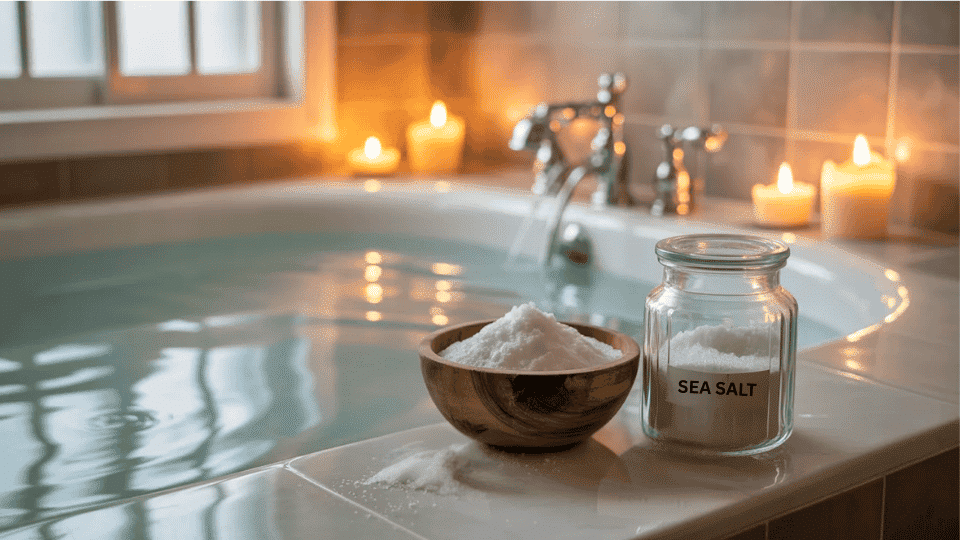
This two-ingredient combination is particularly useful when your child’s skin is reacting to environmental irritants, chlorinated pool water, or mild rashes. Baking soda raises the pH of bathwater slightly, which reduces skin acidity and can calm itching. Sea salt adds minerals and gives the water a slightly denser, more spa-like quality. What actually makes this work is not dramatic. It simply creates conditions where irritated skin can settle without further exposure to soaps or harsh products.
Ingredients
- 1 cup baking soda
- 1 cup sea salt (fine grain dissolves more easily)
- Warm water
Method
- Fill the tub with warm, not hot, water.
- Add both ingredients and stir until fully dissolved.
- Check temperature carefully before your child gets in.
- Soak for 15 minutes, then rinse lightly with clean water.
3. Lavender and Oatmeal Bath
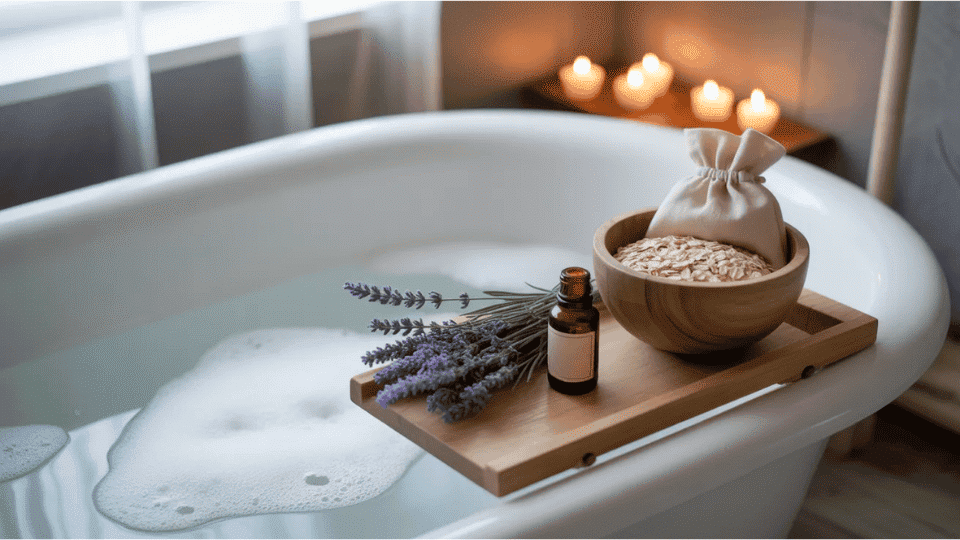
This is my first recommendation for children with eczema, dry skin, or any kind of persistent skin irritation. Colloidal oatmeal has a strong evidence base for reducing skin inflammation. The FDA recognizes it as a skin protectant. It forms a thin lipid barrier on the skin surface that reduces water loss, which is particularly helpful for children prone to flare-ups in dry weather or after illness. Lavender in small amounts adds a calming scent that many children associate with sleep over time. What actually makes this habit stick is the sensory predictability: same smell, same warmth, same outcome.
Ingredients
- 1 cup finely ground oatmeal (colloidal oatmeal, or blend plain oats to a fine powder)
- 3 to 5 drops lavender essential oil (optional, for children over 2)
- Warm water
Method
- Run warm bath water to a safe temperature.
- Place ground oatmeal in a muslin bag or the foot of a clean stocking, and tie it closed.
- Hang the bag from the faucet so water runs through it, or swirl it in the tub.
- Add lavender oil and swirl gently.
- Soak for 15 to 20 minutes.
- Pat skin dry gently instead of rubbing. No rinse needed.
4. Lemon and Ginger Bath
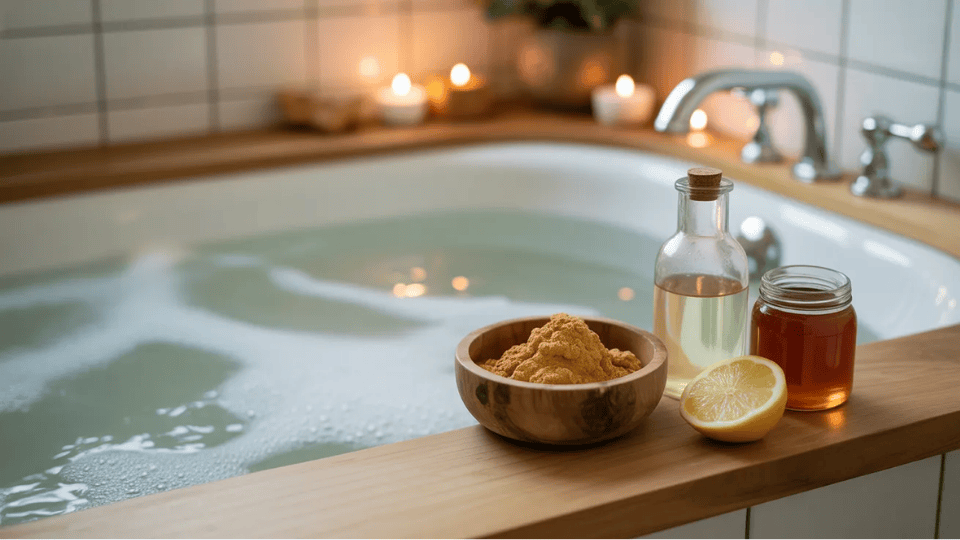
Ginger baths warm the body from the outside in, which parents often use when a child feels cold, sluggish, or achy at the beginning of a cold. Ginger has mild circulatory and warming properties. The lemon adds a fresh scent and small amounts of vitamin C, though the skin contact benefits are mild. This bath is better suited to children over age 5, since ginger can occasionally cause skin sensitivity in younger children. Keep soak time shorter than the other recipes and rinse well afterward. Most people who quit this one do so because the ginger made the water slightly itchy; using less is the fix, not abandoning it entirely.
| Safety Note: Test lemon and ginger on a small patch of your child’s skin before a full soak. Both ingredients can cause mild irritation in sensitive children. Skip this recipe for children under 3. |
Ingredients
- Half a cup fresh lemon juice
- 1 teaspoon ginger powder (or 2 tablespoons freshly grated ginger)
- 1 tablespoon honey
- Warm water
Method
- Fill the tub with warm water.
- Add lemon juice, ginger, and honey and stir to combine.
- Test water temperature and check your child’s skin reaction to the water before a full soak.
- Limit soak time to 10 minutes.
- Rinse thoroughly with clean water after the soak.
When a Detox Bath for Kids Actually Helps Most
Not every night calls for a special soak. Most people who use these baths consistently find two or three situations where they genuinely make a difference: after illness, after high-stimulation events that left a child overtired but wired, and when skin irritation is disrupting sleep. Those are the three best use cases in practice.
After a cold or virus, an Epsom salt soak can ease the muscle aching that often lingers, and the warmth helps the body shift toward rest. After a highly stimulating day, school events, sports, travel, or even emotional stress, a warm bath with lavender is one of the most reliable ways to lower physiological arousal before bed. Children who struggle to stop moving or stop talking often respond well to the sensory containment of a warm bath and a familiar scent. For skin flare-ups, especially eczema and dryness triggered by weather changes, the oatmeal and lavender recipe addresses the physical discomfort that otherwise keeps children awake.
Pay attention to your child’s sleep quality and mood in the 24 hours after a soak. That feedback tells you more than any general guideline.
Safety Rules and Ingredients to Avoid
The most common mistakes with detox baths for kids are too-hot water, too much Epsom salt, and essential oils used at adult concentrations. None of these are dramatic errors, but all of them undermine the results and can cause skin irritation that puts children off bath time entirely.
Water temperature is the most important variable. Keep it between 98 and 102 degrees Fahrenheit. Use a bath thermometer if your instinct about “warm” runs hot. Children’s skin is thinner than adult skin and reaches discomfort thresholds faster.
For Epsom salt, the guidance is 1 cup for children under 6 and up to 2 cups for school-age children. More is not better, and amounts above this range can dry skin and cause the laxative effect Epsom salt is also known for.
For essential oils, always dilute before adding to water, use only 2 to 5 drops per bath, and avoid them entirely for children under 2. Lavender and chamomile are the gentlest options. Peppermint and eucalyptus are too strong for children under 6. Skip tea tree oil for children’s baths entirely.
Avoid any bath product that lists synthetic fragrances, parabens, or sulfates. These interrupt the skin barrier rather than supporting it. If the product list is long and chemical-heavy, it does not belong in a bath meant to calm and restore.
How Often to Give a Detox Bath for Kids
Once a week is the right starting frequency. This is frequent enough to build a recognizable routine that your child’s nervous system starts to associate with winding down, but infrequent enough to avoid overexposure to Epsom salt or any ingredient that might accumulate. If you notice dry skin after the bath, reduce either the frequency or the concentration of ingredients before increasing bath time.
During illness or a period of high stress, you can increase to twice a week for a short time. After that, return to once weekly. The habit works better as a consistent ritual than as an emergency intervention applied inconsistently, so building predictability into the routine matters more than the specific recipe you use. Parents who pair a weekly soak with a broader 7-day detox plan often find the bath fits naturally into an already structured reset week.
How to Make Bath Time Fun for Kids
The ritual around the bath matters as much as what’s in the water. Children who feel involved in the preparation are more likely to relax into it rather than resist it. What actually makes this sustainable in my experience is treating it less like a health intervention and more like a shared activity.
Let your child choose the recipe from the options you have available. Give them a simple job: stirring the Epsom salt, squeezing the lemon bag, or swirling the oatmeal pouch in the water. Put on a specific playlist you only use for bath time. Over several weeks, the music itself starts to signal that it’s time to slow down. A consistent sensory routine, same scent, same temperature, same sounds, does more for a child’s nervous system than any individual ingredient.
For children who are particularly resistant to bath time, try introducing just warm water and one ingredient at a time. Lavender oatmeal tends to be the most appealing starting point for reluctant bathers because it smells familiar and the water feels soft. Pairing the bath with a few yoga poses for kids beforehand can also help channel residual energy before the soak begins.
Frequently Asked Questions
At what age can kids start detox baths?
Children can usually start gentle baths at any age, but ingredients should be age-appropriate. For babies and toddlers, plain warm water or colloidal oatmeal is safest. Older children may tolerate Epsom salt better. Always start mild and avoid strong scents or irritating ingredients.
Should kids rinse after a detox bath?
It depends on the recipe. After Epsom salt or baking soda baths, a light rinse can prevent dryness. After an oatmeal bath, rinsing is usually not needed because the oatmeal leaves a soothing layer on the skin. Pat skin dry gently after either option.
Can detox baths help with itchy skin?
Yes, some baths may calm mild itching, especially oatmeal-based soaks. Colloidal oatmeal helps protect the skin barrier and reduce dryness. Avoid lemon, ginger, fragrance, or strong essential oils if your child is itchy, because these can make sensitive skin feel worse.
What water temperature is best for kids?
Warm, not hot, water is best for children. Aim for about 98 to 102 degrees Fahrenheit, and use a bath thermometer if needed. Water that feels comfortable to an adult may be too hot for a child’s thinner, more sensitive skin.
Can kids drink water after a detox bath?
Yes, offering water after a detox bath is a good habit. Warm baths can make children sweat lightly, especially after active days. A small glass of water helps them rehydrate and supports a calmer transition into bedtime or quiet rest.
Are store-bought detox bath mixes safe?
Some are safe, but many contain fragrance, dyes, sulfates, or strong essential oils. Check the label carefully before using any store-bought mix for children. A simple homemade bath with oatmeal, Epsom salt, or baking soda is often easier to control.
Can detox baths replace regular baths?
No. Detox baths should not replace normal hygiene baths. They are better used as an occasional calming soak for relaxation, sleep support, or skin comfort. Regular baths still need gentle cleansing when your child is dirty, sweaty, or has been playing outside.
What if my child dislikes detox baths?
Keep it simple. Start with plain warm water, a short soak, and one gentle ingredient like oatmeal. Let your child help choose music, a towel, or the recipe. The goal is relaxation, so forcing the bath can defeat the purpose.
Final Verdict
Now you know how a detox bath for kids can be simple, gentle, and easy to prepare at home. I walked you through what a detox bath is, why parents use it, and shared easy recipes like Epsom salt, oatmeal, and baking soda soaks.
You also learned how often to give these baths, what safety steps to follow, and how to make bath time fun and calming for your child.
When you keep ingredients natural and water warm, you create a relaxing space that supports comfort and better sleep. I hope you feel ready to try one of these baths soon.
If you give it a try, share your experience and let others know what worked best for you.
Sources
Waring, R.H., “Report on Absorption of Magnesium Sulfate (Epsom Salts) Across the Skin.” University of Birmingham, 2004.
National Eczema Association, “Colloidal Oatmeal: A Proven Ingredient for Eczema Relief.” nationaleczema.org
Healthline, “Epsom Salt: Benefits, Uses, and Side Effects.” healthline.com
U.S. Food and Drug Administration, “Skin Protectant Drug Products for Over-the-Counter Human Use: Final Monograph.” Federal Register, 2003.