

| Exercise Type | All training modalities (strength, cardio, mobility, sport) |
| Who It’s For | Beginners building their first workout routine |
| Core Principles Covered | Overload, Progression, Specificity, Reversibility, Individualization, Recovery, Consistency, Variation |
| Framework Included | FITT Principle (Frequency, Intensity, Time, Type) |
| Best For | Designing a safe, structured beginner fitness plan |
| Avoid If | You have an active injury or unmanaged medical condition — get clearance first |
| Disclaimer: This article is for informational and educational purposes only. It does not constitute medical advice. Always consult a qualified healthcare provider before starting a new exercise or fitness program. |
The principles of exercise are the foundational rules that explain how the body responds, adapts, and improves in response to physical training. When I first started building a structured routine, I quickly learned that random workouts produce random results.
The body gets stronger and fitter in very specific, predictable ways, and these principles explain exactly why.
In my own training, the single biggest shift came when I stopped thinking about working harder and started thinking about working smarter.
Whether you want to build strength, improve endurance, lose weight, or simply stay active, the same core training principles apply. They are not complicated, but ignoring them is the most common reason beginners stall out or get hurt within the first few months.
This guide covers all eight principles clearly, shows you how to apply the FITT framework to put them into practice, and gives you a beginner’s weekly plan you can start using this week.
The 8 Core Principles of Exercise Explained

Before getting into any specific workout plan, it helps to list the principles of exercise first so you can see the full structure clearly. These are the rules your body actually responds to, regardless of what type of exercise you do.
1. Overload Principle
The overload principle is the foundation of all physical improvement. For the body to adapt and grow stronger, it must be challenged beyond what it normally does. If I keep walking the same 10 minutes at the same pace every day, my body has no reason to change, because it has already adapted to that demand.
The key is that overload does not mean maximum effort every session. It means a manageable increase in demand. I can overload by adding a few minutes of walking, increasing the resistance on a bike, adding one extra set to a strength exercise, or simply moving faster. Any of these signals to the body that it needs to adapt upward.
| Trainer Tip: The American College of Sports Medicine recommends increasing training volume by no more than 10% per week to reduce injury risk. In my own training and when programming for others, I have seen this rule prevent a huge number of overuse injuries that happen when people increase too fast in the first few weeks. |
2. Progression Principle
Progression is overload applied over time in a structured way. The idea is not to jump from a beginner workout to an advanced one overnight, but to increase challenge gradually so the body keeps adapting without breaking down.
When I program progression for beginners, I use a simple ladder: add one variable at a time. That might be two extra minutes of walking this week, one additional set next week, and a slight resistance increase the week after. Each small increase adds up. Over eight to twelve weeks, the cumulative effect is a genuinely stronger, more capable body.
The specifics matter here. Understanding the right rep ranges for strength training is part of applying progression correctly, because beginners who jump straight to high-volume sets before building base strength tend to plateau faster and accumulate fatigue they cannot recover from.
3. Specificity Principle
The body adapts specifically to the demands placed on it. This is called the SAID principle in exercise science, which stands for Specific Adaptation to Imposed Demands. If I want stronger legs, I need to train my legs under load. If I want better cardiovascular endurance, I need sustained aerobic training, not just stretching.
This matters for beginners because a lot of general movement is beneficial early on, but as soon as you have a clear goal, your training needs to align with it. A person training for a 5K run and a person training to add muscle mass need different programs, even if both are at the same fitness level. Choosing the right type of exercise is not optional; it is the reason your training either works or produces results you did not want.
Specificity also applies within a training type. Eccentric quad exercises build a specific kind of quad and hamstring resilience that concentric-only training cannot replicate. If knee stability is your goal, these movements are a more targeted and effective choice than standard leg presses alone.
4. Reversibility Principle
The reversibility principle is often summarized as “use it or lose it.” Fitness adaptations are not permanent. If training stops, the body gradually loses the gains it built. Cardiovascular efficiency declines within two to three weeks of inactivity. Muscle strength takes longer to fade, but it does fade.
Research published by ACE Fitness confirms that detraining begins measurably within two weeks for cardiovascular capacity, with strength losses following at around three to four weeks of complete rest. This is not a reason to panic about missing a few sessions; it is a reason to build consistency into your training structure from the beginning.
The practical takeaway is that even reduced training during busy periods is vastly better than stopping entirely. Two short sessions a week are enough to maintain most fitness gains while life gets complicated.
5. Individualization Principle
Two people doing the same workout will not get identical results. Age, training history, sleep, stress, nutrition, body composition, and genetics all shape how the body responds to exercise. A program that works well for a 25-year-old with two years of training experience will be very different from the right program for a 55-year-old who is returning to movement after a long break.
I have seen this mistake play out repeatedly: a beginner copies an influencer’s six-day program, burns out within three weeks, and concludes that exercise does not work for them. The issue was never effort. It was a mismatch between the program’s demands and where that person actually was starting from.
The right program starts with an honest assessment of current fitness, available recovery time, and a clear goal. People managing mobility limitations still follow the same training principles, but apply them through adaptive movement routines that match what their body can safely handle at that moment.
6. Rest and Recovery Principle
Muscle does not grow during exercise. It grows during recovery. The training session is the stimulus; the days following are when adaptation actually happens. Skipping rest in favor of more training is the most common mistake I see in people who train consistently but stop improving.
Many beginners assume that being sore after training always means good progress, but soreness and productive adaptation are not the same thing. Chronic soreness without adequate rest is a signal of accumulated stress, not a sign that the body is building.
Recovery includes sleep (7 to 9 hours per night for most adults supports optimal muscle protein synthesis), nutrition (adequate protein, roughly 1.6 to 2.2 grams per kilogram of bodyweight daily for muscle-building goals), and scheduled rest days. Active recovery, meaning light movement like a short walk or gentle yoga, is generally better than complete sedentary rest because it promotes circulation and reduces stiffness without adding training stress.
7. Consistency Principle
Consistency is the multiplier that makes all other principles work. A well-structured workout done three times per week for twelve weeks produces far better results than an intense program done sporadically. The body adapts through repeated, regular exposure to training stress, not through occasional maximum effort.
For beginners, the most important consistency goal is showing up. Not perfect sessions, not maximum intensity, just regular contact with structured movement. Three sessions per week is the evidence-supported minimum for beginners to build fitness meaningfully, according to standard ACSM guidelines. As fitness improves, frequency can increase.
8. Variation Principle
The body adapts to repetitive stimuli. If every training session is identical, adaptation plateaus and boredom follows. Variation, sometimes called periodization in more structured programming, means changing training variables systematically to keep driving improvement.
Variation can be as simple as changing exercise order, adjusting rest periods, switching between free weights and bodyweight, or adding a new movement pattern every few weeks. More advanced programs use planned phases, alternating periods of higher volume with periods of higher intensity. For beginners, even small changes to the weekly structure are enough to keep progress moving.
Understanding these eight principles sets the foundation. The next step is learning how to apply them practically using a simple, well-tested framework.
The FITT Principle: How to Apply the Principles of Exercise
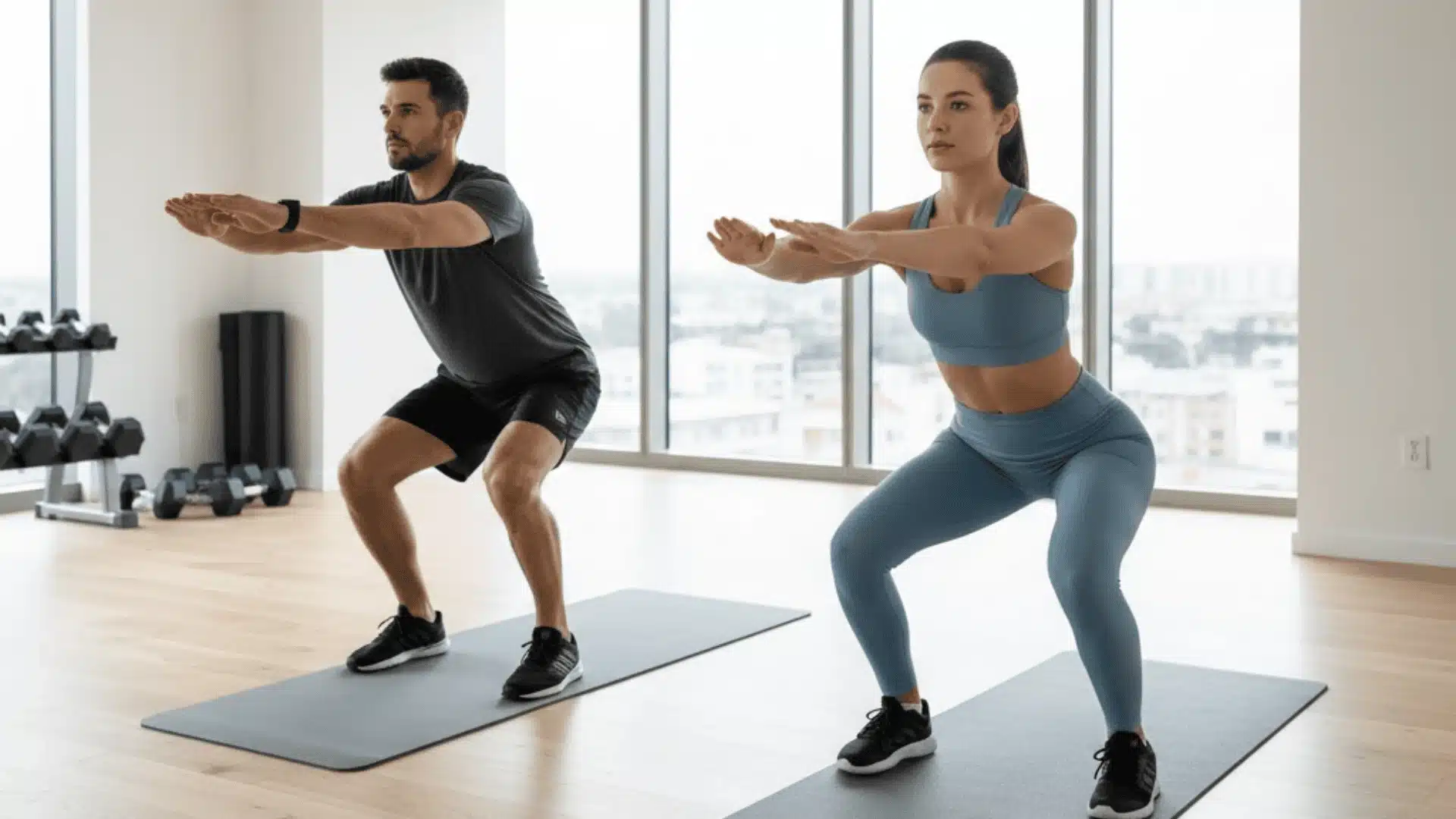
Knowing the principles of exercise matters. Knowing how to actually organize them into a workable weekly plan matters more. The FITT principle, outlined by the American College of Sports Medicine, gives beginners a structured way to do exactly that.
- Frequency: How often you exercise each week. For beginners, 3 to 5 days per week provides enough stimulus for adaptation without overwhelming recovery capacity. A trained person may need more frequent sessions to keep improving.
- Intensity: How hard you work during each session. Intensity is the most important variable for driving adaptation. For cardio, intensity can be measured through heart rate as a percentage of your maximum. For strength training, intensity corresponds to load as a percentage of your one-repetition maximum.
- Time: How long each session lasts. Beginner sessions of 20 to 30 minutes can be highly effective when intensity and structure are right. Longer is not always better, particularly early on.
- Type: The category of exercise chosen: walking, running, resistance training, cycling, yoga, swimming, or sport. Type should match the goal, which is the specificity principle put into practice.
The FITT variables connect directly back to the overload and progression principles. To progress, you adjust one FITT variable at a time: add a session, increase intensity slightly, extend duration by five minutes, or try a different exercise type. Changing too many variables at once makes it impossible to know what is and is not working.
Beginner Weekly Plan Using All 8 Exercise Principles
Here is a seven-day starter plan that puts every principle into action. This is designed for someone in their first four to eight weeks of consistent training.
| Day | Workout | Principle | Why It’s There |
|---|---|---|---|
| Monday | 20-minute brisk walk + light stretching | Consistency, Specificity | Cardio builds aerobic base; walking every Monday builds the habit. |
| Tuesday | Bodyweight strength: squats, push-ups, rows (2 sets each) | Overload | Muscles face greater demand than daily activity, triggering adaptation. |
| Wednesday | Rest or 15-minute gentle yoga | Recovery | Muscles repair and grow stronger during rest, not during training. |
| Thursday | Walk 25 minutes (5 more than Monday) | Progression | A small, deliberate increase keeps the body adapting without overloading. |
| Friday | Cycling 20 minutes + core work | Variation | Different movement patterns prevent plateaus and maintain engagement. |
| Saturday | Activity you enjoy: sport, dance, long walk | Individualization | Personal interest drives adherence; the best exercise is the one you actually do. |
| Sunday | Light stretch or 10-minute walk | Reversibility prevention | Staying lightly active maintains conditioning without adding recovery burden. |
Each session in this plan serves a purpose tied to a specific training principle. Nothing is random.
As weeks progress, the overload and progression principles come into play: add one more set to Tuesday’s strength work, extend Thursday’s walk to 30 minutes, or increase the cycling resistance on Friday. These small adjustments, made consistently over eight to twelve weeks, produce real, measurable fitness improvements.
How Quickly Can Beginners Expect Results?
This is the question I hear most often from people starting out, and it deserves an honest answer. Results happen on different timelines depending on what you are measuring.
Within the first two to four weeks, most beginners notice improvements in energy, sleep quality, and mood. These are real adaptations: your cardiovascular system becomes more efficient at delivering oxygen, and your nervous system improves its ability to recruit muscle fibers. These changes happen before anything is visible in the mirror.
Strength gains in the first four to eight weeks come primarily from neural efficiency, meaning your brain and muscles learn to coordinate better, not from significant muscle tissue growth. Visible muscle development and meaningful body composition changes typically require eight to twelve weeks of consistent training combined with appropriate nutrition.
The principles of exercise exist precisely to manage this timeline realistically. Overload ensures you keep driving adaptation. Progression ensures you do not plateau. Recovery ensures the adaptations you trigger actually complete. Skipping any one of these principles is the most reliable way to slow down or stall results.
Common Mistakes That Violate the Exercise Principles
Understanding the principles of exercise is one thing. Knowing the most common ways beginners unintentionally break them is equally useful.
- Doing too much too soon: This violates the progression principle. Starting with very intense or very long sessions increases injury risk and makes it hard to sustain consistency. I have seen this pattern derail more beginners than any other mistake.
- Copying someone else’s program: This violates individualization. A friend’s program or a fitness influencer’s routine is designed around their body, their history, and their goals. It will rarely be the right starting point for someone else.
- Skipping rest days: This violates the recovery principle. Without adequate rest, muscle protein synthesis is incomplete, and fatigue accumulates. More training days do not always mean faster progress.
- Training the same way every week indefinitely: This violates the variation principle. The body adapts quickly to repeated stimuli. A routine that challenged you in week one will feel easy by week eight, and if you have not changed the variables, that means you have plateaued.
- Stopping training when life gets busy: This triggers the reversibility principle. Even two shorter sessions per week during a hectic period are enough to protect most of your fitness gains. Complete stoppage for several weeks requires the body to rebuild from a lower baseline.
These are not abstract errors. Each one maps directly to a specific principle that, when applied correctly, would have prevented the problem. That is the practical value of understanding the principles in the first place.
How the Principles of Exercise Apply to the Health-Related Components of Fitness
The principles of exercise do not operate in isolation. They interact directly with the five health-related components of fitness: cardiovascular endurance, muscular strength, muscular endurance, flexibility, and body composition.
Each component responds to training according to the same overload, progression, and specificity rules, but each has its own optimal training parameters.
Cardiovascular endurance responds best to sustained aerobic activity performed 3 to 5 days per week at moderate intensity, which is exactly what the FITT principle structures.
Muscular strength requires higher loads and longer rest periods between sets than muscular endurance does. Flexibility improves through consistent stretching after training sessions, when muscles are warm.
Understanding both gives you a complete picture: the principles tell you how to apply training stimulus, and the fitness components tell you what you are building toward.
Frequently Asked Questions
Can exercise principles help prevent injury?
Yes. Exercise principles help prevent injury by keeping training structured instead of random. Progression stops you from doing too much too soon, recovery gives tissues time to repair, and individualization helps match workouts to your current ability. Together, they reduce strain, overuse, and poor exercise choices.
Should I change my workout every week?
No, changing workouts every week is usually unnecessary. Beginners need enough repetition to learn proper form and build consistency. A better approach is keeping the same basic routine for several weeks while slowly adjusting reps, time, resistance, or intensity when the workout starts feeling too easy.
What principle matters most for beginners?
Consistency usually matters most at the beginning. Overload and progression are important, but they only work when you train regularly. A simple routine done three times per week will usually beat a harder plan done inconsistently. First build the habit, then gradually increase the challenge.
Can I use these principles for weight loss?
Yes. Exercise principles can support weight loss by helping you train consistently, progress safely, and choose the right workout type. Cardio helps burn calories, strength training helps preserve muscle, and recovery keeps you from burning out. Nutrition still plays the biggest role in fat loss.
How do I know if my workout is too hard?
Your workout may be too hard if soreness lasts several days, your performance drops, sleep worsens, or you dread every session. Some challenge is normal, but constant fatigue means recovery is not matching the training stress. Reduce intensity, shorten sessions, or add more rest.
Do beginners need a fitness tracker?
A fitness tracker is helpful but not required. Beginners can track progress with a notebook, calendar, or simple notes app. Record workout days, exercises, reps, walking time, or energy levels. The goal is not perfect data; it is noticing whether your routine is becoming more consistent.
Can I follow exercise principles at home?
Yes. These principles apply just as well at home as they do in a gym. You can overload with bodyweight exercises, resistance bands, longer walking sessions, or shorter rest periods. What matters is not the location, but whether your workouts are structured, repeatable, and gradually progressing.
What should I do when progress slows down?
When progress slows, review your routine before adding more work. Check whether you are sleeping enough, recovering well, and gradually increasing the challenge. Then adjust one variable at a time, such as adding reps, increasing resistance, or changing exercise type. Avoid changing everything at once.
Final Verdict
Now that I’ve walked through the main principles of exercise, you can see that fitness is not just random workouts.
Real progress happens when training follows simple ideas like overload, progression, recovery, and consistency.
When I started applying these principles myself, workouts felt more structured, and results became easier to track.
You don’t need a complicated plan; just remember these core rules and use them as your guide whenever you exercise. Start small, stay regular, and adjust slowly as your body improves.
If you found this helpful, save this page for later and share it with someone who wants to start exercising the right way.
Sources
American College of Sports Medicine (ACSM), “Resistance Training Prescription for Muscle Function, Hypertrophy, and Physical Performance in Healthy Adults: An Overview of Reviews.” 2026. acsm.org
American College of Sports Medicine (ACSM), “ACSM’s Guidelines for Exercise Testing and Prescription.” Current edition. acsm.org
ACE Fitness, Sabrena Jo, PhD, “How to Overcome the Reversibility Principle and Help Your Clients Get Back on Track.” September 2024. acefitness.org
Physiopedia, “FITT Principle.” physio-pedia.com