| Exercise Type | Strength endurance / muscular definition |
| Muscles Targeted | Full body: quads, glutes, core, chest, back, shoulders, triceps |
| Difficulty | Beginner to Intermediate |
| Equipmen | Bodyweight, dumbbells, resistance bands, bench or chair |
| Best For | Building lean muscle definition, improving posture, and boosting endurance |
| Avoid If | Acute joint injury, recent surgery (consult a healthcare provider first) |
| Disclaimer: This article is for informational and educational purposes only. It does not constitute medical advice. Always consult a qualified healthcare provider before starting a new exercise, nutrition, or wellness program. |
Starting with toning exercises was honestly a game-changer for me, not just for how my body looked, but for how strong and capable it felt. If you’ve been going through workouts without a clear plan or real results, that changes today.
These exercises work because they target muscle definition and endurance in a practical, sustainable, and genuinely effective way.
I’ve pulled together some of the best toning exercises, each with muscle targets, time guidelines, and step-by-step instructions, so there’s no second-guessing, just doing.
So if you’re starting fresh or adding structure to an existing routine, this list gives you exactly what you need to move with purpose.
What Are Toning Exercises?
Toning exercises are movements that help build muscle definition, strength, endurance, and better body control without focusing only on heavy lifting or bulk. They usually use bodyweight, dumbbells, resistance bands, or moderate resistance with controlled reps.
The goal is not just to look leaner, but to build a toned body that feels stronger, more stable, and more capable in daily life.
These exercises work by challenging your muscles long enough to improve shape, stamina, and firmness. They also support better posture, balance, and functional strength.
Squats, lunges, push-ups, planks, rows, and glute bridges are good examples because they train major muscle groups and help your body move with more control.
The Science Behind Muscle Toning
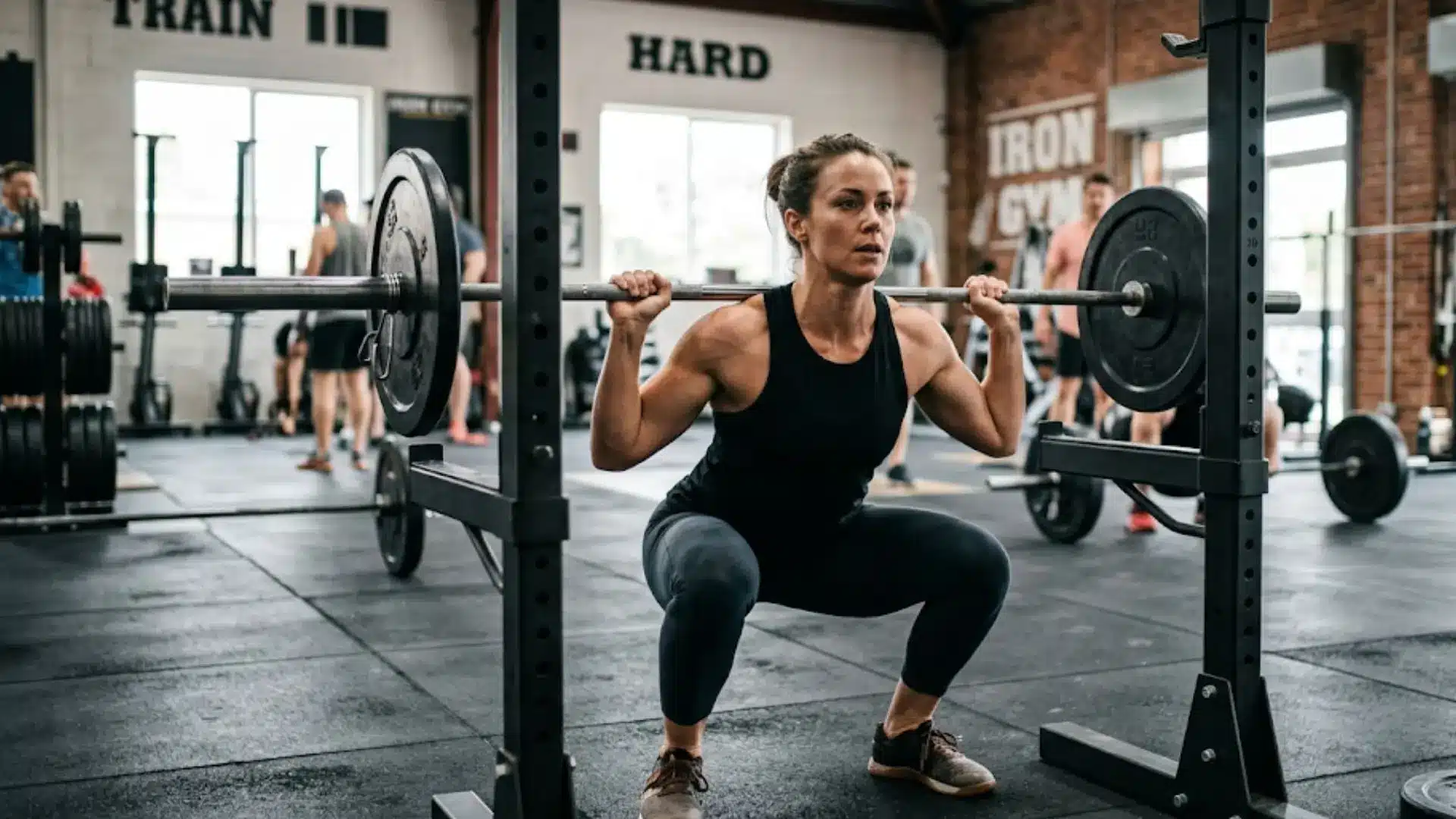
Here is what “toning” actually means from a physiological standpoint, because the word gets misused constantly.
Muscle definition comes from two things working together: sufficient muscle cross-sectional area and low enough body fat to make that muscle visible. No exercise changes the shape of a muscle; what changes is the size of the muscle fibers and the amount of fat covering them.
The rep ranges for strength and endurance work differently at a muscular level: moderate-load, higher-rep training at 60 to 75 percent of one-rep max stimulates meaningful hypertrophy while also improving muscular endurance, and that is exactly the zone toning-style training occupies.
The result is increased quadriceps force output during multi-joint movements like squats and lunges, stronger posterior chain engagement in deadlifts, and improved core stability that carries into every other movement you do.
The practical takeaway: do not fear building muscle. At moderate training volumes, women and men who follow a structured toning program gain definition without gaining mass, as long as caloric intake supports maintenance rather than a significant surplus.
| Trainer Tip: When I program toning exercises for clients, I use a simple threshold: if they can complete more than 20 reps with clean form, the resistance is too low to drive adaptation. Add weight or reduce rest time before adding more reps. |
Toning Exercises to Sculpt Your Body
These exercises cover every major muscle group. From legs and glutes to shoulders and core, each one is selected for practical return: good muscle recruitment, low injury risk at moderate loads, and clear progression potential.
1. Squats
Squats are the single most efficient lower-body toning exercise available. One movement loads the quadriceps, hamstrings, glutes, and core simultaneously, making it the anchor of any leg day.
In my own training, the squat is also the first exercise I check when a client’s knee tracking or lower-back position needs correction, because fixing the squat fixes most other lower-body mechanics downstream.
People dealing with knee pain when squatting often find the issue traces back to foot position or quad weakness rather than the squat pattern itself.
Time: 30 to 60 seconds per set (12 to 15 reps) | Muscles Worked: Quadriceps, hamstrings, glutes, and core
How to Do It:
- Stand with feet shoulder-width apart.
- Lower hips back and down as if sitting in a chair.
- Keep knees tracking over toes and chest tall.
- Drive through heels to stand.
- Pause briefly at the top and squeeze glutes.
- Repeat for 12 to 15 reps per set.
2. Lunges
Lunges are essential for correcting the muscle imbalances that squats alone miss. Because each leg works independently, the stronger side cannot compensate for the weaker one, which is exactly what happens on bilateral movements when there is a significant strength difference between limbs.
Time: 30 to 60 seconds per set (12 reps each leg) | Muscles Worked: Quadriceps, glutes, and hamstrings
How to Do It:
- Stand tall with feet hip-width apart.
- Step forward with one foot.
- Lower hips until both knees reach 90 degrees.
- Keep the front knee directly above the ankle, not past the toes.
- Drive through the front heel to return to standing.
- Alternate legs each rep for 12 reps per side.
3. Push-Ups
Push-ups require no equipment yet produce serious upper-body toning when performed with full tension. The key cue I give clients repeatedly is this: the push-up is a moving plank, not just a chest exercise. Shoulders packed, core braced, glutes squeezed throughout every rep.
Time: 30 to 60 seconds per set (10 to 15 reps) | Muscles Worked: Pectorals, triceps, shoulders, and core
How to Do It:
- Start in a plank with hands slightly wider than shoulders.
- Keep core tight and body in a straight line from head to heels.
- Lower chest toward the floor in a controlled 2-second descent.
- Keep elbows at roughly 45 degrees, not flaring outward.
- Push through palms back to full arm extension.
- Repeat for 10 to 15 reps per set.
4. Planks
Planks build the kind of deep core stability that makes every other toning exercise safer and more effective. The transverse abdominis, the deepest core muscle layer, is the primary target here. Holding a plank with correct tension for 30 to 45 seconds activates this layer far more reliably than crunches or sit-ups.
Time: Hold for 20 to 60 seconds per set | Muscles Worked: Core, shoulders, and glutes
How to Do It:
- Rest on forearms with elbows directly under shoulders.
- Extend legs behind you, toes on the floor.
- Keep body in a straight line from head to heels.
- Brace the core as if bracing for a punch.
- Squeeze glutes and hold without letting hips drop or rise.
- Hold for 20 to 60 seconds per set.
5. Mountain Climbers
Mountain climbers combine cardio conditioning and core toning in one move, keeping heart rate elevated while the anterior core and hip flexors work under sustained load. At a controlled pace, around 1 rep per second, they become a genuine core strengthening exercise rather than just a cardio drill.
Time: 30 to 60 seconds per set (10 to 15 reps per leg) | Muscles Worked: Core, shoulders, hip flexors, and quadriceps
How to Do It:
- Start in a high push-up position, arms fully extended.
- Keep hips level and core braced throughout.
- Drive one knee toward the chest in a controlled motion.
- Quickly switch legs, extending the first back as the second comes forward.
- Maintain a steady rhythm without letting the lower back arch.
- Continue for 30 to 60 seconds per set.
6. Deadlifts
Deadlifts are the posterior chain’s primary toning movement, loading the hamstrings, glutes, and spinal erectors through a full hip hinge pattern. Adding dumbbell deadlifts to a toning program, even at moderate loads, noticeably improves lower-back strength and glute definition within four to six weeks of consistent training.
Time: 30 to 60 seconds per set (10 to 12 reps) | Muscles Worked: Hamstrings, glutes, lower back, and core
How to Do It:
- Stand hip-width apart holding dumbbells in front of your thighs.
- Hinge at the hips with a slight bend in the knees.
- Lower the weights along the shins, keeping back flat throughout.
- Stop when you feel a stretch in the hamstrings, usually around mid-shin.
- Drive through heels to stand, squeezing glutes at the top.
- Repeat for 10 to 12 reps per set.
7. Russian Twists
Russian twists directly target the obliques, the lateral core muscles that give the waist its defined, athletic look. Most core work is anterior-focused, which leaves the obliques undertrained. Adding Russian twists 2 to 3 times per week fills that gap efficiently.
Time: 30 to 60 seconds per set (20 to 30 reps) | Muscles Worked: Obliques and abdominals
How to Do It:
- Sit with knees bent and feet flat on the floor.
- Lean back slightly to engage the core, keeping the spine long.
- Hold a weight with both hands at chest height.
- Rotate the torso to the right, tapping the weight toward the floor beside the hip.
- Rotate to the left and repeat on the other side.
- Keep the movement controlled, not momentum-driven, for 20 to 30 total reps.
8. Bicycle Crunches
Bicycle crunches produce more abdominal EMG activation than standard crunches because the rotation adds oblique engagement that flat crunch variations miss. The movement also trains the rectus abdominis through a longer range of motion than most other core exercises.
Time: 30 seconds per set (15 to 20 reps) | Muscles Worked: Rectus abdominis and obliques
How to Do It:
- Lie on your back with hands loosely behind your head.
- Lift both legs off the floor with knees bent at 90 degrees.
- Bring the right knee toward the chest while rotating the left elbow to meet it.
- Simultaneously extend the left leg straight out.
- Switch sides in a smooth pedaling rhythm.
- Keep the lower back pressed into the floor throughout for 15 to 20 reps.
9. Leg Raises
Leg raises isolate the lower abdominals and hip flexors more directly than most other core exercises. This is the section of the core that produces the flat-lower-belly appearance many people train for, and it responds well to the sustained tension this movement creates.
Time: 30 seconds per set (10 to 15 reps) | Muscles Worked: Lower abdominals and hip flexors
How to Do It:
- Lie flat on your back with legs fully extended.
- Press the lower back firmly into the floor.
- Keep legs straight and raise them toward the ceiling.
- Stop when legs are perpendicular to the floor or as high as control allows.
- Lower legs slowly without letting feet touch the floor between reps.
- Repeat for 10 to 15 reps per set.
10. Glute Bridges
Glute bridges are a joint-friendly way to load the glutes and hamstrings without spinal compression, making them accessible for people who cannot deadlift or squat at full depth due to lower-back sensitivity. They are a core movement in many structured lower-body strengthening programs, particularly for those building back from knee or hip discomfort.
Time: 30 to 60 seconds per set (12 to 15 reps) | Muscles Worked: Glutes, core, and hamstrings
How to Do It:
- Lie on your back with knees bent and feet flat on the floor, hip-width apart.
- Press arms flat at your sides for stability.
- Drive through heels and lift hips toward the ceiling.
- Squeeze glutes hard at the top and hold for one second.
- Lower hips slowly back to the floor without fully resting between reps.
- Repeat for 12 to 15 reps per set.
11. Tricep Dips
Tricep dips require only a sturdy chair or bench and deliver focused work on the posterior upper arm, a muscle group that responds well to bodyweight loading once compound pressing movements have built a baseline of strength.
Time: 30 to 60 seconds per set (10 to 15 reps) | Muscles Worked: Triceps and shoulders
How to Do It:
- Sit on the edge of a sturdy bench with hands gripping the edge beside your hips.
- Slide forward off the bench so your hips are in front of the seat.
- Keep legs extended or bent at 90 degrees depending on difficulty level.
- Lower the body by bending elbows to about 90 degrees, keeping elbows tracking back.
- Push through palms back to full arm extension.
- Repeat for 10 to 15 reps per set.
12. Dumbbell Rows
Dumbbell rows build a defined upper back, a muscle group that most toning programs underemphasize. The lats, traps, and rhomboids are responsible for the V-shape appearance of the back and for the postural strength that keeps shoulders from rounding forward under a desk or during other daily activities.
Time: 30 to 60 seconds per set (10 to 12 reps per arm) | Muscles Worked: Lats, traps, and rhomboids
How to Do It:
- Place one hand and same-side knee on a bench for support.
- Hold a dumbbell in the opposite hand, arm fully extended toward the floor.
- Keep back flat and parallel to the floor throughout.
- Pull the dumbbell toward the lower ribcage, elbow close to the body.
- Lower with a controlled 2-second descent back to full extension.
- Complete 10 to 12 reps, then switch sides.
13. Burpees
Burpees are a full-body conditioning tool that challenges the chest, core, shoulders, and legs while keeping heart rate high. They work best as a finisher or circuit element rather than the primary strength movement, because form degrades quickly under fatigue and that is when the benefit drops off.
Time: 30 to 60 seconds per set (10 to 15 reps) | Muscles Worked: Core, shoulders, chest, and legs
How to Do It:
- Start standing with feet shoulder-width apart.
- Drop into a squat and place hands on the floor in front of you.
- Jump or step feet back to a high plank position.
- Perform a push-up if form allows, then hold the plank briefly.
- Jump or step feet forward to meet your hands.
- Explode upward into a jump with arms overhead, then repeat for 10 to 15 reps.
14. Side Planks
Side planks are one of the most underutilized core exercises for a visible waistline. Holding them for 20 to 40 seconds per side creates sustained tension in the obliques and outer hip stabilizers, two areas that forward-facing exercises simply do not reach.
Time: Hold for 20 to 40 seconds per side | Muscles Worked: Obliques, core, and shoulders
How to Do It:
- Lie on one side with your forearm on the ground, elbow directly under the shoulder.
- Stack feet on top of each other or stagger them for more stability.
- Lift hips off the floor to form a straight line from head to feet.
- Keep the top arm resting on your hip or extended toward the ceiling.
- Hold without letting hips sag toward the floor.
- Hold for 20 to 40 seconds, then switch sides.
15. Side-Lying Leg Lifts
Side-lying leg lifts isolate the gluteus medius, the outer glute muscle responsible for hip abduction and lateral stability. This muscle is consistently underdeveloped in people who spend most of their training doing bilateral movements like squats and deadlifts.
Time: 30 to 60 seconds per set (15 to 20 reps per side) | Muscles Worked: Glutes and outer thighs
How to Do It:
- Lie on one side with legs fully extended and stacked on top of each other.
- Rest your head on your lower arm for support.
- Keep hips stacked and core lightly engaged throughout.
- Lift the top leg toward the ceiling in a slow, controlled motion.
- Lower it back without letting it touch the bottom leg between reps.
- Complete 15 to 20 reps, then switch sides.
16. Jumping Jacks
Jumping jacks are a reliable warm-up or circuit finisher that elevates heart rate quickly while engaging the legs, core, and shoulders in a coordinated pattern. They work particularly well at the start of a toning session to raise muscle temperature before moving to resistance-based exercises.
Time: 30 to 60 seconds per set (15 to 20 reps) | Muscles Worked: Legs, core, and shoulders
How to Do It:
- Start standing with feet together and arms at your sides.
- Jump feet out wide while simultaneously raising arms overhead.
- Land softly with feet wider than shoulder-width and arms fully extended.
- Jump feet back together while lowering arms to your sides.
- Maintain a steady rhythm without locking knees on landing.
- Continue for 30 to 60 seconds per set.
17. Superman
The Superman exercise trains the spinal erectors and posterior chain in the extended position, a range that almost no other toning exercise covers. Lower-back strength built here transfers directly into better posture, safer deadlift mechanics, and reduced fatigue during long periods of sitting.
Time: 30 seconds per set (10 to 15 reps) | Muscles Worked: Lower back, glutes, and shoulders
How to Do It:
- Lie face down on a mat with arms extended straight in front of you.
- Keep legs straight and toes pointed toward the floor.
- Simultaneously lift arms, chest, and legs off the floor.
- Squeeze the glutes and lower back at the top of the movement.
- Hold for 2 seconds, then lower with control back to the starting position.
- Repeat for 10 to 15 reps per set.
18. Chest Press
The dumbbell chest press builds pectoral definition and upper-body pressing strength. Using dumbbells rather than a barbell allows each arm to move independently, which corrects side-to-side strength imbalances over time and adds a stabilization demand the barbell press does not.
Time: 30 to 60 seconds per set (10 to 12 reps) | Muscles Worked: Pectorals, shoulders, and triceps
How to Do It:
- Lie on a flat bench or mat holding a dumbbell in each hand.
- Position elbows bent at 90 degrees, upper arms parallel to the floor.
- Press both dumbbells straight up over the chest until arms are nearly extended.
- Do not lock elbows at the top; keep a slight bend.
- Lower with a controlled 2-second descent back to the starting position.
- Repeat for 10 to 12 reps per set.
19. Lateral Raises
Lateral raises isolate the medial deltoid, the part of the shoulder that creates visible width and the rounded, defined shoulder shape that makes the upper body look strong and proportionate. The medial deltoid is poorly recruited in compound pressing movements, so this isolation exercise earns its place in every upper-body toning session.
Time: 30 to 60 seconds per set (10 to 12 reps) | Muscles Worked: Deltoids
How to Do It:
- Stand with a dumbbell in each hand, arms at your sides.
- Keep a slight bend in the elbows throughout the movement.
- Raise both arms out to the sides until they reach shoulder height.
- Do not shrug the shoulders or use momentum to swing the weights up.
- Lower slowly over 2 to 3 seconds back to the starting position.
- Repeat for 10 to 12 reps per set.
20. Squat to Press
The squat-to-press is a compound movement that combines lower-body and upper-body work into a single, time-efficient exercise.
It keeps heart rate elevated between sets while training legs, glutes, and shoulders together, which is why it fits well as a circuit anchor in functional strength training programs designed around multi-joint movement patterns.
Time: 30 to 60 seconds per set (10 to 12 reps) | Muscles Worked: Legs, glutes, and shoulders
How to Do It:
- Stand with feet shoulder-width apart holding dumbbells at shoulder height.
- Lower into a full squat, keeping chest tall and knees tracking over toes.
- Drive through heels to stand up from the squat.
- As you reach standing, press both dumbbells overhead in one fluid motion.
- Lower the dumbbells back to shoulder height as you descend into the next squat.
- Repeat for 10 to 12 reps per set.
21. Seated Rows
Seated rows complete the push-pull balance that every toning program needs. Without sufficient pulling volume, the anterior muscles become disproportionately stronger than the posterior ones, which is a primary driver of the rounded-shoulder posture that pressing-heavy programs tend to produce.
Time: 30 to 60 seconds per set (10 to 12 reps) | Muscles Worked: Lats, traps, and biceps
How to Do It:
- Sit at a cable machine or hold a resistance band anchored at chest height in front of you.
- Keep back straight, chest slightly lifted, and core braced.
- Pull the handle toward the lower chest with elbows close to the body.
- Squeeze the back muscles firmly at the peak contraction.
- Release with a controlled 2-second extension back to the start.
- Repeat for 10 to 12 reps per set.
How to Build a Weekly Toning Routine
Building a structured toning program starts with a simple principle: enough stimulus to drive adaptation, enough recovery to allow it. Here is how to organize the 21 exercises above into a weekly structure that delivers results without overtraining.
Choose 6 to 8 exercises per session and rotate muscle groups across the week. A three-day split works reliably for most people starting out.
| Day | Focus | Exercises |
| Day 1 | Legs and Glutes | Squats, Lunges, Glute Bridges, Leg Raises, Side-Lying Leg Lifts |
| Day 2 | Upper Body | Push-Ups, Chest Press, Dumbbell Rows, Seated Rows, Tricep Dips, Lateral Raises |
| Day 3 | Core and Full Body | Planks, Side Planks, Mountain Climbers, Russian Twists, Bicycle Crunches, Burpees, Squat to Press |
Perform 3 sets per exercise with 30 to 60 seconds of rest between sets. As strength builds over weeks, increase reps, add resistance, or shorten rest periods to keep progressive overload in place. Without that progression, adaptation stalls even if the exercises feel hard.
| Trainer Tip: When I program toning blocks for clients, I track a simple marker: can they complete the top of the rep range with clean form? If yes for two consecutive sessions, it is time to add resistance or cut rest by 10 seconds. That standard keeps progress moving without guessing. |
Pairing this structure with adequate protein intake, roughly 0.7 to 1 gram per pound of bodyweight for active individuals, makes the results far more visible over time. Muscle definition requires both the training stimulus and the nutritional support to retain muscle while body fat reduces.
Toning Exercise Progressions: Beginner to Advanced
One of the most common mistakes in toning programs is staying at the same level for months without progression. Here is how to advance each major movement pattern across three levels.
| Movement | Beginner | Intermediate | Advanced |
| Squat | Bodyweight squat, 12 reps | Goblet squat with dumbbell | Barbell back squat or Bulgarian split squat |
| Push | Knee push-up | Full push-up, 3 sets of 12 | Weighted push-up or decline push-up |
| Hinge | Glute bridge, bodyweight | Dumbbell deadlift | Single-leg deadlift with dumbbell |
| Core | Plank hold, 20 seconds | Plank with shoulder taps | RKC plank or plank with weight plate |
| Row | Resistance band row | Dumbbell row, 10 reps per side | Barbell bent-over row |
Move from beginner to intermediate when you can complete all sets and reps with clean form and the last 2 reps of each set feel challenging but controlled. Move from intermediate to advanced on the same standard applied to the intermediate variation. Do not rush the progression; two weeks at each level is a minimum, not a ceiling.
For those integrating toning work with a broader fitness routine, timing matters. The question of whether to do yoga before or after a strength session depends on training goals: dynamic mobility work beforehand can improve movement quality during toning exercises, while a slower stretching session afterward supports recovery.
Common Mistakes to Avoid
I see the same errors repeatedly in people who are doing the exercises but not getting the results. Fixing these habits early is the difference between training that works and training that just burns time.
| Mistake | What It Causes | The Fix |
| Using too much weight | Form breakdown, reduced muscle activation, injury risk | Drop 20% off the load and focus on controlled tempo |
| Skipping the eccentric phase | Leaves 40 to 60% of available muscle stimulus on the table | Use a 2 to 3 second lowering phase on every rep |
| No progressive overload | Adaptation stalls after 4 to 6 weeks | Add reps, reduce rest, or increase load every 2 to 3 weeks |
| Skipping rest days | Accumulated fatigue, performance decline, overuse strain | Train 3 to 4 days, rest or use active recovery the others |
| Skipping warm-ups | Reduced muscle temperature, tighter joints, higher injury risk | 5 minutes of dynamic movement before every session |
The eccentric phase error is the one I see most often and the one that costs the most progress. If you are completing each rep quickly on both the way up and the way down, you are leaving the most productive part of the movement underworked.
Toning Exercises for Specific Goals
Not every person doing toning exercises has the same target. Here is how to weight the exercise selection based on your primary goal.
Goal: Core Definition
Prioritize planks, side planks, bicycle crunches, Russian twists, and mountain climbers. Program 3 dedicated core sets at the end of every session rather than distributing them loosely.
Core muscles recover faster than larger muscle groups and can be trained more frequently, 4 to 5 sessions per week if intensity is moderate.
Goal: Glute and Leg Sculpting
Anchor the lower-body sessions around squats and deadlifts as primary movements. Follow with glute bridges, lunges, and side-lying leg lifts as accessory work.
The gluteus maximus responds best to compound hip extension patterns like the deadlift and squat; the gluteus medius responds best to isolation movements like side-lying leg lifts and lateral band walks.
Goal: Upper Body Definition
Balance pushing and pulling at a 1:1 ratio. For every push session (push-ups, chest press, tricep dips), match it with an equal pull session (dumbbell rows, seated rows).
Lateral raises and the overhead press component of the squat-to-press develop the shoulder width that makes the upper body look defined from the front.
Goal: Full-Body Toning with Limited Time
Compound movements are the priority: squats, deadlifts, push-ups, and dumbbell rows cover all major muscle groups. Add burpees or mountain climbers as conditioning finishers.
Three 30-minute sessions per week structured this way deliver meaningful toning results. People who apply the core exercise principles of frequency, intensity, and recovery to a compact session structure see consistent progress without needing long gym sessions.
Frequently Asked Questions About Toning Exercises
How long does it take to see results from toning exercises?
Most people notice improved muscle firmness and better posture within 3 to 4 weeks of consistent training, 3 sessions per week minimum. Visible definition, where muscle shape becomes clearly apparent, typically requires 8 to 12 weeks when training is combined with a diet that reduces body fat. The muscle responds faster than the fat layer covering it, which is why strength and endurance improvements appear before visual changes do.
Do toning exercises build bulk or just definition?
At moderate loads and training volumes, toning exercises build definition rather than bulk. Significant muscle mass gains require sustained caloric surplus, very high training volumes, and typically years of progressive overload. The rep ranges and loads used in toning programs (60 to 75 percent of one-rep max, 12 to 20 reps) produce muscular endurance adaptations and modest hypertrophy rather than the mass-building response seen in powerlifting or high-volume bodybuilding programs.
Can I do toning exercises every day?
Training the same muscle group every day is counterproductive because muscles need 48 to 72 hours to repair and grow stronger after a session. What you can do daily is alternate muscle groups, training legs one day and upper body the next, so no group is worked on consecutive days. Core training can be done more frequently because core muscles are smaller and recover faster, but even there, a rest day every 2 to 3 days improves results over daily training.
What is the best toning exercise for beginners?
Squats and glute bridges are the best starting point. Squats teach the fundamental hinge-and-push pattern that underpins almost every lower-body exercise, while glute bridges build posterior chain awareness without spinal load. Pair them with a knee push-up and a resistance band row, and you have a complete beginner session that covers all major muscle groups. Once these four can be completed with clean form for 3 sets of 12, the progression options expand significantly.
How many toning exercises should I do per session?
Six to eight exercises per session is the effective range for most people. Below six, sessions tend to miss muscle groups. Above eight, the later exercises in the session are often performed with accumulated fatigue that reduces form quality and muscle activation. For a 45-minute session, six exercises at 3 sets each with 45 seconds rest between sets fills the time efficiently.
Do toning exercises help with weight loss?
Toning exercises support weight loss indirectly by increasing muscle mass, which raises resting metabolic rate, and by burning calories during training sessions. A 45-minute moderate-intensity toning session burns between 200 and 400 calories depending on body weight and exercise selection. The more significant mechanism is the post-exercise caloric burn, where elevated muscle repair activity increases energy expenditure for 24 to 48 hours after training. For weight loss, toning work combined with a modest caloric deficit is far more effective than cardio alone.
Are toning exercises safe during injury recovery?
Many toning exercises can be adapted for people managing injuries, but the answer depends entirely on the nature and location of the injury. Core exercises like planks and seated rows are often appropriate during lower-limb recovery. Upper-body toning is frequently safe during ankle or knee injuries. The key is getting medical clearance before starting any program during active recovery. People returning from leg or knee issues should also consider whether modified seated exercises can maintain fitness while the injury heals.
Here is what all of the above adds up to for a real training decision.
Final Verdict
These toning exercises cover every major muscle group and give you a clear, actionable path to a stronger, more defined body.
The goal isn’t perfection, it’s consistency. Pick a few exercises that feel right, build your routine week by week, and pair it with a diet that actually supports your effort.
From personal experience, this kind of structured training changes more than just how the body looks; it changes how confident and capable you feel every single day.
Start where you are, trust the process, and the results will come. If you have a favorite exercise that didn’t make the list? Drop it in the comments below, I’d love to hear what’s working for you.
Sources
American College of Sports Medicine, “Resistance Training for Health.” https://www.acsm.org/education-resources/trending-topics-resources/physical-activity-guidelines
Schoenfeld, B.J., “The Mechanisms of Muscle Hypertrophy and Their Application to Resistance Training.” Journal of Strength and Conditioning Research, 2010. https://pubmed.ncbi.nlm.nih.gov/20847704/
National Strength and Conditioning Association, “Essentials of Strength Training and Conditioning.” https://www.nsca.com/education/resources/
NIH National Institute on Aging, “Exercise and Physical Activity.” https://www.nia.nih.gov/health/exercise-physical-activity