
| Medical Clearance Required: Always consult your doctor or physical therapist before starting any exercise program for occipital neuralgia. These movements are designed as a complement to medical treatment, not a replacement. Stop immediately if any exercise triggers sharp, shooting, or spreading pain. |
When I first started working with clients dealing with occipital neuralgia, the question was always the same: is movement even safe right now? The answer is yes, when you choose the right exercises.
Occipital neuralgia exercises focused on the neck, upper back, and suboccipital muscles can reduce tension on the greater and lesser occipital nerves, ease flare-ups, and help prevent future episodes.
They are not a cure, but in my experience as a certified strength and conditioning specialist, they make a measurable difference in day-to-day function when done consistently and carefully.
| Exercise Type | Rehab / Mobility |
| Muscles Targeted | Suboccipitals, deep neck flexors, upper trapezius, levator scapulae, thoracic extensors |
| Difficulty | Beginner |
| Equipment | Tennis ball or lacrosse ball, towel, chair |
| Best For | Reducing nerve irritation, improving posture, managing flare-up frequency |
| Avoid If | Active flare-up with severe shooting pain; no medical clearance; undiagnosed head or neck injury |
The exercises below cover three layers of the problem: releasing the tight suboccipital muscles that compress the nerves directly, strengthening the deep neck stabilizers that keep the head properly aligned, and improving thoracic and shoulder mobility so the neck does not carry excess load.
Work through them in the order listed during your first week, then adjust based on which movements give you the most relief.
What Causes Occipital Neuralgia Pain (and Why Movement Helps)
The greater occipital nerve runs from the C2 vertebra upward through the suboccipital muscles and into the scalp. W
hen those muscles become tight, whether from poor posture, sustained desk work, or stress-related tension, they can compress the nerve and trigger the characteristic stabbing, electric-shock pain that radiates from the base of the skull toward the crown of the head and behind the eyes.
Forward-head posture is the most common driver at the muscular level. For every inch the head drifts forward from neutral, the load on the cervical spine increases by roughly 10 pounds.
That added strain feeds directly into the suboccipital group and upper trapezius, both of which sit directly over the occipital nerve pathway. The exercises below target that chain systematically rather than treating the pain in isolation.
| Safety Note: During a high-intensity flare-up, rest first. Do not push through sharp or spreading pain. Use heat on the upper neck for 10 minutes before stretching to loosen the suboccipital muscles, and apply a cold pack for 10 minutes afterward to manage inflammation. |
Occipital Neuralgia Exercises: The Core Eight
These are the exercises I return to most often with clients managing occipital nerve pain. Start with exercises 1 through 4 in your first session. Add exercises 5 through 8 once the earlier movements feel comfortable and produce no increase in symptoms.
1. Neck Flexion and Extension Stretch
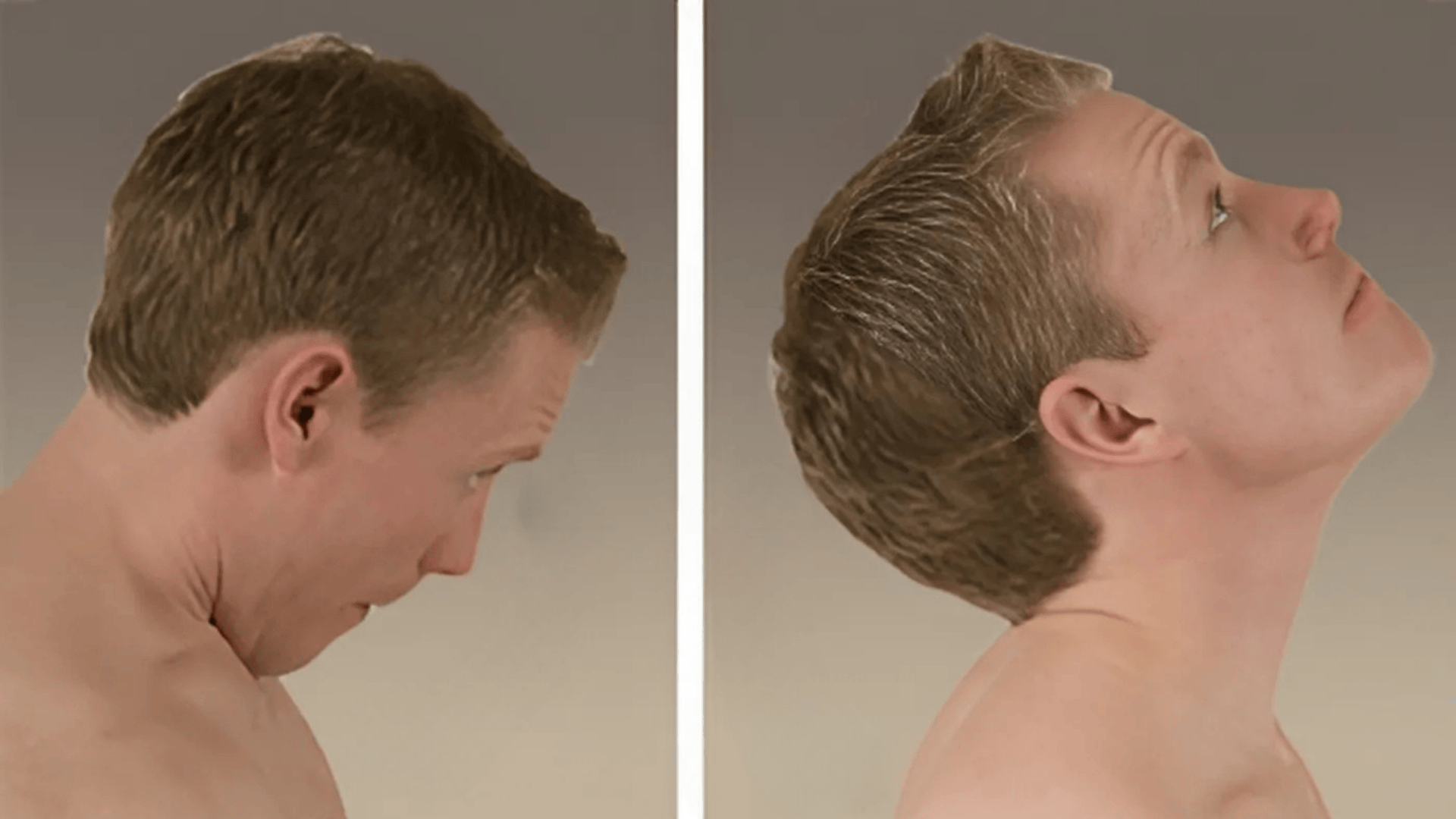
This gentle movement helps the neck move through a safe forward-and-back range. It is useful when your upper neck feels stiff from desk work, phone use, or sleeping in a poor position.
Think of this as a mobility reset, not a deep stretch. The goal is to move the neck smoothly without forcing the end range.
Step-by-step:
- Sit or stand tall with your back straight.
- Relax your shoulders away from your ears.
- Keep your gaze forward and your jaw soft.
- Slowly lower your chin toward your chest.
- Stop when you feel a mild stretch at the back of your neck.
- Hold for 10 seconds while breathing normally.
- Return your head to a neutral position.
- Gently tilt your head slightly backward.
- Stop before any pinching or pressure appears.
- Hold for 5 seconds, then return to neutral.
- Repeat the full cycle 5 to 10 times.
This stretch improves cervical range of motion and reduces stiffness around the upper neck joints. When done gently, it may ease tension near the C1 and C2 area, where occipital nerve irritation often begins.
Sets and reps: 1 to 2 sets of 5 to 10 reps, once or twice daily.
Trainer tip: Keep the motion small at first. If looking upward triggers symptoms, skip the extension part and only practice gentle chin-to-chest movement
.2. Chin Tucks
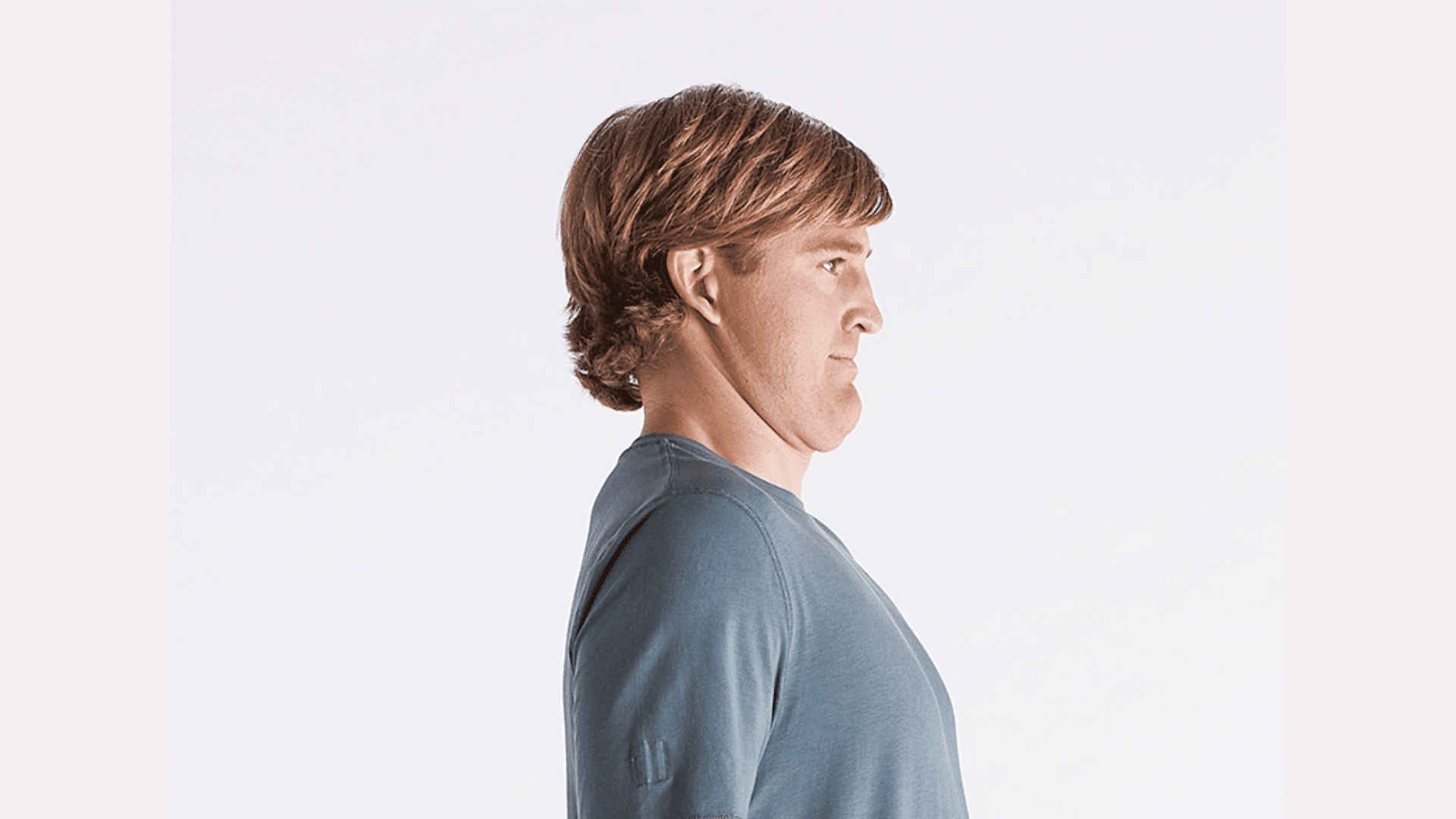
Chin tucks are one of the most useful occipital neuralgia exercises because they train the deep neck flexors. These small muscles help pull the head back into better alignment.
This is especially helpful if your head tends to drift forward while working, reading, or looking at your phone. A better head position reduces strain at the base of the skull.
Step-by-step:
- Sit or stand tall with your eyes looking straight ahead.
- Keep your shoulders relaxed and your chest open.
- Imagine your head sliding straight backward on a shelf.
- Pull your chin gently back without looking down.
- Create a light “double chin” position.
- Keep the back of your neck long.
- Hold the position for 5 seconds.
- Breathe normally during the hold.
- Release fully back to neutral.
- Repeat 8 to 10 times.
Chin tucks strengthen the deep neck stabilizers and reduce forward-head posture. This can lower the mechanical load on the suboccipital muscles and occipital nerve pathway.
Sets and reps: 2 sets of 8 to 10 reps, 2 to 3 times per day.
Trainer tip: Try this against a wall. Keep the back of your head touching the wall as your chin moves backward. If your head lifts off the wall, you are nodding instead of retracting.
| Trainer Tip: Do chin tucks against a wall for instant biofeedback. Stand with your back and head lightly touching the wall. When you pull your chin back, your head should stay in contact with the wall throughout the motion. If the back of your skull lifts away, you are nodding rather than retracting. |
3. Shoulder Blade Squeezes
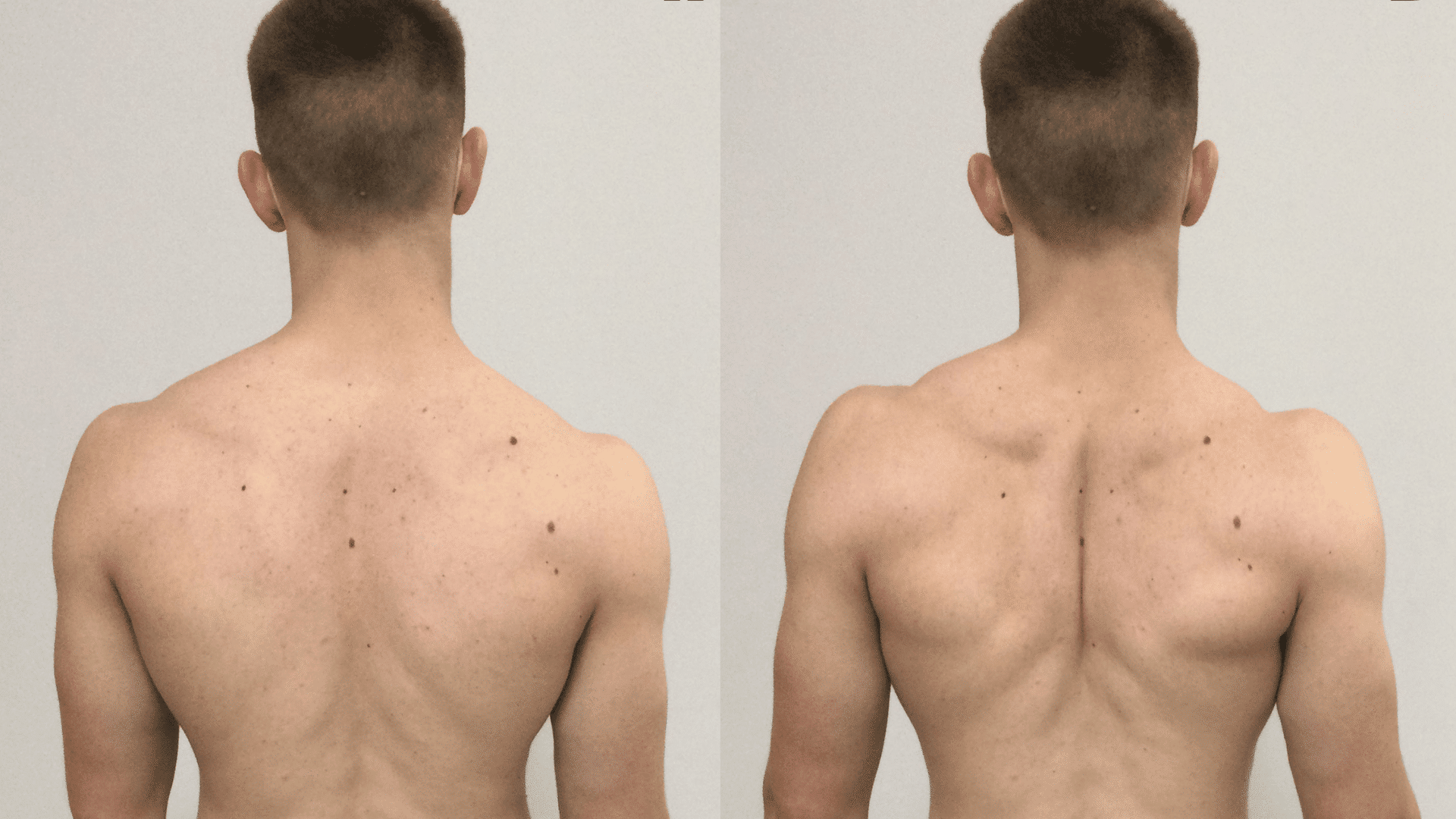
Shoulder blade squeezes train the upper back muscles that help pull your shoulders out of a rounded posture. This matters because rounded shoulders often make the neck work harder.
Use this exercise as a quick posture reset during the day. It is simple, but it can reduce the chain of tension that travels from the upper back into the neck.
Step-by-step:
- Sit or stand tall with your arms relaxed by your sides.
- Keep your chin level and your ribs relaxed.
- Gently draw your shoulder blades back.
- Then pull them slightly downward, as if placing them into your back pockets.
- Avoid shrugging your shoulders upward.
- Hold the squeeze for 5 seconds.
- Keep your neck relaxed during the hold.
- Release completely.
- Repeat 10 to 12 times.
Stronger scapular retractors support better posture. When the upper back is more active, the neck does not have to compensate as much, which may reduce pressure near the occipital nerve pathway.
Sets and reps: 2 to 3 sets of 10 to 12 reps daily.
Trainer tip: Do not over-squeeze. A moderate contraction works better than forcing the shoulder blades together and creating more neck tension.
4. Cat-Cow Stretch
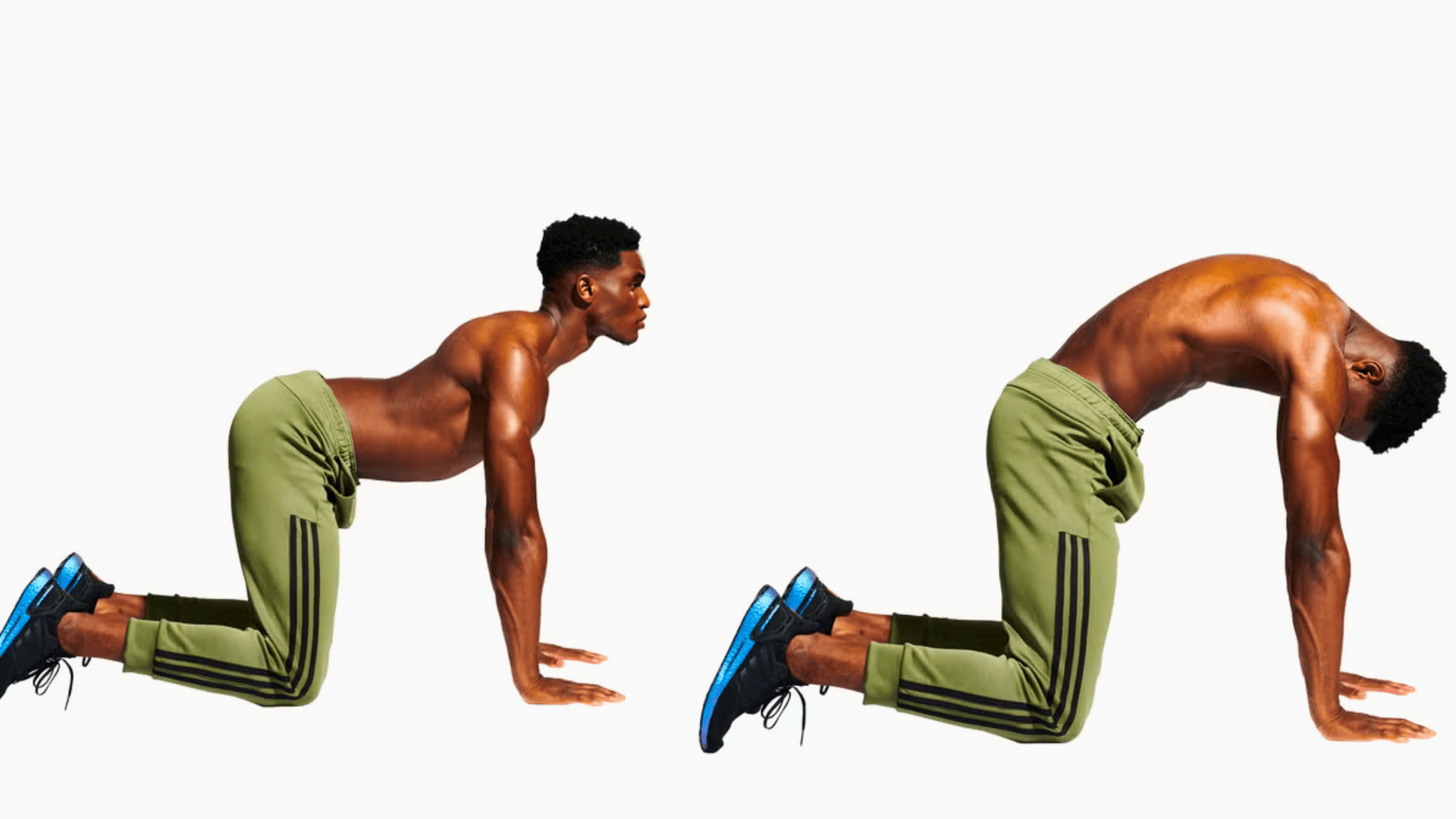
Cat-cow helps the spine move as one connected chain. It gently mobilizes the upper back, neck, and lower back while linking movement to breath.
This is a good warm-up before other neck exercises because it reduces stiffness without directly loading the neck. Move slowly and let your breath guide each phase.
Step-by-step:
- Start on your hands and knees.
- Place your wrists under your shoulders.
- Keep your knees under your hips.
- Inhale and gently arch your back.
- Lift your chest and tailbone into cow position.
- Keep your neck long instead of collapsing your head backward.
- Exhale and round your spine upward.
- Tuck your chin gently toward your chest.
- Draw your belly slightly inward.
- Move between both positions for 8 to 10 slow breaths.
Cat-cow improves spinal mobility and gently stretches the muscles along the neck and upper back. The chin tuck in cat position can lightly lengthen the suboccipital area.
Sets and reps: 1 to 2 sets of 8 to 10 cycles.
Trainer tip: If kneeling bothers your wrists or knees, place a folded towel under them or do a seated cat-cow variation in a chair.
5. Suboccipital Release with a Tennis Ball
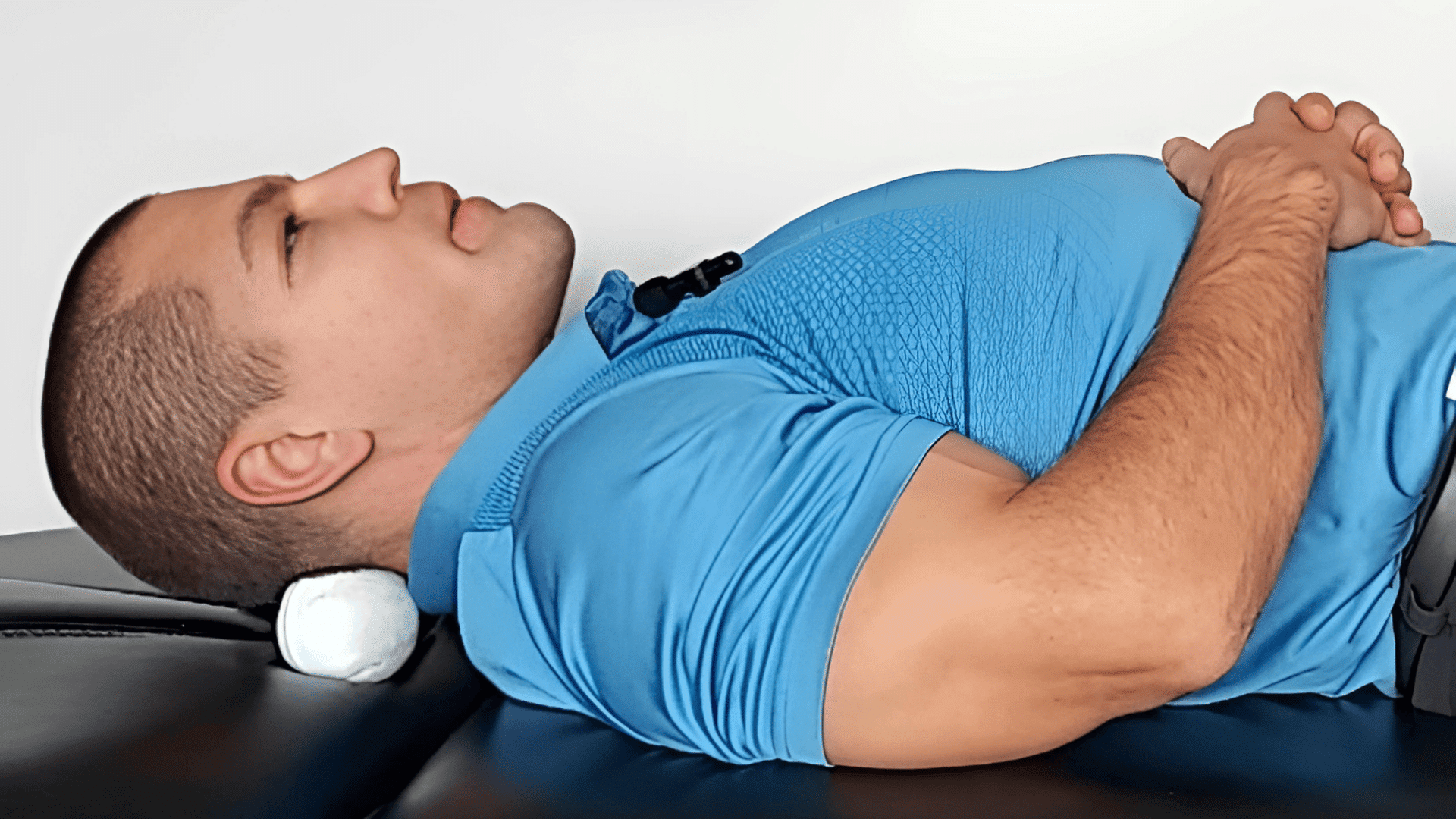
This release targets the small muscles at the base of the skull. These muscles often become tight from forward-head posture, stress, or long hours at a screen.
The key is patience. You do not need hard pressure. Gentle, steady contact works better and is less likely to irritate the nerve.
Step-by-step:
- Lie on your back with your knees bent.
- Place a tennis ball at the base of your skull.
- Keep the ball on soft tissue, not directly on the spine.
- Let your head rest gently into the ball.
- Find a tender but tolerable spot.
- Stay still for 60 to 90 seconds.
- Breathe slowly and relax your jaw.
- Make tiny side-to-side movements if comfortable.
- Move the ball slightly to another tender spot.
- Repeat for 2 to 3 minutes per side.
The suboccipital muscles sit close to the occipital nerves. Releasing tension in this area may reduce compression and calm the surrounding tissues.
Frequency: Once daily during low-symptom periods.
Trainer tip: Do not use a lacrosse ball at first. A tennis ball is softer and safer for beginners. Avoid this during severe shooting pain.
6. Thoracic Extension over Chair
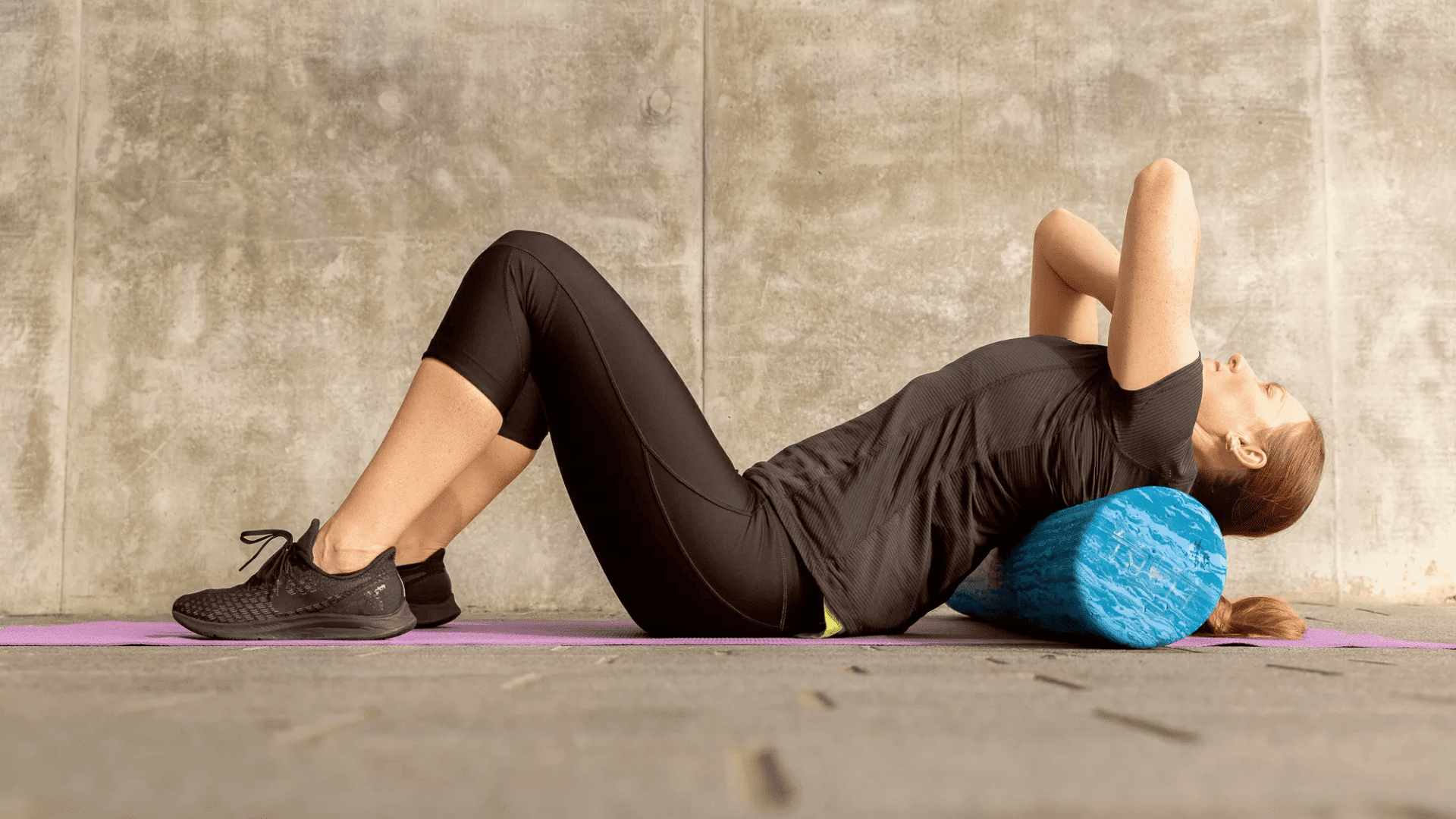
Thoracic extension improves movement in the upper back. This matters because a stiff upper back often forces the neck to overextend and carry more strain.
This exercise helps restore the upright posture your neck needs. It is especially useful for people who sit at a desk for long hours.
Step-by-step:
- Sit on a sturdy chair with a firm backrest.
- Place your feet flat on the floor.
- Interlace your fingers behind your head.
- Keep your elbows open but relaxed.
- Position the chair back against your mid-upper back.
- Gently lean backward over the chair.
- Keep your neck supported by your hands.
- Hold the extended position for 5 to 10 seconds.
- Breathe slowly into your ribs.
- Return to an upright position.
- Repeat 5 to 8 times.
Better thoracic extension reduces the forward-rounding pattern that increases cervical strain. When the upper back moves better, the neck usually feels less overloaded.
Sets and reps: 1 to 2 sets of 5 to 8 reps, once or twice daily.
Trainer tip: Do not crank your neck backward. The bend should come from your upper back, not from the base of your skull.
7. Deep Neck Flexor Strengthening
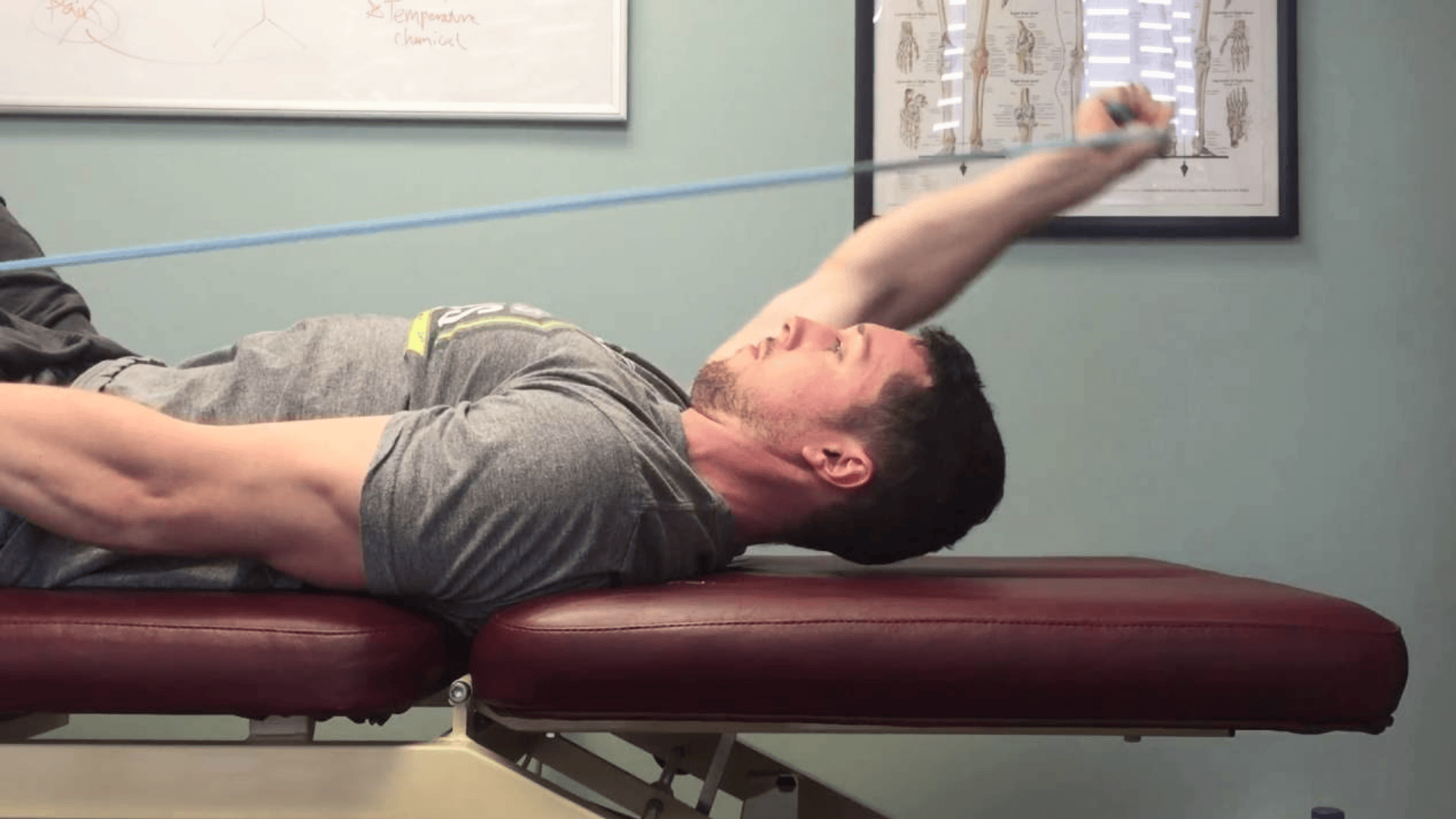
This exercise builds endurance in the deep muscles that stabilize the neck. It looks small, but it can be powerful when practiced consistently.
Use a light effort. Pushing too hard can make the outer neck muscles take over, which defeats the purpose.
Step-by-step:
- Lie on your back with your knees bent.
- Keep your feet flat on the floor.
- Let your shoulders relax.
- Perform a gentle chin tuck.
- Lightly press the back of your head into the floor.
- Use only 20 to 30 percent effort.
- Hold for 5 seconds.
- Keep breathing normally.
- Release completely.
- Repeat 8 to 10 times.
This strengthens the longus colli and longus capitis, which support better head-on-neck alignment. Stronger deep neck flexors may reduce recurring strain on the occipital nerve area.
Sets and reps: 2 sets of 8 to 10 reps, 5 days per week.
Trainer tip: Keep the contraction subtle. If the front of your neck feels strained or your jaw tightens, reduce the effort.
8. Shoulder Shrugs and Rolls
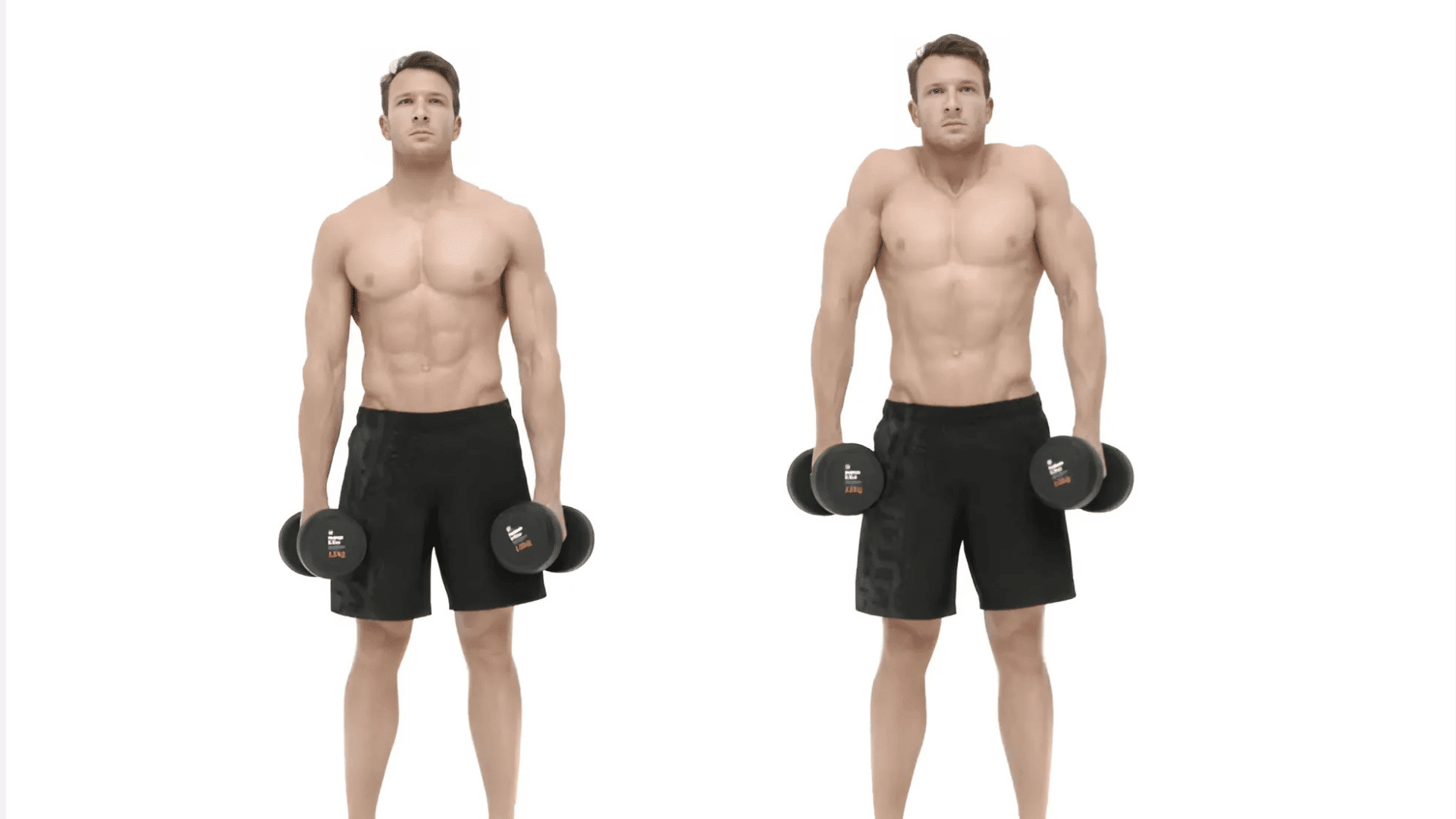
Stand tall with feet shoulder-width apart. Lift both shoulders slowly toward your ears, hold for 3 seconds, then lower them in a
Shoulder shrugs and rolls help reduce upper trapezius stiffness. This is important because the upper traps attach near the base of the skull and often tighten during stress.
Use this as a mid-day reset when your shoulders feel lifted, tense, or stuck near your ears.
Step-by-step:
- Stand or sit tall with your arms relaxed.
- Keep your chin level and your jaw soft.
- Slowly lift both shoulders toward your ears.
- Hold for 3 seconds.
- Lower the shoulders with control.
- Repeat 10 to 15 times.
- Next, roll your shoulders forward, up, back, and down.
- Perform 8 slow circles.
- Reverse the direction.
- Perform 8 more circles.
This movement improves circulation through the upper trapezius and helps break the tension cycle that can feed neck and scalp pain.
Sets and reps: 1 to 2 sets of 10 to 15 shrugs, plus 8 rolls each direction.
Trainer tip: Move slowly. Fast shoulder circles can increase tension instead of releasing it.
Occipital Neuralgia Stretches for the Neck and Shoulders
These stretches complement the exercises above by targeting the muscles that run adjacent to the occipital nerve pathway. Hold each stretch steadily without bouncing, and back off slightly if you feel any sharp sensation rather than the expected dull pull of a muscle stretch.
9. Upper Trapezius Stretch
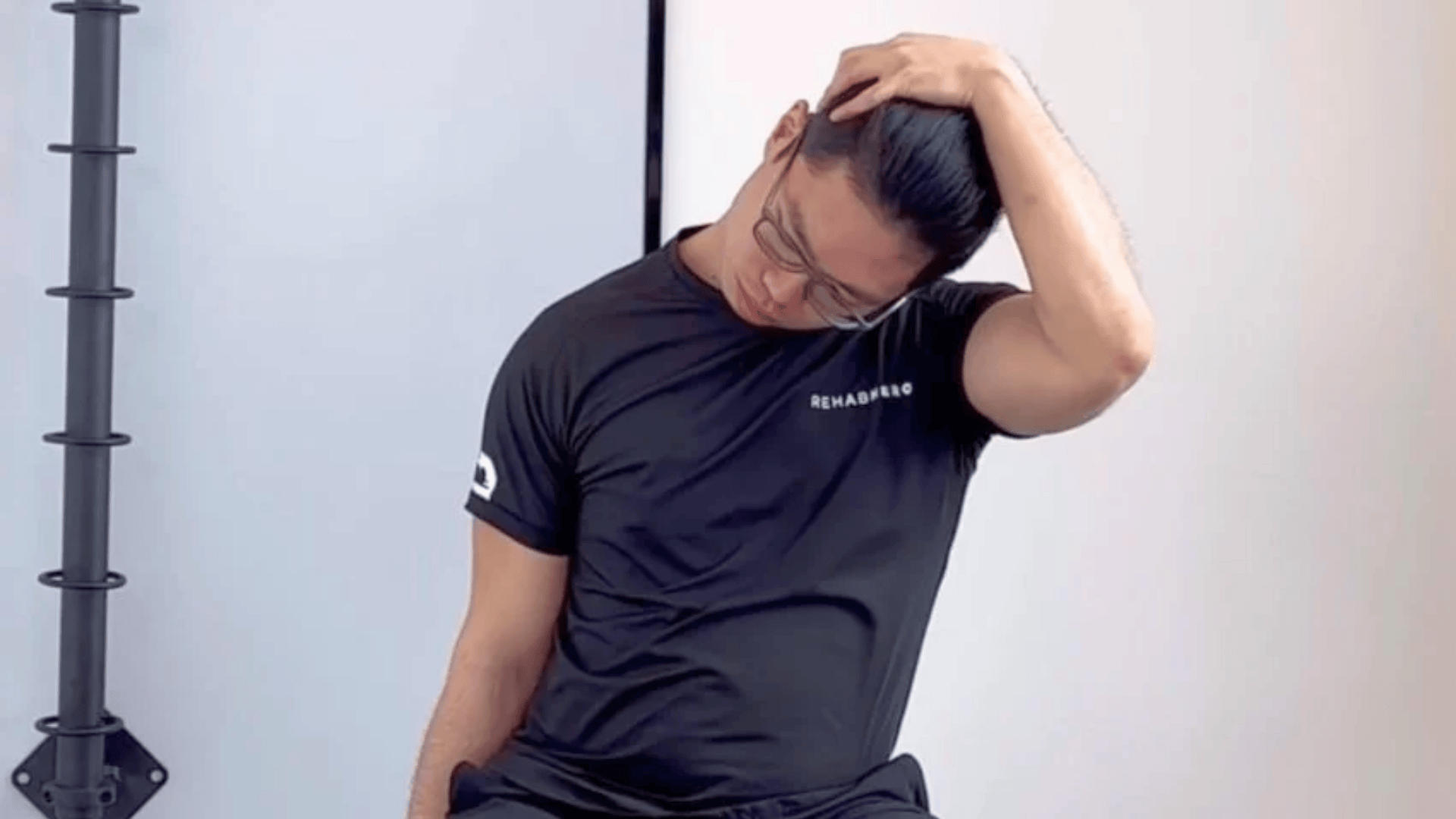
The upper trapezius often becomes overactive when posture breaks down. This stretch helps release tension from the side of the neck into the top of the shoulder.
It is a good option after long sitting, stressful work, or any time your shoulders feel pulled upward.
Step-by-step:
- Sit or stand tall.
- Relax both shoulders downward.
- Tilt your right ear toward your right shoulder.
- Keep your left shoulder heavy and relaxed.
- Place your right hand lightly on top of your head.
- Add only gentle pressure if needed.
- Hold for 20 to 30 seconds.
- Breathe slowly into the stretch.
- Return to center.
- Repeat on the other side.
- Complete 2 to 3 rounds per side.
The upper trapezius attaches near the occipital region. Reducing its tension may ease pulling at the base of the skull and improve neck comfort.
Trainer tip: Do not yank your head. Let the weight of your hand guide the stretch gently.
10. Levator Scapulae Stretch
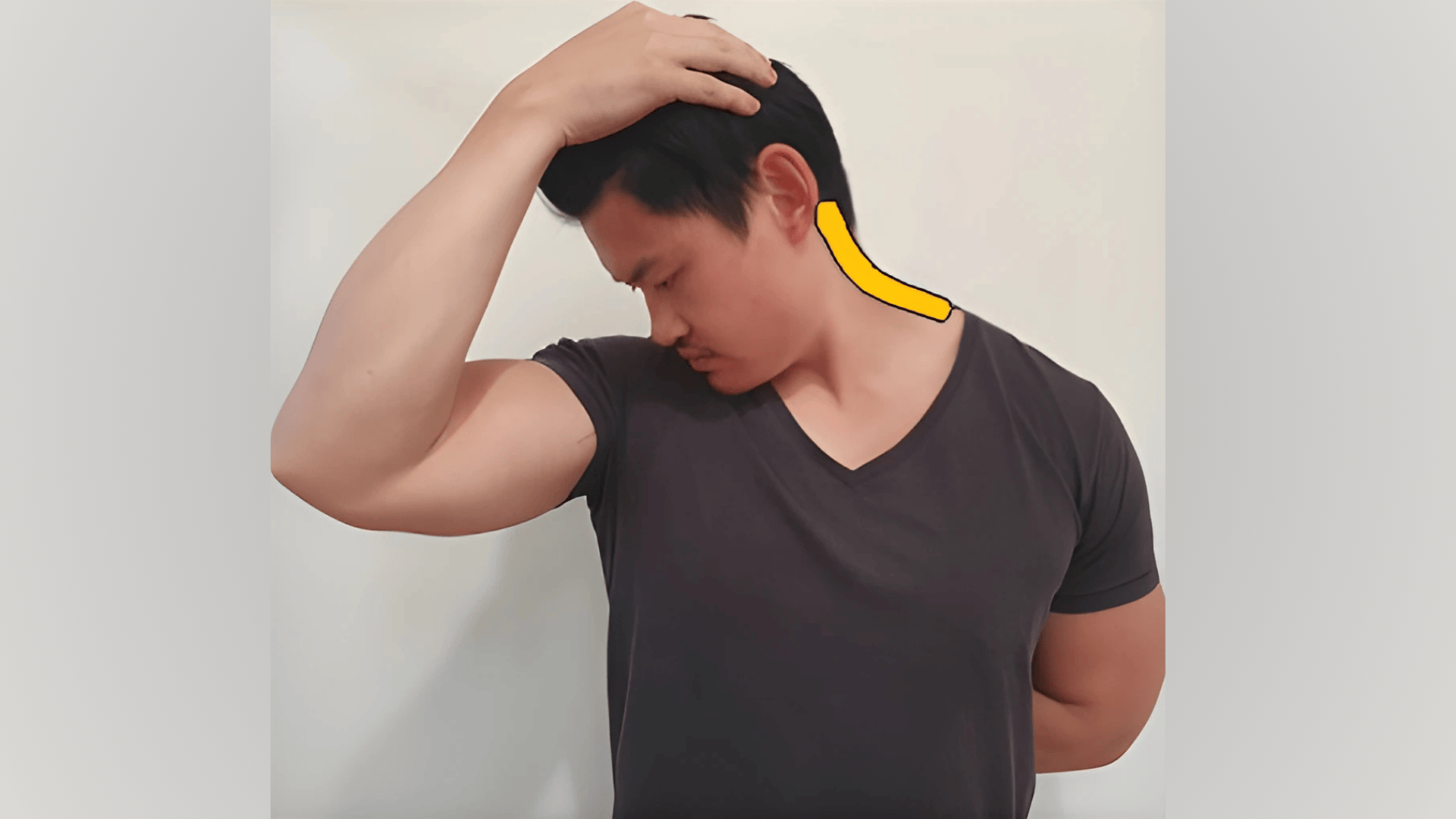
The levator scapulae runs from the upper neck to the shoulder blade. It often gets tight from looking down, using a laptop, or holding stress in the shoulders.
This stretch targets the back-side corner of the neck, where many people feel deep stiffness.
Step-by-step:
- Sit tall with your shoulders relaxed.
- Turn your head 45 degrees to the right.
- Lower your chin toward your right armpit.
- Keep your left shoulder relaxed downward.
- Place your right hand gently on the back of your head.
- Let the arm’s weight deepen the stretch slightly.
- Hold for 20 to 30 seconds.
- Breathe slowly and keep your jaw relaxed.
- Return to center.
- Repeat on the left side.
- Complete 2 to 3 rounds per side.
A tight levator scapulae can increase upper cervical tension. Stretching it may reduce strain near the C2 to C4 region that contributes to occipital nerve irritation.
Trainer tip: Think “nose toward armpit,” not “chin straight down.” The diagonal angle is what targets this muscle best.
11. Seated Neck Stretch with Towel
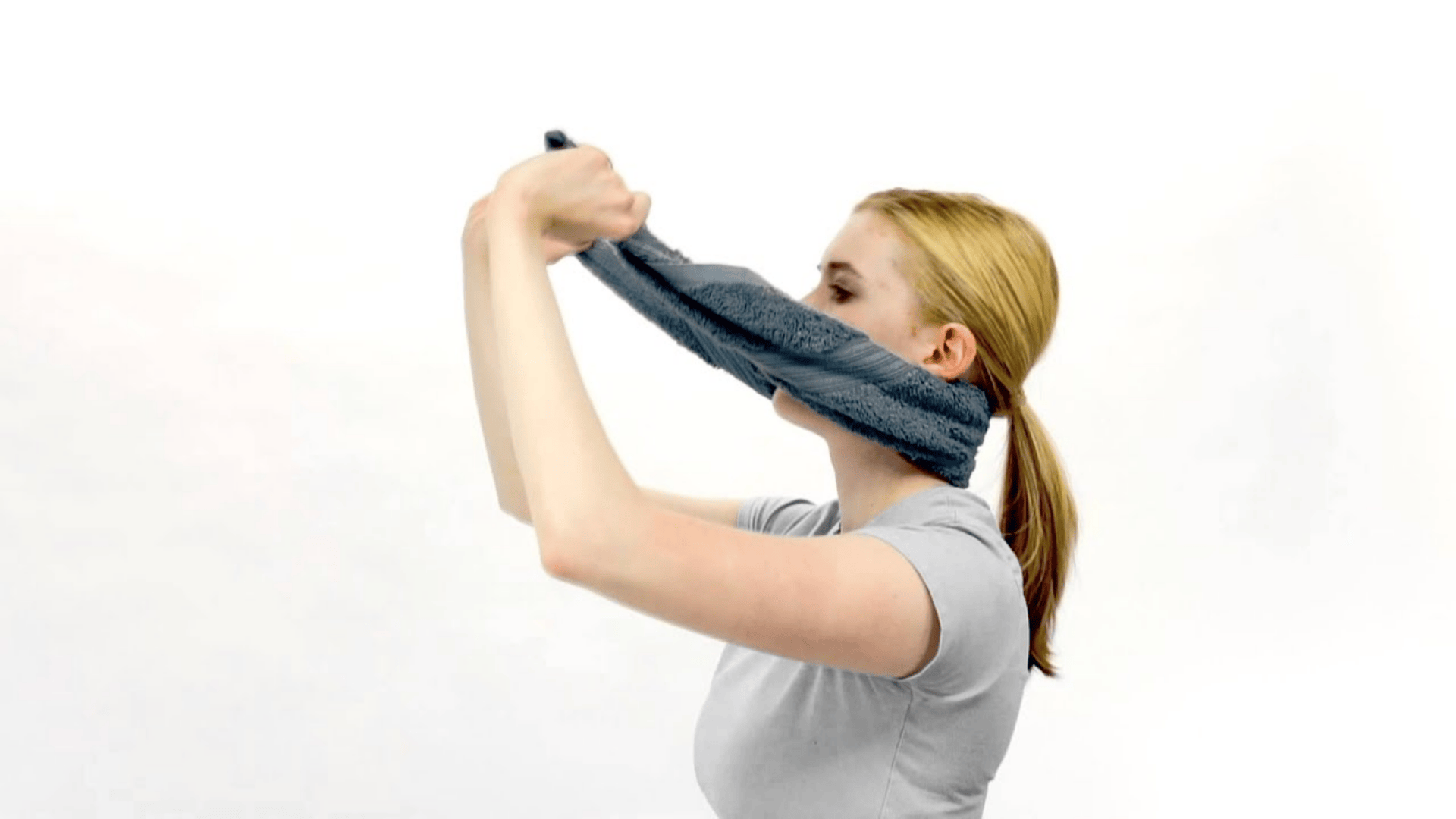
This towel stretch gives gentle support to the base of the skull. It can feel soothing when your upper neck feels compressed or tired.
Keep the pressure even. This should feel like a light decompression, not a strong pull.
Step-by-step:
- Sit tall on a chair.
- Roll a towel lengthwise.
- Place the towel behind your neck, just below the skull.
- Hold one end of the towel in each hand.
- Keep your spine upright.
- Gently pull the towel forward and slightly upward.
- Let your head stay relaxed but supported.
- Hold for 10 to 15 seconds.
- Release the tension fully.
- Repeat 3 to 5 times.
The towel gives controlled support to the upper cervical area. This may reduce joint-level compression and improve comfort around the base of the skull.
Trainer tip: Keep both hands pulling evenly. Uneven pressure can twist the neck and irritate symptoms.
12. Wall Angels
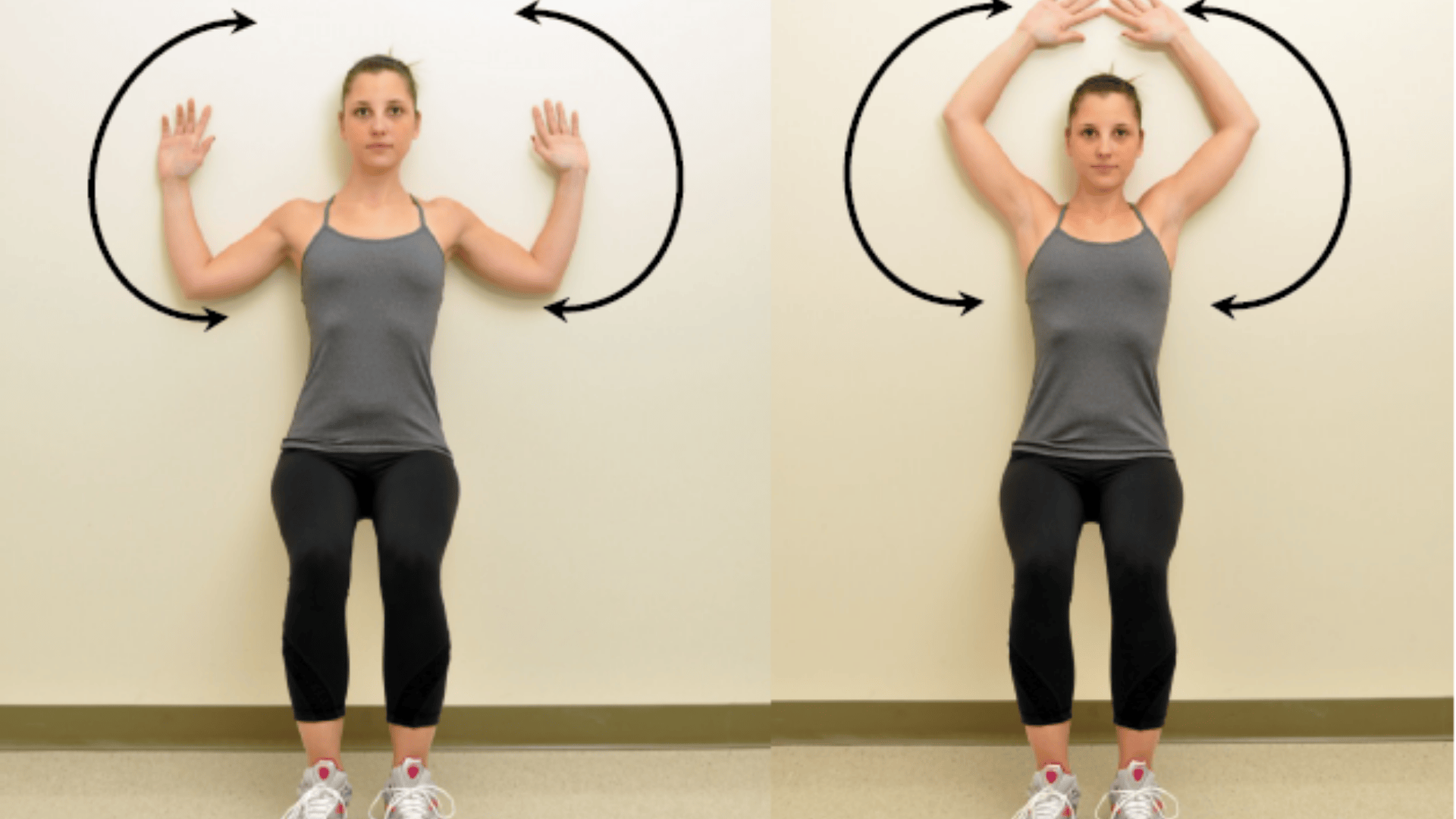
Wall angels train posture while improving shoulder and upper-back movement. They are useful because the neck often suffers when the shoulders round forward.
This exercise teaches your back, shoulders, and neck to work together in better alignment.
Step-by-step:
- Stand with your back against a wall.
- Place your feet about 6 inches away from the wall.
- Gently press your lower back toward the wall.
- Keep the back of your head lightly touching the wall.
- Raise your arms into a goalpost shape.
- Keep elbows and forearms as close to the wall as comfortable.
- Slowly slide your arms upward.
- Stop before your ribs flare or your neck tightens.
- Slide your arms back down to the starting position.
- Repeat 8 to 10 times.
Wall angels strengthen the lower traps and serratus anterior while opening the chest. This helps correct rounded shoulders, which can reduce strain on the cervical spine.
Trainer tip: It is fine if your arms do not fully touch the wall. Keep the movement clean instead of forcing the range.
How to Add These to a Flare-Up Management Routine
The exercises above work best as part of a structured daily approach rather than as reactive pain management. Here is how I recommend organizing them.
- During a Flare-Up: Limit active exercise. Focus on heat application, the tennis ball suboccipital release done very gently, and diaphragmatic breathing. Avoid any exercise that involves loading the neck or moving quickly through range.
- During Low-Symptom Periods: This is when to build the habit. Perform chin tucks and shoulder blade squeezes twice daily as a baseline. Add the full 12-exercise sequence three to four times per week. Consistency during low-symptom windows is what reduces the frequency and severity of future flare-ups.
- Posture Reset During the Workday: Every 45 to 60 minutes, do 10 chin tucks and 10 shoulder rolls at your desk. This alone can interrupt the sustained suboccipital contraction that drives nerve irritation over the course of a workday.
Sleep positioning matters just as much; avoiding neck pain overnight is its own practice that extends the benefit of daytime postural work into the full 24-hour cycle.
Breathing and Relaxation Techniques for Occipital Neuralgia
Stress-driven muscle tension is one of the most underappreciated drivers of occipital neuralgia flare-ups. When the nervous system is in an activated state, the suboccipital and upper trapezius muscles are among the first to contract and hold. Two controlled breathing techniques can break that pattern quickly.
Diaphragmatic breathing: Place one hand on your chest and one on your stomach. Inhale through your nose for 4 seconds, directing the breath into your belly so your lower hand rises while your upper hand stays still. Exhale slowly through pursed lips for 6 seconds. Run 10 to 15 cycles, particularly during or immediately following a pain episode.
Box breathing: Inhale for 4 seconds, hold for 4 seconds, exhale for 4 seconds, hold for 4 seconds. Repeat for 4 to 5 minutes. Box breathing activates the parasympathetic nervous system and has been shown to reduce pain intensity by lowering sympathetic arousal. I use this with clients as a bridge technique between the onset of a flare-up and the point where movement becomes possible again.
Breathing techniques can also be combined with scapular retraction. Inhale as you squeeze the shoulder blades back, exhale as you release. This pairing magnifies the upper trapezius relaxation effect of both practices.
What to Avoid with Occipital Neuralgia
Knowing what to leave out of your routine is as important as knowing what to add. These are the most common movement errors that worsen occipital nerve irritation:
- Neck circles or full rotation under load. These movements can compress the C1 to C3 joints and inflame the nerve pathway. Replace with the controlled, range-limited stretches in this list.
- Sustained forward-head posture. More than 20 minutes of uninterrupted desk or phone use without a posture reset is enough to drive suboccipital tension. Set a timer.
- High-impact activities during a flare-up. Running, jumping, or heavy lifting during active nerve pain increases intracranial pressure and muscle tension simultaneously. Wait for the acute phase to pass.
- Sleeping on your stomach. This position forces the cervical spine into sustained rotation for hours, compressing the occipital nerve pathway throughout the night. Side or back sleeping with a cervical-supportive pillow is the correct alternative.
- Forcing range through sharp pain. Stretching into a sharp, electric sensation is not productive discomfort. Back off immediately. The goal is the dull pull of a muscle releasing, not nerve provocation.
Safety Tips for Exercising with Occipital Neuralgia
These principles apply across the full list of exercises and stretches above:
- Start with 3 to 5 reps of any new movement and increase gradually over one to two weeks rather than jumping to the full volume immediately.
- Apply heat to the upper neck for 10 minutes before stretching; apply a cold pack for 10 minutes after exercise to manage post-exercise inflammation.
- Stop any movement that triggers sharp, shooting, or spreading pain. Pause, rest, and reassess before continuing.
- If lying flat on your back worsens symptoms during a flare-up, do seated variations only until the acute pain resolves.
- Track which exercises reduce symptoms and which ones do not. Everyone’s nerve irritation pattern is slightly different, and individual response varies.
When to Seek Professional Help
These exercises are appropriate for mild to moderate occipital neuralgia managed alongside standard medical care. Contact your doctor or physical therapist promptly if you experience any of the following:
- Pain spreading into the face or behind the eyes despite a week of consistent exercise.
- New weakness, tingling, or numbness in the arms or hands.
- Sudden onset of the worst headache of your life (seek emergency care immediately).
- Symptoms that worsen after any of the exercises rather than improving.
- Pain episodes that increase in frequency or severity over two or more weeks.
Physical therapy is the most evidence-supported conservative intervention for occipital neuralgia rooted in muscular compression. A trained therapist can assess your specific cervical mechanics, identify which muscles are driving the nerve irritation, and design a manual therapy and exercise program tailored to your pattern.
If physical therapy does not provide sufficient relief, medical options include occipital nerve blocks, NSAID therapy, and, in refractory cases, nerve stimulation. Those decisions belong with a physician who knows your full history.
People with occipital neuralgia often also experience tension headaches driven by similar suboccipital and trapezius patterns; yoga for headache relief addresses that overlap through a different movement modality.
When muscle tightness is the primary driver, neck massage for tension can reduce resting tone between exercise sessions.
Frequently Asked Questions About Occipital Neuralgia Exercises
These are the questions I hear most often from people who are starting an exercise program for occipital nerve pain.
How long does it take for occipital neuralgia exercises to work?
Most people notice a reduction in baseline tension after 1 to 2 weeks of daily chin tuck and suboccipital release practice. Meaningful reductions in flare-up frequency typically take 4 to 6 weeks of consistent effort. The exercises are addressing a postural and muscular pattern that developed over months or years, so the timeline for reversal is measured in weeks, not days. Consistency across both low-symptom and high-symptom periods is more important than any single session.
Can I do these exercises during an occipital neuralgia flare-up?
Gentle breathing techniques, the seated diaphragmatic breathing, and very light heat application are appropriate during a flare-up. Most of the active exercises, especially chin tucks, the tennis ball release, and wall angels, are better reserved for low-symptom windows. Attempting to exercise through sharp, shooting pain risks increasing nerve irritation. Rest first, then reintroduce movement as symptoms settle.
What is the best exercise for occipital neuralgia?
The chin tuck is consistently the most effective single movement for occipital neuralgia rooted in forward-head posture. It directly activates the deep neck flexors, corrects the mechanical load on the C2 nerve root, and can be done anywhere without equipment. Paired with the suboccipital tennis ball release, these two movements address both the muscular compression and the positional driver of the condition. Start there before adding the rest of the program.
How do you sleep with occipital neuralgia?
Back sleeping with a cervical support pillow that fills the natural curve of the neck is the most protective position. The goal is to maintain the same neutral head-on-neck alignment during sleep that the chin tuck and postural exercises are training during the day. Stomach sleeping with the head rotated is the worst position, as it sustains the suboccipital compression that drives nerve irritation for the full duration of sleep. Side sleeping with a pillow that keeps the spine level is the second-best option.
Does heat or ice help occipital neuralgia?
Both can help at different stages. Heat applied to the upper neck and base of the skull for 10 to 15 minutes reduces suboccipital muscle tone and prepares the tissues for stretching. Cold applied after exercise or during a flare-up reduces local inflammation and temporarily numbs the area. A practical sequence is heat before your exercise session and ice for 10 minutes afterward. During acute pain, some people find cold more immediately effective; others respond better to heat. Try both and track which provides more consistent relief for your pattern.
Can physical therapy cure occipital neuralgia?
Physical therapy can significantly reduce the frequency and severity of occipital neuralgia in cases where muscle compression and poor posture are the primary drivers. It does not cure the underlying nerve sensitivity, but it addresses the mechanical factors that trigger symptoms. Research supports manual therapy, deep neck flexor training, and postural correction as effective conservative interventions. Refractory cases that do not respond to physical therapy may require medical management including nerve blocks or nerve stimulation procedures, which fall outside what exercise alone can address.
Are there exercises to avoid with occipital neuralgia?
Yes. Full neck circles, especially under load, should be avoided as they can compress the C1 to C3 joints. High-impact cardio during active flare-ups increases intracranial pressure and should wait until symptoms settle. Any movement that reproduces the characteristic shooting or electric-shock pain should be stopped immediately. Heavy resistance exercises involving the neck, such as neck machines or plate neck bridges, are inappropriate for this condition without direct physical therapy supervision. Stick to the low-load, mobility-focused movements in this program.
Final Verdict: Are Occipital Neuralgia Exercises Worth Doing Consistently?
Yes, and the key word is consistently. The exercises in this program work by correcting the postural and muscular patterns that compress the occipital nerves, and those corrections only hold if the work is repeated daily. The chin tuck and suboccipital tennis ball release are where I would tell anyone to start: two movements, done every day, that address both the muscular driver and the mechanical alignment of the nerve pathway. Add the wall angels and thoracic extension for the upstream thoracic component, and you have the core of an effective home program. The goal is not pain-free days immediately; it is fewer and less severe flare-ups over the next four to six weeks.
| Disclaimer: This article is for informational and educational purposes only. It does not constitute medical advice. Always consult a qualified healthcare provider before starting a new exercise or wellness program, particularly for nerve pain conditions. |
Sources:
- Djavaherian DM, Guthmiller KB. Occipital Neuralgia. In: StatPearls. Treasure Island, FL: StatPearls Publishing; 2023. https://www.ncbi.nlm.nih.gov/books/NBK538281/
- Chiu TT, Lam TH, Hedley AJ. A randomised controlled trial on the efficacy of exercise for patients with chronic neck pain. Spine. 2005. https://pubmed.ncbi.nlm.nih.gov/15838362/
- Falla D, Jull G, Russell T, Vicenzino B, Hodges P. Effect of neck exercise on sitting posture in patients with chronic neck pain. Physical Therapy. 2007. https://pubmed.ncbi.nlm.nih.gov/17641154/
- National Institute of Neurological Disorders and Stroke. Occipital Neuralgia Information Page. https://www.ninds.nih.gov/health-information/disorders/occipital-neuralgia
- Melchior AG, Al-Khazali S, et al. Epidemiology and clinical features of occipital neuralgia: a systematic review and meta-analysis. Cephalalgia. 2025.