People often hear about yin yoga from someone who says, “I felt lighter after one class,” or “I finally slept better.” That kind of feedback makes the practice feel interesting before you even try it. The quiet pace can look simple, but the effects can feel deeper than expected.
Yin yoga benefits are not only about stretching. The benefits of yin yoga can include calmer breathing, less stiffness, better body awareness, and a softer way to handle stress.
If you want a practice that gives your body time to settle instead of rushing through movement, yin yoga can be a gentle place to begin.
What Yin Yoga Feels Like Before the Benefits Make Sense
Most people try yin yoga because their bodies feel tight, their minds feel busy, or someone told them it helped them feel calmer. Before they care about the full list of yin yoga benefits, they want to know what it may feel like in real life.
Yin yoga can feel slow at first. You stay in one pose long enough to notice your breath, your thoughts, and where your body holds tension. That may feel peaceful, but it can also feel restless or emotional.
Over time, the benefits of yin yoga become easier to notice. You may feel less stiff, sleep better after evening practice, or learn when your body needs support instead of force.
Main Benefits of Yin Yoga
The benefits of yin yoga are not all felt in the same way. Some show up quickly, like calmer breathing after class. Others take steady practice, like better flexibility or more comfort in stiff areas.
The research around yoga is stronger for general wellness, stress, sleep, and some pain support than it is for yin yoga alone.
So the best way to explain yin yoga benefits is with care: it may support the body and mind, but it is not a cure or a replacement for medical care.
1. Better Flexibility in Tight Areas
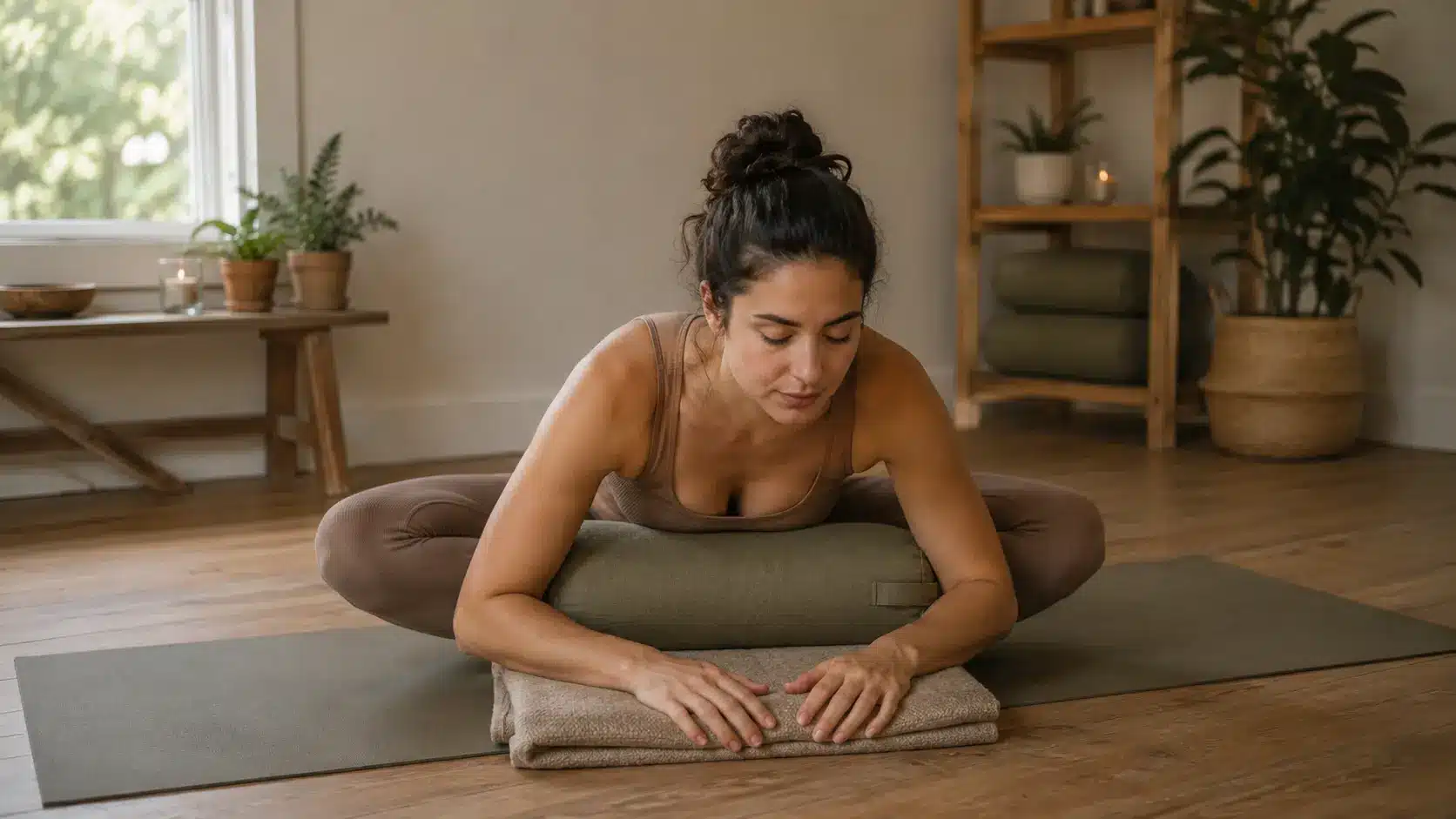
One of the most common benefits of yin yoga is better flexibility. The poses are held for several minutes, so your body has time to soften instead of rushing through a stretch.
You may feel this most in the hips, hamstrings, lower back, chest, and shoulders. These areas often get tight from sitting, stress, workouts, or daily posture habits.
The change is usually slow. One class may help you feel looser, but steady practice brings better results. A few short sessions each week often work better than one deep stretch that leaves you sore.
2. Easier Joint Mobility
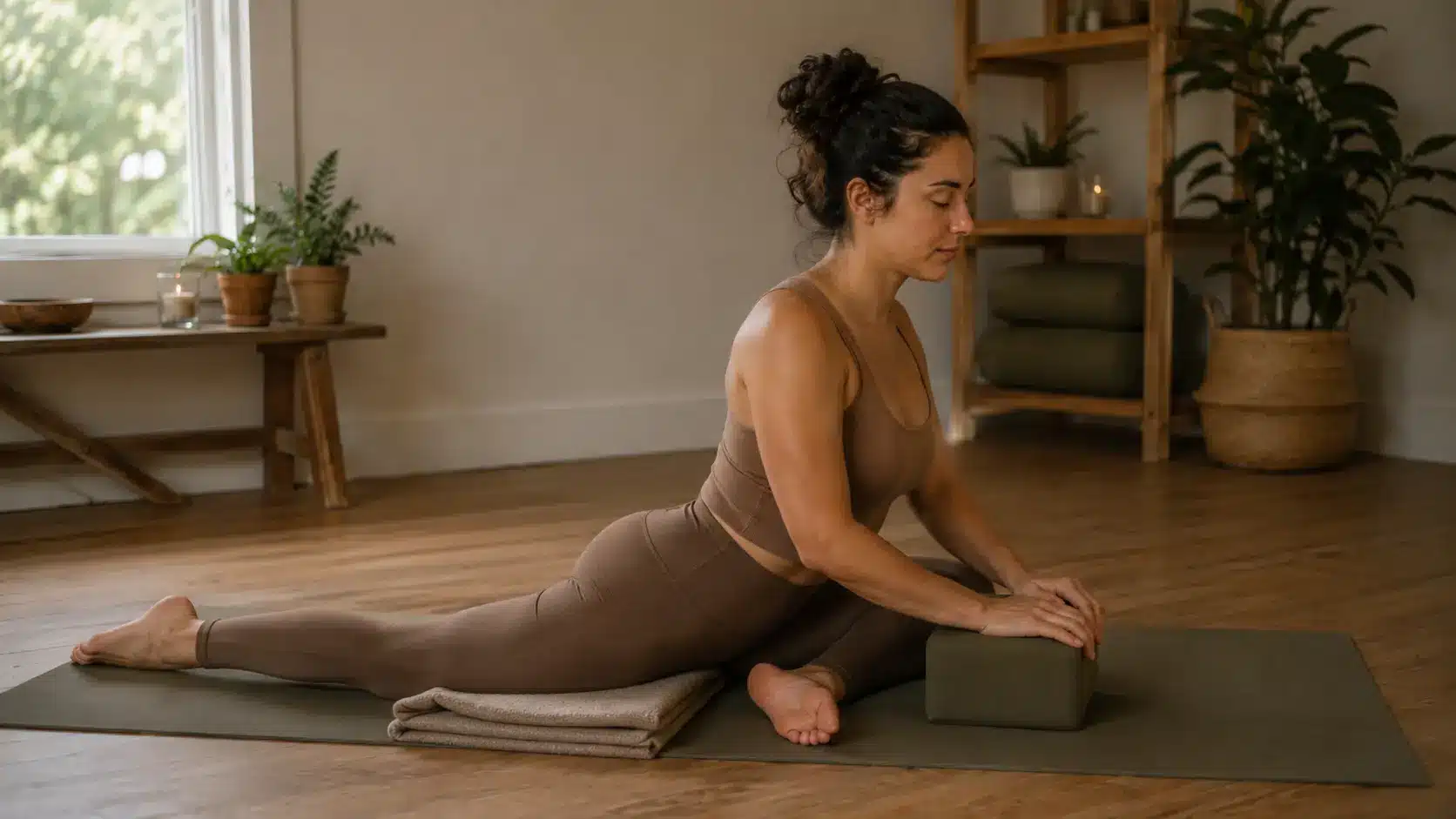
Yin yoga may support joint mobility because the poses use less muscular effort. When your body feels supported, the tissues around the joints can settle more gently.
This can help if you feel stiff after sitting, waking up, or repeating the same movements every day. It gives your body a slow way to move into ranges you may not use often.
The goal is not to force a bigger stretch. A good yin pose should feel steady, supported, and easy to breathe through.
3. Less Physical Tension
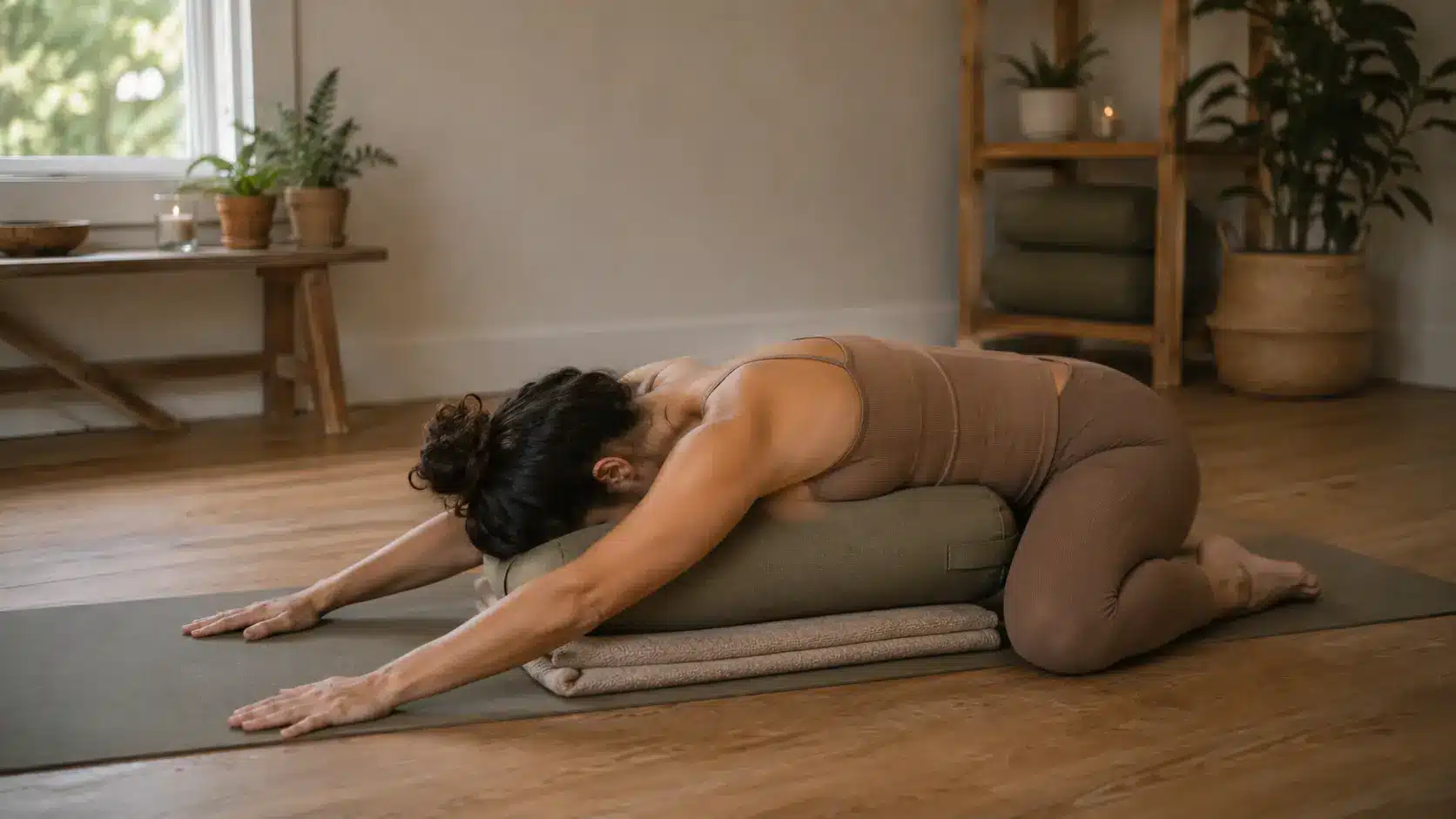
Many people hold tension in the jaw, neck, shoulders, belly, hips, and back. Yin yoga gives you time to notice where your body is gripping.
That pause matters. Once you notice the tension, you can soften your breath and release some effort.
This is why a slow class can leave you feeling lighter. The pose may look simple, but the stillness helps you feel what your body has been holding.
4. Calmer Stress Response
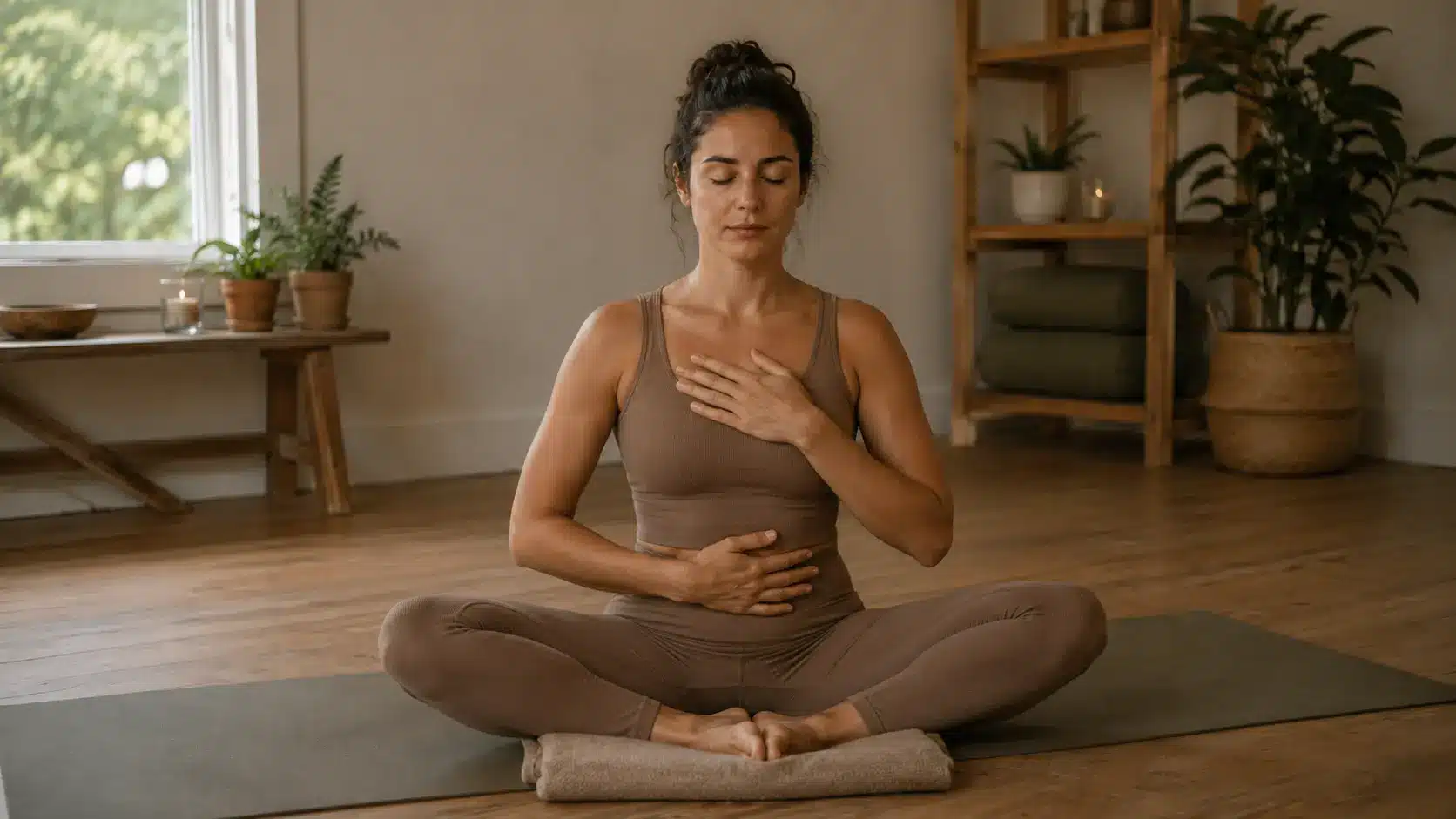
Yin yoga can help your body move out of constant “go mode.” You are not rushing, sweating, or trying to keep up. You are staying still long enough for your breath to slow down.
This can feel helpful after a busy day. You may notice your shoulders drop, your jaw relax, or your breathing become easier.
Over time, that slower pace may help you feel more patient with your body and less reactive to stress.
5. Better Sleep Support
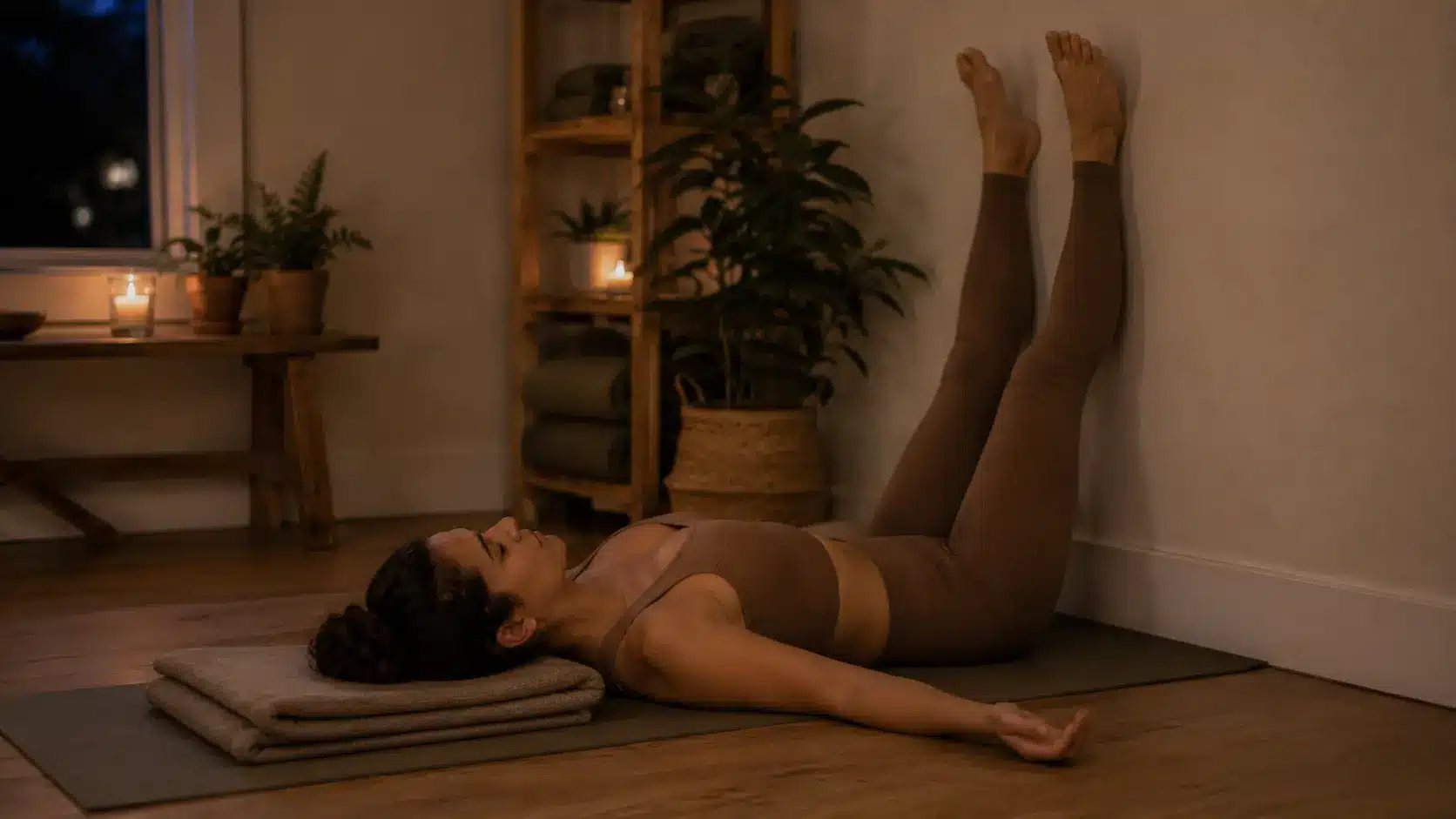
Yin yoga may support sleep when it becomes part of a calm evening routine. The slower pace can help your body move away from screens, work stress, and mental noise.
This works best when the session is gentle. If you push too hard before bed, your body may feel sore instead of settled.
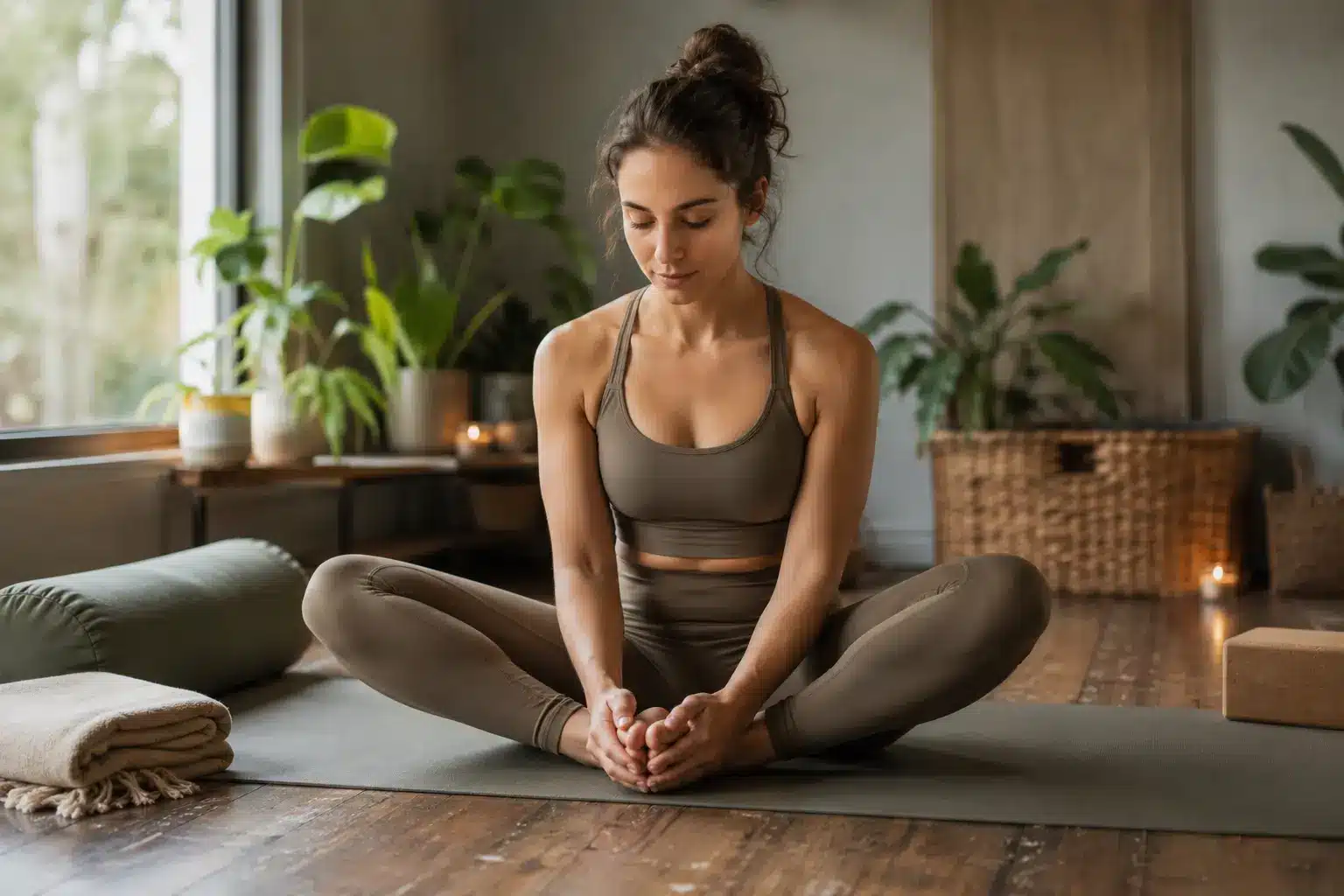
Try soft poses like child’s pose, reclined twist, butterfly pose, or legs up the wall. Even 10 to 20 minutes may help you wind down.
6. Better Recovery From Active Workouts
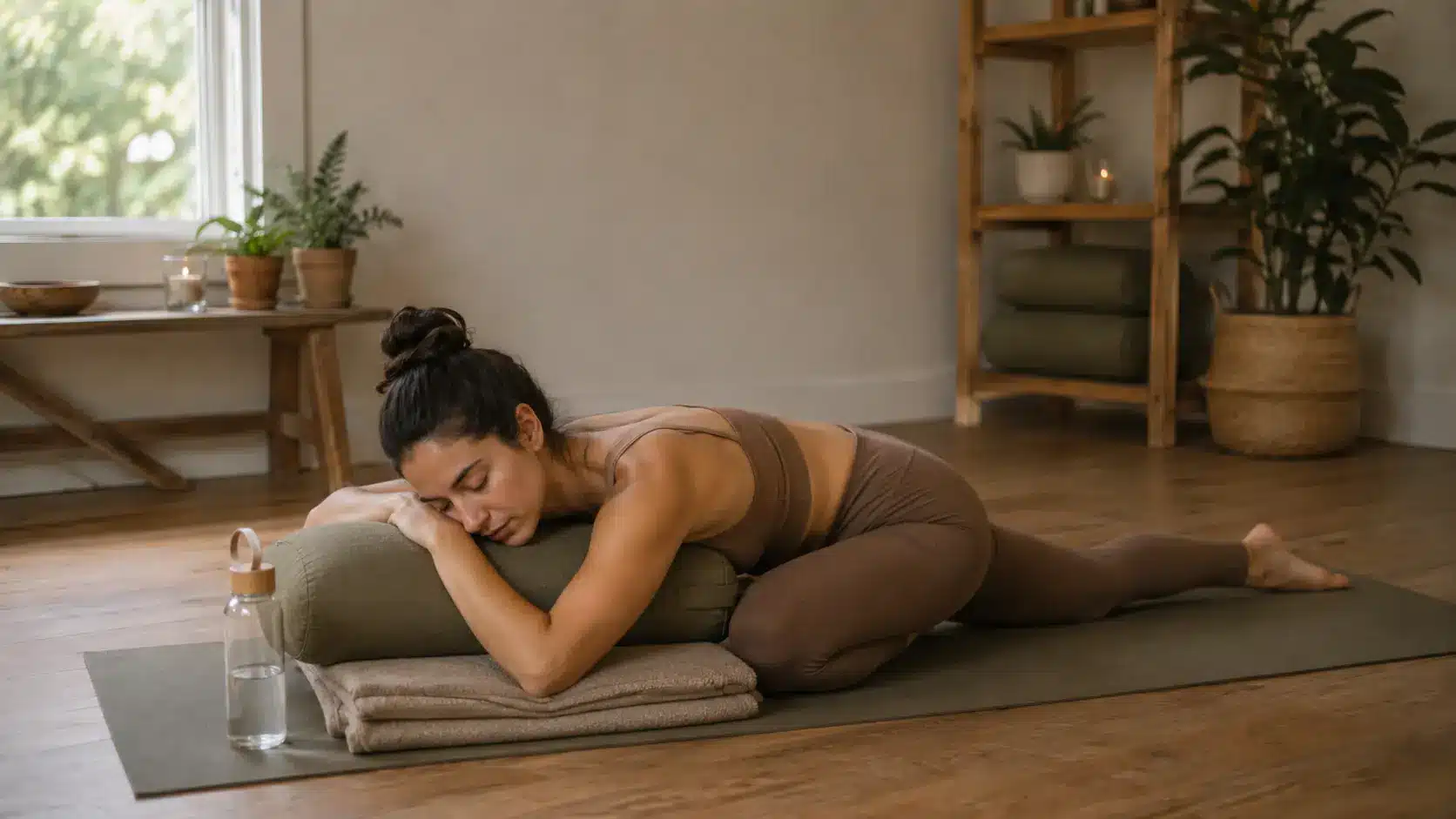
Yin yoga can pair well with running, lifting, cycling, or faster yoga. Hard training asks your body to work. Yin gives your body time to slow down.
It does not replace rest, sleep, protein, hydration, or strength work. It simply gives you a lower-effort option between harder sessions.
It can also help you notice tight spots early. If one hip, shoulder, or hamstring keeps feeling guarded, yin gives you time to pay attention before it gets worse.
7. More Body Awareness
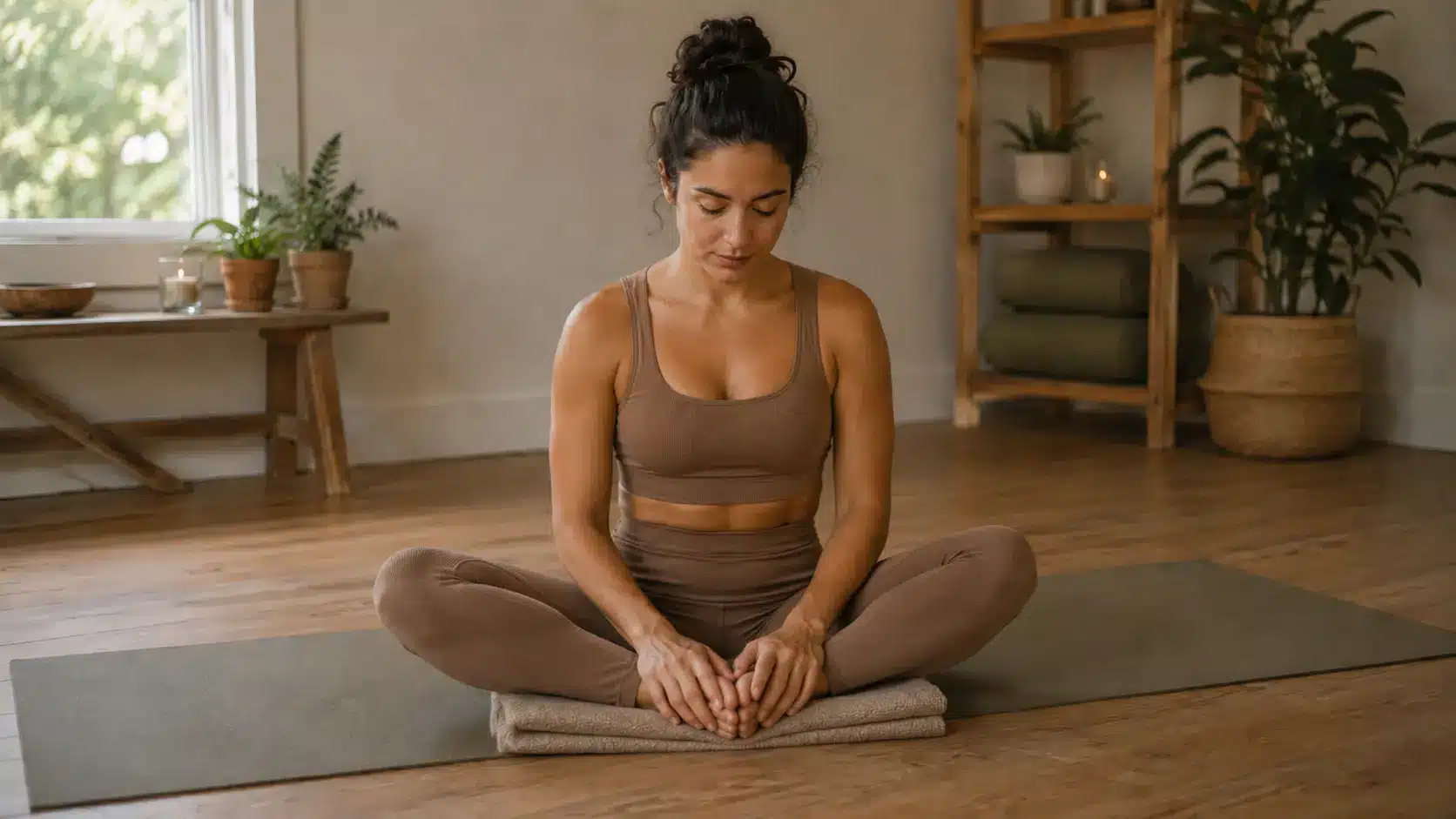
A quieter benefit of yin yoga is learning how your body responds. You may notice the difference between a helpful stretch and a warning sign.
You may also notice when your breath gets tight, your shoulders grip, or your body needs more support.
That awareness can help outside of class. You may sit differently, stretch sooner, rest earlier, or stop pushing through discomfort.
8. Gentle Low-Back Support
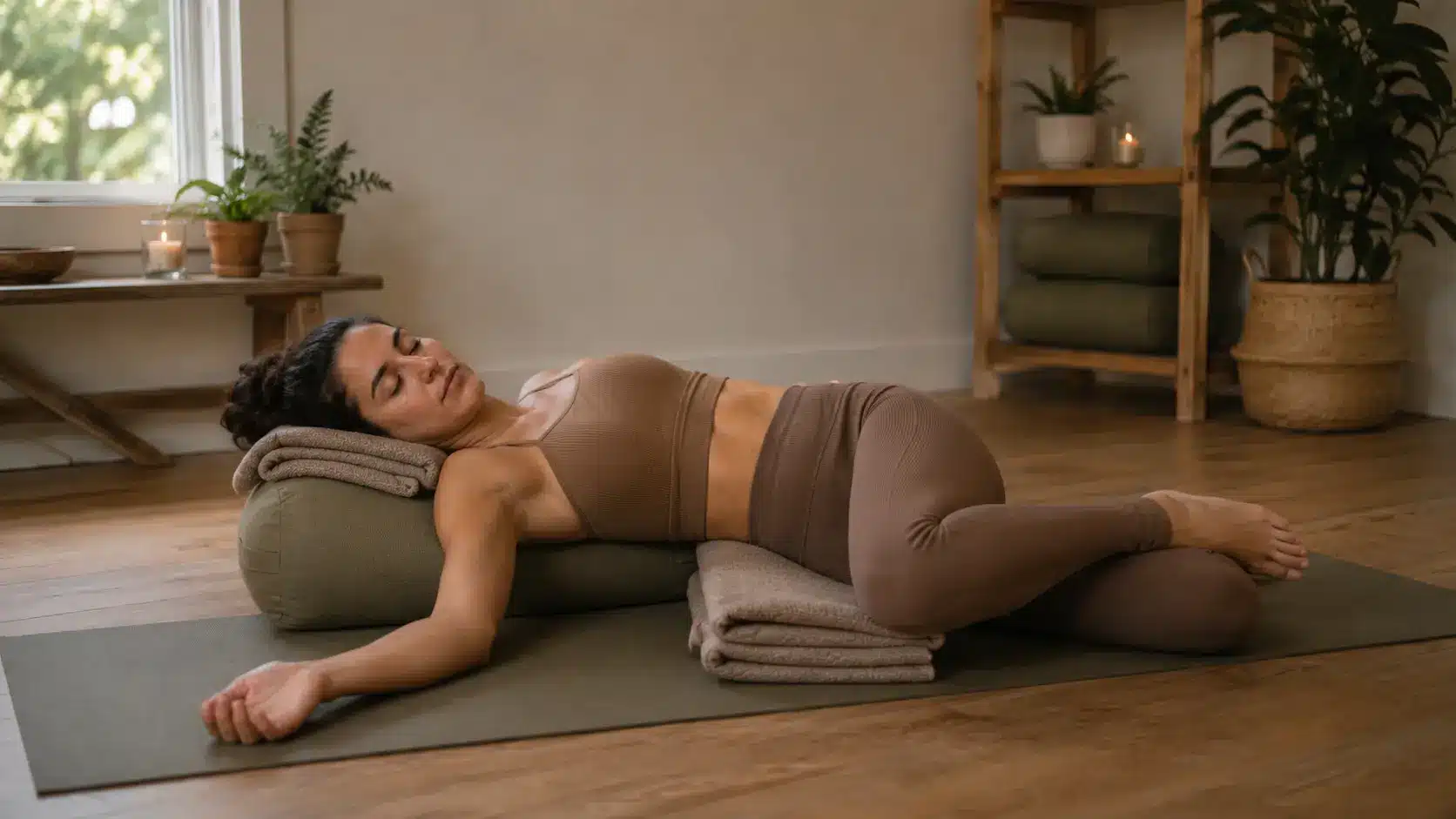
Yin yoga may help some people with low-back comfort, but it should be approached gently.
Support matters for the lower back. Deep forward folds can feel good for some people and irritating for others. Bent knees, folded blankets, and smaller ranges are often safer.
If you have ongoing back pain, nerve pain, or pain that travels down the leg, get proper guidance before deep holds. A safe practice should leave your back feeling supported, not strained.
How to Practice Yin Yoga Safely
Yin yoga can be safe for many people when the practice stays gentle. Problems usually happen when someone pushes too far, holds pain too long, or copies a shape that does not fit their body.
A safe pose should feel steady, not sharp. You should be able to breathe without clenching your jaw or holding tension in your face. If you feel numbness, tingling, burning nerve pain, or strong joint pressure, come out of the pose.
People with osteoporosis, hypermobility, pregnancy, recent surgery, joint injuries, severe back pain, or sciatica should be extra careful. In these cases, it is better to work with a trained teacher or health professional before doing deep holds.
Helpful safety tips:
- Use pillows, blankets, blocks, or bolsters.
- Stay away from sharp pain.
- Leave each pose slowly.
- Keep the stretch mild to moderate.
- Skip poses that do not suit your body.
If your breath gets tight, back off and make the pose easier.
Beginner Yin Yoga Routine, Poses, and Weekly Plan
A beginner routine should be simple. A quiet space, a mat, and a few pillows are enough.
Start with supportive poses like child’s pose, butterfly pose, sphinx pose, reclined twist, and legs up the wall. These help the body settle without needing deep flexibility.
A simple 20-minute routine can look like this:
| Pose | Time |
|---|---|
| Child’s pose | 3 minutes |
| Butterfly pose | 4 minutes |
| Sphinx pose | 3 minutes |
| Reclined twist | 3 minutes each side |
| Legs up the wall | 5 minutes |
| Quiet rest | 2 minutes |
If you are new, practice once or twice a week. After a few weeks, move to two to four sessions if your body feels good. Keep the goal small: steady breathing, safe holds, and learning how your body responds.
What People Say About Yin Yoga Online
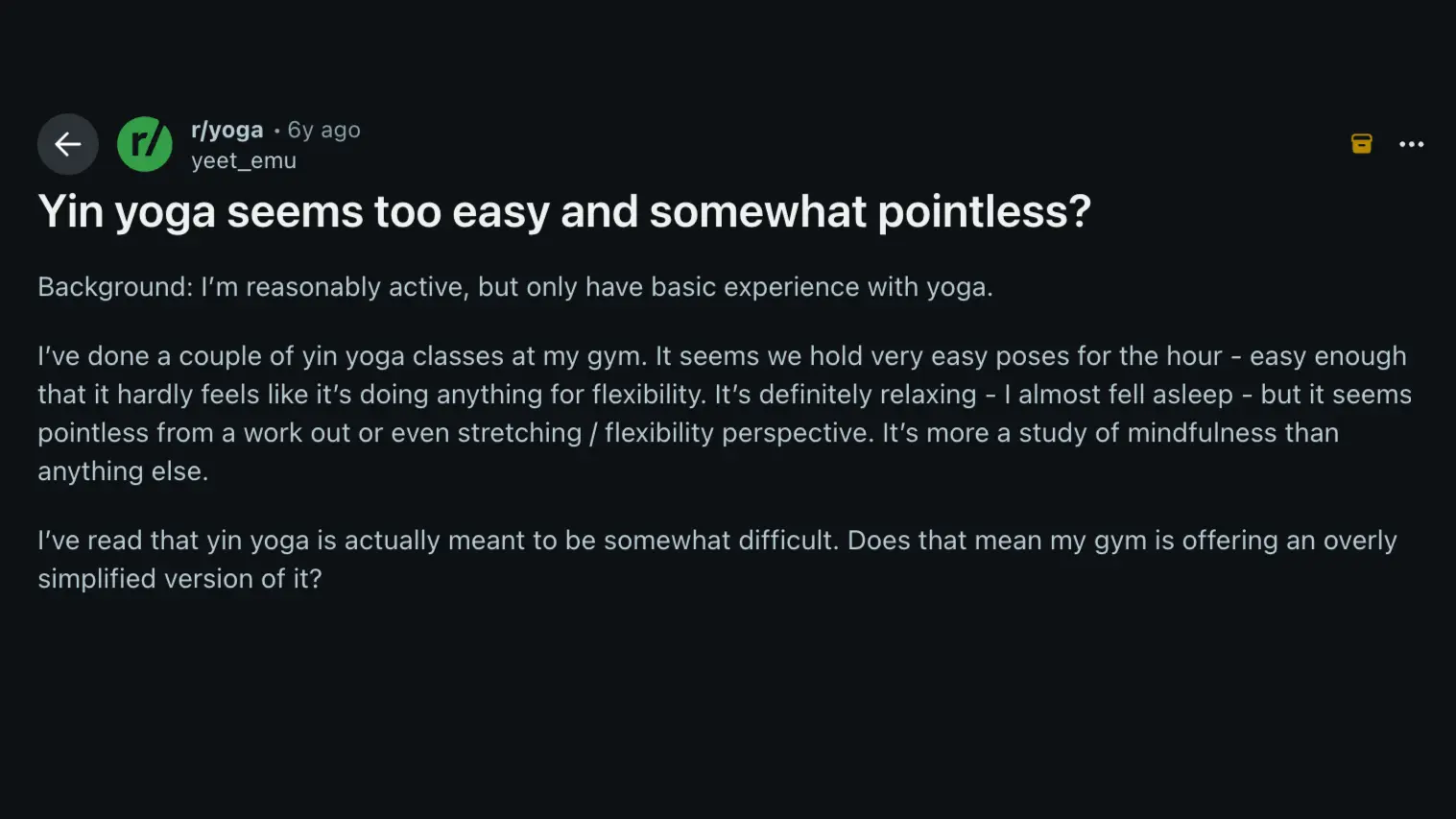
People often search for yin yoga benefits because they want proof from real practice, not only a list of claims. That shows up clearly in Reddit discussions where users ask whether yin yoga is worth their time, how others have benefited, and why the practice can feel so strong.
In one Reddit thread, a beginner asks if yin feels “too easy” or “pointless,” then users explain that it is not meant to feel like a workout. They describe it as a slower practice that works through long holds, stillness, fascia, and patience: beginner concern.
Another discussion asks directly how people have benefited from yin. The replies mention greater flexibility, calmer breathing, improved sleep, less anxiety, and greater comfort in the body: benefits discussed.
A first-time practitioner also shared that yin changed how they saw yoga. They expected active movement, but after a mentally draining week, the slower class helped their body feel relaxed, stretched, and more cared for: first-time experience.
These online experiences support the personal side of the search intent. People want to know if yin yoga actually feels useful before they try it.
The common answer is that the practice may look gentle, but the long holds can help people feel calmer, more aware, and more connected to their body.
Pros and Cons of Yin Yoga
Yin can be helpful, but it is not the right fit for everybody or every goal. A balanced view helps the reader understand what to expect before starting.
| Pros | Cons |
|---|---|
| Gentle and beginner-friendly | Can feel slow or boring at first |
| May improve flexibility | Does not build major strength |
| May support stress relief | Deep holds may irritate some joints |
| Easy to practice at home | Requires patience and body awareness |
| Pairs well with active workouts | Not ideal for every injury |
The best results come when you treat it as a steady practice, not a quick fix. It works well when paired with strength, walking, rest, and safe movement.
Common Mistakes to Avoid
Yin yoga works best when the body feels supported, not pushed. These common mistakes can make the practice less helpful or even uncomfortable.
- Going too deep too soon: Yin yoga works best when your body feels safe. If you force a pose, your muscles may tighten instead of release.
- Treating stillness like a test: Feeling restless does not mean you are doing it wrong. Your mind may simply need time to adjust to the slower pace.
- Skipping props: Support helps your body soften. A pillow, block, or folded blanket can make the same pose feel safer and more useful.
- Holding sharp pain: A steady stretch is fine, but sharp pain, numbness, tingling, or joint pressure means you should ease out.
- Practicing deep holds when tired or injured: If your body feels inflamed, sore, or drained, choose shorter holds and more support.
A good session should leave you feeling steadier, not strained. If your breath gets tight or your body starts guarding, back off and make the pose easier.
Frequently Asked Questions
How soon can a person feel a change?
Some people feel calmer after one class, especially when the session is slow and supported. Flexibility, mobility, and body awareness often take longer. A steady practice for a few weeks usually gives clearer, more lasting results.
Why do emotions sometimes come up?
Stillness can make you more aware of feelings that were hidden by a busy day. A long hold may also bring attention to tension in the body. Tears, restlessness, or quiet relief can all happen.
Can it help before bed?
A quiet evening session may help your body slow down before sleep. Choose soft poses, low light, and easy breathing. Avoid intense stretches late at night if they leave you sore, restless, or too alert.
Is it safe for people with osteoporosis?
People with osteoporosis should be careful with deep forward folds, twists, and long holds. A trained teacher or health professional can help modify poses. The safest version is usually supported, gentle, and free from sharp pressure.
Can it support digestion, blood pressure, or pelvic discomfort?
It may help some people relax, breathe slower, and reduce tension, but it should not be treated as medical care. Anyone managing blood pressure, IBS, endometriosis, or ongoing pain should ask a qualified professional first.
Final Takeaway
Yin yoga benefits can start with simple things: a slower breath, softer hips, or a quieter mind after class. With time, the benefits of yin yoga may also include better flexibility, less stiffness, more patience, and a kinder way to notice your body.
Yin yoga does not ask you to push or perform. It asks you to pause, breathe, and listen.
Start with one short session this week. Choose a few supported poses, stay out of pain, and notice how you feel afterward. If your body responds well, keep the routine gentle and steady. That is where the practice often begins to make sense.