
I used to think olive oil was one of those foods you could pour freely because it was “healthy.” Then I checked the numbers and realized one small spoon can carry more calories than expected. That does not make olive oil bad. It just means it deserves a little attention.
These olive oil nutrition facts are easier to understand when you see them by serving size, fat type, and use. A label can look simple, but the details tell you how olive oil fits into real meals.
This blog breaks down the numbers with tables, serving-size charts, and clear food-use context, so you can read the label without guessing. Let’s start with what olive oil actually gives your body.
Overview of Olive Oil Nutrition Facts
Olive oil nutrition facts show what a single serving provides your body. One tablespoon of olive oil has about 119 calories and 13.5 grams of fat. It has no carbohydrates, fiber, sugar, or protein.
The key point is that olive oil is not a mixed food. Its nutritional value primarily comes from the fats it contains, especially oleic acid, a monounsaturated fat.
Extra virgin olive oil may also contain small amounts of natural plant compounds called polyphenols.

A nutrition label can look simple, but olive oil is one of those foods where serving size matters a lot. The infographic gives you the key olive oil nutrition facts for one tablespoon, including calories, total fat, fat profile, carbs, protein, and vitamins.
The main point is clear: olive oil is a fat-based food with 119 calories per tablespoon, 13.5 g of total fat, and 0 g of carbs, sugar, fiber, and protein. Most of that fat is monounsaturated, which is the main reason olive oil is often used in heart-conscious eating patterns.
These numbers are helpful, but serving size changes everything. A teaspoon, a tablespoon, and a larger pour can look similar in the kitchen, yet they add very different amounts of calories.
How Many Calories are in Olive Oil?
When people ask how many calories are in olive oil, they usually want a quick serving-size answer. Since olive oil is pure fat, even small amounts carry noticeable calories. Here is the simple breakdown.
- 1 Teaspoon: One teaspoon of olive oil has about 40 calories. It works for light cooking, quick dressings, or a small amount over vegetables.
- 1 Tablespoon: One tablespoon has about 119 calories. This is the standard serving size shown on most nutrition labels.
- 2 Tablespoons: Two tablespoons have about 238 calories. This amount may fit a full recipe better than one small serving.
- 100 Grams: 100 grams contains about 884 calories. This number is mainly useful for food tracking, recipes, and nutrition comparisons.
These numbers help with portion control, but calories do not explain oil quality. For that, you need to look at the type of fat.
What Types of Fat are Found in Olive Oil?

Olive oil is almost entirely made up of fat, but most of it comes from unsaturated fat. This is why the fat profile matters as much as the total fat number.
| Fat Type | Amount per Tablespoon | Approximate Share |
| Monounsaturated Fat | 9.9g | ~73% |
| Saturated Fat | 1.9g | ~14% |
| Polyunsaturated Fat | 1.4g | ~11% |
The largest portion comes from monounsaturated fat, mainly oleic acid. Saturated fat accounts for a smaller share, while polyunsaturated fat accounts for a modest share. This mix is what makes olive oil different from butter, coconut oil, and many solid fats.
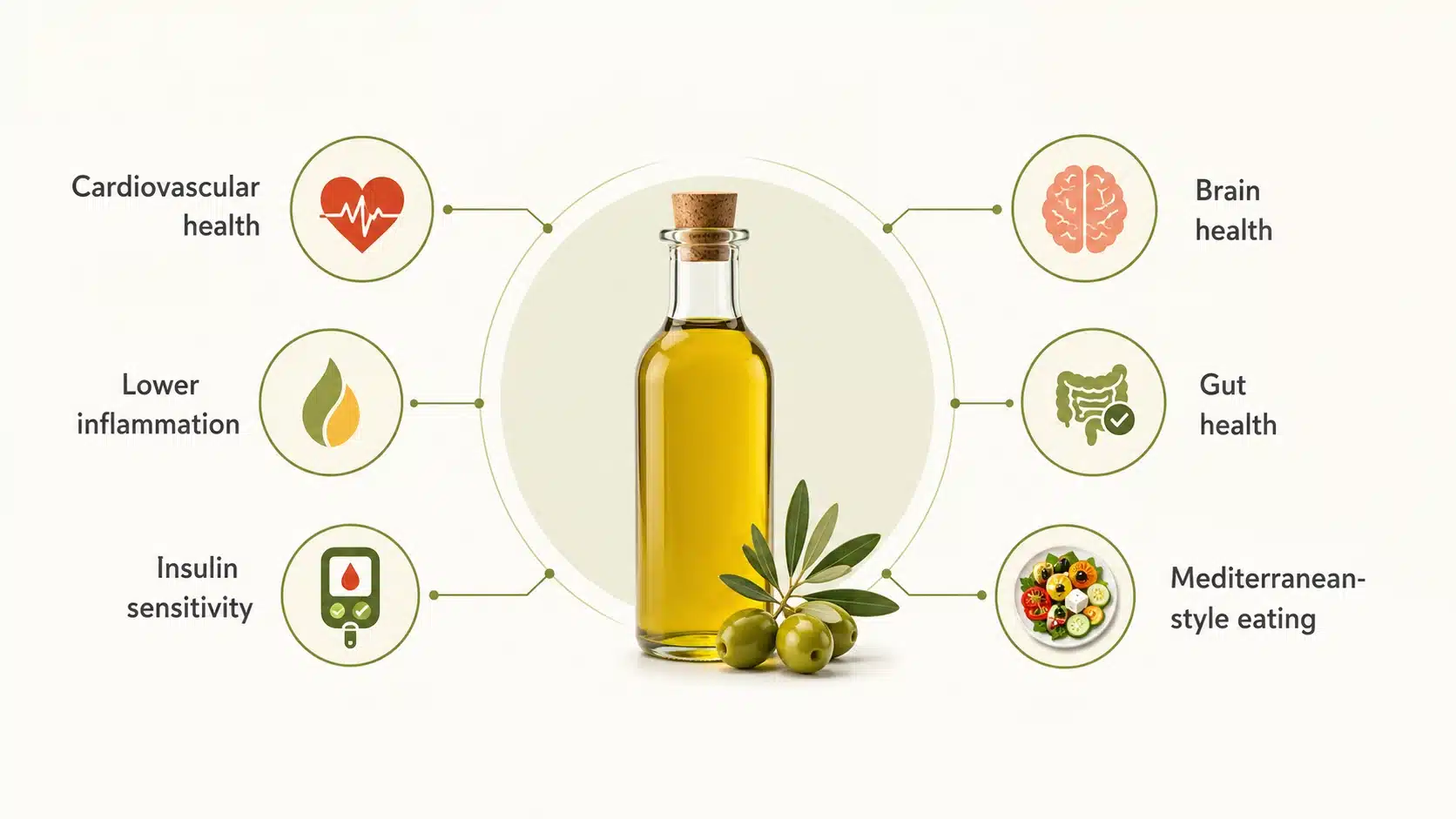
What Health Benefits are Linked With Olive Oil?
Olive oil can support health when used as part of a balanced diet, especially in place of higher-saturated-fat fats. Extra-virgin olive oil may offer the most value because it retains more natural olive compounds.
1. Supports Cardiovascular Health
Extra virgin olive oil may support heart health by helping improve cholesterol balance, blood vessel function, and overall fat quality in meals. Its monounsaturated fats are helpful when they replace butter, shortening, or other fats higher in saturated fat.
For the best effect, use it with vegetables, beans, whole grains, fish, and nuts instead of adding it to already heavy meals every single day.
2. Help to Lower Inflammation
Extra virgin olive oil contains oleocanthal, a natural compound studied for its anti-inflammatory action. It works through pathways, sometimes compared with common pain-relief medicines, but it should not be treated like medicine.
The better way to see it is as a supportive food. When used regularly with plant-rich meals, it may help support a less inflammatory eating pattern over time.
3. Support Insulin Sensitivity
Olive oil may support insulin sensitivity when it is part of a steady eating pattern. This can matter for people focused on blood sugar, metabolic health, or Type 2 diabetes prevention.
It works best when paired with fiber-rich foods such as vegetables, beans, lentils, and whole grains. Portion size still matters because too much oil can quickly add calories to meals.
4. Support Brain Health
The healthy fats and antioxidant compounds in extra virgin olive oil may support brain health, especially when used as part of a Mediterranean-style diet.
Research often links this eating pattern with better cognitive aging. Still, olive oil should not be treated as a single brain-protecting food. It works best beside sleep, movement, social connection, and plant-rich meals.
5. Supports Gut Health
Extra virgin olive oil contains plant compounds that may support a healthier gut microbiome. This matters because gut health is linked with digestion, immunity, and inflammation.
The strongest value comes when olive oil is paired with plant foods rather than used alone. Vegetables, beans, fruit, nuts, and whole grains give fiber, while olive oil adds fat and flavor.
Fits Mediterranean-Style Eating
Olive oil is a key fat in Mediterranean-style meals, which often include vegetables, legumes, whole grains, nuts, fruit, fish, herbs, and moderate dairy.
The health value comes from the overall dietary pattern, not just from the oil. That is why olive oil makes more sense with salads, beans, fish, and roasted vegetables than with fried or heavily processed meals.
These benefits depend on quality, freshness, and portion size. That is why the next section looks at which type of olive oil gives the strongest nutritional value.
Which Type of Olive Oil has the Most Nutrition?
Not every olive oil goes through the same process, which affects how much natural olive character remains in the bottle. This quick breakdown helps you choose without having to repeat the same calorie and fat details.
- Extra Virgin Olive Oil: Least processed and highest in natural olive compounds. Best for salads, dips, finishing dishes, and low- to medium-heat cooking.
- Virgin Olive Oil: Lightly processed with a good fat profile. It is less common but works well for dressings and regular cooking.
- Refined Olive Oil: More processed, so it has a milder taste and fewer natural compounds. It is useful for general cooking.
- Light Olive Oil: Refined for a lighter color and flavor, not fewer calories. It works well when you want a mild oil for baking or cooking.
For a nutrition-first choice, extra virgin works best. If you need a softer taste, refined options can help, but they should not be treated as lower-calorie oils.
How Should Olive Oil Be Stored Safely?

Olive oil quality changes quietly, so storage matters even when the bottle looks fine. Use this section as a quick kitchen check, not a repeat of the nutrition facts.
| Storage Tip | What to Do | Why It Matters |
| Keep it away from light | Store it in a dark bottle, tin, or closed cabinet. | Light can make olive oil lose its freshness faster. |
| Avoid heat | Keep it away from the stove, oven, or sunny counter. | Heat can weaken flavor and quality over time. |
| Close the cap tightly | Seal the bottle right after each use. | Air exposure can make the oil turn rancid sooner. |
| Buy the right size | Choose a bottle you can finish within a reasonable time. | Smaller bottles stay fresher if you use oil slowly. |
| Check the smell | Smell it before use if the bottle has been open for a long time. | Rancid oil may smell stale, waxy, or like old nuts. |
Freshness is not only about taste. Once storage is clear, it also helps to know when using less olive oil may be the better choice.
Are There Any Downsides or Times to Avoid Olive Oil?
Olive oil is safe for most people when used in food, but it still needs portion control and common sense. Some people may also need extra care based on digestion, medical advice, or specific health goals.
- High Calorie Density: A measured spoon helps you enjoy olive oil without adding more energy than planned.
- Digestive Sensitivity: Large servings may feel heavy for some people. Using olive oil with meals is usually easier than taking it on its own.
- Medical Concerns: Anyone taking blood-thinning medication or following a strict medical diet should consult their clinician before making major dietary changes.
- Healthy Oil Misuse: Olive oil works best in better meals. It cannot make fried or ultra-processed foods healthy on its own.
Used with care, olive oil can support better food choices. The next section compares it with other common fats so readers can see where it fits.
Is Olive Oil Healthy Compared With Other Cooking Fats?

Olive oil is often a smart choice when it replaces fats that are higher in saturated fat. This comparison focuses on fat type and saturated fat per tablespoon, which makes the difference easier to see in a chart.
| Cooking Fat | Main Fat Type | Saturated Fat Per Tablespoon | Best Visual Note |
| Olive oil | Monounsaturated fat | 1.9 g | Lower saturated fat |
| Avocado oil | Monounsaturated fat | 1.6 g | Similar fat profile |
| Canola oil | Unsaturated fat | 1.0 g | Lowest in this group |
| Butter | Saturated fat | 7.2 g | Much higher saturated fat |
| Coconut oil | Saturated fat | 11.2 g | Highest saturated fat |
A simple way to read this chart is that olive oil works well when replacing butter or coconut oil. The goal is not to use more oil, but to choose a better fat source for everyday meals.
What are Some Other Uses Of Olive Oil?
Olive oil is primarily used in food, but people also use it in simple home and personal care routines.
It may help soften dry hair ends, add light shine to wooden furniture, loosen sticky labels, condition cuticles, and reduce squeaks on small household items.
Some people use oil to soften earwax, but this should be done only with medical guidance, especially if there is pain, infection, ear tubes, or a damaged eardrum.
For skin or hair, use a small amount at first, as too much can feel greasy or clog pores. This section is a side note, so the main nutrition recap comes next.
Frequently Asked Questions
Can olive oil be used for high-heat cooking?
Olive oil can be used for many cooking methods, but the heat level matters. Extra-virgin olive oil works well at low to medium heat. For higher heat, refined olive oil may be more practical because it has a milder flavor and a higher smoke point.
Why does some olive oil taste bitter or peppery?
A bitter or peppery taste can be normal in good extra virgin olive oil. It often comes from natural plant compounds found in olives. A slight throat tickle is common, too. Bad oil usually smells stale, waxy, or sour instead of fresh.
Should olive oil be refrigerated after opening?
Olive oil usually does not need refrigeration. A cool, dark cabinet is enough for most homes. Refrigeration can make it cloudy or thick, though this does not always mean it is spoiled. Let it return to room temperature before using.
Is olive oil better raw or cooked?
Olive oil can be useful both raw and cooked. Raw extra-virgin olive oil retains its strongest flavor and natural compounds. Cooking still gives healthy fats, but heat can reduce some compounds. Use raw for salads and finishing when flavor matters.
Why do nutrition labels show different calorie numbers?
Nutrition labels may show slightly different numbers because serving size and rounding rules vary. Some labels use 1 tablespoon as 14 grams, while others use 13.5 grams. That is why you may see calorie counts of 119, 120, or nearby values. The answer to how many calories in olive oil can vary slightly because labels round serving sizes differently.
Final Thoughts
Olive oil is one of those kitchen staples that feels simple until you look more closely. The real value is not in calling it healthy and moving on. It is in knowing the serving size, fat type, and best way to use it.
The most useful thing to remember about olive oil nutrition facts is this: one tablespoon has about 119 calories, mostly from monounsaturated fat. That makes it a smart choice when used with care, especially in meals built around vegetables, grains, beans, fish, or lean protein.
Measure it sometimes. Store it well. Choose extra virgin when flavor and nutrition matter most.
How do you usually use olive oil at home: salad dressing, cooking, dips, or finishing a meal? Share your favorite use in the comments.