

If you’ve ever watched sprinters warm up, you’ve probably noticed A Skips and B Skips and wondered what they actually do.
I used to see them as just another routine drill, but once I understood the mechanics, everything clicked. These movements are not random hops. They train rhythm, posture, knee drive, and ground contact in a very specific way.
When you understand how to perform them correctly, you start to feel the difference in your stride.
Here, I’ll break down what each drill is, how they differ, why coaches rely on them, and how you can use them in your own sprint sessions. By the end, you’ll know exactly how they support faster, cleaner running mechanics.
What are A-Skips?

A-Skips are a fundamental sprint drill used to improve running mechanics and coordination. The movement combines a rhythmic skip with a strong knee drive.
As you move forward, you lift one knee to about hip height while hopping off the opposite foot. Your arms move naturally in opposition to your legs, just like in sprinting. The goal is not speed, but a clean, controlled rhythm and an upright posture.
A-Skips help train proper hip alignment, reinforce midfoot landing, and build hip flexor strength. Athletes of all levels can use them, from beginners learning form to experienced sprinters sharpening their technique before workouts or competitions.
What are B-Skips?
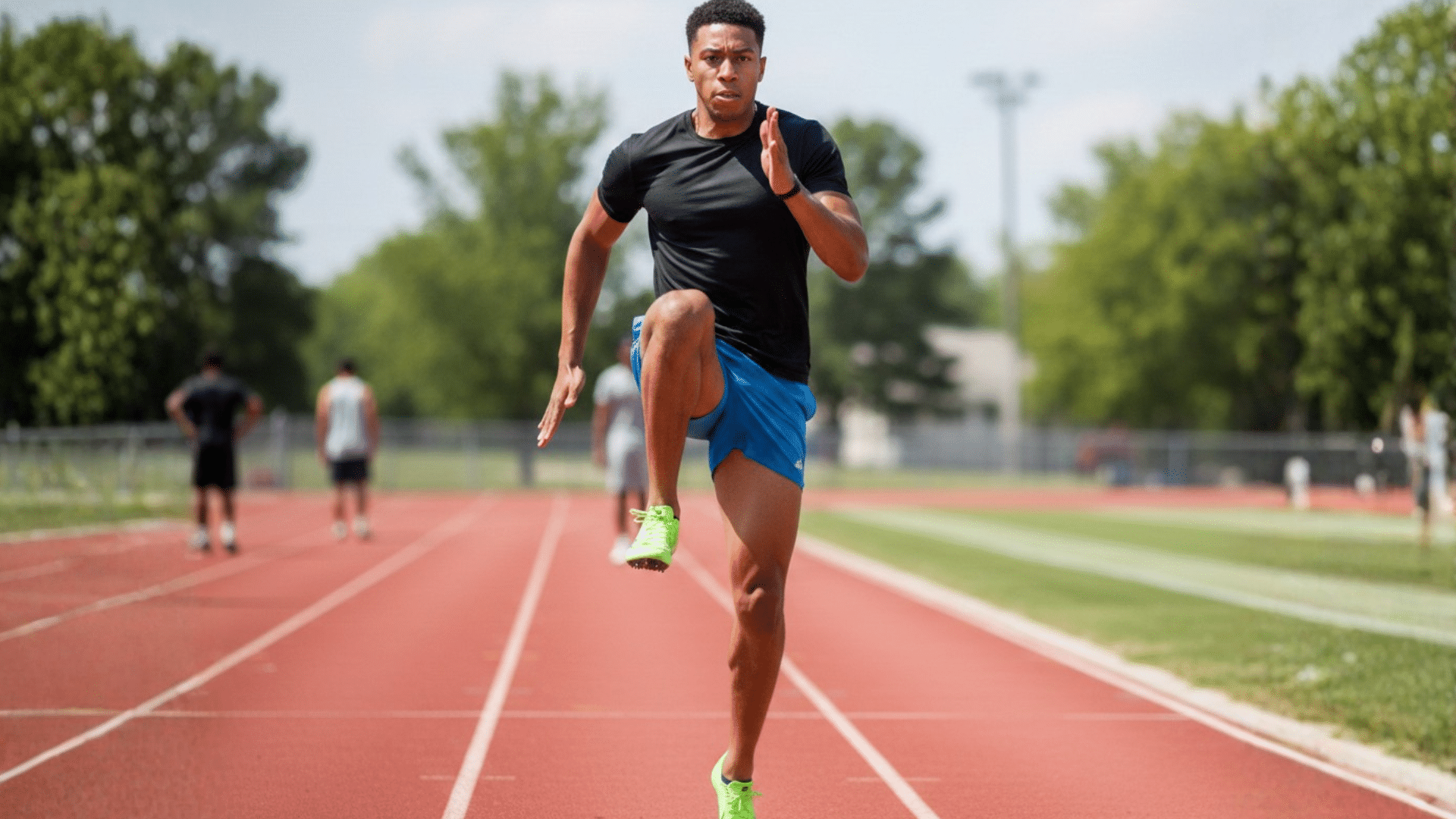
B-Skips are a more advanced sprint drill that builds directly on A-Skips. They begin with the same knee drive, but then add a forward leg extension before snapping the foot down underneath the hips. This creates a pawing motion that mimics sprint ground contact.
The added extension increases coordination demands and teaches athletes how to apply force efficiently into the ground.
B-Skips help improve stride mechanics by reinforcing proper foot strike and hip alignment. They are especially useful for runners working on acceleration and stride efficiency, but should be performed only after mastering the rhythm and posture of A-Skips.
Key Differences Between A Skips and B Skips
A-Skips and B-Skips are essential sprinting drills that improve running form and efficiency. Here’s a quick comparison to help you understand their differences and benefits.
| Aspect | A-Skips | B-Skips |
|---|---|---|
| Focus | Knee drive, posture, and rhythm | Knee extension, stride length, foot kick |
| Execution | Lift the knee high while driving the foot down | Extend the leg, kicking the foot outward |
| Benefits | Builds leg strength, improves running form | improves stride mechanics, flexibility |
| Primary Use | Warm-up, strength building | Speed, stride length improvement |
| Common Mistakes | Overstriding, poor posture | Overextension, not enough foot kick |
By incorporating A-Skips and B-Skips into your training, you can target specific areas to improve sprinting speed and form, thereby strengthening overall performance.
How to Perform A-Skips Step by Step
A-Skips teach proper sprint rhythm, posture, and knee drive. When done cleanly, they reinforce strong running mechanics that transfer directly to faster, more efficient sprinting.
Step 1: Establish the Basic Hop Rhythm
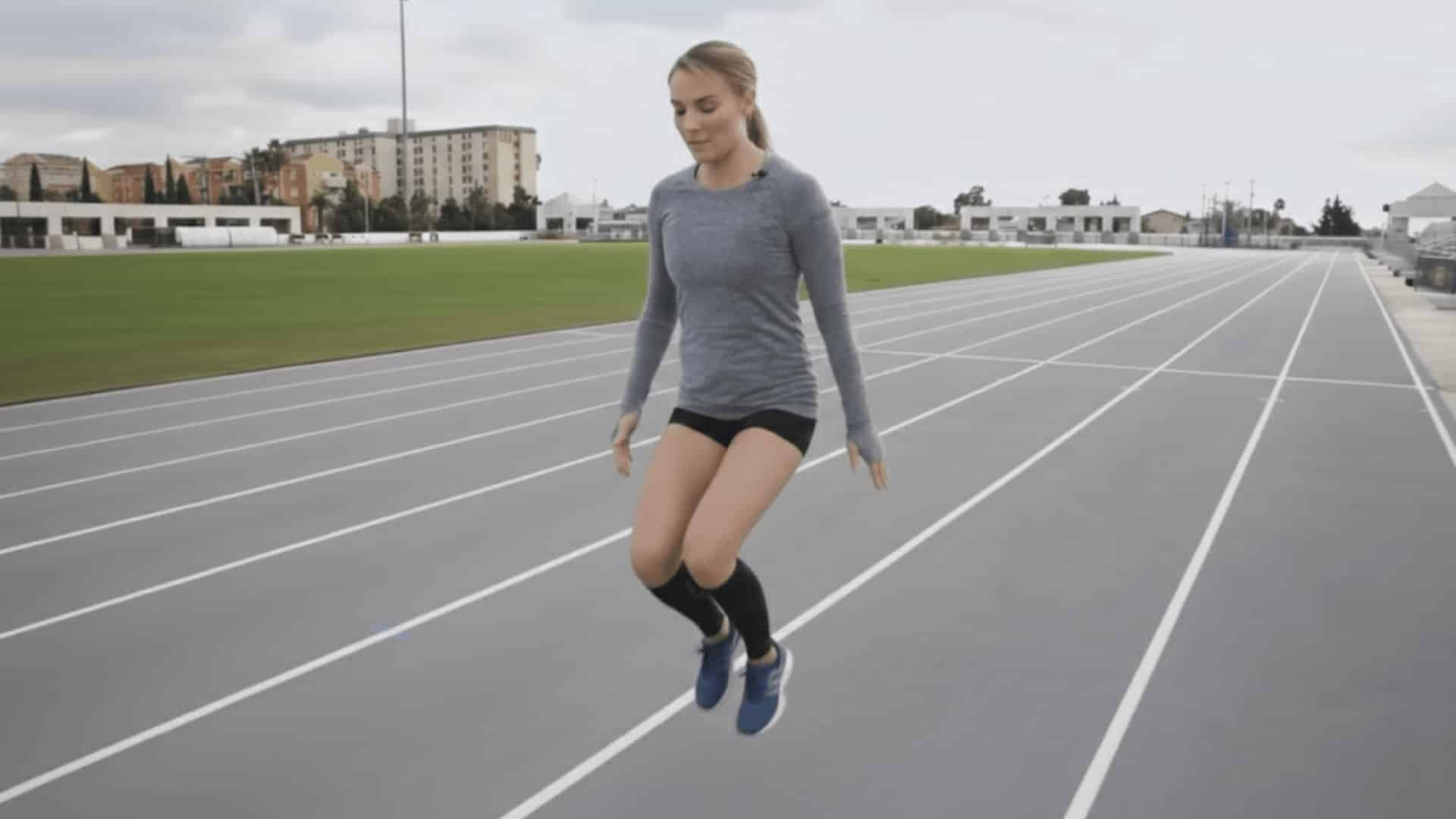
Start with a steady skipping rhythm. Think “hop, hop, hop” at an even tempo as you move forward.
First, practice hopping on two feet to feel the timing. Then shift to alternating hops, landing on one foot while the opposite knee lifts.
Keep the movement controlled and light. Do not rush. The rhythm should feel smooth and repeatable. Mastering this simple bounce pattern is the foundation for adding sharper knee drive and arm coordination.
Step 2: Drive the Knee to Ninety Degrees
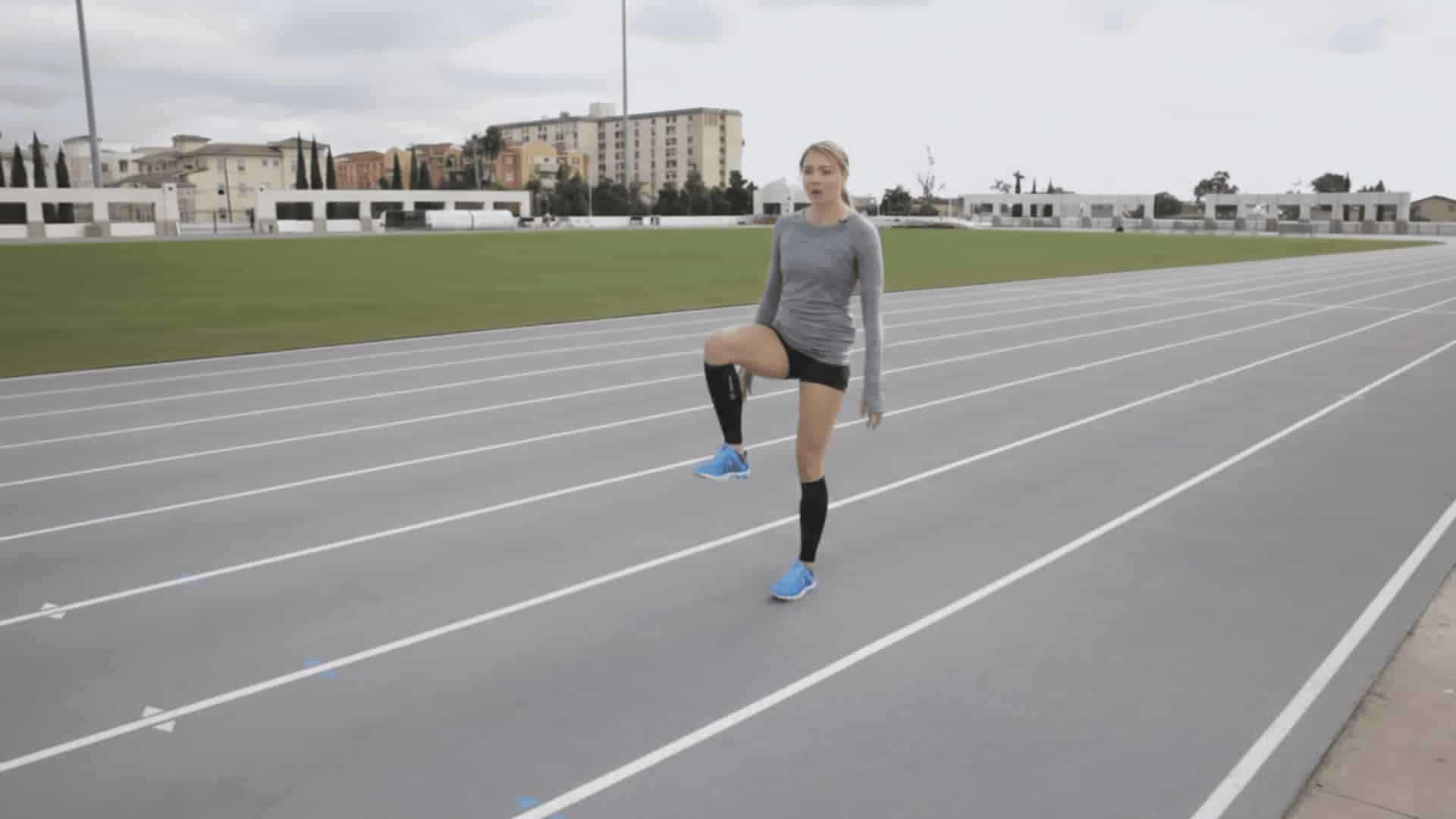
As you hop off one foot, lift the opposite knee to about ninety degrees. Your thigh should be parallel to the ground, and your foot flexed. Avoid letting the knee drift outward or collapse inward.
Bring both feet back under you before switching sides. The motion should feel precise and compact, not exaggerated. Clean knee lifts train hip flexor strength and teach proper sprint angles. Focus on maintaining the same height and position throughout each repetition.
Step 3: Coordinate the Arms Properly

Arm action must match your leg movement. When your right knee rises, your left arm drives forward. Keep elbows bent at about 90 degrees and swing from the shoulders, not the wrists.
Arms should move straight forward and backward, not across your body. The upward drive should feel sharp, then return to the ground as your foot lands. Proper arm timing improves balance and rhythm. Strong coordination between arms and legs makes the drill more effective.
Step 4: Maintain Tall Posture and Alignment
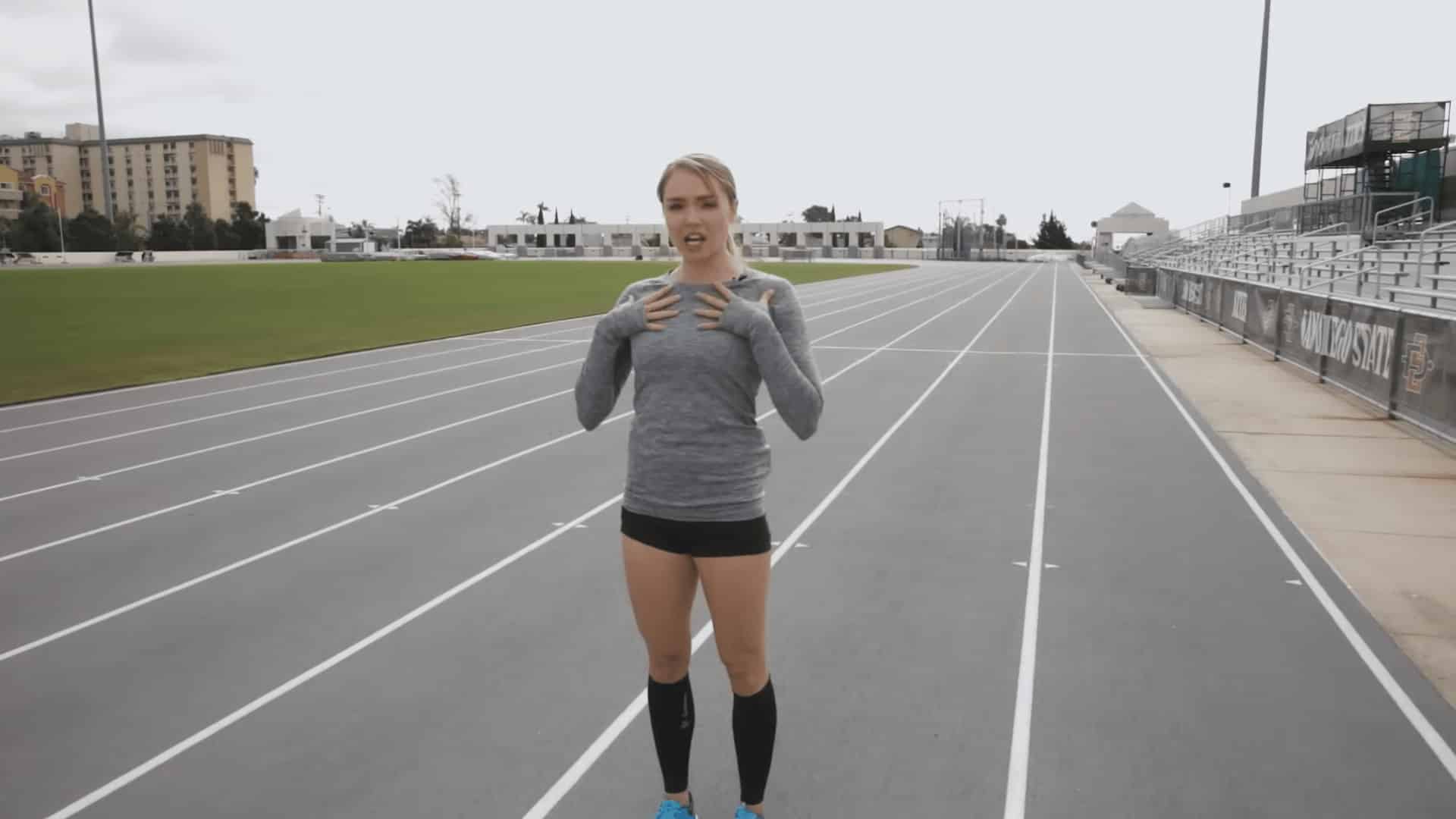
Posture is the most important part of the A-Skip. Keep your chest up, hips tall, and core engaged. Avoid sitting back into your hips or leaning too far forward. Your head should stay neutral, eyes looking ahead.
Think about stacking your shoulders over your hips and landing directly underneath your body. Clean positioning ensures the drill builds correct sprint mechanics. When alignment stays strong, your movement looks crisp and carries over better to actual running.
Watch this video to see the proper rhythm and knee drive of the A-Skip drill at full speed.
How to Perform B-Skips Step by Step
B-Skips build sprint power by adding a sharp leg extension and snap-down to the basic skip rhythm you already know.
Step 1: Establish the Hop Rhythm
Start by finding the correct rhythm. The movement should feel like steady, repeated hops moving forward. Think “hop, hop, hop” at an even pace. Before adding the kick, practice lifting your knee and landing softly on the midfoot.
The rhythm matters more than speed. If the timing feels off, slow down and reset. Once the hop feels smooth and controlled, you’re ready to layer in the leg action that makes this drill different from A-Skips.
Step 2: Drive the Knee Up First
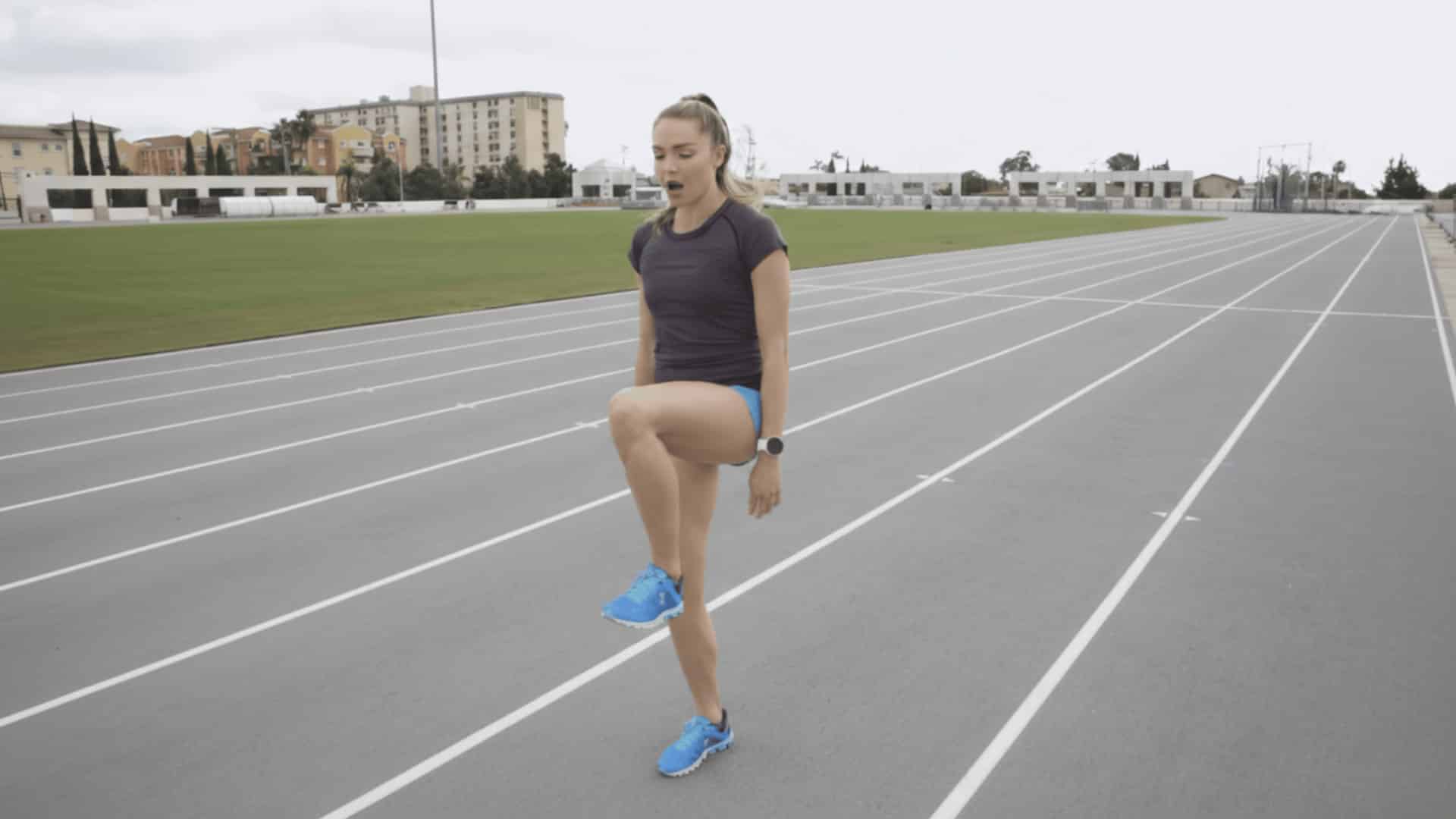
Lift your knee up just like you would in an A-Skip. Keep your torso tall and your hips aligned underneath you. Avoid leaning back or collapsing forward. Your foot should stay flexed as the knee rises.
This position sets up the rest of the movement. If the knee drive is weak or rushed, the rest of the drill will feel awkward. Focus on a strong, clean knee lift before thinking about the extension and snap-down phase.
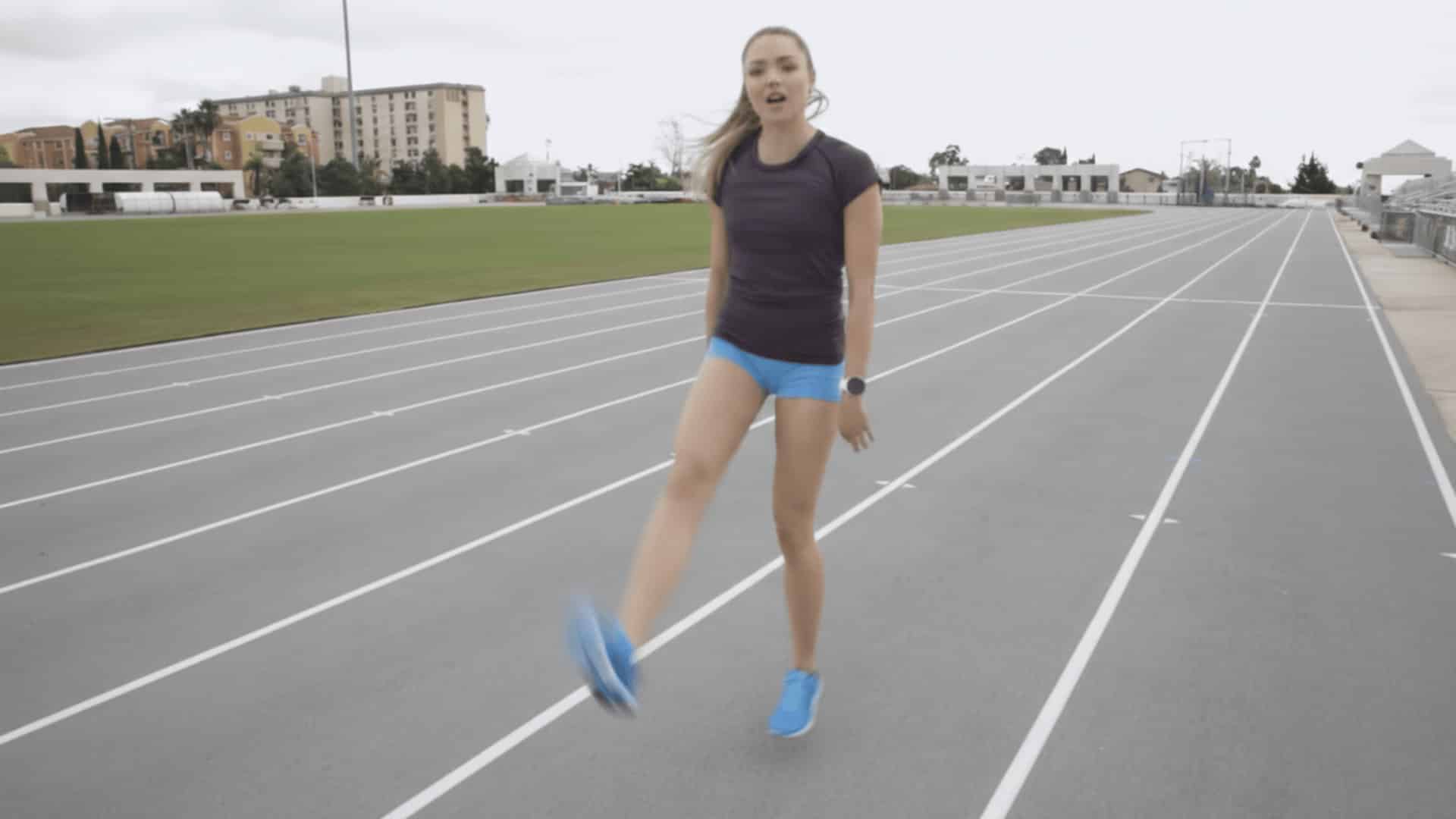
Step 3: Extend and Snap Down
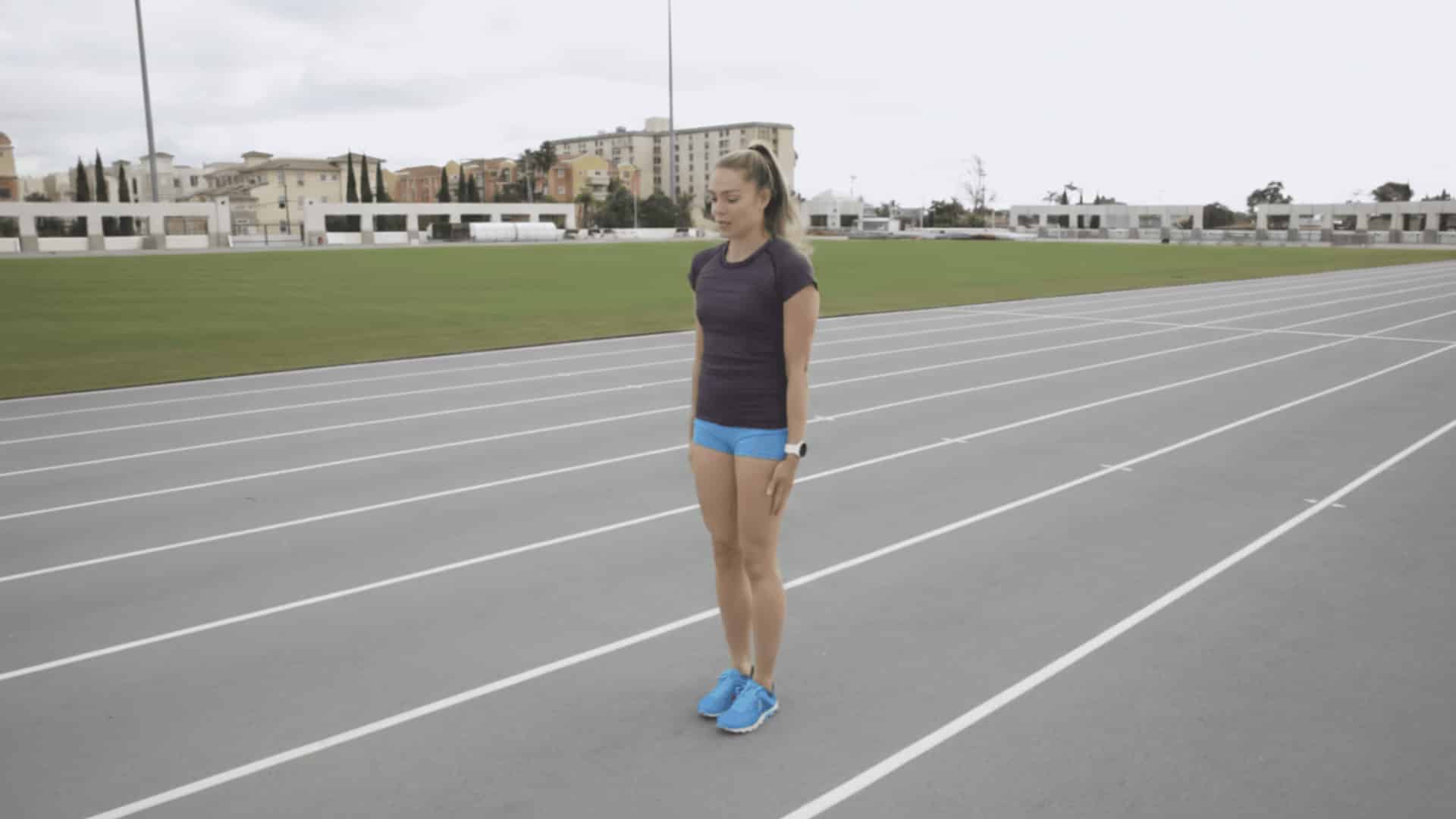
After driving your knee up, extend your lower leg forward in a controlled kick. Then quickly snap the foot down underneath your hips. This snap-down mimics sprint ground contact.
The goal is to strike the ground slightly behind your center of mass, not out in front. That creates a negative foot strike, meaning your hips move over your foot at contact. This action helps propel you forward and reinforces proper sprint mechanics.
Step 4: Coordinate Arm Action
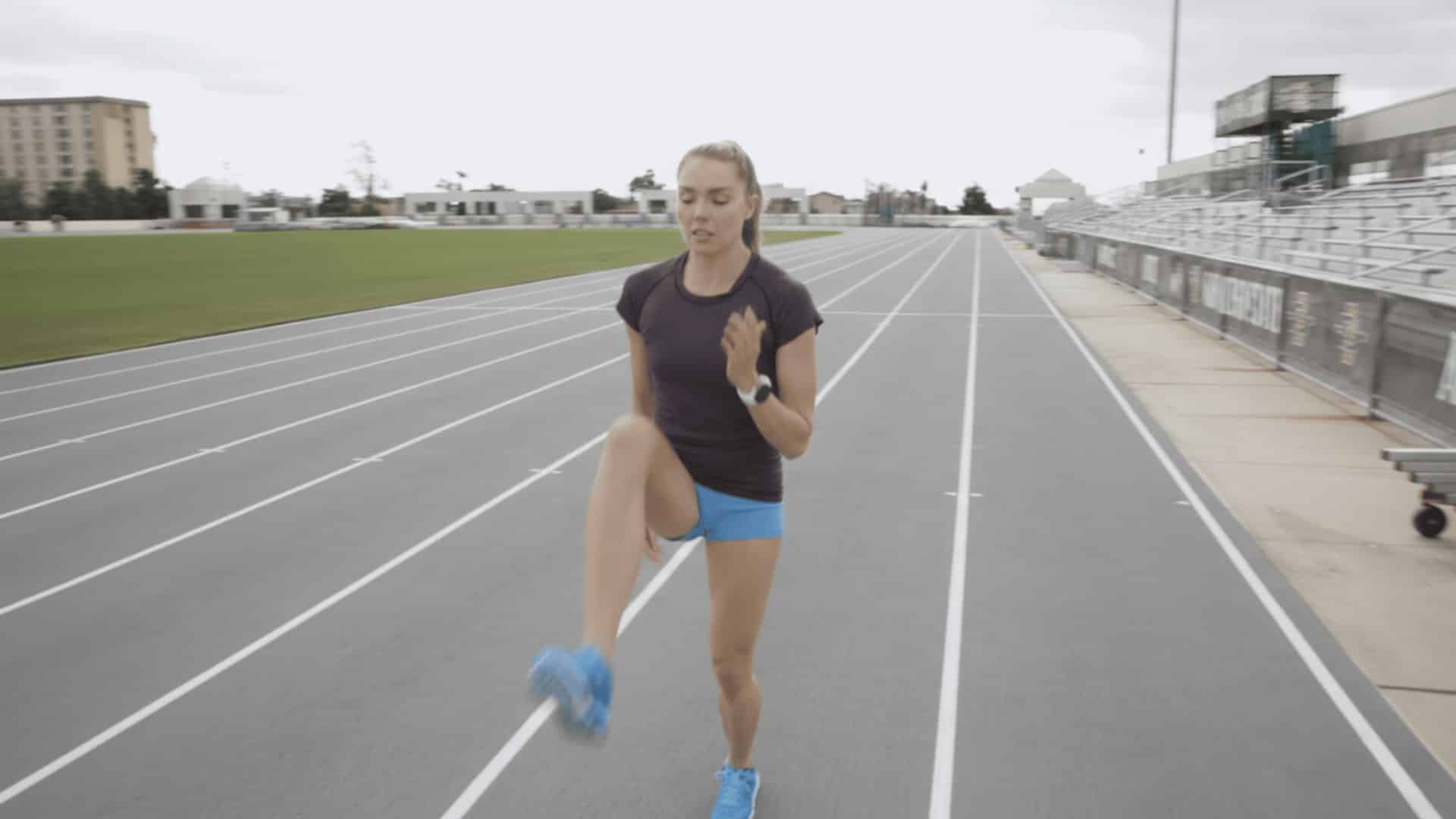
Your arms should move in the opposite direction to your legs, just like in sprinting. As your leg snaps down, drive the opposite arm down with intent. Keep the elbows bent at about 90 degrees and avoid swinging too wide.
The arm action should feel slightly more aggressive than in A-Skips. Matching the hand snap with the foot snap can improve rhythm and force production. Strong arm timing keeps your upper body stable and supports efficient lower-body mechanics.
Step 5: Maintain Posture and Alignment
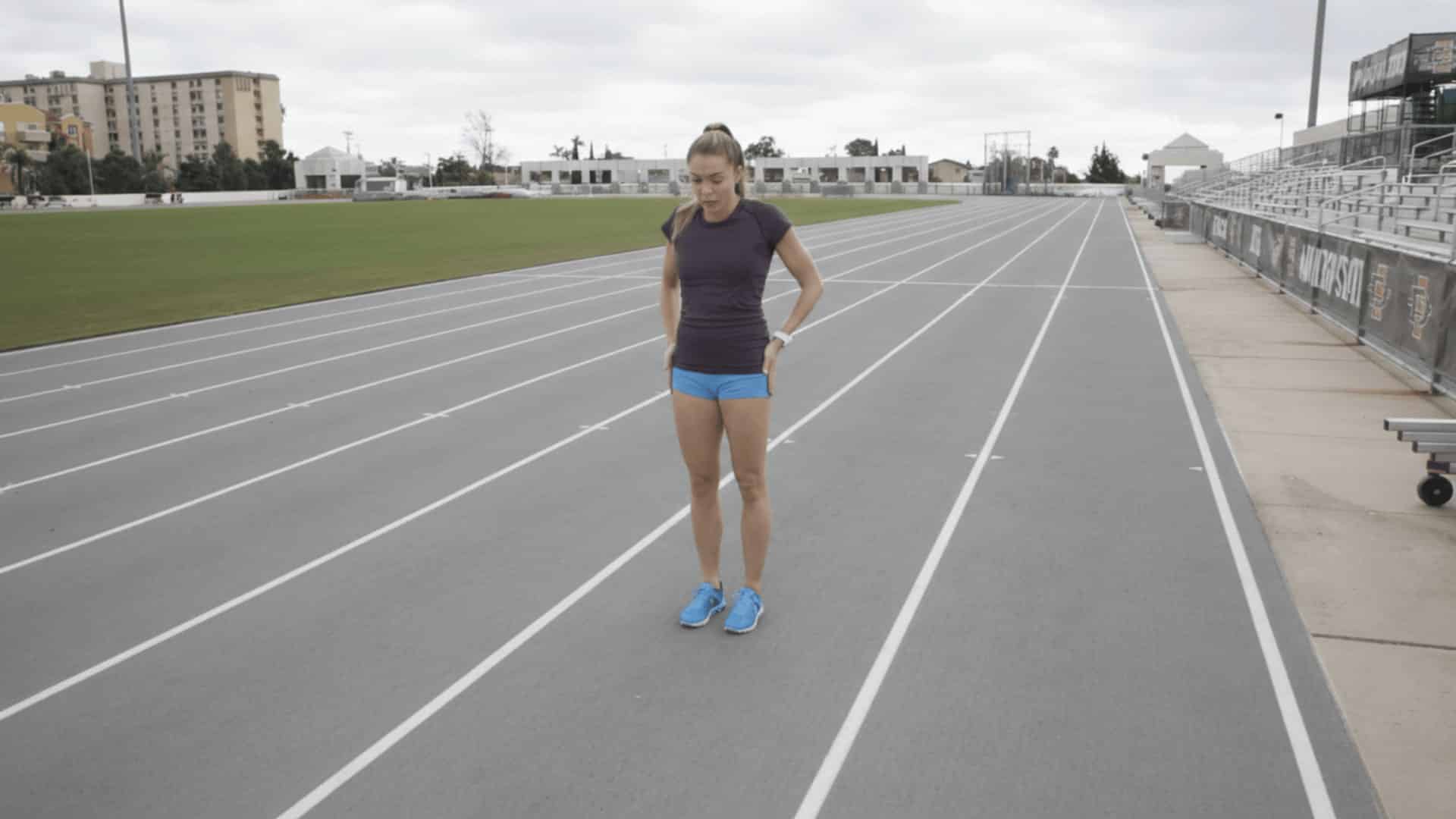
Keep your hips tall and your core engaged throughout the drill. If your hips drop or your torso twists, the movement loses its purpose. Avoid overkicking or reaching too far forward.
The kick should be controlled and purposeful, not exaggerated. Think about staying stacked from head to hips to foot strike. When posture stays solid, the drill looks crisp and feels athletic, which means it will transfer better to real sprint performance.
Check out this video to master the extension and aggressive snap-down technique required for an effective B-Skip drill.
Benefits of A-Skips and B-Skips for Sprinting
These drills strengthen sprint mechanics by improving coordination, posture, timing, and explosive ground contact during acceleration phases.
- Improves coordination: Trains arms and legs to move in the proper sprint sequence.
- Reinforces sprint posture: Encourages tall alignment and stable core control.
- Develops hip flexor strength: Strengthens muscles responsible for powerful knee drive.
- Sharpens ground contact: Teaches quick, efficient midfoot strikes.
- Builds rhythm and timing: Helps create smooth, repeatable sprint mechanics.
Practicing these consistently improves running efficiency and supports stronger, faster sprint performance over time.
When to Use A-Skips and B-Skips in Your Workout
A-Skips and B-Skips work best when placed early in your training session. You can use them as part of your warm-up to activate your hips, improve coordination, and prepare your body for faster running.
They are especially helpful before sprint sessions because they reinforce proper mechanics before you increase speed. On technique-focused days, these drills let you slow things down and sharpen movement quality without excessive fatigue.
For most athletes, 2 to 3 sets of 20 to 30 meters per drill work well. Keep the pace controlled and focus on posture, rhythm, and clean foot strikes instead of rushing through the movement.
Other Related Drills and Alternatives
Pairing A-Skips and B-Skips with complementary drills can strengthen coordination, power, and overall sprint mechanics over time.
| Drill | What It Improves | Why It Helps |
|---|---|---|
| C-Skips | Hip mobility and coordination | Adds lateral movement to improve control and rhythm |
| High Knees | Knee drive and tempo | Reinforces upright sprint posture and quick turnover |
| Butt Kicks | Hamstring activation | Supports the proper recovery phase during sprinting |
| Ankling Drills | Ground contact mechanics | Sharpens foot strike and improves efficiency |
| Bounding | Explosive power | Builds force production for stronger strides |
| Single-Leg Hops | Balance and stability | Develops unilateral strength for better sprint control |
Choosing the right combination helps target weak areas and supports steady, well-rounded sprint development over time
Wrapping Up
By now, you’ve seen how A Skips and B Skips build strong sprint fundamentals. I walked you through each drill, how to perform them step by step, and why they matter for posture, coordination, and ground contact.
When you practice them with focus and consistency, you train better mechanics that carry directly into your sprinting. You don’t need complicated equipment or long sessions to benefit.
Just a short stretch of space and attention to form can make a real difference. Start adding a few controlled sets to your warm-up and notice how your stride feels over time.
If you try them or adjust your routine, share what you’re noticing. I’d love to hear how your training is progressing.