
When I first had to think about staying active while using crutches, I honestly thought exercise was not possible. Walking alone feels tiring, so working out sounds risky.
But I learned that the right crutches workout can actually help keep your muscles strong, improve blood flow, and support a smoother recovery.
The key is choosing safe movements that don’t put pressure on your injured leg.
Here, I’ll walk you through the exercises you should do on crutches, the safety rules you should follow first, and simple workout ideas you can try at home.
Can You Exercise While Using Crutches?
Yes, you can exercise while using crutches. Just make sure that the workout does not put pressure on the injured leg. The goal is to stay active without slowing down the healing process.
Safe workouts usually focus on the upper body, the core, and simple seated movements. These help keep your muscles strong and your blood moving while you recover.
I always suggest starting with chair exercises or floor exercises where your injured leg can rest. Avoid jumping, running, or standing workouts unless your doctor says they are okay.
If any movement causes sharp pain, stop right away. The best rule is simple: move gently, stay safe, and follow your doctor’s weight-bearing instructions first.
Safety Rules Before Starting Any Crutches Workout
Before starting any workout while using crutches, it is important to follow a few basic safety rules. These simple steps help protect the injury, prevent falls, and make exercise safer during recovery.
- Medical approval: Always check with a doctor or physical therapist before starting any workout. Confirm weight-bearing limits and safe movements so recovery is not slowed by the wrong exercise.
- No pressure on the injured leg: Choose seated or lying exercises that keep weight off the injured area unless medical advice says otherwise. Avoid standing workouts, jumping, or sudden changes in direction.
- Stable support: Use a strong chair, bench, or flat surface that will not move or slide. Keep crutches nearby so balance stays safe when changing positions.
- Slow and controlled movement: Move gently during exercises and when sitting or standing. Fast motions increase the chance of losing balance or straining the injury.
- Pain warning signs: Mild muscle effort is normal, but sharp pain, swelling, or sudden weakness means the exercise should stop right away. Rest first before trying again.
- Short workout sessions: Keep recovery workouts short and manageable. Overworking the arms or shoulders can cause soreness because crutches already add daily strain.
Following these safety rules makes it easier to stay active while healing. Once these basics are covered, the workout itself becomes much safer and more effective.
Safe Crutches Workout Ideas to Stay Fit During Injury Recovery
If you want to stay active while healing, here are simple, safe crutches workout ideas I recommend to help maintain your strength without putting pressure on your injury.
1. Wall Push-Ups
Wall push-ups are super simple but really effective, especially when you’re on crutches. Just stand a little away from a wall, place your hands on it, and slowly push your body away and back.
You don’t need to go all the way down like a regular push-up; just a gentle motion works. This move helps keep your arms, chest, and shoulders strong without putting pressure on your legs or causing injury.
I like doing a few sets whenever I need a quick upper-body boost, and it’s safe even if you’re still healing.
2. Seated Shoulder Press for Upper-Body Strength
Sit on a strong chair with the back straight and feet supported. Hold light dumbbells or water bottles near the shoulders, then slowly press them overhead and lower them with control.
This exercise builds shoulder and arm strength, which is helpful because crutch use already puts extra demand on the upper body. Keep the weight light, move slowly, and stop if the shoulders feel strained or overly tired.
3. Resistance Band Rows for Back Support
Sit upright while holding a resistance band with both hands. Pull the band toward the chest, squeeze the shoulder blades together, then slowly release.
This movement strengthens the upper back and improves posture, which helps when using crutches for long periods. A stronger back can also reduce neck and shoulder soreness. Focus on smooth, controlled pulls and keep the chest lifted during the exercise.
4. Seated Chest Press for Daily Pushing Strength
While sitting tall, hold dumbbells or a resistance band at chest level and slowly push forward until the arms extend. Bring them back in with steady control.
This exercise builds chest and arm strength that is useful for daily activities like pushing up from a chair or stabilizing the body. Keep the core engaged and avoid leaning forward. Light resistance and slow motion make this safe during recovery.
5. Gentle Arm Circles for Shoulder Mobility
Stretch the arms out to the sides and slowly make small circles in the air. After several seconds, switch direction. This simple move works well as a warm-up because it increases blood flow and loosens stiff shoulders.
Because crutch use can tighten the shoulders, gentle mobility work helps prevent discomfort. Keep the circles small and controlled instead of large and fast.
6. Seated Torso Twists for Core Stability
Sit upright with the back straight and slowly twist the upper body from side to side while keeping the hips facing forward.
This gentle movement activates the core muscles that help with posture and balance. A stronger core can make crutch walking feel steadier. Move slowly, breathe normally, and stop before any pulling or discomfort appears.
7. Chair Crunch Holds for Safe Ab Activation
Sit slightly leaned back in a chair and tighten the stomach muscles as if bracing the belly. Hold for a few seconds, then relax and repeat.
This simple hold activates the core without lifting the legs or stressing the injury. It’s an easy way to keep the abdominal muscles engaged during recovery. Focus on steady breathing and controlled holds instead of long, tiring squeezes.
8. One-Leg Glute Squeezes (If Approved)
While sitting or lying comfortably, tighten the glute muscles and hold for about five seconds before relaxing. Repeat slowly.
Even though the movement is small, it helps keep the hip muscles active when overall mobility is limited. Strong glutes support balance and walking once recovery improves. Gentle activation like this can help prevent weakness during longer healing periods.
9. Supported Leg Raises for Circulation
If medically approved, slowly raise the uninjured leg while sitting or lying down. In some cases, the recovering leg may be moved gently with support from the hands or a strap.
These slow lifts help improve blood flow and reduce joint stiffness. Movements should always stay controlled and pain-free. The goal is gentle circulation and mobility, not height or speed.
10. Seated Knee Lifts
Seated knee lifts are a gentle way to keep your lower abs active while on crutches. Just sit up straight on a sturdy chair and slowly lift one knee toward your chest, then lower it back down.
You can do one leg at a time or alternate. It feels simple, but it really works your core without putting weight on your injured leg. Remember, only do this if your doctor says it’s safe. Don’t push it if you have any weight-bearing restrictions.
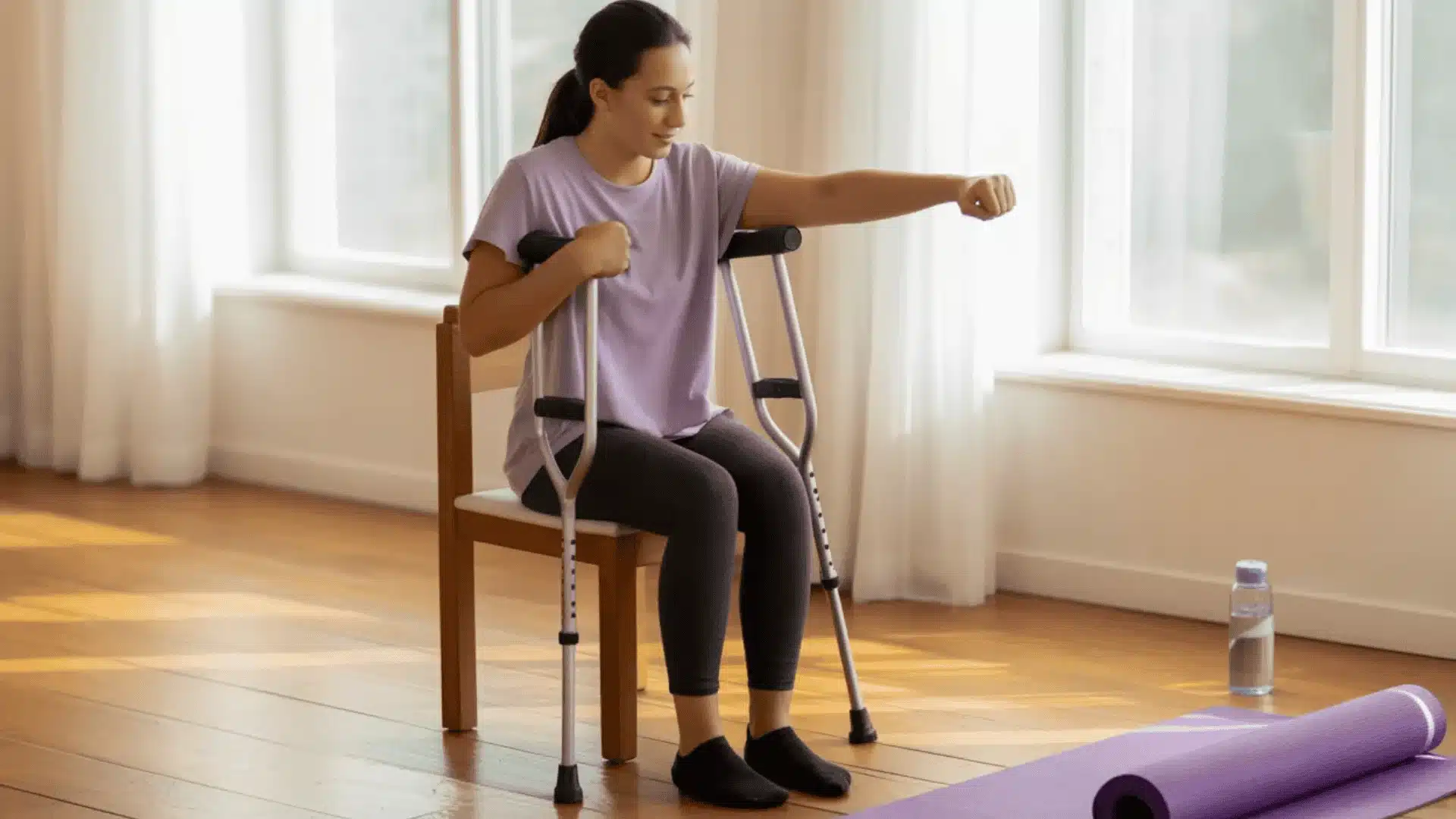
11. Seated Shadow Boxing for Upper-Body Movement
Seated shadow boxing is a fun and easy way to get your arms, shoulders, and core moving without putting any pressure on your injured leg. Just sit tall on a sturdy chair with your feet flat on the floor.
Imagine you’re throwing gentle punches into the air alternate right and left hands in a smooth, controlled motion. You can keep your punches small or extend them slightly as you get more comfortable.
Sample Beginner Weekly Crutches Workout Schedule
To make things simple, here is an easy weekly crutches workout schedule that balances safe exercise, gentle movement, and enough rest for proper healing.
| Day | Focus | Recommended Activities | Suggested Time |
|---|---|---|---|
| Day 1 | Upper body + core | Perform seated shoulder presses, resistance band rows, and chest presses. Add gentle core work, such as seated torso twists or chair crunch holds. | 15–20 mins |
| Day 2 | Rest or gentle mobility | Allow the body to recover. Optional light movements include slow arm circles, gentle seated stretching, or breathing exercises to support circulation. | 5–10 mins optional |
| Day 3 | Light strength session | Repeat two or three seated upper-body exercises and one safe core movement. Keep the pace slow and include longer rest breaks. | 15–20 mins |
| Day 4 | Light movement day | Focus on gentle circulation exercises such as supported leg raises (if medically approved), posture drills, or simple seated mobility work to prevent stiffness. | 10–15 mins |
| Day 5 | Short full routine | Start with a short warm-up, such as arm circles. Add one pushing exercise, one pulling exercise, and one core movement. | About 20 mins |
| Weekend (optional) | Full rest or light stretch | Prioritize recovery. Very light stretching may be done if stiffness occurs, but complete rest is also appropriate. | As needed |
Following a gentle routine like this can make recovery feel more structured while still keeping safety and comfort the top priority.
Tips to Maintain Fitness Faster While Recovering
Recovery time can feel slow, but a few smart habits can help the body stay strong and heal better. Focus on small daily actions that support both fitness and healing.
- Consistency over intensity: Short, gentle workouts done regularly help more than rare, hard sessions. Safe daily movement keeps muscles active without putting stress on the injury.
- Enough protein for repair: The body needs protein to rebuild muscle and tissue. Adding foods like eggs, beans, yogurt, fish, or lean meat can support strength and recovery.
- Good sleep for healing: Sleep gives the body time to repair itself. Getting enough rest each night helps reduce fatigue, improve energy, and support faster recovery.
- Track little progress: Notice small wins like less stiffness, better balance, or easier movement. Watching these changes helps keep motivation high during the healing process.
Following these simple habits makes it easier to protect fitness levels while allowing the injury to recover safely.
Final Words
Recovering on crutches can feel slow, and I know it’s easy to feel like your fitness is slipping away. But even small, controlled workouts can help you keep strength, protect your joints, and stay mentally positive during recovery.
You don’t need long or intense sessions; simple seated exercises done regularly can make a real difference. The most important thing is to stay patient, follow your medical advice, and build your routine step by step.
Healing takes time, but staying safely active helps your body bounce back stronger. If you found this helpful, share it with someone who might need it, and comment if any questions remain unanswered.