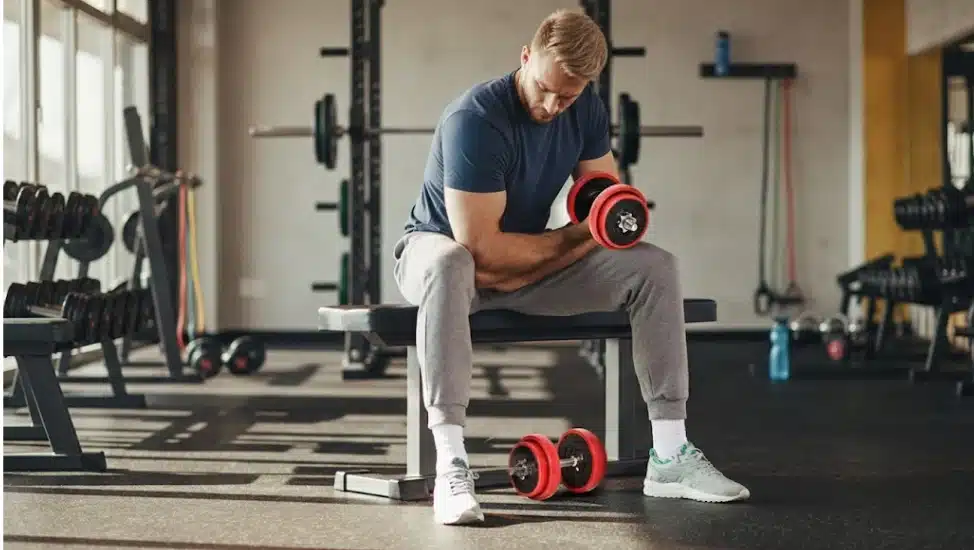
Dumbbells remain one of the simplest tools for building arm strength at home or in the gym. I’ve covered proven arm dumbbell exercises targeting your biceps, triceps, shoulders, and forearms.
Each movement comes with clear execution details and strategic tips you can apply immediately. You’ll find exercises for every experience level, from basic curls to advanced variations.
The variety here lets you customize dumbbell arm workout routines based on your goals, available time, and equipment.
By the end, you’ll have a complete reference for building stronger, more defined arms with simple equipment that fits any space.
Understanding Arm Training with Dumbbells
Arms consist of bicepson the front, tricepson the back, and forearmsrunning from the elbow to the wrist.Your shoulders connect to the upper arm and play a role in many movements.
Dumbbells work each arm independently, helping correct strength imbalances and improve coordination. This equipment also allows natural movement patterns that reduce joint stress compared to fixed machines.
When you start, choose weights you can control for 8-12 repetitions with proper form. Good technique always matters more than heavyweight. Keep your core engaged during each exercise to protect your lower back.
Track your progress by noting weights and reps each workout. Consistency builds results over weeks and months, not days.
Arm Dumbbell Exercises
Build stronger, more defined arms with these targeted dumbbell movements. Each section covers a specific muscle group and guides you through every exercise you need for complete arm development.
Top Biceps Exercises
Build front arm strength with these targeted movements designed for maximum biceps development and definition. Each exercise emphasizes different angles and grip positions to effectively work all parts of the muscle group.
1. Dumbbell Bicep Curl
Stand with your feet shoulder-width apart, holding dumbbells at your sides, palms facing forward. Curl the weights toward your shoulders, keeping your upper arms stationary.
Squeeze at the top, then lower with control, avoiding momentum or swinging motions throughout.
Primary Muscles:Biceps brachii, Coracobrachialis muscle, forearm flexors
Difficulty Rating: Beginner-friendly with progressive loading options
Equipment Required: A pair of dumbbells matching your strength
Form Cues: Keep elbows pinned at sides throughout movement
2. Hammer Curl
Hold dumbbells with palms facing each other in a neutral grip position. Curl both weights together or alternate while keeping thumbs pointing toward the ceiling.
This grip shifts emphasis to outer biceps and builds forearm thickness while maintaining straight wrists.
Primary Muscles: Brachialis, biceps brachii, brachioradialis
Difficulty Rating: Beginner to intermediate progression exercise
Equipment Required: Dumbbells with a comfortable grip diameter
Form Cues: Thumbs point up throughout the entire curl
3. Incline Dumbbell Curl
Set the adjustable bench to 45-60 degrees, then sit back with dumbbells at your sides. The incline stretches the biceps at the start, creating a greater range of motion.
Curl the weights up without letting your elbows drift forward to prevent cheating and isolate your biceps completely.
Primary Muscles: Long head of biceps, anterior shoulder
Difficulty Rating: Intermediate exercise requiring bench setup
Equipment Required: Adjustable bench, matching dumbbell pair
Form Cues: Arms hang perpendicular to the floor at the start
4. Concentration Curl
Sit on a bench and lean forward slightly with one arm hanging between your legs. Brace the back of the upper arm against the inner thigh for stability.
Curl the weight toward the shoulder, keeping the upper arm completely still against the leg and eliminating any swinging or body English.
Primary Muscles: Biceps peak, brachialis muscle
Difficulty Rating: Beginner isolation movement
Equipment Required: Single dumbbell, flat bench or chair
Form Cues: Brace elbow against inner thigh firmly
5. Reverse Dumbbell Curl
Stand holding dumbbells with an overhand grip and palms facing behind you. Curl weights up, maintaining a pronated hand position throughout movement.
This grip creates a mechanical disadvantage requiring significantly lighter weight while building forearm top and adding thickness to the upper arms.
Primary Muscles: Brachioradialis, extensor muscles, biceps
Difficulty Rating: Intermediate exercise with lighter weights
Equipment Required: Dumbbells 30-40% lighter than standard curls
Form Cues: Palms face down throughout full movement
6. Zottman Curl
Start with a standard underhand grip and curl the dumbbells toward your shoulders. At the top, rotate your wrists so your palms face down, then lower the weights slowly with an overhand grip.
Rotate back to underhand at the bottom, working both forearm sides within a single repetition while building wrist strength.
Primary Muscles: Complete biceps, brachialis, forearm flexors, and extensors
Difficulty Rating: Intermediate movement requiring coordination
Equipment Required: Moderate-weight dumbbells for controlled rotation
Form Cues: Rotate wrists at the top between curl phases
7. Crossbody Hammer Curl
Hold dumbbells at your sides in a hammer grip, with palms facing each other. Curl one dumbbell diagonally across the body toward the opposite shoulder, keeping the other arm still.
This cross-body path increases the range of motion compared to straight hammer curls while engaging core muscles.
Primary Muscles: Brachialis, biceps, core stabilizers
Difficulty Rating: Beginner to intermediate stability challenge
Equipment Required: Single dumbbell per hand
Form Cues: Curl across body toward opposite shoulder
8. Spider Curl
Position yourself face down on an incline bench with your chest against the pad and your arms hanging straight down. Curl dumbbells up, keeping upper arms perpendicular to the floor.
Chest support eliminates the ability to swing weight or use momentum, making this incredibly effective for building pure biceps strength.
Primary Muscles: Biceps brachii, short head, peak development
Difficulty Rating: Intermediate exercise requiring a specific bench setup
Equipment Required: Preacher bench or incline bench, dumbbells
Form Cues: Chest pressed firmly against the pad throughout the movement
9. Neutral Grip Curl
Hold dumbbells with palms facing each other and thumbs pointing up toward the ceiling. Curl both weights simultaneously or alternate arms, maintaining a neutral hand position.
This grip often feels more comfortable on wrists and elbows than fully supinated curls, splitting the difference between standard and hammer curls.
Primary Muscles: Brachialis, biceps brachii, forearm muscles
Difficulty Rating: Beginner-friendly basic movement
Equipment Required: Dumbbells with neutral grip capability
Form Cues: Maintain thumbs-up position from start to finish
Biceps exercises form the foundation of arm training and deserve focused attention in every workout.
Essential Triceps Builders
Triceps comprise two-thirds of your upper arm mass and deserve equal attention during training sessions. These exercises target all three heads for complete back-arm development and functional pressing strength.
10. Overhead Dumbbell Tricep Extension
Stand or sit holding one dumbbell with both hands cupped under the top plate. Raise the weight overhead with arms extended, then bend the elbows to lower it behind the head.
Keep your upper arms vertical and your elbows pointing toward the ceiling throughout the movement, lowering until you feel a stretch in your triceps.
Primary Muscles: Long head triceps, medial and lateral heads
Difficulty Rating: Intermediate overhead movement
Equipment Required: Single dumbbell held with both hands
Form Cues: Keep elbows close together throughout movement
11. Tricep Kickback
Hinge forward at the hips with a flat back and hold the dumbbell in one hand. Bend the elbow to 90 degrees with the upper arm parallel to the torso.
Extend the forearm straight back until the entire arm is parallel to the floor, holding the contracted position for one second before slowly returning to the start.
Primary Muscles: Lateral triceps head, overall arm definition
Difficulty Rating: Beginner isolation exercise
Equipment Required: Light to moderate dumbbells
Form Cues: Upper arm stays parallel to the floor
12. Skull Crusher (Lying Triceps Extension)
Lie flat on the bench holding dumbbells with arms extended above the chest. Bend your elbows to lower the weights toward the sides of your head or just above your forehead.
Keep upper arms at a slight angle rather than perpendicular to avoid shoulder stress extending back to the starting position by straightening elbows completely.
Primary Muscles: All three triceps heads, forearm stabilizers
Difficulty Rating: Intermediate to advanced pressing movement
Equipment Required: Flat bench, pair of dumbbells
Form Cues: Lower weights beside ears, not onto forehead
13. Single-Arm Tricep Extension
Hold one dumbbell overhead with the arm extended and the other hand supporting the elbow. Lower weight behind the head by bending only at the elbow while keeping the upper arm vertical.
Supporting the hand helps maintain proper elbow position throughout the movement, extending the arm back to full extension at the top.
Primary Muscles: Long head emphasis, stabilizer muscles
Difficulty Rating: Intermediate single-arm coordination
Equipment Required: One dumbbell per set
Form Cues: Free hand can brace the working elbow
14. Close-Grip Dumbbell Press
Lie on a bench holding dumbbells together above the chest with palms facing each other. Lower weights while keeping them pressed together until they reach the chest.
Press back up, maintaining dumbbell contact throughout the movement with a close grip, keeping tension on the triceps rather than spreading the load.
Primary Muscles: Medial and lateral triceps heads, inner chest
Difficulty Rating: Intermediate pressing variation
Equipment Required: Flat bench, pair of dumbbells
Form Cues: Dumbbells touch throughout the pressing motion
15. Tate Press
Lie on a bench holding dumbbells above your chest with your elbows bent and pointing toward your hips. Weights should be in a semi-pronated position with a slight angle.
Press the dumbbells together as you extend your arms to center them above your chest, then lower them under control, keeping your elbows pointed toward your lower body.
Primary Muscles: Outer triceps sweep, muscle thickness
Difficulty Rating: Advanced variation requiring control
Equipment Required: Moderate dumbbells for precise movement
Form Cues: Elbows point toward the hips during the press
16. Decline Tricep Extension
Set the bench to a 15-30 degree decline and secure your feet at the top. Lie back holding dumbbells above your chest with your arms extended toward the ceiling.
Bend your elbows to lower the weights beside your head, keeping your upper arms angled slightly back as the decline increases the stretch on your triceps at the bottom.
Primary Muscles: Long head stretch, complete triceps activation
Difficulty Rating: Advanced movement with bench requirement
Equipment Required: Decline bench, dumbbells
Form Cues: Control weight carefully in the declined position
Triceps exercises build the back of your arms and improve pressing strength for all compound movements.
Shoulder and Upper Arm Developers
Shoulders add width and definition to the overall arm appearance from all viewing angles. These movements target all three deltoid heads, along with supporting muscles, for balanced development and injury prevention.
17. Dumbbell Shoulder Press
Sit or stand holding dumbbells at shoulder height with palms facing forward. Press the weights straight up until your arms are fully extended overhead, without locking out completely.
Lower the dumbbells back down with control until they return to shoulder level, keeping your core tight throughout the movement to protect your lower back.
Primary Muscles: Anterior and middle deltoids, upper chest, triceps
Difficulty Rating: Beginner to advanced compound movement
Equipment Required: Pair of dumbbells, optional bench with back support
Form Cues: Press straight overhead without leaning back excessively
18. Arnold Press
Start seated, holding dumbbells at shoulder height with palms facing your body. As you press overhead, rotate your hands so that your palms face forward at the top.
Reverse rotation on the way down, ending with palms facing you again at shoulder level, engaging front delts more intensely than standard presses.
Primary Muscles: All three deltoid heads, rotator cuff muscles
Difficulty Rating: Intermediate rotation pattern
Equipment Required: Moderate dumbbells for controlled motion
Form Cues: Smooth rotation from palms-in to palms-forward
19. Lateral Raise
Stand holding dumbbells at sides with a slight bend in elbows. Raise the weights out to the sides until your arms reach shoulder height and are parallel to the floor.
Lead with elbows rather than hands to keep tension on the side delts, pausing briefly at the top before lowering back down with control.
Primary Muscles: Middle deltoid, upper trapezius
Difficulty Rating: Beginner isolation movement
Equipment Required: Light to moderate dumbbells
Form Cues: Raise arms to shoulder height, not above
20. Front Raise
Hold dumbbells in front of your thighs with palms facing your body. Raise one or both weights forward and up until they reach shoulder height.
Keep a slight bend in the elbows throughout the raising motion to reduce joint stress and avoid momentum by swinging the weights up with the lower body.
Primary Muscles: Anterior deltoid, clavicular head of pectoralis
Difficulty Rating: Beginner single-plane movement
Equipment Required: Light to moderate dumbbells
Form Cues: Raise to shoulder height with slight elbow bend
21. Bent-Over Lateral Raise
Hinge forward at the hips until the torso is nearly parallel to the floor. Let dumbbells hang straight down from your shoulders with palms facing each other.
Raise the weights out to the sides, leading with your elbows, until your arms are parallel to the floor, squeezing your shoulder blades together at the top before lowering back down.
Primary Muscles: Posterior deltoid, upper back muscles, rhomboids
Difficulty Rating: Intermediate postural control required
Equipment Required: Light dumbbells for strict form
Form Cues: Maintain flat back throughout movement
22. Upright Row
Stand holding dumbbells in front of your thighs with palms facing your body. Pull weights straight up along the torso by raising the elbows out to the sides.
Lift until your elbows reach shoulder height, or slightly below, to avoid shoulder impingement, keeping the dumbbells close to your body throughout the pulling motion.
Primary Muscles: Middle deltoids, trapezius, biceps
Difficulty Rating: Intermediate pulling movement
Equipment Required: Pair of dumbbells
Form Cues: Pull elbows up and out to the sides
23. IYT Raises
Hinge forward at the hips and perform three different raise patterns in sequence. For “I” raise my arms straight overhead in line with my body.
For “Y” raises lift arms at diagonal angle creating Y shape. For “T,” raise the lift arms straight out to the sides, perpendicular to the body, targeting different shoulder muscle fibers.
Primary Muscles: Complete deltoid coverage, rotator cuff, upper back
Difficulty Rating: Advanced coordination and endurance challenge
Equipment Required: Light dumbbells for controlled movements
Form Cues: Create distinct letter shapes with arms
Shoulder exercises create three-dimensional development and improve performance in all pressing and overhead movements throughout training.
Forearm and Grip Strengtheners
Forearms support all upper-body exercises and improve grip strength for daily tasks and athletic performance. These focused movements build the muscles between the elbow and wrist for balanced arm development.
24. Wrist Curls
Sit on a bench and rest your forearms on your thighs with your wrists hanging over your knees. Hold dumbbells with palms facing up and let them roll down toward fingertips.
Curl wrists upward by flexing forearms, bringing weights toward inner forearms with only wrists moving while forearms stay still.
Primary Muscles: Forearm flexors, finger flexors, grip strength
Difficulty Rating: Beginner isolation exercise
Equipment Required: Light dumbbells for high-rep training
Form Cues: Forearms rest flat, only wrists move
25. Back Wrist Curls
Sit with forearms resting on your thighs and your wrists hanging over your knees, palms facing down. Hold light dumbbells and extend your wrists upward, raising the weights toward your outer forearms.
Lower back down with control, past neutral, to achieve full stretch of the extensors, using significantly lighter weights than in regular variations.
Primary Muscles: Forearm extensors, wrist extensors, outer forearm
Difficulty Rating: Beginner reverse flexion movement
Equipment Required: Very light dumbbells for controlled reps
Form Cues: Maintain contact between forearms and thighs
26. Finger Curls
Hold dumbbells at your sides or rest your forearms on your thighs. Open your hands and let the weights roll down to your fingertips while maintaining control.
Close your fingers to curl the weights back into your palms using only finger strength, keeping your wrists neutral and not flexing during the movement to develop the grip strength needed for heavy deadlifts.
Primary Muscles: Finger flexors, deep forearm muscles, grip endurance
Difficulty Rating: Intermediate grip exercise
Equipment Required: Moderate dumbbells with good knurling
Form Cues: Let the weight roll to the fingertips completely
Forearm exercises prevent imbalances and improve grip strength for all pulling movements during training sessions and daily activities.
Compound and Full-Arm Movements
Complete movements engage multiple muscle groups simultaneously, providing efficient training and functional strength development. These exercises improve overall strength and teach your muscles to work together as coordinated systems.
27. Dumbbell Row (Single Arm)
Place one knee and hand on the bench for support, with the other foot on the floor. Hold the dumbbell in your free hand and let it hang straight down toward the floor.
Pull the weight up toward your hip by driving your elbow back and keeping it close to your body, squeezing your back muscles at the top, then lower with control.
Primary Muscles: Lats, rhomboids, biceps, forearm flexors, grip
Difficulty Rating: Beginner to intermediate compound pull
Equipment Required: Bench for support, moderate to heavy dumbbells
Form Cues: Pull elbow back past torso level
28. Alternating Shoulder to Curl Combo
Start with dumbbells at shoulder height and press one overhead while the other stays at the shoulder. Lower the pressed weight back to shoulder level, then curl both dumbbells down and back up.
Alternate which arm presses on each repetition to work both sides equally and keep muscles under constant tension throughout the workout.
Primary Muscles: Deltoids, biceps, triceps, core stabilizers
Difficulty Rating: Intermediate coordination challenge
Equipment Required: Moderate dumbbells for multiple movements
Form Cues: Complete the full range on each component
29. Cross-Body Arm Raise
Hold a dumbbell in one hand at your side with the palm facing your body. Raise the weight diagonally across the body toward the opposite shoulder in an arcing motion.
Control the weight at the top before lowering back to the starting position at the side along a diagonal path, engaging the core and shoulders from angles not typically trained, keeping the torso relatively stable.
Primary Muscles: Deltoids, biceps, core rotators, obliques
Difficulty Rating: Beginner to intermediate stability movement
Equipment Required: Single dumbbell or one in each hand
Form Cues: Control rotation and avoid momentum
Compound movements build functional strength and muscle coordination while maximizing training efficiency for complete arm development results.
How to Put These Moves Together
Start with 6-8 exercises that hit different muscle groups to avoid overworking any single area during sessions. Beginners should perform 2-3 sets of 10-12 repetitions for each exercise with 60-90 seconds rest between sets.
More advanced lifters can increase to 3-4 sets of 8-15 reps depending on goals. A balanced approach works best: choose 2-3 biceps exercises, 2-3 triceps movements, and 2 shoulder exercises per session.
Always begin with compound movements when your energy is highest, then finish with isolation exercises for specific muscle groups. Rest for at least 48 hours between arm workouts to allow proper recovery time for muscle growth.
Track your weights and reps each session to monitor progress over time. Adjust the resistance when you can complete all sets with good form, leaving 1-2 reps in reserve.
Final Thoughts
Building stronger arms requires consistent effort and smart programming, not random workouts. Start each session with a proper warm-up, including light cardio and dynamic stretches.
Focus on controlled movements rather than heavy weights you cannot handle with good form.
Progressive overload matters most, so gradually increase weight or reps over weeks and months. Mix arm dumbbell exercises every 4-6 weeks to prevent plateaus.
Combine these dumbbell arm workout routines with adequate protein intake and sleep for optimal results. Stay patient since meaningful strength changes take months of training. Share your favorite arm exercises in the comments below!