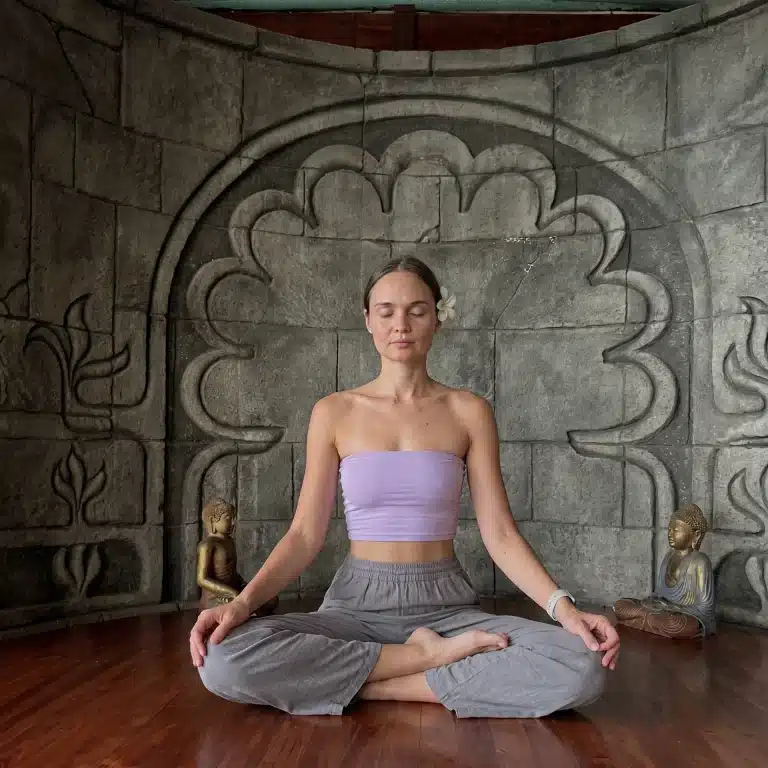
| Style | Restorative / Therapeutic Yoga |
| Level | Beginner to intermediate — all poses have modifications |
| Duration | 10-minute routine; individual poses held 30 seconds to 3 minutes |
| Props Needed | Yoga mat, optional: folded blanket, yoga strap or towel, yoga block |
| Best Time | Morning to loosen stiffness; evening to release accumulated tension |
| Avoid If | Severe or worsening nerve symptoms, recent spinal injury, bladder or bowel changes — consult a doctor first |
I found yoga for sciatica relief during a period when prolonged sitting was making my lower back and hip so tight that even getting out of a chair felt careful and slow.
What helped most was not the most intense poses, it was the gentle, supported ones that let the nerve settle instead of pulling at it. That shift changed how I approach sciatica-specific practice entirely.
This guide covers the best yoga poses for sciatica, a 10-minute routine to start with, how to choose the right pose for your specific symptoms, what to avoid, and when to stop and see a professional.
If you want to begin right away, start with Child’s Pose, Knees-to-Chest, Reclined Pigeon, Sphinx, and Bridge.
| Medical Clearance Required: This article is for informational purposes only and does not replace medical advice. If your sciatic symptoms are severe, worsening, or include numbness and weakness spreading into your legs, consult your doctor or physical therapist before starting any yoga practice. Stop any pose that increases pain or sends discomfort farther down the leg. |
What is Sciatica and Why Does It Hurt So Much?
Sciatica is nerve pain that occurs when the sciatic nerve is irritated, compressed, or inflamed. This nerve runs from the lower back through the hips and buttocks and down each leg, which is why the pain can travel rather than staying in one spot.
It may feel like sharp pain, burning, tingling, numbness, or an electric shock moving down the leg. Sciatica can hurt so much because nerves are highly sensitive, and even slight pressure on the lower spine can send severe pain signals throughout the body.
Common Causes of Sciatic Nerve Irritation
Understanding what is irritating your nerve matters because it changes which yoga poses are helpful and which could make things worse. The two most common drivers at play:
- Disc-related sciatica: A herniated or bulging lumbar disc presses on the nerve root. Gentle lumbar extension poses like Sphinx and low Cobra are typically better tolerated than deep forward folds, which increase disc pressure.
- Piriformis syndrome: The piriformis muscle in the deep glute sits directly over the sciatic nerve. When this muscle becomes tight or inflamed, it can compress the nerve without any disc involvement. Hip-opening poses like Reclined Pigeon directly target this cause.
Tight hips, tense glutes, prolonged sitting, poor posture, or disc problems can worsen symptoms regardless of cause. The goal of yoga for sciatica is to calm the nerve, reduce surrounding pressure, and move in ways that support recovery rather than trigger more pain.
10-Minute Yoga Routine for Sciatica Relief
Use this short routine when you want a simple starting point. Move slowly, keep each stretch mild, and stop if pain, tingling, or numbness travels farther down your leg.
| Step | Pose | Time |
|---|---|---|
| 1 | Cat-Cow | 1 minute |
| 2 | Child’s Pose | 1 minute |
| 3 | Sphinx Pose | 1 minute |
| 4 | Reclined Pigeon | 1 minute each side |
| 5 | Knees-to-Chest | 1 minute |
| 6 | Bridge Pose | 8 slow reps |
| 7 | Legs-Up-the-Wall | 2 minutes |
This routine should feel calming, not intense. Repeat it a few times weekly, or daily if comfortable. Choose supported versions during flare-ups, and never push into sharp or radiating pain. Cat-Cow first warms the spine; Legs-Up-the-Wall last gives the nerve and lower back a passive reset.
The Best Yoga Poses for Sciatica
These yoga poses focus on gentle movement, steady breathing, and safe support for sciatic pain. In my classes, I always tell students: choose comfort over depth every time, especially in the first few weeks. The nerve responds better to consistency at a manageable intensity than to occasional deep stretching.
1. Child’s Pose
Best for: Spinal decompression | Hold: 1 to 3 minutes | Type: Restorative
Child’s Pose is one of the most effective restorative yoga poses for calming the lower back, hips, and glutes while allowing the spine to rest in a soft position. It can also calm the nervous system, which may help reduce pain sensitivity when sciatic discomfort feels linked to tension or stress.
How to do it:
- Kneel on your mat with knees comfortably hip-width apart.
- Sit your hips back toward your heels without forcing.
- Lower your chest slowly toward your thighs and mat.
- Stretch your arms forward, or rest them beside you.
- Rest your forehead down and breathe deeply through your nose.
Modification: Place a folded blanket between your thighs and calves if your hips do not reach your heels comfortably.
2. Knees-to-Chest Pose
Best for: Lower back relief | Hold: 1 to 2 minutes | Type: Restorative
Knees-to-Chest helps reduce lower back pressure and gently releases the glutes. It is simple, controlled, and useful during mild flare-ups because it lets the spine rest while keeping the stretch easy to adjust for comfort and safety.
How to do it:
- Lie on your back with both knees gently bent.
- Bring both knees slowly toward your chest comfortably.
- Wrap your arms lightly around your shins or thighs.
- Rock side to side gently to release the lower back.
- Hold still and breathe slowly into your lower back.
Modification: If both knees feel too intense, pull in one knee at a time and keep the other foot flat on the mat.
3. Reclined Pigeon Pose
Best for: Piriformis release | Hold: 1 minute per side | Type: Therapeutic stretch
Reclined Pigeon is one of the most important poses for piriformis-related sciatica. It stretches the outer hip and piriformis muscle while keeping the lower back fully supported. Students who struggle with full Pigeon Pose usually find this version far more manageable — the back stays on the floor, the stretch is controlled, and there is no hip torque forcing the spine into an awkward position.
How to do it:
- Lie on your back with both knees gently bent.
- Cross one ankle over the opposite thigh carefully.
- Keep the crossed foot flexed to protect your knee.
- Pull the lower thigh gently toward your chest.
- Hold the stretch, then switch to the other side.
Modification: Use a towel or strap behind the thigh if reaching your leg feels difficult. If the hip stretch is too intense, reduce how far you pull the thigh toward you.
4. Sphinx Pose
Best for: Lumbar extension | Hold: 30 to 60 seconds | Type: Gentle backbend
Sphinx Pose gently extends the lower back and is particularly useful for disc-related sciatica where forward flexion makes symptoms worse. It supports the spine through the forearms, making it easier to lift the chest without pushing too deeply into the lumbar area. A 2013 study found that extension-based poses like Cobra were associated with improved sciatica symptoms, and Sphinx is the most accessible entry point into that movement pattern.
How to do it:
- Lie face down with legs extended comfortably behind you.
- Place your elbows directly under your shoulders for support.
- Press your forearms gently into the yoga mat.
- Lift your chest slightly without forcing your lower back.
- Keep hips, thighs, and legs grounded while breathing.
Modification: Move your elbows slightly forward or place a folded towel under your hips to reduce the degree of backbend.
5. Supine Spinal Twist
Best for: Sitting-related tension | Hold: 1 to 2 minutes per side | Type: Restorative twist
Supine Spinal Twist releases stiffness in the lower back and hips after long periods of sitting. Because the body remains supported on the floor, gentle rotation can happen without loading the spine, as long as the twist stays soft and never forced.
How to do it:
- Lie on your back with both legs extended comfortably.
- Bring one knee slowly toward your chest.
- Guide that knee gently across your body.
- Extend the opposite arm outward for gentle balance.
- Breathe slowly, release carefully, then switch sides.
Modification: Place a folded blanket under the dropped knee to keep the twist gentle and supported. If any rotation sends pain down the leg, reduce the range of motion or skip this pose for now.
6. Cat-Cow
Best for: Spinal mobility | Reps: 8 to 10 breaths | Type: Dynamic warm-up
Cat-Cow gently moves the spine through flexion and extension, warming the lower back before deeper poses. It also pairs movement with breath, which helps the body release muscle guarding around sensitive areas. I use it as the opening movement in almost every sciatica-focused class because it re-establishes the breathing rhythm before any stretch begins.
How to do it:
- Start on hands and knees with a neutral spine.
- Inhale and slowly drop your belly toward the mat.
- Gently lift your chest and tailbone into Cow.
- Exhale and round your back upward into Cat.
- Repeat slowly with your breath for several rounds.
Modification: If your wrists are uncomfortable, make fists or rest on your forearms instead.
7. Low Lunge
Best for: Hip flexor tightness | Hold: 30 to 45 seconds per side | Type: Active stretch
Low Lunge stretches tight hip flexors, which can pull the pelvis forward and increase lower back strain. This pose is particularly helpful if prolonged sitting has made your hips feel locked and your lower back tight, but it should stay supported and controlled throughout.
How to do it:
- Start on your hands and knees with control.
- Step one foot forward between your hands carefully.
- Lower your back knee softly onto the mat.
- Keep your torso lifted and your hips steady.
- Shift forward gently, breathe, then switch sides.
Modification: Place a folded blanket under the back knee and keep your hands on blocks or on a chair for added height and support.
8. Cobra Pose
Best for: Back strength | Hold: 15 to 30 seconds | Type: Strengthening backbend
Cobra Pose strengthens the back muscles and gently encourages lumbar extension. A low Cobra is safer than a full one because it allows controlled movement without pinching the lower back or forcing the spine. Use your back muscles to lift rather than pushing hard through the hands.
How to do it:
- Lie face down with legs extended behind you.
- Place your hands under your shoulders for support.
- Lift your chest slightly using your back muscles.
- Keep elbows bent and close to your ribs.
- Lower slowly, with controlled, relaxed breathing.
Modification: Try Baby Cobra by lifting the chest only a few inches and using mostly back muscle activation rather than arm pressure.
9. Bridge Pose
Best for: Glute and lumbar strength | Hold: 8 breaths | Type: Strengthening
Bridge Pose strengthens the glutes, hips, and lower back while improving pelvic stability. Stronger glutes reduce extra strain on the lumbar spine, which may help protect the sciatic nerve during daily movement. In my classes, students who add Bridge consistently see a noticeable reduction in how often their symptoms flare after sitting for extended periods.
How to do it:
- Lie on your back with both knees bent.
- Keep your feet hip-width apart and firmly grounded.
- Press through your feet and engage your glutes.
- Lift your hips slowly without arching too much.
- Lower your spine down one vertebra at a time.
Modification: Place a yoga block or firm pillow under your sacrum for a supported Bridge during flare-ups.
10. Seated Spinal Twist
Best for: Hip rotation and spinal mobility | Hold: 5 to 8 breaths per side | Type: Active twist
Seated Spinal Twist improves hip rotation and spinal mobility when done gently. It is more active than the supine version, so keep the spine tall and let the rotation come slowly — never force the end range.
How to do it:
- Sit tall with both legs extended in front.
- Cross one foot outside the opposite thigh.
- Place one hand behind you for support.
- Hook the opposite elbow outside your bent knee.
- Breathe slowly, release gently, then switch sides.
Modification: Sit on a folded blanket to lift the hips and make it easier to keep your spine upright throughout the twist.
11. Downward-Facing Dog
Best for: Posterior chain stretch | Hold: 5 to 8 breaths | Type: Active stretch
Downward-Facing Dog stretches the hamstrings, calves, and back body while gently lengthening the spine. For sciatica, bent knees are often safer because they help keep the spine long instead of rounded, which reduces nerve tension through the posterior chain.
How to do it:
- Start on hands and knees with steady support.
- Tuck your toes under and prepare to lift.
- Lift your hips slowly toward the ceiling.
- Keep your knees bent and spine long.
- Hold gently, breathe, then lower down slowly.
Modification: Place your hands on a wall or a chair for a standing version that reduces spinal load entirely.
Each pose should feel controlled, mild, and safe. If pain travels farther down the leg, tingling grows, or weakness appears, stop the movement and get professional guidance before continuing.
How Yoga Relieves Sciatic Nerve Pain
The right pose depends on why your sciatic nerve is irritated, so yoga should be gentle, specific, and adjusted to your symptoms. Research supports several mechanisms through which consistent yoga practice may reduce sciatic pain.
- Stretches the piriformis: A tight piriformis muscle can compress the sciatic nerve directly. Poses like Reclined Pigeon target the deep gluteal muscles that surround the nerve.
- Reduces tissue tension: Slow, held stretches may ease tight connective tissue around the hips, thighs, and lower back. This includes pelvic floor tension, which can contribute to hip stiffness and buttock pain in some sciatica cases, helping the pelvis move more freely overall.
- Calms the nervous system: Slow, controlled breathing can reduce the body’s stress response, which in turn may decrease muscle guarding and pain sensitivity around the affected nerve.
- Builds spinal support: Strengthening poses like Bridge and Cobra develop the core, glute, and lower back muscles that protect the lumbar spine from ongoing stress. Stronger support muscles mean less pressure cycling through the nerve with every movement.
The goal is not immediate relief, it is steady, compounding support. Gentle practice reduces pressure, builds strength, and helps the nerve settle over weeks rather than days.
Which Yoga Pose Should You Choose Based on Your Symptoms?
Use this table to match your main symptom with safer starting poses. Always choose the gentlest version first, then adjust based on comfort over time.
| If you feel this | Try these first | Avoid at first |
|---|---|---|
| Pain after sitting | Sphinx, Low Cobra, Cat-Cow | Deep forward folds |
| Deep buttock pain | Reclined Pigeon, Knee-to-Opposite-Shoulder | Full Pigeon Pose |
| Lower back tightness | Child’s Pose, Knees-to-Chest | Strong twists |
| Tight hamstrings | Bent-knee Downward Dog, Legs-Up-the-Wall | Aggressive hamstring stretches with straight legs |
| Hip flexor tightness | Low Lunge, Bridge | Deep backbends |
| Pain during flare-up | Supported Child’s Pose, Legs-Up-the-Wall | Long holds and intense stretches |
If you are unsure which category fits you, start with the flare-up row and work up from there as symptoms settle. Stop if pain spreads, sharpens, or feels electric.
How to Build a Consistent Yoga Habit for Sciatica Relief
Consistency matters more than intensity here. A five-minute gentle practice done daily does more for sciatic nerve recovery than a long session done once a week. The nerve responds to repeated, calm stimulation — not occasional deep work.
A realistic starting structure for most people:
- Days 1 through 7: The 10-minute routine above, once daily. No deep holds. Focus entirely on breathing and not triggering symptoms.
- Weeks 2 through 4: Extend holds to 90 seconds on poses that feel comfortable. Add a second session on days you feel good. Start incorporating Bridge as a strengthening pose.
- Month 2 onward: Introduce Downward Dog with bent knees, Low Lunge, and seated twists at mild intensity. Continue Reclined Pigeon daily if piriformis tightness is your main driver.
Students who struggle with building consistency usually try too much too soon. One prop and one modification make a bigger difference than five new poses. If you only have five minutes, do Reclined Pigeon on both sides and finish with Legs-Up-the-Wall. That alone is a meaningful session.
Props Setup: What You Actually Need
You do not need an elaborate kit, but a few items make a real difference for sciatica-specific practice.
- Yoga mat or firm rug: Uneven or soft surfaces like carpet or a mattress can shift the spine during floor poses. A mat or firm rug gives the consistent base the spine needs.
- Folded blanket: Place under the back knee in Low Lunge, between the thighs and calves in Child’s Pose, or under the dropped knee in Supine Twist. Reduces pressure and makes supported holds more sustainable.
- Yoga strap or long towel: Essential for Reclined Pigeon if you cannot comfortably reach your thigh. Learning proper yoga strap stretches makes a significant difference in how safely and effectively you can access this hip stretch.
- Yoga block or firm pillow: Place under the sacrum for Supported Bridge during flare-ups. This converts a strengthening pose into a restorative one.
Props are not a shortcut. In my experience, students who use props properly in the first month progress faster than those who skip them and compensate with form breakdown.
Integrating Yoga With Other Sciatica Management Strategies
Yoga works better alongside complementary habits that reduce pressure, improve strength, and support the body’s recovery. These are the strategies that consistently make the biggest difference alongside a yoga practice:
- Physical therapy: A physiotherapist can determine whether sciatica is linked to a disc issue, piriformis tightness, or another structural cause. This shapes which exercises are safe and which should be avoided entirely.
- Anti-inflammatory nutrition: Foods like leafy greens, omega-3-rich options, nuts, seeds, and whole foods may support tissue recovery. Reducing processed sugar can also help manage systemic inflammation that slows nerve healing.
- Better ergonomics: If you sit for work, adjust your chair, use lower back support, keep your screen at eye level, and stand every 30 to 40 minutes. The nerve needs load variation throughout the day, not just during yoga.
- Complementary relief options: Some people also benefit from heat before gentle yoga sessions to relax tight muscles, and ice after activity to calm any residual irritation.
- Long-term management: Sciatica can become chronic for many people. A mix of yoga, strengthening work, posture habits, and regular medical guidance offers more durable relief than any single intervention.
A complete plan gives sciatica less room to return. Combine gentle movement, smart posture, good nutrition, and professional guidance for safer long-term outcomes.
Poses and Movements to Avoid With Sciatica
Knowing what to avoid matters as much as knowing what to do. Some movements increase disc pressure, load the nerve under tension, or force the hip into positions that aggravate the piriformis.
| Pose or Movement to Avoid | Why Avoid It | Safer Option |
|---|---|---|
| Deep forward folds | Can strain the lower back, pelvis, and hamstrings, increasing disc pressure. | Supine hamstring stretch with a strap |
| Full Wheel / Upward Dog | May compress the lower back at intensity. | Sphinx or low Cobra |
| Plow / Shoulder Stand | Loads the spine in deep flexion, increasing nerve tension. | Legs-Up-the-Wall |
| Forceful twists | Can irritate the nerve and the surrounding lower back muscles. | Gentle supine twist with blanket support |
| Full Pigeon Pose | May add hip torque and increased disc pressure when symptoms are active. | Reclined Pigeon |
These poses are not permanently off-limits. Once symptoms settle and supporting strength improves, some may be reintroduced carefully — ideally with guidance from a yoga teacher or physical therapist familiar with your history.
Common Mistakes to Avoid When Doing Yoga for Sciatica
Small errors are where most people run into trouble with sciatica-specific yoga. These are the patterns I see most often, and the specific corrections that make the difference:
| Common Mistake | Why It Matters | Better Approach |
|---|---|---|
| Forcing flexibility | Can aggravate the sciatic nerve directly. | Keep stretches mild and controlled. |
| Skipping body checks | Symptoms may shift during a session without warning. | Pause and notice leg sensation after each pose. |
| Rushing the breath | Keeps the body tense and guarded, reducing the effect of each pose. | Breathe slowly and steadily throughout. |
| Using a soft surface | May allow the spine to shift unevenly during floor poses. | Use a firm mat or rug. |
| Copying advanced poses | May strain sensitive areas before the supporting muscles are ready. | Start with supported beginner versions. |
| Doing only stretches | Weak support muscles stay weak and continue contributing to the problem. | Add gentle strength work like Bridge Pose. |
| Sitting too long after yoga | Can bring stiffness and nerve irritation back quickly. | Take short walking or standing breaks every 30 to 40 minutes. |
| Using yoga as the only plan | Persistent sciatica typically needs a multi-pronged approach. | Combine yoga with posture changes and professional guidance. |
Safe yoga for sciatica is not about doing more. It is about moving smarter, noticing symptoms early, and choosing support before pain gets louder.
When to Stop Yoga and See a Doctor Instead
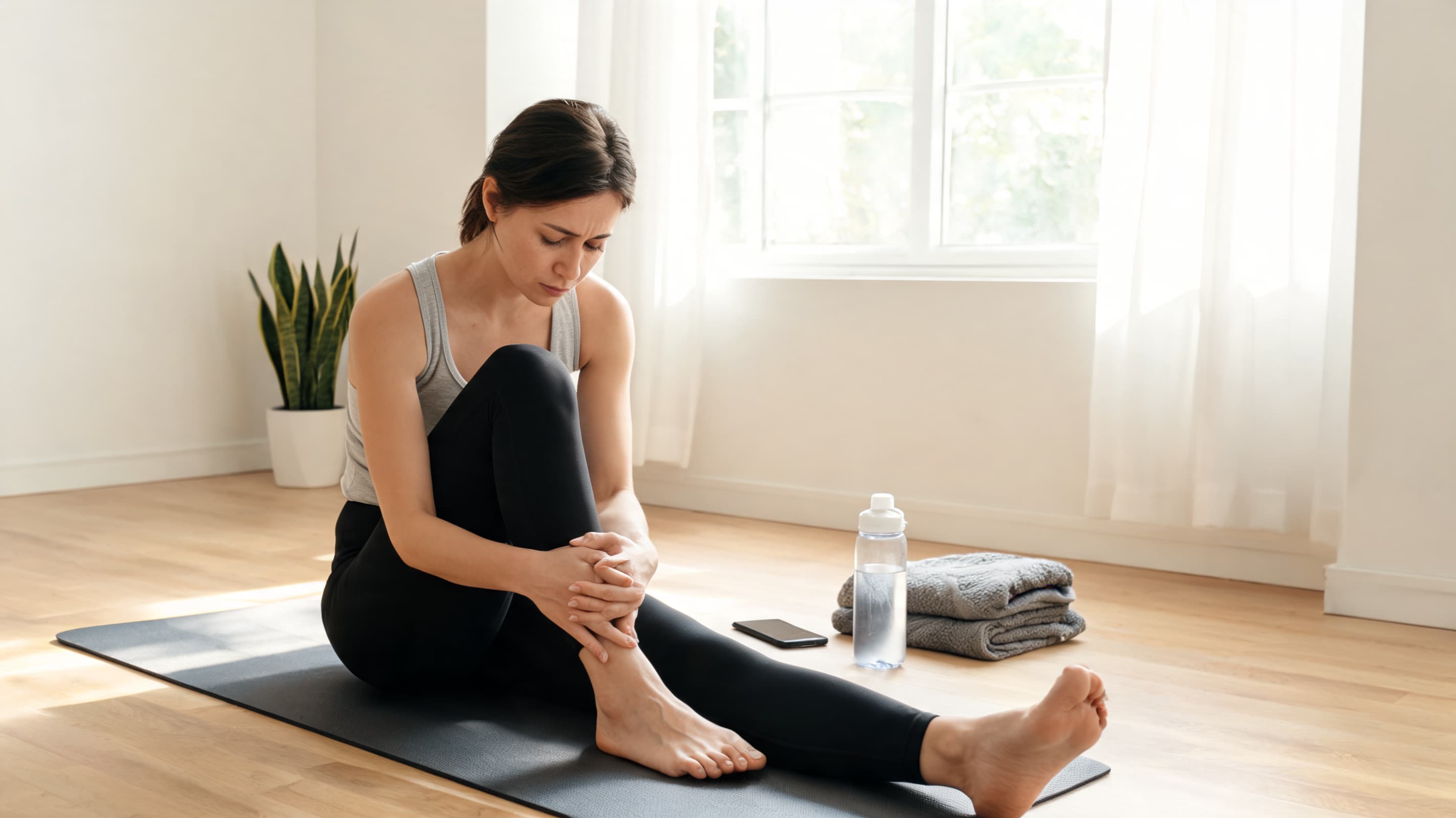
Yoga is appropriate for mild symptoms and can support recovery when sciatica is stable. It should never replace medical care when nerve symptoms are severe, spreading, or worsening.
Stop yoga if pain becomes severe, constant, or keeps worsening over several weeks instead of slowly improving with rest and gentle care. Get medical help if numbness or weakness spreads into one or both legs, especially if walking becomes difficult or unstable. Seek urgent care for any bladder or bowel changes, this may signal serious nerve compression requiring immediate attention.
Avoid yoga after a fall, accident, or recent injury until a doctor determines the cause of the sciatic pain. Stop any pose that sends pain farther down the leg or increases tingling. If symptoms feel serious, do not push through. Prompt medical guidance can help you avoid bigger problems and identify the safest path forward.
Frequently Asked Questions
Can beginners do yoga safely for sciatica?
Beginners can practice yoga safely for sciatica by using simple poses, short holds, and slow breathing. The safest approach is to avoid advanced shapes and focus on supported movements that feel mild, steady, and easy to leave at any point. Start with the 10-minute routine in this guide and build from there over several weeks rather than trying everything at once.
Is yoga good for sciatica or can it make it worse?
Yoga can be beneficial for sciatica when practiced at an appropriate intensity and with the right pose selection for your specific symptoms. It can make symptoms worse when poses are forced, held too long, or when someone chooses movements that increase nerve tension — particularly aggressive hamstring stretching, deep forward folds, or full Pigeon Pose during an active flare. The poses in this guide are specifically chosen to reduce rather than increase nerve irritation.
What yoga poses should be avoided with sciatica?
Deep forward folds, full Wheel, Upward Dog, Plow, Shoulder Stand, forceful twists, and full Pigeon Pose are the main poses to avoid while symptoms are active. Each of these either increases lumbar disc pressure, loads the sciatic nerve under tension, or creates hip torque that can aggravate the piriformis. The avoidance table earlier in this article covers each with a safer alternative.
How long does it take yoga to help with sciatica?
Relief depends on the cause, severity, and consistency of practice. Some people feel noticeably lighter after one gentle session. Others need four to six weeks of steady practice before symptoms clearly improve. If symptoms remain the same or worsen after two to three weeks of gentle, consistent practice, yoga alone may not be sufficient and professional assessment is the right next step.
Should heat or ice be used before yoga for sciatica?
Heat may help relax tight muscles and improve tissue pliability before a gentle session, making it easier to move into low-intensity poses. Ice or cold application may calm irritation after activity. Use whichever feels better for your body at a given time. One caution: avoid pushing into deeper stretches just because the heat makes the area feel looser than usual. Heat relaxes tissue but does not change how much stretch the nerve can safely tolerate.
Can pregnancy-related sciatica be managed with yoga?
Gentle prenatal yoga may help pregnancy-related sciatic discomfort, but specific modifications are needed. Avoid deep twists, poses requiring belly-down positioning, and strong backbends. Supported side-lying poses, gentle Cat-Cow on hands and knees, and Reclined Pigeon with props are typically more appropriate. A prenatal yoga teacher or healthcare provider should guide pose selection for this specific context.
Is it normal to feel sore after yoga for sciatica?
Mild muscle soreness in the glutes or hips can happen after yoga for sciatica, especially if these areas are underused. That kind of soreness typically fades within a day. Sharp, burning, electric, or radiating pain is different and should not be ignored or pushed through. Nerve irritation often feels worse after activity rather than better, which is the key signal to reduce intensity or seek professional input.
How often should I do yoga for sciatica?
Daily gentle practice tends to produce better outcomes than infrequent longer sessions, because the nerve and surrounding muscles respond well to consistent, low-intensity stimulation. Start with the 10-minute routine once daily for the first two weeks. As symptoms improve, you can add a second session on some days or extend individual holds to 90 seconds. The goal is sustainable frequency, not maximum duration.
Final Verdict: Does Yoga for Sciatica Actually Work?
Managing nerve discomfort requires shifting your focus from intense flexibility to mindful, restorative support.
By prioritizing gentle, prop-supported movements over deep, aggressive stretches, you give your body the space it needs to calm inflammation. This thoughtful approach to yoga for sciatica helps decompress the lower back, release tight piriformis muscles, and build foundational strength to protect your spine over time.
Real, lasting relief comes from daily, low-intensity consistency rather than occasional deep exertion. Try starting with the 10-minute routine tonight to see how your body responds to these gentle modifications.
What is your favorite pose for releasing lower back tightness? Leave a comment below to share your experiences.