
You probably feel it after a long day at your desk. Your shoulders round forward, your upper back feels tight, and sitting up straight takes effort.
I used to ignore that feeling too, until I learned how much proper shoulder blade movement matters.
Scapular retraction exercises are a simple way to pull your shoulder blades back toward your spine and retrain the muscles that support good posture.
When you do them correctly, you ease tension, support your shoulders, and build real upper back strength.
I’ll walk you through what scapular retraction is, how to perform it step by step, common mistakes to avoid, and how often you should practice so you can start seeing results.
Knowing of Scapular Retraction Exercises
Scapular retraction is the deliberate movement of drawing the shoulder blades back and together toward the spine. It targets the rhomboids and middle trapezius muscles of the upper and mid back.
Rooted in rehabilitative medicine, these exercises were originally used in clinical settings to correct poor posture and shoulder mechanics. As sedentary lifestyles became more common, they moved into mainstream fitness and corrective exercise programs.
Today, scapular retraction exercises are a staple in posture correction, shoulder rehabilitation, and strength training; retraining the muscles that modern lifestyles tend to weaken over time.
Benefits of Scapular Retraction Exercises
Adding these exercises to your routine delivers benefits that go far beyond just stronger shoulders.
These movements create a ripple effect that improves how you move, feel, and carry yourself throughout your entire day here’s what you can expect:
- Better Posture: These exercises pull your shoulder blades back and help you stand taller naturally.
- Pain-Free Shoulders: Stronger scapular muscles mean less nagging shoulder pain and stiffness.
- Stronger Upper Back: You’ll build serious strength in the muscles that support your upper body.
- Injury Prevention: A stable scapular foundation protects your shoulders from common workout injuries.
- Improved Athletic Performance: Proper scapular control gives you more power in sports and lifting.
These exercises are a small investment of time that pays huge dividends in how your body functions and feels.
How to Perform the Scapular Retraction Exercise
Once you’ve mastered the basics, check variations targeting your shoulder blades from multiple angles. These exercises range from simple bodyweight moves to more challenging resistance-based movements, giving you plenty of options to keep your workouts fresh and effective:
Step 1: Position Yourself for Shoulder Blade Squeeze

Start by standing up straight with your feet shoulder-width apart and your arms hanging naturally at your sides. Keep your head level and look straight ahead while pulling your belly button slightly toward your spine to engage your core.
This solid foundation ensures you’re ready to perform the movement correctly. Good posture from the start makes all the difference in targeting the right muscles and avoiding unnecessary strain during the exercise.
Step 2: Squeeze Your Shoulder Blades Together

Now gently pull your shoulder blades back and together, imagining you’re trying to hold a pencil between them.
Focus on feeling your mid-back muscles working, specifically your rhomboids and the middle part of your trapezius.
Keep your shoulders relaxed and down, not hunched up toward your ears. If you feel pinching or discomfort in the front of your shoulders, you’re likely shrugging too much, so reset and try again with a gentler squeeze.
Step 3: Perform the Squeeze in Front of a Mirror

Stand in front of a mirror so you can monitor your form as you squeeze. Turn slightly to the side now and then to check that your shoulder blades are moving toward each other and not just your arms.
Keep your shoulders relaxed and pulled down, not lifting up toward your ears. Stay tall through your spine and move slowly so the right muscles in your upper back do the work.
Step 4: Add Resistance for a Greater Challenge

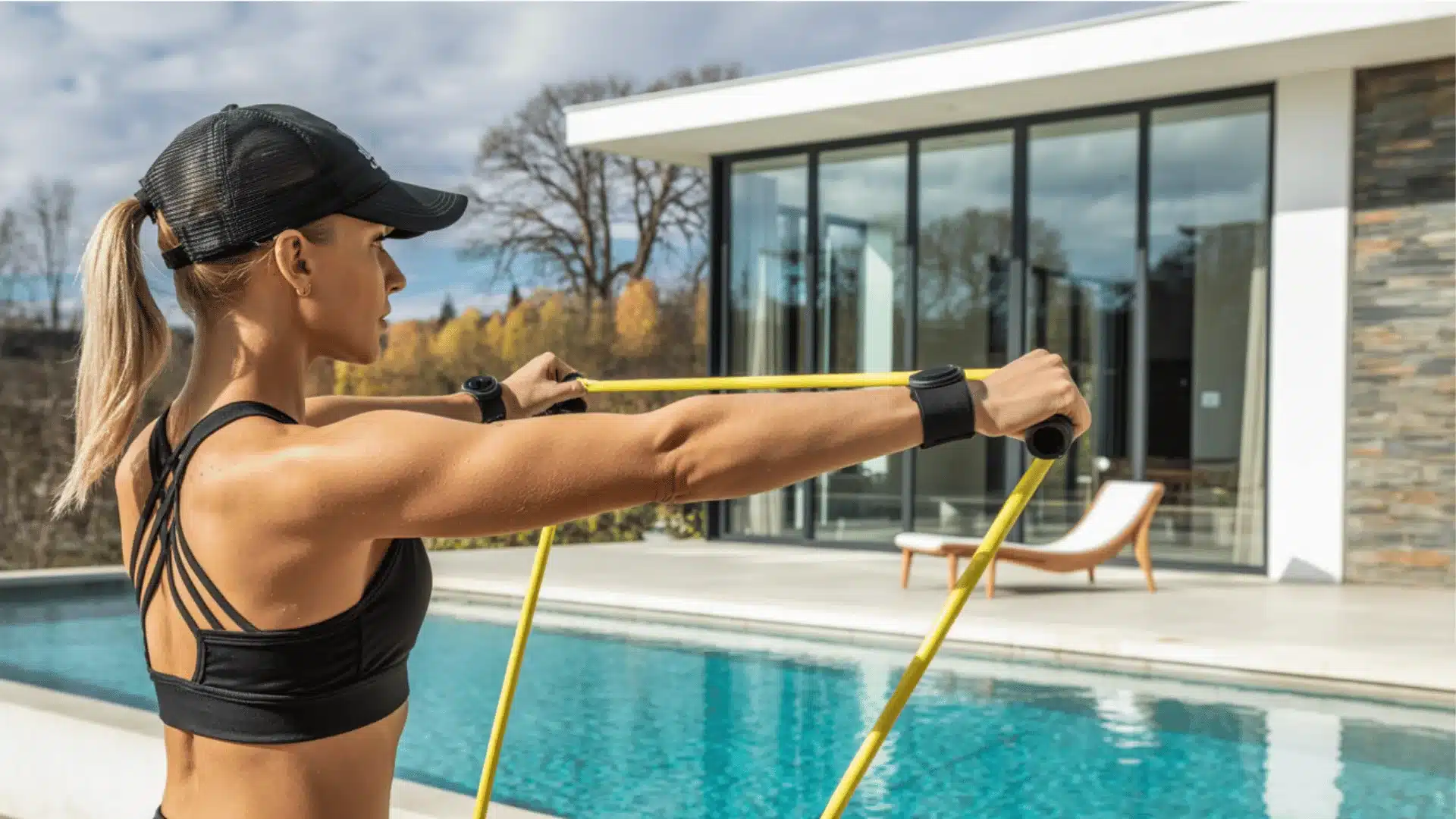
Once you’ve mastered the basic squeeze, grab a resistance band to increase the difficulty. Tie a knot in the middle of the band and secure it in a closed door at chest height.
Hold both ends of the band with your arms extended, then perform your shoulder blade squeeze while pulling against the band’s tension. The added resistance forces your muscles to work harder and builds strength faster than bodyweight alone.
Step 5: Modify the Position for Comfort

If you experience any discomfort or pinching during the exercise, try lowering your arms a few inches or adjusting how far back you squeeze.
Everyone’s shoulder mobility is different, so find the range that feels challenging but not painful. Keep practicing at this comfortable position, and over time, your flexibility and strength will improve. Listening to your body and never pushing through sharp pain or discomfort means you need to modify the movement.
If you’d like to watch these movements step by step, you can check them out on the StoneclinicPT YouTube channel.
Tips for Effective Scapular Retraction
Getting the most from your the exercises isn’t just about doing the reps; it’s about doing them right. Here are some tips you can all look forward to and work on:
- Keep Your Shoulders Down: The biggest mistake is shrugging your shoulders up toward your ears instead of pulling them back, which strains your neck and misses the target muscles entirely.
- Focus on Your Form: Maintain good posture throughout each exercise with your chest up, core engaged, and spine neutral to avoid unnecessary strain and get better results.
- Breathe Correctly: Exhale as you squeeze your shoulder blades together and inhale as you release back to the starting position for optimal muscle engagement.
- Start the Movement Right: Think about pulling your shoulder blades back and down, not just back, to activate the correct muscles and avoid compensation patterns.
- Go Slow and Controlled: Rushing through reps defeats the purpose. Focus on quality movements with a brief hold at the peak squeeze for maximum benefit
Follow these key tips to ensure you’re maximizing results while keeping your shoulders safe and healthy.
How Often Should You Do Scapular Retraction Exercises?
For best results, aim to practice scapular retraction exercises 3 to 4 times per week , giving your muscles at least one day of rest between sessions to recover and grow stronger.
Start with basic bodyweight movements and gradually increase difficulty by adding resistance bands, weights, or more challenging variations as you build strength.
Remember to balance these exercises with your other shoulder and back workouts to avoid overtraining the same muscle groups. Listen to your body if you feel persistent soreness or fatigue; take an extra rest day.
Consistency matters more than intensity when you’re first starting out, so focus on perfecting your form and building the habit before pushing for heavier resistance or more complex movements.
Frequently Asked Questions
Can scapular retraction exercises fix rounded shoulders?
Yes, but pair them with chest stretching. Strengthening the rhomboids alone without releasing tight pectorals limits how much correction you will actually achieve.
What is the difference between scapular retraction and scapular depression?
Retraction pulls the shoulder blades toward the spine. Depression moves them downward. Optimal shoulder mechanics need both — hence the coaching cue “back and down.”
Are scapular retraction exercises good for neck pain?
Yes. They reduce upper trapezius overuse, a common neck pain driver. Severe symptoms with arm tingling warrant a physiotherapist assessment before progressing.
Final Thought
Scapular retraction exercises are your secret weapon for better posture, stronger shoulders, and a pain-free upper back.
I have covered what scapular retraction is, that simple action of squeezing your shoulder blades together, and explored various exercises from basic shoulder blade squeezes to more advanced movements like face pulls and inverted rows.
The key is consistency and proper form, so start with three to four sessions per week and gradually progress as you build strength.
Don’t wait for shoulder pain or poor posture to get worse; begin incorporating these exercises into your routine today. Your future self will thank you for taking action now.
Comment down below how the scapular retracation exercise has helped you and share your learning.